Fredrikstad — Scandinavia's best-preserved fortress town
Fredrikstad is 1 hour from Oslo by Vy train. Its Gamlebyen is Scandinavia's best-preserved Renaissance fortress town — moats, earthen ramparts, cobbled
From Oslo: Drøbak and Oscarsborg Fortress day trip
Duration: Full day
- Fjord cruise
- Historic fortress
Quick facts
- Best time
- Year-round; summer for outdoor walking and cafés; December for Christmas market
- Days needed
- Half-day to full day
- Getting there
- Vy train from Oslo S to Fredrikstad — approximately 1 hour, trains run hourly
- Budget per day
- NOK 400–900 (USD 43–97) including return train, entry fees, and lunch
A 17th-century town still inside its walls
Fredrikstad is one of those places that surprises people who arrive without high expectations. The town is 90 kilometres south of Oslo, near the mouth of the Glomma river where it opens into the outer Oslofjord. Most visitors arrive without any particular anticipation — it’s a short day trip, it was mentioned in a guidebook, let’s see what it’s like — and find themselves spending considerably longer than planned.
The reason is Gamlebyen: the old town. Fredrikstad was founded by King Frederik II in 1567 and rebuilt in its current form after a fire in 1567, then progressively reinforced through the 17th century into a textbook example of a Renaissance star fortress. The defences — massive earthen bastions, a wide water moat, a network of underground passages and casemates, and an outer ring of fortifications — were designed by military engineers working from the same principles used across Europe from the 1550s onwards.
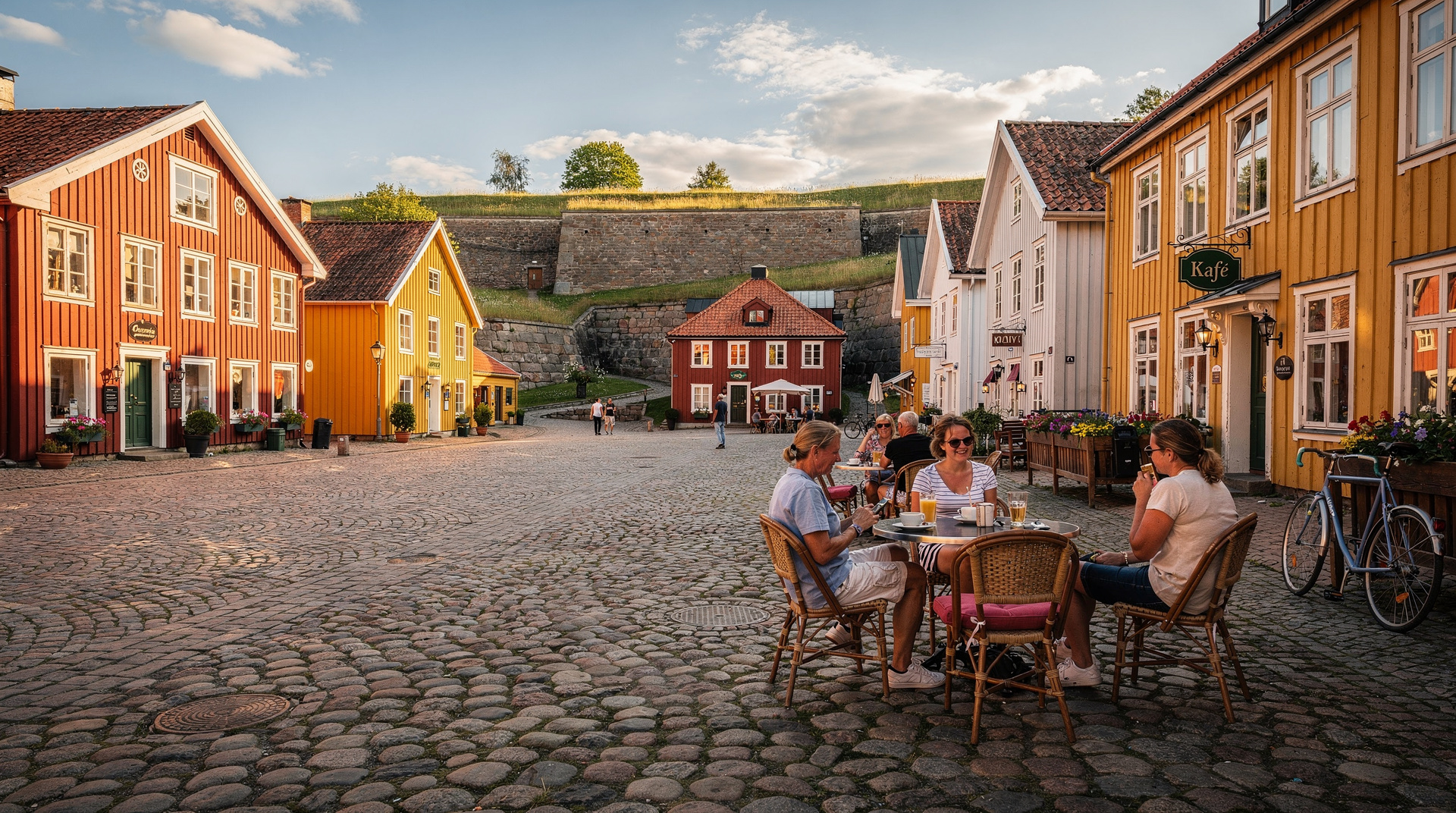
What makes Fredrikstad exceptional is that its old town was never demolished or rebuilt for modern use. The cobbled streets, whitewashed buildings, and original fortifications are intact. Gamlebyen remains a functioning neighbourhood — people live here, there are galleries and cafés inside the walls — but it looks almost exactly as it did in the 18th century.
This is, by the consensus of architectural historians and most who visit, the best-preserved town fortification in Scandinavia. Given Scandinavia’s density of fortified heritage sites, that’s a serious claim. Fredrikstad earns it.
Getting there from Oslo
By Vy train: The reliable and comfortable approach. Trains depart Oslo S roughly twice per hour and reach Fredrikstad station in approximately 1 hour. Book advance tickets on the Vy website or app (from around NOK 149–199 / USD 16–21 each way in advance; standard fares are higher). The train arrives at Fredrikstad’s modern town centre, about 1.5 kilometres from Gamlebyen.
From Fredrikstad station, you reach Gamlebyen one of two ways. The simplest is the small passenger ferry (Båten) that runs across the Glomma river from the quay near the station to the Gamlebyen landing — the crossing takes about 3 minutes and costs a few NOK. Alternatively, a 15-minute walk via the bridge. The ferry is more atmospheric and gives a better first view of the fortifications.
By car: About 90 kilometres on the E6 motorway south from Oslo, 1 to 1.5 hours in normal traffic. Parking near Gamlebyen is available but limited on summer weekends.
Gamlebyen: inside the walls
The walk around the earthen bastions — the outer rampart path — takes about 45 minutes at a slow pace and gives the best understanding of the fortress geometry. You’re walking on top of the earth and stone fortifications; below you, the moat (now dry or filled in some sections) runs between the outer wall and the inner buildings. The bastions are substantial: 10–15 metres high, designed to absorb and deflect cannon fire rather than resist it (unlike earlier stone castle walls). From the tops of the corner bastions, you can see down into the cobbled streets of the old town on one side and out over the river and modern Fredrikstad on the other.
Inside the walls, the scale is surprisingly domestic. The buildings are two and three-storey whitewashed constructions that served originally as barracks, officers’ quarters, stores, and prisons. Today they house:
Punkt Ø (Point Zero): a contemporary art museum occupying a converted building inside the fortifications, with a strong programme of Norwegian and Nordic art. The collection and rotating exhibitions are consistently well-regarded; admission is around NOK 120 (USD 13). Worth an hour if contemporary art interests you at all.
Galleries and studios: Several artists have workshops inside the old town, some open to visitors. The concentration of art in a historic fortress environment gives Fredrikstad a slightly surreal quality — contemporary canvas alongside 17th-century masonry.
Cafés and restaurants: A handful of cafés inside the walls serve coffee and lunch at standard Norwegian prices. The Gamlebyen Café near the main gate is the most reliable year-round option; Majorstuen near the inner courtyard is better for a longer lunch.
Cobblestone streets: The street grid inside the walls is essentially unchanged since the 18th century. Walking it is slower than it looks on a map — the cobblestones require attention underfoot — but it’s the most immersive way to understand the scale of the place.
The underground casemates and passages
Below the main bastion on the eastern side, a network of underground vaulted passages and casemates (gun emplacements) can be explored. These are not always open independently; guided tours run in summer (June–August, typically twice daily) and give access to sections of the tunnel network and the old powder magazine. The passages are dark, low in places, and smell authentically of old stone and damp. This is one of those heritage experiences that works because it hasn’t been overdone.
If you’re visiting outside summer, check the current opening status of the casemate tours on the Fredrikstad Museum website before planning your day around them.
Beyond Gamlebyen: the rest of Fredrikstad
Modern Fredrikstad — on the west bank of the Glomma — is a mid-sized Norwegian town with a city centre, pedestrian shopping streets, and the Fredrikstad Museum (covering regional history). Unless you have a specific interest in Norwegian industrial history (Fredrikstad was a major sawmill and shipbuilding town in the 19th century), the modern town is secondary to Gamlebyen.
The Glomma riverbank near the station is pleasant for a walk, particularly in summer when the fishing boats tie up and the waterside cafés are open. The river is wide here — 300 metres across — and watching the river traffic (cargo barges, pleasure boats, the Gamlebyen ferry crossing) is a good way to pass time while waiting for a train.
What to combine with a Fredrikstad visit
Fredrikstad is sometimes combined with Halden — another fortress town with the Fredriksten Fortress (a star fort on the Swedish border) — for a longer day involving two historical sites. Halden is 30 minutes further south by train. This makes a genuinely satisfying historical day, but requires a 7–8am departure from Oslo and some efficient timing. The Fredriksten Fortress is larger and more dramatic in profile than Gamlebyen but less intact in its interior streets.
As a standalone day trip, Fredrikstad works best combined with the morning train arriving around 9:30am, a circuit of the ramparts and Gamlebyen, lunch inside the walls, and an afternoon return. You can be back in Oslo for dinner.
For those interested in the broader Oslofjord region, the fjord day trips guide covers Fredrikstad alongside Drøbak and the islands in a single comparison. The Drøbak guide offers a contrasting experience — Oscarsborg’s WWII story vs Fredrikstad’s Renaissance fortifications — for those deciding between the two. Our dedicated Fredrikstad day trip guide has a suggested hour-by-hour schedule if you want more structure than the outline above, and the wider Oslofjord guide puts the town in context alongside the region’s other coastal destinations.
Seasonal notes
Fredrikstad is a year-round destination in a way that some of the fjord activities aren’t. The fortifications and Gamlebyen are accessible in all weather. In winter, the cobblestone streets dusted with snow look particularly photogenic. A Christmas market operates inside the walls in late November and December — small, genuine, and much less commercialised than Oslo’s markets. In summer, Gamlebyen hosts outdoor concerts and festivals in the courtyard areas, and the long evening light on the whitewashed walls is exceptionally good for photography from around 7pm onwards.
Autumn is underrated: October brings quiet streets, cool air, and the yellow birch trees outside the ramparts in peak colour. Very few tourists in October, and the light is still long enough for a comfortable afternoon visit.
Fitting Fredrikstad into a wider Oslo trip
Fredrikstad works best as a break in the middle of a longer stay rather than a rushed add-on. If you are still deciding how long to spend in the capital, the how many days in Oslo guide helps you judge whether a day away from the city is worth it, and the 3-day Oslo itinerary or the 4-day itinerary show where an out-of-town day can slot in without squeezing the museums. Visitors who prefer to keep to the city can compare with the Oslo destination guide.
Because the day is mostly walking, it pairs well with a lighter plan on either side. Budget-minded travellers will find the Oslo on a budget guide useful for balancing a train day against pricier city activities, and the Oslo Pass guide explains why the pass is a city-centre product that does not cover a trip like this one. If you are weighing other excursions, the Drøbak day trip guide and the Lillehammer day trip guide set out the alternatives.
For readers who like a first-person view, the 48 hours in Oslo story shows how a short stay can be structured, and the best time to visit Oslo guide is a good companion when choosing the season for your trip.
The Glomma river and the wider town
Modern Fredrikstad spreads across both banks of the Glomma, with the train station on the west bank and Gamlebyen on the east. The river at this point is wide, muscular, and still commercially active — cargo barges, fishing boats, and the small passenger ferry all use the same channel. Watching river traffic from the Stortorvet quay on the west bank, with Gamlebyen’s white walls visible across the water, is itself a satisfying 20 minutes.
The modern town centre, while unremarkable, has a few points of interest. Fredrikstad Museum (west bank, near the market square) covers the town’s industrial history: the sawmills and shipyards that dominated the Glomma valley economy in the 18th and 19th centuries, when Fredrikstad was one of Norway’s most significant timber-export ports. The collection includes a good section on traditional wooden boat construction that connects to the broader maritime history of the Oslofjord region.
The Isegran island — just north of Gamlebyen, connected to the east bank by a bridge — has the remnants of an older medieval fortification that predates the Renaissance fortress. The ruins are modest but historically significant as the site of the original Norwegian coastal defence on the Glomma. Access is free and the island makes a 30-minute detour that extends the day trip beyond Gamlebyen itself.
Photography: when and where the light works
Fredrikstad is a photographer’s destination, and the best light is predictable. The whitewashed walls of Gamlebyen reflect the golden-hour light in summer (roughly 8–10pm in June and July) in a way that makes the stone seem almost incandescent. The bastion corners facing west — looking back towards the river and the setting sun — are the best vantage points.
In winter, the low angle of the December sun (rarely above 10–12 degrees above the horizon) creates long shadows across the ramparts even at midday. The combination of snow on the earthen bastions and the whitewashed walls against a grey sky is visually distinctive. Blue hour (20 minutes after sunset) with the Christmas market lanterns and the fortress gates lit is worth staying for in December.
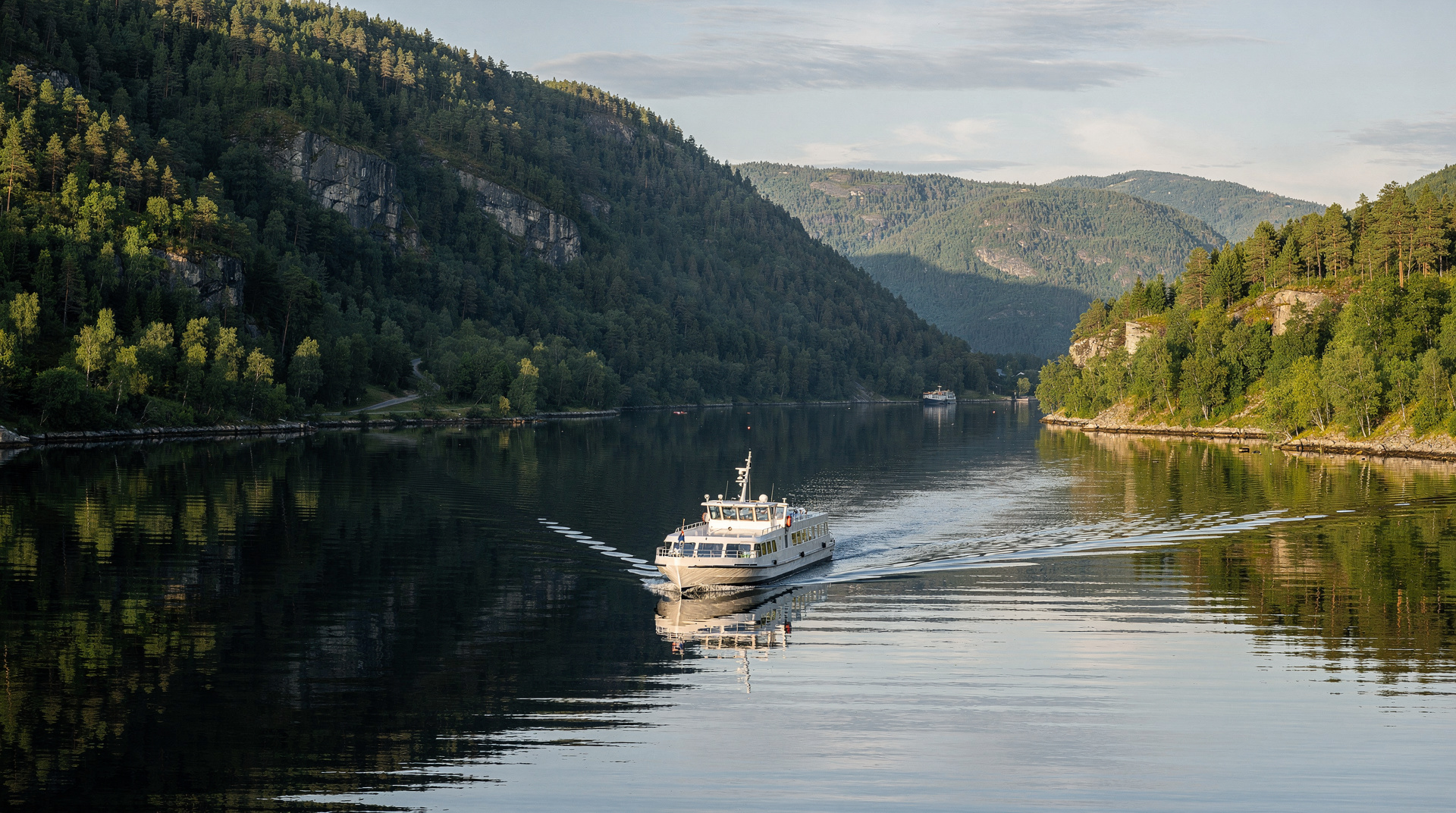
The river crossing on the small ferry, taken from deck level, gives a brief 3-minute window to photograph the Gamlebyen walls from the water — the same perspective that 17th-century travellers would have seen approaching by boat.
Honest assessment
Fredrikstad is Oslo’s most underrated day trip. It consistently receives fewer visitors than Drøbak (smaller profile) or Lillehammer (bigger name), yet delivers a genuinely distinctive heritage experience that you cannot replicate in Oslo itself. The fortifications are real, intact, and understood in context rather than presented as a sanitised theme park. The contemporary art in Punkt Ø is a useful counterpoint to the historical setting. The train journey is easy and relatively cheap.
The limitations: there’s not an enormous amount to do beyond the old town and the walk. If you exhaust Gamlebyen in a morning — which is possible, especially in winter when cafés and galleries are limited — the modern town doesn’t compensate. This is a half-day experience that rewards a slow approach. Bring a camera, wear comfortable shoes for cobblestones, and budget two hours for the rampart walk and interior exploration.
For a well-organised Oslo visit, the best day trips from Oslo guide helps you match Fredrikstad against your specific interests and schedule.
Frequently asked questions about Fredrikstad
How far is Fredrikstad from Oslo?
Fredrikstad is 90 kilometres south of Oslo. By Vy train, the journey takes approximately 1 hour. Trains run roughly twice per hour from Oslo S. Advance tickets start from around NOK 149–199 (USD 16–21) each way; booking through the Vy app in advance is strongly recommended for best prices.
What is Gamlebyen and why is it significant?
Gamlebyen (literally “the old town”) is Fredrikstad’s 17th-century fortress neighbourhood, still enclosed within its original earthen ramparts and moat. Founded by King Frederik II in 1567 and rebuilt in its current form after fire, it is considered Scandinavia’s best-preserved Renaissance star fortress. Unlike many comparable European fortresses, the interior streets and buildings are intact and still inhabited, giving it a living quality rather than a museum atmosphere.
Can you walk on the fortress ramparts?
Yes — the full rampart circuit is publicly accessible and one of the best ways to understand the fortress geometry. The walk takes about 45 minutes at a slow pace. There are no fences between you and the moat side, so exercise normal care. The views from the bastion corners over both the old town and the river are excellent, particularly in the late afternoon light.
Is Fredrikstad suitable as a half-day trip rather than a full day?
Yes. A morning train from Oslo arriving at 9:30am, a rampart walk, exploration of Gamlebyen, lunch inside the walls, and a mid-afternoon return is comfortably achievable. A full day allows more time for Punkt Ø, the casemate tours (in summer), and a more relaxed lunch without feeling rushed.
When is the Christmas market in Fredrikstad?
The Gamlebyen Christmas market typically runs in late November and the first three weeks of December. It is held inside the fortress walls and maintains a genuinely traditional atmosphere — significantly less commercialised than Oslo’s central Christmas markets. The combination of the whitewashed buildings, wooden market stalls, and Norwegian winter cold makes this one of the region’s best seasonal experiences. Check current dates on the Fredrikstad tourism website.
Is there anything for children in Fredrikstad?
The fortress ramparts and the underground passages (in summer) appeal to children with an interest in castles and history. The short river ferry crossing is itself fun for young children. The Gamlebyen streets are car-free and safe to explore. Compared to the Oslo islands (with swimming) or Drøbak (with the aquarium and Christmas house), Fredrikstad skews older — it’s better suited to children who can engage with history and architecture than very young children looking for beaches or interactive exhibits.
Top experiences
Bookable activities with verified prices and instant confirmation on GetYourGuide.