Bergen — gateway to the fjords
Everything you need to plan a Bergen trip from Oslo — the 7-hour train, Bryggen, Mount Fløyen and Hardangerfjord day tours.
Bergen: city sightseeing, fjord cruise and Mt Fløyen funicular
Duration: Full day
- Fløibanen
- Fjord cruise
Quick facts
- Best time
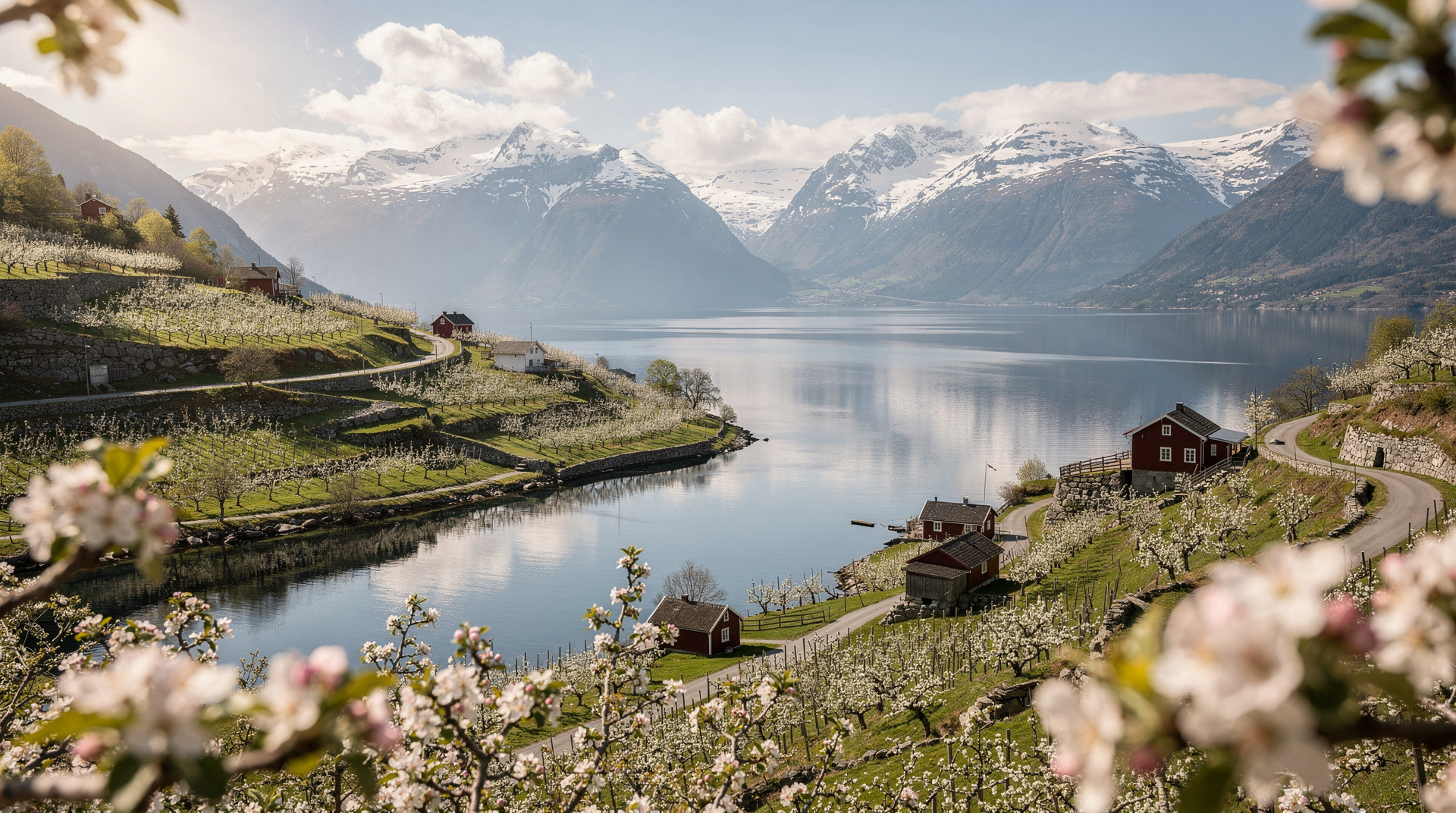
- May–September (drier, longer days); May for cherry blossoms near Hardanger
- Days needed
- 2–3 days minimum; 1 long day is possible but rushed
- Getting there
- Bergen Railway (Bergensbanen) from Oslo S — approx. 6.5–7 hours
- Budget per day
- NOK 900–1 600 (USD 97–172) mid-range, excluding accommodation
From Oslo to Bergen: one of the world’s great train journeys
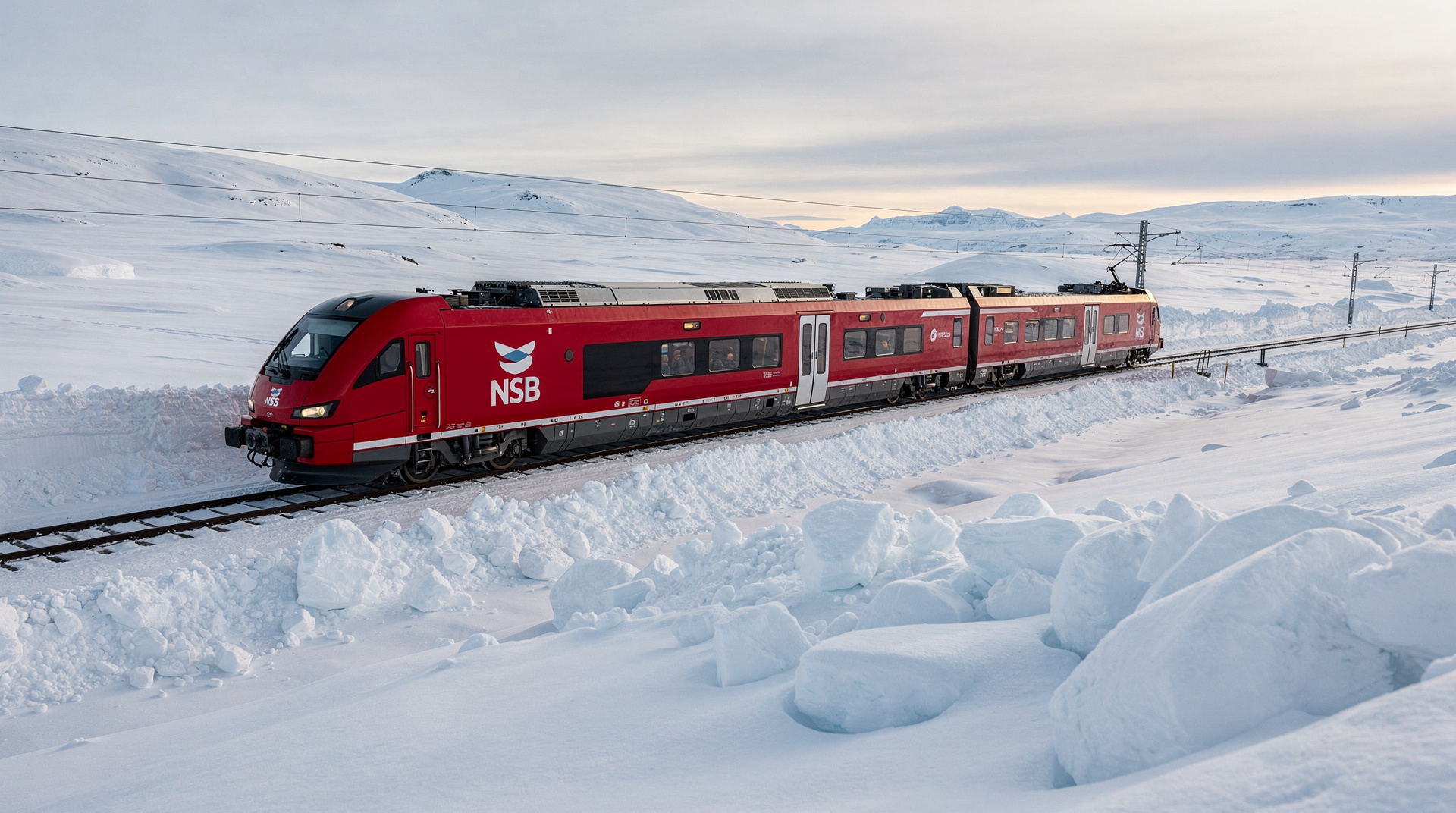
The single best reason to leave Oslo — at least for a few days — is the Bergensbanen. The Bergen Railway runs 496 kilometres from Oslo S to Bergen station, crossing the Hardangervidda plateau at roughly 1 300 metres above sea level. It is consistently ranked among the most spectacular train journeys on earth, and for once the hyperbole is earned.
You board at Oslo S in the morning (the 08:25 departure is a favourite), sit back with coffee from the café car, and spend the next six and a half to seven hours watching Norway unfold: dense forest giving way to open farmland, farmland climbing into bare upland tundra, snow lingering on the plateau even in June, then a dramatic descent through tunnels and switchbacks into the mild, rain-soaked climate of western Norway. By the time you pull into Bergen station you have crossed the country.
For detailed booking tips, seat recommendations, and the best window side to choose, see the complete Oslo to Bergen train guide. If you want to understand the “Norway in a Nutshell” extension — where you detour via Myrdal, the Flåmsbana and the Sognefjord — read how Norway in a Nutshell works before you buy any tickets. And for everything scenic on the Bergen Railway itself, that guide covers the key landmarks kilometre by kilometre.
Bergen in brief: what kind of city is it?
Bergen is Norway’s second city (pop. ~290 000), but it feels nothing like Oslo. Where Oslo is spread-out, waterfront-facing, and architecturally Nordic-cool, Bergen is compact, hilly, and saturated with colour — the famously photogenic rows of timber-and-brick warehouses at Bryggen are a UNESCO World Heritage site, and they still smell of tar and salt.
The city sits inside a ring of seven mountains (the Syv Fjell), which means every walk leads uphill eventually, and which also means the rain that hits the west coast — Bergen averages around 240 wet days a year — pours off steep slopes straight into the city. Bring a waterproof jacket in any month.
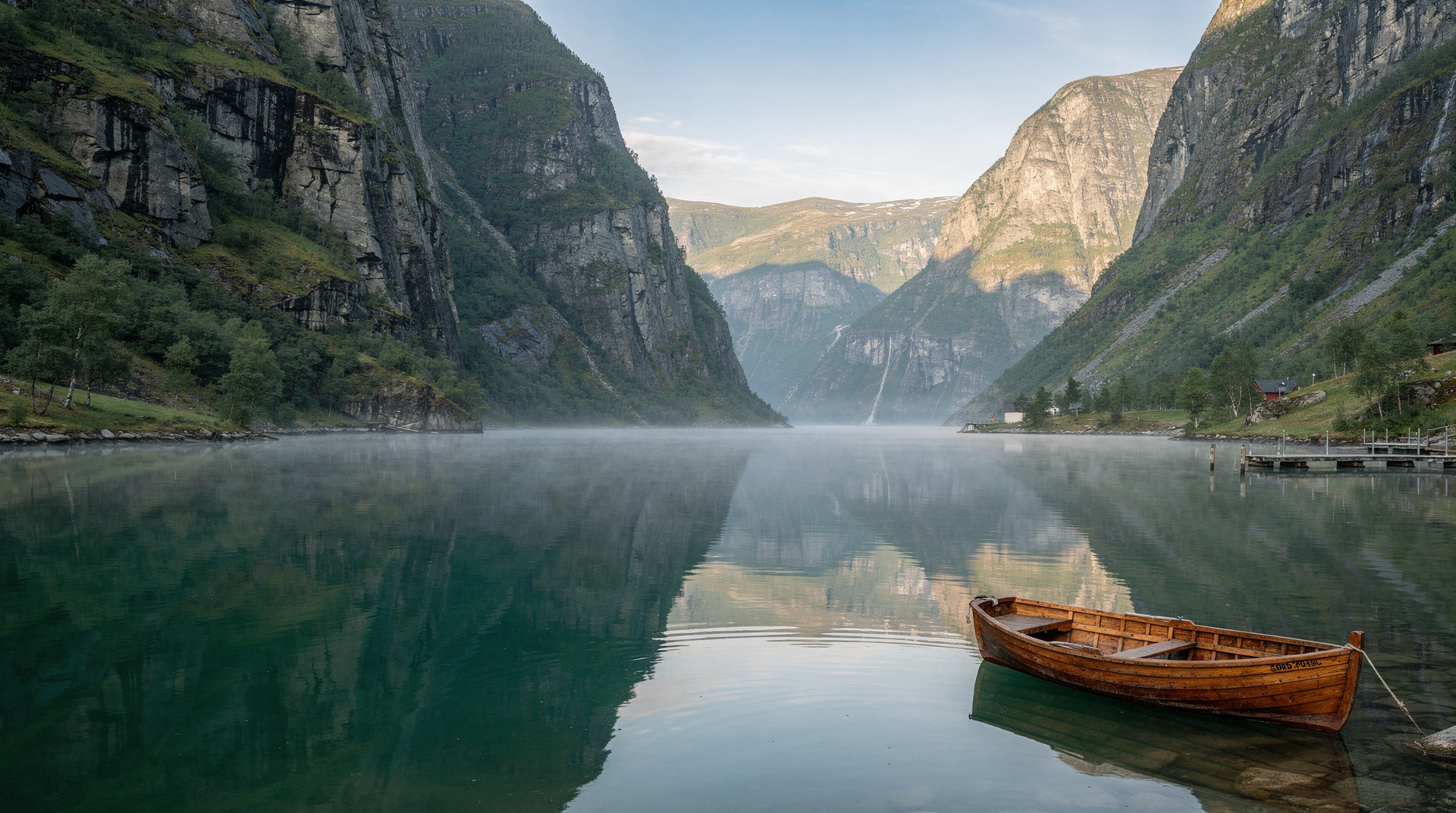
This is not a place to visit purely for its own sake, though it rewards the curious. It is above all a base: for the fjords, for the Nærøyfjord, for Flåm, and for the Hardangerfjord orchards and waterfalls to the south-east.
The old wharf: Bryggen and the Hanseatic quarter
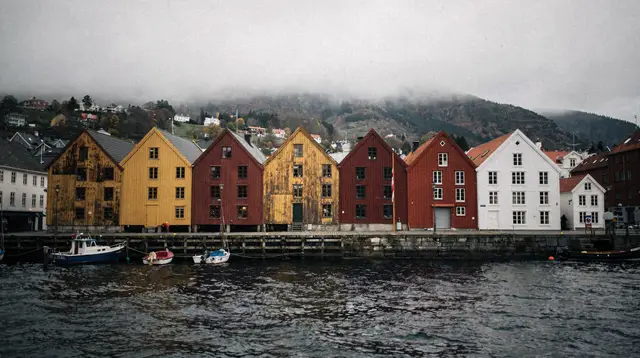
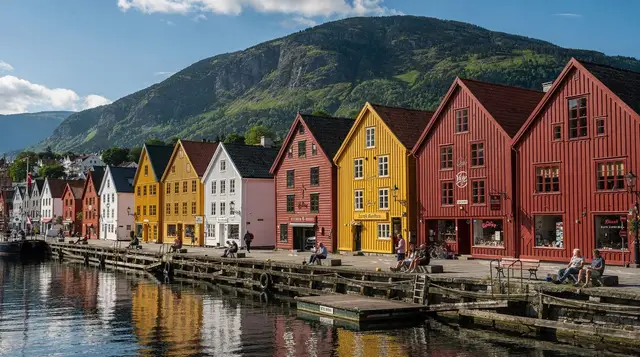
Bryggen is Bergen’s visual signature — a row of narrow wooden buildings along the northern quay of Vaagsbotn harbour, dating in their current form to rebuilds after the fire of 1702, with medieval foundations beneath. The German Hanseatic League operated a trading post here from the 14th century until 1754, and the street plan — narrow passages called “strete” running inland between the buildings — is essentially unchanged.
Walk through the alleys in the morning before the cruise ships arrive. You will find craft workshops, small galleries, and the Hanseatic Museum (check opening hours in advance — it is periodically closed for restoration work). The fish market at Torget, a five-minute walk south of Bryggen, has been selling seafood in some form since the 1270s. Fresh salmon, cured fish, crab claws, and fish soup: prices at the market stalls are tourist-facing (expect NOK 180–250 / USD 19–27 for a bowl of fish soup), but the quality is genuine.
Fløyen and the cable car up the mountain
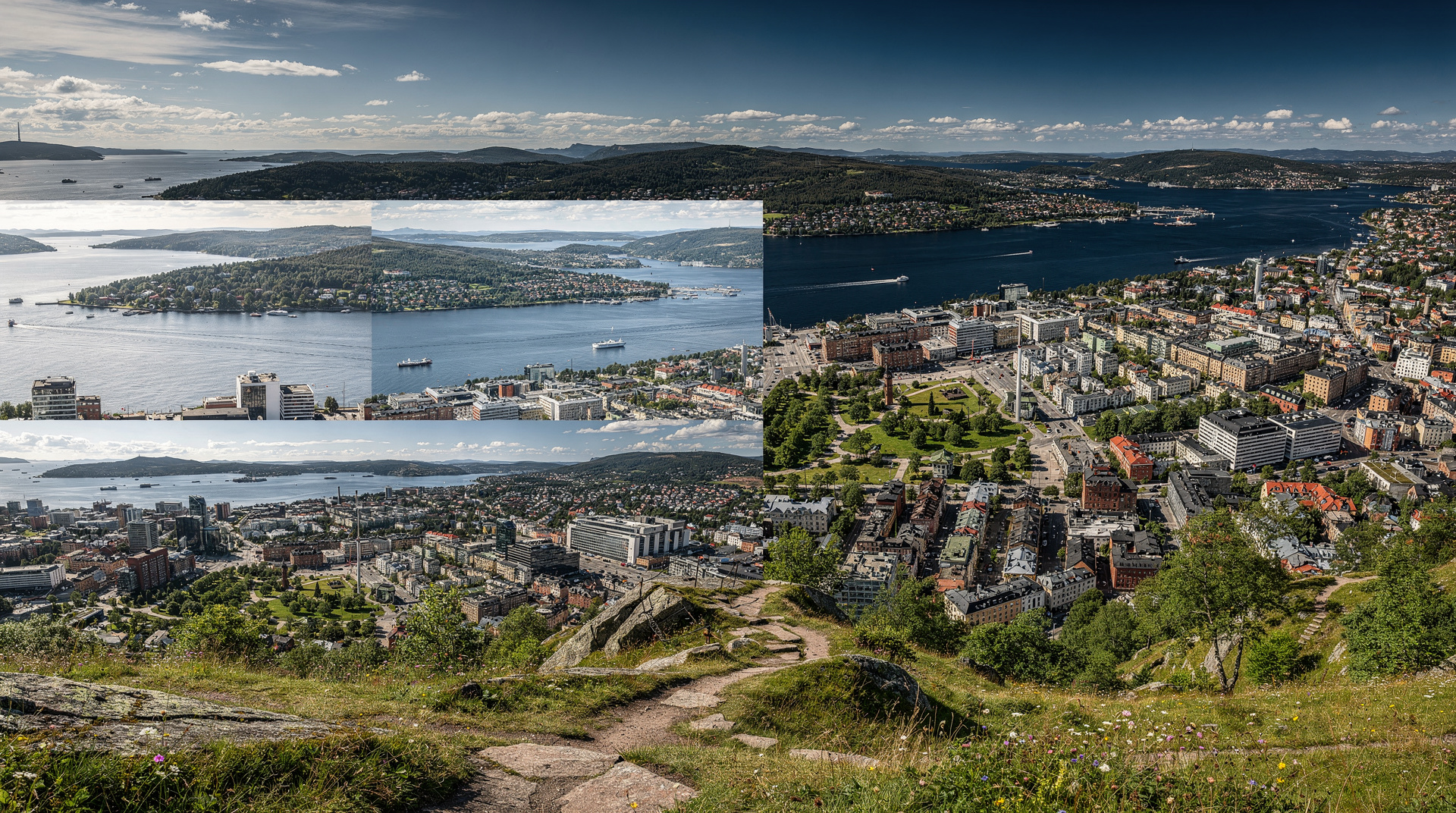
Fløibanen — the funicular railway to Mount Fløyen — departs from a small station a five-minute walk from Bryggen. It climbs 320 metres in about eight minutes and delivers you to the top at 399 metres with a panorama over the city, the harbour, and the islands beyond. On a clear day you can see the open sea.
The return ticket costs around NOK 205 for adults (USD 22) as of early 2026. At the summit there is a café, a souvenir shop, and the start of several marked hiking trails. The most popular descent is on foot through the forest — a 45-minute walk that is easy to navigate and feels surprisingly wild given that you are ten minutes from the city centre.
If Fløyen is busy (it often is in summer), consider Ulriken instead: the cable car on Bergen’s highest mountain (642 m) is less visited and has better views, though it requires a short bus ride from the centre. A walk connecting Ulriken to Fløyen — the classic “Ulriksbanen to Fløibanen” route — takes around four hours and is one of the best urban hikes in Norway.
What to eat and drink in Bergen
Bergen is serious about food in a way that smaller Norwegian cities often are not. The waterfront Fisketorget (fish market) is touristy but not a trap — the fish is fresh and the prices, while high by European standards, are not inflated by Norwegian norms. For a sit-down meal, Enhjørningen (the Unicorn) is a Bryggen institution for fish and shellfish; a three-course dinner runs NOK 700–900 per person (USD 75–97) without wine. More affordable: Pingvinen on Vaskerelven, a classic Norwegian home-cooking restaurant with mains around NOK 260–320 (USD 28–34).
Bergen has a lively coffee scene concentrated around Nøstet and the areas south of Bryggen. Kafe Møller and Det Lille Kaffekompaniet are both excellent. The craft-beer scene, while smaller than Oslo’s, clusters around Ølhallen (Norway’s oldest beer hall, inside the fish market building) and a handful of bars around Nygårdsgaten near the university.
One honest note on alcohol: Norway’s alcohol laws mean that spirits and wine above 4.7% are sold only through Vinmonopolet state shops. The nearest Vinmonopolet to Bergen centre is on Starvhusgate. Bar prices are steep — expect NOK 100–130 (USD 11–14) for a beer, and NOK 140–180 (USD 15–19) for a glass of wine. Budget accordingly.
Day trips from Bergen: the fjords on your doorstep
Bergen’s greatest practical advantage over Oslo for fjord-seeking is proximity. The fjords you want to see — Nærøyfjord, the Aurlandsfjord, Sognefjord — are all reachable as day trips from Bergen in a way that they simply are not from Oslo (where the travel time is punishing).
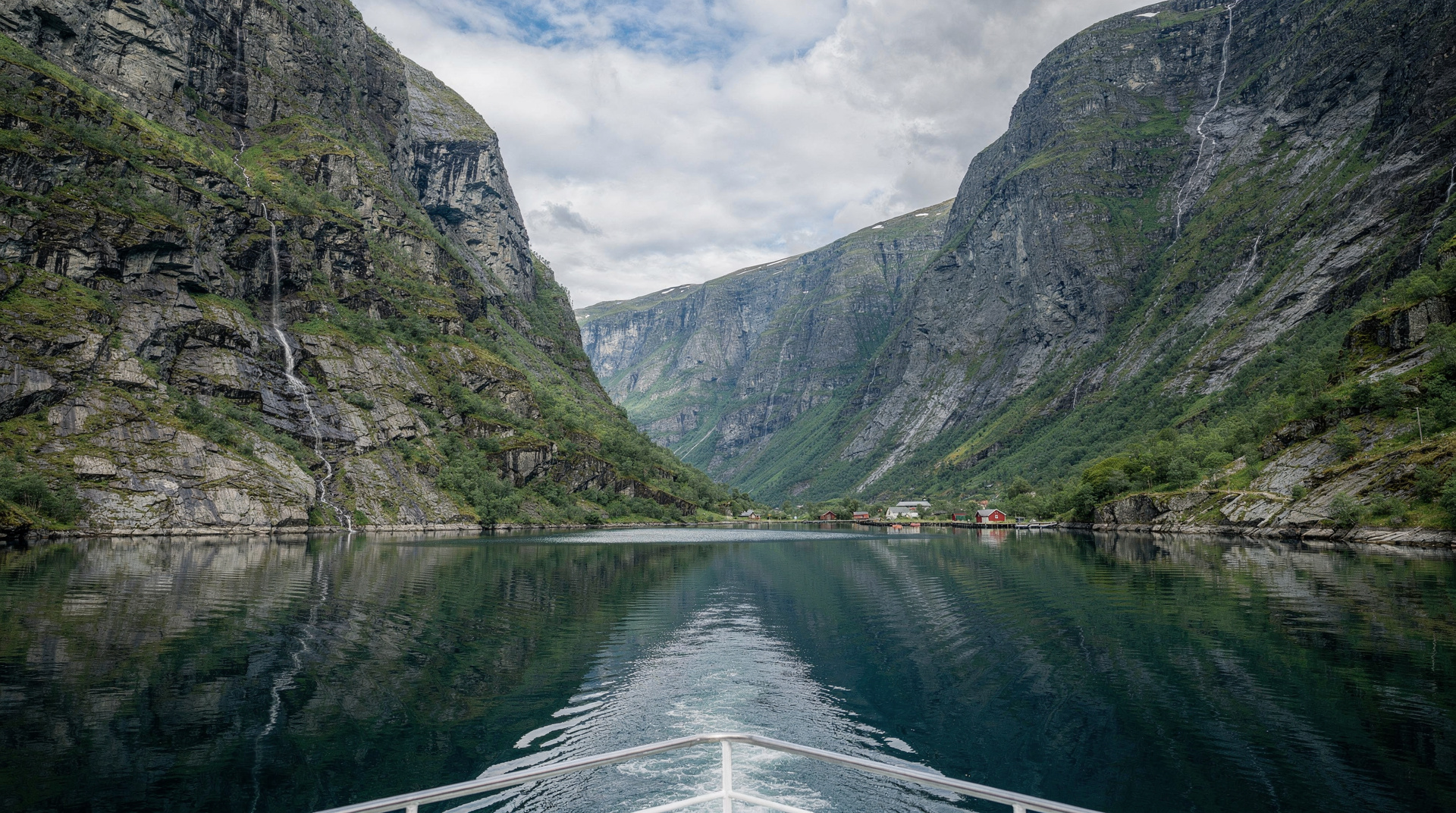
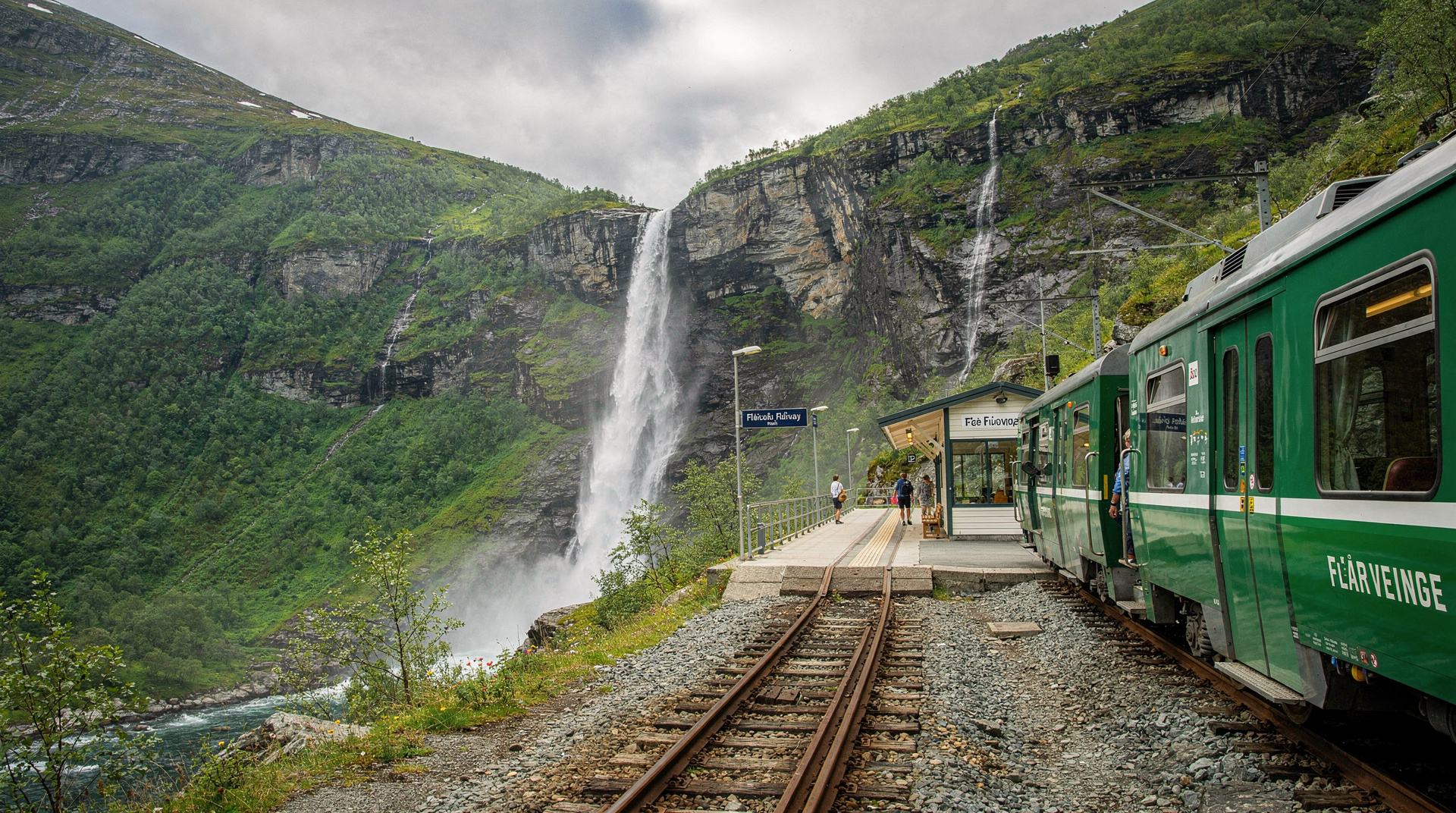
Nærøyfjord and Flåm return from Bergen is the classic route: Bergen–Voss–Myrdal by train, the Flåmsbana down to Flåm, a cruise on the Nærøyfjord to Gudvangen, and a bus back via Voss to Bergen. This is the Norway in a Nutshell loop in reverse. It is long (10–11 hours of travel with stops), but it is achievable as a single very full day. For logistics, see the Norway in a Nutshell guide and the dedicated Flåm Railway guide.
Hardangerfjord requires either a guided tour or a rental car. The public transport connections from Bergen to Hardanger are possible but slow — see the Hardangerfjord destination page for realistic options.
Mostraumen — the narrow outer fjord arm just south of Bergen — is accessible by boat in about three hours from the city harbour. This is the most accessible fjord experience from Bergen for visitors with limited time.
Combining Bergen with an Oslo trip: practical logistics
Most visitors arriving from Oslo face a binary choice: overnight train (overnight sleeper exists but is slow and infrequent) or day train. The day train — departing Oslo S around 08:00–09:30 — arrives in Bergen by mid-afternoon, giving you the rest of the day in the city. Book with Vy (vy.no) as early as possible; cheap tickets (NOK 199–399 / USD 21–43) sell out weeks in advance, especially on weekends and in summer. Full flexible fares are NOK 800–1 100 (USD 86–118).
A 2-night stay in Bergen is the sweet spot: enough to explore Bryggen properly, do the Fløibanen, eat at the fish market, and fit in at least one fjord day trip. Three nights is ideal if you want to combine Nærøyfjord and Hardangerfjord.
For those doing the classic Oslo–Nutshell–Bergen 2-day itinerary, the most efficient structure is: Day 1 Oslo → Myrdal → Flåm → Gudvangen → Voss → Bergen (full Nutshell day), Day 2 explore Bergen, evening train or flight back to Oslo. This is demanding — you spend most of Day 1 in transit — but it covers all the major highlights.
The return trip from Bergen to Oslo is most convenient by flight (Norwegian and SAS fly the 50-minute route from Bergen Flesland, with fares often matching or undercutting the train when booked early), though the flight obviously sacrifices the scenery.
Where to stay in Bergen
Bergen’s accommodation market is tight and expensive in summer — book several months ahead for July and August.
Near Bryggen/Sentrum: Clarion Hotel Admiral on C. Sundts gate has a harbour-view location and rates from NOK 1 400–2 200/night (USD 150–237). More budget-friendly: Bergen Budget Hotel on Nygårdsgaten, with basic rooms from NOK 750–950 (USD 81–102) including breakfast.
Near the train station: Thon Hotel Rosenkrantz is a reliable mid-range choice (NOK 1 100–1 800 / USD 118–194) two minutes’ walk from Bergen station, useful if you’re arriving late from Oslo or leaving early.
Hostels: Montana Youth Hostel is well-run and set in the hills above the city, with dorm beds from NOK 350–480 (USD 38–52). It requires a bus ride to the centre.
The Oslo accommodation guide covers the full planning picture for visitors splitting a trip between the two cities.
Getting around Bergen
Bergen is small enough to walk almost everywhere in the centre. The Bybanen light rail connects the airport (Bergen Flesland) to the city centre in about 45 minutes (NOK 42 / USD 4.50). The same tram system extends south to Rådal, but for sightseeing purposes you’ll mostly be on foot.
For day trips, the train station (Bergen stasjon) is the hub for rail to Voss and Myrdal, and the harbour at Strandkaien is the departure point for most fjord cruises and boat tours.
Frequently asked questions about Bergen from Oslo
How long does the train from Oslo to Bergen take?
The Bergen Railway (Bergensbanen) takes approximately 6 hours 30 minutes to 7 hours depending on the service. There are typically three to five direct departures per day from Oslo S. Book through Vy (vy.no) for the best prices — cheap seats sell out fast in peak season.
Is Bergen worth visiting for just one day?
A full day in Bergen (arriving mid-morning, leaving late evening) is technically possible and better than not going. But one day does not allow for a fjord day trip, and you will feel rushed. Two nights is strongly preferred if you want to combine Bryggen, Fløibanen, and at least one fjord excursion.
What is the Norway in a Nutshell route?
Norway in a Nutshell is a self-guided scenic loop combining the Bergen Railway, the Flåmsbana mountain railway, a cruise on the Nærøyfjord or Aurlandsfjord, and a bus connection back to the main line. It can be done as a round trip from Oslo, a round trip from Bergen, or one-way between the two cities. See the full Norway in a Nutshell guide for all booking options.
How rainy is Bergen?
Very. Bergen is one of the wettest cities in Europe, with around 240 days of measurable rainfall per year. Even in July — its driest month — Bergen receives roughly 140 mm of rain. Pack a waterproof jacket and keep expectations flexible. That said, rain in Bergen is usually light and fast-moving; many days are simply overcast rather than continuously wet.
Can I combine Bergen with the Nærøyfjord on one trip?
Yes — this is the standard Norway in a Nutshell experience. From Bergen, you take a train to Myrdal, the Flåmsbana down to Flåm, a boat cruise through the Nærøyfjord, and a bus back to Voss and Bergen. From Oslo, you can do the same route one-way, ending in Bergen. See the Nærøyfjord page for details on the cruise itself.
Is Bergen expensive compared to Oslo?
Bergen is slightly less expensive than Oslo for accommodation and food, but still firmly in the “expensive European city” bracket. The fish market and restaurants around Bryggen are tourist-priced. You’ll spend around NOK 900–1 600 per day (USD 97–172) on food, activities, and local transport at a mid-range level, excluding accommodation.
Do I need a car to explore Bergen and the fjords?
No — Bergen and its main fjord day trips are accessible by train, bus, and boat without a car. The Norway in a Nutshell route is entirely public transport. A car opens up more flexibility for Hardangerfjord in particular, where public connections are slow. But for a first visit, public transport is sufficient and considerably less stressful given the narrow mountain roads.
Top experiences
Bookable activities with verified prices and instant confirmation on GetYourGuide.
From Bergen: the original fjord cruise to Mostraumen
- Mostraumen
- Waterfalls
Bergen: city sightseeing hop-on hop-off bus tour
- Hop-on hop-off
- Audio guide
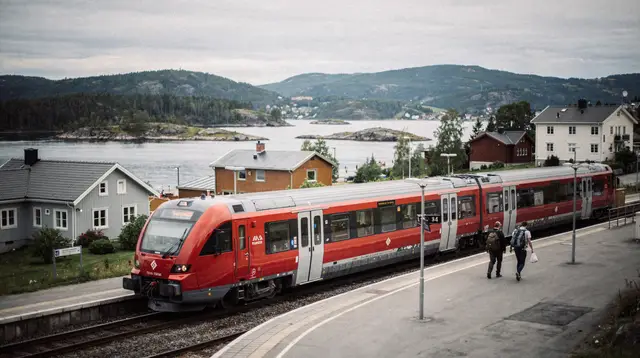
Bergen: sightseeing walking tour with guide
- Bryggen
- Local guide
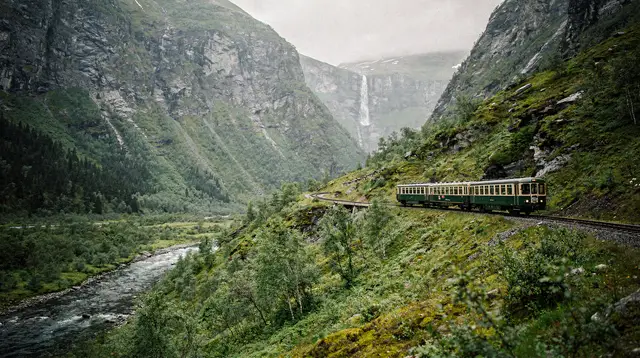
Bergen to Oslo: Nærøyfjord cruise and Flåm Railway
- Nærøyfjord
- Flåm Railway
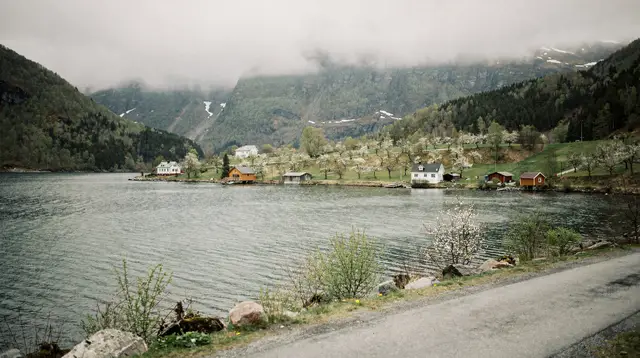
Bergen: Hardangerfjord, Voss gondola and great waterfalls
- Hardangerfjord
- Voss gondola