Bygdøy — Oslo's museum peninsula
Bygdøy holds Oslo's best outdoor museums: Fram, Kon-Tiki, Norsk Folkemuseum. Viking Ship Museum closed until ~2027 — here's the alternative.
Oslo: skip-the-line Fram Museum private tour with tickets
Duration: 2 hours
- Skip the line
- Private guide
Quick facts
- Best time to visit
- May to September (some museums have reduced winter hours)
- Days needed
- Half a day to one full day
- Getting there
- Bus 30 from Nationaltheatret, or summer ferry from Aker Brygge
- Budget per day
- NOK 400–900 (USD 43–97) museum entry; ferry extra
The peninsula that holds Oslo’s most extraordinary stories
Bygdøy is a forested peninsula jutting into the Oslofjord just three kilometres west of the city centre. Royal summer houses, embassies, and a long public beach sit alongside five museums that between them tell some of the most remarkable stories in Norwegian history: polar expeditions to the ends of the earth, voyages across the Pacific on a balsa raft, the centuries-deep roots of Norwegian rural culture, and the lives of Norwegian Jews deported during the Second World War.
Spending a half-day or full day here is, for most visitors, one of the genuine highlights of an Oslo trip — and it is one of the things that separates Oslo from many other European capitals, where museum clusters tend toward fine art rather than this kind of muscular, explorer-driven narrative.
One important update before you plan your visit: the Viking Ship Museum (Vikingskipshuset) is closed for a major renovation and will not reopen until approximately 2027. It is not temporarily closed — it is undergoing a full rebuild. If seeing original Viking ships is a priority, read on for the best alternatives in Oslo while you wait.
Getting to Bygdøy
Bus 30 runs from Nationaltheatret (T-bane station) to the main Bygdøy bus stops in about 8 to 10 minutes, year-round. It stops near both the Norsk Folkemuseum/Viking Ship Museum area and the Fram and Kon-Tiki Museum cluster on the eastern tip of the peninsula. A Ruter single-journey ticket (NOK 42 / USD 4.50 via the app) covers the journey.
Summer ferry (Bygdøyfergen): from late April through September, Ruter ferry route 91B operates from Aker Brygge to two Bygdøy piers, roughly every 15 to 20 minutes. The ferry ride takes about 10 minutes and costs the same as a single Ruter journey. Arriving by water gives you the most scenic approach — the view of the Bygdøy shoreline from the fjord, with the green forest canopy above the white museum buildings, is excellent.
The Fram Museum
The Fram Museum is built around one ship: the Fram, the most ice-hardened wooden vessel ever built, which made three polar expeditions between 1893 and 1912. It carried Fridtjof Nansen’s Arctic drift (1893–96), Otto Sverdrup’s Arctic archipelago exploration (1898–1902), and Roald Amundsen’s Antarctic expedition that reached the South Pole in December 1911.
The museum houses the ship in an enormous A-framed structure, and you can board the Fram and walk through its cramped interior — the mess, the cabins, the engine room — which communicates more viscerally than any exhibit board the sheer physical courage required to spend winters frozen into polar pack ice. The multimedia exhibition surrounding the ship covers all three expeditions in depth.
Entry is NOK 180 (USD 19) for adults, NOK 80 (USD 9) for children aged 4 to 15. Allow 90 minutes minimum. The museum also holds the Gjøa, the first vessel to navigate the Northwest Passage (Amundsen again, 1903–06). This is one of Oslo’s best museums without qualification.
For guided tours with deeper narrative, a private tour adds significant value at the Fram — the stories around the expeditions’ personal dynamics and the engineering challenges are endlessly rich.
The Kon-Tiki Museum
Adjacent to the Fram Museum, the Kon-Tiki Museum is built around Thor Heyerdahl’s 1947 raft voyage across the Pacific Ocean from Peru to Polynesia. Heyerdahl believed Polynesia was originally settled from South America and set out to prove the journey was physically possible using only pre-Columbian materials and navigation.
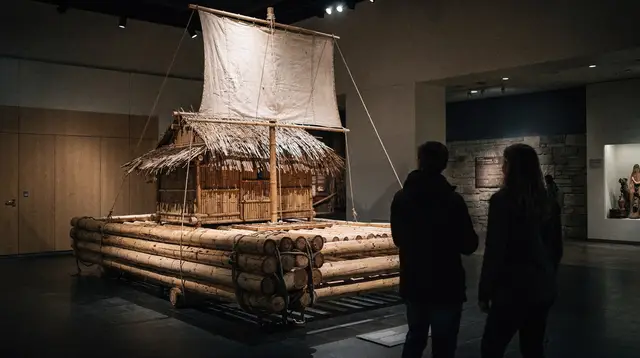
The raft itself — the Kon-Tiki — sits in the museum alongside the Ra II, the papyrus boat in which Heyerdahl crossed the Atlantic in 1970. The museum also has a small shark aquarium and short documentary films. It is more compact than the Fram Museum (allow 60 to 90 minutes) but excellent for children and for anyone with an interest in the intellectual and physical audacity of mid-twentieth-century exploration.
Entry is NOK 160 (USD 17) for adults, NOK 80 (USD 9) for children. Combined tickets with the Fram Museum are available and save around NOK 40. The Kon-Tiki Museum guide covers what to look for inside.
The Norsk Folkemuseum
The Norsk Folkemuseum is an open-air museum spreading across 14 hectares of the Bygdøy peninsula. More than 160 historic buildings have been relocated here from across Norway — farmhouses, urban dwellings, a stave church from around 1200, and an entire reconstructed nineteenth-century Oslo street.
The scale and quality are genuinely impressive. Costumed interpreters demonstrate traditional crafts and farming practices throughout summer. The stave church, Gol stave kirke, is among the most important medieval wooden structures in Norway.
The indoor exhibition covering Norwegian Jewish history — including deportation under the occupation — is one of the most significant Holocaust memorial exhibitions in Scandinavia and should not be missed.
Entry is NOK 220 (USD 24) for adults; the Oslo Pass covers it. Summer opening (mid-May to mid-August) from 10 am to 6 pm. Winter hours are reduced and many outdoor buildings are not accessible — the indoor exhibitions remain open. Allow two to three hours for a meaningful visit in summer; the full grounds could absorb an entire day.
The Viking Ship Museum: honestly closed until ~2027
The Vikingskipshuset has been closed since 2020 for a comprehensive renovation project that will nearly double its exhibition space and create the “Museum of the Viking Age.” The opening date has slipped multiple times; the most current estimate is approximately 2027, but this should be verified before visiting. Do not book a Bygdøy trip specifically to see the Viking ships — they are genuinely inaccessible.
The three ships it houses — the Oseberg, Gokstad, and Tune ships — are the world’s best-preserved ninth-century Viking vessels, and they will be well worth visiting once the new museum opens. Until then:
Viking Planet (Rådhusgata 23, central Oslo): an interactive Viking history experience that opened in 2021 specifically to fill the gap left by the Viking Ship Museum’s closure. It uses digital reconstructions, immersive rooms, and replica artefacts to tell the Viking Age story. More engaging for families and casual visitors than a traditional museum; more theatrical than academic. Entry around NOK 250 (USD 27). See the Viking Planet guide.
Historical Museum (Historisk Museum), Frederiks gate 2: the main collections of the University of Oslo include excellent Viking Age artefacts — rune stones, jewellery, weapons, and ship finds not held at Bygdøy. This is where serious Viking history enthusiasts should go during the closure. Free on some days; otherwise around NOK 100 (USD 11). See the Historical Museum guide.
For full context, our Viking Ship Museum status guide covers the renovation timeline and the best alternatives in detail.
The Norwegian Maritime Museum
The Norsk Maritimt Museum sits on the Bygdøy waterfront between the ferry pier and the Fram Museum. Its collection covers Norwegian maritime history from the Stone Age to the present — traditional wooden boats, navigational instruments, ocean-going vessels, and a permanent exhibition on the offshore petroleum industry.
It is a somewhat overlooked museum, which means it is rarely crowded. The rooftop terrace has excellent fjord views. Entry is NOK 100 (USD 11) for adults; children are free. Worth an hour for those with maritime or industrial-history interests.
Huk beach and Bygdøy outdoor life
In summer, Bygdøy is not only a museum destination — it is also where many Osloians come to swim. Huk is the most popular beach on the peninsula, on the western tip. It has separated sections — one clothing-optional — and fills with families in July and August. The swimming is excellent: the fjord water here is calmer than the open sea and reaches 17 to 19°C in peak summer.
Paradisbukta (Paradise Bay) is a quieter cove on the south side of the peninsula, reached by walking from the bus stop through the Bygdøy forest. No facilities, more secluded, equally good swimming. See Oslo swimming spots for the full guide.
Planning a Bygdøy day
Half-day option: Fram Museum plus Kon-Tiki Museum (adjacent, same ticket area, NOK 270 combined for adults). Arrive by the 10 am opening. Done by 1:30 pm; catch the ferry back to Aker Brygge.
Full day: Add the Norsk Folkemuseum (allow two to three hours). Bring lunch or buy from the museum café. Finish at Huk beach in late afternoon if the weather is good.
With children: the Kon-Tiki shark aquarium and the Fram ship boarding are both excellent. Viking Planet (in the city centre) is better for very young children than the more densely texted Folkemuseum.
Budget note: buying an Oslo Pass for a Bygdøy-heavy day often makes financial sense — the Fram, Kon-Tiki, and Folkemuseum entry fees combined reach NOK 560 (USD 60) for an adult, and the pass covers public transport on top.
Frequently asked questions about Bygdøy
Is the Viking Ship Museum open?
No. The Viking Ship Museum (Vikingskipshuset) has been closed since 2020 and is undergoing a major rebuild. The estimated reopening is approximately 2027, though this date has shifted previously. Check the museum’s official website for the latest update before visiting. Our Viking Ship Museum guide has the current status.
How do you get to Bygdøy without a car?
Bus 30 from Nationaltheatret T-bane station runs year-round and takes about 10 minutes. In summer (late April through September), the Bygdøyfergen ferry from Aker Brygge is a more enjoyable option and costs no more than a regular Ruter ticket. Both are included in the Oslo Pass.
How many museums can you do in one Bygdøy day?
Two museums is comfortable. Three (Fram, Kon-Tiki, and Folkemuseum) is achievable with an early start and a quick lunch. Trying to do all five open museums in one day is exhausting and most visitors find the quality of each visit suffers after the third museum. Prioritise based on your interests.
Which is better: the Fram Museum or the Kon-Tiki Museum?
They are adjacent and complement each other well, so most visitors do both. The Fram Museum tends to get higher marks — the sheer scale of the ship and the depth of the polar-expedition narrative are difficult to match. The Kon-Tiki Museum is smaller but more visually dramatic, and the story of the Pacific voyage has a slightly more accessible, adventure-story quality. Families with children often prefer Kon-Tiki; adults interested in polar history generally rate Fram higher.
Is the Norsk Folkemuseum worth it in winter?
In winter, many of the outdoor buildings are closed (unfurnished and unheated) and the grounds lose much of their atmosphere. The indoor exhibitions, including the Jewish history section and the urban history collections, remain open and are genuinely worth visiting. But for the full experience — the costumed staff, the open farmhouses, the atmosphere of the stave church in its proper outdoor setting — spring through early autumn is strongly preferable.
Can you swim at Bygdøy?
Yes. Huk beach on the western tip of the peninsula is one of Oslo’s most popular urban beaches in summer, with calm fjord water reaching 17 to 19°C in July and August. Paradisbukta (a short forest walk away) is more secluded. Both are accessible by Bus 30.
Bygdøy through the seasons
The Bygdøy experience varies considerably by season, and understanding these differences helps you plan the right visit.
Summer (late May–August): the optimal time. The summer ferry from Aker Brygge operates (roughly every 20 minutes), all museums are on extended hours (typically 9 or 10 am to 6 pm), the outdoor Folkemuseum is fully staffed with costumed interpreters, and Huk beach is warm enough for swimming. The peninsula takes on a genuinely pleasurable character — half-outdoor, half-cultural — that makes it feel different from the more urban parts of Oslo.
Early autumn (September): still very good. Crowds thin considerably after mid-August. The Folkemuseum’s outdoor areas remain open; the indoor exhibitions are at their best without summer queues. The summer ferry begins to reduce its frequency in September and stops by mid-October. Worth checking current schedule before planning.
Winter (October–April): the museum experience is still worthwhile, but reduced. The Fram and Kon-Tiki Museums maintain their normal opening hours year-round. The Folkemuseum’s outdoor buildings are largely inaccessible (unfurnished, unheated), but the indoor exhibitions — including the Jewish history section — remain open and are among the most significant in Oslo. Bus 30 runs year-round. Swimming is not an option; the beach is deserted.
Practical museum-visiting advice
Crowds: July is the peak month and the Fram and Kon-Tiki Museums can be busy between 11 am and 2 pm. Arrive at opening time (9 or 10 am) or after 3 pm for a noticeably quieter experience. The Folkemuseum is better at absorbing large numbers because of its outdoor spread.
Accessibility: the Fram Museum has an elevator inside the ship structure, but the ship itself involves a number of steep stairs and narrow passages — manageable for most visitors but challenging for wheelchairs. The Folkemuseum’s grounds are partially accessible on main paths; the historic buildings have uneven floors and doorsteps. The Kon-Tiki Museum is largely flat and accessible.
Café and food: the Fram Museum has a small café. The Folkemuseum has a more substantial café/restaurant inside the main building that serves traditional Norwegian lunch dishes (open sandwiches, fish soup). The Kon-Tiki Museum has a café open in summer. The nearest alternatives are back along the Bus 30 route toward the city centre.
Photography: the Fram ship interior is well-lit and excellent for photography. The Folkemuseum’s outdoor streets in good light — early morning or late afternoon — are particularly photogenic. The stave church exterior is the most frequently reproduced Bygdøy image for a reason.
Bygdøy’s residential character
Most of Bygdøy beyond the museum cluster is a residential peninsula — quiet, heavily forested, with large mid-century villas, the Norwegian Royal Family’s Oscarshall palace (occasionally open for summer guided tours), and walking paths along the shoreline. The Norwegian Maritime Museum sits here too. Bus 30 continues past the main museums to a loop that covers the quieter parts of the peninsula.
If you have time after the museums and a swim at Huk, the 30-minute loop walk along the western shoreline of the peninsula (south from Huk toward the ferry pier on the eastern side) passes through beech and oak forest above the fjord and gives you the best sense of why this combination of nature and culture makes Bygdøy so valuable to Oslo.
Connecting Bygdøy to wider Oslo sightseeing
Bygdøy sits naturally in the middle of a larger Oslo itinerary. The most natural sequences:
- Aker Brygge morning, Bygdøy afternoon: take the summer ferry across, spend the afternoon at the Fram and Kon-Tiki Museums, return by Bus 30. This leaves the evening free for the waterfront.
- Bygdøy full day: start at the Folkemuseum when it opens at 10 am, spend two to three hours there, cross the peninsula on foot to the Fram and Kon-Tiki cluster for a late afternoon visit, finish at Huk beach (summer).
- Museum-heavy day: Bygdøy in the morning, Munch Museum or National Museum in the afternoon. The Oslo Pass covers the entry fees at both locations.
See the 3-day Oslo itinerary for how Bygdøy fits alongside the city’s other major sites.
Top experiences
Bookable activities with verified prices and instant confirmation on GetYourGuide.
Oslo: Kon-Tiki Museum entry ticket
- Instant confirmation
- Mobile ticket

Oslo: Norsk Folkemuseum private tour and skip-the-line tickets
- Skip the line
- Private guide
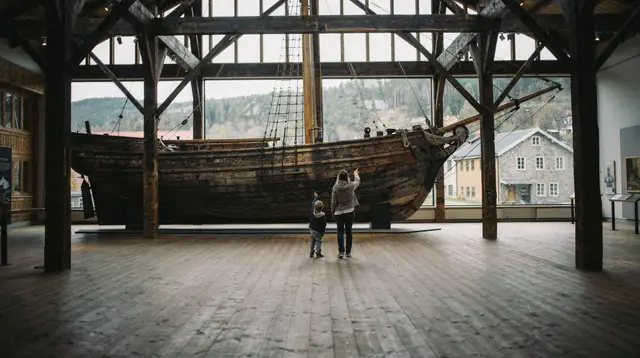
Oslo: The Viking Planet entry ticket with VR movie
- VR experience
- Family friendly
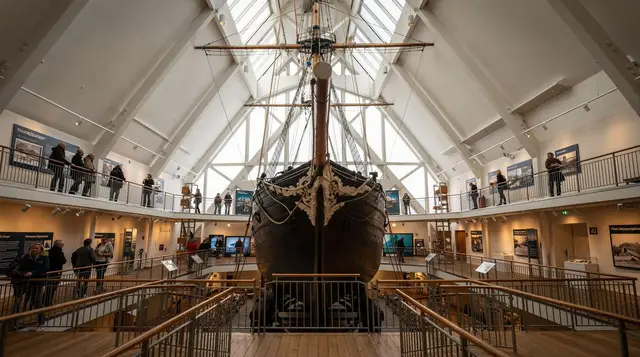
Oslo: Norwegian explorers and culture 3-museum tour
- Multiple museums
- Guided