Aker Brygge & Tjuvholmen — Oslo's waterfront
Oslo's stylish western waterfront: Astrup Fearnley museum, floating saunas, fjord cruises, and the best harbour restaurants.
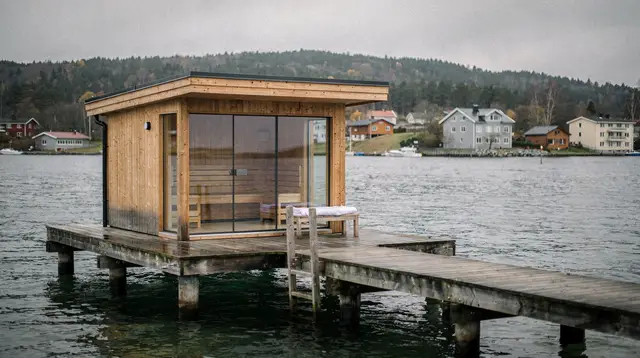
Oslo: self-service public floating sauna ticket, Tjuvholmen
Duration: 1 hour
- Floating sauna
- Fjord swim
Quick facts
- Best time to visit
- May to September for outdoor life; year-round for museums and saunas
- Getting there
- 10-minute walk from Nationaltheatret T-bane station or Oslo S
- Days needed
- Half to one full day
- Budget per day
- NOK 500–1 500 (USD 54–162) depending on dining choices
From shipyard to the city’s social hub
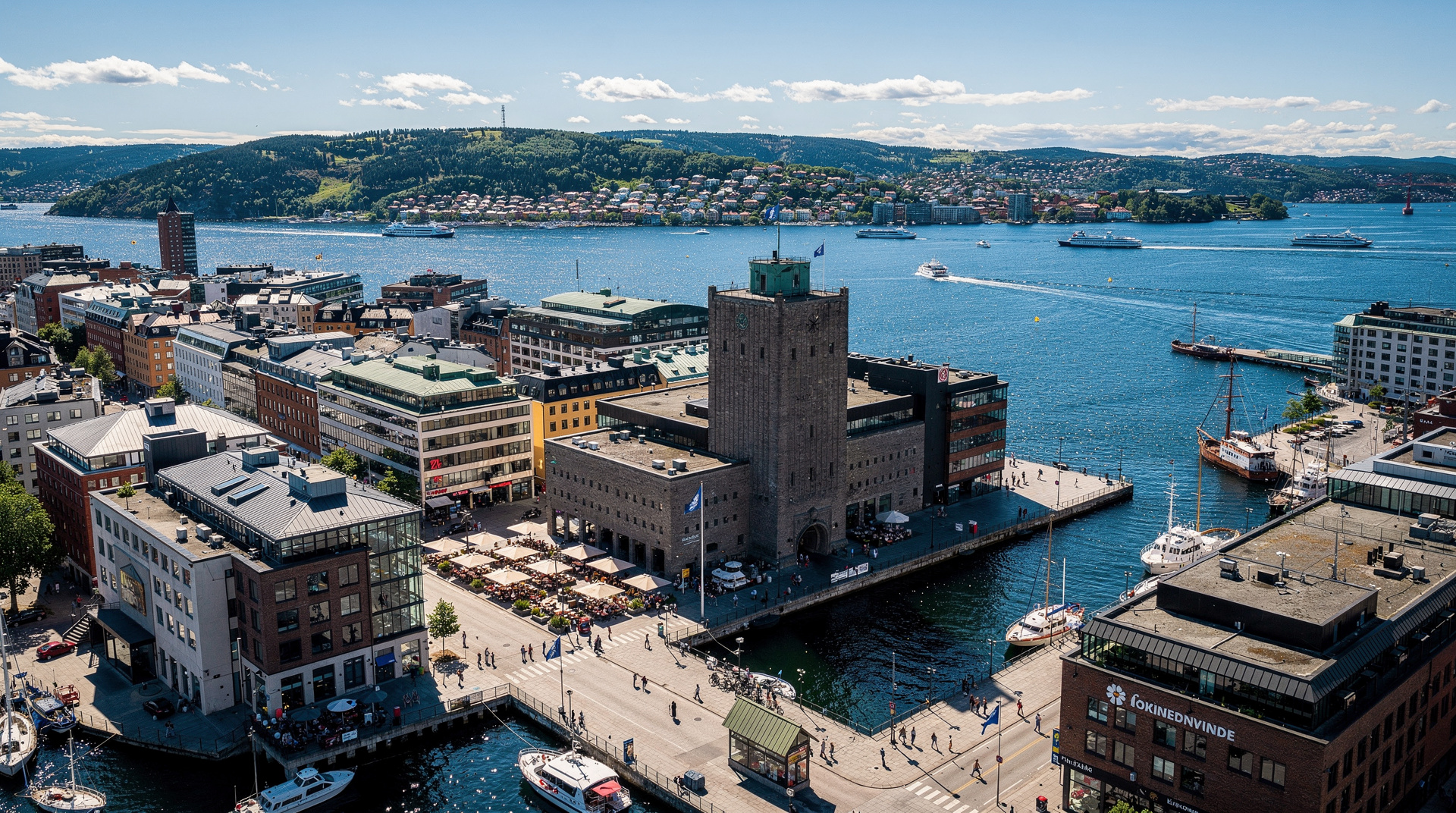
Forty years ago, the stretch of waterfront now known as Aker Brygge was a functioning shipyard — industrial, inaccessible, and certainly not a place where you would linger over a glass of wine. The Akers Mekaniske Verksteder shipyard closed in 1982, and the redevelopment that followed created one of Scandinavia’s most successful waterfronts: a mix of converted wharf buildings and purpose-built architecture that manages to feel lively rather than sanitised.
Aker Brygge flows west into Tjuvholmen (“Thieves’ Island”), a peninsula completed around 2010 that takes the development upmarket: more contemporary architecture, quieter restaurants, the Astrup Fearnley Museum of Modern Art, and a small beach that fills with Osloians on summer afternoons.
Together, these two waterfront neighbourhoods offer a concentrated range of experiences — world-class contemporary art, Oslo’s best-known floating saunas, the departure points for most Oslofjord cruises and the summer ferry to Bygdøy, and a wide spectrum of places to eat and drink. The honesty note: the restaurants with the most visible outdoor terraces on Aker Brygge tend to be the most expensive and the least distinctive. The places worth your money are slightly less obvious.
The Astrup Fearnley Museum of Modern Art
The Astrup Fearnley Museet is the reason many art-focused visitors make a specific trip to Tjuvholmen. The building was designed by Renzo Piano and opened in 2012; two glass-roofed pavilions straddle a canal, and the museum’s private collection is among the most significant holdings of postwar and contemporary international art in Scandinavia.
The collection centres on American art from the 1980s and 1990s — Jeff Koons, Cindy Sherman, Damien Hirst, Matthew Barney — alongside strong Norwegian representation. Temporary exhibitions change every few months and are consistently high quality. Entry costs NOK 180 (USD 19) for adults. The museum is closed on Mondays; Thursday evenings are free (5 pm to 9 pm). Allow 90 minutes to two hours.
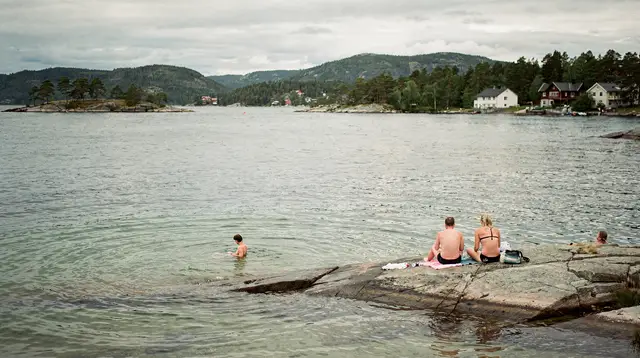
Even if you skip the museum, the Tjuvholmen Sjøbad (the little urban beach beside the building) is worth knowing about. It gets crowded in July but in May, June, and September it is a pleasant spot to sit, watch the fjord traffic, and have a coffee from one of the nearby kiosks.
Oslo’s floating saunas
Oslo’s harbour sauna scene is one of the city’s most talked-about experiences, and for once the reputation is deserved. The concept is straightforward: a wood-fired or electric sauna cabin moored in the fjord, from which you alternate between intense heat and jumps into the harbour water. In practice, it is the social ritual around this — the unhurried conversation, the way strangers quickly become chatty, the extraordinary quality of light on the fjord at 9 pm in June — that makes it memorable.
Tjuvholmen Sjøbad / Aker Brygge saunas: the most central options, clustered near Tjuvholmen. These are operated by different providers; booking in advance is strongly recommended in summer as slots fill early. Mix of public group sessions and private sauna rentals.
Sørenga Sjøbad: slightly east, near the Opera House in Bjørvika. A large outdoor sea-swimming facility with separate sauna cabins. Popular with locals precisely because it is slightly less prominent in tourist guides.
KOK Oslo: a popular operator offering floating sauna experiences with fjord swim combinations. Check their current booking calendar as they operate from multiple locations.
What to know before you go: bring a towel (some operators provide them for a fee), wear a swimsuit (nudity norms depend on the facility — most mixed-gender saunas in Oslo are not nude by default, unlike in some Finnish traditions), and arrive 10 minutes early to get oriented. Water temperatures range from about 4°C in winter to 18°C in late July. The cold plunge is more pleasant than you expect.
Our full guide to Oslo’s floating saunas covers every option with honest comparisons.
Oslofjord cruises from Aker Brygge
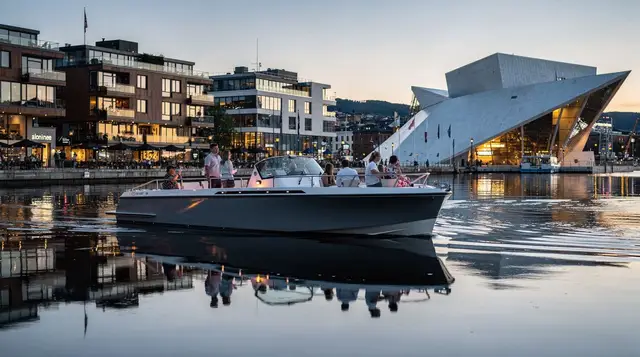
Most Oslofjord cruise operators depart from Aker Brygge or the adjacent piers. This is the convenient hub for getting out onto the water, whether for a 90-minute electric boat tour or a three-hour evening shrimp buffet cruise.
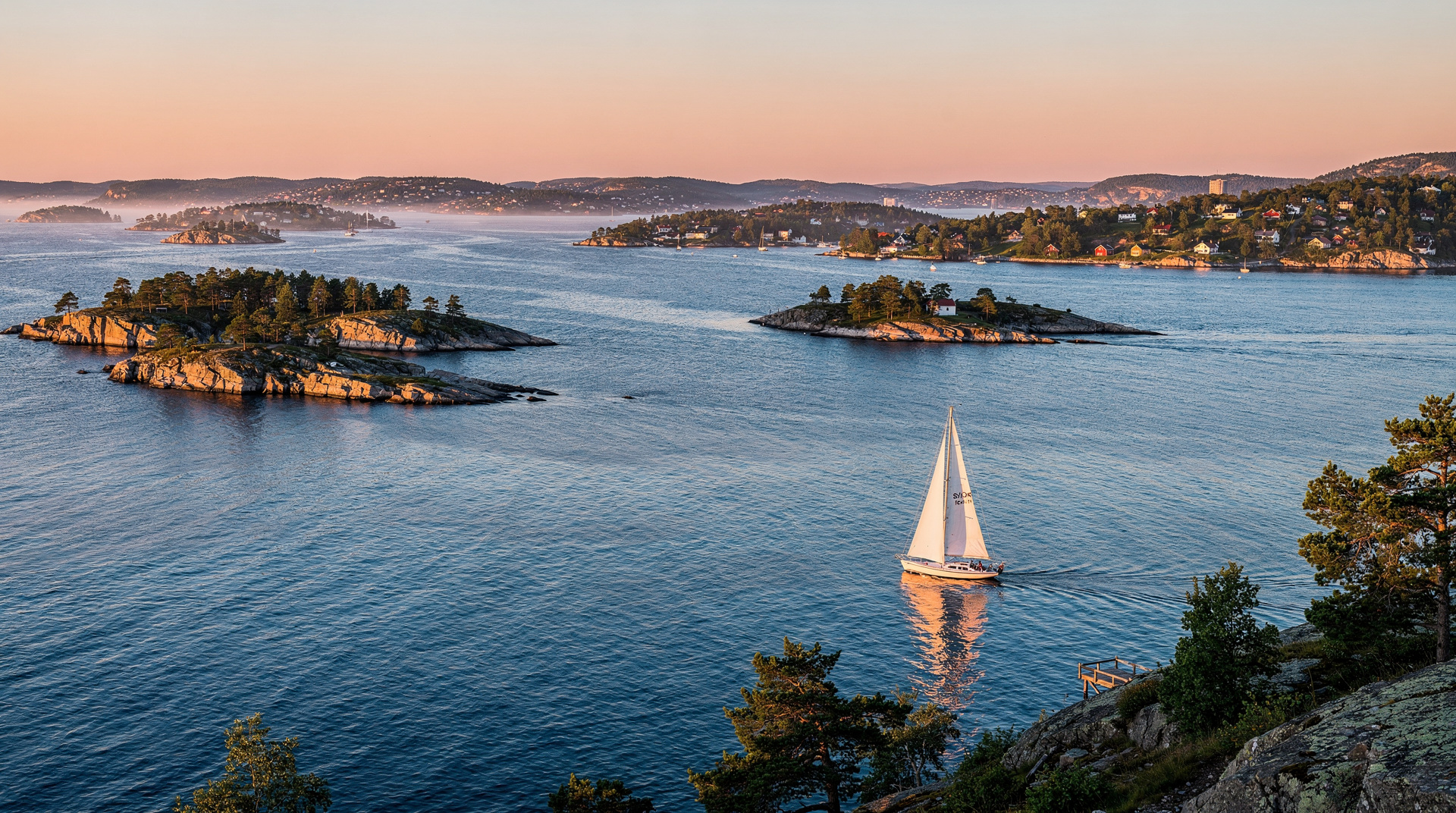
The silent electric boat cruise (around 90 minutes) is the recommendation for first-time visitors: nearly noiseless, low-wake, and narrated in English, it passes the Oslofjord’s island fortresses, recreational beaches, and distinctive geological formations. Departure slots at various times throughout the day in summer.
The Oslofjord shrimp buffet evening cruise is a beloved Oslo ritual: fresh shrimp, bread, butter, and views of the city from the water as the sky shifts colour after 9 pm in summer. Slightly touristy but in an endearing rather than cynical way. Budget around NOK 700 to 950 (USD 75–102) per person depending on the operator.
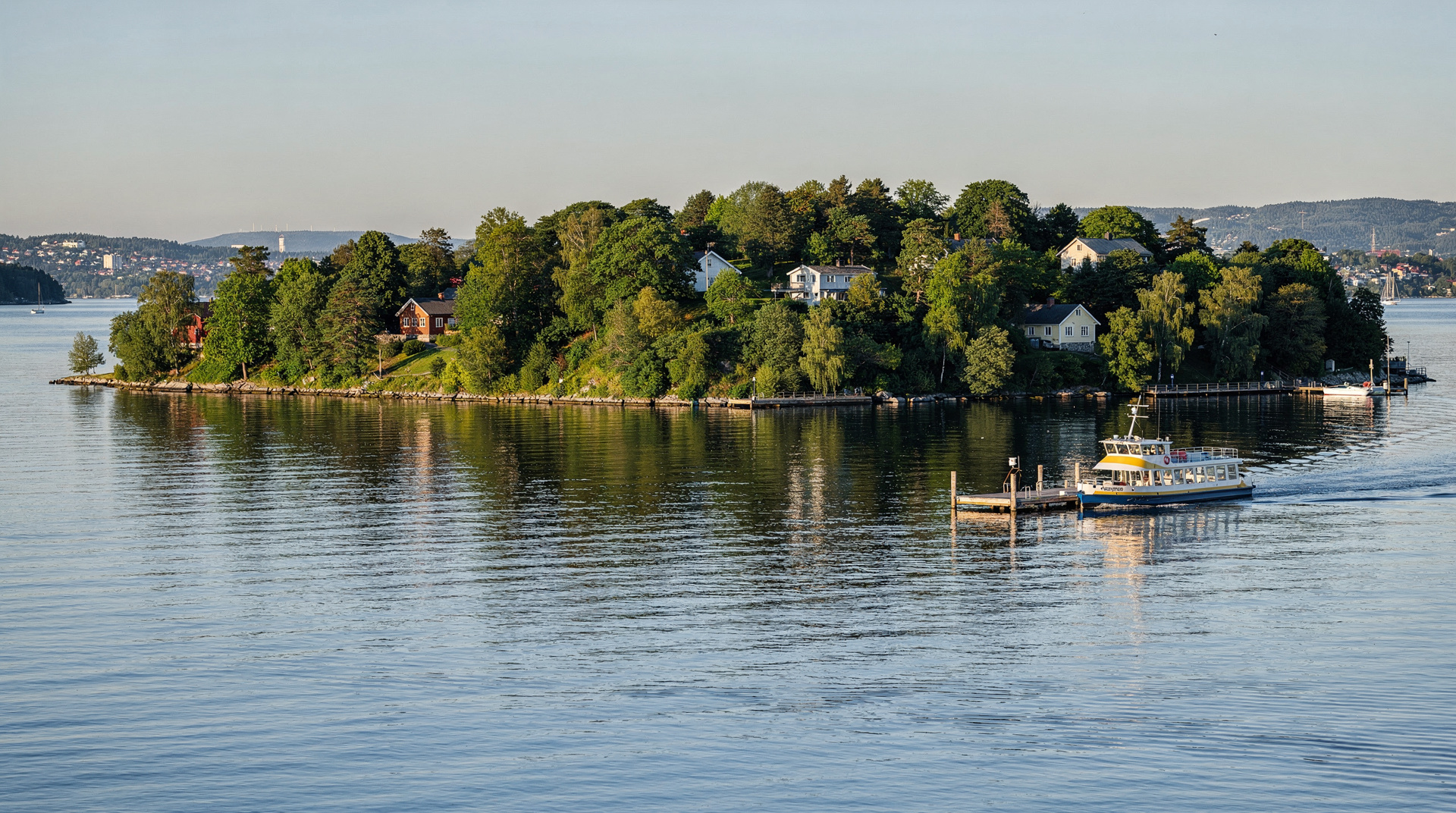
For those who want something more independent, the public Ruter ferry route 91 (included in your Ruter ticket or Oslo Pass) runs from Aker Brygge to Bygdøy and to the fjord islands throughout the summer season. It is a legitimate way to get a fjord perspective for the price of a bus ticket.
See best Oslofjord cruises and which Oslofjord cruise to pick for detailed comparisons.
The National Museum
The National Museum (Nasjonalmuseet), which opened its purpose-built waterfront building in 2022, sits right on the Aker Brygge waterfront. It is the largest art museum in the Nordic countries — 54 000 m2 of gallery space housing the state collections of Norwegian art, international art, design, architecture, and applied arts.
The most famous single object is Edvard Munch’s “The Scream” (1893 version). The museum also holds the largest collection of Norwegian Romantic landscape paintings — Johan Christian Dahl, Thomas Fearnley — which convey something real about the Norwegian relationship with dramatic nature that photographs cannot quite capture. Entry is NOK 200 (USD 22) for adults; free on Thursday evenings. Allow three to four hours for a meaningful visit. More detail at our National Museum guide.
Eating and drinking: the honest version
Aker Brygge’s restaurant row is where Oslo’s restaurant pricing is at its most aggressive. The high-visibility outdoor terraces can charge NOK 280 to 380 (USD 30–41) for a main course that a neighbourhood restaurant would price at NOK 200 to 250. That said, some of the higher-end establishments deliver quality that justifies the cost.
Lofoten Fiskerestaurant: Oslo’s most respected fish restaurant, on Stranden in Aker Brygge. Not cheap — count on NOK 650 to 950 (USD 70–102) per person for dinner with wine — but the quality of the fish and the harbour view are both exceptional. Worth it for a special evening.
Onda by Bjørn Svensson: more relaxed Mediterranean-inflected cooking, good lunchtime pasta dishes at NOK 200 to 280 (USD 22–30).
Tjuvholmen Sjøbad kiosk: ice cream, coffee, and simple snacks at normal city prices. One of the better-value spots in the waterfront area.
Vulkanbyen / Mathallen (20-minute walk or short tram ride east, in Grünerløkka): if budget is a concern, the food hall at Mathallen has better variety and better prices than anything along the Aker Brygge tourist strip. See the Mathallen guide.
Getting there and away
From Oslo S (central station): walk west along the harbour for about 15 to 18 minutes. The route along the waterfront is pleasant and well-signposted.
From Nationaltheatret T-bane station: exit and walk south toward the harbour — around 8 to 10 minutes.
Tram 13 runs from the centre and stops close to Aker Brygge (Aker Brygge stop). The Ruter app shows real-time tram positions.
Cycling: Oslo’s Bysykkel city bikes have docks throughout Aker Brygge and Tjuvholmen — a good option if you are continuing to Bygdøy (the cycle path along the coast is pleasant). See getting around Oslo.
Combining Aker Brygge with Bygdøy
The summer ferry from Aker Brygge to Bygdøy (Ruter route 91B, roughly every 20 minutes in peak season) is the classic half-day combination: a morning at Aker Brygge and the National Museum, the ferry to Bygdøy for the Fram or Kon-Tiki Museum, and back via Bus 30 in the late afternoon. It works well as a stand-alone day from the city centre.
The ferry approach to Bygdøy is also arguably the best way to arrive there — the view of the forested peninsula from the water gives you an immediate sense of why Oslo’s residents regard it as something special.
Frequently asked questions about Aker Brygge and Tjuvholmen
Is the Aker Brygge waterfront free to visit?
Yes — walking along the waterfront, through Tjuvholmen, and along the Tjøme pier costs nothing. The beach at Tjuvholmen Sjøbad is free. You pay only for museum entry (Astrup Fearnley, National Museum), food and drink, paid sauna sessions, and boat tours.
How far is Aker Brygge from Oslo S?
About 1.2 km, or a 15-minute walk along the harbour. It is an easy and pleasant walk with good views of the fjord and Akershus Fortress along the way.
Can you swim at Aker Brygge?
Tjuvholmen Sjøbad is a designated swimming area beside the Astrup Fearnley Museum. The water quality in Oslo harbour has improved significantly over the past two decades and is generally considered safe for swimming from late June through August. The water temperature reaches about 17 to 19°C at peak summer. There are lifeguards at designated areas in high season.
What is the difference between a public and private sauna session?
Public sauna sessions mix groups of visitors in a shared sauna cabin with scheduled time slots (typically 90 minutes to two hours). They are cheaper (around NOK 250–350 / USD 27–38 per person) and good for solo travellers or couples. Private sauna rentals take the full cabin for a group of 4 to 10 people at a higher total cost but more flexibility; popular for groups of friends or family. Our Oslo saunas compared guide covers specific pricing.
Are there any free things to do at Aker Brygge?
Walking the harbourfront, sitting on the Tjuvholmen pier watching the fjord traffic, visiting the National Museum on Thursday evenings (free 5–9 pm), and using the public beach are all free. The Astrup Fearnley Museum also has free Thursday evening access (same 5–9 pm window). If you have children, the outdoor spaces around Tjuvholmen are genuinely good for an hour of unstructured outdoor time.
Aker Brygge through the seasons
The waterfront experience changes significantly across Oslo’s seasons, and it is worth knowing what to expect.
Summer (June–August): this is Aker Brygge at its peak. The outdoor terraces are full by noon. The Tjuvholmen beach has swimmers from mid-June. The harbour is busy with recreational boats, electric ferries, and occasional tall ships. The evening light in June and July is long and golden — the sun dips below the Holmenkollen hills but the sky stays lit until nearly midnight. Fjord cruise bookings fill up, so reserve early. Summer is the single best reason to be here.
Autumn (September–October): the terraces thin out but the museums remain fully active. The harbour light in September is warm and lower than summer, producing excellent conditions for photography. The Oslofjord cruise season extends into September; October sees some departures reduced or suspended depending on the operator.
Winter (November–March): the waterfront is transformed. Most outdoor terraces close, the beach is deserted, and the fjord can occasionally freeze in the inner harbour during hard winters. But the sauna scene is at its most atmospheric — emerging from a 90°C sauna cabin to plunge into a 4°C fjord, with steam rising around you and the city lights reflected in the water, is an experience worth travelling specifically for. The Christmas period brings lights along the promenade and a quieter, more local character to the restaurants that stay open.
Spring (April–May): the city reopens psychologically as daylight hours expand rapidly through April. The first outdoor terrace chairs appear in Aker Brygge sometimes as early as late March, occupied by Osloians who have waited four months for them. By mid-May, the waterfront is fully active again.
Photography at Aker Brygge and Tjuvholmen
The combination of architecture, water reflections, and the city backdrop makes this one of Oslo’s most photogenic districts. A few specific recommendations:
From the Tjuvholmen pier looking east: the view back toward Akershus Fortress and the old city quarter, with the Renzo Piano pavilions of the Astrup Fearnley in the foreground, is excellent at blue hour (the 30 minutes after sunset) in any season.
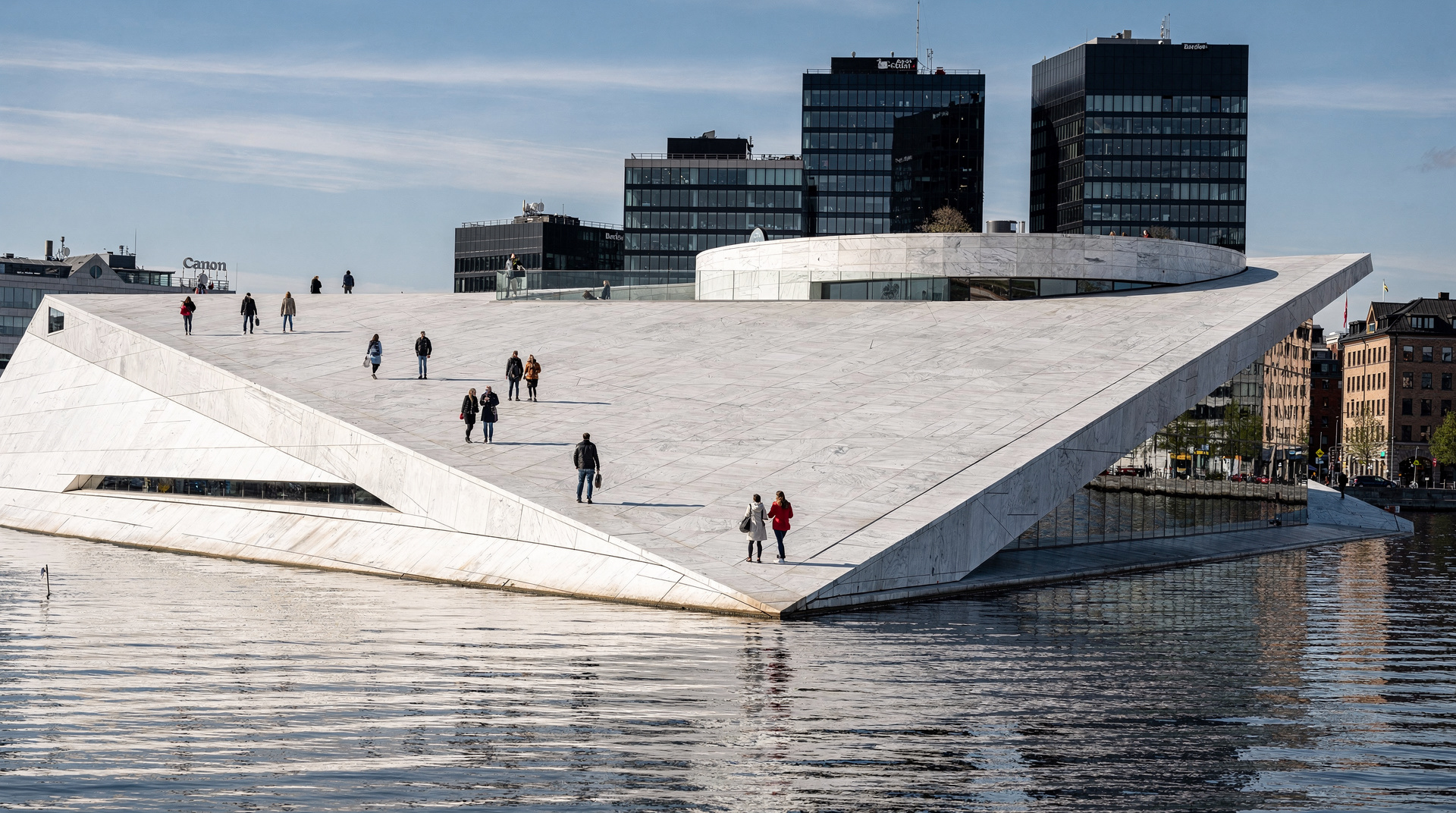
Opera House from the water: if you are on an Oslofjord cruise departing from Aker Brygge, the approach back into harbour at the end of the journey gives a view of the Opera House, the Barcode towers, and the Munch Museum’s leaning profile from the water — one of the better Oslo skyline views.
Tjuvholmen canal at dawn: the narrow canal between the two Astrup Fearnley pavilions, before the morning café crowds arrive, offers a quiet architectural composition with good reflections in calm weather.
The Tjuvholmen sculpture park
Tucked between the Astrup Fearnley Museum and the waterfront at Tjuvholmen, a small outdoor sculpture park extends along the pier. Works by international artists are installed along the walkway — it is modest in scale compared to Vigeland Park, but the combination of sculpture, water, and the Renzo Piano building behind creates a concentrated visual experience. Free, accessible at all times.
Practical notes for visiting
Opening hours: The National Museum is closed Mondays. The Astrup Fearnley Museum is closed Mondays. Most restaurants and cafés along Aker Brygge open daily from 11 am (or earlier for breakfast spots) through late evening.
Public toilets: available in both the National Museum (free access to the foyer) and in the Aker Brygge shopping complex. The harbour promenade itself has limited facilities.
Weather: Oslo’s weather is changeable. Pack a layer even in summer — a sea breeze off the Oslofjord in the evening cools quickly. The indoor museums provide obvious shelter on rainy days.
Oslo Pass: if you are planning to visit the National Museum, a fjord cruise, and using public transport extensively, the Oslo Pass covers all three and quickly pays off on an Aker Brygge-centred day. Use the Oslo Pass calculator to check if it makes sense for your specific day.
For Aker Brygge in the context of a full Oslo itinerary, see the 2-day itinerary and food and design weekend.
Top experiences
Bookable activities with verified prices and instant confirmation on GetYourGuide.