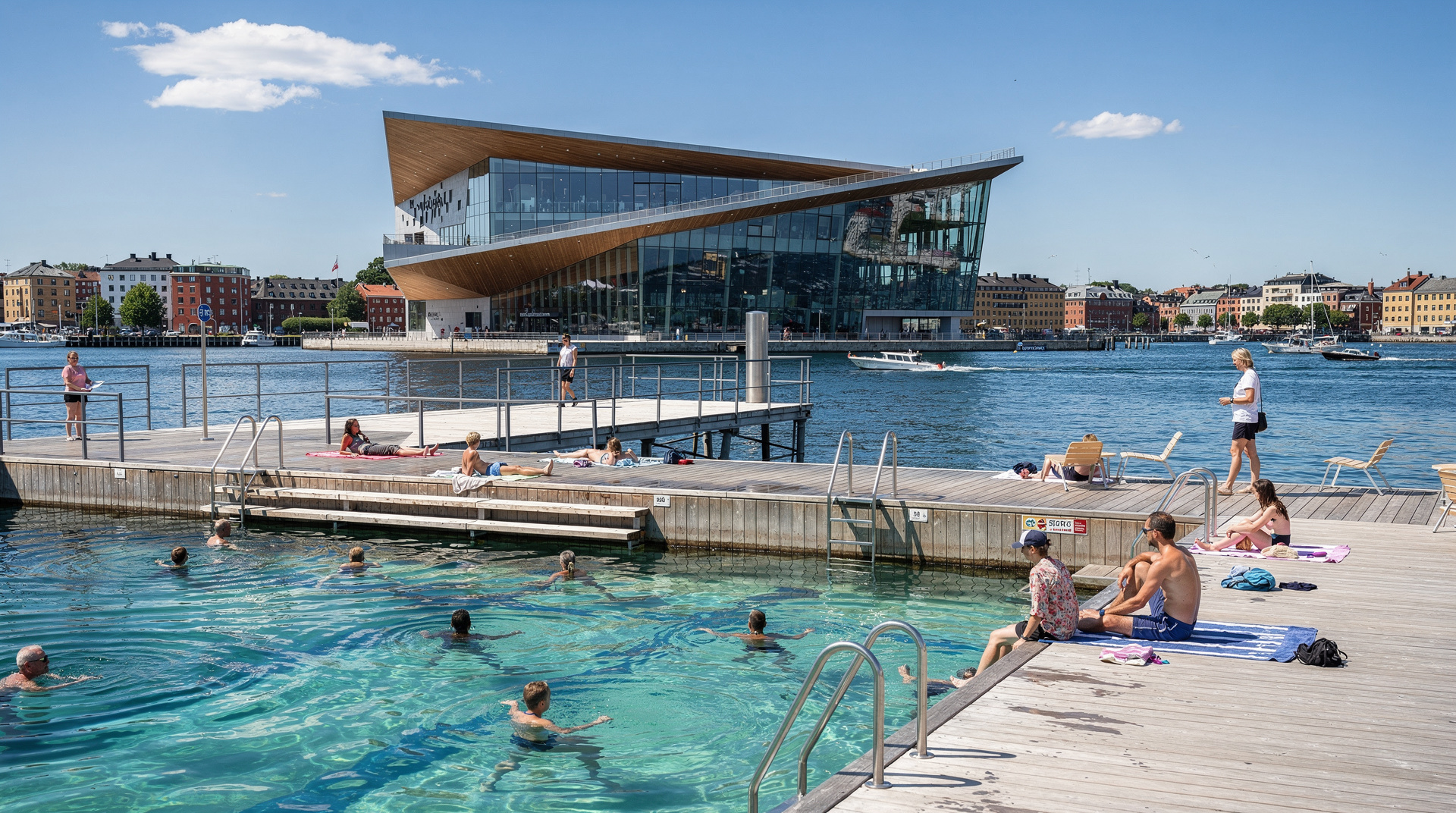
Oslo's floating saunas: the definitive guide
Oslo: self-service public floating sauna ticket, Tjuvholmen
Duration: 1 hour
- Floating sauna
- Fjord swim
Where are Oslo's floating saunas?
Oslo's main floating saunas are moored at Tjuvholmen and Aker Brygge, a short walk from the city centre. The most famous is the KOK Oslo sauna cluster. You can book a public session (from around NOK 250 / $27) or a private pod from NOK 650 / $70 for up to four people. Sessions run year-round, even in winter.
Why Oslo has become Europe’s sauna capital
In a city built around a fjord, it was only a matter of time before someone moored a wooden sauna barrel directly onto the water. That’s exactly what happened when KOK Oslo opened its first floating pods at Tjuvholmen in the early 2010s. Since then, the concept has spread across the Oslo waterfront, spawning a genuine wellness culture that locals and visitors now consider one of the city’s defining experiences.
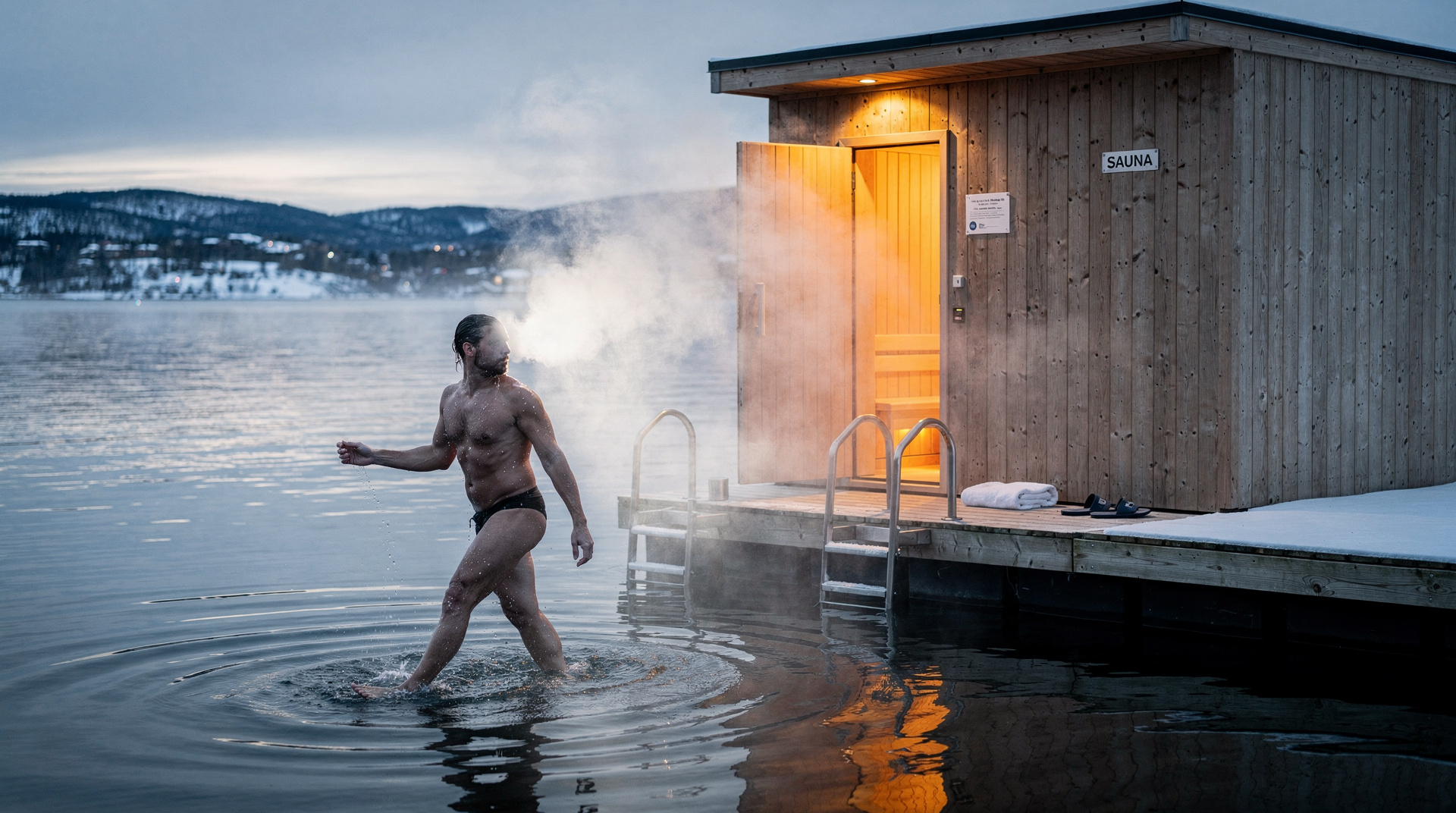
The idea is elegantly simple: you sit in intense dry heat for 10 to 20 minutes, then step onto a floating deck and drop into the Oslofjord. In summer, the water is a refreshing 18–22°C. In winter it can dip below 5°C. Either way, the rush of cold against your heat-flushed skin is — according to both the science and every Osloite you’ll meet — deeply, addictively good for you. Heart rate drops, endorphins surge, and Oslo’s expensive reputation momentarily melts away.
This guide covers every floating sauna in Oslo, how to book them, what they cost, and exactly how to get the most out of the experience regardless of when you visit.
| Where | Tjuvholmen pontoon, short walk from Aker Brygge |
| Cost | From around NOK 250 (USD 27) public; NOK 650–800 (USD 70–86) private pod |
| Time needed | 45–90 minutes per session |
| Getting there | Tram 12 to Aker Brygge, then a 10–15 min walk |
| Best time | Weekday mornings or evenings; book ahead for summer weekends |
The main floating sauna cluster: KOK Oslo at Tjuvholmen
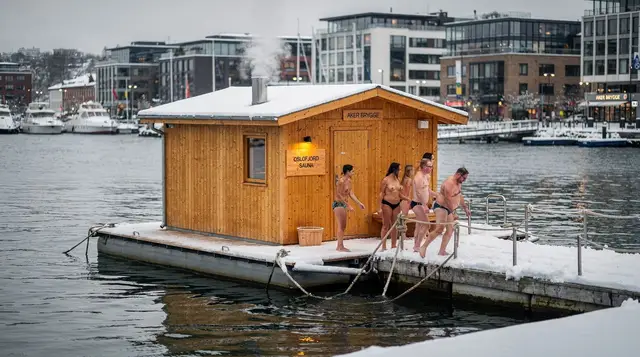
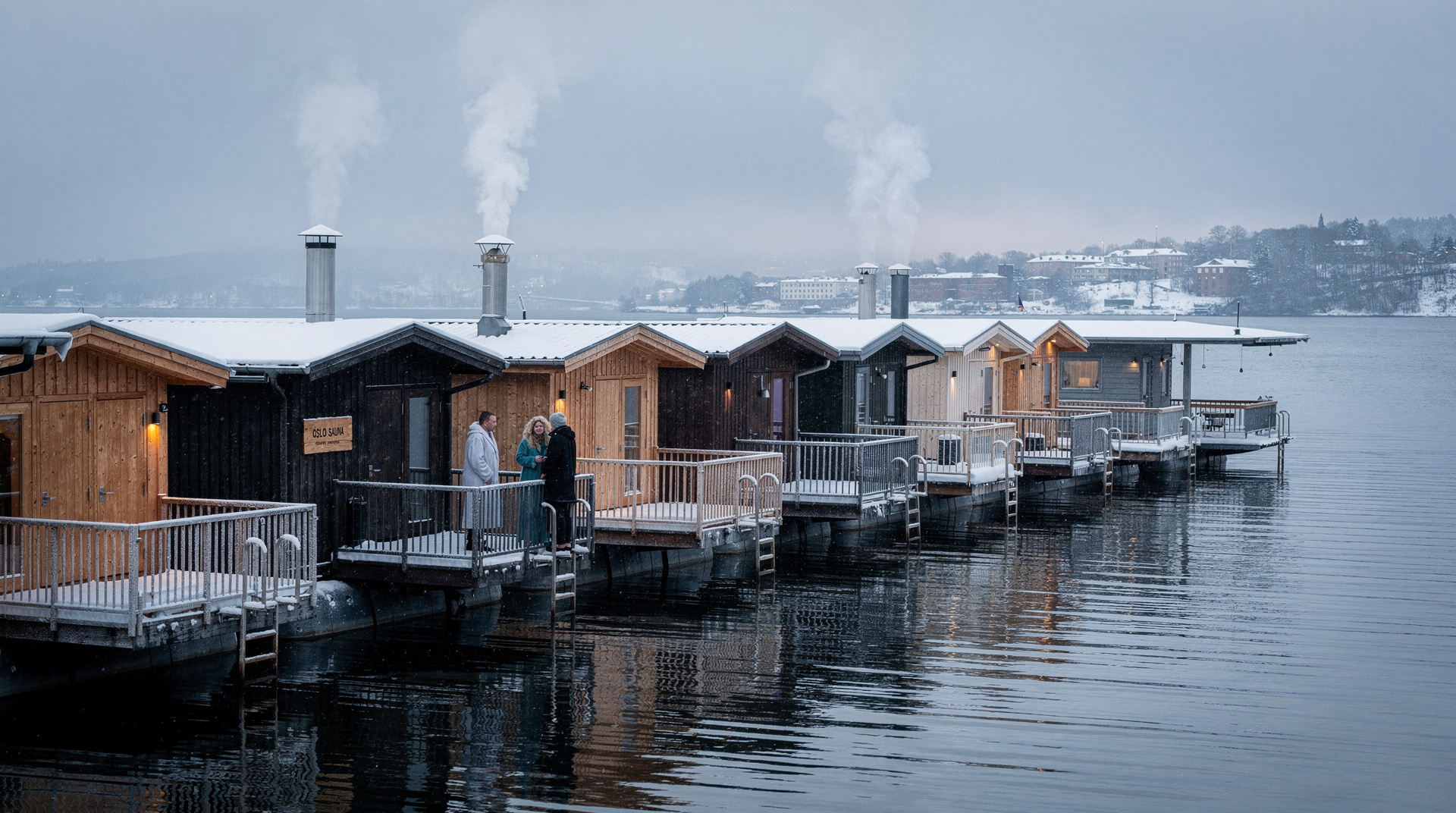
The flagship location sits on a floating pontoon just off Tjuvholmen, Oslo’s slickest marina neighbourhood. From the waterfront promenade you can see the cluster of small wooden barrels bobbing on the fjord — they look like oversized bathtubs wearing hats.
KOK Oslo operates several different structures here:
The public sauna is a large communal cabin accommodating around 20 people per session. Tickets run approximately NOK 250 to 310 (about $27 to $33) per person and sessions are typically 45–60 minutes. You share the space with strangers, which Norwegians approach with complete unselfconsciousness. There is a social deck outside with cold-plunge ladders and benches.
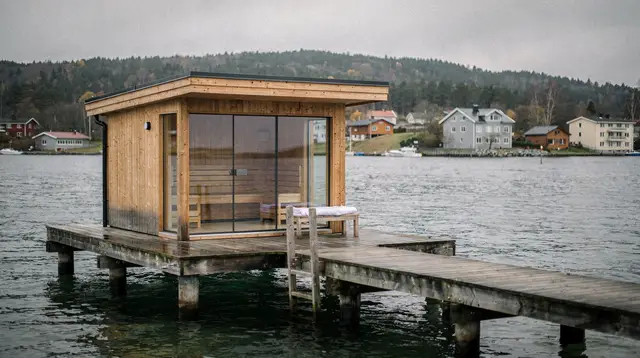
Private sauna pods (the “Bragi” and similar units) are smaller barrels for two to six people. A 90-minute private session starts at roughly NOK 650 to 800 ($70 to $86) for the whole pod, making it roughly NOK 160 to 200 ($17 to $22) per person in a group of four. You get exclusive use of the pod and a private deck section — ideal for groups or couples who want the experience without the public-sauna intimacy.
The guided floating sauna and fjord swim experience is an operator-led session where a local guide talks you through the ritual, the health benefits, and Norwegian sauna culture while managing the heat cycles. This runs roughly 90 minutes and costs around NOK 650 ($70) per person — higher than DIY but genuinely informative for first-timers.
All three options are bookable online in advance, which is strongly recommended in summer and on weekend evenings.
How to get there
The pontoon is a short walk from Aker Brygge. From Oslo Central Station (Oslo S), take tram 12 westbound (direction Frogner) and alight at Aker Brygge — the ride takes about 10 minutes. From there, follow the waterfront promenade west past the modern art galleries; the sauna pontoon is clearly visible. Total walking time from Oslo S is about 25 minutes if you prefer to stroll along the harbour.
If you’re using Ruter’s public transport, the same single-zone ticket (NOK 40 / $4.30 with the app) covers the tram. The Oslo Pass includes unlimited Ruter rides if you already have one.
What to bring
The operators provide towels and some offer basic amenities, but the packing list is short:
- Swimwear — optional in the communal sauna (nudity is fine) but required for the outdoor deck
- Flip-flops or sandals — the pontoon deck is wooden and sometimes wet
- A second towel or dry bag for your phone and dry clothes
- Water bottle — you will sweat a lot; the operators usually provide water but hydrating beforehand helps
Leave your valuables in your accommodation or a secure locker. The pontoons have limited storage.
The experience itself: heat, cold, repeat
A standard session follows a rhythm that Scandinavians call “the ritual”:
-
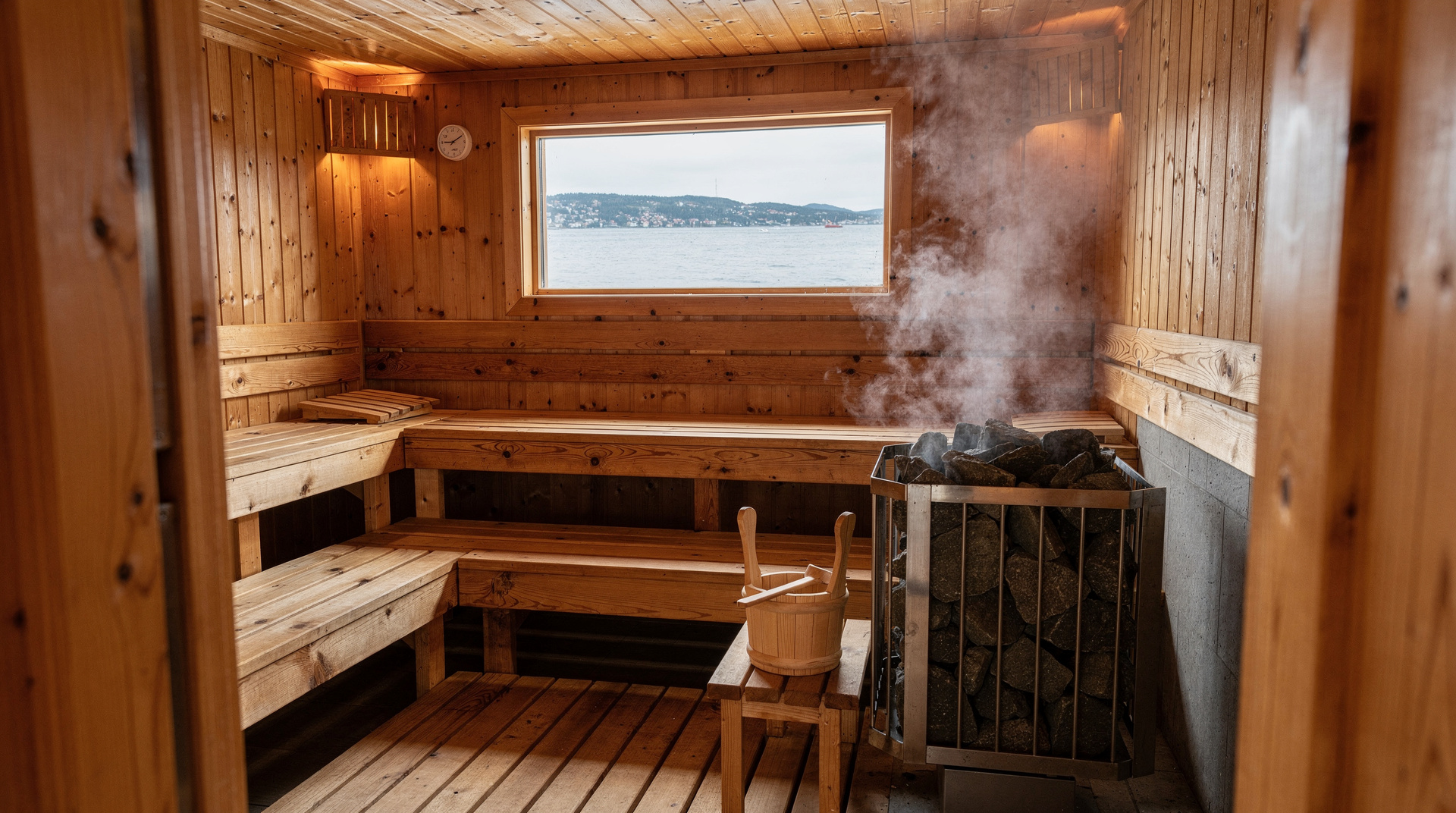
Enter the sauna and sit quietly for 10 to 15 minutes, letting your core temperature rise. Temperature inside runs 80–90°C. Breathe slowly through your nose. Ladle water onto the stones occasionally for a burst of steam (löyly in Finnish; the Norwegians have absorbed this tradition wholesale).
-
Exit to the deck and cool down in the open air. Take your time — a minute of fresh fjord air before the plunge amplifies the shock positively.
-
Cold plunge. Use the ladder at the pontoon’s edge and lower yourself into the Oslofjord. Most first-timers gasp at the cold; veterans slide in smoothly and float for 30 seconds to two minutes.
-
Repeat two or three times. The cumulative effect is what transforms a sauna from a hot room into something approaching meditation.
The whole cycle — sauna in, deck rest, fjord plunge — takes 45 minutes to 90 minutes depending on how many rounds you do and how long you linger on the deck watching the Oslo skyline shimmer.
Seasonal guide: when to go
Summer (June–August): The fjord is warm (18–22°C), days are long with near-continuous daylight, and the deck social scene is lively. The contrast between sauna and water is gentler, making it a good first experience. Book well in advance — this is peak season.
Autumn (September–October): Water cools quickly after mid-September (10–15°C). Crowd levels drop, sunset light over the fjord is spectacular, and prices may be slightly lower on weekdays. A local favourite time.
Winter (November–March): Water temperatures of 2–5°C make the cold plunge genuinely extreme. The visual drama — rising steam, snowflakes, frozen pontoon railings — is extraordinary. Many locals consider this the best season. Book indoor warming sessions or bring an extra layer for between rounds on the deck.
Spring (April–May): Water warming up through 8–15°C, long evenings returning, crowds not yet at summer peak. Good value and atmospheric.
Comparing public vs private sessions
| Public session | Private pod | |
|---|---|---|
| Price per person | NOK 250–310 ($27–33) | NOK 160–200 ($17–22) in a group of 4 |
| Capacity | 10–20 shared | 2–6 exclusive |
| Nudity | Common | Your choice |
| Booking window | Up to 2–3 days ahead in peak | 1–3 days ahead on weekends |
| Best for | Solo travellers, meeting locals | Couples, groups, special occasions |
Other waterfront wellness spots
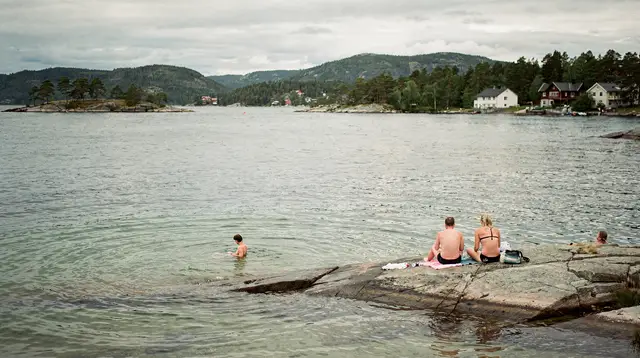
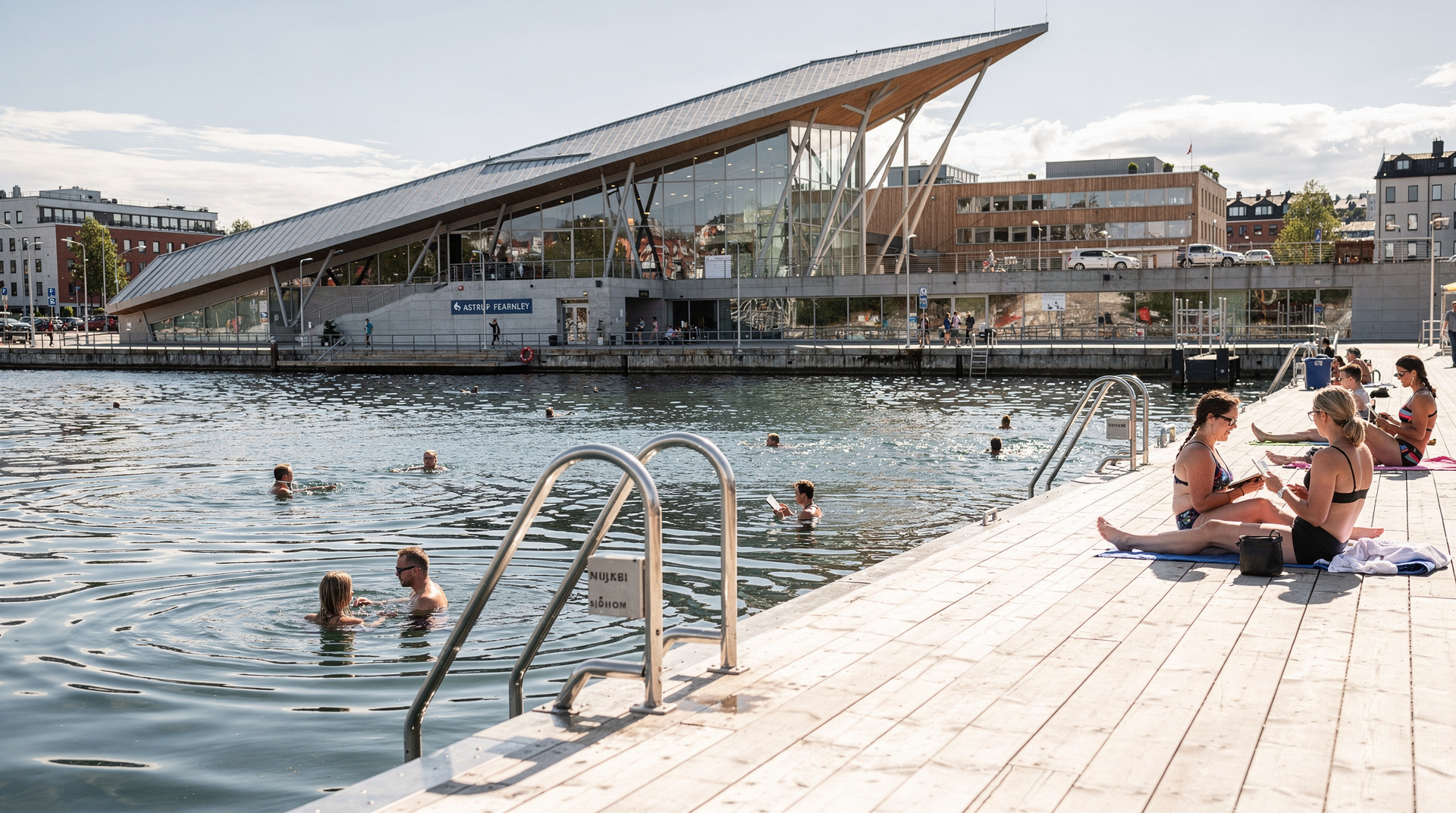
Beyond Tjuvholmen, Oslo has a growing number of waterfront wellness venues. The Oslofjord waterfront stretching east through Bjørvika has seasonal outdoor swimming ladders near the Opera House — free and open to anyone in summer. The Oslo swimming spots guide covers all the public options.
For a longer sauna-and-swim excursion, several operators offer guided experiences that combine a floating sauna session with a broader Oslofjord experience, though booking the standalone sauna remains the most economical approach.
Practical booking details
Operator website: Book directly at KOK Oslo’s website or through GetYourGuide, which offers instant confirmation and free cancellation in most cases if you cancel 24 hours in advance.
Opening hours: Generally 10:00 to 22:00 daily, with last entry around 20:30. Hours vary seasonally — the operators extend evening slots in summer.
Payment: Card only; like most of Oslo, this is a cashless operation.
Alcohol: Some operators allow you to bring a beer or a thermos of hot drink, but hard spirits are typically prohibited. Check the house rules when booking.
Group bookings: Groups of 6 or more can sometimes negotiate a dedicated pod for a fixed period — contact the operator directly.
Is it worth the price?
At NOK 250 to 300 per person for a public session, Oslo’s floating saunas are one of the city’s better-value experiences. For context: a midrange restaurant meal in Oslo runs NOK 250 to 400 per person before drinks. The sauna is cheaper than most museums (which run NOK 160–200), uniquely Norwegian, and takes two to three hours if you do multiple rounds. Virtually every visitor who does it rates it among their Oslo highlights.
See the full comparison of Oslo sauna options — public, private, and guided — to decide which format suits your group best.
Getting the most out of the experience
A few tips from repeat visitors:
Go early or late on weekdays to avoid the midday rush. The 18:00–21:00 window on summer evenings is both the most crowded and the most beautiful (the golden light on the fjord is hard to beat, but book early).
Hydrate before and after. Bring a 500ml water bottle and drink it before you step into the sauna, then refill before going home.
Don’t rush the cold plunge. Stand at the edge of the ladder for a breath, then go in deliberately rather than hesitating. Getting your shoulders under is important — the head doesn’t need to go under.
Book the guided session if this is your first sauna experience. The guide explains the ritual, manages the timing, and answers questions about Norwegian wellness culture that add real context to the physical experience.
The Oslo sauna etiquette guide covers the unwritten rules — what to say (very little), how to behave around nudity (matter-of-factly), and the few things that will mark you as a first-timer (staring, excessive talking, checking your phone).
Oslo’s saunas are not a gimmick or a tourist attraction bolted onto the city for marketing purposes. They are a genuine part of how Oslonians live. Use this guide, book early, and jump in.
Health considerations before you book
The heat-and-cold cycle is intense, and it’s worth a moment’s thought before booking if you have any relevant health conditions. Pregnant visitors, anyone with heart conditions, uncontrolled high blood pressure, or circulatory issues should check with a doctor before combining an 80–90°C sauna with a near-freezing plunge — this isn’t Oslo-specific caution, it’s the same advice any sauna culture gives.
Alcohol and the sauna-plunge cycle don’t mix well either: the operators’ house rules limiting hard spirits exist partly for this reason, and even a beer beforehand is worth having after rather than before your session. If you’re recovering from illness, jet-lagged and dehydrated, or simply unsure, start with a shorter public session rather than booking a 90-minute private pod, and skip a plunge round if you feel light-headed rather than pushing through it.
Combining the sauna with the rest of a Tjuvholmen visit
The floating saunas sit inside a genuinely interesting neighbourhood, and it’s worth planning a couple of hours either side of your session rather than treating it as a standalone errand. Before or after, the Astrup Fearnley Museum’s free outdoor sculpture park is a five-minute walk and costs nothing even if you skip the paid galleries — a natural pairing since both experiences reward slow, unhurried time.
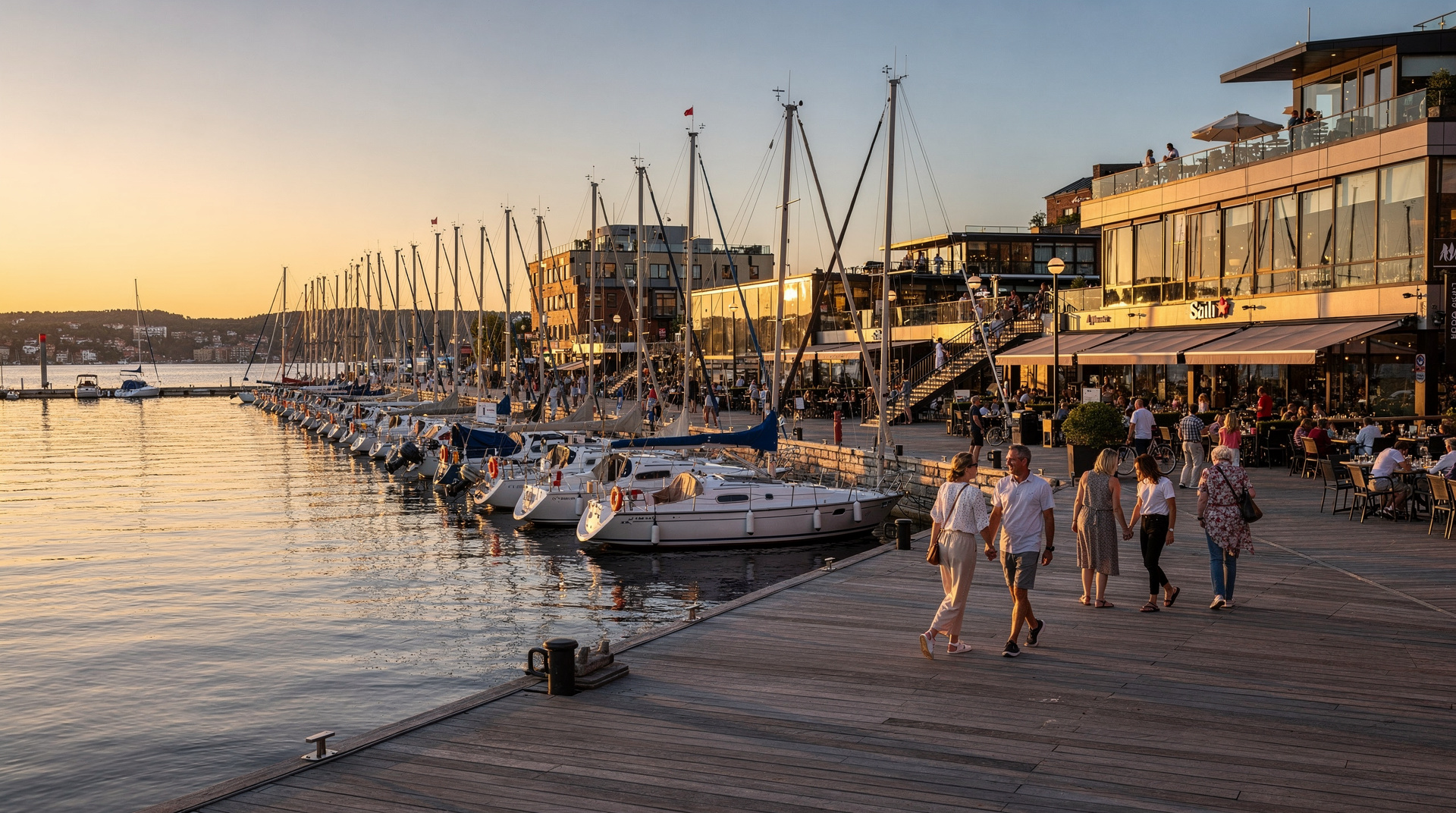
If hunger strikes post-sauna, Tjuvholmen and neighbouring Aker Brygge have a dense cluster of restaurants with fjord views; see the Oslo fine dining guide for the upper end or the where to eat in Oslo guide for more casual options. Many visitors build a full afternoon around the sauna, sculpture park, and a waterfront dinner without needing to leave the immediate area.
Frequently asked questions about Oslo's floating saunas
Do I need to be naked in Oslo's floating saunas?
In the public sauna sessions nudity is common but not mandatory. Swimwear is perfectly acceptable. For private pods, it's entirely up to your group. Towels are typically required on the wooden benches.How far in advance do I need to book?
In summer (June–August) and on weekends, slots can sell out two to three days ahead, especially for private pods. Mid-week in autumn or spring, same-day booking is usually possible online.Can I swim in the Oslofjord after the sauna?
Yes — that's half the point. The pontoon has ladders directly into the fjord. Water temperature averages around 20°C in summer and drops to 2–5°C in winter. The cold plunge after the sauna heat is the signature Oslo wellness ritual.Are there age restrictions?
Children are allowed in most sessions when accompanied by an adult, but verify when booking. The minimum age for unaccompanied entry is typically 16 or 18 depending on the operator.What is the sauna temperature inside the floating saunas?
Traditional Finnish-style temperature of around 80–90°C is standard. Some pods go up to 95°C. You can cool down on the outdoor deck or jump straight into the fjord.Is the Tjuvholmen floating sauna open in winter?
Yes. Winter is arguably the most dramatic time — steam rising off the fjord, snow on the pontoon, and the cold plunge feeling like a full-body reset. Book early as winter slots are popular with locals.How do I get to the floating saunas from the city centre?
Walk west from Aker Brygge along the waterfront — the saunas are visible from the promenade. Tram 12 from Jernbanetorget stops near Aker Brygge (around 10 minutes). The whole pontoon area is clearly signposted.
Top experiences
Bookable activities with verified prices and instant confirmation on GetYourGuide.