Flåm — the railway and the fjord
Plan your trip to Flåm from Oslo — the Flåmsbana mountain railway, Aurlandsfjord cruises, and how to combine it all as a day trip or overnight.
From Oslo: self-guided Norway in a Nutshell round trip (Flåm train and Nærøyfjord cruise)
Duration: Full day
- Flåm Railway
- Nærøyfjord cruise
Quick facts
- Best time
- Late April to October; summer (June–August) for full cruise schedules
- Days needed
- 1 very full day from Oslo (doable); 1 overnight allows a more relaxed experience
- Getting there
- Train Oslo S → Myrdal (4.5–5h), then Flåmsbana down to Flåm (1h)
- Budget per day
- NOK 700–1 300 (USD 75–140) excluding accommodation and train tickets
Why Flåm is the centrepiece of Norway’s most famous route
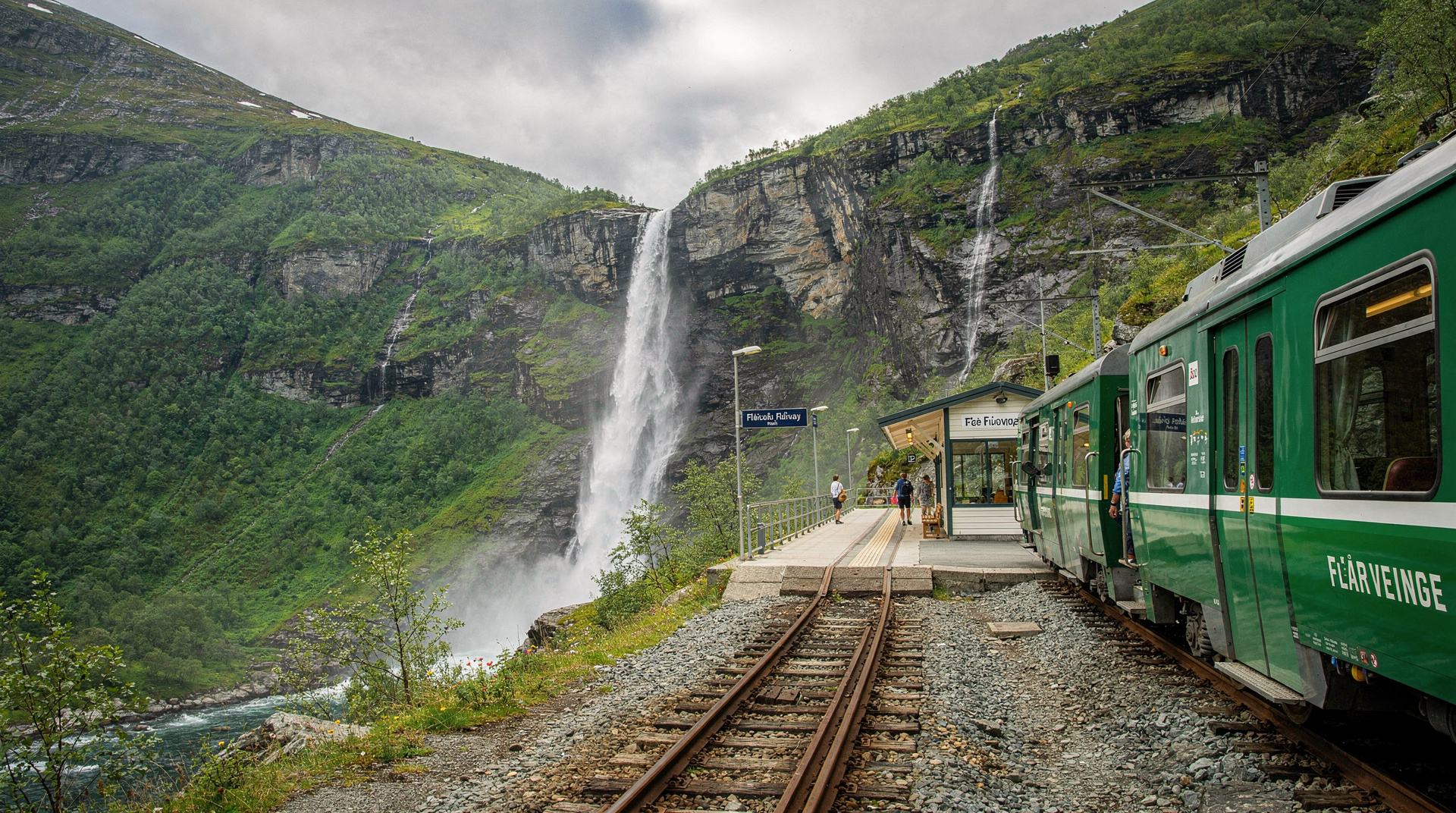
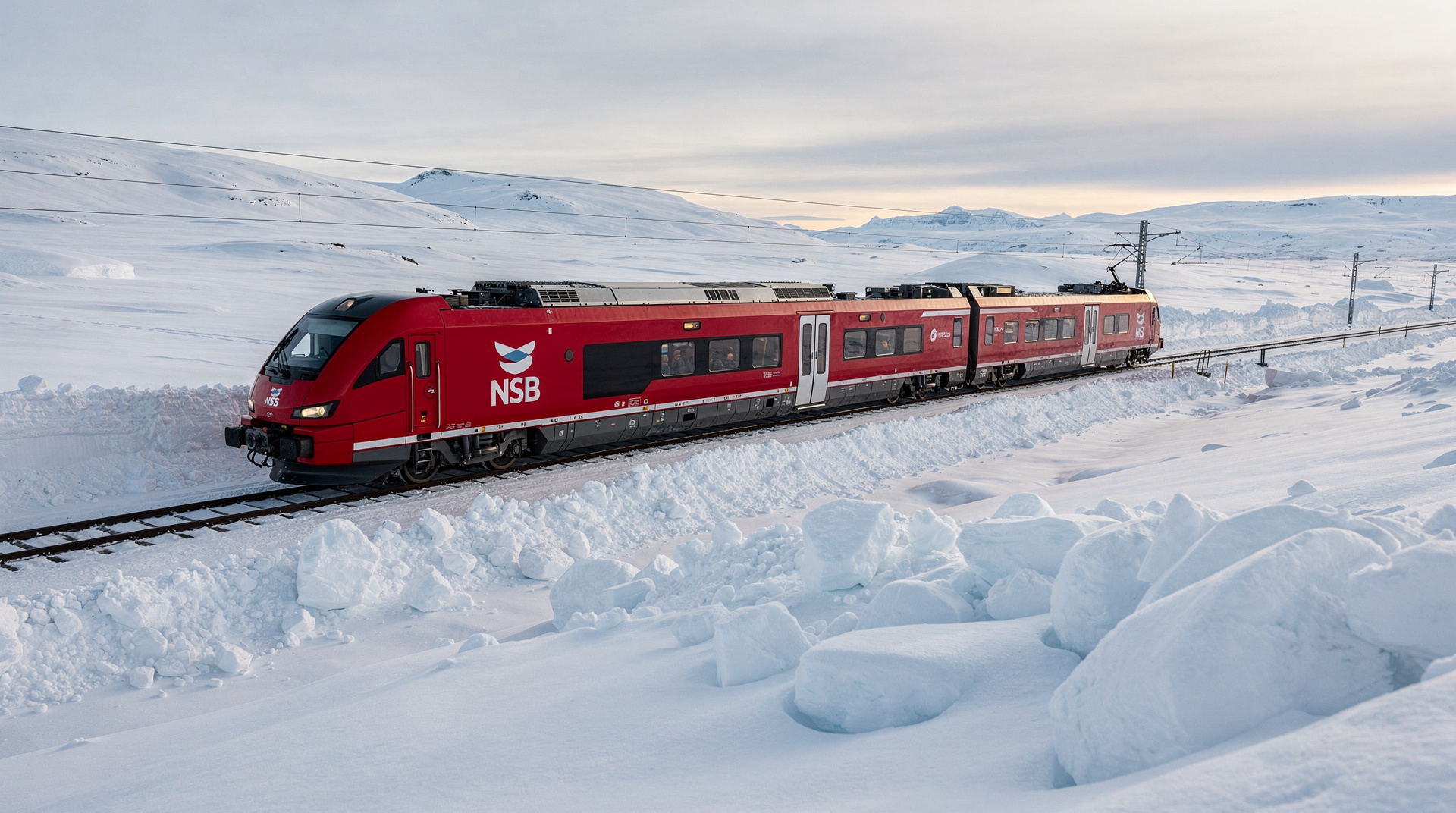
In a country defined by spectacular train travel, the Flåmsbana stands alone. In 20 kilometres and 55 minutes it drops 866 metres from the Myrdal junction on the Bergen Railway plateau down to the village of Flåm at sea level — navigating 20 tunnels, 18 of which were built entirely by hand in the 1930s. The gradient averages 5.5%, reaching 5.5% on the steepest sections, making it one of the steepest standard-gauge railways in the world. Watching the train slow to a crawl as it negotiates switchbacks cut directly into cliff faces, with the Kjosfossen waterfall crashing down beside the tracks, is genuinely unlike anything else in European rail travel.
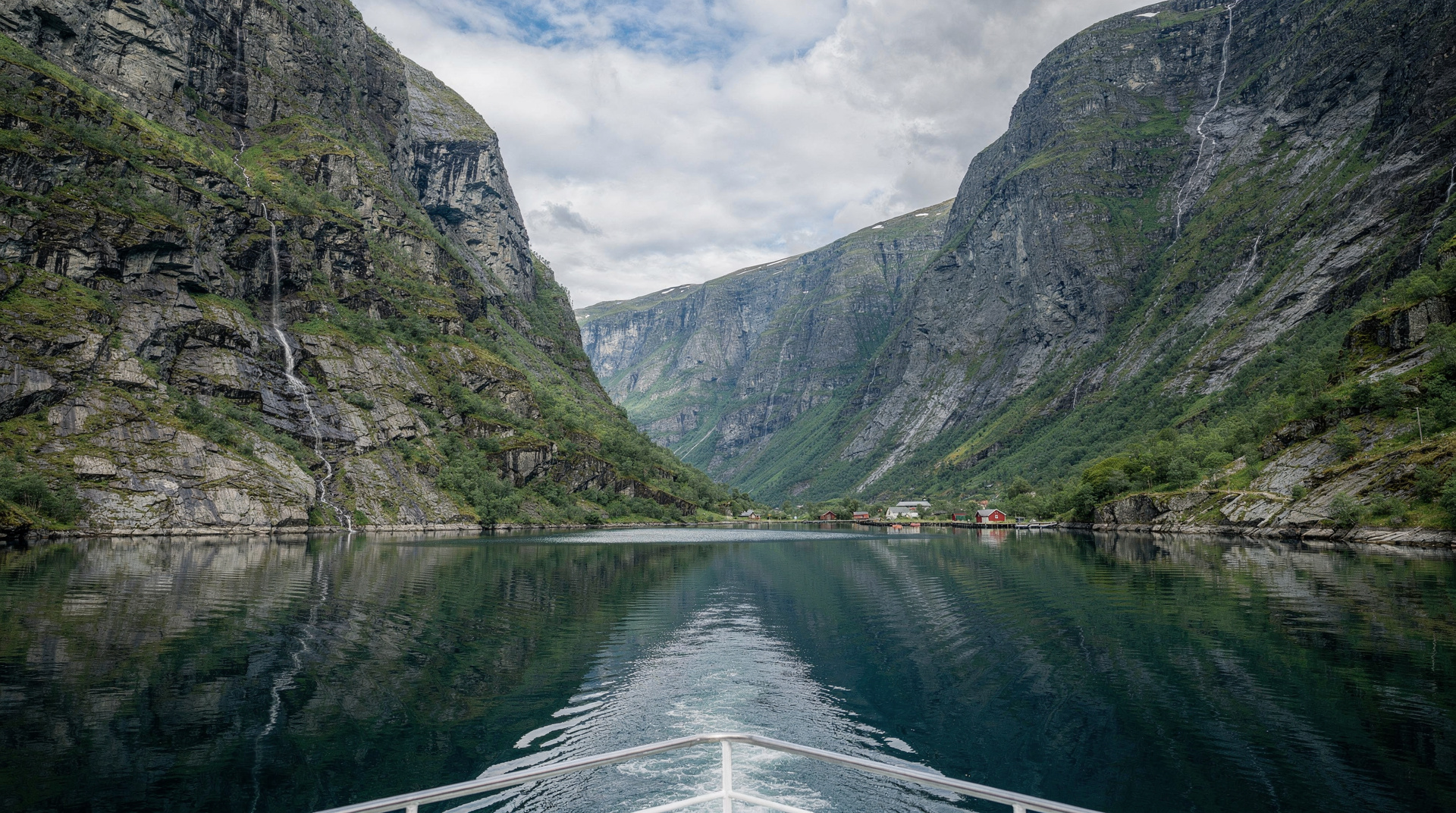
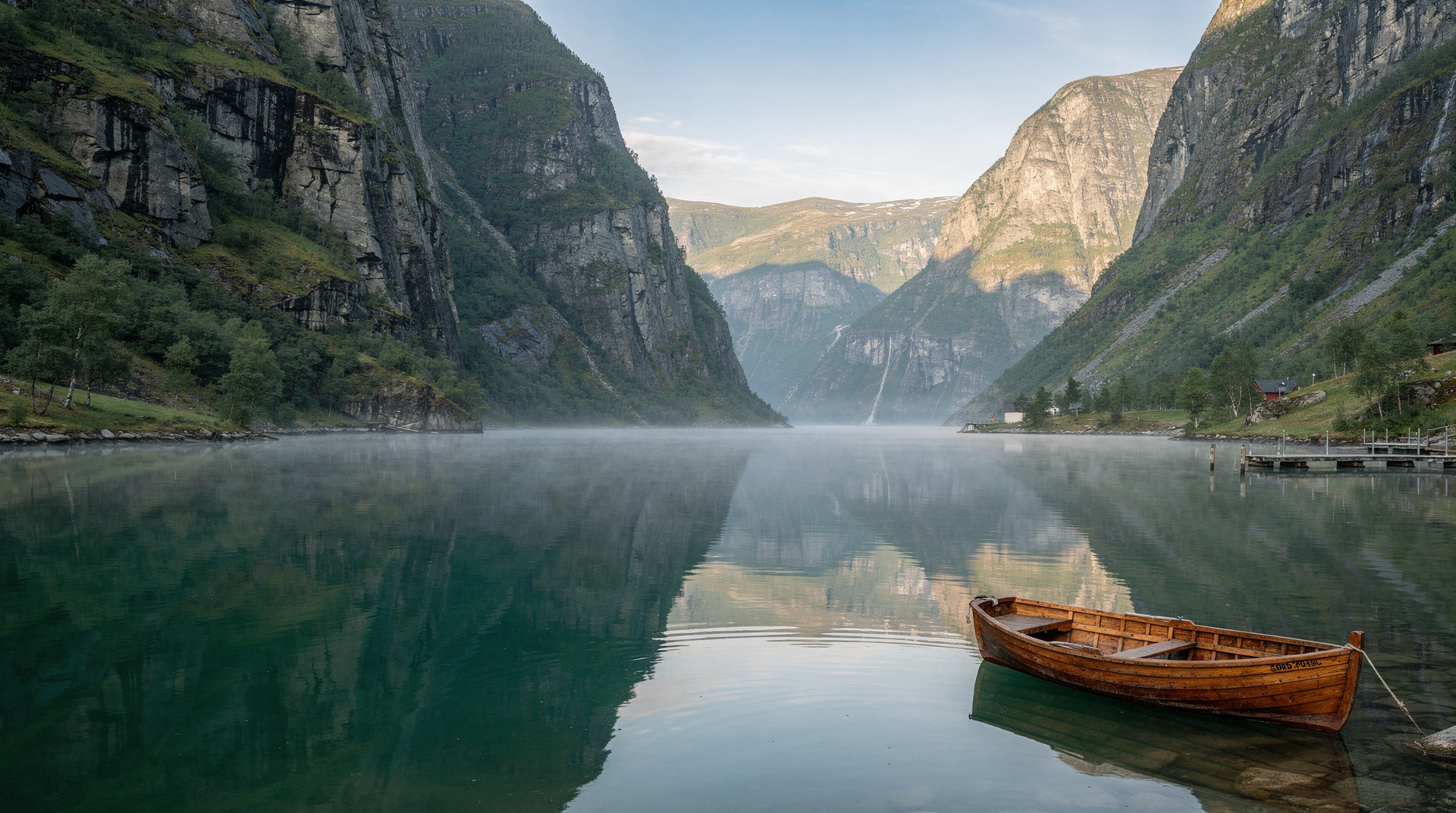
But Flåm is not only a railway. The village at the foot of the line sits at the inner end of the Aurlandsfjord — a long, calm arm of the Sognefjord system — and it is the embarkation point for cruises into the Nærøyfjord, the narrowest fjord in the world and a UNESCO World Heritage site. The combination of mountain railway and fjord cruise is the core of the Norway in a Nutshell experience, and Flåm is its heart.
Getting from Oslo to Flåm: the logistics
The journey from Oslo to Flåm is a trip in itself — it cannot be shortened, but it does not feel long if you choose the right trains.
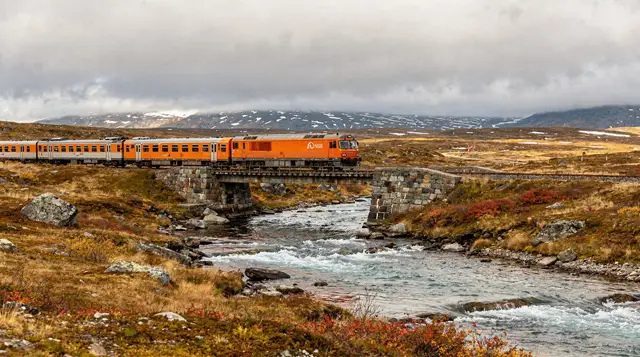
Step 1: Oslo S to Myrdal. Take the Bergen Railway (Bergensbanen) westbound from Oslo S. You want to get off at Myrdal station — a tiny junction at 866 metres altitude, with nothing there except the connection to the Flåmsbana. Journey time is approximately 4.5–5 hours. The early departures (around 08:00–08:30 from Oslo S) are best for a day-trip: they get you to Myrdal by early afternoon. Tickets: book with Vy (vy.no). Cheap advance fares start around NOK 199–399 (USD 21–43); flexible fares are NOK 700–900 (USD 75–97).
Step 2: Myrdal to Flåm on the Flåmsbana. The Flåmsbana runs roughly every hour in peak season (less frequently October–April). Journey time is 55 minutes downhill, 1 hour 5 minutes on the uphill return. Tickets cost around NOK 380 return (USD 41) for adults. Buy in advance online at Flåm Railway’s website or through Norway in a Nutshell operators — the train fills completely in summer and seats are not guaranteed without a reservation. For everything you need to know about the journey itself, see the Flåm Railway guide.
Can you do Flåm as a day trip from Oslo? Yes, but only just. The maths work like this: leave Oslo S at 08:00, arrive Myrdal around 12:30, Flåm by 13:30, cruise or look around until 16:30, Flåmsbana back to Myrdal, Bergen Railway back to Oslo arriving around 22:30–23:00. It is a very full 15-hour day with limited time in Flåm itself. An overnight stay in Flåm — or routing one-way to Bergen — is strongly recommended if budget and schedule allow. See the guide to day trips from Oslo for a frank assessment of what is and isn’t realistic.
The Flåmsbana: what to expect on the train
The railway was built between 1923 and 1940 by the Norwegian State Railways, primarily as a link between the Bergen Railway main line and the farming and fishing communities in the Flåm valley. It was always a difficult engineering project: the valley is too narrow and steep for roads, and the mountain walls close in on every side.
You should sit on the left side going down (the right side going up) to face the Kjosfossen waterfall — the train stops here for a few minutes to allow passengers to photograph the falls, which drop 93 metres down a cliff face directly alongside the tracks. In summer, the stop includes a brief theatrical performance involving a “huldra” (a Norse mythological figure) near the falls.
The train passes through the village of Vatnahalsen, the tiny hamlet of Berekvam, and the wider Flåm valley before arriving at the fjordside terminus. The descent is dramatic throughout: you watch the clouds drop away and the temperature rise as you descend from the treeless plateau to the lush green valley floor.
One honest note: the Flåmsbana is now extremely popular. In peak summer (July–August) the trains are completely full. Book your seat at least a week in advance for July; two to three weeks ahead for weekends. Arriving at Myrdal and hoping to walk on is a gamble you will probably lose.
Flåm village: what is there to do?
Flåm itself is small — a few hundred permanent residents — and its infrastructure is geared almost entirely towards the approximately one million visitors who pass through each year. There is a railway museum at the station (free entry) documenting the construction of the Flåmsbana, a handful of restaurants and cafés, a supermarket, and a short waterfront promenade.
Ægir Bryggeri is the standout food-and-drink option: a brewery built to resemble a Viking longhouse, with its own craft ales and a menu of Norwegian dishes (mains NOK 280–420 / USD 30–45). It is touristy in the best sense — the food is good and the setting on the fjord edge is excellent.
Flåm Marina is the departure point for fjord cruises. The most popular route is the 2-hour cruise to Gudvangen through the Nærøyfjord — the narrow, cliff-walled arm of the fjord that is the centrepiece of the Norway in a Nutshell route. See the Nærøyfjord page for details on the cruise itself.
Hiking is possible for those with energy after the train. The Otternes farm trail (3–4 hours return) climbs out of the valley to an 18th-century farm cluster with fjord views. A shorter option is the walk along the Flåm river (Flåmselvi) into the upper valley — easy going and very scenic.
The Aurlandsfjord: calm water and steep walls
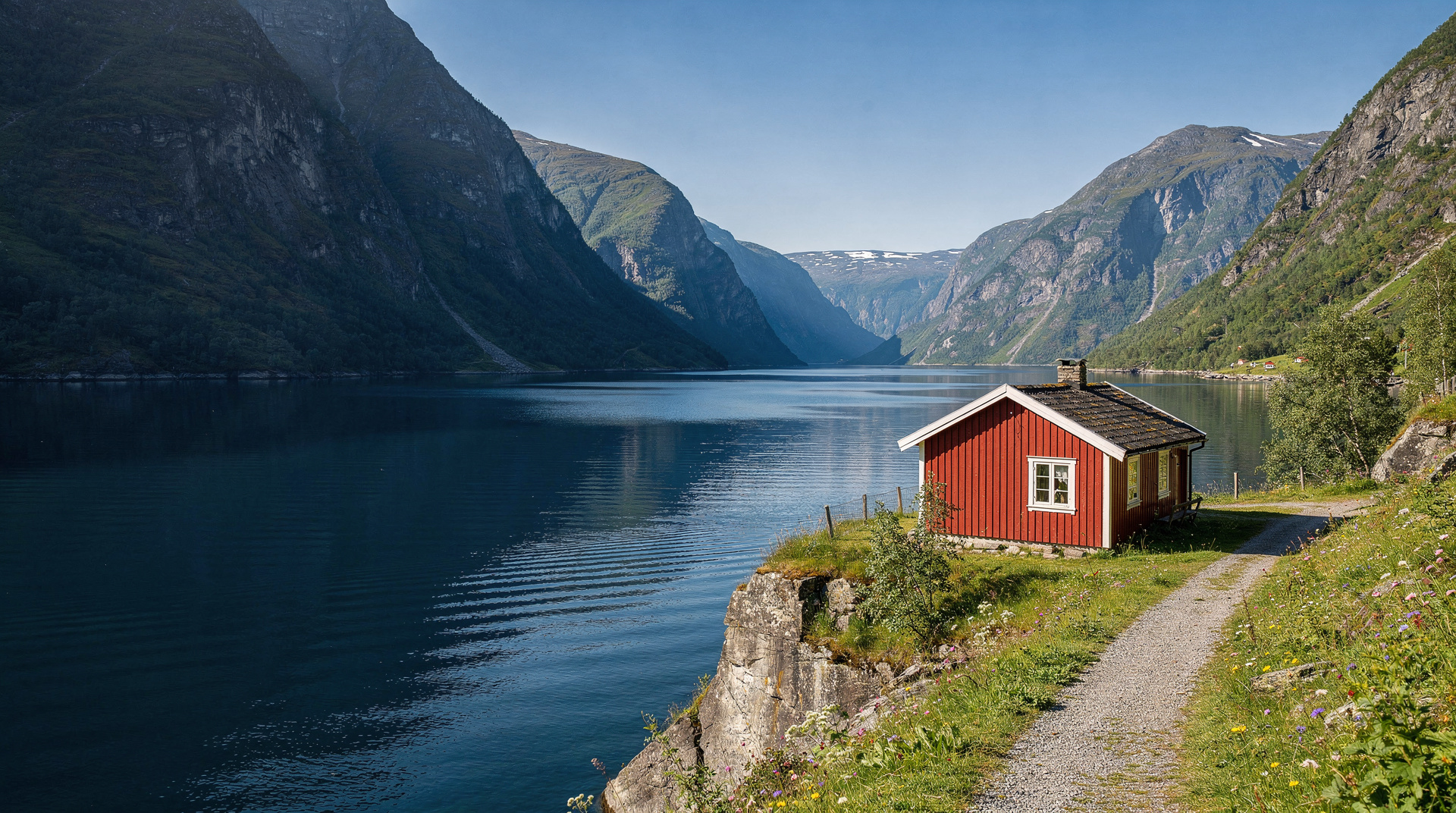
The fjord at Flåm’s doorstep is the Aurlandsfjord, a 30-kilometre branch of the Sognefjord running roughly north–south. It is narrower and calmer than the open sea-fjords further west, with walls rising 1 400–1 700 metres on either side. The water is extraordinarily clear and cold — the fjord is not tidal at its inner end, and the colour in summer is an improbable blue-green.
The village of Aurland, a 20-minute drive or 40-minute kayak from Flåm, has a small church dating to the 12th century and a tourist office with panoramic viewing terrace. The famous “Stegastein” viewpoint (a cantilevered platform 650 metres above the fjord) is accessible by car or on the “Snow Road” bus route from Aurland in summer.
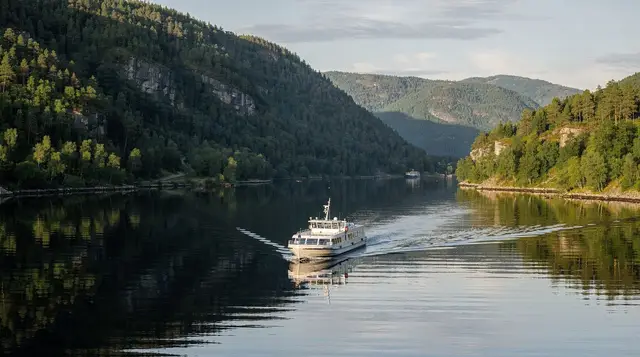
Cruise options from Flåm range from the Norway in a Nutshell boat (large ferry, crowded in summer) to smaller electric and hybrid vessels. For travellers who want a quieter experience, booking a small-group electric boat tour is worth the premium.
Norway in a Nutshell: using Flåm as the pivot
The classic Norway in a Nutshell route positions Flåm as the point where train travel and fjord cruising connect. There are three main ways to structure it from Oslo:
Option A — Round trip from Oslo (2 days). Oslo → Myrdal → Flåm (overnight) → Nærøyfjord cruise → Gudvangen → Voss → Bergen → Oslo by train or plane. This is the “full loop” and gives you Bergen, the Flåmsbana, and the Nærøyfjord cruise without rushing.
Option B — One-way Oslo to Bergen (1 very long day). Oslo → Myrdal → Flåm → Gudvangen → Voss → Bergen. Doable in a single day if you take the 08:00 from Oslo S and accept limited time in Flåm. You arrive in Bergen around 21:00–22:00.
Option C — Day trip from Oslo to Flåm and back. As described above — feasible but rushed. The return trip to Oslo takes until late evening. See the Norway in a Nutshell guide for a full breakdown of each option and what it costs.
The self-guided approach — buying individual segment tickets yourself via Vy and Flåm Railway — is consistently cheaper than pre-packaged “Norway in a Nutshell” bundles sold by tour operators. The difference is rarely under NOK 300 (USD 32) per person. The booking process is straightforward for independent travellers comfortable with online booking.
Where to stay in Flåm
Flåmsbrygga Hotel is the most prominent accommodation in the village — a 4-star hotel directly on the fjord, with rooms from around NOK 1 600–2 400 per night (USD 172–258) in summer. It has the fjord-view setting that the pictures promise.
Heimly Pensjonat is a simpler, family-run guesthouse a short walk from the station with doubles from NOK 900–1 300 (USD 97–140). A better value option for those who mainly need a bed and are planning early starts.
Camping: Flåm Camping og Vandrehjem has tent pitches from NOK 220 (USD 24) and cabin accommodation. The site is directly on the fjord and is one of the more atmospheric camping spots in western Norway.
In high summer, accommodation in Flåm books out entirely — plan at least two months ahead for July and August stays.
Practical details and seasonal considerations
The Flåmsbana runs year-round, but cruise services on the Nærøyfjord operate primarily from late April to early October. Winter visits to Flåm are possible (the railway continues to run) but the fjord cruise and some activities are unavailable. The valley can be snowy and atmospheric in winter, and prices are considerably lower — but the Norway in a Nutshell loop cannot be completed in full.
For the standard 2-day Oslo–Bergen itinerary, Flåm is the natural overnight stop, with the Nærøyfjord cruise and onward journey to Bergen on Day 2.
Frequently asked questions about Flåm and the Flåmsbana
How far is Flåm from Oslo?
Flåm is approximately 230 kilometres from Oslo as the crow flies, but the journey by train takes 5.5–6.5 hours depending on connections: about 4.5–5 hours on the Bergen Railway to Myrdal, then 55 minutes on the Flåmsbana down to Flåm. There is no direct road route that is significantly faster — the mountains mean any driving route also takes 4–5 hours.
Is the Flåmsbana worth it?
Yes, without reservation. It is one of the most dramatic short train journeys in the world and the journey itself — not just the destination — is the point. Even visitors who are not typically interested in trains find it impressive. The caveat: it is extremely crowded in peak summer, so book in advance and have low expectations for solitude.
Can I do Norway in a Nutshell as a day trip from Oslo?
Just barely, and only if you take an early train from Oslo S (around 08:00) and are prepared for a 14–15 hour day. You will spend the majority of the day in transit with only a couple of hours in Flåm and on the fjord. An overnight in Flåm or routing through to Bergen is a much better experience. See the Norway in a Nutshell guide for full logistics.
Do I need to book the Flåmsbana in advance?
Yes, especially in July and August. The railway is frequently full, and there is no guarantee of a seat without a reservation. Book as soon as you know your travel date — at minimum one week ahead, ideally two to three weeks for peak summer weekends.
What is the difference between the Aurlandsfjord and the Nærøyfjord?
The Aurlandsfjord is the wider fjord arm in front of Flåm — relatively open, with the village and marina on its banks. The Nærøyfjord is a narrower branch that runs west from the Aurlandsfjord towards Gudvangen — the walls close in to as little as 250 metres apart and the cliffs reach 1 700 metres. The Nærøyfjord is UNESCO-listed and is the section that appears on most postcards. Cruises from Flåm go through the Aurlandsfjord and into the Nærøyfjord, and most continue to Gudvangen at the far end.
What should I eat in Flåm?
Ægir Bryggeri is the best option for a proper meal — Viking-themed décor aside, the food is genuinely good and the house-brewed ales are excellent. For lighter meals, the Flåm Bakeri near the station has sandwiches and pastries. Prices everywhere in Flåm are tourist-facing, so expect to pay NOK 160–250 (USD 17–27) for a main course.
Is Flåm accessible with limited mobility?
The Flåmsbana and the main village are reasonably accessible — the station has lift access and the village is flat. The fjord cruise ferries have accessible boarding. The Kjosfossen waterfall stop on the train requires a short walk on uneven ground. The hiking trails in the valley are not suitable for wheelchairs.
Top experiences
Bookable activities with verified prices and instant confirmation on GetYourGuide.