Sognefjord — Norway's king of fjords
Sognefjord is Norway's longest fjord at 204 km. Here's how to reach it from Oslo, what to see, and how to combine it with Flåm and the Nærøyfjord.
From Oslo: private round-trip tour to Sognefjord via Flåm
Duration: Full day
- Private tour
- Sognefjord
Quick facts
- Best time
- May–September; May for spring waterfalls, June–August for full boat services
- Days needed
- 2–3 days to do it justice from Oslo; the fjord system is enormous
- Getting there
- Train Oslo S → Myrdal or Voss (4–5h), Flåmsbana to Flåm, then boat
- Budget per day
- NOK 800–1 400 (USD 86–150) on the fjord, excluding Oslo–Myrdal train
The scale of the Sognefjord: start here
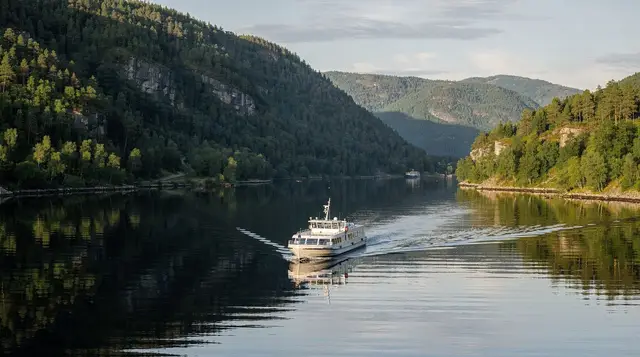
Numbers go only so far in conveying what the Sognefjord is. At 204 kilometres long and 1 308 metres deep, it is the longest and deepest fjord in Norway — and the second-longest in the world. It reaches from the open coast at Sygnefest all the way to the Jotunheimen mountains in the east, cutting through some of the most dramatic landscape on the planet.
But the Sognefjord is not a single thing you can “see” in a day. It is a vast branching system — a tree of water, with the main trunk running east–west and dozens of arms reaching north and south. The branches you are most likely to visit are:
| Where | West Norway, reached from Oslo via Myrdal or Voss |
| Typical cost | NOK 800–1,400 (USD 86–150) per day on the fjord, excluding the Oslo–Myrdal train |
| Time needed | 2–3 days from Oslo to do it justice; a single very long day is possible via Norway in a Nutshell |
| Getting there | Bergen Railway to Myrdal (4.5–5h), Flåmsbana to Flåm (55 min), then boat |
| Best time | May for waterfalls, June–August for full boat schedules |
- The Aurlandsfjord, which runs south from the main fjord to Flåm — the base for the Norway in a Nutshell route and the Flåmsbana
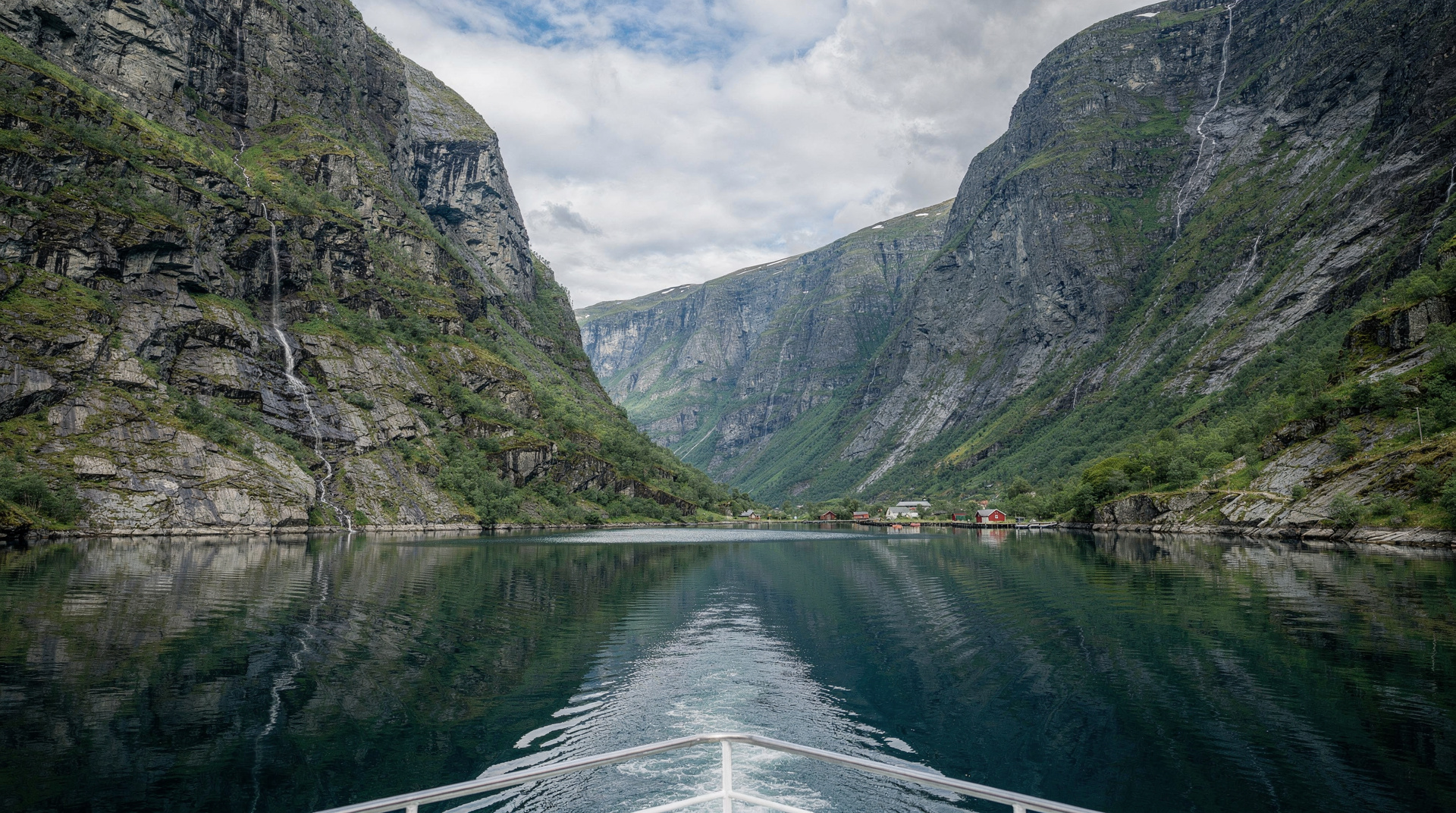
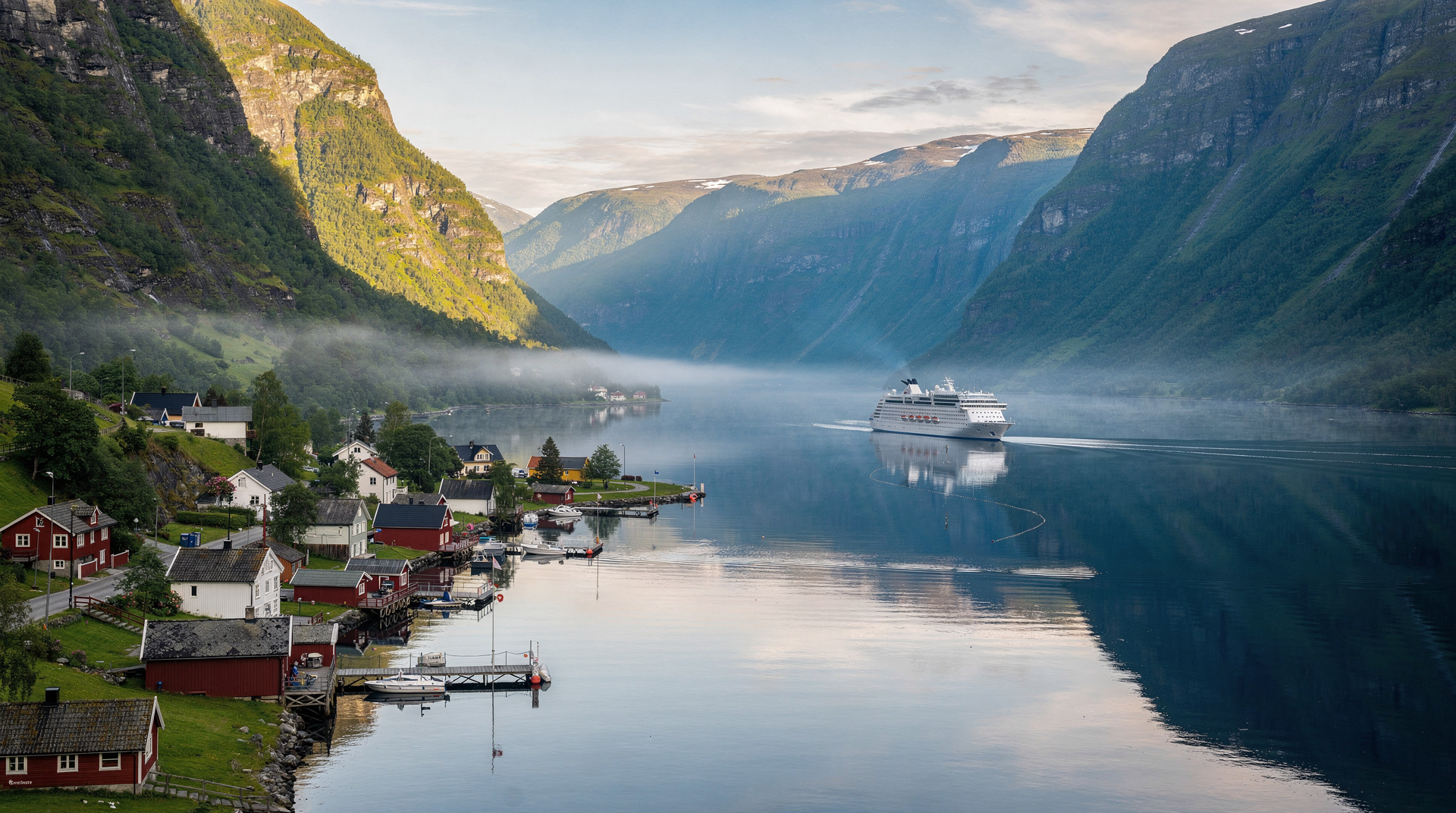
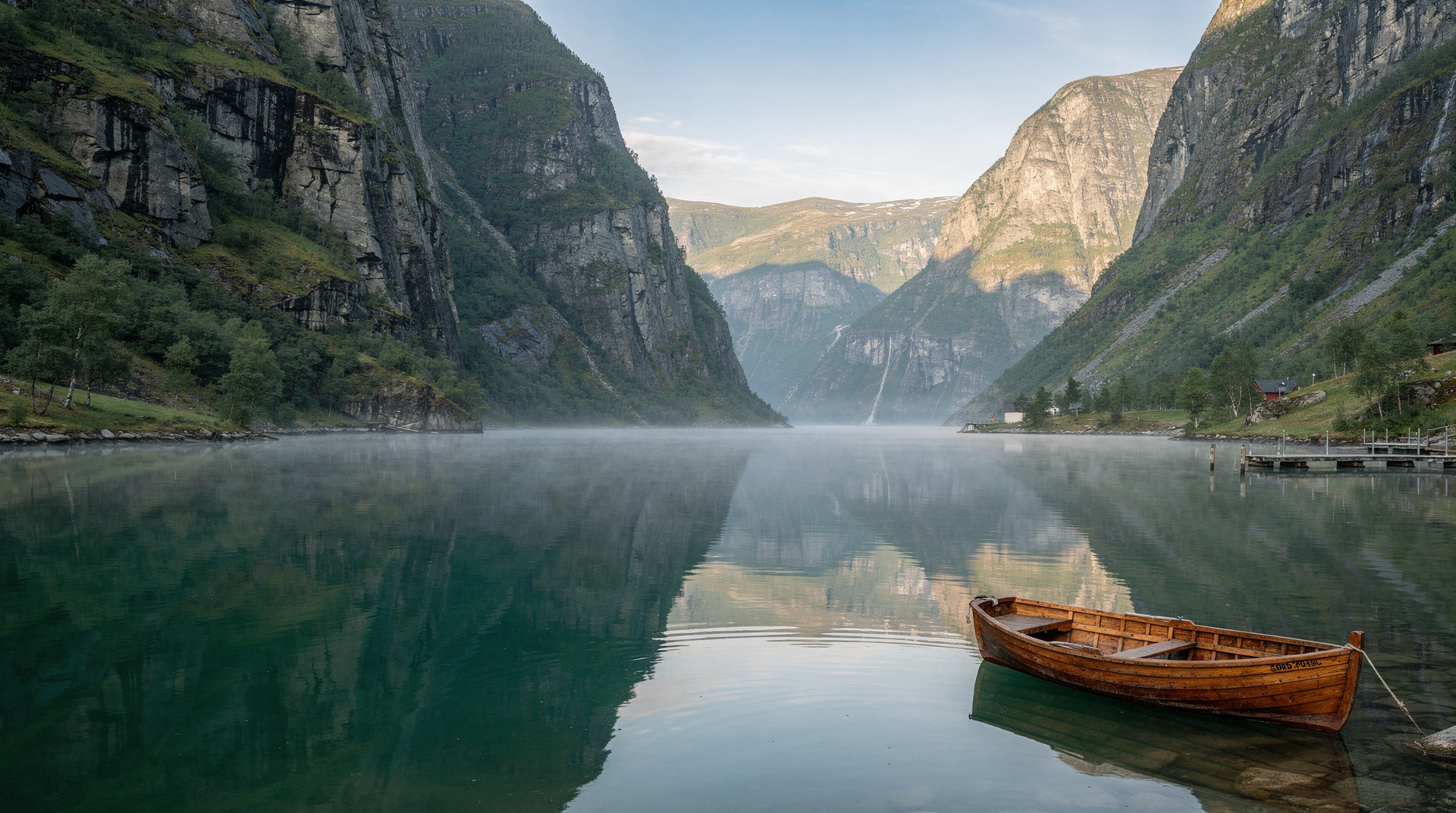
- The Nærøyfjord, the UNESCO-listed narrow arm west of Aurland — the centrepiece of most fjord cruises from Flåm; see the Nærøyfjord page
- The Lustrafjord, in the northeast — less visited, with the famous Nigardsbreen glacier arm of the Jostedalsbreen ice cap
- The Fjærlandsfjord, in the northwest — with the UNESCO-listed Fjærland stave church area and the Boyabreen glacier
For visitors coming from Oslo on a limited schedule, the practical entry point to the Sognefjord system is Flåm at the end of the Aurlandsfjord — and the most memorable single experience is the Nærøyfjord cruise westward from Flåm.
Getting to the Sognefjord from Oslo
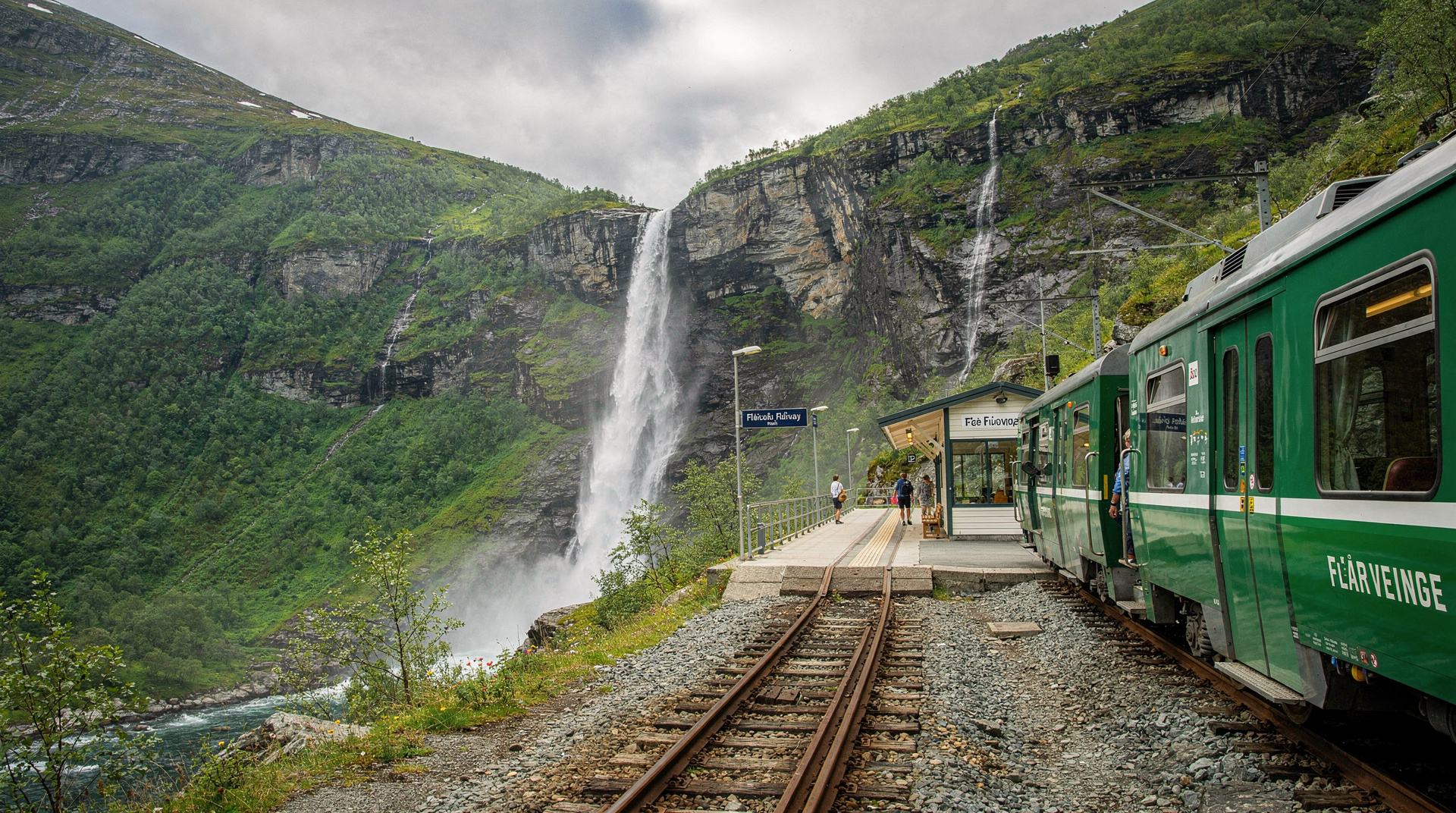
The Sognefjord cannot be reached by direct train. The most practical route from Oslo involves the Bergen Railway as far as Myrdal (approximately 4.5–5 hours), then the Flåmsbana down to Flåm (55 minutes), and then boats westward into the fjord system.
Train tickets: book through Vy (vy.no) as far ahead as possible. Cheap advance seats on the Bergen Railway start around NOK 199–399 (USD 21–43); flexible fares are NOK 700–900 (USD 75–97). See the Oslo to Bergen train guide for full booking guidance. The Bergen Railway itself is one of Europe’s great scenic routes, crossing the Hardangervidda plateau above the treeline — the Bergen Railway scenic guide covers which side of the train to sit on and what you’ll see. If you’re weighing the train against flying or driving, the Oslo to Bergen options guide compares all three.
Flåm to the fjord: from Flåm marina, boats operated by Fjord1 and Norled serve the Aurlandsfjord and Nærøyfjord on various schedules. In summer, there are multiple daily departures to Gudvangen (2 hours through the Nærøyfjord), to Balestrand on the main Sognefjord trunk (about 2.5 hours), and to Flåm’s neighbouring fjord villages.
By private vehicle: driving from Oslo to the Sognefjord is possible — roughly 5–6 hours to Flåm via the E16 and Laerdal tunnel (24.5 km, the world’s longest road tunnel). The tunnel was opened in 2000 and is a remarkable piece of infrastructure, though not a scenic one. Drivers can also take the Sognefjellsvegen mountain road in summer — the highest mountain pass in northern Europe — if approaching from the Jotunheimen side.
The main fjord trunk: Balestrand and Sogndal
Most visitors see only the inner branches of the Sognefjord (Flåm, Nærøyfjord). The main fjord trunk — the wide, open water running east–west — offers a different experience: slower, wider, and less dramatic in scale but rich in character.
Balestrand is the classic small town on the Sognefjord’s north shore, about halfway along the main trunk. It has a ferry connection from Flåm (approximately 2.5 hours), a Victorian-era hotel (Kvikne’s Hotel, operating since 1877), an English church built in 1897, and a calm, unhurried atmosphere that Bergen and Flåm cannot match. Stay here if you want to actually live in the Sognefjord landscape rather than pass through it. Double rooms at Kvikne’s Hotel run from NOK 1 800–2 800 (USD 194–301) in summer; smaller guesthouses offer doubles from NOK 950–1 400 (USD 102–150).
Sogndal is the main service centre of the inner Sognefjord, with supermarkets, a hospital, and connections to the Lustrafjord. It is practical rather than scenic. Lærdal, on the south shore, is notable for the Borgund stave church (about 45 minutes inland) — one of the best-preserved stave churches in Norway, dating to around 1180.
The Aurlandsfjord: Flåm’s immediate fjord
The Aurlandsfjord deserves its own mention even for visitors who are primarily using Flåm as a transit hub. The 30-kilometre arm running south from the main Sognefjord to Flåm is calmer than the main trunk and has an intimacy the wider fjord lacks — the walls are lower here, the farms more visible, and the small village of Aurland (a 20-minute drive from Flåm, or 40 minutes by kayak) has a 12th-century stone church and a well-regarded cider farm.
The Stegastein viewpoint — a cantilevered platform 650 metres above the fjord accessible by car or summer bus from Aurland — gives the best vertical perspective on the Aurlandsfjord of any viewpoint in the area. The 30-second drop to the water below it is vertiginous.
Lustrafjord and the glaciers: for those going deeper
The Lustrafjord is the northernmost major branch of the Sognefjord system and the most remote of the commonly visited arms. It runs roughly 45 kilometres north from the main trunk, and at its head it leads to the Jostedalen valley and the Nigardsbreen glacier — an arm of the Jostedalsbreen, Europe’s largest mainland glacier.
A guided glacier hike on Nigardsbreen takes 2–4 hours from the boat landing, depending on how far you go. This is genuine glacier walking with crampons and ropes, guided by local operators. The ice is a distinctive blue-green and the surrounding landscape is completely unlike anything in the lower fjords — bare rock, moraine, and ice, with no vegetation. Contact Jostedalen Breførarlag for current tour schedules and booking.
Access from Flåm to the Lustrafjord: boat to Sogndal, then local bus or rental car north. This extension adds at least one full day to a Sognefjord itinerary.
How the Sognefjord compares to Norway’s other fjords
Norway markets several fjords hard, and it helps to know how they actually differ before you commit days of travel to one over another:
| Fjord | Character | Distance from Oslo | Best for |
|---|---|---|---|
| Sognefjord (main trunk) | Widest, longest, most varied — a whole system rather than one view | 2–3 days round trip via Flåm | Travellers with time who want scale and quiet |
| Nærøyfjord | Narrowest, most dramatic, UNESCO-listed | Reached as a branch of the Sognefjord via Flåm | The single most photogenic cruise, in limited time |
| Geirangerfjord | Famous waterfalls (Seven Sisters), very popular with cruise ships | Further from Oslo, usually combined with a longer western Norway trip | Waterfall scenery, if you don’t mind crowds |
| Hardangerfjord | Orchards and fruit farms, gentler landscape | Day trip from Bergen | A softer, pastoral contrast to Sogn’s scale |
For a first-time visitor with limited days, the Sognefjord system via Flåm and the Nærøyfjord covers the essentials efficiently. See the Geirangerfjord guide and Hardangerfjord guide if you’re deciding between multiple fjords for a longer western Norway trip.
What to eat and where to stay around the Sognefjord
Accommodation and restaurants outside of Flåm and Balestrand are limited. This is genuine rural Norway, and the concept of “eating out” is less established than in the cities.
Flåm: the best option is Ægir Bryggeri (Viking-longhouse brewery, mains NOK 280–420 / USD 30–45). Flåmsbrygga Hotel does a fjord-view breakfast included in room rates. The supermarket in Flåm village is useful for self-catering.
Balestrand: Kvikne’s Hotel restaurant is the main dining option, with a buffet dinner that’s a fixture of the fjord cruise scene (NOK 450–600 / USD 48–65 per person). The food is Norwegian classics — gravlax, lamb, waffle desserts — executed well.
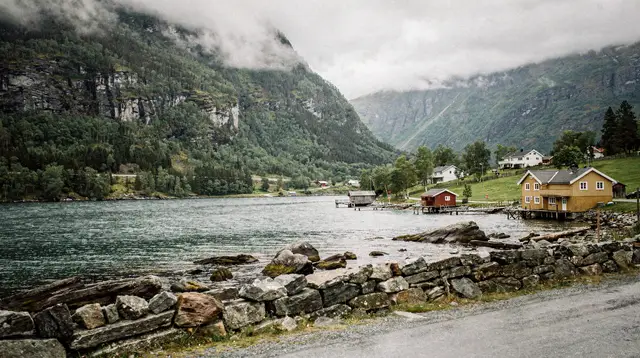
Smaller villages: bring food or accept that options will be very limited. Several farm cafés operate in summer along the fjord road, selling local produce, cheese, and the apple cider for which the inner Sognefjord is locally known.
Norway in a Nutshell and the Sognefjord connection
The Norway in a Nutshell route, as marketed, takes you through the innermost part of the Sognefjord system — specifically the Aurlandsfjord and Nærøyfjord branches. This is the most concentrated experience of the fjord you can have in a single transit day, and for most visitors it is more than sufficient to understand why the Sognefjord’s reputation is earned.
But the full Sognefjord is far larger than the Nutshell route shows. If you want to understand the fjord on its own terms — to spend an afternoon on a slow ferry watching the landscape pass, to sit in Balestrand and watch the evening light turn the water copper — you need more time than a transit itinerary allows.
The 2-day Oslo–Bergen itinerary covers the Nutshell efficiently. Adding a third day with an overnight at Balestrand transforms the experience from a highlight reel into something closer to genuine immersion. If you’d rather compare it against Oslo’s other big day-trip options first, the best day trips from Oslo guide and the wider fjord day trips from Oslo guide put the Sognefjord’s time cost in context.
Combining the Sognefjord with other western Norway destinations
The Sognefjord sits at the centre of a network of destinations that can be combined efficiently if you have a week in western Norway:
- Flåm is the natural base for accessing the Sognefjord from the east, with the Flåmsbana and fjord cruises leaving from its marina.
- Nærøyfjord is the most dramatic section of the Sognefjord system and a UNESCO World Heritage site — a 2-hour cruise from Flåm.
- Bergen is the practical western base, reachable from Voss on the Bergen Railway after completing the Nærøyfjord cruise. The Bergen from Oslo guide covers the full range of ways to make that leg of the trip.
- Hardangerfjord to the south is a separate fjord system requiring a dedicated day trip from Bergen.
Practical matters
Getting around the fjord: local ferry services (“Hurtigbåt”) connect the main villages on the Sognefjord. These are scheduled public transport services, not tourist boats — they are cheaper, slower, and more authentic. The ferry timetables are available on Vy’s website and the Sognefjord ferry app.
Crowds: the Norway in a Nutshell ferry route through the Nærøyfjord in July and August can feel overwhelmed with tourism. The main Sognefjord trunk sees fewer visitors and is dramatically quieter.
Winter: the Sognefjord is accessible year-round — it does not freeze even in the coldest winters. But the Flåmsbana still runs, the fjord is visible, and the landscape is beautiful under snow. The catch is that most boat services other than the main express ferries are suspended between November and April. A winter visit to Balestrand or Flåm is possible but requires more flexibility.
Frequently asked questions about the Sognefjord
How long is the Sognefjord?
The Sognefjord is 204 kilometres long and up to 1 308 metres deep, making it the longest fjord in Norway and the second-longest in the world. Its branches extend the total navigable waterway to several hundred kilometres more.
Is the Nærøyfjord part of the Sognefjord?
Yes. The Nærøyfjord is a branch of the Aurlandsfjord, which is itself a branch of the Sognefjord. When people say they are “visiting the Sognefjord,” they often mean specifically the Nærøyfjord cruise via Flåm — but this covers only the innermost finger of a much larger system. See the Nærøyfjord page for details on this specific cruise.
How do I get to the Sognefjord without a car?
The most practical approach is the train–railway–boat combination: Bergen Railway from Oslo to Myrdal, Flåmsbana to Flåm, and then fjord ferries westward. From Bergen, the equivalent eastward journey is also possible by train and Flåmsbana. Local “Hurtigbåt” express ferries connect villages along the main fjord trunk without requiring a car.
What is Balestrand and is it worth visiting?
Balestrand is a small town on the north shore of the main Sognefjord, accessible by boat from Flåm (about 2.5 hours). It is calmer and less touristy than Flåm and offers a genuine sense of fjord village life. If you are spending 2+ nights in the Sognefjord area, Balestrand is an excellent base. For a single day, it adds significant travel time.
Can I see the Sognefjord in one day from Oslo?
You can pass through the inner Sognefjord system (via the Norway in a Nutshell route) as part of a very long day from Oslo — around 14–15 hours total — but you will spend most of that day on trains and boats. For anything beyond a transit experience, an overnight stay in the region is necessary.
What is the best base for exploring the Sognefjord?
Flåm is the most convenient base if you are primarily interested in the Nærøyfjord cruise and the Flåmsbana. Balestrand is a better base if you want to explore the main fjord trunk and have a quieter experience. Bergen works well if you prefer a city with full services and want to take day trips into the Sognefjord.
How does the Sognefjord compare to the Geirangerfjord?
Both are dramatic, but they suit different trips. The Sognefjord system (via Flåm and the Nærøyfjord) is the more practical choice from Oslo, with a direct train-and-boat route. The Geirangerfjord is further west, famous for its waterfalls and heavier cruise-ship traffic, and usually makes more sense as part of a longer western Norway loop rather than a trip based from Oslo.
Can I visit the Sognefjord without taking the full Norway in a Nutshell package?
Yes. The individual legs — Bergen Railway to Myrdal, Flåmsbana to Flåm, and fjord boats onward — can all be booked separately through Vy and the boat operators, often for less than the bundled package, and with more flexibility on timing and overnight stops.
Top experiences
Bookable activities with verified prices and instant confirmation on GetYourGuide.