Nærøyfjord — UNESCO's narrowest fjord
Nærøyfjord is a UNESCO World Heritage site and Norway's most dramatic fjord arm. Here's how to reach it from Oslo via Flåm or Bergen.
Bergen to Oslo: Nærøyfjord cruise and Flåm Railway
Duration: Full day
- Nærøyfjord
- Flåm Railway
Quick facts
- Best time
- May–September; peak cruise season June–August
- Days needed
- Half a day on the fjord itself; allow 2 days total from Oslo
- Getting there
- Oslo → Myrdal (train) → Flåm (Flåmsbana) → Nærøyfjord cruise → Gudvangen
- Budget per day
- NOK 600–1 100 (USD 65–118) on the fjord day, excluding Oslo train tickets
The narrowest fjord in the world — and why it matters
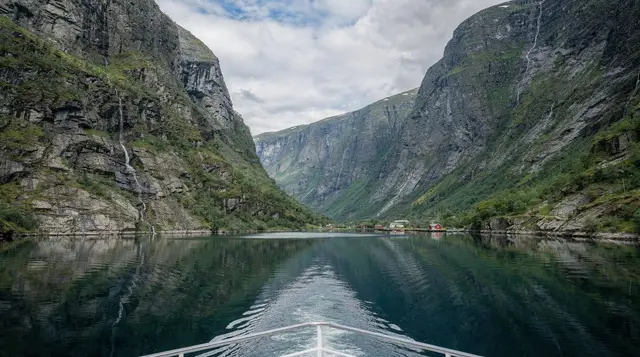
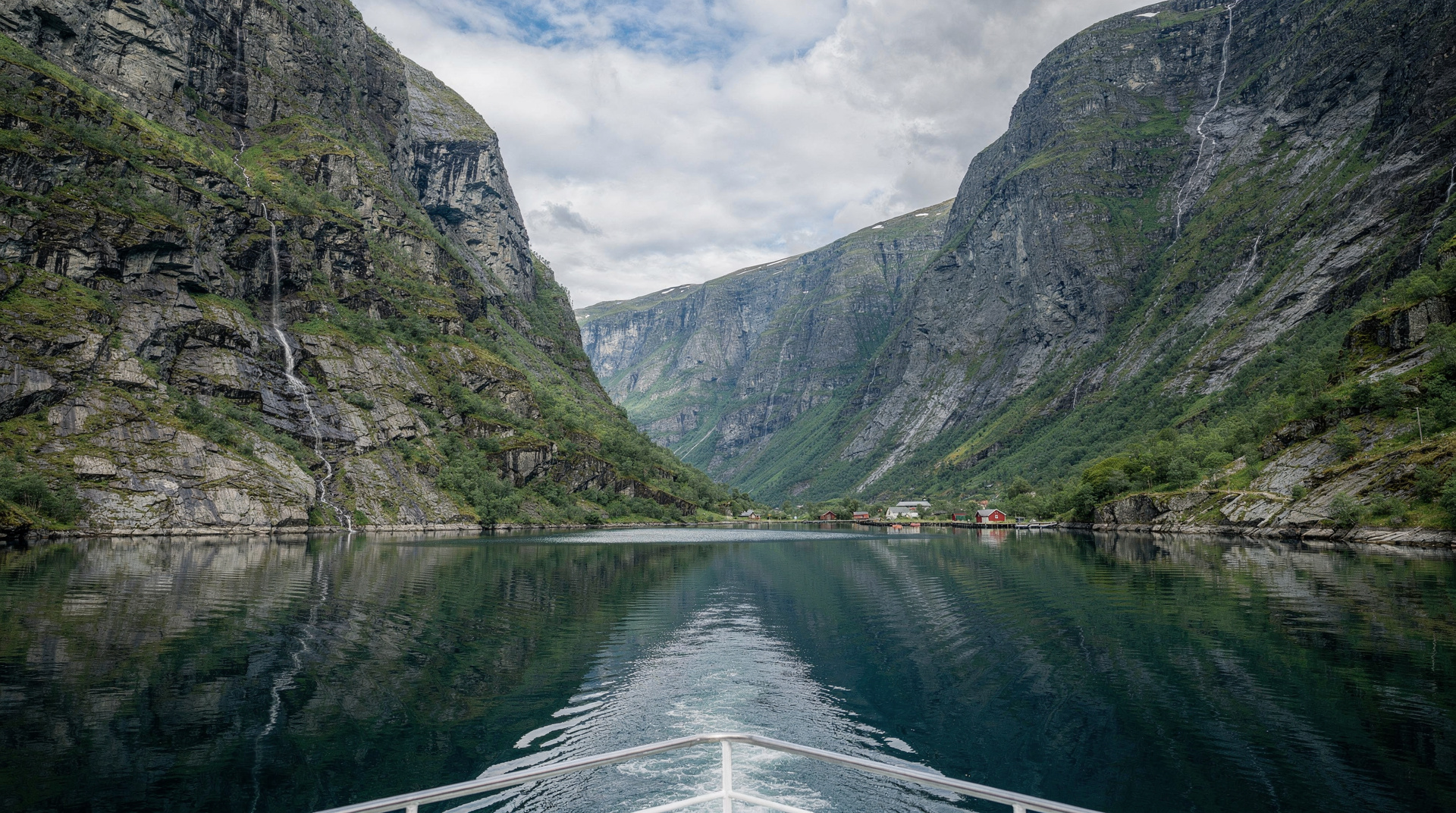
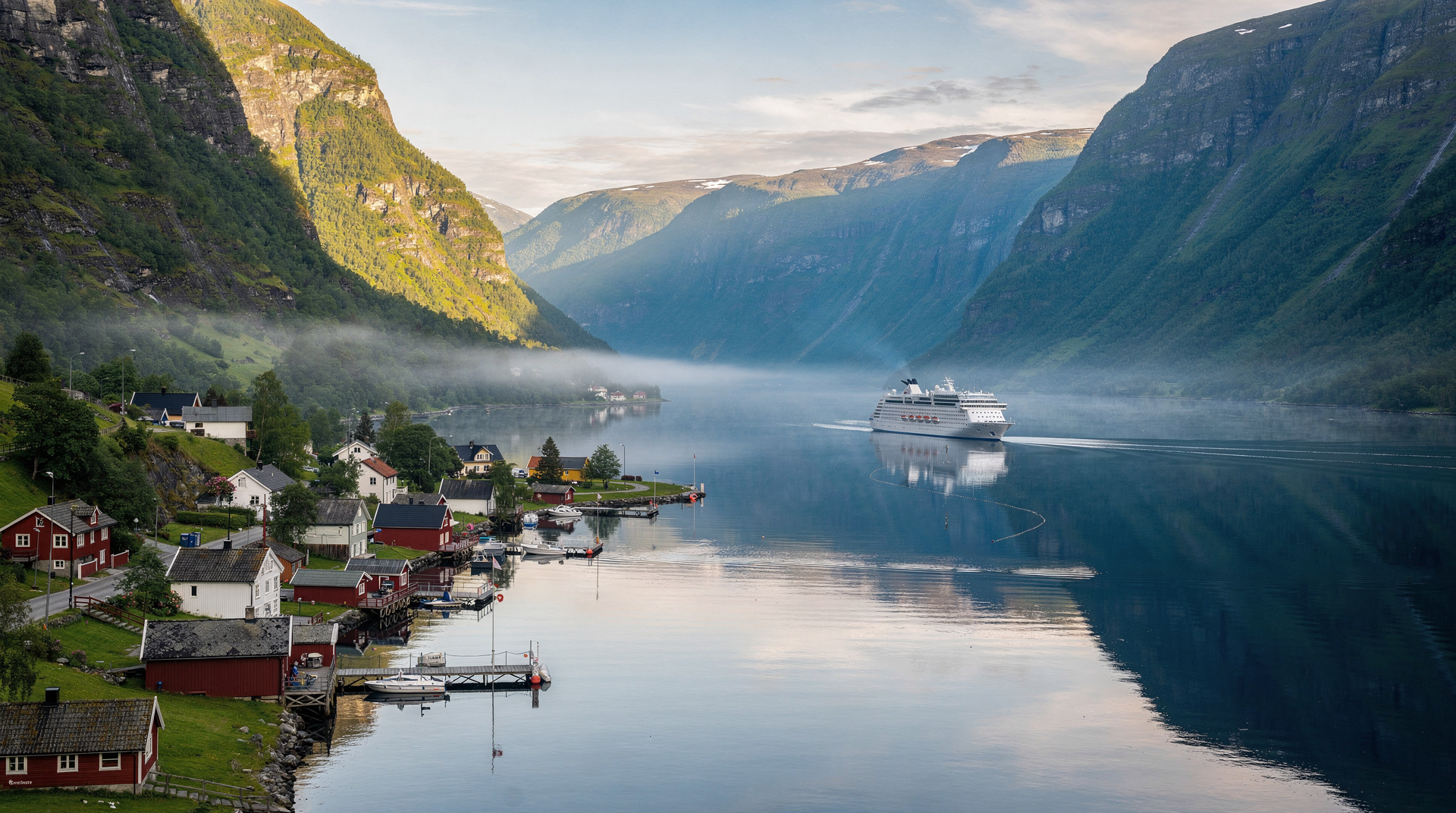
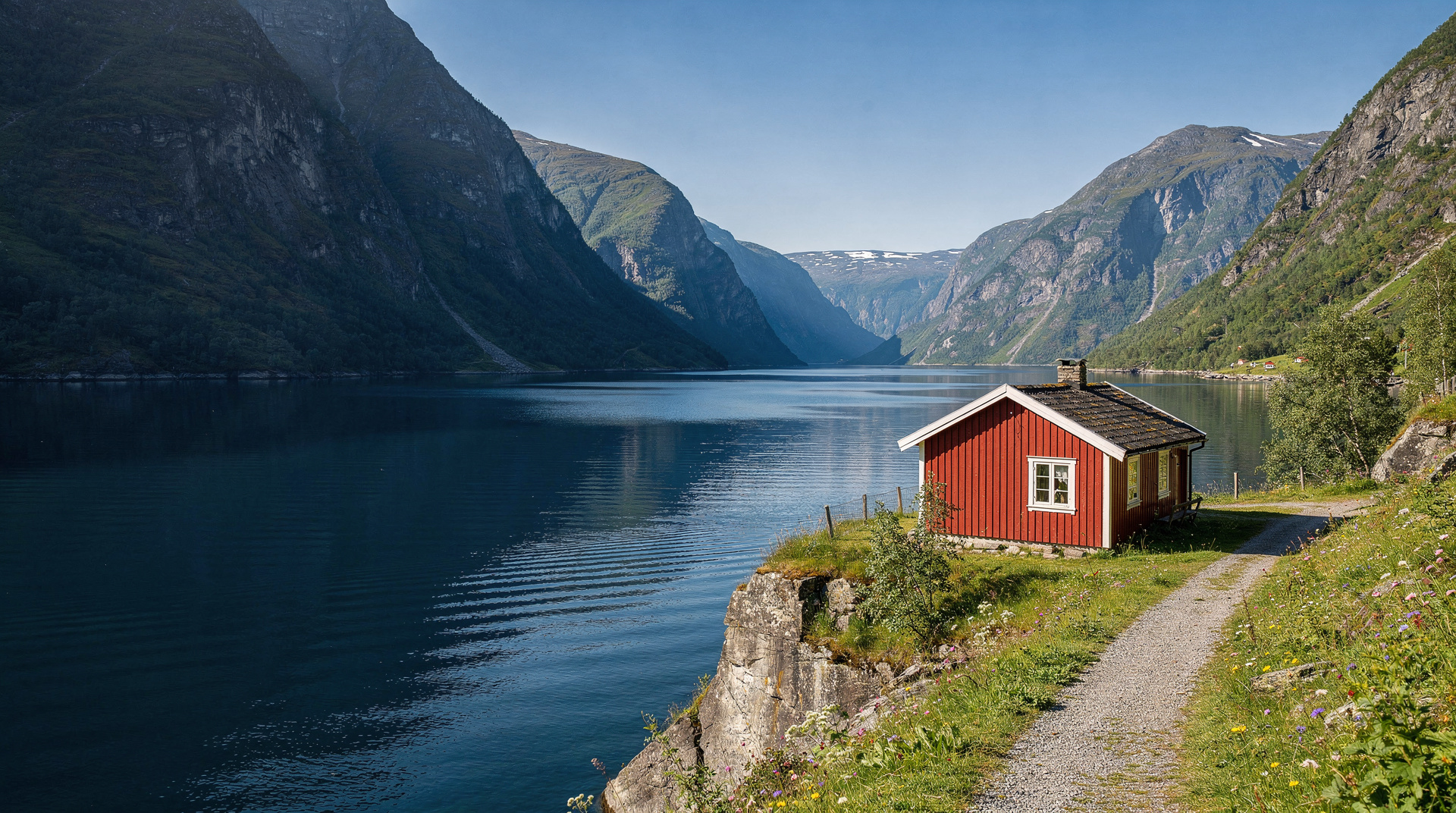
There are longer fjords in Norway, deeper fjords, and arguably more famous ones. But the Nærøyfjord earns its UNESCO World Heritage status (shared with the Geirangerfjord, designated in 2005) through sheer drama: at its narrowest point, near the village of Bakka, the water is only 250 metres wide. On either side, the mountain walls rise to 1 400–1 700 metres. The fjord is 18 kilometres long. You cruise through it — often in silence broken only by distant waterfalls — and the scale of it is simply incomprehensible from photographs.
The Nærøyfjord is a branch of the Sognefjord — specifically an arm of the Aurlandsfjord, which is itself a branch of the Sognefjord’s inner reaches. It runs roughly east–west between Gudvangen in the west and the junction with the Aurlandsfjord in the east, with Flåm a short sail south. This geography makes it the natural centrepiece of the Norway in a Nutshell route, which approaches from the Aurlandsfjord side and exits through Gudvangen.
| Where | Western Norway, an arm of the Sognefjord near Flåm |
| Getting there | Oslo → Myrdal (train) → Flåm (Flåmsbana) → cruise → Gudvangen |
| Time needed | Half a day on the water; allow 2 days total from Oslo |
| Cost | Around NOK 600–1 100/day (USD 65–118), excluding the Oslo train |
| Best time | May–September; June–July for long daylight, late Aug–Sept for photography light |
Getting to the Nærøyfjord from Oslo
The Nærøyfjord is not accessible by road — you reach it by boat, and getting to the boat requires a rail journey first. The full route from Oslo looks like this:
Oslo S → Myrdal on the Bergen Railway (approx. 4.5–5 hours). Take the early morning departure (around 08:00) to make the most of daylight. For full booking guidance on this section, see the Oslo to Bergen train guide.
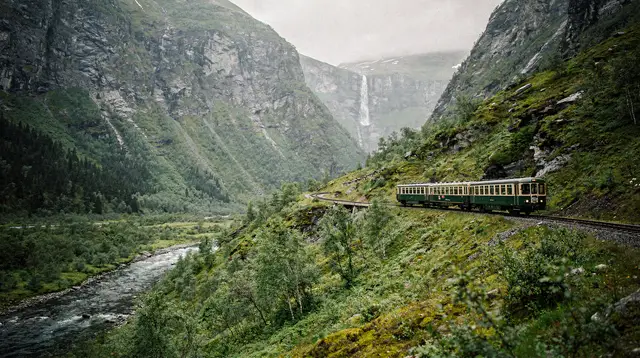
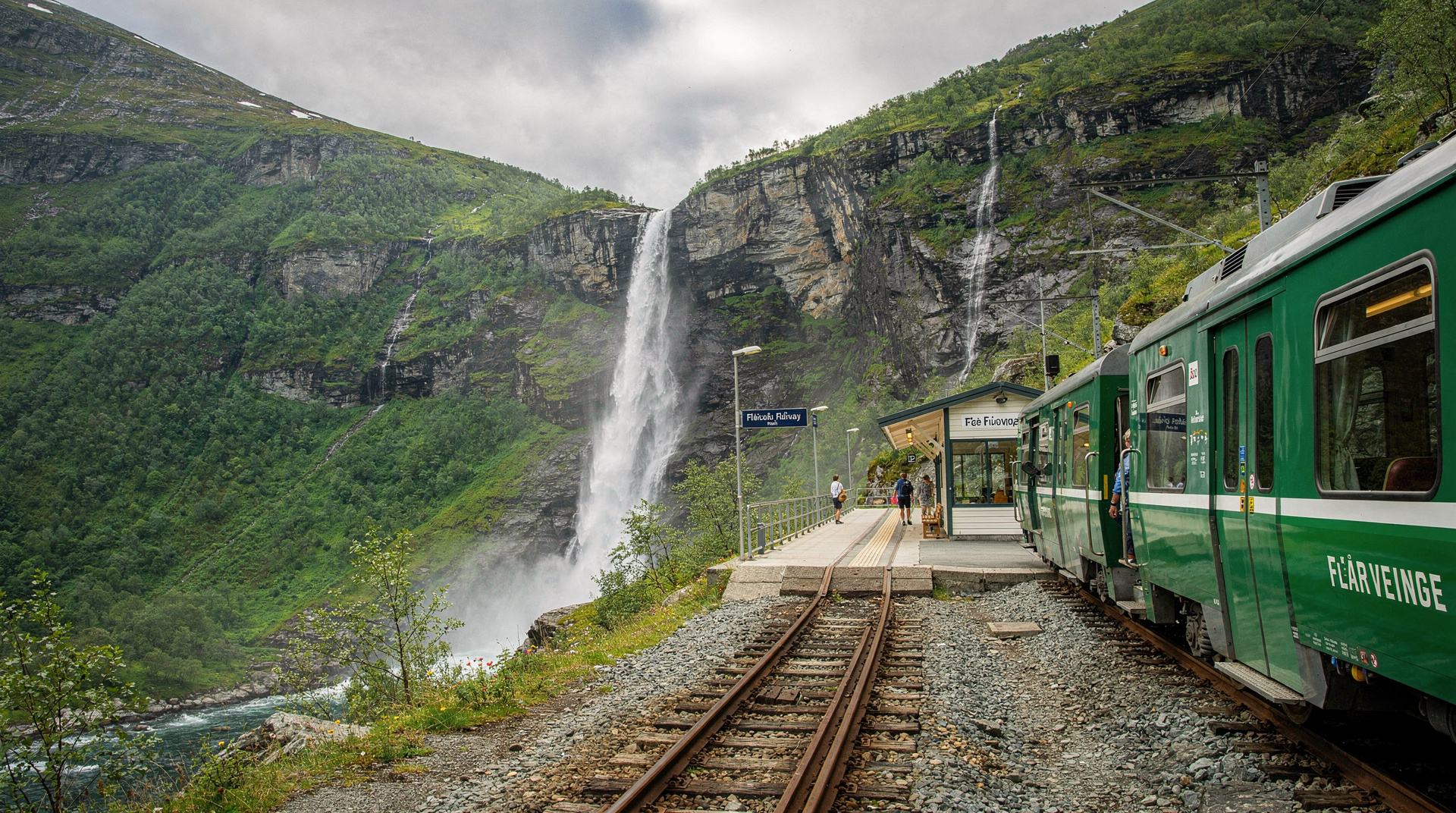
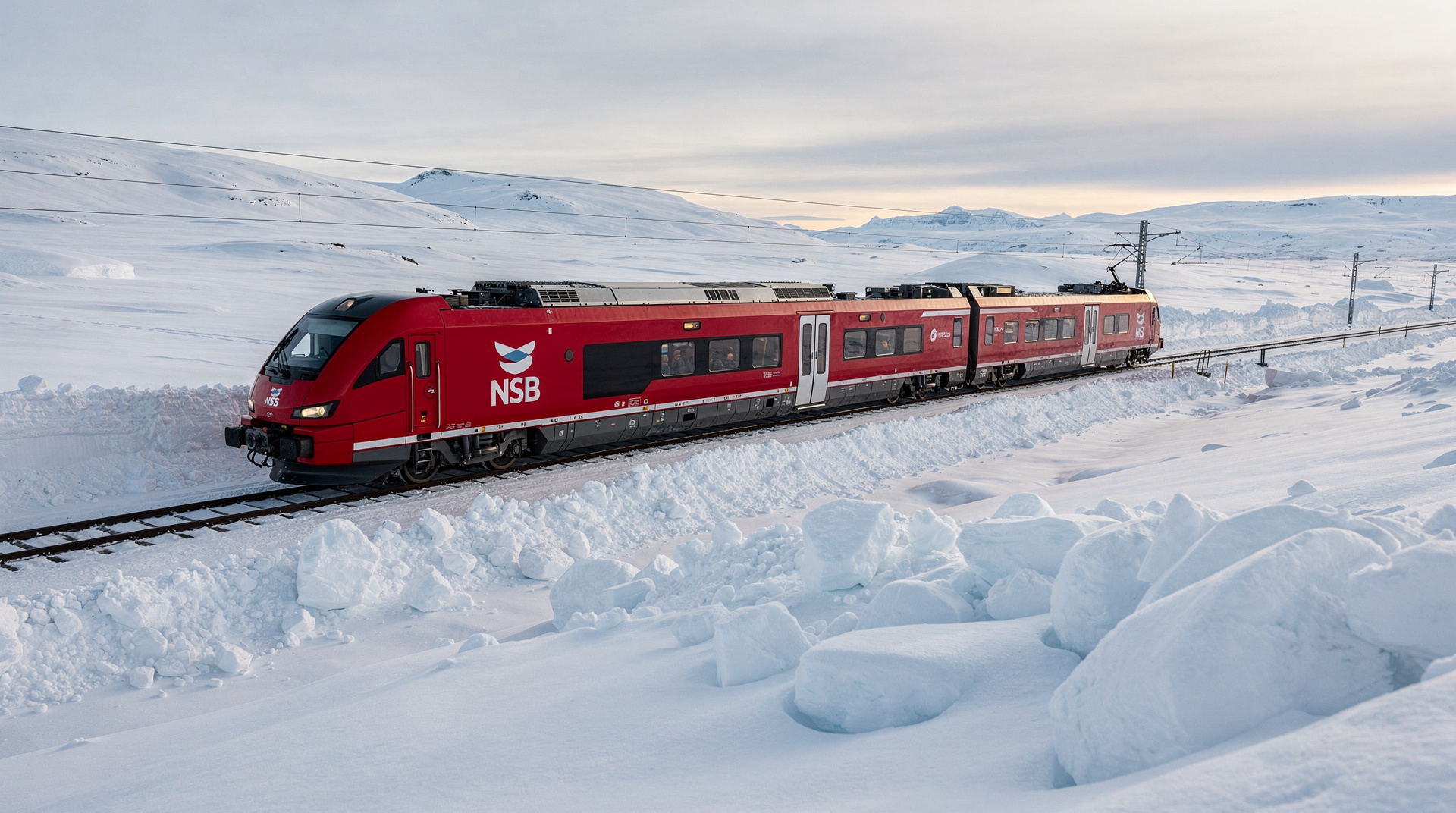
Myrdal → Flåm on the Flåmsbana (55 minutes downhill). This is the famous mountain railway that descends 866 metres from the plateau to fjord level. See the Flåm Railway guide for everything you need to know.
Flåm → Gudvangen by fjord ferry (approximately 2 hours). This is the Nærøyfjord cruise itself — the section this page is about. Boats run by Fjord1 and Norled depart from Flåm marina several times daily in summer (less frequently in shoulder seasons). Book in advance; these boats fill quickly in July and August.
Gudvangen → Voss → Bergen or Oslo by bus and train. From Gudvangen, a bus (part of the Norway in a Nutshell package route) runs to Voss, where you pick up the Bergen Railway onwards.
The total round trip from Oslo to the Nærøyfjord and back to Oslo in a single day is possible but extremely demanding — you are looking at 14–15 hours of travel with roughly 2 hours on the fjord. Staying overnight in Flåm or continuing to Bergen is strongly recommended. See the day trips from Oslo guide for an honest assessment of one-day options.
The cruise itself: what to expect
The boat from Flåm typically moves slowly through the Aurlandsfjord first — a 20-minute crossing to the junction — before turning into the Nærøyfjord proper. As the walls narrow and rise, the mood on deck shifts noticeably. Passengers who were chatting or looking at phones tend to go quiet.
The waterfalls are the first thing you notice: dozens of them, thin white threads spilling off ledges hundreds of metres above, fed by snowmelt and rain. The most dramatic, Kjelfossen, drops over 700 metres in total. In June and July the flow is at its most powerful; by late September many of the smaller falls have slowed to a trickle.
Tiny farms cling to ledges partway up the valley walls — Styvi, Bakka, Dyrdal — accessible only by boat. Bakka has a passenger pier and a small church; it is possible to disembark here on some services. These settlements have been inhabited for centuries, and the Norse-era terraced fields are still visible on the cliff faces.
At Gudvangen, the fjord ends in a flat floodplain — a jarring transition from the vertical world you’ve been moving through. The Viking Valley tourist complex here is optional and unremarkable; most visitors catch the connecting bus to Voss immediately.
Nærøyfjord from Bergen: the reverse direction
The Nærøyfjord is, if anything, easier to reach from Bergen than from Oslo. The journey from Bergen takes:
- Bergen → Voss → Myrdal by train (about 1.5 hours to Voss, then 40 minutes to Myrdal)
- Flåmsbana from Myrdal to Flåm (55 minutes)
- Nærøyfjord cruise Flåm to Gudvangen (2 hours)
- Bus Gudvangen to Voss (1 hour)
- Train Voss to Bergen (45 minutes)
This is the Norway in a Nutshell circuit done as a full-day loop from Bergen — about 9–10 hours of travel with stops. It is feasible in a single day and the most popular way to combine Bergen with the fjord.
Alternatively, the one-way route from Bergen ends in Oslo — you ride the Flåmsbana, cruise the Nærøyfjord, and take the Bergen Railway back east to Oslo. This is the “Nutshell in reverse” option favoured by travellers who want to end in Oslo rather than Bergen.
What makes the Nærøyfjord UNESCO-listed?
The Nærøyfjord was inscribed as a UNESCO World Heritage site in 2005, as part of the West Norwegian Fjords designation shared with the Geirangerfjord. The listing recognises the fjord’s natural significance — it represents one of the best remaining examples of an active fjord landscape, with glacial geology, ongoing erosion, and ecosystems that span from the sea floor to the mountain summits above.
The fjord is also notable for its settlement history. The farms on the valley walls at Bakka, Styvi, and Dyrdal have been continuously occupied for over a thousand years. Their position — unreachable by land, serviced only by boat — is a reminder of how Norwegians lived in these valleys before the roads were carved through the mountains in the 20th century.
There is an ongoing tension between the site’s heritage value and its popularity. In peak summer, large cruise ships enter the fjord — the Nærøyfjord is technically navigable for ocean-going vessels, and some operators have used this. Environmental regulations have tightened significantly in recent years, with moves toward zero-emission vessels only in UNESCO-listed fjords. By 2026 the largest diesel-powered tourist boats have been largely replaced by hybrid and electric vessels on the main cruise routes.
Smaller boats and quieter experiences
The standard Norway in a Nutshell ferry is a large vessel carrying several hundred passengers. It is efficient and perfectly comfortable, but the experience of being on a packed deck in the middle of one of Europe’s most pristine landscapes is not everyone’s preference.
Alternatives for a quieter time:
Electric and hybrid small-group boats from Flåm Marina offer 2–4 hour tours in vessels carrying 20–50 passengers. These are quieter, allow you to stop and linger, and often include guided commentary. Prices are higher — roughly NOK 700–1 200 per person (USD 75–129) versus NOK 350–450 (USD 38–48) for the standard ferry.
Kayaking from Flåm into the outer Aurlandsfjord is available for experienced paddlers. Guided sea kayak tours into the lower Nærøyfjord run from Flåm from late May to early September. The scale of the fjord is most viscerally felt from water level.
Gudvangen Viking Village is a reconstruction of a Viking-age settlement at the head of the fjord. It is a managed tourist attraction rather than an archaeological site, but it is handled with reasonable seriousness and includes craft demonstrations and a café. Worth 1–2 hours if you are spending time in Gudvangen.
Combining Nærøyfjord with the rest of your Norway trip
The standard Oslo–Bergen 2-day Nutshell itinerary covers the Nærøyfjord as Day 1’s afternoon highlight. Day 1: Oslo → Myrdal → Flåm (overnight). Day 2: Nærøyfjord cruise → Gudvangen → Voss → Bergen. This structure is the most popular because it gives you a full morning on the Flåmsbana, an afternoon on the fjord, and arrives in Bergen with the evening free.
If you are spending more time in western Norway, the Nærøyfjord pairs naturally with:
- Flåm village (overnight base, with the Flåmsbana as a separate excursion)
- Sognefjord (the wider fjord system of which the Nærøyfjord is a branch)
- Bergen (the natural base for western Norway exploration)
Seasonal notes
Cruises on the Nærøyfjord run from approximately late April to late October. Winter services are limited or non-existent depending on the operator. The fjord itself is open year-round, but ice can affect the upper reaches in cold winters, and the small ferries that serve the cliffside farms run on reduced winter schedules.
The most dramatic light for photography is in late summer (mid-August to late September) when the sun is lower in the sky and rakes across the cliff faces late in the afternoon. June and July have very long days — in Bergen, sunset is after 23:00 in midsummer — meaning evening cruises are lit by a long golden hour that photographers love.
Spring (May–June) brings the highest waterfall flow from snowmelt. The valley farms are lush green, which contrasts with the bare grey stone of the upper cliffs.
Frequently asked questions about the Nærøyfjord
How long is the Nærøyfjord cruise from Flåm to Gudvangen?
The standard ferry takes approximately 2 hours. Some smaller vessel tours run 2.5–3 hours with stops. The boat from Gudvangen back to Flåm takes the same time. Most visitors do the cruise one-way (Flåm to Gudvangen) and continue onward by bus to Voss.
Is the Nærøyfjord the same as the Sognefjord?
No — the Nærøyfjord is a branch of the Aurlandsfjord, which is itself a branch of the Sognefjord. The Sognefjord is the largest fjord system in Norway (204 km long, 1 308 m deep). The Nærøyfjord is one of its innermost and narrowest arms. See the Sognefjord page for the full picture of how these waterways connect.
Can I visit the Nærøyfjord without doing the full Norway in a Nutshell?
Yes. The Nærøyfjord cruise (Flåm to Gudvangen or vice versa) can be booked as a standalone boat ticket without the full Nutshell package. You still need to get to Flåm first — which requires the Bergen Railway and Flåmsbana — but you can skip the Gudvangen–Voss bus and return to Flåm by boat if you prefer.
What is there to do at Gudvangen?
Gudvangen is a small village at the head of the Nærøyfjord, primarily serving as a transit hub. The Viking Village tourist complex here includes Norse craft demonstrations, a café, and accommodation. It is worth a brief stop but not a destination in itself. Most visitors take the connecting bus to Voss within 30–60 minutes of arriving.
Is the Nærøyfjord cruise suitable for children?
Yes. The boat ride is calm (the fjord is sheltered), the views are dramatic and engaging even for younger children, and the journey time of 2 hours is manageable. The Flåmsbana train beforehand is also popular with children. The Norway in a Nutshell route as a whole is widely recommended for family travel.
What is the difference between the Nærøyfjord and Geirangerfjord?
Both are UNESCO-listed Norwegian fjords, but they are not connected. The Nærøyfjord is reached via Flåm and the Sognefjord system in western Norway. The Geirangerfjord is further north, accessed from Ålesund or via a long drive from Bergen or Oslo. The Nærøyfjord is narrower; the Geirangerfjord has the famous Seven Sisters waterfall and more dramatic cascades. See the Geirangerfjord page for comparison.
Standard ferry versus small-group boat: which to choose
| Standard ferry (Flåm–Gudvangen) | Small-group electric/hybrid boat | |
|---|---|---|
| Price | NOK 350–450 (USD 38–48) | NOK 700–1 200 (USD 75–129) |
| Passengers | Several hundred | 20–50 |
| Commentary | Minimal | Often guided |
| Flexibility | Fixed schedule, no stops | Can slow down or pause for photos |
| Best for | Budget travellers, the Nutshell route | Photographers, quieter groups, special occasions |
Both cover the same UNESCO-listed water; the choice is really about crowd tolerance and budget, not scenery.
Top experiences
Bookable activities with verified prices and instant confirmation on GetYourGuide.