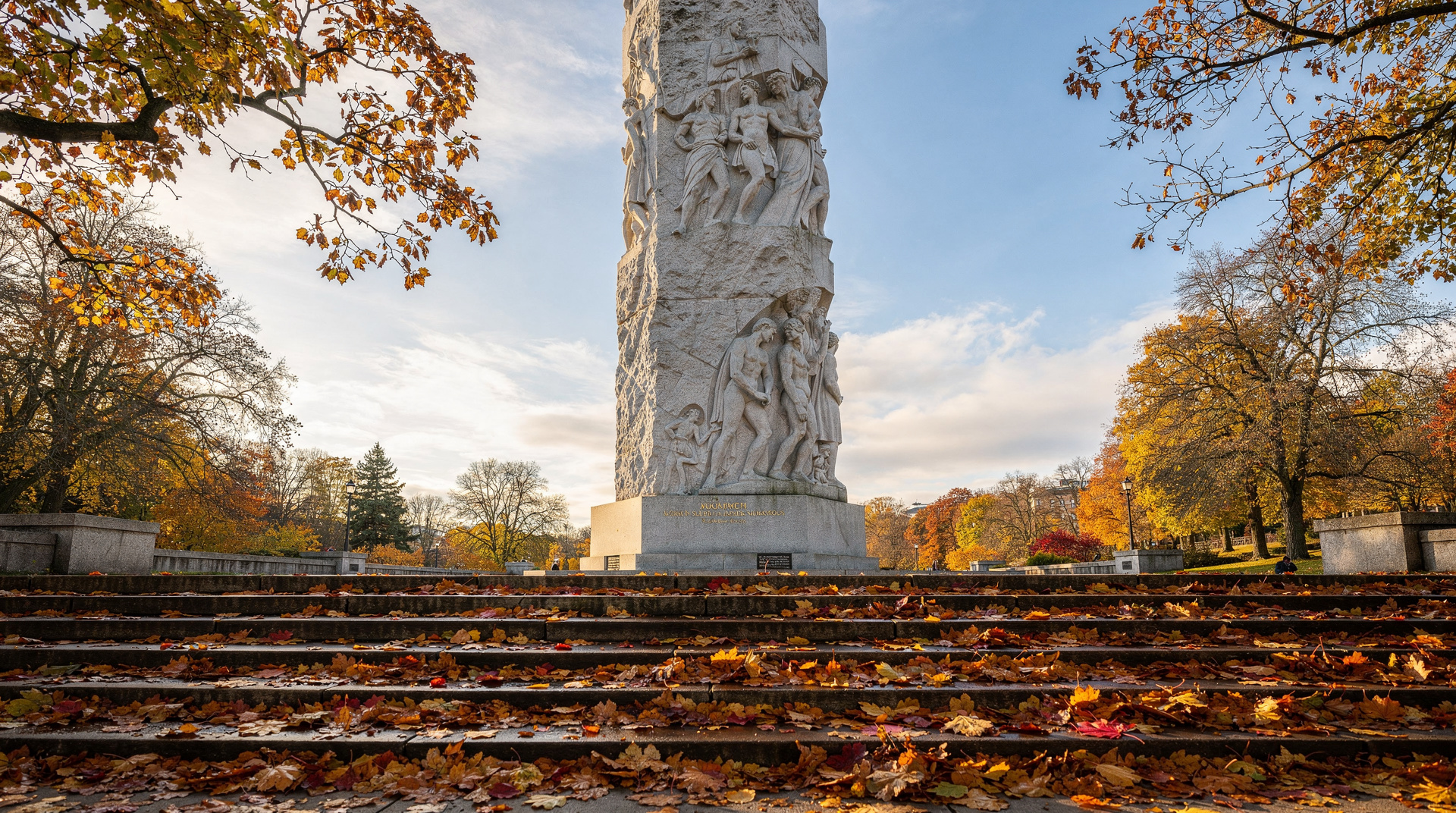
Grünerløkka — Oslo's creative quarter
Grünerløkka is Oslo's creative east-side quarter: specialty coffee, vintage shops, street food, and the city's best neighbourhood energy.
Oslo: Grünerløkka food and culture walking tour
Duration: 3 hours
- Grünerløkka
- Tastings included
Quick facts
- Best time to visit
- Year-round; summer terraces are a highlight
- Getting there
- Tram 11/12 from Jernbanetorget to Olaf Ryes plass, or tram 13 from Nationaltheatret
- Days needed
- Half a day to a full day
- Budget per day
- NOK 350–900 (USD 38–97) — one of Oslo's better-value areas
The neighbourhood that got there first
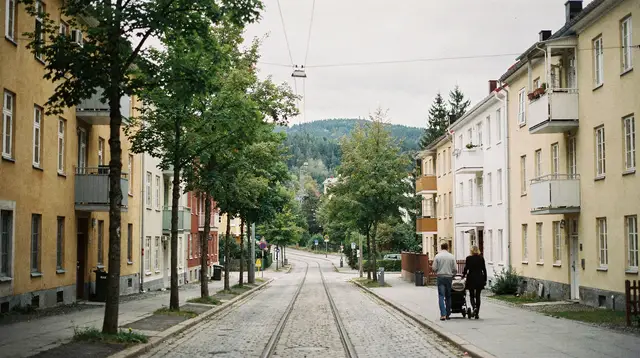
Grünerløkka’s story is a familiar one in European cities: a working-class industrial district, left behind as manufacturing declined, discovers cheap rents and high ceilings, attracts artists and young families, becomes the city’s coolest neighbourhood, then gradually becomes expensive as a consequence of its own success. What makes Grünerløkka interesting is how well it has navigated this trajectory. Twenty years into its transformation, it still feels more like a genuine neighbourhood than a tourist product.
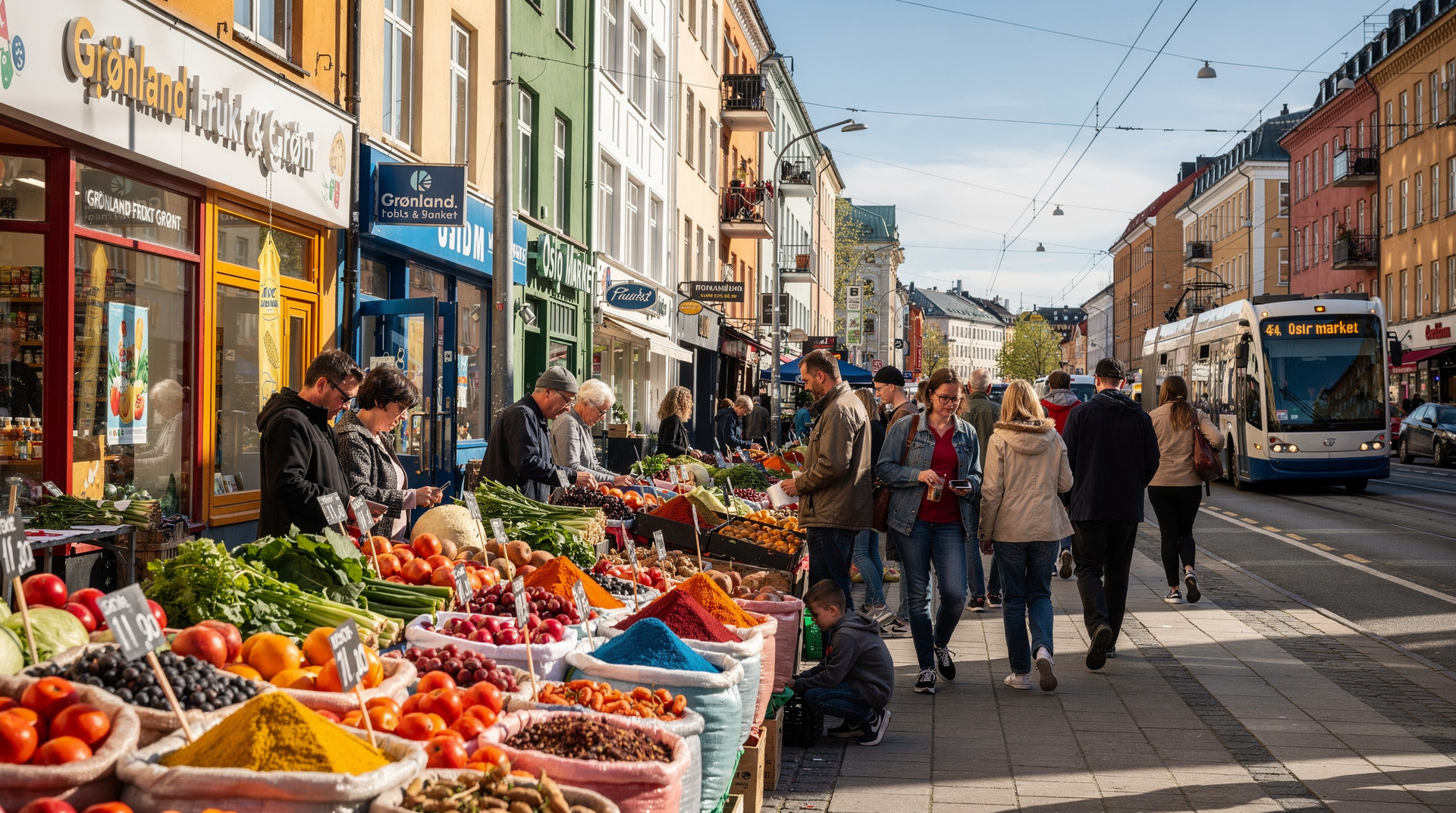
The streets around Olaf Ryes plass, Thorvald Meyers gate, and the Akerselva river are the heart of the district. You will find Oslo’s most dedicated specialty coffee roasters here, a density of independent shops that would be exceptional in any European city, and a restaurant and bar scene that spans cheap Vietnamese noodles to acclaimed tasting-menu kitchens. Locals — young professionals, designers, food-industry workers, families pushing prams — occupy the same spaces as tourists without the friction you find in the more overtly tourist-facing neighbourhoods.
One honest note: Grünerløkka is not a budget district by Norwegian standards, but it is significantly cheaper than Aker Brygge or Sentrum for eating and drinking. A sit-down lunch here costs NOK 150 to 250 (USD 16–27); a craft beer at a good bar runs NOK 95 to 115 (USD 10–12). That is still expensive by most international standards, but it is the reasonable range for Oslo.
| Where | East-side Oslo, around Olaf Ryes plass and Thorvald Meyers gate |
| Getting there | Tram 11/12 from Jernbanetorget, or tram 13 from Nationaltheatret |
| Time needed | Half a day; a full day if you add Mathallen and nightlife |
| Typical spend | Around NOK 350–900 (USD 38–97) per day, food and drink included |
| Best time | Year-round; summer evenings on Olaf Ryes plass are the highlight |
Grünerløkka versus Sentrum and Aker Brygge for eating out
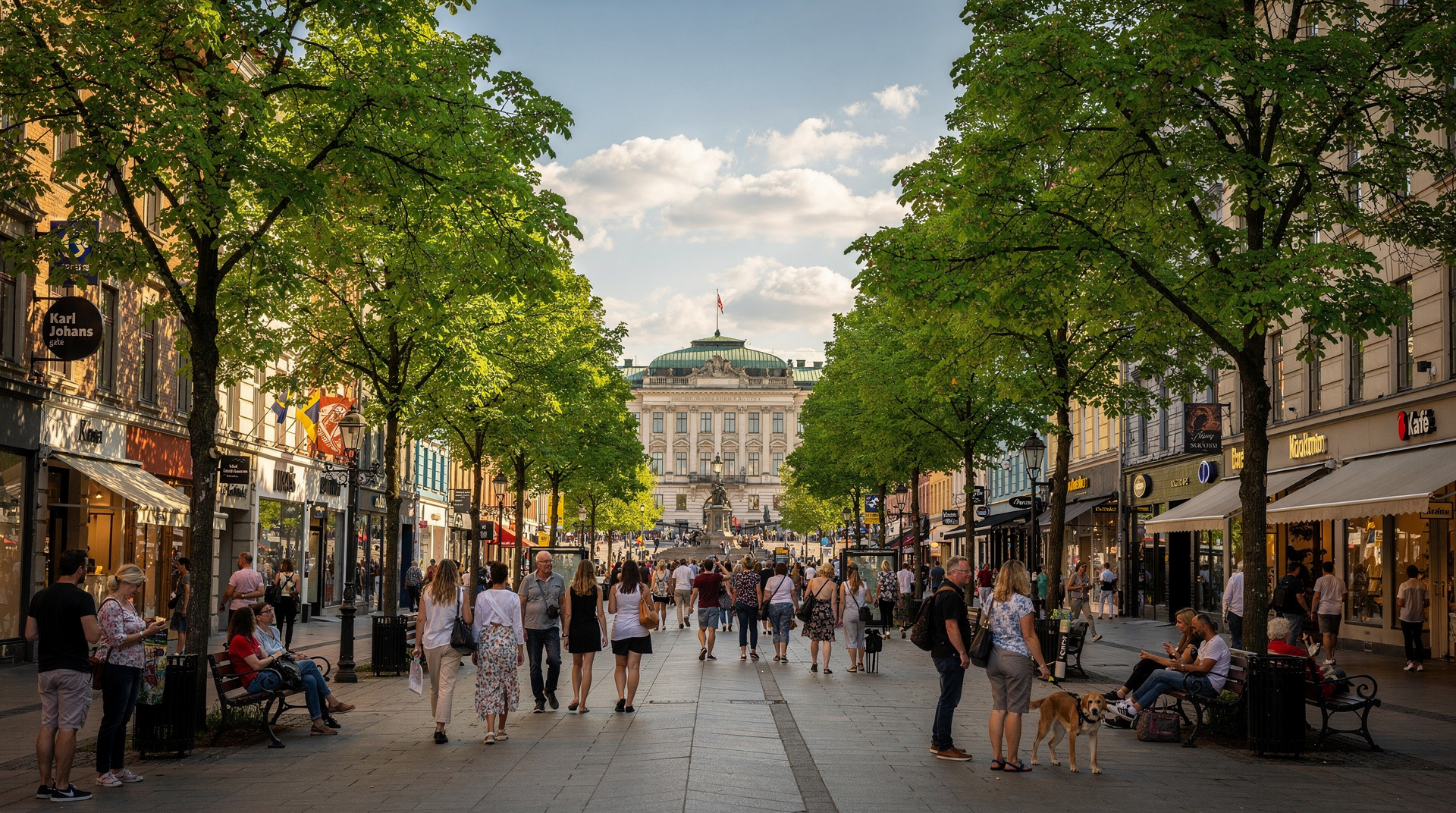
Visitors who base themselves near Karl Johans gate or the Aker Brygge waterfront often never make it east to Grünerløkka, which is a mistake if eating well matters to the trip. The three areas serve genuinely different experiences and price points.
| Grünerløkka | Sentrum (Karl Johans gate) | Aker Brygge | |
|---|---|---|---|
| Typical lunch | NOK 150–250 | NOK 200–320 | NOK 220–350 |
| Clientele | Mostly local | Mostly tourist | Mixed, waterfront premium |
| Best for | Coffee, food halls, independent kitchens | Convenience near sights | Waterfront views, seafood |
| Honest verdict | Best value-to-quality ratio in Oslo | Fine in a pinch, rarely memorable | Pay for the view, not the food |
The pattern holds across almost every category: Grünerløkka gives you better food for less money because the customer base is local rather than passing through once. See where to eat in Oslo for the full citywide picture.
Olaf Ryes plass: the neighbourhood square
The large park-square at the centre of Grünerløkka is where the district’s social life concentrates. In summer, the outdoor terraces of the surrounding bars and cafés fill from mid-afternoon and stay busy until midnight. In winter, the square is quiet but the surrounding cafés are cosy and heated.
The key corner is where Thorvald Meyers gate meets the square — this is the geographic and social heart of the neighbourhood. The coffee shop Stockfleths (one of Oslo’s oldest roasters) has a branch here; so does Tim Wendelboe, whose micro-roastery a few blocks away on Grüners gate is a pilgrimage destination for specialty coffee enthusiasts from around the world.
Tim Wendelboe (Grüners gate 1): Wendelboe won the World Barista Championship in 2004 and has been operating this compact, single-origin-focused roastery-café since 2007. The coffee is outstanding; the queues on weekend mornings can be long; the prices reflect the quality (NOK 60 to 85 / USD 6–9 per cup). Go for the filter coffee.
Fuglen (Universitetsgata 2, also in Sentrum): another cornerstone of Oslo’s coffee scene, with a vintage furniture shop inside and a reputation that extends to international coffee media. The Grünerløkka area generally has the highest concentration of quality-focused coffee shops of any district in Oslo — see our Oslo coffee culture guide for the full list.
Thorvald Meyers gate: the shopping street
Running through the heart of Grünerløkka, Thorvald Meyers gate is lined with the kind of shops that independent-retail enthusiasts travel specifically to visit. The mix includes:
Vintage and secondhand: Grünerløkka has a concentration of curated vintage clothing shops that is exceptional by Scandinavian standards. Fretex (the Salvation Army chain) has a large store here; more curated options include BUA, Vintage Oslo, and several smaller boutiques on adjacent streets. Norwegian vintage design — furniture, ceramics, glassware from the 1950s through 1980s — is particularly worth seeking out.
Design and homewares: Norwegian design culture is genuinely strong, and Grünerløkka has several shops selling work by local designers rather than the generic Scandinavian aesthetic you find at airport stores. Look on Markveien and Thorvald Meyers gate itself.
Records and books: Råkk & Rålls on Thorvald Meyers gate has been Oslo’s best independent record shop for decades. The small bookshop cluster on and around the street includes good English-language sections.
The shopping is best approached with time and no specific agenda — this is a neighbourhood for wandering, not a checklist experience.
Mathallen Oslo: the food hall
Mathallen is Oslo’s premier food hall, housed in a converted industrial building at Vulkan (on the Akerselva, the boundary between Grünerløkka and Rodeløkka). It is one of the best single places in the city to eat and to shop for Norwegian produce.
The hall hosts around 30 independent food vendors and producers. Highlights include Jacobs & Sons (smoked fish, prawns, and gravlaks), Ostehuset (Norwegian artisan cheeses), Smelteverket (burgers), Maaemo Deli (the retail arm of Norway’s three-Michelin-starred restaurant), and several excellent lunch counters serving everything from Vietnamese pho to house-made pasta.
Lunch at Mathallen costs NOK 130 to 220 (USD 14–24) for a main dish — Oslo’s best food-hall pricing. Weekend brunch is popular and can draw queues. Open Tuesday through Sunday; closed Mondays. See our Mathallen guide for the best current vendor recommendations.
The Akerselva: the river that made Grünerløkka
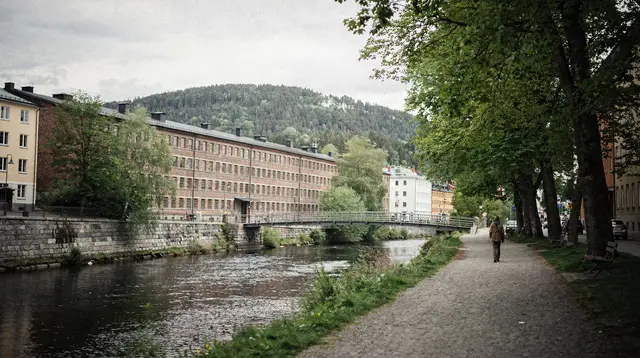
The Akerselva river runs from Maridalsvannet (the drinking-water reservoir north of the city) through Grünerløkka, past Mathallen and Vulkan, and into the Oslofjord near the Opera House. The riverside path from Vulkan north to Nydalen passes former textile mills, waterfalls, and converted industrial buildings.
This walk is one of Oslo’s best free experiences: you can cover the most interesting 3 to 4 km section in an hour and emerge at Nydalen T-bane station to return to the centre. In summer, the river banks between Grünerløkka and Grønland (to the south) are popular spots for urban swimming — the water is cold but clean, and small beaches have formed below the weirs. See Oslo swimming spots for which sections are safe.
Eating out in Grünerløkka
Beyond Mathallen, the neighbourhood has a restaurant scene that covers most price points.
Illegal Burger: the original Oslo smash-burger joint, opened before smash burgers were everywhere. Queue at the counter; burgers run NOK 180 to 220 (USD 19–24) with sides. Reliably good.
Punjab Tandoori (Grønland, adjacent neighbourhood): technically just south of Grünerløkka, but no list of genuinely good, affordable Oslo eating ignores it. Chicken tikka masala for NOK 180 (USD 19), reliably excellent for over a decade. Mostly locals.
Hendrix Ibsen: mid-range bistro on Thorvald Meyers gate with a natural-wine focus and good seasonal Norwegian small plates. Popular with food-industry Osloians. Dinner around NOK 400 to 600 (USD 43–65) per person with drinks.
Young Sik: Korean-Norwegian fusion in a small space, booking essential for dinner. One of the more interesting kitchens in the neighbourhood.
For a deeper eating guide, see Grünerløkka food guide and Oslo craft beer and bar scene.
Nightlife in Grünerløkka
Grünerløkka has Oslo’s best bar-and-pub concentration outside the city centre. The area around Thorvald Meyers gate and Olaf Ryes plass transforms after 10 pm on weekends, with queues at some of the busier venues from midnight on.
Blå (on the Akerselva riverbank): Oslo’s best live music and club venue, in a former bus garage. Attracts both established acts and cutting-edge electronic music nights. Check listings at blaaoslo.no; tickets typically NOK 150 to 300 (USD 16–32).
Territoriet: wine bar on Markveien, natural-wine focused, excellent selection by the glass from NOK 100 (USD 11). Relaxed atmosphere; good late-evening option.
Bar Boca: retro cocktail bar, one of Oslo’s oldest specialist cocktail venues, in a narrow space on Thorvald Meyers gate. House specials are consistently well-made; prices around NOK 150 to 175 (USD 16–19) per cocktail.
For more, see Oslo nightlife guide.
Getting to and around Grünerløkka
Tram 11/12: departs from Jernbanetorget (Oslo S) and runs the length of Thorvald Meyers gate, stopping at Schous plass, Olaf Ryes plass, and northward. Most useful for connecting to the centre and to Grønland and Tøyen.
Tram 13: connects Nationaltheatret (near Aker Brygge and Sentrum) through the city to the Grünerløkka area.
Walking: from Oslo S to the lower end of Grünerløkka (Grønland district, border zone) takes about 15 minutes on foot. From Nationaltheatret, allow about 25 to 30 minutes walking via the river path — pleasant in good weather.
Bysykkel city bikes: docks throughout the neighbourhood. Best way to continue to the Botanical Garden, Tøyen, or the Akerselva path.
Frequently asked questions about Grünerløkka
How do you pronounce Grünerløkka?
Approximately “GREW-ner-luh-ka” — the ü is like the French “u” in “rue”, the ø is like the French “eu” in “bleu”. Osloians often shorten it to “Løkka” in casual speech.
Is Grünerløkka worth a visit even without specific plans?
Yes, more than most neighbourhoods. The combination of good coffee, interesting shops, and lively outdoor spaces makes it one of the easiest districts to spend unstructured time in. It is also consistently cited by long-term Oslo residents as the neighbourhood they would choose to live in — which is a reliable indicator of quality of urban experience.
How does Grünerløkka compare to the city centre for eating?
Grünerløkka is generally better for eating — more variety, better quality-to-price ratio, and more places where the clientele is primarily local. The tourist strip along Karl Johans gate and the Aker Brygge waterfront restaurant row are noticeably more expensive for worse food. If you are making a specific effort to eat well in Oslo, Grünerløkka (and Mathallen in particular) should be your first stop. See where to eat in Oslo.
What are the best vintage shops in Grünerløkka?
The neighbourhood has a rotating cast of curated vintage shops; the scene changes faster than any guide can reliably track. Thorvald Meyers gate and the side streets off it (Markveien, Helgesens gate) currently have the highest concentration. Fretex is always worth a browse for furniture and homewares. The Oslo Vintage Fair (held periodically, usually spring and autumn) is worth timing a visit around if you are seriously interested.
Is Grünerløkka good for families with children?
The Akerselva riverside path, Sofienbergparken (large park just north of Olaf Ryes plass), and the general street life all work well for children. Mathallen is child-friendly for lunch. The neighbourhood’s generally flat terrain and tram access make it stroller-friendly. It is not a specifically “family destination” in the same way that Bygdøy is, but it is a comfortable neighbourhood to spend time in with children.
Seasonal character: when to visit Grünerløkka
Grünerløkka is not a seasonal destination in the sense that Bygdøy or Holmenkollen are — it functions year-round and many of its best features (coffee, shops, food) are entirely weather-independent. But the experience shifts with the seasons.
Summer (June–August): the outdoor café culture is at its peak. Olaf Ryes plass fills every warm evening. The Akerselva riverside parks become social gathering spots. The city’s bar scene operates at full volume. If you are only visiting Oslo in summer, allocate at minimum an evening here — the atmosphere on a warm Friday night, with every terrace occupied and music coming from Blå on the river, is close to Oslo at its most characteristically alive.
Autumn (September–October): the neighbourhood’s indoor culture comes to the fore. Coffee shops fill with students and laptop workers. The vintage shops see their autumn arrivals. Blå’s indoor programme picks up. This is also when Oslo’s food professionals — chefs, sommeliers, producers — begin their autumn menus, and the restaurants most worth visiting are often in Grünerløkka or nearby Vulkanbyen.
Winter (November–March): the long, dark winter months are when Oslo’s café culture is at its most embedded. The narrow-windowed cafés of Thorvald Meyers gate, lit inside and frosted outside, are one of the city’s most atmospheric settings. Christmas here is less marketed than in the city centre — more local trees in windows, less commercial display, a genuine neighbourhood quality. The Akerselva river freezes in hard winters.
Spring (April–May): the terraces open at the first hint of warmth, sometimes in early April with heat lamps and blankets. The Akerselva riverside paths fill with joggers and cyclists. The neighbourhood’s outdoor dimension returns quickly.
Grünerløkka’s craft beer scene
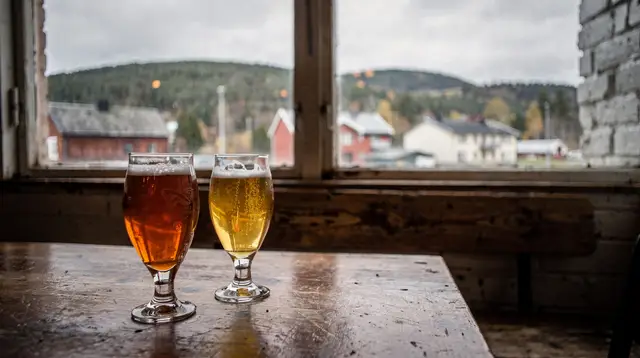
Oslo has a genuinely impressive craft beer culture, and Grünerløkka is its geographic heart. Several Oslo-based breweries either operate taprooms in or near the neighbourhood or distribute primarily here.
Grünerløkka Brygghus: the closest thing to a neighbourhood brewery, producing a range of lagers, IPAs, and seasonal specials. The taproom is casual and popular with the post-work crowd.
Oslo Brewing Company: founded in 2015, one of the city’s better-regarded craft producers. Their beers appear on tap throughout Grünerløkka’s bars.
Crowbar (on Torggata, just south of Grünerløkka): a dedicated craft beer bar with an extraordinary tap list — 20 to 30 Norwegian and international craft beers, rotating regularly. The low-ceilinged space is decorated with record sleeves. NOK 95 to 135 (USD 10–15) per pint depending on the style.
For a full guide to Oslo’s craft beer scene, see Oslo craft beer guide.
The Oslo Climbing Club and active Grünerløkka
The neighbourhood’s outdoor-active character extends beyond the riverside path. Boulderworld (Grünerløkka) is one of Oslo’s main indoor climbing walls, popular with the neighbourhood’s young professional demographic. Several yoga studios and independent gyms operate in the converted industrial spaces along the Akerselva. If your visit involves looking for active options alongside sightseeing, this neighbourhood provides more non-gym physical activity than almost anywhere else in the city.
Sofienbergparken: the neighbourhood’s outdoor living room
Just north of Olaf Ryes plass, Sofienbergparken is a large park that functions as Grünerløkka’s outdoor commons. In summer it has the character of a collective garden party: barbecues, frisbee, sun-bathing, impromptu music, and the slow social rhythm of a city that has learned to extract maximum value from every warm day. Free, open all the time. The café on the park’s western edge provides drinks and light food.
Connecting Grünerløkka to other Oslo districts
Grünerløkka sits at the junction of several natural itinerary routes:
- East to Grønland and Tøyen: 15-minute walk through Nedre Grünerløkka and across the river. Good for combining a morning of specialty coffee and vintage shops with an afternoon of budget eating and the Botanical Garden.
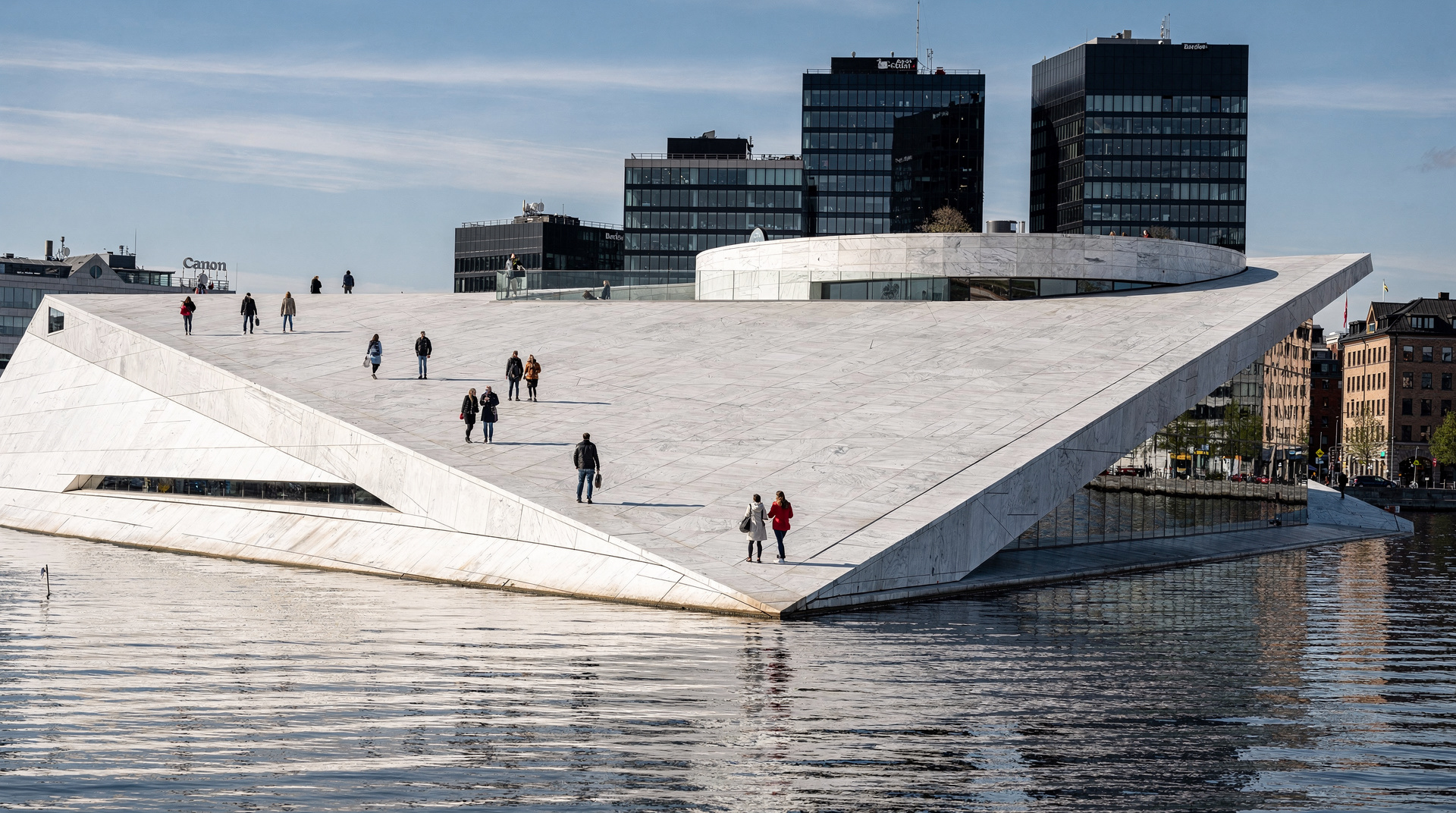
- South to Bjørvika: tram 11/12 or 20-minute walk. Natural combination for an afternoon that includes the Opera House rooftop and Munch Museum.
- West to Sentrum: tram 11/12 back to Jernbanetorget (10 minutes) for the city-centre sights.
- Northwest to Mathallen: a 5-minute walk brings you to the Vulkan food hall cluster, a useful midday anchor for the whole east-Oslo area.
See the food and design weekend itinerary for a detailed programme built around Grünerløkka and its neighbours.
Is Grünerløkka safe at night?
Yes, by any reasonable standard. Grünerløkka is one of Oslo’s busiest nightlife districts, which in practice means well-lit streets, plenty of foot traffic, and staff at bars who are used to managing a lively but not aggressive crowd. The area around Olaf Ryes plass and Thorvald Meyers gate stays populated well past midnight on weekends. As with any city, keep an eye on belongings in the busiest queueing areas outside Blå and the more popular cocktail bars, where pickpocketing (rare, but not unheard of) is more likely than anywhere else in the neighbourhood.
Top experiences
Bookable activities with verified prices and instant confirmation on GetYourGuide.