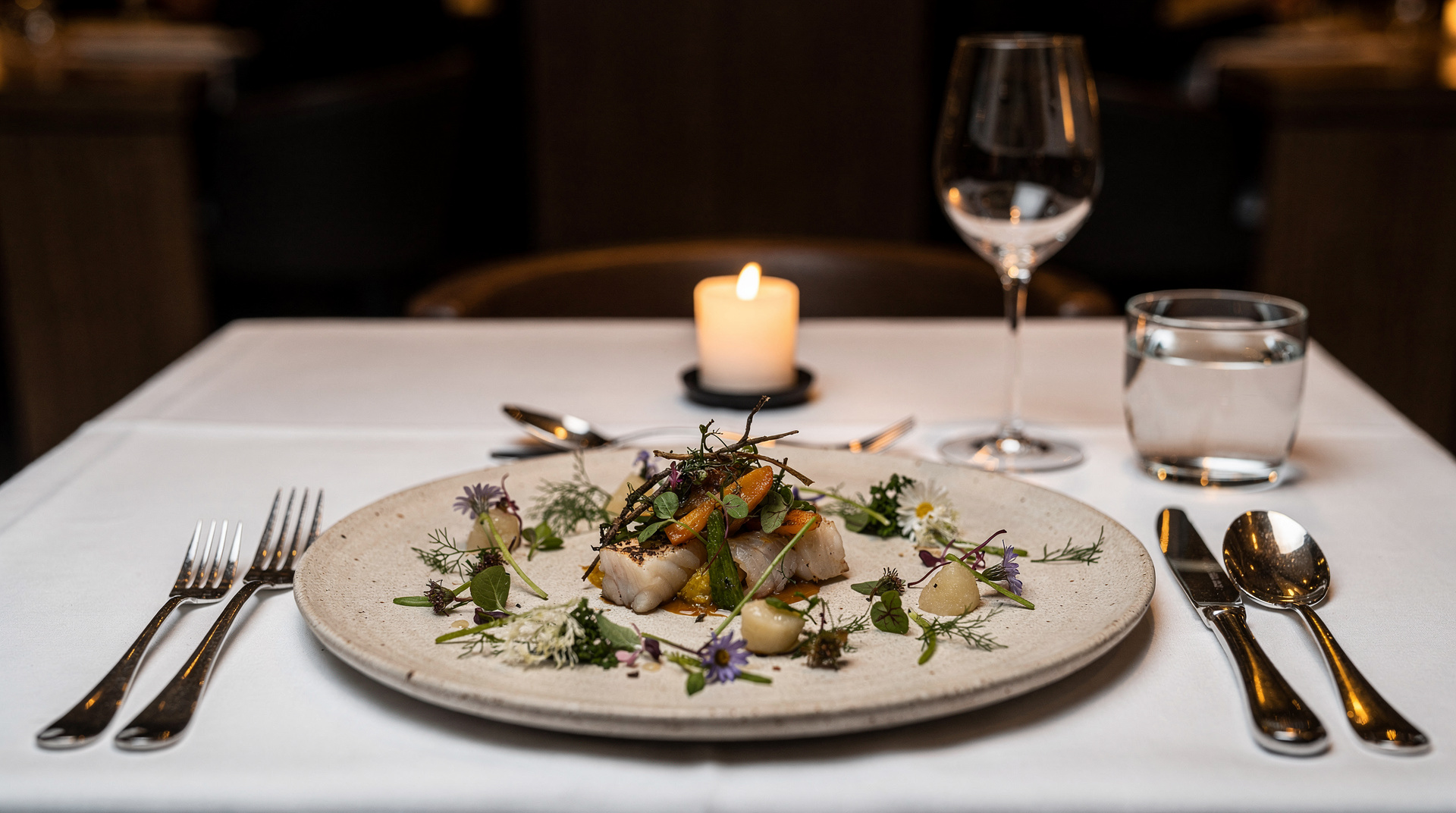
Where to eat in Oslo: honest neighbourhood-by-neighbourhood guide
Oslo: 3.5-hour walking tour for great food
Duration: 3.5 hours
- Tastings included
- Local guide
What is the best neighbourhood to eat in Oslo?
Grünerløkka has Oslo's best concentration of independent restaurants, cafés, and street food at fair prices. For seafood with fjord views, Aker Brygge is the classic choice. For cheap, authentic international food, Grønland — Oslo's most multicultural neighbourhood — is the best value. Karl Johans gate is largely tourist-facing and overpriced.
The honest Oslo eating guide
Oslo has transformed from a city where visitors complained about boring food to one with a genuinely exciting restaurant culture. The New Nordic movement that started in Copenhagen infiltrated Oslo a decade ago and permanently changed what the city considers a restaurant worth opening. But the transformation has been uneven — there’s still a sharp divide between the areas where Oslonians actually eat and the tourist-facing strips where the food is mediocre and the prices are astronomical.
This guide sorts that out, neighbourhood by neighbourhood, with real restaurant names and real prices.
| Best value | Grønland (NOK 100–180 mains) |
| Best atmosphere | Grünerløkka |
| Best splurge | Maaemo, Bjørvika (NOK 2,500–3,000 tasting menu) |
| Avoid | Karl Johans gate & Aker Brygge waterfront row |
| Booking | Advance for dinner in summer; lunch is usually walk-in |
The tourist-trap warning you need first
Karl Johans gate (Oslo’s main pedestrian street) has a cluster of restaurants between the Central Station and the Royal Palace that survive on footfall rather than quality. The menus are long, the service is perfunctory, and a main course of salmon with butter sauce will cost you NOK 350 ($38) and taste like it was prepared the day before. There are exceptions — a few bakeries and coffee shops are perfectly fine — but as a restaurant strip it’s not where you should be eating.
Aker Brygge waterfront strip: The first row of restaurants directly facing the harbour at Aker Brygge caters to visitors who’ve just arrived and are seduced by the fjord view. The view is real; the food quality-to-price ratio is not great. Walk one street back from the water and you’ll find better options immediately.
Bygdøy ferry restaurants: The cluster near the ferry dock at Aker Brygge/Rådhusbrygga has tourist-menu syndrome. The ferry shrimp boats selling fresh reker (boiled prawns) are fine — they’re a genuine Oslo experience and inexpensive — but the sit-down restaurants here add a significant premium for minimal quality improvement.
Grünerløkka: Oslo’s best eating neighbourhood
Grünerløkka is where you should spend at least two meals during any Oslo stay. The neighbourhood runs along both sides of the Akerselva river in the city’s east, and its food culture has developed organically from a mix of independent spirit, lower rents (historically), and a population that cares about what it eats.
Smørbrød and lunch:
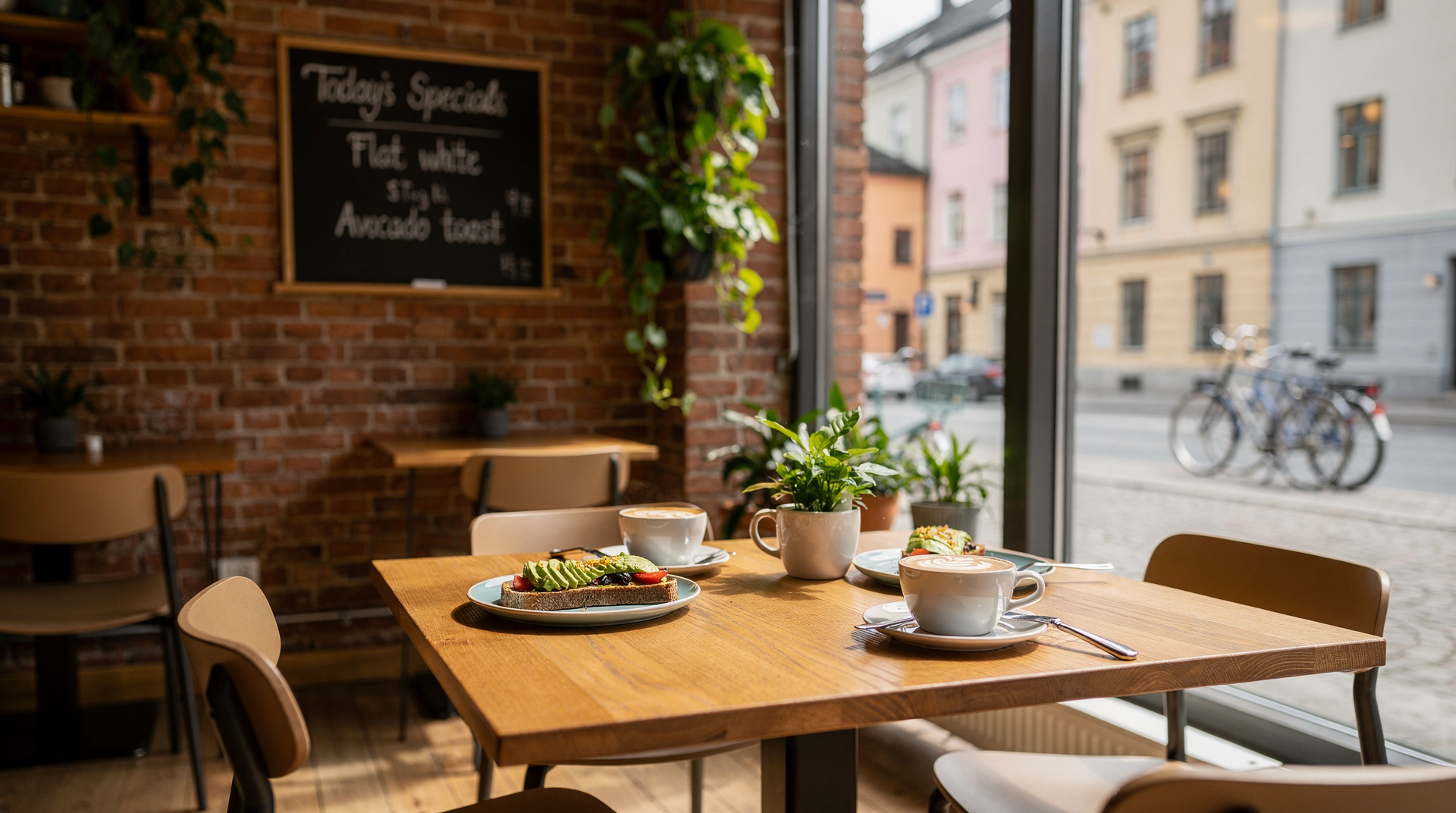
Godt Brød (Thorvald Meyers gate 57) is the neighbourhood’s landmark bakery — a cooperative-run establishment producing excellent sourdough, pastries, and open-faced sandwiches from around NOK 55 to 90 ($6–10) per piece. The lunchtime queue moves quickly.
Illegal Burger (Møllergata 23) is exactly what it sounds like — Oslo’s best smash burgers, around NOK 185 ($20) for a meal. No connection to the grey Norwegian tourist burger scene.
Café Sara (Thorvald Meyers gate 27) serves simple, honest café food — soups, salads, smørbrød — for NOK 120–180 ($13–19). Popular with the neighbourhood’s design-studio crowd.
Dinner:
Hendrix Ibsen (Hegdehaugsveien 35, technically Majorstuen but worth the short tram ride) has earned a reputation as one of Oslo’s best value contemporary Norwegian restaurants, with seasonal mains around NOK 285–350 ($31–38).
Territoriet (Markveien 58) is Grünerløkka’s natural wine bar and small-plates destination. The food is thoughtful Norwegian with a Scandinavian-European hybrid approach — mains NOK 220–300 ($24–32), wine by glass NOK 120–180 ($13–19).
Olympen (Grønlandsleiret 15 — technically Grønland but walkable) is a beautifully preserved historic pub-restaurant dating from 1892. It serves reassuringly good Norwegian pub food — kjøttkaker (meat patties), lapskaus (meat stew), and herring plates — at prices that feel reasonable by Oslo standards: NOK 200–295 ($22–32) for mains.
Grønland: Oslo’s most underrated food neighbourhood
Grønland is Oslo’s most diverse neighbourhood and its most interesting destination for cheap, authentic food. The main street, Grønland gate, has a dense concentration of Pakistani, Somali, Vietnamese, and Turkish restaurants where you can eat well for NOK 100 to 180 ($11–19).
Enak (Grønland gate 12) is a long-standing Indonesian/pan-Asian restaurant that locals consider one of the city’s best value dinners. Main courses NOK 155–200 ($17–22).
Punjab Tandoor (Grønland gate 24) serves Pakistani daal, biryani, and grilled meats at prices that seem impossibly low by Oslo standards — full meals from NOK 120 ($13). The lassi is excellent.
Café Con Bar (Brugata 11, edge of Grønland) sits at the threshold between Grønland and the city centre and has been Oslo’s reliable neighbourhood restaurant for over two decades. Good pizza, honest pasta, burgers — mains NOK 190–260 ($20–28). Unpretentious and consistent.
For Norwegian food specifically in this area, Vippa (Akershusstranda 25) is a seasonal food market in a converted warehouse near the Akershus Fortress, open May to September. It has 15 to 20 food stalls selling everything from Thai food to Norwegian fish dishes to Ethiopian injera. Mains NOK 130–200 ($14–22). Highly recommended for a casual Friday evening.
Sentrum (city centre) and Bjørvika
The city centre contains Oslo’s densest concentration of both tourist traps and genuinely excellent restaurants — you just need to know which is which.
Kulinarisk Akademi (Akersgata 39) has a lunch concept that deserves its reputation — beautifully executed Norwegian produce at a lunch counter format. NOK 175–220 ($19–24) for a plate. One of the best quick meals in central Oslo.
Maaemo (Schweigaards gate 15, Bjørvika) is Oslo’s three-Michelin-star restaurant and one of Europe’s most renowned. The tasting menu runs NOK 2,500 to 3,000 per person ($269–322) before drinks and pairings. Reservation required months in advance. See the fine dining guide for details on the Michelin Oslo circuit.
Ekebergrestauranten (Kongsveien 15) sits in Ekeberg park overlooking the fjord and the city. Primarily worth visiting for the view, but the food has improved — Norwegian-influenced contemporary cuisine, mains NOK 285–380 ($31–41). Take tram 18 from the city centre.
Brasserie France (Øvre Slottsgate 16) is Oslo’s best French bistro in the genuine French-in-Oslo sense — no pretension, decent wine list, solid steak frites and moules marinières. NOK 285–360 ($31–39) for mains.
Aker Brygge and Tjuvholmen (beyond the tourist strip)
One street back from the waterfront, the Aker Brygge area has some genuinely good dining:
Lofoten Fiskerestaurant (Stranden 75) is Oslo’s most reliable traditional Norwegian seafood restaurant. Not cheap (mains NOK 350–480 / $38–52) but the quality of the fish is consistent and the preparation is honest — this is where to eat Norwegian salmon, cod, and monkfish properly.
Ruffino Ristorante (Tjuvholmen allé 23) has established itself as Oslo’s best Italian restaurant — genuinely Italian, not the Oslo approximation. Pasta NOK 220–280 ($24–30), fish mains NOK 340–420 ($37–45).
Frogner and Majorstuen
Frogner is Oslo’s most affluent residential district and has a restaurant scene that serves its population well — polished, expensive, and reliably good.
Arakataka (Mariboes gate 7, slightly east) is considered one of Oslo’s best wine bars with genuinely good food to match — sharing plates format, NOK 130–180 ($14–19) per plate.
Egget (Josefines gate 16) is a Majorstuen neighbourhood bistro that sources well and cooks simply — breakfast and lunch only, excellent eggs on toast and smørbrød from NOK 85–150 ($9–16).
Holmenkollen and outskirts
Worth a mention for the experience as much as the food:
Holmenkollen Restaurant (Kongeveien 26, near the ski jump) has a classic Norwegian menu and panoramic city views. Mains NOK 285–395 ($31–42). Reach it by T-bane Line 1 to Holmenkollen in 25 minutes from the city centre.
A note on Oslo dining logistics
Tipping: Not obligatory. Rounding up or leaving 10% is common and appreciated but never expected. The service charge is included in most Oslo bills.
Alcohol: Oslo is notably expensive for drinks — budget NOK 100–130 ($11–14) for a 500ml beer and NOK 90–120 ($10–13) for a glass of house wine at midrange restaurants. There are no BYO restaurants in Norway. All spirits above 4.7% ABV must be bought from Vinmonopolet (the state alcohol monopoly) and cannot be purchased in regular shops or restaurants after 20:00 on weekdays and 18:00 on Saturdays. This makes pre-dinner drinks expensive; plan accordingly.
Lunch is always better value: Most Oslo restaurants offer lunch versions of their dinner menus at NOK 150–250 ($16–27) for a two-course set. This is the best way to access Oslo’s better restaurants without the dinner price tag.
Neighbourhood comparison at a glance
| Neighbourhood | Price level | Best for | Typical main |
|---|---|---|---|
| Grønland | $ | Cheap, authentic international food | NOK 100–200 ($11–22) |
| Grünerløkka | $$ | Independent restaurants, café culture | NOK 185–350 ($20–38) |
| Sentrum / Bjørvika | $$–$$$ | Fine dining, business lunches | NOK 175–3,000 ($19–322) |
| Aker Brygge / Tjuvholmen | $$$ | Seafood with a view, one street back | NOK 220–480 ($24–52) |
| Frogner / Majorstuen | $$ | Wine bars, polished neighbourhood dining | NOK 85–180 ($9–19) |
| Karl Johans gate | $$$ | Convenience only — see warning above | NOK 300–400+ ($32–43) |
Food halls and markets worth a special trip
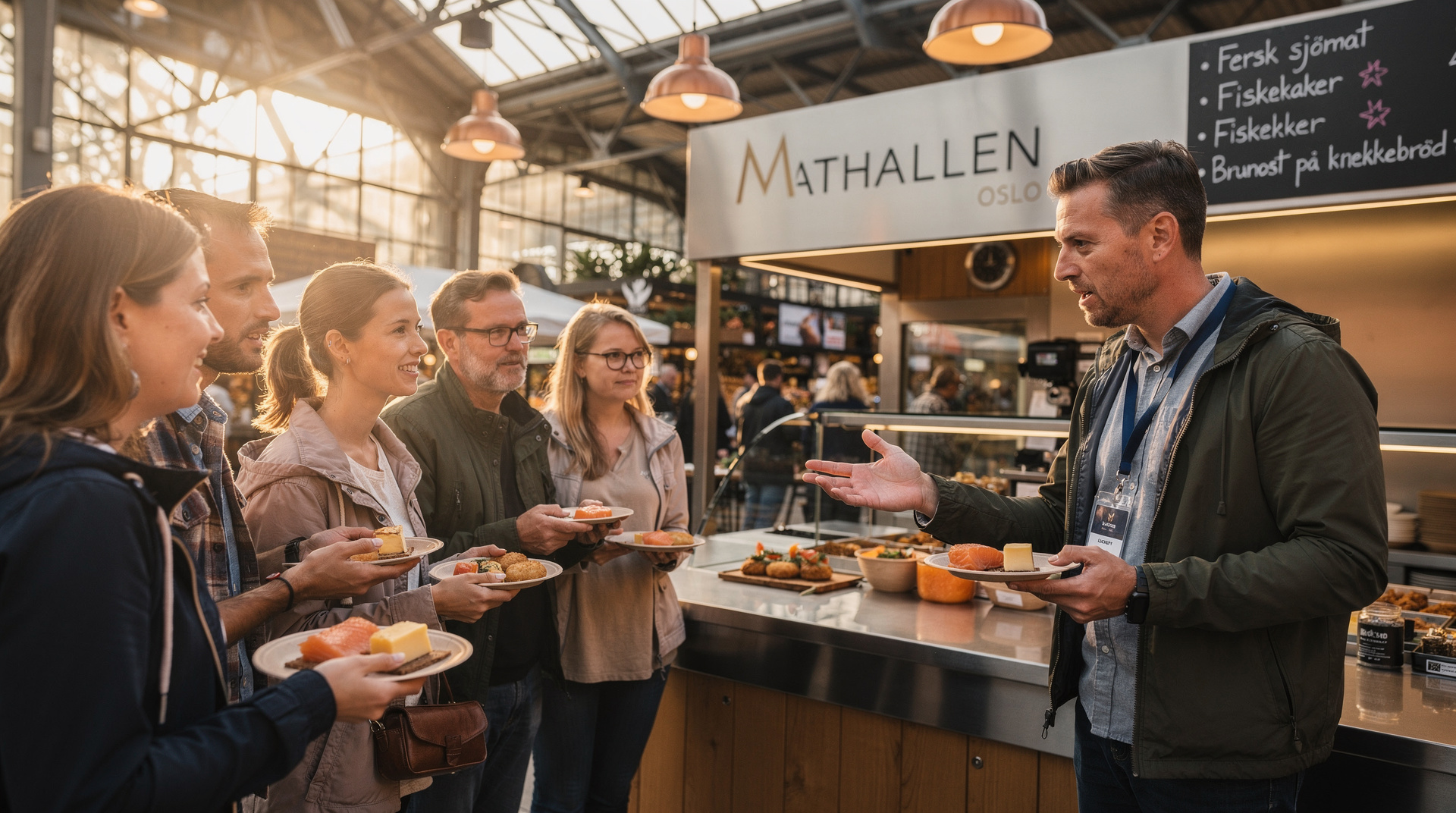
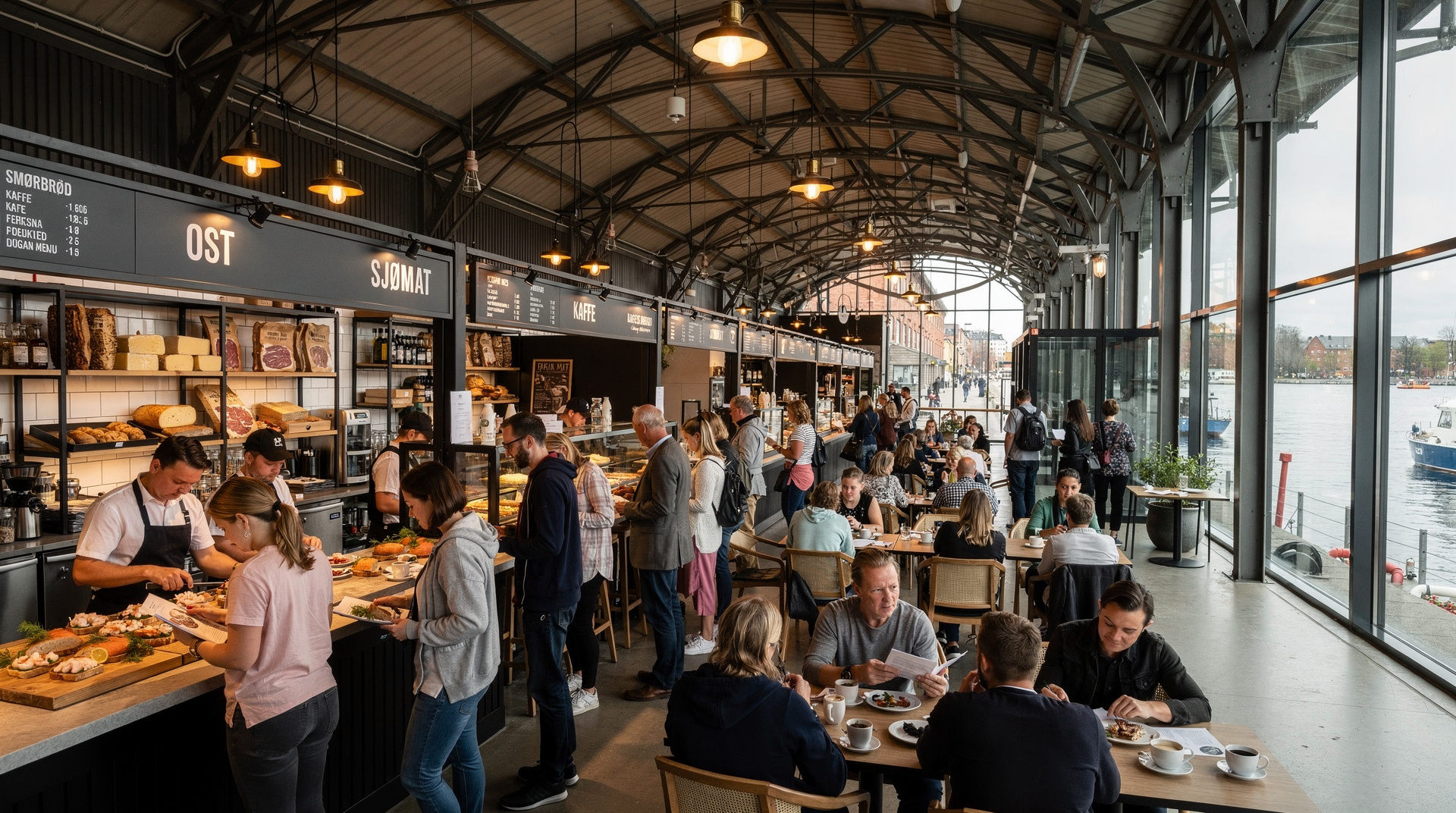
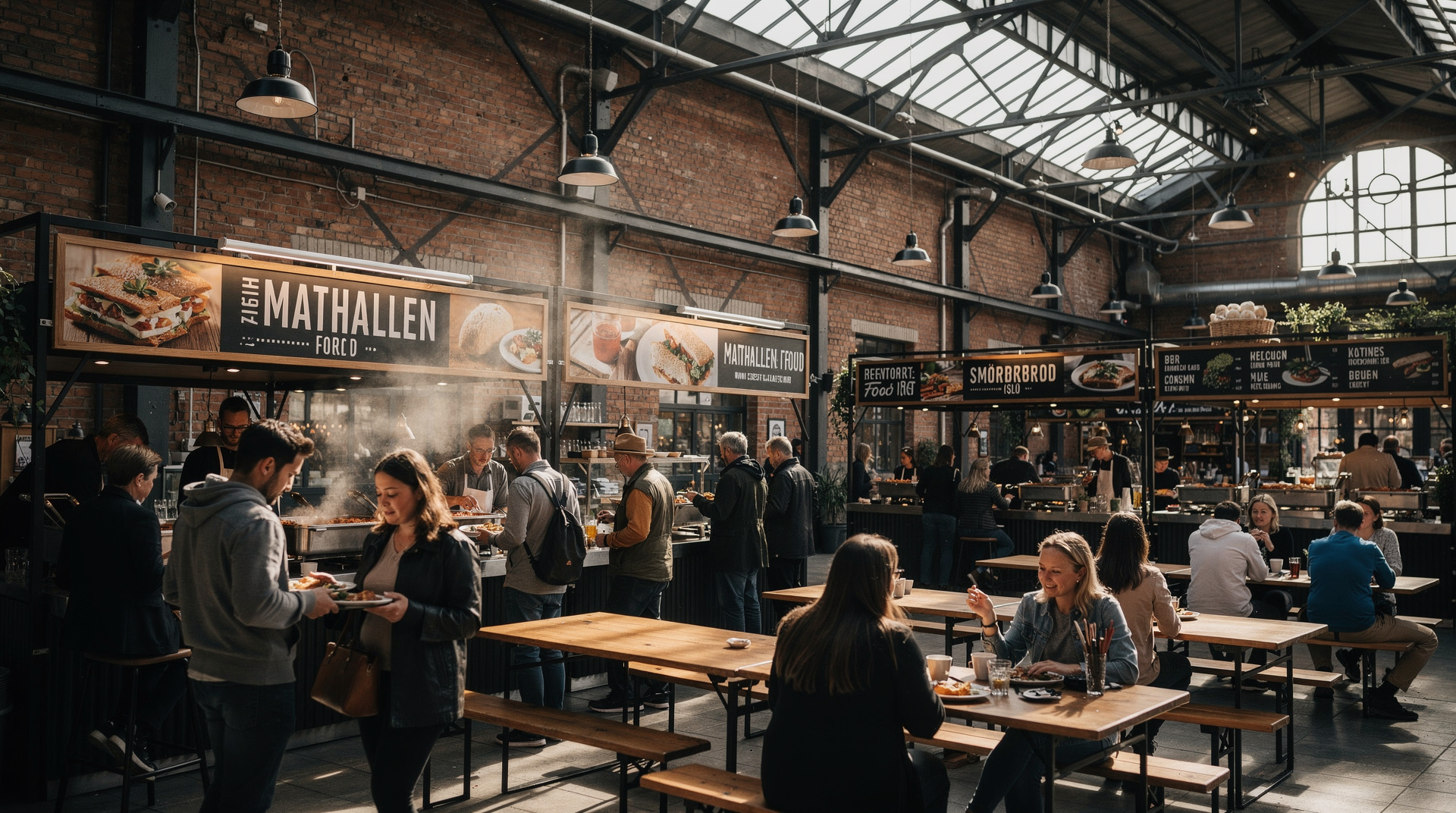
Beyond sit-down restaurants, Oslo’s food-hall scene is one of the most reliable ways to eat well without committing to a single cuisine. Mathallen (Vulkan, Grünerløkka edge) is the anchor: a converted industrial building with roughly 30 stalls and small restaurants covering Norwegian, Thai, Italian, and specialty coffee, all under one roof — ideal for groups who cannot agree on a cuisine. See the full Mathallen food hall guide for a stall-by-stall breakdown.
Vippa (Akershusstranda 25), open seasonally from May to September, leans more local and less polished than Mathallen — a genuine community food market in a converted warehouse near Akershus Fortress, with prices that undercut most sit-down restaurants nearby. Youngstorget hosts a seasonal street-food market that is one of the best cheap-eats concentrations in the city centre, particularly useful if you are staying near Oslo city centre and do not want to travel far for a good, inexpensive meal.
For a fuller picture of what to actually order once you’re at any of these, see our Norwegian food to try guide.
Building meals around your sightseeing
The easiest way to eat well in Oslo is to stop treating meals as a separate task and fold them into the neighbourhood you are already visiting. If your morning is spent at the Munch Museum or the Opera House, you are in Bjørvika, and that is where the splurge dinner fits. If you are wandering the sculptures at the Vigeland sculpture park, you are in Frogner, which suits a polished, unhurried lunch. A day around Akershus Fortress points naturally towards Vippa and the harbour edge, while a slow afternoon in Grünerløkka is best paired with a long café stop and an early dinner on one of the side streets.
Two habits make the biggest difference. First, put your most expensive meal at lunch rather than dinner, and let the evening be something lighter from a food hall or a market stall. Second, avoid eating at the moment you step off a ferry or out of a museum, when hunger and convenience push you towards the nearest terrace. Walking ten minutes in almost any direction changes the quality of what is on offer.
Matching the meal to the trip
Different trips call for different eating strategies, and the right choice depends on how you are travelling.
- On a tight budget: lean on Grønland, the markets and bakery lunches, and read the Oslo on a budget guide and the daily costs breakdown before you commit to restaurant dinners. The cheap eats guide goes further on this.
- As a family: food halls and casual pizza or burger places are far easier with children than long sit-down menus. The Oslo with kids guide has more on planning days that include sensible meal stops.
- Travelling solo: counters, food halls and wine-bar bars are comfortable places to eat alone, and the solo travel guide covers the wider picture.
- For a food-led weekend: the Oslo food and design weekend itinerary strings the best neighbourhoods together, and a guided food tour is a good way to taste several places in one outing.
- For drinks after dinner: the best bars in Oslo and the craft beer guide are the natural next step, and the coffee culture guide covers the daytime side.
Whichever approach you take, it helps to understand why prices look the way they do. The is Oslo expensive guide explains the wider cost picture, and the overpriced food warning is a useful companion to the tourist-trap section above. For a different angle on local flavours, the brown cheese and specialties guide is worth reading before you sit down anywhere traditional.
Practical habits that save money and disappointment
Check the lunch menu before the dinner menu. Many places advertise the dinner version prominently and mention the lunch set only on a small board inside, so it is worth asking. Look at where people with shopping bags and work lanyards are queuing; locals rarely queue for mediocre food. Read the menu for seasonal dishes rather than a vast list, because a short menu usually means fresher cooking. And if a place has staff standing outside inviting you in, that is a good sign to keep walking.
Finally, leave room for flexibility. Opening patterns shift with the seasons, and some venues change their format from year to year, so treat the names in this guide as a starting point and check current details before you travel. Planning a few anchor meals and leaving the rest open usually produces the best Oslo food days, and the top things to do in Oslo page can help you decide what to build those anchors around.
For dedicated deep dives, see the Grünerløkka food guide, Mathallen food hall guide, and Oslo budget eats.
Frequently asked questions about Where to eat in Oslo
How much does a restaurant meal cost in Oslo?
Budget lunch: NOK 130–200 ($14–22) at a café or smørbrød counter. Midrange dinner main course: NOK 250–400 ($27–43). Fine dining tasting menu: NOK 1,200–2,500 per person ($129–269) before drinks. Drinks add significantly — a beer costs NOK 100–130 ($11–14) at most restaurants.What are the best cheap places to eat in Oslo?
Grønland's international food scene (Pakistani, Somali, Vietnamese, Turkish) offers meals for NOK 100–180 ($11–19). Street food markets at Youngstorget and Vippa are Oslo's best budget options. Thai food, shawarma, and filled rolls at Mathallen food hall stalls are around NOK 150–200 ($16–22).What Norwegian dishes should I order in Oslo?
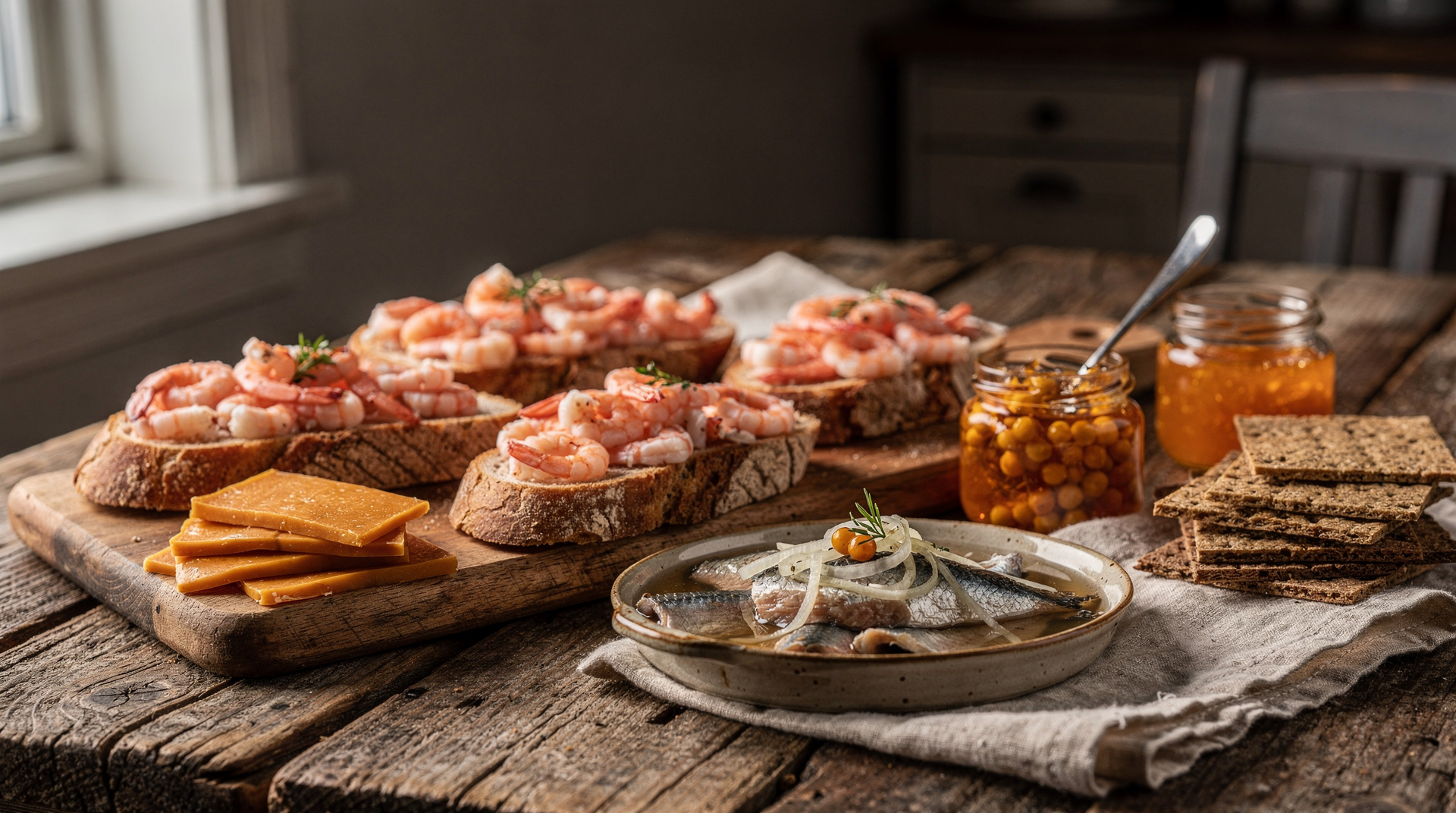
Smørbrød (open-faced sandwiches with smoked salmon, prawns, or eggs), fårikål (lamb and cabbage — Norway's national dish), raspeballer/kompe (potato dumplings), and klippfisk (salt cod) at traditional restaurants. Kanelboller (cinnamon rolls) at any café. Reker (fjord shrimp) bought fresh at the harbour.Which Oslo restaurants should I avoid?
Most restaurants directly on Karl Johans gate and the Aker Brygge tourist strip serve mediocre food at elevated prices to captive tourist audiences. The shrimp-heavy seafood restaurants right on the Rådhusbrygga pier are convenient but overpriced compared to the same quality a few streets back.Where do Oslo locals eat lunch?
Smørbrød lunches at bakeries and lunch counters throughout Grünerløkka and Majorstuen. Mathallen food hall for quality affordable midday meals. Markveien and Thorvald Meyers gate in Grünerløkka have multiple local-favourite lunch spots between NOK 120 and 200 ($13–22).Is Mathallen worth visiting for a full meal?
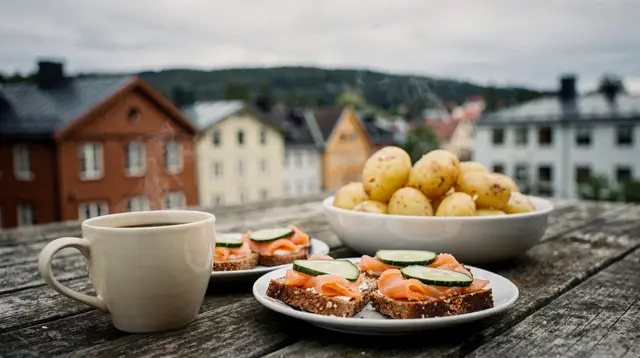
Yes. Mathallen at Vulkan has roughly 30 stalls and small restaurants covering Norwegian, Thai, Italian, and specialty coffee under one roof, making it especially useful for groups who cannot agree on a single cuisine. It rewards a full lunch or dinner visit, not just a snack.Do I need to book restaurants in advance in Oslo?
For casual lunch spots and food halls, no — walk-in is fine. For popular Grünerløkka and Bjørvika dinner restaurants in summer, and especially for tasting-menu restaurants such as Maaemo, book well ahead — Maaemo requires reservations months in advance.
Top experiences
Bookable activities with verified prices and instant confirmation on GetYourGuide.