Budget eats in Oslo: how to eat well cheaply in an expensive city
Oslo: the taste of Oslo food tour
Duration: 4 hours
- Tastings included
- Small group
What is the cheapest way to eat in Oslo?
Self-catering from Oslo supermarkets (Rema 1000, Coop Extra, Kiwi) is cheapest — a full lunch from a supermarket runs NOK 50–80 ($5.40–8.60). For eating out cheaply, Grønland's Pakistani and international restaurants serve meals from NOK 100–160 ($11–17). Food trucks at Youngstorget and Vippa run NOK 120–180 ($13–19). Avoid restaurants on Karl Johans gate.
The reality of eating cheaply in Oslo
Oslo is consistently ranked among Europe’s most expensive cities, and food is one of the key drivers. A sit-down restaurant meal — even a casual one — reliably costs more than you’d expect. The minimum wage in Norway is high, commercial rents in Oslo are high, and VAT on restaurant food is 15% (though included in listed prices). None of this is going to change.
| Cheapest meal | Supermarket smørbrød, around NOK 60–100 |
| Cheapest hot meal out | Grønland ethnic food, around NOK 100–180 |
| Best value dinner | Lunch menu (dagmeny) at a proper restaurant |
| Avoid | Karl Johans gate, Aker Brygge front row |
| Daily food budget (backpacker) | around NOK 200–280 |
What you can do is understand where the genuine value is and navigate accordingly. This guide gives you real strategies, real places, and real prices in NOK (and USD at approximately 9.3 NOK to the dollar as of May 2026). No vague advice — specific spots, specific numbers.
Strategy 1: self-catering from supermarkets
Oslo’s supermarket system is straightforward and genuinely affordable by local standards. The cheapest chains are:
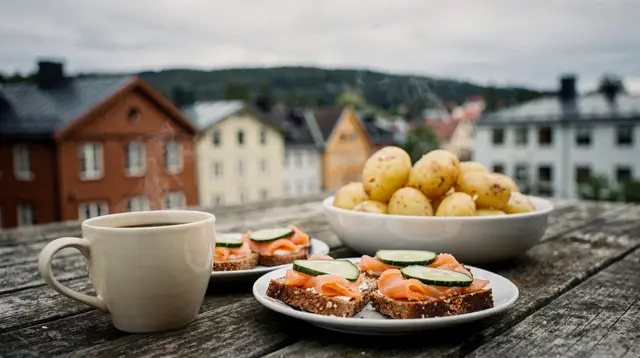
Kiwi: The discount leader. Stores throughout central Oslo, open late (typically 07:00–23:00 daily). A self-assembled smørbrød lunch — rye bread, smoked salmon slices, cheese, yoghurt, piece of fruit — costs NOK 60–85 ($6.50–9.15). For something hot, the ready-meal section has soups and pasta dishes from NOK 45–75 ($4.80–8.10).
Rema 1000: Similar positioning to Kiwi, slightly different product selection. Also reliable for cheap daily groceries. Bread NOK 20–35 ($2.15–3.80), Norwegian cheese NOK 30–50 ($3.22–5.40) for a 200–300g block.
Coop Extra / Coop Obs: Mid-price with better quality on Norwegian produce. Worth the slight premium for better salmon and dairy.
Meny: The premium supermarket chain. Quality is noticeably higher — better cheese selection, better fresh fish — but prices are 20–30% higher than Kiwi.
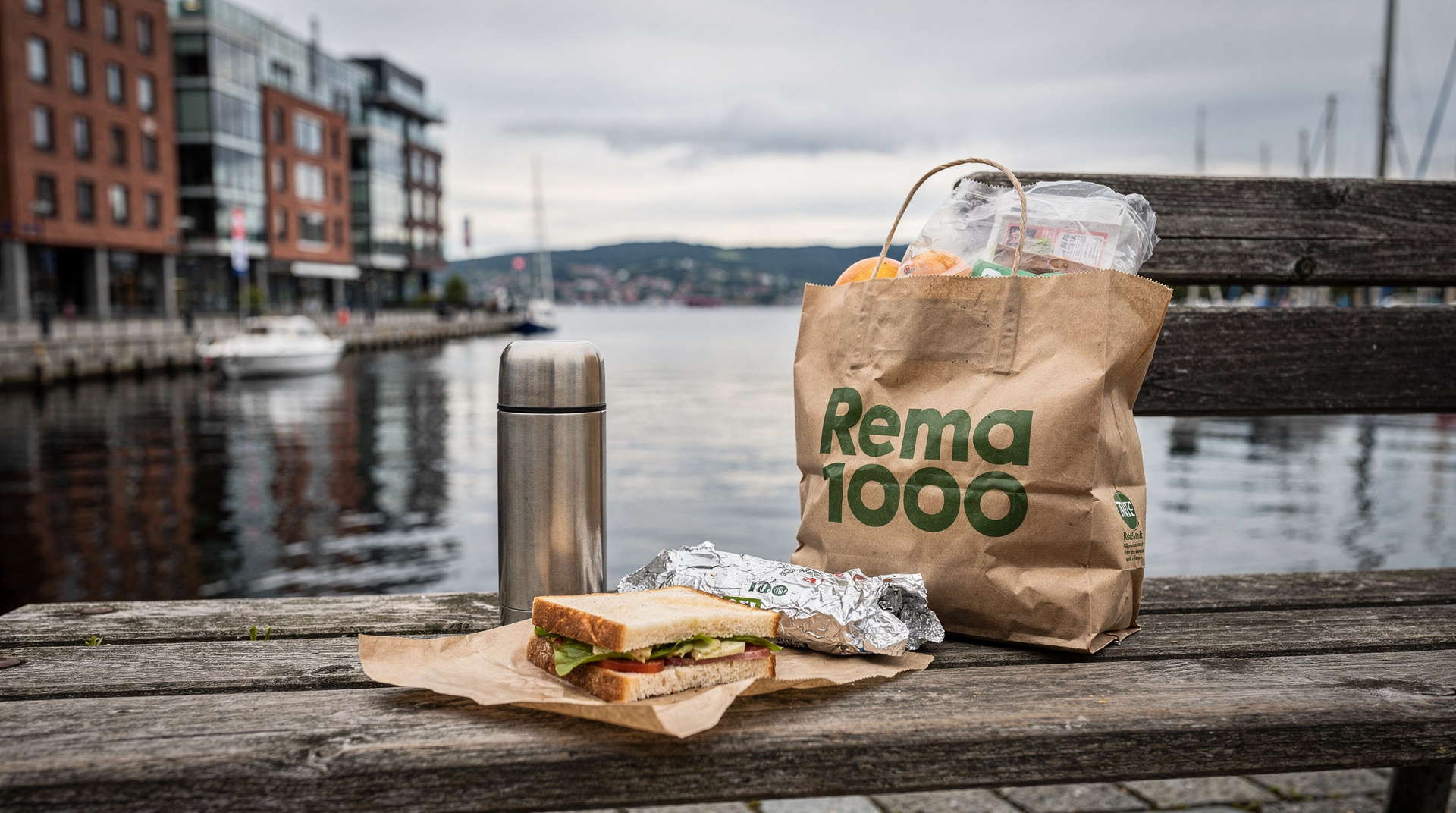
What to buy for a supermarket picnic: Knekkebrød (crispbread) — about NOK 15–25 for a packet. A tube of kaviar (cod roe paste) — around NOK 35 ($3.75). Brunost (brown cheese) — NOK 45–75 per 500g block. Sliced smoked salmon — NOK 55–75 for a 100g packet. This is a completely authentic Norwegian lunch for under NOK 120 ($12.90) for two people.
Strategy 2: Grønland for cheap ethnic food
Grønland is Oslo’s most multicultural neighbourhood and consistently the cheapest area for eating out. The main street (Grønland gate and Tøyengata) has a dense concentration of Pakistani, Somali, Vietnamese, Afghan, and Turkish restaurants where a full meal costs NOK 100–180 ($11–19).
The best cheap spots:
Punjab Tandoor (Grønland gate 24): Pakistani daal, biryani, and grilled meats. A full meal with bread: NOK 110–145 ($11.80–15.60). The lassi at NOK 40 ($4.30) is excellent.
Taj Mahal (Grønland gate 17): Similar pricing to Punjab Tandoor with a broader Indian subcontinent menu. A vegetarian thali is NOK 125–150 ($13.40–16.10).
Thai Orchid and similar Thai cafés along Tøyengata: Pad Thai and rice dishes from NOK 120–165 ($12.90–17.75). Not authentic Bangkok street food, but honest and filling.
Enak (Grønland gate 12): Indonesian and pan-Asian with mains at NOK 155–200 ($16.67–21.51) — slightly above the Grønland average but excellent quality.
Grønland is 15 minutes from the city centre on foot (walk east from Oslo S or take tram 17, 18, or 19 two stops from Jernbanetorget).
Strategy 3: food markets and food trucks
Vippa (Akershusstranda 25, near Akershus Fortress): Open May to September, Thursday–Sunday from around 11:00 to 22:00. A seasonal food market in a converted warehouse with 15 to 20 stalls selling food from around the world — Filipino, Ethiopian, Mexican, Norwegian fish, burgers, Asian bowls. Mains NOK 120–195 ($12.90–20.97). The outdoor terrace has harbour views. This is one of the best budget food experiences in Oslo.
Youngstorget food trucks: The square at Youngstorget (central Oslo, near the Deichman library) hosts food trucks during spring and summer, with mains from NOK 120–180 ($12.90–19.35). The selection varies weekly.
Birkelunden market (Grünerløkka, Saturdays May–October): The Grünerløkka farmers’ market is affordable for fresh produce — a bag of vegetables and some cheese for NOK 100–150 ($10.75–16.13). More useful if you have cooking facilities.
Strategy 4: lunch menus at better restaurants
Almost every Oslo restaurant with a dinner menu offers a cheaper lunch version. This is consistently the best way to eat well without full dinner prices. Known as the dagmeny or lunsjmeny, it typically offers two courses for NOK 150–220 ($16.13–23.66).
Restaurants that are otherwise too expensive for a budget trip become accessible at lunch:
Kulinarisk Akademi (Akersgata 39): Lunch plates of excellent Norwegian produce for NOK 175–225 ($18.82–24.19). Normally only serves professionals but lunch is open to all.
Various Grünerløkka bistros: Le Benjamin, Café Sara, Elias Mat og Sant all have lunch menus in the NOK 145–195 ($15.59–20.97) range — good food, proper portions, reasonable by Oslo standards.
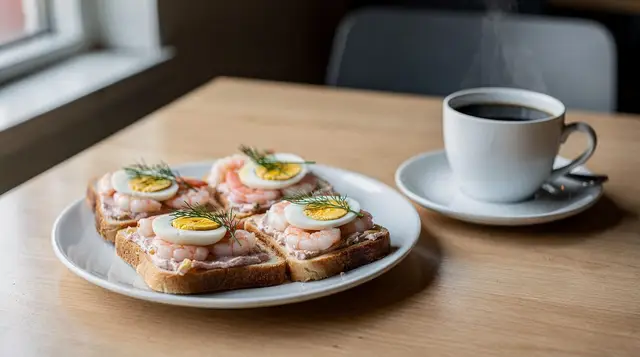
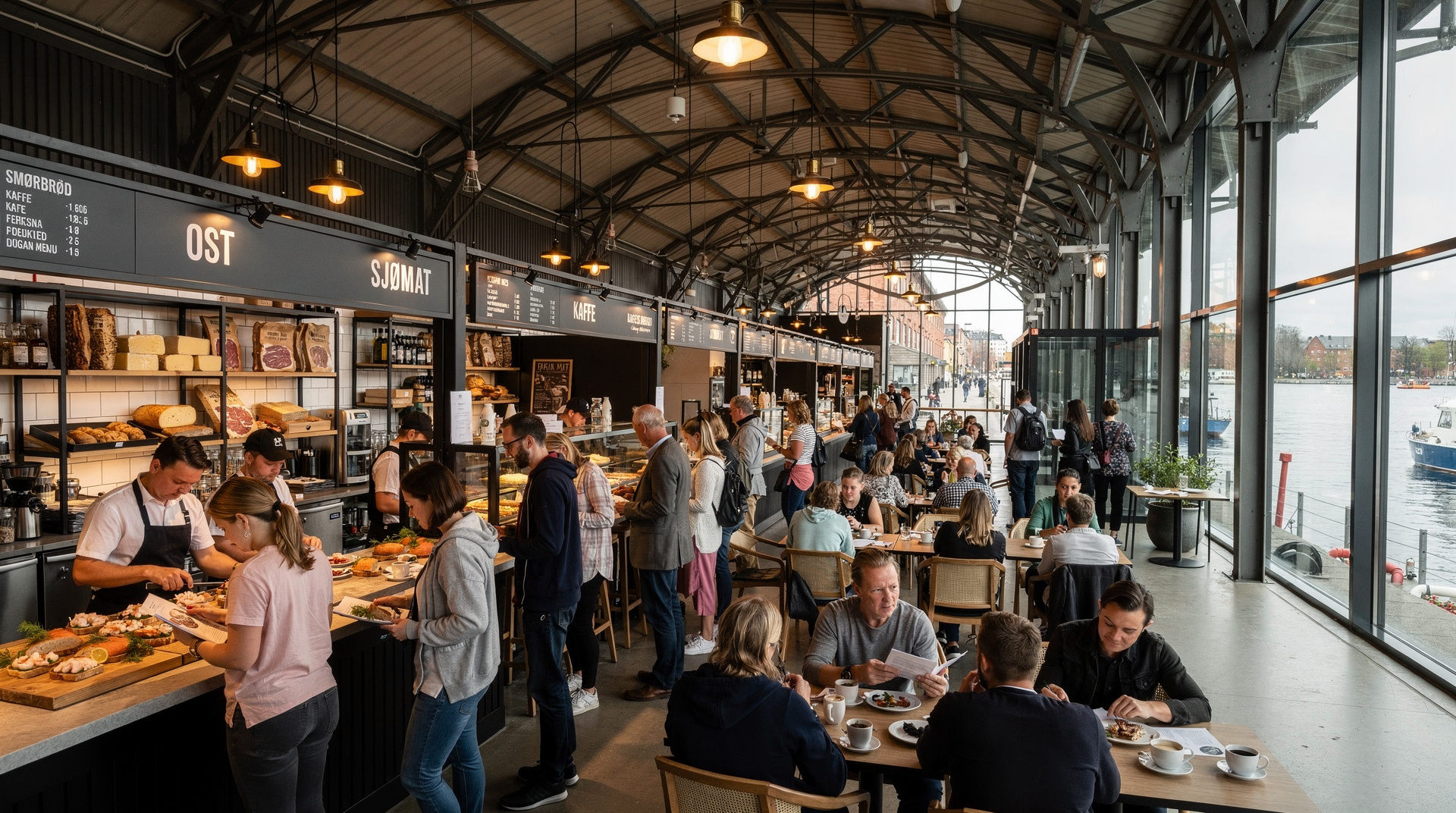
The Mathallen stalls: Mathallen at Vulkan is not “cheap” but offers good value — a smørbrød from Smørbukk (NOK 95–130 / $10.22–13.98) or a fish cake from Vingen Fisk (NOK 115–145 / $12.37–15.59) is a genuine quality lunch for less than a sit-down restaurant.
Strategy 5: bakeries for breakfast and snacks
Norwegian bakeries are significantly cheaper than Norwegian restaurants. Building your breakfast around a bakery rather than a hotel restaurant saves NOK 100–200 ($10.75–21.51) per person daily.
Baker Hansen: The main bakery chain, reliable and reasonably priced. A kanelbolle (cinnamon roll): NOK 35–45 ($3.76–4.84). A cup of coffee: NOK 35–45 ($3.76–4.84). A substantial breakfast for two: under NOK 200 ($21.51).
Godt Brød (Grünerløkka flagship and other locations): Slightly pricier but genuinely better. Sourdough with butter and jam: NOK 45–65 ($4.84–6.99).
7-Eleven and Narvesen: Oslo’s convenience stores have surprisingly decent pastries and hot dogs. The Narvesen Lompe (a potato flatbread hot dog) costs around NOK 35–45 ($3.76–4.84) and is an authentically Norwegian cheap snack. Don’t overlook it.
Strategy 6: fresh shrimp from the harbour boats
In summer (May to August), small boats moored at Rådhusbrygga sell freshly boiled fjord shrimp directly to visitors. This is not a tourist trap — it’s where Oslonians actually buy shrimp. A bag large enough to eat as a meal for two costs around NOK 150–200 ($16.13–21.51).
You eat them on the waterfront: peel them over the bag, eat with bread (buy a roll from a nearby bakery for NOK 20–30 / $2.15–3.23), and drink something cold. This is one of Oslo’s most genuine and best-value summer food experiences.
What to avoid if you’re on a budget
Restaurants on Karl Johans gate: Mediocre food at inflated tourist prices. NOK 300–400 for a main course of salmon is not good value anywhere in Oslo, and particularly not here.
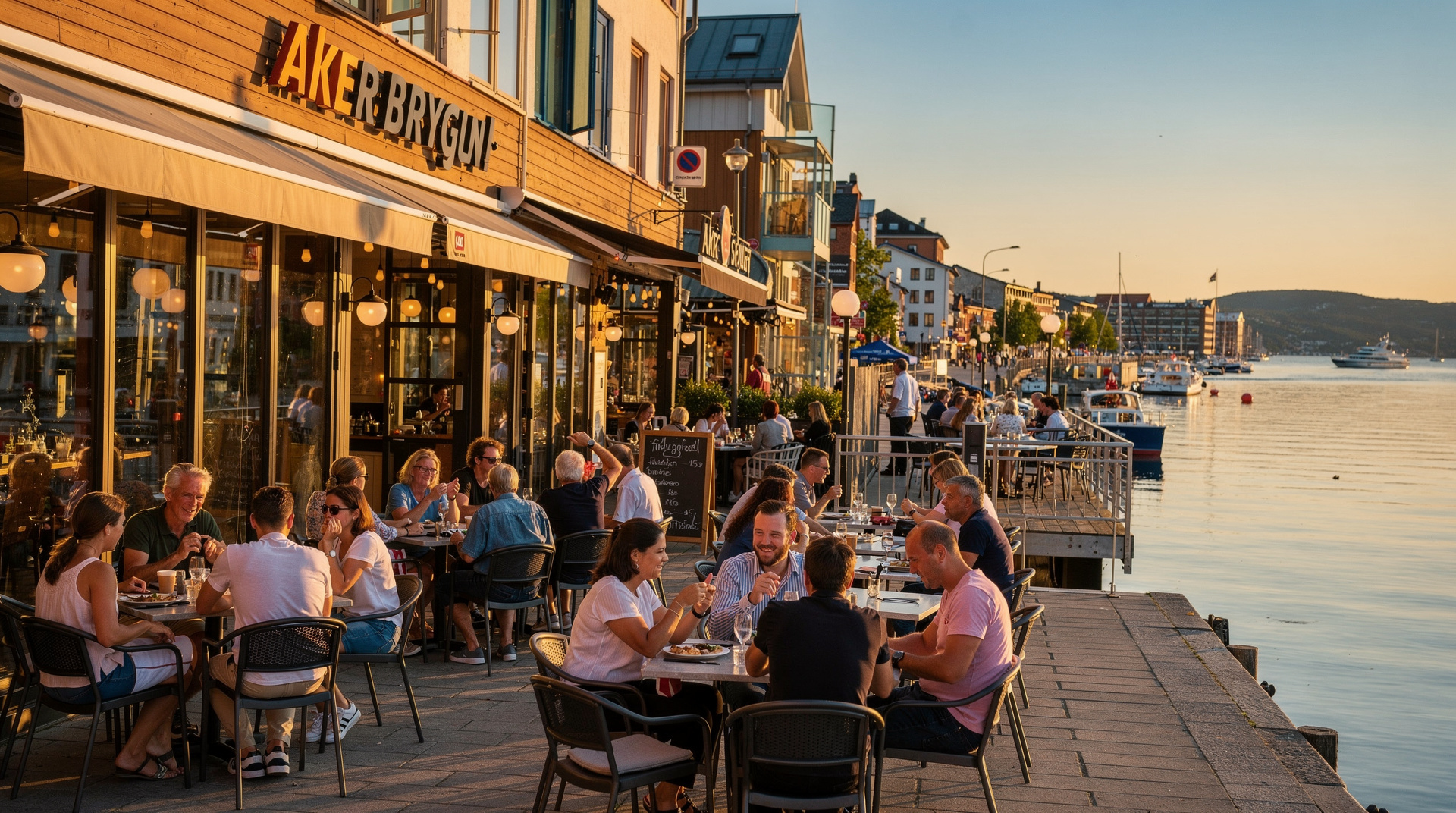
Aker Brygge front row: The waterfront strip charges a view premium that isn’t reflected in food quality. Move one street back.
Hotel breakfasts: Norwegian hotel breakfasts are extensive but typically cost NOK 150–250 ($16.13–26.88) per person when not included in room rates. An equivalent meal from a bakery costs NOK 80–120 ($8.60–12.90).
Tourist food package deals: Boat tour plus lunch, hop-on hop-off with lunch included, etc. The food component is invariably overpriced catering quality.
Real budget for eating in Oslo
Budget per day per person for food, at three different comfort levels:
Backpacker (self-catering + one cheap meal out): NOK 200–280 per day ($21–30). Supermarket breakfast and lunch, one Grønland or food truck dinner.
Mid-budget (mix of eating out and supermarket): NOK 350–500 per day ($37.60–53.76). Bakery breakfast, lunch at a café or food market, one restaurant dinner (sticking to lunch-menu-style dishes or Grünerløkka bistros).
Comfortable (eating out for all meals): NOK 600–900 per day ($64.52–96.77). All meals out, avoiding the most expensive venues.
For the full Oslo trip cost breakdown, see the Oslo trip cost guide. For strategies to reduce total trip costs across accommodation, transport, and activities, see Oslo on a budget.
Budget eating by neighbourhood
Where you’re staying affects which strategy makes most sense:
Staying near Grønland or Tøyen: you’re already in the cheapest food neighbourhood in Oslo. Lean into the local ethnic restaurants and don’t bother travelling elsewhere for cheap food — see the Grønland neighbourhood guide.
Staying near Grünerløkka: good mix of kebab shops, bakeries, and Mathallen. See the Grünerløkka food guide for the full spread of budget and mid-range options in the area.
Staying near Aker Brygge or the city centre: you’re in the most expensive food zone. Walk 10–15 minutes to Grønland or take the T-bane one stop to save significantly — staying put and eating at the harbour restaurants is the single most common budget mistake visitors make.
Staying near Frogner: fewer cheap options directly nearby, but a short tram ride reaches both Grünerløkka and the city centre supermarkets.
Free water and other small savings
Tap water in Oslo restaurants is free and safe to drink — always ask for it rather than buying bottled water, which can add NOK 40–60 ($4.30–6.45) per meal for a family. Norwegian restaurants are legally required to provide free tap water on request, though not all advertise it. Bringing a reusable bottle and refilling at public fountains (common in parks and near major sights) saves a meaningful amount across a multi-day trip, particularly in summer.
Building a day of cheap eating around your sightseeing
The easiest way to keep food costs down is to plan meals around where you will already be, rather than deciding at the moment you are hungry. Hunger is when visitors drift onto the busiest tourist street and pay for it. A little forethought turns the strategies above into a routine that costs almost no effort.
Start the day with a bakery breakfast or something assembled from a supermarket, then carry a simple lunch in a bag. Many of the best free or low-cost sights are outdoors, and a picnic suits them well. The free things to do in Oslo and the Oslo free things budget guide both point to parks, waterfront walks and viewpoints where a packed lunch beats any café. A bench in Frogner Park or a spot on the grass near the Vigeland sculpture park makes a fine lunch table, and it costs nothing beyond the food you brought.
If you are heading out for a longer outdoor day, the same logic applies even more strongly. Food near trailheads and lakes is limited, so pack what you need before leaving the city. The Sognsvann lake guide and the Nordmarka hiking guide are good examples of days where a supermarket stop on the way saves both money and disappointment. The same goes for island days: the Hovedøya island guide is a reminder that a picnic on the shore is part of the appeal.
Keep one meal a day for something hot and properly cooked. For most budget travellers this is dinner, and the best-value options are the Grønland restaurants or a stall at a seasonal market. If you would rather sit down somewhere with a menu, use the lunch trick instead and make that your main meal, then eat lightly in the evening from your supermarket supplies. Either way, the principle is the same: one proper meal, two cheap ones.
Matching the strategy to your trip length
On a short stay, you have less time to shop around, so lean on whatever is closest and decent. The Oslo budget weekend itinerary shows how a compact trip can be paced so that meals fall naturally at the cheap spots. If you only have a day, the Oslo in 1 day itinerary gives a route you can adapt by swapping in a picnic or a Grønland stop.
On a longer stay, the savings compound. Buying staples once, such as bread, cheese and crispbread, and using them across several lunches is far cheaper than repeating restaurant meals. If your accommodation has a kitchen, it changes the maths entirely. The where to stay in Oslo guide is worth a look for this reason alone, since a flat or hostel with cooking facilities can do more for your food budget than any restaurant tip.
Telling cheap from overpriced
Not every low price is good value, and not every high price is a rip-off. A useful habit is to check what the menu board says before sitting down, and to compare it with the rest of the street. The overpriced food warning and the Oslo tourist traps guide explain which places tend to charge for location rather than quality. For wider context on what your money buys, see is Oslo expensive? and the Oslo daily costs guide.
If you want a broader list of places to eat at every budget, the cheap eats in Oslo guide and where to eat in Oslo cover more ground. And if you would like to try something distinctly Norwegian without overspending, the Norwegian food to try guide helps you choose the dishes worth paying for and the ones you can skip.
Frequently asked questions about Budget eats in Oslo
Can you eat cheaply in Oslo?
Cheaply by European standards — no. Affordably by Oslo standards — yes, with strategy. A budget lunch eating out runs NOK 120–180 ($13–19). Self-catering from supermarkets runs NOK 60–100 ($6.50–11) per meal. Oslo's cheapest sit-down restaurant meals are from about NOK 100 ($11) for a simple dish at an ethnic restaurant in Grønland.Where are the cheapest supermarkets in Oslo?
Kiwi and Rema 1000 are Oslo's cheapest supermarket chains. Both have multiple central locations. A smørbrød lunch assembled from a Kiwi — rye bread, smoked salmon slices, cheese, a piece of fruit — costs around NOK 60–80 ($6.50–8.60). The Meny and Coop Extra chains are mid-price with better quality.Are there cheap street food markets in Oslo?
Yes. Vippa (Akershusstranda 25, open May–September) is a seasonal food market with 15+ stalls where mains run NOK 120–190 ($13–20). Youngstorget has seasonal food trucks. The Mathallen area at Vulkan has some affordable stalls. The Grünerløkka farmers' market (Saturdays) sells affordable fresh produce.What is the cheapest Norwegian thing to eat in Oslo?
Kanelboller (cinnamon rolls) at bakeries — NOK 35–50 ($3.80–5.40). Fresh shrimp (reker) bought from the harbour boats in summer — NOK 150–200 ($16–22) for enough for two people as a meal. Knekkebrød (crispbread) with brunost from a supermarket is Norway's cheapest genuine food experience.Are Oslo lunch menus good value?
Yes. Most Oslo restaurants with dinner menus offer a dagmenu (daily menu) or lunsjmeny at lunch — a two-course set for NOK 150–220 ($16–24). This is consistently Oslo's best restaurant value. Many of the city's better restaurants are much more accessible at lunch than dinner.
Top experiences
Bookable activities with verified prices and instant confirmation on GetYourGuide.