Is Oslo expensive? Real numbers vs other capitals
Oslo: Oslo Pass with public transport and free museum entry
Duration: 24-72 hours
- Instant confirmation
- Free public transport
- Skip museum queues
Is Oslo expensive to visit?
Yes. Oslo is consistently one of the two or three most expensive cities in Europe, alongside Zurich and Geneva. A restaurant main course costs NOK 220–380 (USD 24–41). A beer is NOK 100–130 (USD 11–14). A budget hostel bed is NOK 300–400 (USD 32–43). But many of Oslo's best experiences are free, and supermarket food is much cheaper than restaurant food.
The direct answer: yes, expensive by European standards
Oslo’s reputation as one of Europe’s most expensive cities is accurate. It has ranked in the top three most expensive European capitals in every major cost-of-living survey for at least a decade. If you’re coming from Western Europe expecting “about the same as Paris,” you’ll be surprised. If you’re coming from Southern or Central Europe, the shock is significant.
But the word “expensive” is more useful if paired with specific numbers. Here’s what things actually cost in Oslo in 2026.
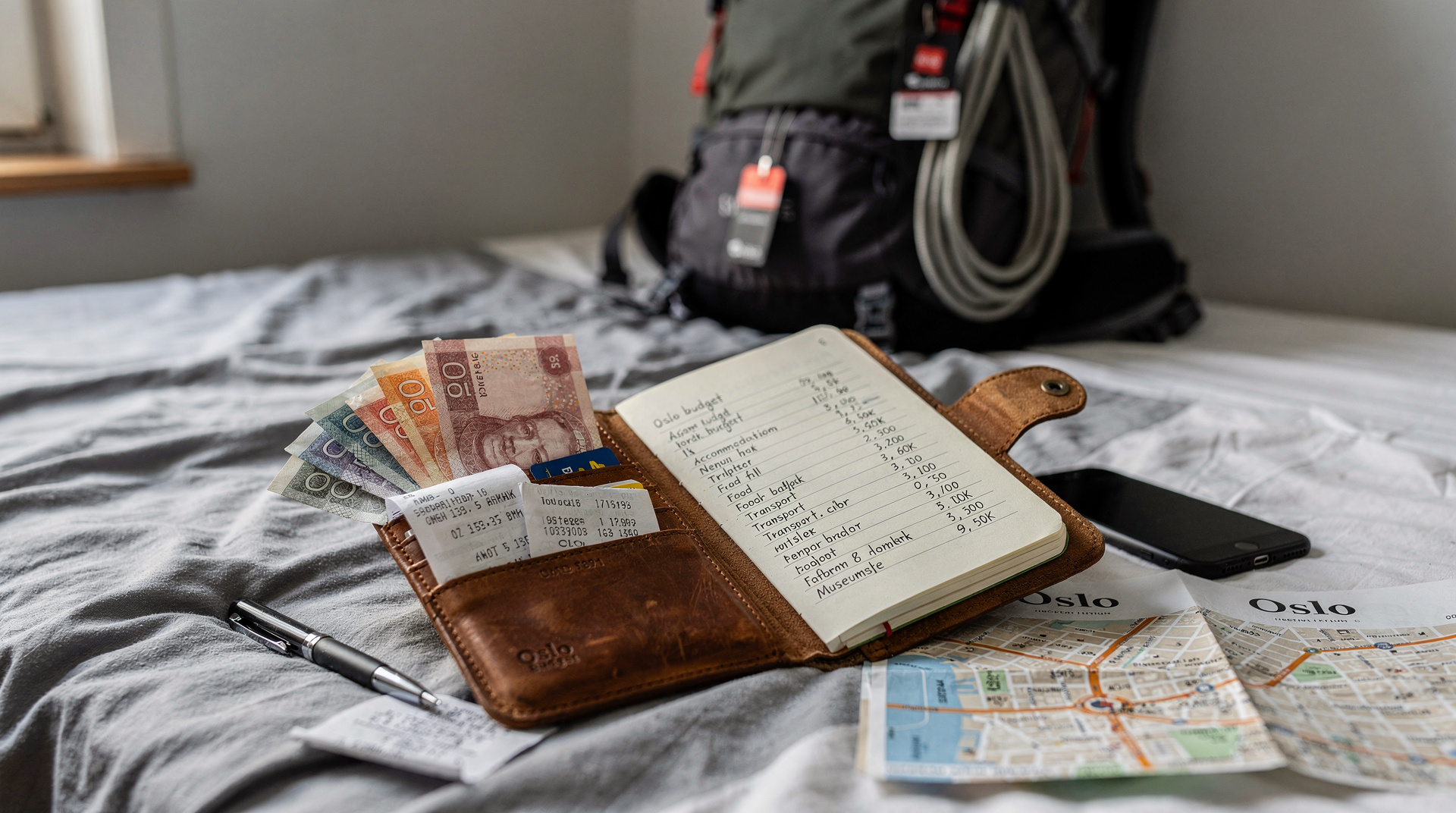
| Daily budget (mid-range) | NOK 1 400–1 900 / USD 150–204 per person |
| Daily budget (tight but real) | NOK 800–950 / USD 86–102 per person |
| Biggest single cost | Restaurant dinners (NOK 500–700 for two courses + drink) |
| Biggest saving lever | Self-catering breakfast/lunch |
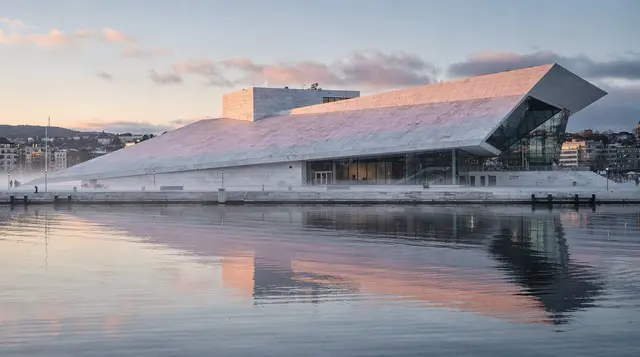
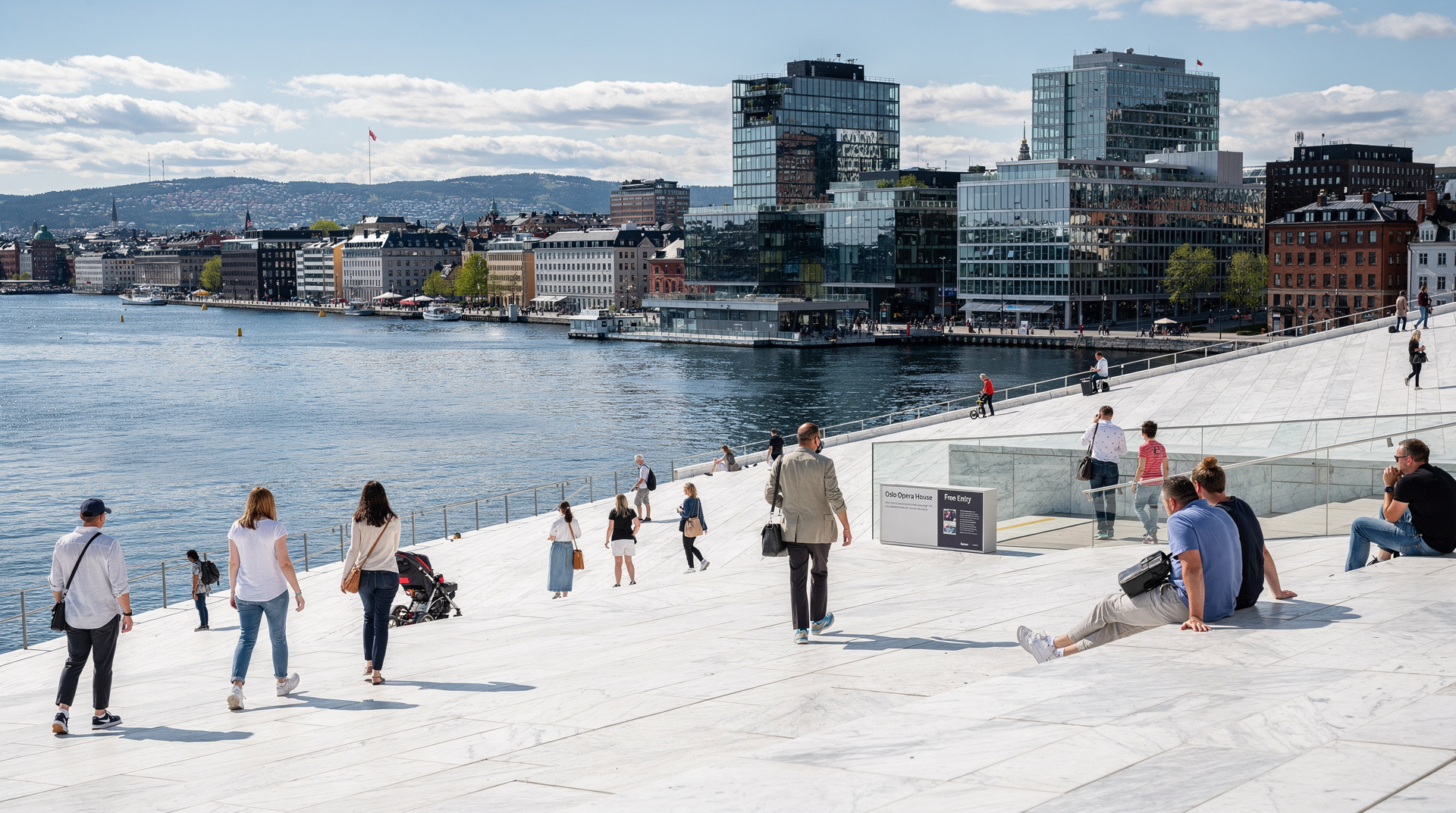
| What’s free | Vigeland Park, Opera House roof, Nordmarka, most fjord islands |
Price comparisons: Oslo vs other European capitals
All prices in NOK with USD equivalents. European comparisons are approximate 2026 equivalents.
Coffee
| City | Price |
|---|---|
| Oslo | NOK 50–65 / USD 5.40–7 (café flat white) |
| London | USD 5–6.50 |
| Paris | USD 4.50–5.50 (espresso cheaper; flat white similar) |
| Berlin | USD 3.50–4.50 |
| Copenhagen | USD 5–6.50 |
| Lisbon | USD 1–2 (espresso) |
| Prague | USD 2–3.50 |
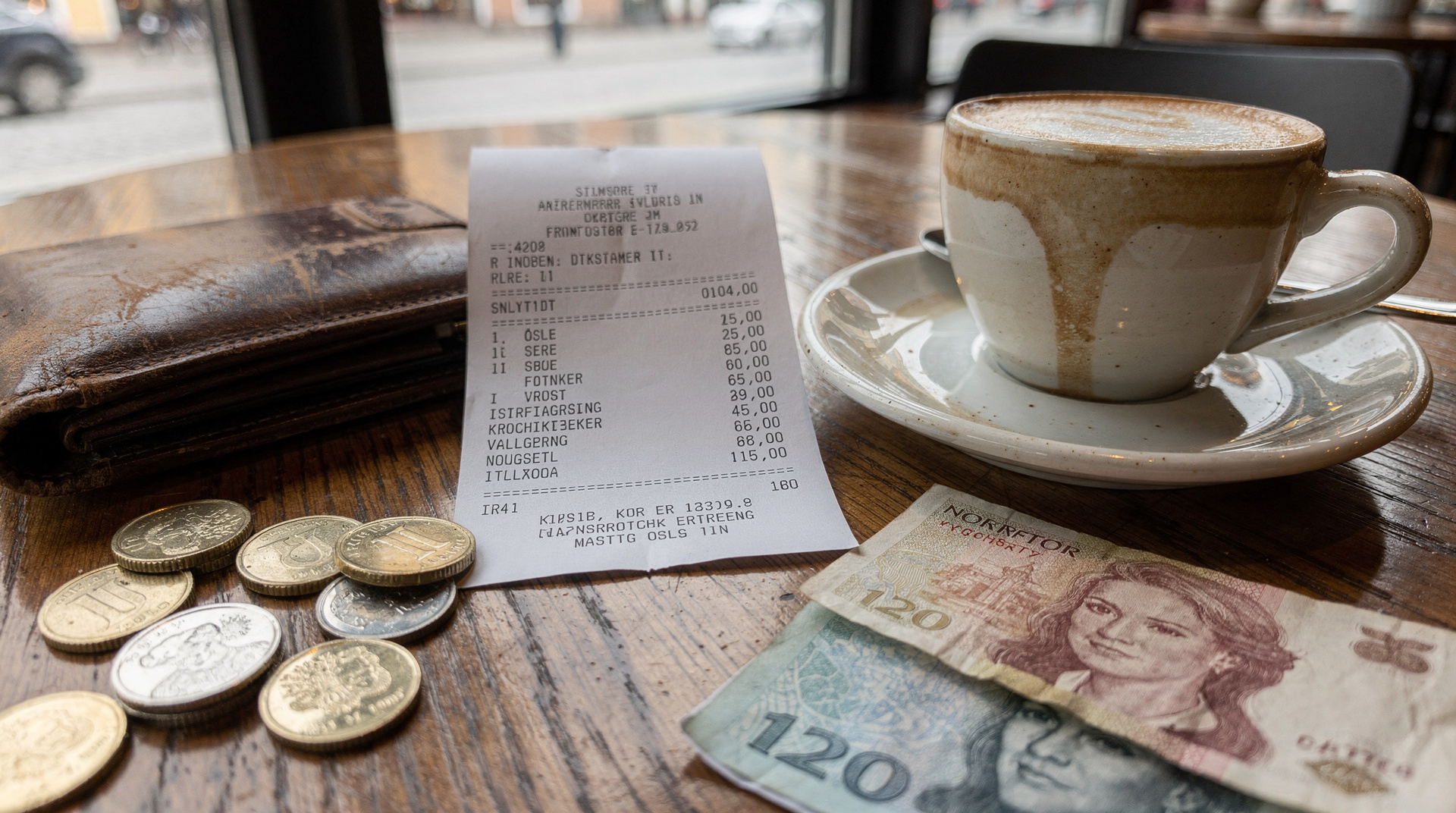
Coffee in Oslo is comfortably among the most expensive in Europe — similar to London and Copenhagen. The quality is generally excellent; Oslo has a serious specialty coffee culture centred on roasters like Tim Wendelboe (Grünerløkka) and Supreme Roastworks (Grünerløkka).
Beer at a bar
| City | Price (pint / 500ml) |
|---|---|
| Oslo | NOK 100–130 / USD 11–14 |
| London | USD 7.50–9.50 |
| Paris | USD 7–10 |
| Berlin | USD 4.50–6.50 |
| Copenhagen | USD 8–12 |
| Amsterdam | USD 5.50–7.50 |
| Prague | USD 2–4 |
Oslo beer prices are among the highest in Europe. This is primarily due to Norway’s high alcohol taxes. A beer at a restaurant (rather than a bar) is slightly cheaper — typically NOK 90–115 / USD 10–12.
Restaurant main course (mid-range)
| City | Price |
|---|---|
| Oslo | NOK 230–380 / USD 25–41 |
| London | USD 22–35 |
| Paris | USD 20–30 |
| Berlin | USD 14–22 |
| Copenhagen | USD 22–32 |
| Amsterdam | USD 17–26 |
| Lisbon | USD 12–18 |
Restaurant food in Oslo is the most significant daily cost for most visitors. A two-course dinner with one drink at a mid-range restaurant costs NOK 500–700 / USD 54–75 per person. Fine dining ranges from NOK 900–2 000+ / USD 97–215 per person.
Hotel (central, mid-range double room)
| City | Price per night (central, mid-range) |
|---|---|
| Oslo | NOK 1 400–2 200 / USD 150–237 |
| London | USD 175–280 |
| Paris | USD 150–260 |
| Berlin | USD 110–190 |
| Copenhagen | USD 150–230 |
| Amsterdam | USD 160–260 |
| Lisbon | USD 100–180 |
Hotel prices in Oslo are high but not dramatically above London or Paris for comparable quality. The difference is that even budget hotels in Oslo start around NOK 900–1 200 / USD 97–129, while budget hotels in Lisbon or Berlin start noticeably lower.
Museum entry
| Museum | Price |
|---|---|
| Munch Museum (Oslo) | NOK 180 / USD 19 |
| National Museum (Oslo) | NOK 200 / USD 22 |
| Norsk Folkemuseum | NOK 220 / USD 24 |
| British Museum (London) | Free |
| Louvre (Paris) | EUR 22 / USD 24 |
| Pergamon Museum (Berlin) | EUR 12–16 / USD 13–17 |
| Nationalmuseet (Copenhagen) | Free |
Oslo museum entry fees are higher than London (where major state museums are free) and slightly above Paris equivalents. This is partly offset by the Oslo Pass, which bundles 30+ museums with transport.
Public transport (single ticket)
| City | Single ticket |
|---|---|
| Oslo (Ruter zone 1, app) | NOK 42 / USD 4.50 |
| London (Tube, card) | GBP 2.70–3.70 / USD 3.40–4.70 |
| Paris (Metro, Navigo Liberté) | EUR 2.50 / USD 2.75 |
| Berlin (single) | EUR 3.50 / USD 3.85 |
| Copenhagen (single zone) | DKK 27 / USD 3.90 |
Oslo’s single Ruter ticket is the most expensive of these, though the 24-hour pass (NOK 155 / USD 17) and 7-day pass (NOK 360 / USD 39) bring it more in line with other major cities on a per-journey basis.
What explains Oslo’s prices?
High wages: Norwegian minimum wages are among the highest in the world. A restaurant server or barista earns a living wage that is significantly higher than in Germany, Spain, or Portugal. This flows through into every service price.
Alcohol taxes: Norway deliberately taxes alcohol heavily to reduce consumption (a long-standing social policy). A bar buys beer wholesale and marks it up in a market where wholesale prices are already taxed heavily.
VAT: Norway’s standard VAT rate is 25% (higher than most EU countries). 15% on food, 12% on transport and accommodation. This adds up.
Import costs: Norway is not in the EU. Many goods, particularly food items and consumer products, carry higher import costs due to customs and transport.
Labour costs in construction and hospitality: Building and maintaining a hotel in Oslo is significantly more expensive than in Southern Europe, which flows into room rates.
Where Oslo is not as expensive as you’d expect
- Nature activities: Hiking in Nordmarka, the Oslofjord islands, Vigeland Park — all essentially free.
- Museums vs quality: The price-per-quality ratio for Oslo’s best museums is competitive. The Munch Museum at NOK 180 / USD 19 is a world-class collection; the Louvre at EUR 22 / USD 24 is a 3-hour queue followed by a 10-second glimpse of the Mona Lisa.
- Supermarket food: While not cheap by global standards, Norwegian supermarket food is excellent quality and not dramatically more expensive than UK supermarkets.
- Public transport: Yes, the single ticket is expensive, but Oslo’s 7-day pass at NOK 360 / USD 39 is comparable to Stockholm and cheaper than London.
How to cope with Oslo’s prices
The key strategies are explored in depth in the Oslo on a budget guide. In brief:
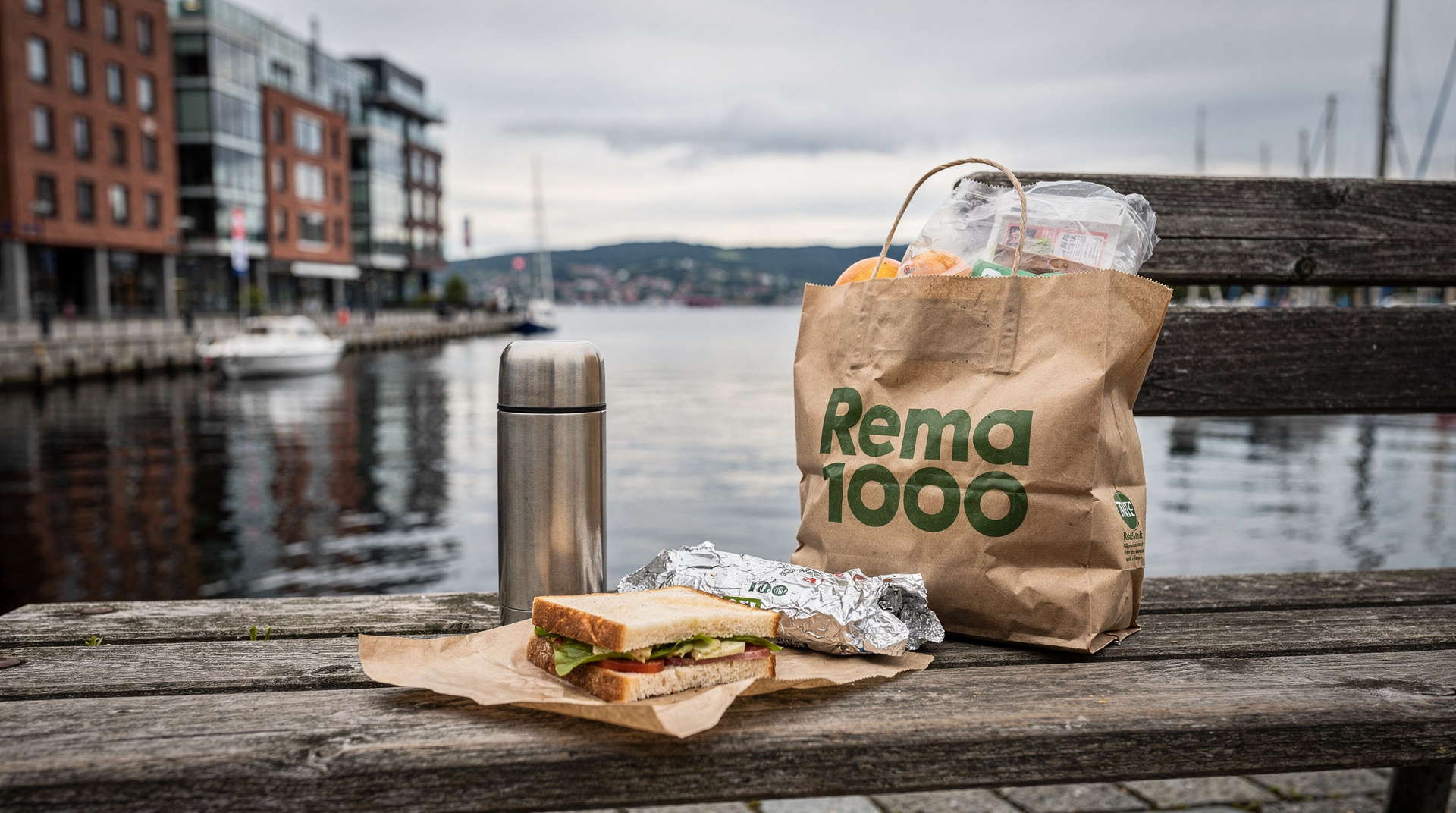
- Self-cater for breakfast and lunch (saves NOK 250–400 / USD 27–43 per day)
- Use a 7-day Ruter pass if staying 3+ days
- Prioritise free attractions (Vigeland, Opera House, Ekeberg, islands)
- Drink from Vinmonopolet rather than bars
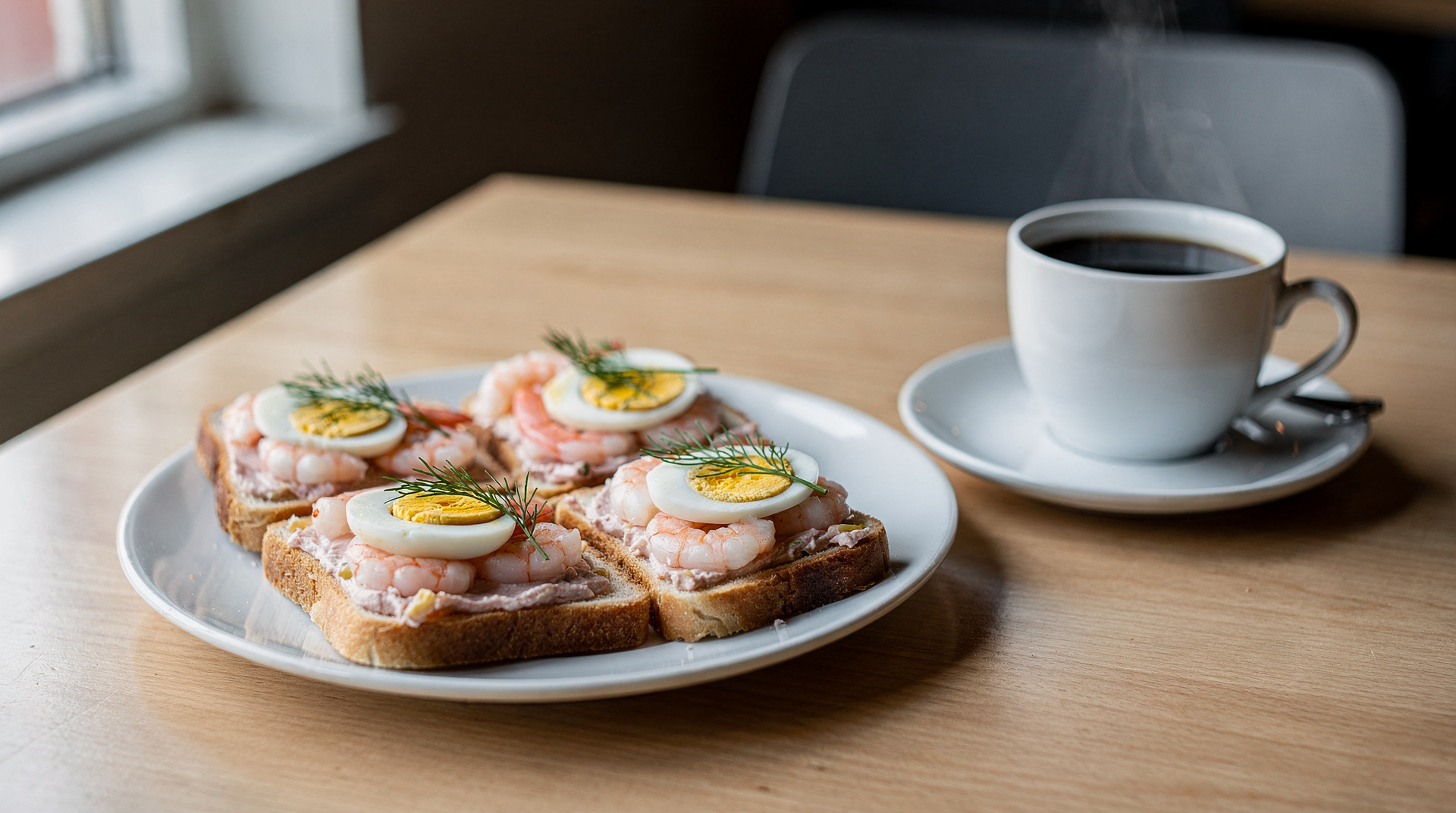
- Eat cheaply at Grønland market, Mathallen, or kebab shops
- Time museum visits for free-entry periods
See also the full itemised breakdown at Oslo daily costs and the honest assessment of whether the city is worth the expense at is Oslo worth visiting.
Oslo’s cost structure in context
Understanding why Oslo is expensive helps you navigate the pricing strategically rather than just absorbing the shock.
The Norwegian oil fund effect
Norway’s sovereign wealth fund (Government Pension Fund Global, the world’s largest) is funded by North Sea oil revenues. The wealth has filtered through the Norwegian economy via high public investment, high wages, and strong social services. This has driven up the cost of everything requiring Norwegian labour — which is everything service-related that tourists consume: restaurants, hotels, guides, and transport.
VAT at 25%
Norway’s standard VAT rate is 25%, compared to 20% in the UK, 19% in Germany, and 22% in Sweden. On a NOK 100 item, NOK 20 is VAT. On restaurant meals, 15% VAT applies; on accommodation, 12%. These rates are embedded in all displayed prices (Norway always shows inclusive pricing) but they represent a structural cost premium over most of Europe.
Alcohol monopoly pricing
Vinmonopolet’s state pricing structure deliberately prices alcohol at levels that reduce consumption. A bar or restaurant that buys wine wholesale pays post-monopoly prices, then marks up for service. The result: wine by the glass in Oslo (NOK 120–160 / USD 13–17) is more expensive than in almost any other European capital. This is not a tourist mark-up; it applies equally to Norwegians.
Prices that are comparable to other capitals
Not everything in Oslo is unusually expensive:
Smartphone repair and electronics: Global pricing; iPhone repair costs in Oslo are comparable to Western Europe.
Clothing: International chain stores (Zara, H&M, Uniqlo) sell at similar prices to other European capitals.
Fast food chains: McDonald’s and similar chains are slightly more expensive in Oslo (a Big Mac meal NOK 130–160 / USD 14–17) but not dramatically more than London or Paris.
Cinema: A cinema ticket in Oslo costs NOK 110–160 / USD 12–17 — broadly comparable to London or Stockholm.
International flights: Oslo Gardermoen is a well-connected hub. International flight prices from OSL are competitive with other major European airports.
The psychological adjustment
Visitors who obsess over Oslo’s high prices often report enjoying the trip less than those who accept the context and adjust their behaviour. The key mental shift: don’t compare Oslo café prices to Spanish café prices. Compare them to other high-wage Northern European cities (Zurich, Helsinki, Stockholm) where the gap narrows considerably.
The genuine budget relief comes from behaviours, not comparisons: self-catering, free attractions, and smart transport choices can make the experience of Oslo accessible at NOK 800–950 / USD 86–102 per person per day — tight, but real.
What Norwegians actually complain about
For perspective: Norwegians themselves complain about the cost of eating out, alcohol, and imported goods. But they don’t generally find basic living expensive relative to their incomes. A Norwegian teacher or nurse earns enough to eat well, travel domestically, and maintain a reasonable standard of living. The prices look extreme from a Southern European or American wage perspective; from a Norwegian income perspective, they’re proportionate.
This doesn’t make them less challenging for the tourist, but it contextualises why the prices won’t come down: they reflect real labour costs, not tourist extraction.
Practical cost benchmarks to memorise before you go
These are the numbers worth internalising before arriving in Oslo:
| Item | NOK | USD |
|---|---|---|
| Ruter single ticket (app) | 42 | 4.50 |
| Supermarket coffee | 35–45 | 3.80–4.80 |
| Kebab or cheap lunch | 120–145 | 13–16 |
| Museum entry (most major) | 165–220 | 18–24 |
| Pint of beer at a bar | 100–130 | 11–14 |
| Mid-range dinner main | 250–350 | 27–38 |
| Budget hotel room | 900–1 200 | 97–129 |
| Oslo Pass 48h | 895 | 96 |
See the Oslo on a budget guide for the complete strategies to manage these costs, and the cheap eats guide for specific affordable restaurant and market recommendations.
Will Oslo prices come down?
Probably not significantly in the near term. Norway’s structural cost drivers — high wages, high taxes, limited competition in some markets — are stable features of the economy, not temporary conditions. Some competitive pressure from online travel markets has kept hotel pricing slightly more dynamic, and the growth of budget air carriers on the Oslo–Bergen and Oslo–European routes has created price pressure in aviation. But the fundamental cost of a restaurant meal, a museum ticket, or a coffee in Oslo tracks Norwegian wages and will rise with them.
The one genuine mitigating factor is the NOK exchange rate. The krone has weakened in periods of global oil price decline (Norway’s export income is significantly oil-dependent). A weaker krone makes Oslo proportionally cheaper for USD, EUR, or GBP holders. Monitor the NOK rate before booking: significant krone weakness can reduce effective costs by 10–15%.
The luxury ceiling: Oslo’s most expensive experiences
At the top end, Oslo has some genuinely world-class and correspondingly priced experiences:
Maaemo restaurant: Three Michelin stars, tasting menu approximately NOK 2 800–3 500 / USD 301–376 per person before wine. Wine pairing adds NOK 2 000–3 000 / USD 215–323. This is one of the most expensive restaurant experiences in Europe.
The Thief hotel (Tjuvholmen): Boutique design hotel on the waterfront, from NOK 3 500–6 000 / USD 376–645 per night.
Sommerro hotel (Frogner): Converted 1930s power station, rooms from NOK 3 000–5 000+ / USD 323–538.
Private Oslofjord sailing: Charter a traditional Norwegian sailing vessel for a private fjord day: NOK 8 000–15 000 / USD 860–1 613 for a day charter.
These represent the outer edge of what Oslo offers. The city’s more interesting story is the range of world-class experiences available at mid-range prices — the Munch Museum (NOK 180), the Norsk Folkemuseum (NOK 220), a day on Nordmarka (NOK 42 for the T-bane), and the floating saunas (NOK 250). Oslo at the premium mid-range level delivers exceptional quality for what you pay.
Currency risk and planning ahead
For non-Norwegian visitors, Oslo’s costs in your home currency depend on the NOK exchange rate. Planning a trip 3–6 months out, the rate you budget with may not reflect what you actually pay.
Hedging strategy: If the NOK is currently favourable (weak NOK relative to your currency), book and pre-pay as many costs as possible: accommodation (refundable rates), flights, guided tours. This locks in the effective price. If the NOK strengthens before you travel, your pre-booked costs are protected.
Currency converter: For current NOK rates, see the Oslo currency converter tool.
Is Oslo more expensive in 2026 than in previous years?
Norwegian inflation peaked at around 7% in 2022–2023 and has moderated. In 2025–2026, price increases have slowed to closer to 3–4% annually. This means Oslo prices in 2026 are higher than in 2022 in absolute NOK terms, but the rate of increase has slowed.
For international visitors, the relevant comparison is also the NOK rate, which has fluctuated. In USD terms, Oslo’s costs have been relatively stable because occasional krone weakness has offset some of the NOK price increases.
The prices in this guide reflect verified 2026 figures. Always re-check specific prices (museum entry, Ruter fares) before travel, as annual adjustments can change the absolute numbers while the relative structure stays consistent.
Accommodation: apartment rental vs hotel
For stays of 3 nights or longer, a short-term apartment rental often beats a mid-range hotel on real cost, mainly because it lets you self-cater. A one-bedroom apartment in Grünerløkka or Grønland runs NOK 1 100–1 700 (USD 118–183) per night — comparable to or slightly below a mid-range hotel — but with a kitchen that removes at least one restaurant meal a day from the budget. Over a 4-night stay, cooking breakfast and one dinner at the apartment instead of eating out can save NOK 1 500–2 500 (USD 161–269) for two people, which usually outweighs any modest price difference versus a hotel.
The trade-off is convenience: hotels in central locations near Karl Johans gate or Aker Brygge cut down on transit time, and breakfast buffets (often included) are themselves a meaningful saving if you eat well at them. For a first-time, shorter visit, a hotel with breakfast included is simpler; for a longer stay, an apartment with a kitchen is the stronger budget move. See the where to stay in Oslo guide for specific neighbourhood recommendations.
Tipping in Oslo: what’s actually expected
Tipping is not obligatory in Norway and this is one genuine relief in an otherwise expensive city. Service charges are built into menu prices and staff earn a living wage regardless of tips. At restaurants, rounding up the bill or leaving 5–10% for good table service is appreciated but not expected — nobody will chase you down for skipping it. At bars, no tip is standard. For taxis, rounding to the nearest note is common but optional. Hotel porters and housekeeping are not customarily tipped, though a small gesture for exceptional help is fine.
This is a genuine contrast with the US: a Norwegian dinner bill of NOK 600 doesn’t implicitly carry another NOK 100–120 in expected gratuity. Factor that into direct price comparisons — an Oslo restaurant bill is often closer to the “all-in” cost than the same number on a US menu.
Value table: Oslo daily budget by traveller style
| Traveller style | Daily spend (per person) | What it looks like |
|---|---|---|
| Backpacker / hostel | NOK 700–950 (USD 75–102) | Hostel dorm, self-catering, free attractions, occasional cheap eat |
| Mid-range | NOK 1 400–1 900 (USD 150–204) | Mid-range hotel, mix of restaurants and supermarkets, 1–2 paid museums |
| Comfortable | NOK 2 500–3 500 (USD 269–376) | Central hotel, restaurant dinners most nights, Oslo Pass, taxis occasionally |
| Splurge | NOK 4 500+ (USD 484+) | Boutique hotel, fine dining (Maaemo-tier), private guided experiences |
Use this table alongside the Oslo trip cost guide, which breaks the mid-range figure down into specific line items for a 3-day visit.
Duty-free and cross-border alcohol strategy
Because Vinmonopolet pricing and alcohol taxes make Norwegian wine, spirits and strong beer some of the most expensive in Europe, many visitors and locals alike buy alcohol at the duty-free shop on arrival at Oslo Gardermoen Airport, where allowances let you bring in significant quantities tax-free. If your trip includes a flight in, buying wine, spirits or beer at arrivals duty-free before you even leave the airport is the single most effective way to blunt Oslo’s alcohol costs for the whole stay. This won’t help with bar or restaurant drinking, but it meaningfully reduces the cost of evenings in an apartment or hotel room.
Frequently asked questions about Is Oslo expensive? Real numbers vs other capitals
How does Oslo compare to London for prices?
Oslo is noticeably more expensive than London for food and drink. A pub pint in London runs roughly GBP 6–7 (USD 7.50–8.80); in Oslo, NOK 100–130 (USD 11–14). Restaurant mains in Oslo average NOK 250–350 (USD 27–38) vs London's GBP 18–28 (USD 23–35). Accommodation is broadly similar in price for central options.How much is a coffee in Oslo?
A flat white or cappuccino at a good Oslo café costs NOK 45–65 (USD 5–7). This is more than London (GBP 3.50–4.50 / USD 4.40–5.60) and significantly more than Berlin (EUR 3–4 / USD 3.30–4.40). Norwegians drink a lot of coffee but filter coffee (kaffe) is slightly cheaper.Is food expensive in Oslo supermarkets?
Supermarket prices in Oslo are higher than Germany or Poland, but comparable to the UK and lower than Switzerland. A litre of milk costs NOK 19–24 (USD 2–2.60). A 500g pack of smoked salmon costs NOK 75–120 (USD 8–13). Bread is NOK 30–55 (USD 3.20–5.90). Self-catering is genuinely the most effective budget strategy.Why is Oslo so expensive?
Norway's high wages (driven by oil wealth and strong unions) push up service costs. VAT is 25% on most goods. Alcohol is additionally taxed by a state monopoly. Import costs on food and goods are higher than in continental Europe. These aren't exploitative tourist prices — Norwegians pay the same.Is Norway more expensive than Sweden or Denmark?
Norway is broadly similar to Denmark and slightly more expensive than Sweden for most day-to-day costs. Stockholm is typically 10–20% cheaper than Oslo. Copenhagen is broadly comparable or slightly cheaper. All three Scandinavian capitals are significantly more expensive than most other European cities.
Top experiences
Bookable activities with verified prices and instant confirmation on GetYourGuide.