Cheap eats in Oslo: where locals actually eat on a budget
Oslo: Grünerløkka district food tour of 7 authentic tastings
Duration: 3 hours
- 7 tastings
- Trendy district
Where can I eat cheaply in Oslo?
Your three best options: supermarkets (Kiwi, Rema 1000) for self-catering at NOK 60–120 per meal; the Grønland Torg market area for street food from NOK 100–150; and kebab shops in Grünerløkka from NOK 120–140. Mathallen food hall offers quality street food from NOK 130–190. Avoid the tourist-facing harbour restaurants on the Aker Brygge strip.
Why food is Oslo’s biggest budget challenge
In Oslo, the gap between “eating like a tourist” and “eating like a local on a budget” is wider than in most European cities. The harbour restaurant strip at Aker Brygge can easily cost NOK 400–600 / USD 43–65 per person for a mediocre meal. A few hundred metres away, the same quality of food eaten from a market stall or kebab shop costs one-quarter of that.
| Cheapest hot meal | Kebab or street food, around NOK 100–150 |
| Where | Grønland, Thorvald Meyers gate |
| Avoid | Aker Brygge waterfront strip |
| Best value hall | Mathallen, around NOK 130–200 |
| Daily food budget | around NOK 350–450 per person |
Knowing where to eat — and more importantly where not to eat — is the most impactful single money decision of a budget trip to Oslo.
Food is only one line of the bill. If you want to see how it sits next to lodging and transport, is Oslo expensive? puts the whole picture in perspective, and the Oslo trip cost guide helps you build a realistic total before you travel.
The golden rule: avoid the tourist waterfront
The restaurants on the pedestrian strip of Aker Brygge, particularly those facing the marina with laminated menus and photos of dishes, are not good value. A bowl of klippfisk (salted cod) or a shrimp sandwich (rekesmørbrød) at these places costs NOK 280–380 / USD 30–41 — and the quality rarely matches the price. Norwegians eat here occasionally for convenience, not because the food is good value.
The floating sauna complex at Tjuvholmen is different (genuinely Norwegian experience worth paying for). The tourist trap strip directly facing Aker Brygge marina is where the problem is.
Option 1: supermarket self-catering
This is the single most important cheap eating strategy. Norwegian supermarkets are well-stocked and the quality is high.
Main supermarket chains:
- Kiwi: Discount positioning; widest spread of locations across Oslo. Consistently the cheapest.
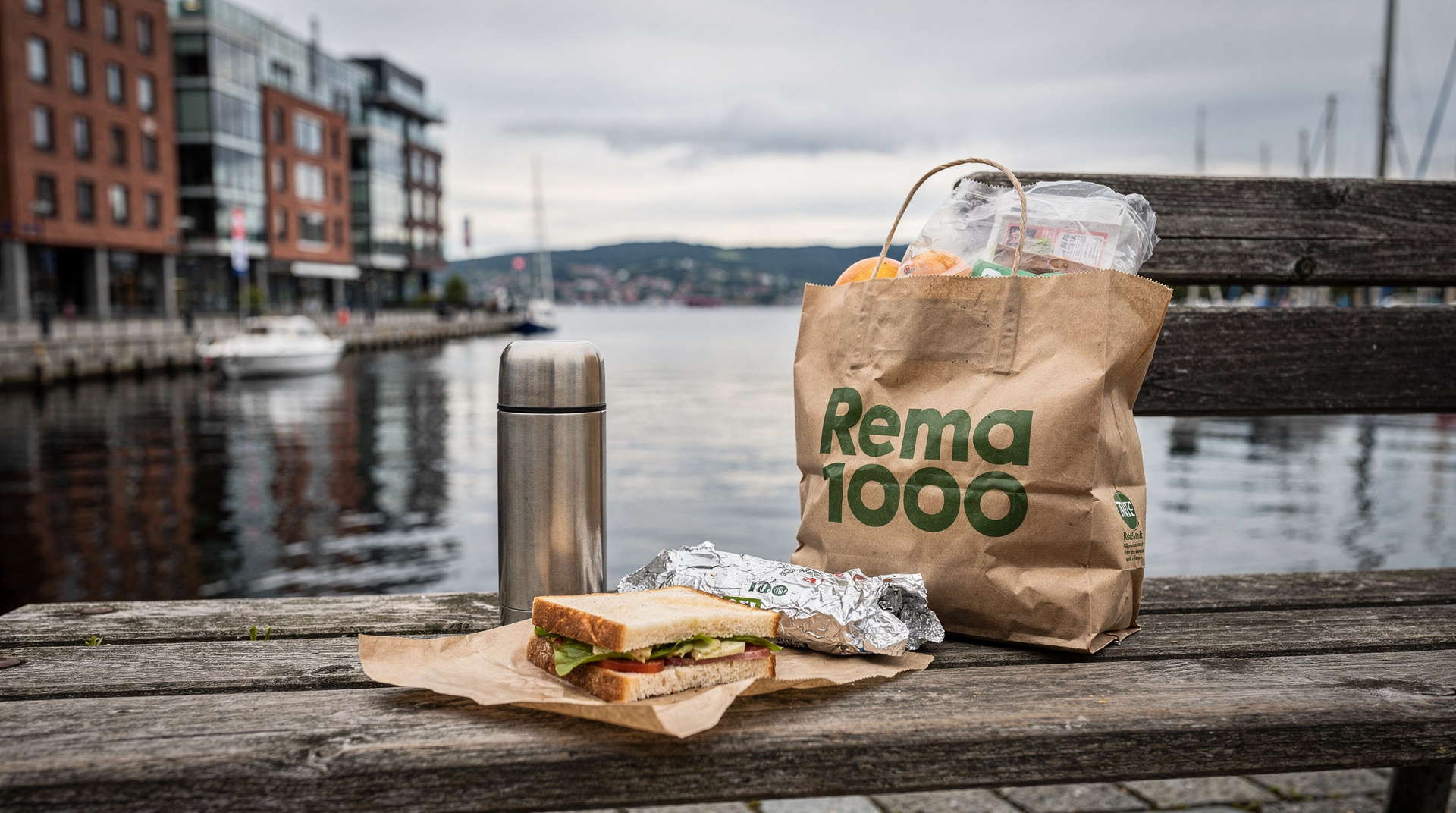
- Rema 1000: Similar pricing to Kiwi; slightly more variety. Good for fresh produce.
- Coop Extra: Mid-range discount; good bakery sections in larger stores.
- Meny: Premium; higher prices but excellent quality and selection. Worth visiting once for the fish counter.
- Bunnpris: Small discount chain, particularly in outer areas.
Best supermarket buys for a self-catering lunch in Oslo:
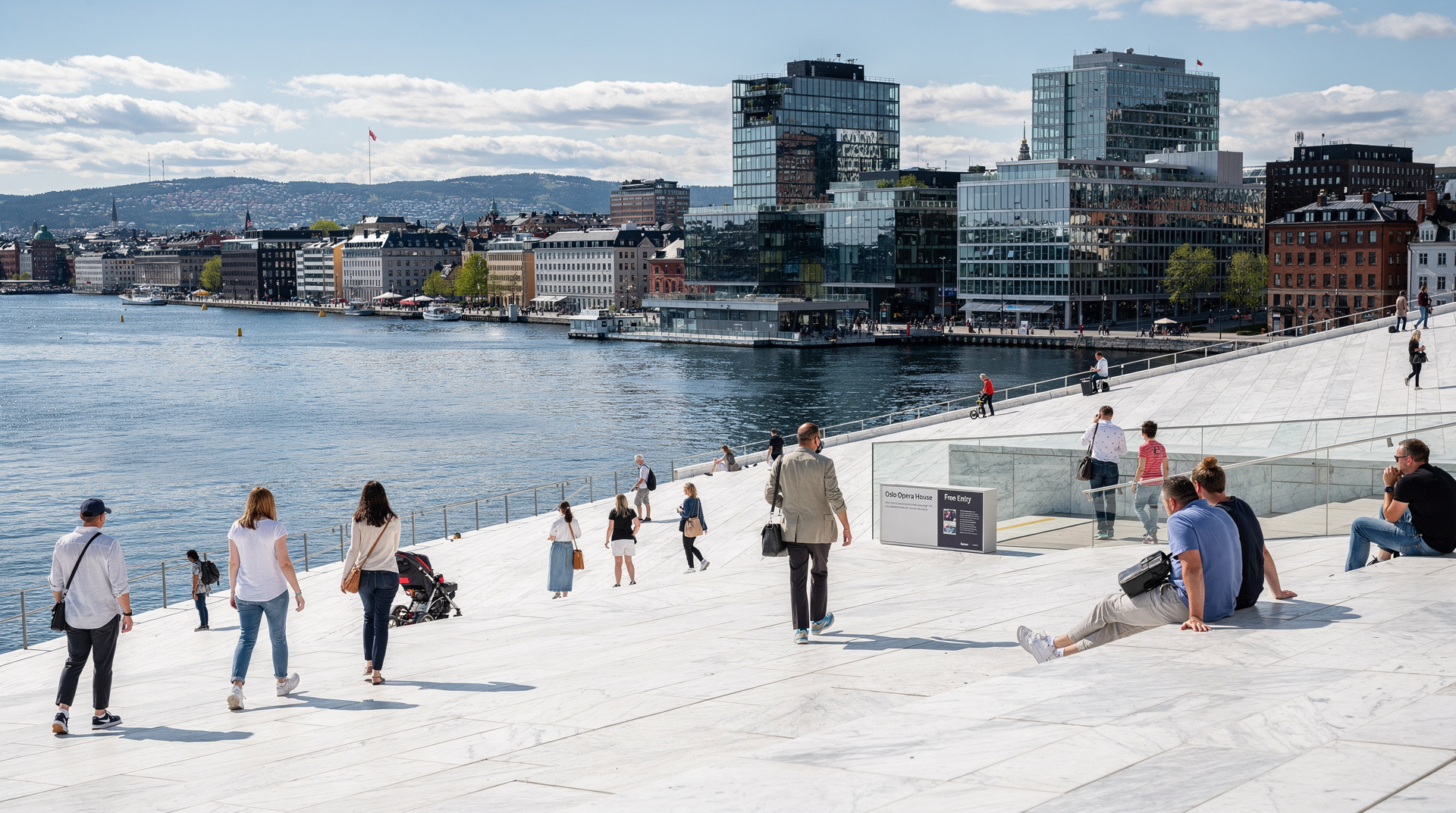
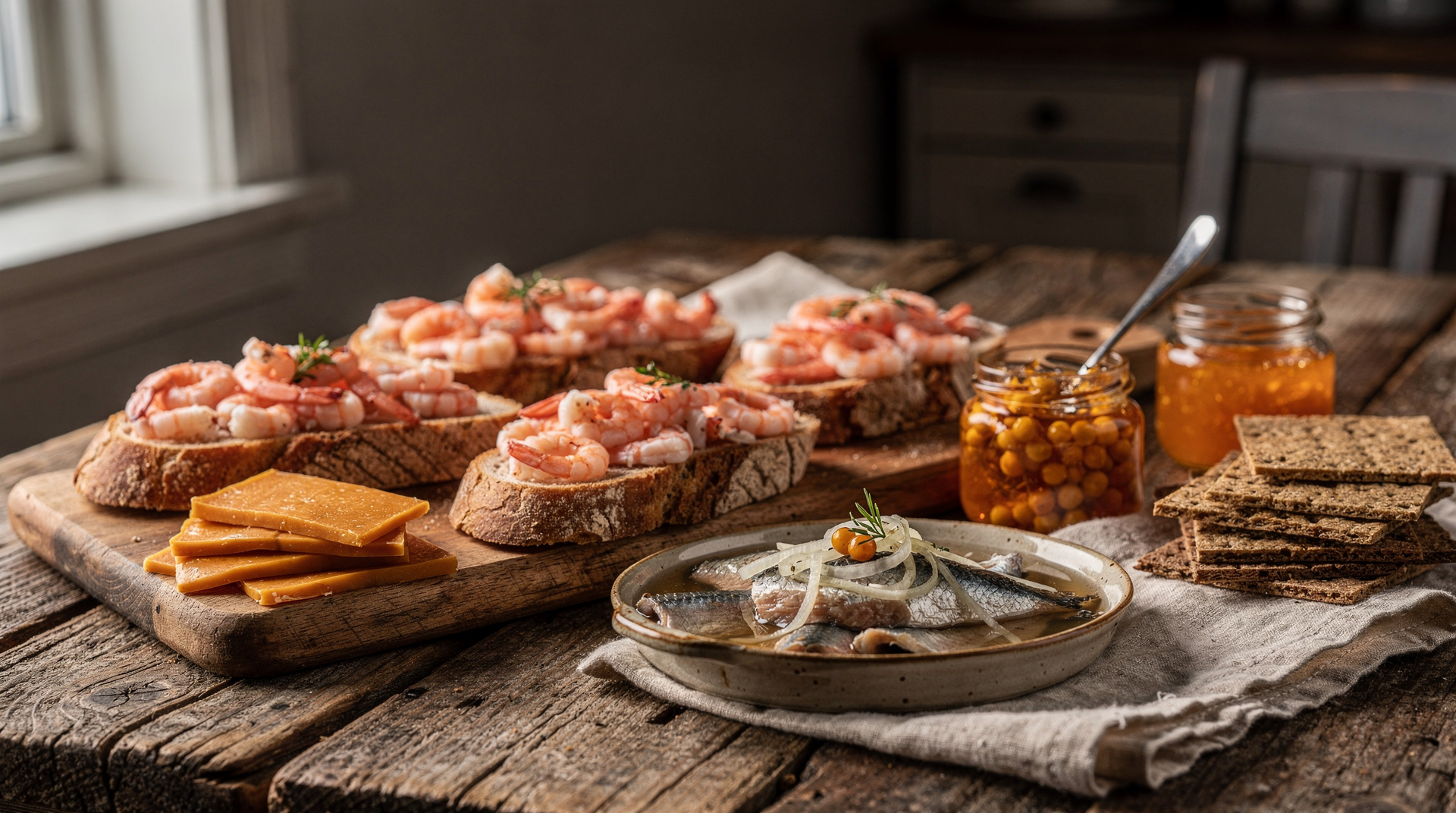
- Reker (shrimp): Pre-cooked, peeled, chilled. NOK 60–90 / USD 6.50–10 for a generous portion. Exceptional quality. Eat on the Opera House roof or in Vigeland Park.
- Laks (smoked salmon): NOK 45–80 / USD 5–9 per 100g pack. Consistently better quality than what’s served in harbour restaurants at double the price.
- Brunost (brown cheese): Unique Norwegian product — a sweet, caramel-like whey cheese. NOK 40–55 / USD 4.30–6 per block. Life-changing on a cracker.
- Knekkebrød (crispbread): NOK 20–35 / USD 2.20–3.80. A staple for open sandwiches.
- Pålegg: The Norwegian concept of smørebrød toppings — cold cuts, cheese, fish. Buy a selection for NOK 50–100 / USD 5.40–11 and assemble picnic sandwiches.
- Makrell i tomat (canned mackerel in tomato): NOK 15–25 / USD 1.60–2.70 per tin. An Oslo institution. Eat on bread for a genuinely Norwegian cheap lunch.
- Yogurt and skyr: Norwegian dairy is excellent. Skyr (Icelandic-style high-protein yogurt) is widely sold from NOK 20–35 / USD 2.20–3.80 for a large tub.
Where to picnic: Vigeland Park, the Opera House roof, Ekebergparken, any Oslofjord island beach, the Akerselva riverside in Grünerløkka.
Option 2: Grønland market area
Grønland is the neighbourhood directly east of Oslo S, about 15 minutes on foot or one T-bane stop. It is Oslo’s most ethnically diverse district — home to Pakistani, Somali, Vietnamese, Middle Eastern, and Indian communities — and has by far the most affordable restaurant and market food in the city.
Best spots:
-
Grønland Torg: The square itself has market stalls and small shops selling Middle Eastern pastries (baklava, böreks), bread, and produce. A fresh-baked flatbread costs NOK 10–20 / USD 1.10–2.20.
-
Kebab shops on Grønlands gate and Tøyengata: Full döner kebab with salad and sauce costs NOK 110–140 / USD 12–15. These are among the cheapest hot meals in Oslo.
-
Vietnamese restaurants: Several small Vietnamese restaurants in Grønland and Toyen serve pho and spring rolls for NOK 150–200 / USD 16–22. Significantly cheaper than similar dishes in tourist areas.
-
Middle Eastern bakeries: Fresh bread, falafel, and hummus. Falafel wrap: NOK 90–120 / USD 10–13.
-
Pakistani sweet shops: Mithai (South Asian sweets) sold by weight; unusual, inexpensive, and genuinely good.
The atmosphere in Grønland is genuine and local — this is the best place in Oslo to eat affordably and feel like you’re not in a tourist bubble.
To understand the area beyond its food counters, read the Grønland neighbourhood guide or the Grønland and Tøyen district page. Both explain how to combine a meal with a walk through the market streets, and why the area rewards an unhurried visit rather than a quick stop.
Option 3: Thorvald Meyers gate (Grünerløkka)
Grünerløkka is Oslo’s most popular neighbourhood for café culture, and while some of its restaurants are priced at the higher end, the street food and casual options on Thorvald Meyers gate and surrounding streets are competitive.
Key spots:
- Kebab shops on Thorvald Meyers gate: Local favourite for late-night cheap eating. Dürüm wrap or full kebab: NOK 120–140 / USD 13–15.
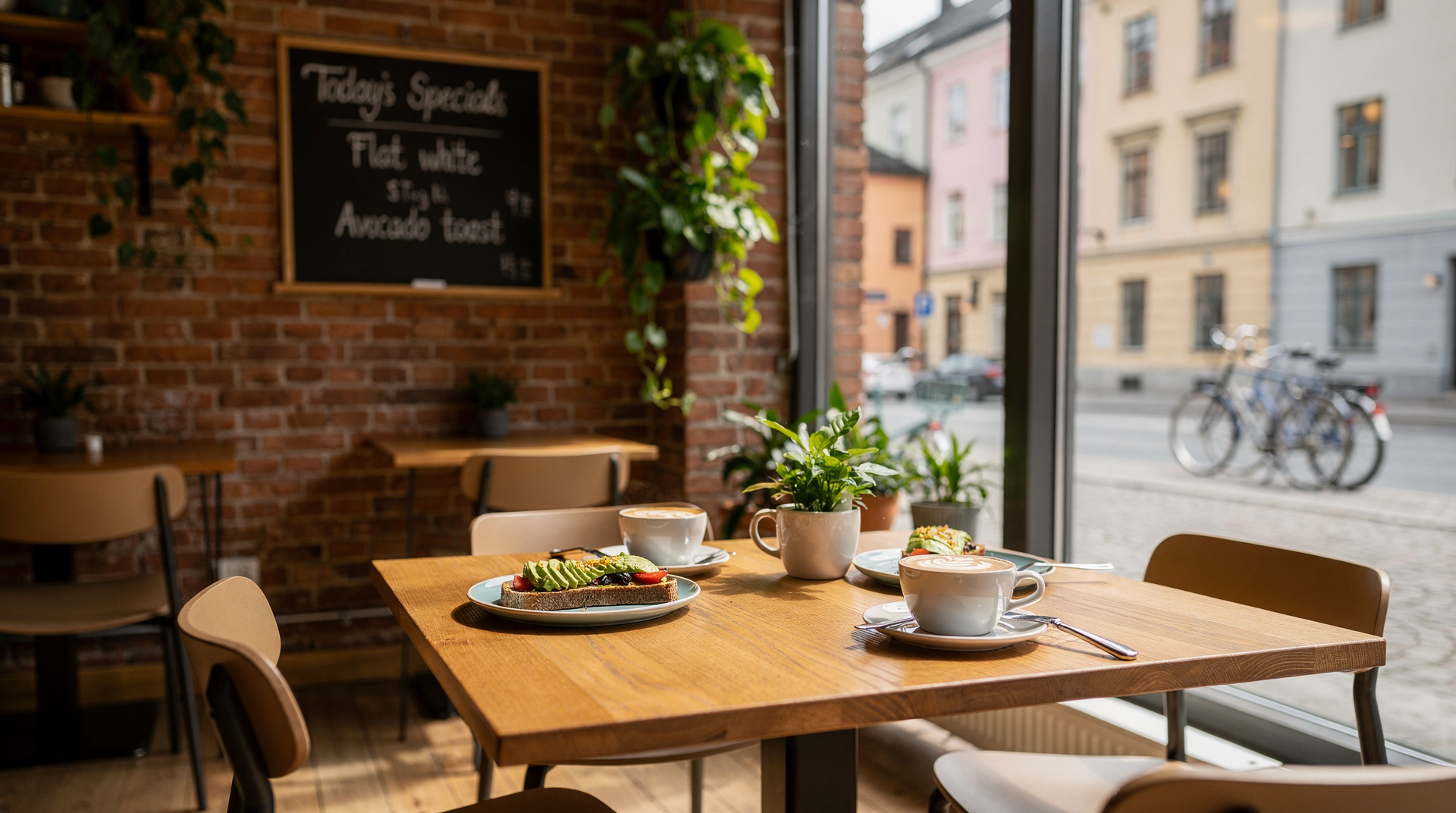
- Kaffe Catégorie (Thorvald Meyers gate): Good coffee, reasonable prices for the area. Filter coffee from NOK 35 / USD 3.80.
- Fiskeriet (Youngstorget): Technically not Grünerløkka (it’s nearby), but this fish market and café is one of Oslo’s best-value seafood spots.
A shrimp sandwich costs NOK 180–220 / USD 19–24 — significantly less than at Aker Brygge, and better quality.
- Market stalls (weekend): Weekend morning markets in Grünerløkka (particularly near the Akerselva bridges) sell artisan food, street food, and produce. Prices are mid-range but the atmosphere is Oslo at its most enjoyable.
For more on where to sit down, which streets reward wandering and what to order in the area, the Grünerløkka food guide goes deeper, and the Grünerløkka neighbourhood guide shows how a meal fits into a wider afternoon there. If you simply want a good cup alongside your meal, Oslo coffee culture is worth a look.
Option 4: Mathallen food hall
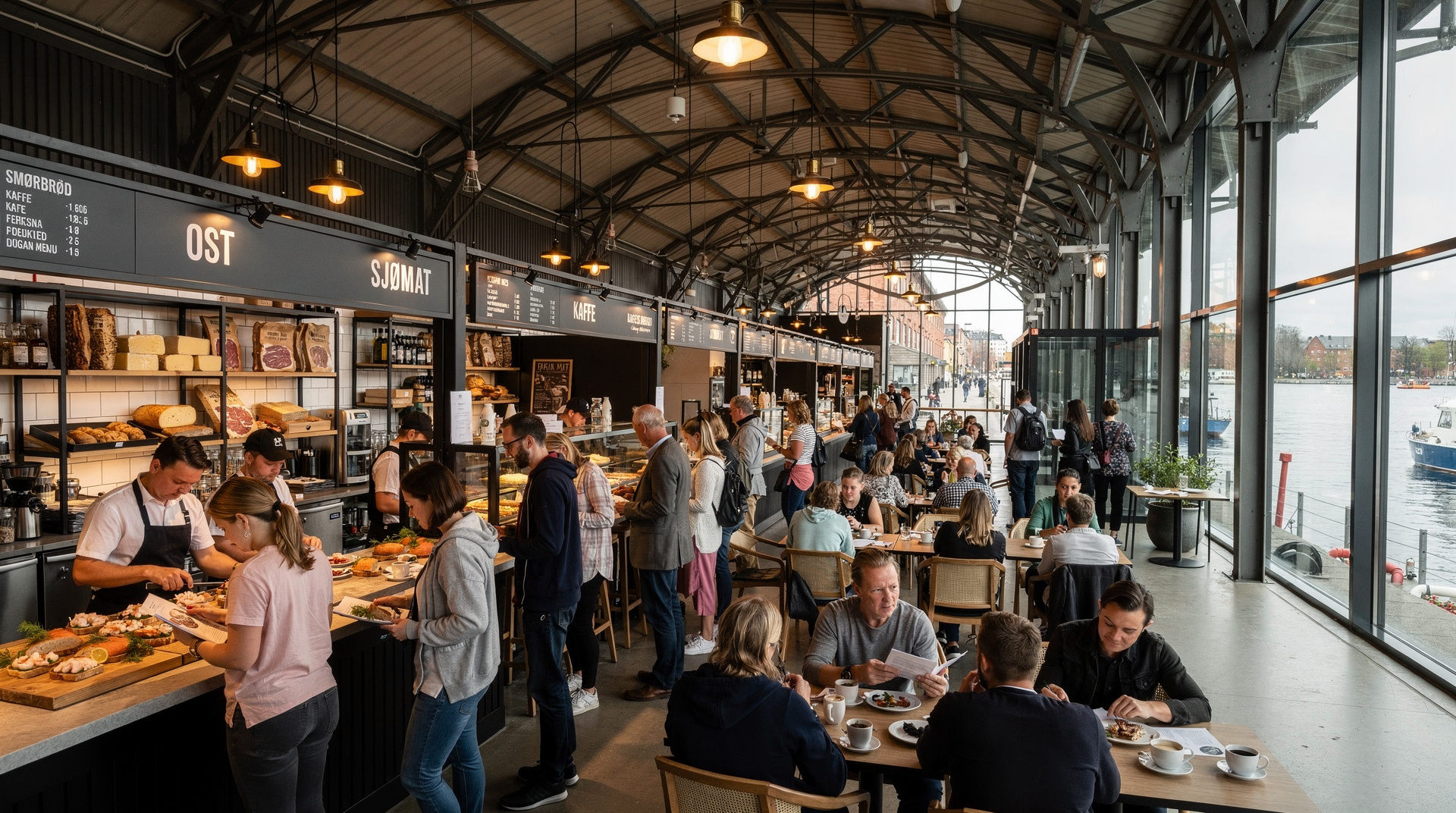
Mathallen Oslo (on Vulkan, in Grünerløkka) is a permanent indoor food hall with around 30 vendors. Open Tuesday through Sunday (closed Mondays). It’s not the cheapest option, but it’s Oslo’s best food hall and represents good value for quality.
Price range: NOK 130–200 / USD 14–22 per meal. Higher-end stalls can charge more, but the basic lunch bowl or sandwich options at most counters fall in the mid range.
Best budget options within Mathallen:
- Flatbread wraps and sandwiches from bakery counters: NOK 80–120 / USD 9–13
- Bowls and quick-service mains from Asian counters: NOK 140–180 / USD 15–19
- Grøt (Norwegian porridge) stalls: breakfast or lunch bowl from NOK 80–130 / USD 9–14
The Mathallen guide covers the full vendor list and what to order.
Option 5: 7-Eleven and Narvesen convenience stores
Not glamorous, but practical. Oslo’s 7-Eleven and Narvesen kiosks are on virtually every main street and serve:
- Filter coffee: NOK 25–40 / USD 2.70–4.30 (with refills at some locations)
- Hot dogs (pølser): NOK 30–50 / USD 3.20–5.40 — a Norwegian street food institution
- Sandwiches: NOK 55–90 / USD 6–10
- Fresh fruit: NOK 15–30 / USD 1.60–3.20
The hot dog (pølse) culture in Norway is genuine and widespread. “Pølse med lompe” (sausage in a soft potato flatbread with onion and mustard) is the classic — cheap, filling, and sold everywhere.
Option 6: student canteens (kantiner)
Oslo has two major universities (University of Oslo and Oslo Metropolitan University) plus several colleges. Many of their student canteens are open to the public. A hot meal in a university canteen costs NOK 80–120 / USD 9–13 — significantly below any restaurant equivalent. Check the Studentsamskipnaden (SiO) website for canteen locations and opening hours.
Choosing between cheap and just good
Cheap eating works best when you mix formats rather than commit to one. A supermarket breakfast frees up room for a proper sit-down dinner, and a kebab lunch makes a Mathallen evening feel like a treat rather than a strain. If you want to taste the national classics without paying restaurant prices, Norwegian food to try and brown cheese and specialties explain what to look for on shelves and menus.
If the budget is tight across the whole trip, the free things to do in Oslo guide pairs well with a picnic plan, since many of the best picnic spots cost nothing to sit in.
What to avoid
- Aker Brygge tourist strip restaurants: See the opening caveat. Not worth it.
- Airport food at Gardermoen: Standard airport mark-up; a sandwich costs NOK 100–160 / USD 11–17. Buy in the city if you need airport food.
- Hotel restaurants for breakfast: Many Oslo hotels serve a good Norwegian breakfast buffet — but the cost (often included in the room rate) is the only justification. If breakfast is charged separately (NOK 150–200 / USD 16–22), skip it and go to a supermarket.
- Harbour cruise snack bars: On the tourist ferry boats, snacks and drinks carry heavy mark-ups. Pack your own before boarding.
A practical eating plan for a budget week
- Breakfast: Supermarket: skyr, bread, fruit (NOK 50–70 / USD 5.40–7.50 per person)
- Lunch: Supermarket smørebrød or a Grønland kebab (NOK 80–140 / USD 8.60–15)
- Dinner (3 times): Grønland or Grünerløkka restaurant (NOK 150–200 / USD 16–22)
- Dinner (2 times): Mathallen or Fiskeriet quality option (NOK 190–250 / USD 20–27)
- Dinner (2 times): Full supermarket self-catering (NOK 120–180 / USD 13–19 for a proper meal with salmon and salad)
Average food cost on this plan: NOK 350–450 / USD 38–48 per person per day — roughly half the cost of eating out for every meal.
For the full daily cost breakdown, see Oslo daily costs and the Oslo on a budget master guide.
Norwegian foods worth trying at budget prices
Eating cheaply in Oslo doesn’t mean missing out on Norwegian food culture. Several distinctly Norwegian ingredients and dishes are excellent value from supermarkets:
Reker (shrimp): Possibly the single best value food purchase in Norway. Pre-cooked fjord shrimp, sold by weight or in chilled packs at Kiwi and Meny. The quality is remarkable — Norwegian cold-water shrimp are sweeter and more flavourful than warm-water alternatives. A generous portion costs NOK 60–90 / USD 6.50–10. Eat with bread and mayonnaise on the Opera House roof for a genuinely Norwegian experience at a fraction of the harbour restaurant price.
Brunost (brown cheese): A whey-based Norwegian cheese with a sweet, caramel, slightly salty flavour. Nothing else tastes like it. G35 is the classic version; Gudbrandsdalsost is the premium variety. NOK 40–55 / USD 4.30–6 for a 250g block. Eaten on bread or crispbread.
Laks (salmon): Norwegian smoked salmon from a supermarket is exceptional — and cheaper than Norwegian salmon served in a London restaurant. A 100g pack runs NOK 45–80 / USD 5–9.
Knekkebrød (crispbread): The Norwegian approach to sandwich bread — hard, thin, and an excellent base for smørebrød. Wasa, Ryvita, and various Norwegian brands. NOK 20–35 / USD 2.20–3.80 per pack.
Makrell i tomat: Tinned mackerel in tomato sauce. A Norwegian pantry staple costing NOK 15–25 / USD 1.60–2.70. Mashed onto bread, it makes a filling and genuinely Norwegian cheap lunch.
Skyr: High-protein yogurt (originally Icelandic but widely eaten in Norway). Siggi’s and Arla brands available everywhere from NOK 25–40 / USD 2.70–4.30 for a large tub. Better protein per krone than most breakfast options.
The Fiskeriet question
Fiskeriet Youngstorget (next to the outdoor square at Youngstorget, easily walkable from Oslo S) deserves special mention for budget seafood. It’s a fish market and café hybrid that sells fresh fish and seafood at market rather than tourist-restaurant prices.
A shrimp sandwich (rekesmørbrød) at Fiskeriet costs approximately NOK 180–220 / USD 19–24 — compared to NOK 280–380 / USD 30–41 at Aker Brygge harbour restaurants for a similar (often inferior) dish. The quality at Fiskeriet is higher. This is where Osloites who want good seafood actually eat.
Opening times: roughly Tuesday–Friday 10:00–17:00, Saturday 09:00–15:00. Check before visiting as hours change seasonally.
Budget eating with dietary requirements
Vegetarian and vegan: Grønland market area has excellent vegetarian options — falafel from Lebanese stalls (NOK 90–120 / USD 10–13), Ethiopian injera with vegetable stews (NOK 150–180 / USD 16–19), and South Asian vegetarian dishes. Mathallen has at least two counters with strong vegetarian offerings. Oslo has a decent vegan scene concentrated in Grünerløkka — Nordvegan (Thorvald Meyers gate) is one of several vegan restaurants with reasonable prices for Oslo (mains around NOK 180–250 / USD 19–27).
Halal: Grønland is the best area. Multiple kebab shops, Somali restaurants, and halal butchers and bakeries on Grønlands gate and Tøyengata.
Gluten-free: Norwegian supermarkets stock good gluten-free bread and crispbread alternatives (NOK 35–60 / USD 3.80–6.50). Most Oslo restaurants understand the dietary requirement; English communication is easy.
How to use Vinmonopolet effectively
Vinmonopolet (the state wine and spirits monopoly) is not just a budget tool — it’s genuinely interesting as a Norwegian institution. The stores are well-organised, well-stocked, and have knowledgeable staff who speak English.
Practical tips:
-
Find your nearest location at vinmonopolet.no (map function, English available). There are locations in all major Oslo districts.
-
Hours: Monday–Friday 10:00–18:00 (some later on Thursdays), Saturday 10:00–18:00 (or 15:00 on summer Saturdays). Closed Sundays and public holidays — important to note for weekend planning.
-
Beer over 4.7% ABV is only sold at Vinmonopolet; supermarkets sell up to 4.7% only.
-
Wine pricing: A decent bottle of Norwegian-import wine (mostly European labels) starts at NOK 140 / USD 15. The selection is excellent and the prices are reasonable by Norwegian standards, though higher than in wine-producing countries.
-
Strategy: Buy wine and spirits for your accommodation on Friday before 18:00 (the last Vinmonopolet opening); Sundays and some Saturdays close at 15:00.
Tipping culture in Oslo restaurants
Tipping is not expected in Norway. Restaurant staff are paid a proper wage — significantly higher than in tipping-culture countries. Some visitors round up to the nearest NOK 50 or add a small tip on card; this is appreciated but never anticipated. At bars, tipping on card transactions is unusual.
This saves a meaningful amount compared to countries with a 15–20% tipping norm. On a NOK 400 / USD 43 dinner for two, not tipping saves NOK 60–80 / USD 6.50–9 vs a standard restaurant tip elsewhere.
Where not to eat (tourist trap summary)
Three areas to avoid for value:
-
Aker Brygge waterfront restaurant strip: Laminated menus facing the marina. Prices are 30–50% higher than equivalent quality elsewhere. The shrimp toast at one of these costs NOK 340 / USD 37; the same quality at Fiskeriet Youngstorget is NOK 200 / USD 22.
-
Karl Johans gate tourist cafés: The cafés directly on the pedestrian strip between the station and the Parliament charge tourist mark-ups. Step one street off Karl Johans gate and prices normalise.
-
Airport food at Gardermoen (T2 departure hall): Standard 80% airport mark-up. A 7-Eleven or Narvesen shop in the central city is noticeably cheaper than the departure lounge alternatives.
For a wider look at the places that overcharge, the Oslo tourist traps and Oslo overpriced food warning guides list what to skip and why, and where to eat in Oslo offers the other side of the coin with picks across several budgets.
Cheap eats near Oslo’s main attractions
If you’re sightseeing rather than staying near Grønland, here’s the closest genuinely cheap food to Oslo’s main draws:
Near Vigeland Park/Frogner: Fewer cheap options directly adjacent — bring a supermarket picnic (Kiwi has a branch near Frogner) or take the tram back toward the city centre for kebab or Mathallen options.
Near the Opera House and Bjørvika: Some reasonably priced counters in the Barcode development; otherwise walk 15 minutes to Grønland for genuinely cheap food, or picnic on the Opera House roof with supermarket shrimp and bread.
Near Bygdøy museums: Limited cheap options on the peninsula itself; the museum cafés are convenience-priced rather than tourist-gouging, but a packed lunch from a supermarket before boarding the bus or ferry is the budget move.
Near Holmenkollen: Holmenkollen Skistua and the ski jump café are the only options at altitude and priced accordingly; bring snacks if you’re spending a full day.
Near Akershus Fortress: Vippa (seasonal, May–September) is a 10-minute walk and one of the best budget food experiences in the city — see the fortress area combined with a Vippa lunch for an efficient, affordable afternoon.
Frequently asked questions about Cheap eats in Oslo
How much does a cheap meal in Oslo cost?
At a street food stall or kebab shop: NOK 100–150 (USD 11–16). At Mathallen or a food hall: NOK 130–190 (USD 14–20). A supermarket lunch: NOK 60–100 (USD 6.50–11). A sit-down budget restaurant: NOK 150–250 (USD 16–27) per main.What is smørebrød?
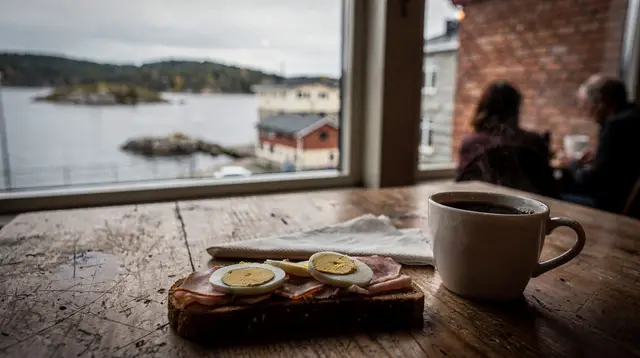
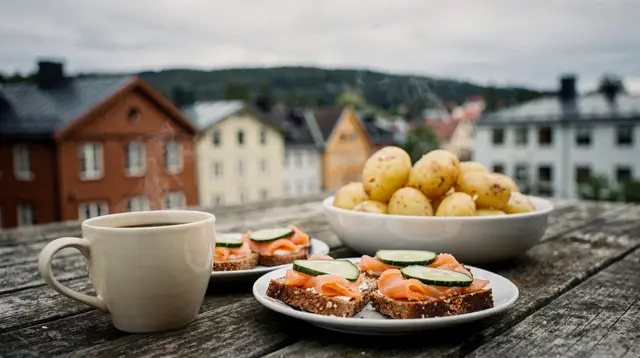
Smørebrød are Norwegian open-faced sandwiches — sliced bread with toppings such as smoked salmon, brown cheese, hard-boiled egg, shrimp, or leverpostei (liver paste). They are the standard Norwegian lunch format and excellent value at supermarkets or dedicated smørebrød cafés.Where is the cheapest area to eat out in Oslo?
Grønland, east of Oslo S, is Oslo's most affordable neighbourhood for eating out. The Grønland market area has Middle Eastern bakeries, kebab shops, Vietnamese and Ethiopian restaurants all priced below typical Oslo levels. Thorvald Meyers gate in Grünerløkka has good-value kebab shops and casual cafés.Is Mathallen worth it for budget eating?
Mathallen food hall (Grünerløkka) is mid-budget rather than cheap — plan NOK 130–190 per meal. But the quality is significantly better than most cheap options, and the atmosphere is excellent. Worth visiting at least once.What is the cheapest hot drink in Oslo?
Filter coffee (filterkaffe) at most Oslo cafés costs NOK 30–45 (USD 3.20–4.80) for a large cup with free refills. This is noticeably cheaper than espresso-based drinks (NOK 45–65 / USD 5–7). 7-Eleven and Narvesen convenience stores sell black coffee for NOK 25–35 (USD 2.70–3.80).
Top experiences
Bookable activities with verified prices and instant confirmation on GetYourGuide.