Free things to do in Oslo: the complete budget guide
Oslo: Oslo Pass with public transport and free museum entry
Duration: 24-72 hours
- Instant confirmation
- Free public transport
- Skip museum queues
What can you do for free in Oslo?
More than you'd expect for one of Europe's most expensive cities. Key free highlights: Vigeland Sculpture Park (always free), the Opera House roof walk, Ekebergparken sculpture park, Nordmarka forest hiking (T-bane fare only), the Oslofjord island beaches (Ruter ferry fare only), Akershus Fortress grounds, the Akerselva river walk, and Astrup Fearnley Museum on Sundays.
How Oslo punches above its weight for free experiences
Oslo’s reputation as an expensive city is well-founded, but it obscures an equally true fact: the city has more compelling free experiences than most European capitals of equivalent cost. This is partly structural — Norway’s public space and nature philosophy means parks, forests, and waterfronts are publicly owned and universally accessible. It’s also partly coincidental — the Opera House’s design makes the building itself a public artwork you can climb on.
This guide covers every significant free experience in Oslo, organised by category.
If you are still deciding whether the city fits your budget at all, the is Oslo expensive guide and the daily costs breakdown put the free list in context. The more you lean on the options below, the less the famous prices matter.
| Where | City-wide: Frogner, Bjørvika, Ekeberg, Nordmarka, the fjord islands |
| Cost | Free, beyond Ruter transit fares (NOK 42 single / NOK 105 day pass) |
| Time needed | A full day covers the highlights; 2–3 days for the full list |
| Getting there | Tram, T-bane, and on-foot; ferries needed for the islands |
| Best time | Year-round, though summer opens more (swimming, ferries, festivals) |
Free outdoor attractions
Vigeland Sculpture Park (Frogner Park)
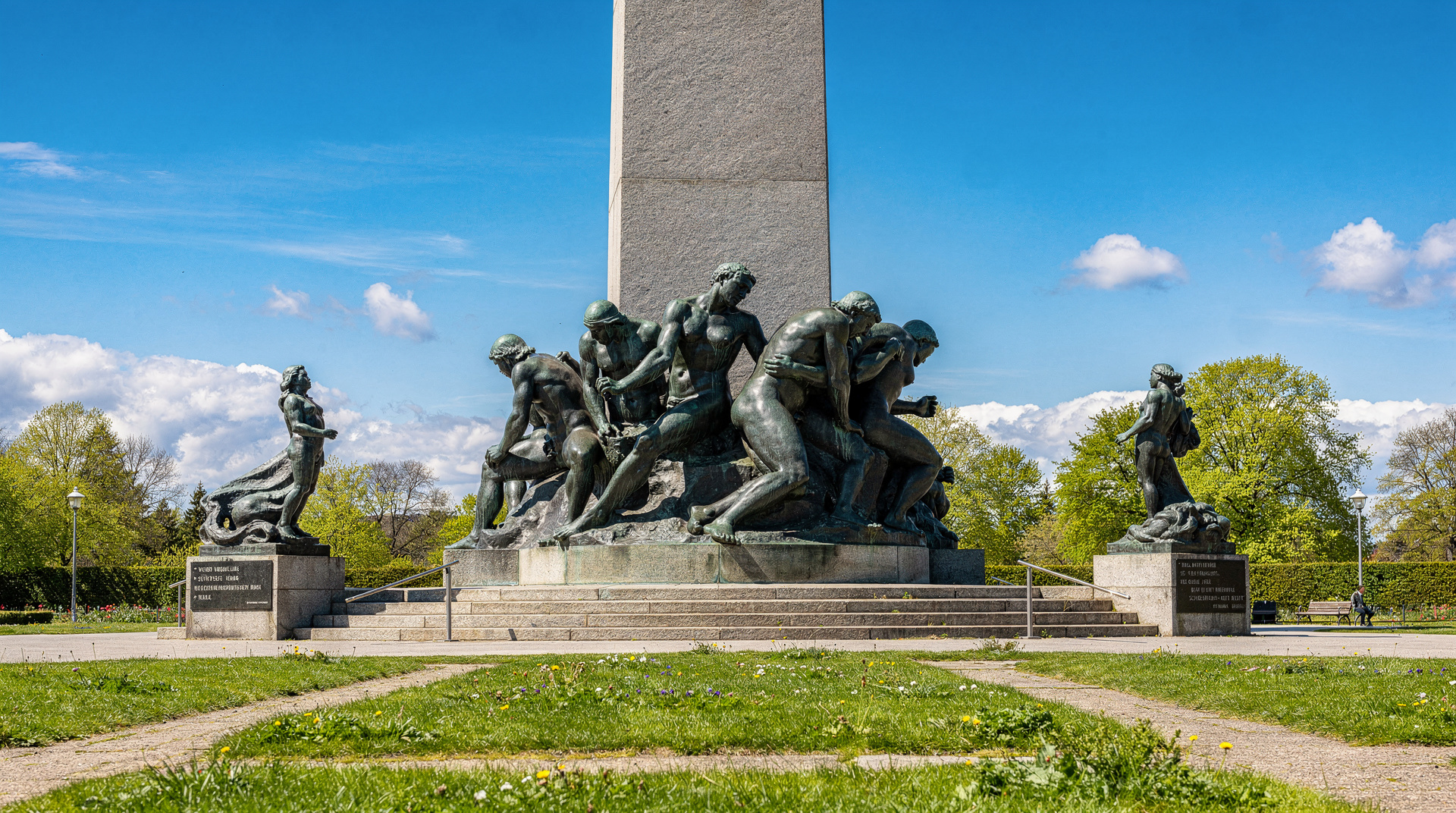
Oslo’s single most-visited attraction is completely free. Vigeland Sculpture Park is one of the world’s largest sculpture parks created by a single artist — Gustav Vigeland — and it’s set within the larger Frogner Park in the west of the city.
The 212 sculptures cover birth, childhood, family, aging, and death in bronze, granite, and cast iron. The centrepiece is the 14-metre tall Monolith (Monolitten), carved from a single granite block with 121 human figures. The bridge leading to the park is lined with bronze figures that have made Norway famous as the country where people do odd things.
Entry: free, always, 24 hours. Even at midnight in June, the park is walking distance from tram 12 or bus 20 from the centre. See the detailed Vigeland Park guide for visiting tips.
Oslo Opera House roof walk
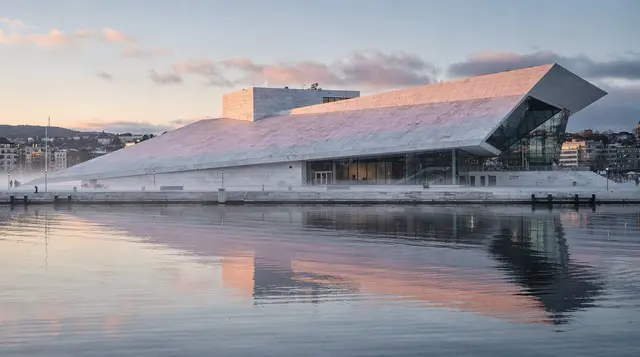
The Operahuset roof is one of the great pieces of free public architecture in Europe. The building was designed by Norwegian firm Snøhetta and completed in 2008. The white marble and granite roof slopes from water level up to the ridge of the building, and the entire surface is accessible to the public — day and night, free of charge.
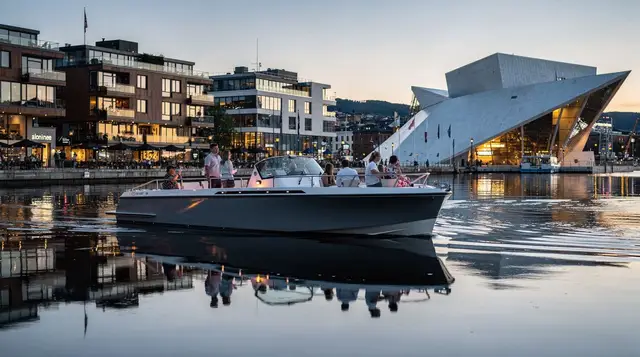
Views from the top take in the Oslofjord, Akershus Fortress, and the Barcode district. In summer evenings (light until 22:00+), this is one of the finest spots in Oslo for watching the city in golden hour. Combine with a walk along the Havnepromenaden to Aker Brygge. The building also has its own Opera House guide if you want the architecture explained, and the surrounding Bjørvika district rewards an unhurried wander.
Ekebergparken (Ekeberg Sculpture Park)
A 26-hectare hillside park southeast of the city centre, Ekebergparken has over 30 sculptures and art installations by major international artists — among them Auguste Rodin, Louise Bourgeois, Salvador Dalí, Damien Hirst, and Marina Abramovic.
Entry: always free. The park is open dawn to dusk. Access: take tram 18 or 19 to Ekeberg stop, or walk up from Sørenga (20–25 minutes). The views from the upper park over Oslo and the Oslofjord are among the best in the city. More background on the artworks and the walking routes is in the Ekebergparken guide.
Akershus Fortress grounds
The medieval fortress and castle on the Oslofjord waterfront is partially free. The grounds, ramparts, courtyards, and sea-facing walls can be walked freely during opening hours (roughly 06:00–21:00 in summer). The views from the ramparts over the fjord and Aker Brygge are excellent.
Entry to the interior (the royal castle Akershus Slott) costs NOK 120 / USD 13. The Resistance Museum (Norges Hjemmefrontmuseum) inside the fortress costs NOK 120 / USD 13. But wandering the grounds is free and worthwhile. The Akershus Fortress guide explains what is worth paying for inside, should you decide to.
The Havnepromenaden (harbour promenade)
A fully pedestrianised promenade running from the Opera House in Bjørvika west around the waterfront to Frognerkilen. Completely free. The walk passes the Opera House, the Munch Museum exterior, Aker Brygge marina, Tjuvholmen, and the Astrup Fearnley Museum exterior. On a summer evening, this is Oslo at its most vibrant and completely costs nothing.
Nordmarka forest (via T-bane)
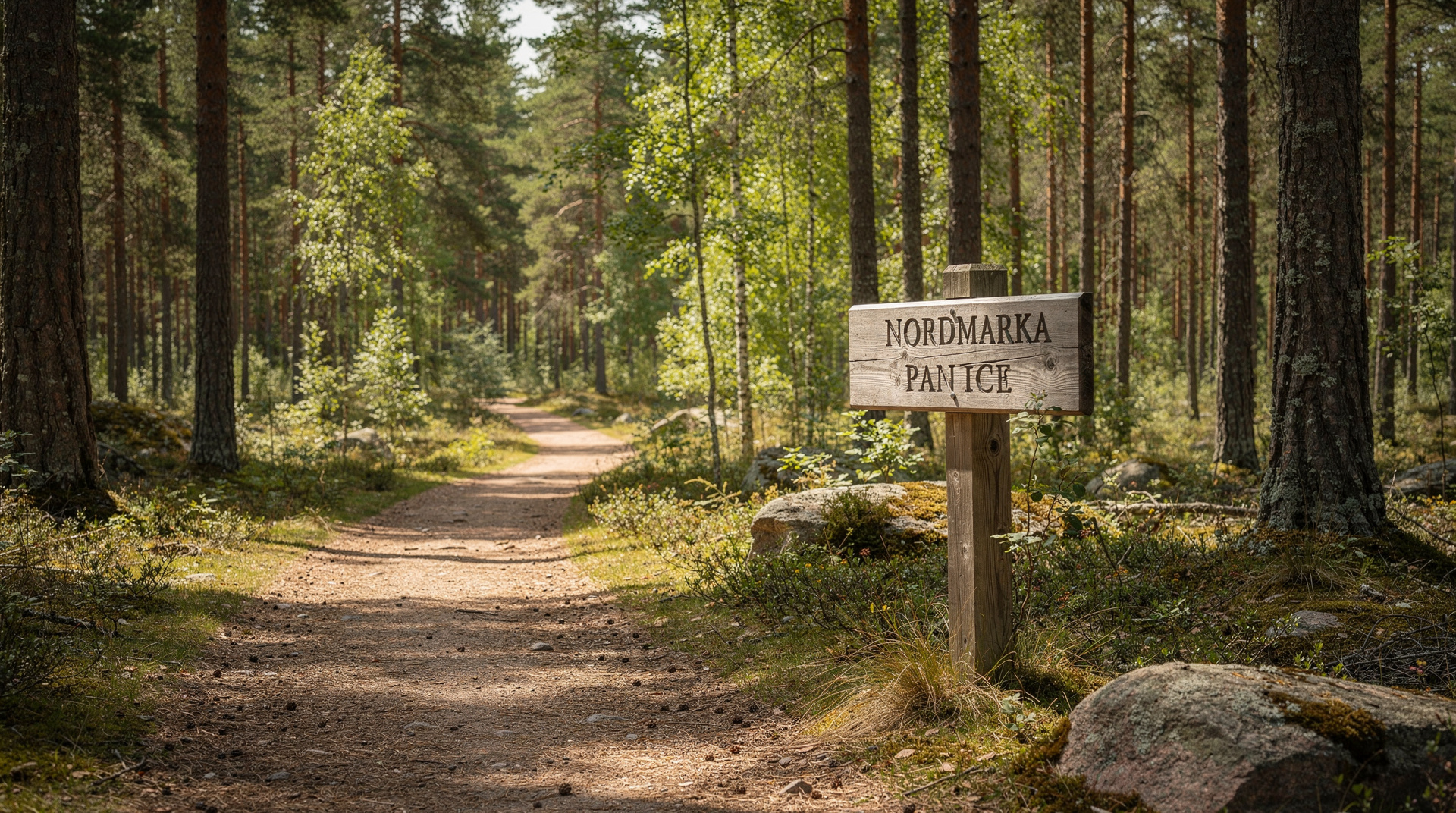
The Nordmarka forest begins at the northern edge of Oslo and covers about 1 700 km² of managed woodland, lakes, and ridges. The trails are free to walk. The only cost is the Ruter T-bane ticket to reach the trailheads.
Key free entry points:
- T-bane line 1 to Frognerseteren: Zone 1 ticket (NOK 42 / USD 4.50). Direct access to the main Nordmarka trails.
- T-bane line 3 to Sognsvann: Zone 1 ticket. 4 km loop trail around the lake; excellent for running, walking, and winter skiing.
Full hiking options in the Nordmarka hiking guide. For a gentler outing, the Sognsvann lake guide covers the lake loop, and the Nordmarka destination page gives the wider picture of the forest.
Akerselva river walk
The Akerselva river runs from Maridalen lake south through Grünerløkka to the Oslofjord. An 8 km walking path follows the river throughout. Features include: Akersfossen waterfall (just north of Grünerløkka), several historic mill buildings converted to galleries and workshops, and a pleasant green corridor through one of Oslo’s most interesting neighbourhoods. Free at all times.
Botanical Garden (Botanisk hage)
Oslo’s botanical garden in Tøyen, adjacent to the Natural History Museum, is free to enter. Seasonal displays, a rock garden, greenhouses (small entry charge), and a relaxed atmosphere. Best visited in May–June when the roses and spring plantings are at their best.
Free architecture and public space
Karl Johans gate
Oslo’s central street is a free walk (see also the Karl Johans gate guide). From Oslo S (Central Station) west to the Royal Palace, Karl Johans gate passes the Cathedral (free to enter), Parliament (Stortinget — exterior free; guided tours available), the National Theatre, the main University buildings, and the Royal Palace grounds. The changing of the guard at the Royal Palace is free and daily in summer (approximately 13:30).
Bjørvika / Barcode district
The new waterfront district east of the Opera House has some of Oslo’s most interesting modern architecture. The Maaemo restaurant building, the Deichman Bjørvika (Oslo’s main public library — free entry), and the tall Barcode towers are a short walk from the Opera House. The library itself has a rooftop terrace with free access and good views.
Free and low-cost museums
Astrup Fearnley Museum of Modern Art — free Sundays
One of Norway’s best modern art museums, housed in a Renzo Piano-designed building at Tjuvholmen. Standard entry is NOK 180 / USD 19. Free every Sunday. The collection includes works by Damien Hirst, Jeff Koons, and Matthew Barney, plus rotating international exhibitions.
Nobel Peace Center — check free days
The Nobel Peace Center near City Hall (Rådhuset) has periodic free-entry days and evenings. Check the visitoslo.com calendar before your trip. Standard entry is NOK 120 / USD 13.
National Museum (Nasjonalmuseet) — possible free periods
The new National Museum on Aker Brygge sometimes has free periods on specific days. Check the museum website before visiting. Standard entry is NOK 200 / USD 22.
Free views
- Opera House roof: See above.
- Ekebergparken: Best panoramic view in the city with no entry fee.
- Frognerseteren café terrace: Take T-bane line 1 to the terminus and sit at the Frognerseteren café (coffee required; NOK 45 / USD 5). The view over Oslo and the fjord is exceptional.
- Grefsenkollen: T-bane line 5 to Sinsen, then bus 54 to Grefsenkollen. Open ridge with panoramic views north and over the city. The café at the top is seasonal.
- Holmenkollen ski jump observation deck: The outdoor observation point at the base of the jump is free; the elevator to the jump platform costs NOK 120 / USD 13.
Free events
Oslo has a lively calendar of free outdoor events, especially in summer:
- Øya Festival (August): Norway’s largest music festival in Tøyenparken — costs money to enter, but the surrounding area has free music stages during the festival period.
- Oslo Jazz Festival (August): Several outdoor free-entry stages.
- Inferno Metal Festival (April): Like Øya, has free outdoor components.
- National Day (17 mai): The Norwegian Constitution Day parade down Karl Johans gate is one of the most colourful and joyful public celebrations in Europe. Completely free. Children in bunads (traditional dress) wave flags from Oslo S to the Royal Palace. The full guide is in the Oslo in summer guide.
For a fully planned budget itinerary that makes the most of these free experiences, see the Oslo budget weekend itinerary.
Free experiences across different neighbourhoods
Bjørvika and the waterfront
This new district between the Opera House and the Munch Museum is entirely open and free to walk. The Deichman Bjørvika library (Oslo’s flagship public library, opened 2020) is free to enter, free to use the Wi-Fi, and has a publicly accessible rooftop terrace with exceptional views. The interior architecture is worth seeing independently of any book borrowing. Hours: Monday–Friday 08:00–22:00, weekends 10:00–18:00.
The Havnepromenaden (harbour promenade) running from the Opera House around the waterfront to Tjuvholmen is entirely free and one of Oslo’s most pleasant summer evening walks. Distance: approximately 3 km from the Opera House to the Astrup Fearnley Museum.
Grünerløkka
The neighbourhood itself is a free attraction. Thorvald Meyers gate — the main street — has some of Oslo’s most independent-minded shop windows, street art, and people-watching at no charge. The weekend market by the Akerselva river is free to browse (you’ll likely spend some money at the food and craft stalls, but entry is free).
The Akersfossen waterfall on the Akerselva river at the northern edge of Grünerløkka is free to reach and view. It’s a modest urban waterfall but sits in a surprisingly green riverside setting — good for a 20-minute detour on a walk through the neighbourhood.
Grønland
Oslo’s most ethnically diverse neighbourhood is a free cultural experience. The Grønland mosque (Oslo Mosque, Tøyengata 33) welcomes visitors at appropriate times; the building’s architecture reflects its community. The covered market building at Grønlands Torg has a free-to-enter bazaar atmosphere with market stalls, cheap food, and Norwegian-immigrant culture in its most genuine form.
Holmenkollen
The T-bane line 1 fare gets you to Holmenkollen (zone 1 ticket: NOK 42 / USD 4.50). Once there:
- The outdoor observation point below the ski jump is free
- The Holmenkollen chapel is free to enter (a simple Scandinavian church from 1903)
- The forest trail network around Holmenkollen is free to walk
The ski jump tower elevator (NOK 120 / USD 13) and the Ski Museum (NOK 175 / USD 19) are the paid elements — both optional.
Free for children specifically
Oslo is generous to young visitors:
- Vigeland Park playground: A separate children’s playground within Frogner Park (near the main park entrance) with climbing frames, slides, and open grass. Free.
- Botanical Garden: The gardens themselves are free and good for children who enjoy plants, butterflies, and open space.
- T-bane to Frognerseteren: The journey on T-bane line 1 is an adventure for children — the above-ground sections pass through forest and snow (in winter). At the top, the terrace at Frognerseteren has panoramic views. The surrounding forest is free to walk.
- Opera House roof: Children love the slope. Free and safe (the design prevents falls at the edges).
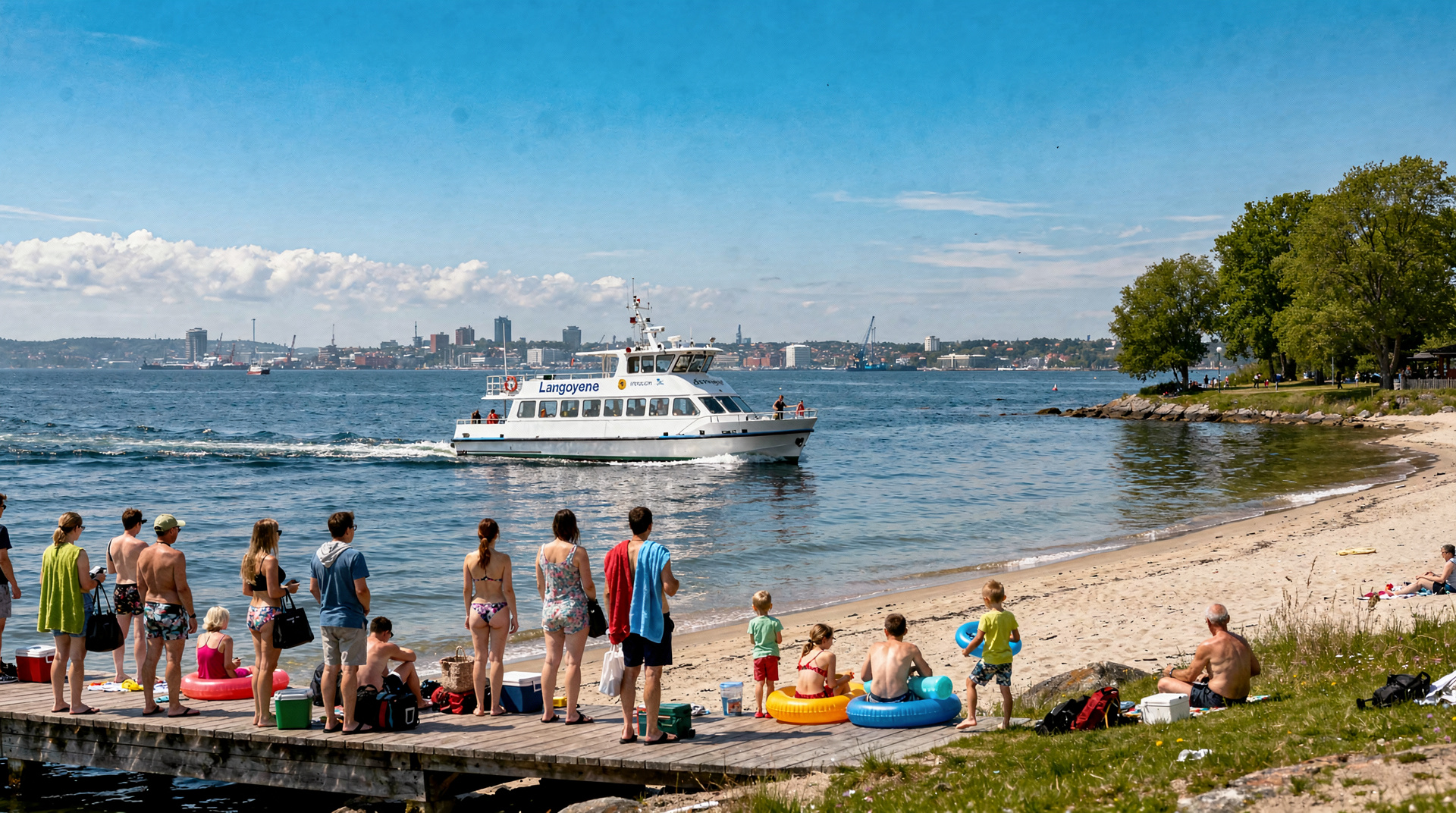
- Oslofjord island beaches: Sandy beaches at Langøyene accessible for the cost of a Ruter ferry ticket (children under 4 free; 4–17 half price).
What’s almost free: experiences under NOK 100 / USD 11
These experiences cost a small amount but feel closer to “free” than to “paid attraction”:
- Oslo Bysykkel day pass: NOK 49 / USD 5.30 for a city bike and unlimited 45-minute trips. An excellent afternoon cycling the harbour.
- Ruter 7-day pass amortised: NOK 51 / USD 5.50 per day — effectively free transport for all of Oslo.
- Botanical Garden greenhouse: Small entry (approximately NOK 50 / USD 5.40) for the tropical greenhouse section.
- Free walking tour tip: Freetour Oslo and similar operators run tip-based tours. The recommended tip is approximately NOK 100–150 / USD 11–16, which is effectively the entry price. The tours cover the main city landmarks with 2 hours of context.
Planning your free day in Oslo
A completely free day (beyond transport) might look like this:
Morning: Take T-bane line 1 to Frognerseteren. Walk the ridge trail south through the Nordmarka edge toward Vettakollen or simply follow the trail signs toward Ullevålsseter hut. 3 hours in the forest.
Midday: Return to the city on T-bane. Walk the Akerselva river from Nydalen south through Grünerløkka to Akersfossen waterfall.
Afternoon: Continue south along the Akerselva to the Bjørvika waterfront. Walk the Havnepromenaden to Aker Brygge and Tjuvholmen.
Evening: Vigeland Sculpture Park at golden hour (the light is extraordinary in June–August at 20:00–21:00). Return on tram 12.
Transport cost: 2 zone 1 Ruter trips (to Frognerseteren and return) = NOK 84 / USD 9, or included in a 7-day pass. Everything else: Free.
What locals actually do for free
Beyond the tourist-facing free list, Oslo residents have their own low-cost habits worth borrowing:
- Swimming from the rocks rather than the official platforms — locals often swim from any accessible rocky shoreline around the fjord, not just Sørenga; the water quality is consistent across the inner fjord in summer.
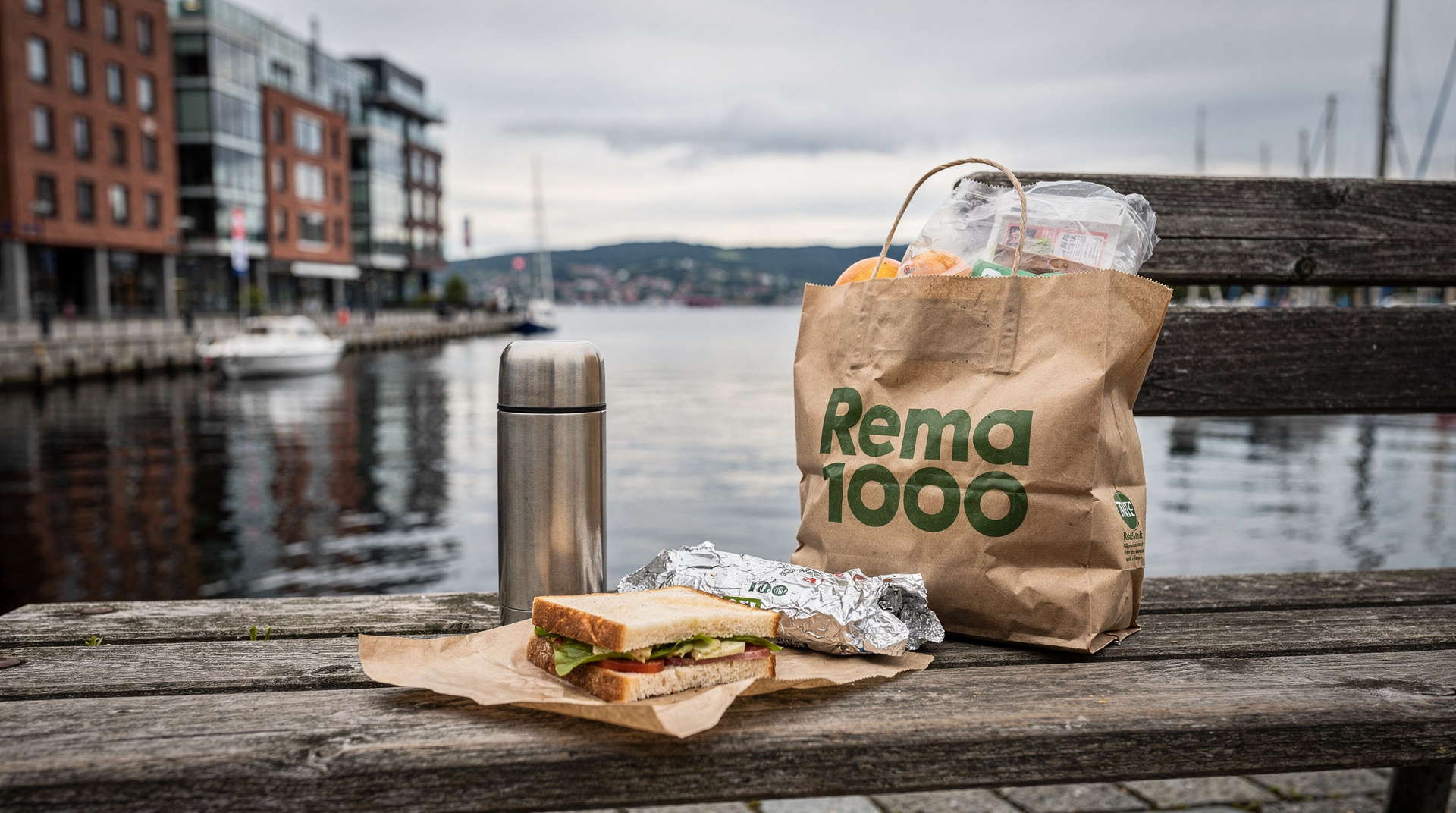
- Packing coffee rather than buying it — a thermos brought from the hotel or Airbnb saves NOK 45–60 per stop across a full day of sightseeing, which adds up quickly on a multi-day free-attractions itinerary.
- Treating the library as a living room — Deichman Bjørvika is genuinely used by Oslo residents as a daytime social space, not just a tourist curiosity; sitting there for an hour with the view costs nothing and doesn’t feel like “doing a tourist thing.”
- Walking rather than transiting between adjacent free sights — Vigeland Park to Frogner plass, or the Opera House to Akershus Fortress, are both walkable in 15–25 minutes, saving the Ruter fare entirely if the weather’s decent.
Free things to do specifically for teenagers
Free Oslo skews toward families with young children and toward adults, but there’s a solid list for teenagers who want more than a sculpture park:
- Street art walk in Grünerløkka: Genuinely interesting for teens with an eye for design or photography; no guide needed, just wander Thorvald Meyers gate and the side streets.
- Ekebergparken at dusk: The mix of contemporary art and city views photographs well and holds attention longer than a traditional park for this age group.
- Deichman Bjørvika library: Free Wi-Fi, gaming zones on some floors, and a genuinely cool building — an easy free stop between other activities.
- Bysykkel city bike (small cost): At NOK 49 for a day pass, cycling the harbour independently appeals to teens who want a bit of autonomy from the family itinerary.
One free day vs a full free weekend: what’s realistic
A single free day (as outlined above) covers Oslo’s highlight-reel free attractions comfortably. A full free weekend requires spreading out further:
| Day | Focus | Approx. transport cost |
|---|---|---|
| Day 1 | Vigeland Park, Frogner walk, Opera House roof, Bjørvika waterfront | NOK 0–42 |
| Day 2 | Nordmarka forest hike, Sognsvann loop, Akerselva river walk | NOK 42–84 |
| Day 3 (optional) | Fjord islands via Ruter ferry, Ekebergparken | NOK 84–105 |
Getting between these sights is simple once you understand the Ruter public transport system, and the island hopping guide and Hovedøya island guide help you plan the ferry day. Anyone weighing a pass should read whether the Oslo Pass is worth it before buying, since a free-focused itinerary often does not need one.
Spreading free experiences over a weekend rather than cramming them into one day also avoids the fatigue of trying to see everything at once — several of these (Nordmarka, the islands) reward unhurried time rather than a checklist approach. For the paid attractions worth adding to this free framework, see the Oslo on a budget guide, and for a different curation of Oslo’s free list, see the companion free things to do in Oslo guide.
Frequently asked questions about Free things to do in Oslo
Is Vigeland Park free?
Yes, always. Vigeland Sculpture Park inside Frogner Park is free to enter at all times, day and night. The 212 sculptures by Gustav Vigeland — including the famous Monolith — require no ticket and have no opening hours. The park is open 24 hours.Is the Oslo Opera House free to visit?
Free to enter and to walk on the roof at any time. The building itself (Operahuset) is open to the public and the sloping marble roof is one of Oslo's most iconic free experiences. Performances inside require tickets from NOK 150–900+ depending on the show.Are any Oslo museums free?
Astrup Fearnley Museum of Modern Art is free on Sundays. Ekebergparken sculpture park is always free. Botanical Garden (Botanisk hage) is free. The National Gallery collections (within the National Museum) may have free periods — check before visiting. The Nobel Peace Center has occasional free hours.Are the Oslofjord islands free to enter?
Yes — the islands (Hovedøya, Gressholmen, Nakholmen, Bleikøya, Langøyene) are free to enter. The only cost is the Ruter ferry ticket (NOK 42 / USD 4.50, or included in the 7-day pass or Oslo Pass) from Vippetangen pier.What free hiking is there near Oslo?
Nordmarka forest is directly accessible via T-bane line 1 (zone 1 ticket required, NOK 42 / USD 4.50). The trails themselves are free. The Vettakollen, Kolsåstoppen, and Sognsvann loop hikes cost nothing beyond the transit fare. Ekebergåsen park with forest trails is free and walkable from the city centre.
Top experiences
Bookable activities with verified prices and instant confirmation on GetYourGuide.