Oslo in summer — long days, the fjord, islands and what's actually on
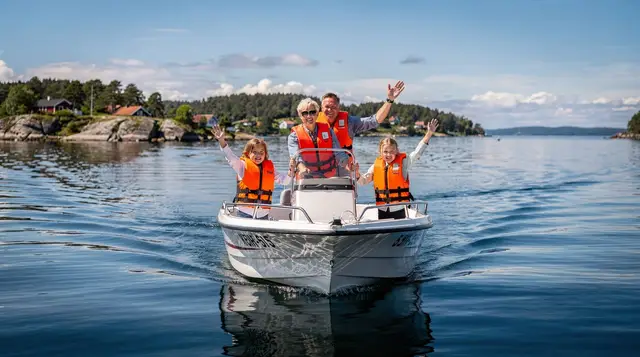
Oslo: island walks — island hopping tour (3 islands)
Duration: 3 hours
- 3 islands
- Local guide
What is Oslo like in summer?
Oslo summers (June–August) bring 18–19 hours of daylight, warm temperatures averaging 20–22°C, and a city transformed by outdoor life. Fjord cruises, island hopping, rooftop bars, outdoor swimming and waterfront dining dominate. It is also peak season — the busiest and most expensive time to visit.
Summer in Oslo: a genuine Nordic transformation
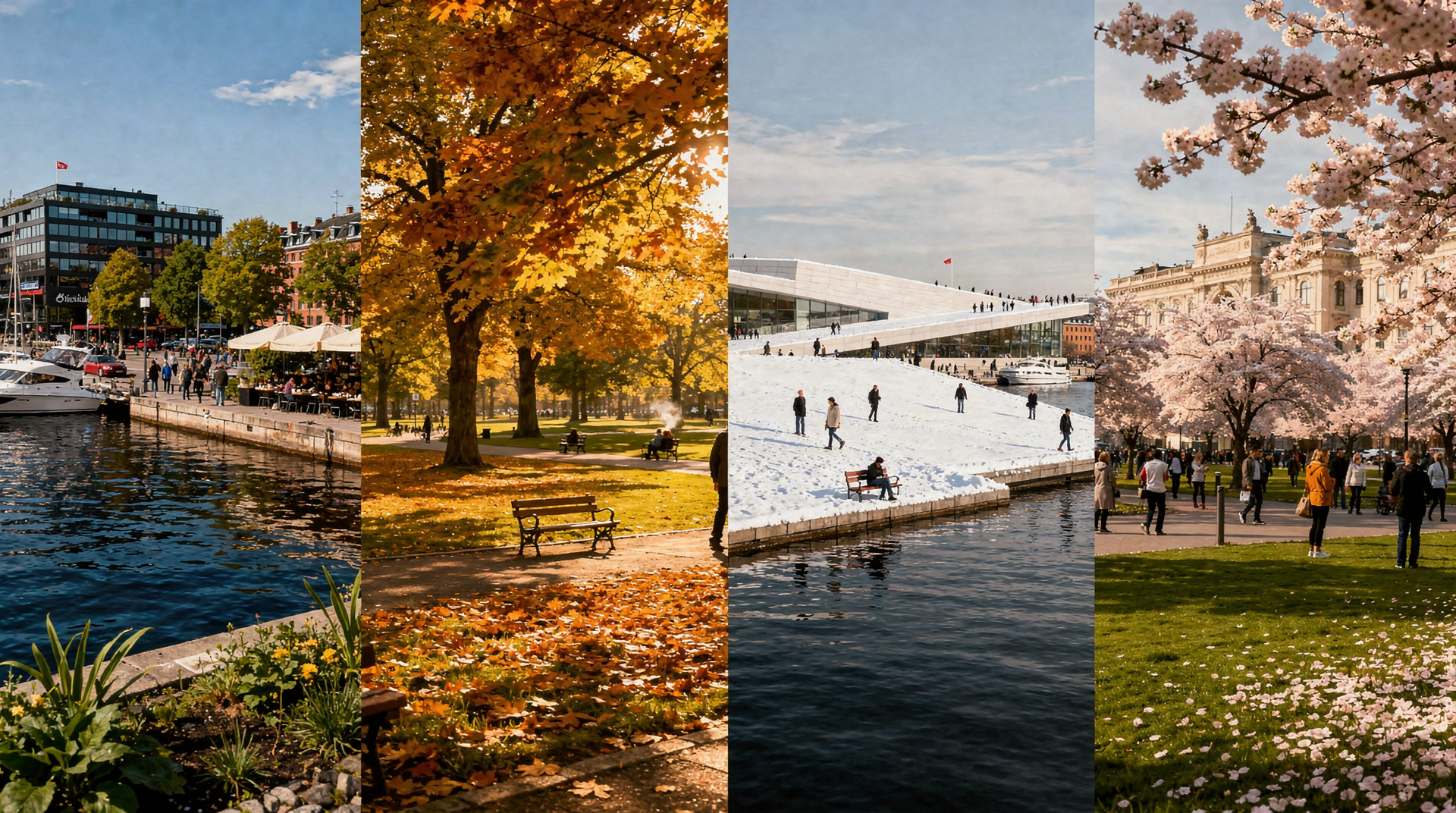
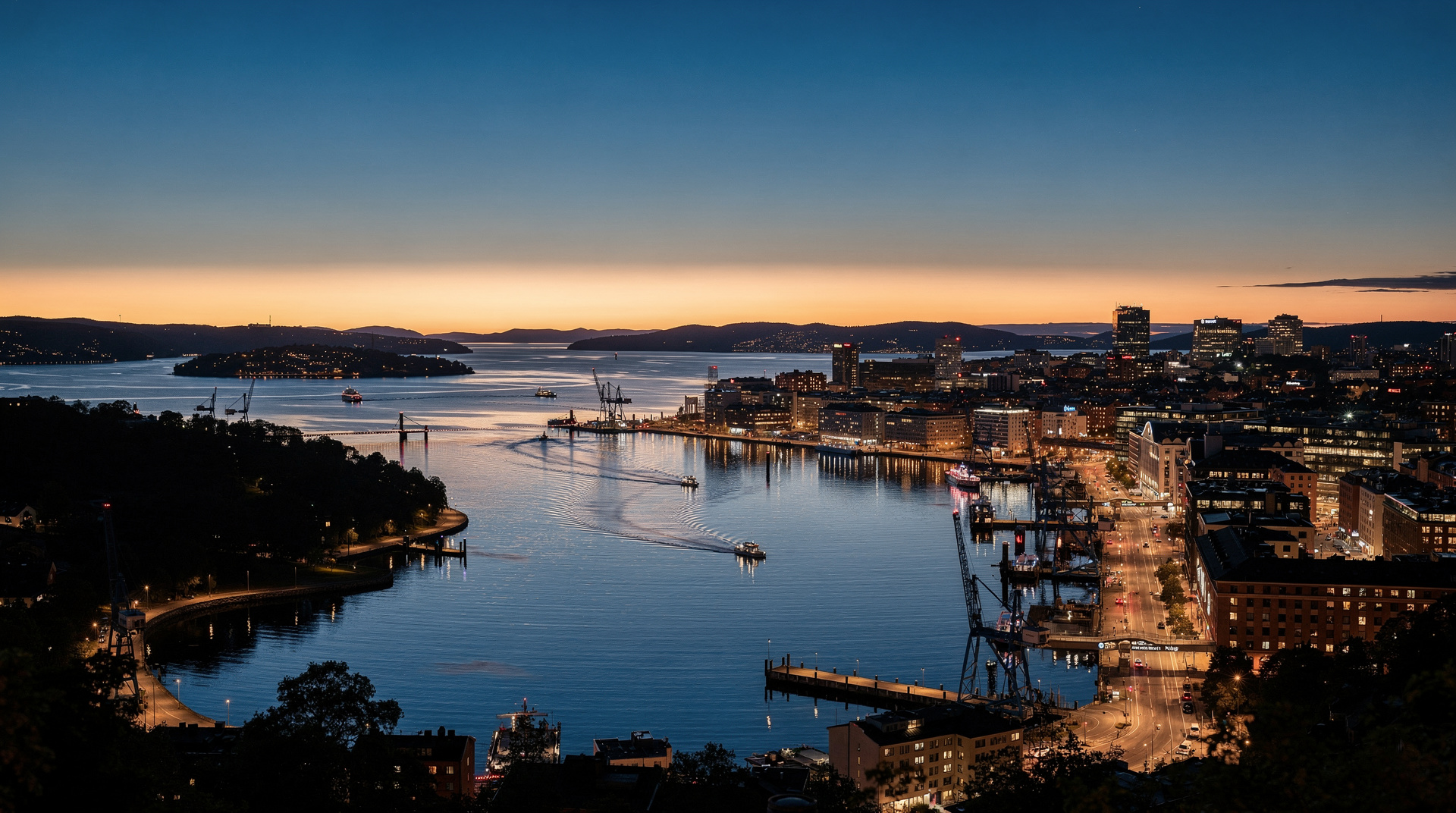
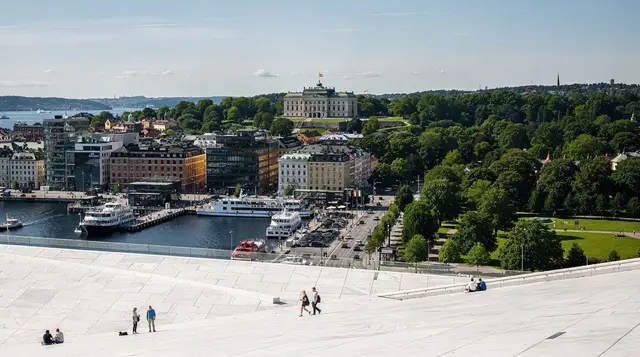
Between June and August, Oslo becomes a different city. The sky stays light until nearly midnight, Aker Brygge fills with people nursing drinks at outdoor tables, and the Oslofjord becomes an extension of the city’s living room. Kayakers, paddle boarders, and ferry boats crowd the blue water. Locals spill onto every patch of grass.
This is the Oslo most visitors imagine when they book: open, sociable, and sitting in extraordinary natural light. It lives up to expectations — with some honest caveats about cost and crowds that most travel guides skip over.
| When | June–August, peak late June–mid July |
| Daylight | ~19hrs (June) down to ~14hrs (late August) |
| Temperatures | Around 20–22°C, heatwaves to 28–30°C possible |
| Hotel prices | Highest of the year, book 2–3 months ahead for July |
| Signature activity | Fjord cruise + island swim, Ruter ferry from Aker Brygge |
Daylight: the numbers you need
Oslo does not get midnight sun. At 59.9°N, the sun sets even in midsummer — around 22:55 in late June. What you actually get is an extended twilight: the sky never fully darkens, and 23:00 can feel like a long summer dusk in northern Europe. This is beautiful and disorienting in equal measure, and completely real.
June offers the longest days: sunrise around 04:00, sunset around 23:00, giving approximately 19 hours of usable daylight. By late August, days have shortened noticeably — sunset drops to around 20:30. Plan outdoor activities, especially evening fjord cruises, for June and early July to get the most from the light.
For the full breakdown by week and month, our daylight hours by season guide has precise data and planning implications.
The Oslo islands: the summer highlight most visitors underuse
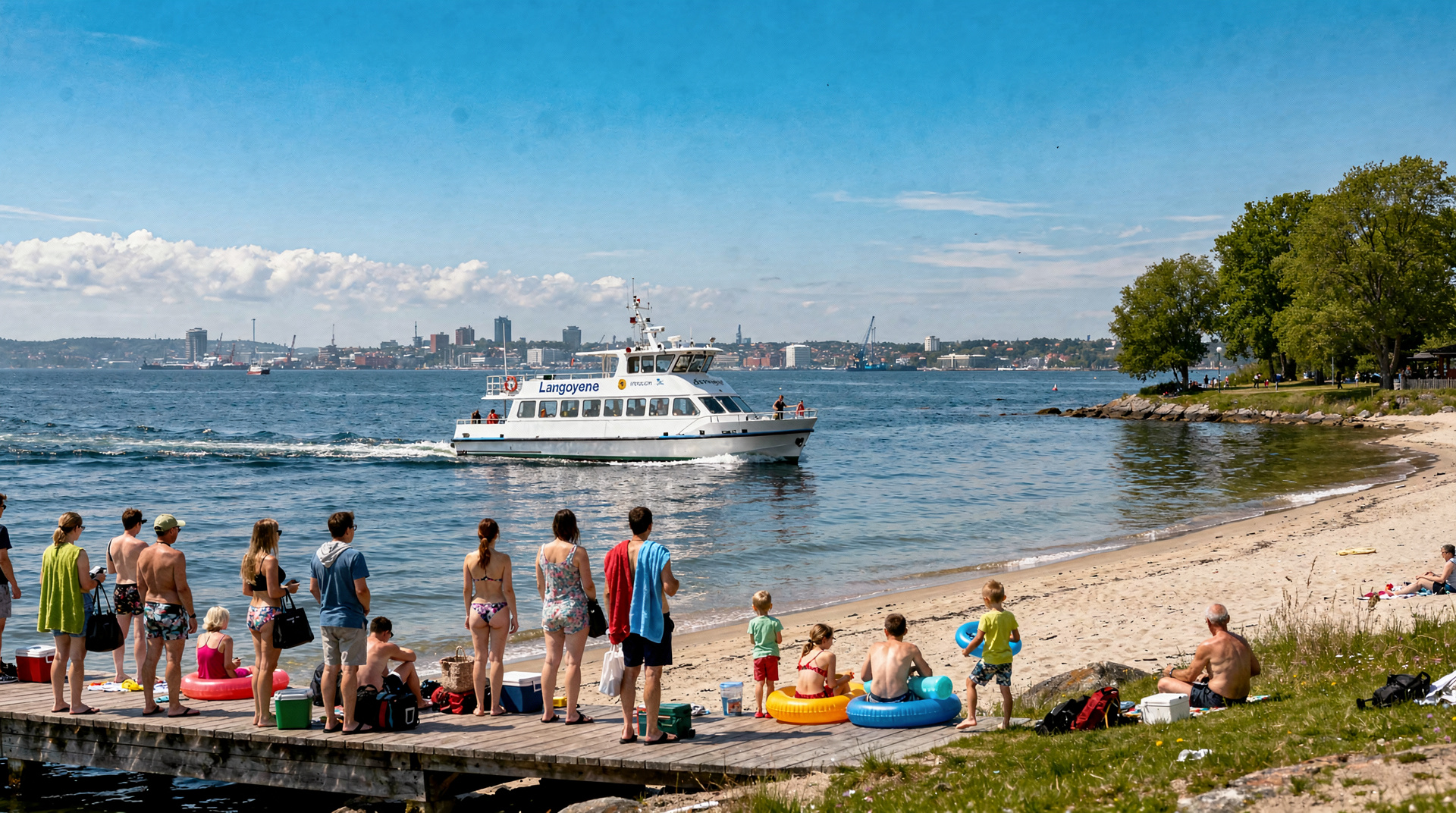
The Oslo archipelago — a cluster of small islands 15–25 minutes by ferry from Aker Brygge — is one of the city’s genuine summer gems and largely ignored by the Karl Johans gate tourist crowd. Islands like Hovedøya, Lindøya, Nakholmen, and Gressholmen have sandy and rocky beaches, easy hiking paths, and (on Hovedøya) the atmospheric ruins of a 12th-century monastery.
Getting there: Ruter ferry line B1 (and others depending on destination) departs from Aker Brygge pier. A standard Ruter ticket covers the journey — no separate ferry fare needed if you already have a travel card. Crossings take 10–25 minutes depending on the island.
A guided island hopping tour is worth considering for a first visit — local guides show you which beaches the tourist crowds miss, where to swim, and what the monastry ruins at Hovedøya actually mean historically. The pace is relaxed and you get oriented to the whole archipelago in a morning.
What to bring: food and non-alcoholic drinks. There are minimal facilities on most islands. Alcohol purchases in Norway require the state Vinmonopolet shops — spontaneous island wine is logistically awkward.
Fjord cruises: the honest guide to which one to pick
A summer fjord cruise is almost mandatory for first-time visitors, and for good reason — the fjord is spectacular, and the perspective on Oslo from the water is unlike anything you get on land. The question is which boat to take.
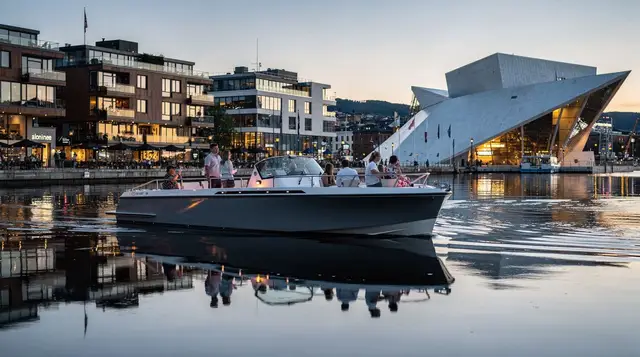
The silent electric boat cruise is our clear favourite: quiet, calm, no diesel fumes, and genuinely elegant. The two-hour guided cruise passes the Opera House, Akershus Fortress, the islands, and returns via Aker Brygge. Running May–September, it is worth booking a few days ahead in peak summer.
The evening shrimp buffet cruise (oslofjord-shrimp-buffet-evening in our tour catalog) is the classic Norwegian-style evening on the water: fresh shrimp, good views, a traditional setting. About 3 hours. Expect to pay around NOK 750 to 900 per person (approximately USD 80 to 97).
For families or those wanting flexibility, the Ruter ferry to the islands is the DIY alternative — not guided, but genuine Oslo summer life. See best Oslofjord cruises for a full comparison.
Oslo’s floating saunas: a genuine local experience
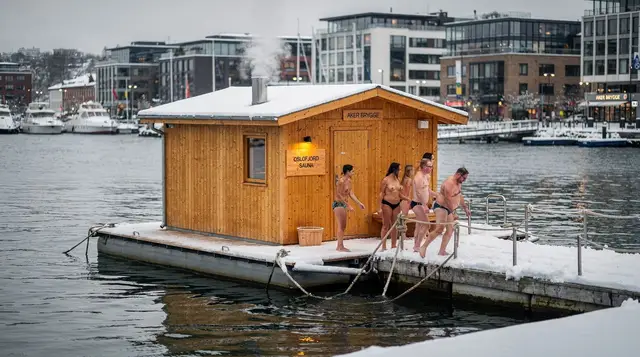
Oslo has a sauna culture that has exploded in popularity over the past decade. The floating saunas at Tjuvholmen — rafts moored in the fjord with wood-fired saunas and cold-plunge access directly into the fjord — are authentic and not particularly touristy. You need a booking; they fill up in summer.
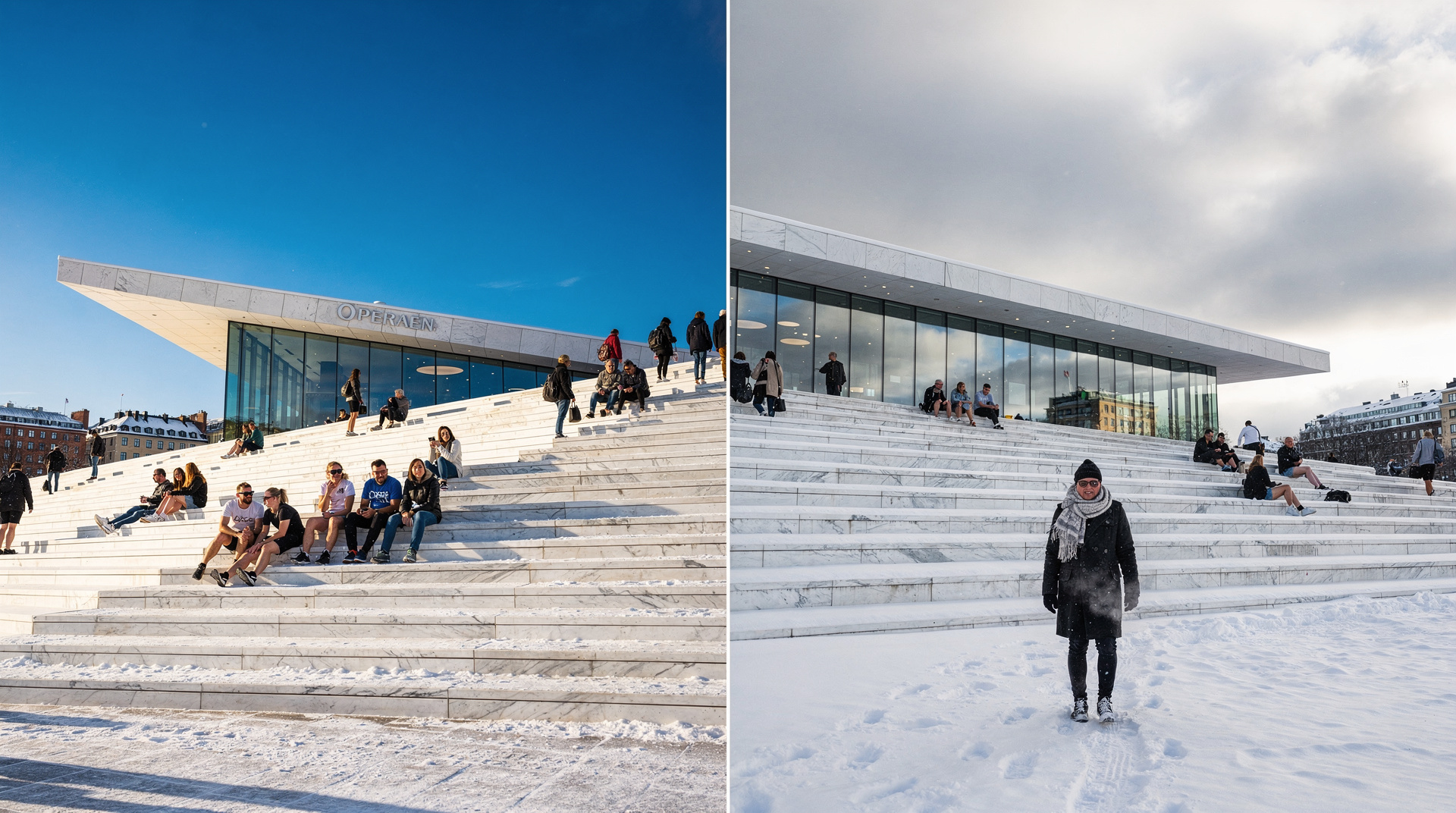
The experience: heat to around 80–90°C in the sauna, then plunge into the 18–20°C fjord water. Repeat. Dry off on the deck with the Opera House visible across the bay. It is the most Norwegian thing you can do without owning a hytte (cabin) or knowing how to ski.
The floating sauna guide covers all the options — public and private sessions, etiquette, and what to expect as a first-timer.
Exploring by bike: the best Oslo summer transport
Oslo’s summer cycling infrastructure is genuinely good. The city has a well-established bike hire network (Oslo CIty Bike / Bysykkel), and a guided bike tour is one of the most efficient ways to hit multiple neighbourhoods in a half day without paying for a hop-on-hop-off bus.
The Oslo highlights bike tour covers the Opera House, Aker Brygge, Vigeland Park, and Grünerløkka in a loop, with a guide who contextualises what you are seeing. It is more engaging than the bus and gives you a feel for the city’s scale. At NOK 550 to 700 per person (approximately USD 59 to 75), it is reasonable value.
For independent cycling, the Bysykkel subscription (NOK 49 per day or NOK 365 per year as of 2026) allows unlimited 45-minute rides — perfect for city exploration.
Grünerløkka and Mathallen: where locals actually eat in summer
The classic tourist circuit follows Karl Johans gate down to the waterfront, where restaurants charge tourist prices for mediocre food. Oslo’s real summer food scene is in Grünerløkka and at Mathallen food hall in Vulkan.
Mathallen (Vulkan, 15 minutes walk north of the centre) is a 30-stall indoor market with independent vendors selling everything from Norwegian smoked salmon to international street food. Budget NOK 200 to 350 per person for a proper lunch (approximately USD 22 to 38). No pretension, good quality.
Grünerløkka has dozens of independent cafés, bakeries, and mid-price restaurants. Tim Wendelboe (Grünerløkkagata 1) is arguably Norway’s most famous speciality coffee roaster — a flat white there is NOK 60 to 70 (USD 6.50 to 7.50). The neighbourhood’s market at Birkelunden park on Sunday mornings is worth timing your visit around.
For more on navigating Oslo’s food costs honestly, see our overpriced food warning guide.
What’s on in Oslo: summer events
Oslo’s summer calendar features several worthwhile events:
Oslo Pride (late June): one of Scandinavia’s larger pride festivals, centred on the city centre with a parade along Karl Johans gate.
Øya Festival (August): Norway’s biggest outdoor music festival, held in Tøyen park. Attracts major international acts alongside Norwegian artists. Tickets sell out well in advance.
Oslo Jazz Festival (mid-August): smaller and more atmospheric, with concerts across central venues.
Norwegian National Day (17 May): Technically just before summer, but the most important event in Oslo’s calendar. The city streets fill with thousands of Norwegians in traditional bunad dress, brass bands, and children’s parades. Hotels fill up fast around this date.
Practical summer logistics
Getting around: Ruter’s unified ticketing covers T-bane (metro), tram, bus, and the island ferries. A 24-hour pass costs NOK 135 (approximately USD 15), and a 7-day pass NOK 390 (approximately USD 42). The T-bane runs until around 01:00 on weekdays and 02:00 on weekends.
Weather clothing: pack a light waterproof jacket. Summer rain showers arrive without much warning and pass quickly. The evenings can be cooler than you expect — a light sweater for outdoor dining after 21:00 is sensible.
Sunscreen: counterintuitively important. The summer UV index in Oslo can reach 5–7 even at northern latitudes, especially when combined with long midday sun exposure.
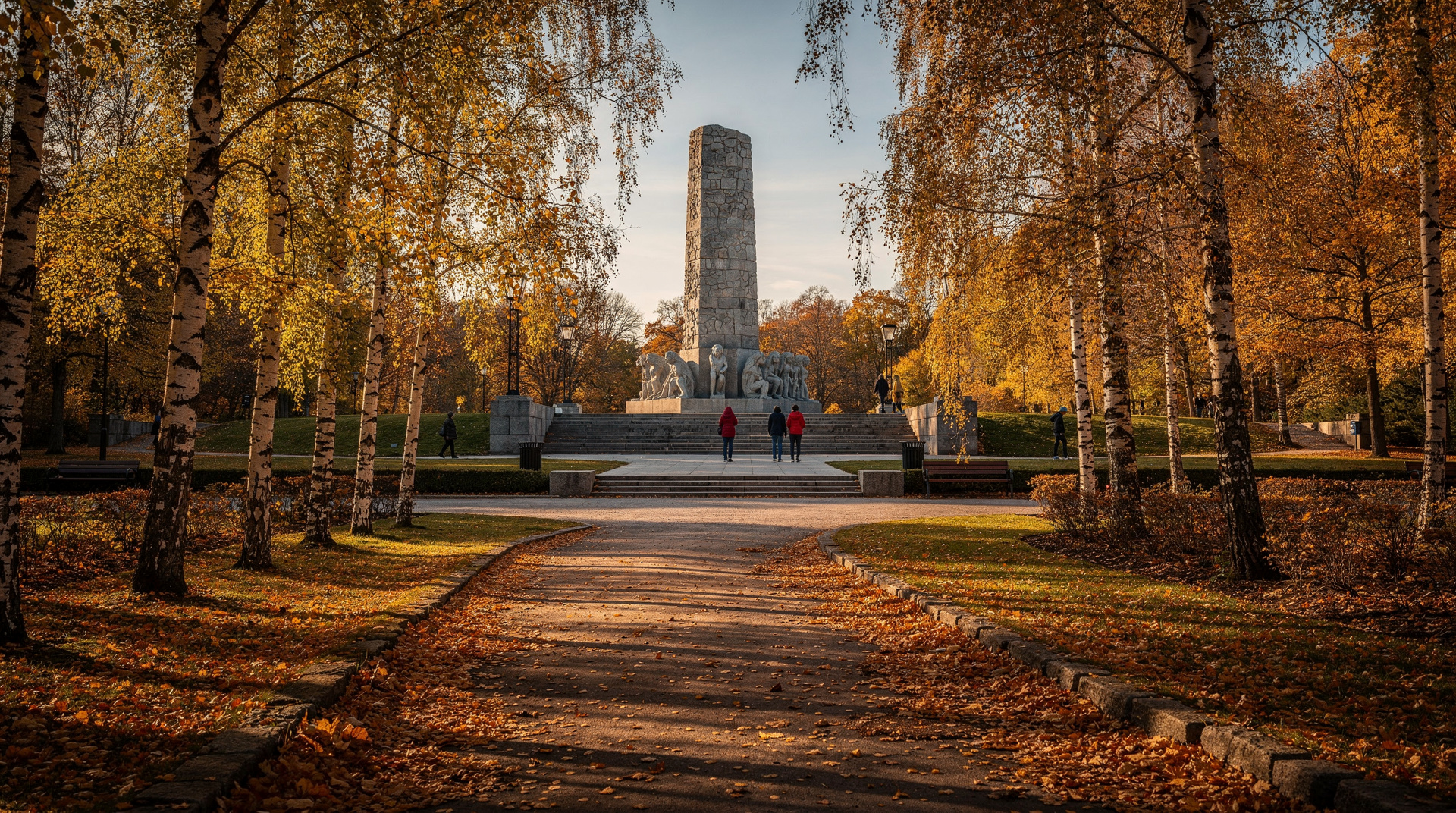
Crowds: the Opera House, Vigeland Park, and the Munch Museum are most crowded 10:00 to 14:00. Plan these in late afternoon or first thing in the morning for a better experience.
The honest caveat: Oslo is genuinely expensive in summer
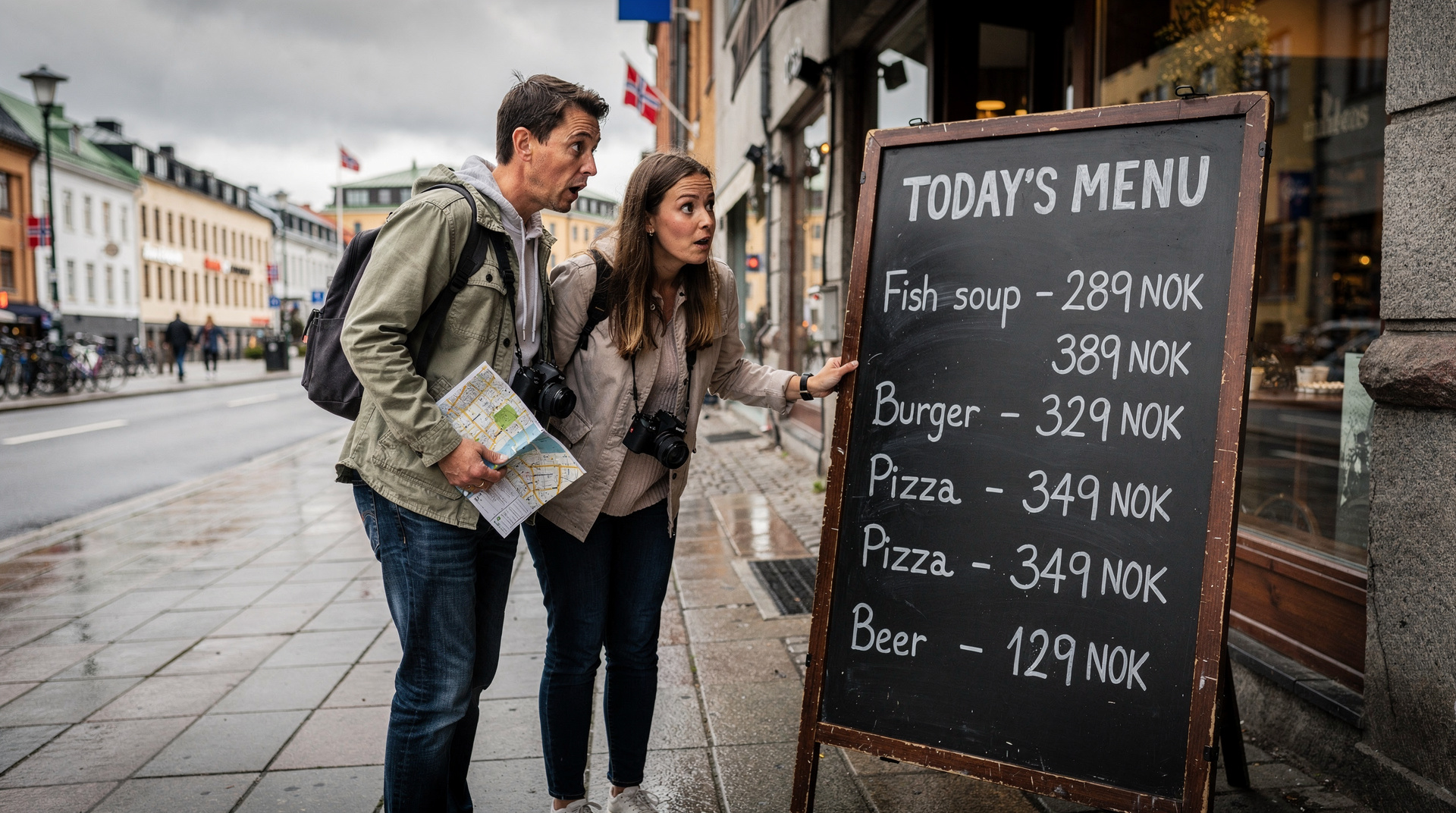
July is Oslo’s most expensive month. Mid-range hotels in Sentrum average NOK 1,800 to 2,800 per night (approximately USD 195 to 300). A dinner for two at a mainstream waterfront restaurant easily runs NOK 900 to 1,400 (approximately USD 97 to 150) before wine. A pint of beer is NOK 95 to 130 (approximately USD 10 to 14) at most bars.
These prices are not a tourist trap — they are Norway’s standard cost of living reflected in the hospitality sector. Budget for them honestly. Our Oslo on a budget guide gives strategies for experiencing the best of summer without overpaying. The short version: buy groceries for breakfast and lunch (Kiwi, Rema 1000, or Meny supermarkets), reserve restaurant spending for one or two genuinely good dinners, and use the Ruter pass rather than taxis.
The Oslo Pass can make financial sense in summer if you plan to visit 4–6 museums in a day or two — our dedicated guide does the break-even maths honestly.
Summer month by month
Not all of June, July and August behave the same, and the differences matter for booking decisions.
June has the longest days of the year and the freshest energy — Oslo Pride and Constitution Day season overlap with genuinely good weather, though the fjord water is only just warming past 16–17°C by month’s end. Hotel prices start climbing but haven’t hit the July peak.
July is peak everything: peak price, peak crowd, peak warmth, and the best month for swimming (water reaches 20–22°C). It is also the month Norwegians themselves take their own summer holidays, so some smaller family-run restaurants close for two or three weeks — check opening hours before planning a special dinner around one.
August cools gradually and days shorten noticeably by the end of the month, but it brings Øya Festival and the Oslo Jazz Festival, plus lower hotel rates than July. Early August still has excellent swimming conditions; by the last week, evenings need a light jacket.
Day trips that pair well with an Oslo summer stay
Summer’s long days make ambitious day trips realistic without needing an overnight stop. Fredrikstad, about an hour southeast, combines a fortress town walk with a swim at the mouth of the Glomma river. Drøbak, about an hour south by boat or bus, is a compact harbourside town that works well as a half-day add-on to an island-hopping morning. For those chasing mountain scenery rather than fjord, the Lillehammer day trip reaches Olympic history and forest trails in around two hours by train — a fuller day than the coastal options but manageable given June and July’s long light.
Frequently asked questions about Oslo in summer — long days, the fjord, islands and what's actually on
Does Oslo have midnight sun in summer?
No. Oslo is at 59.9°N, too far south for true midnight sun. In June, the sky stays bright until roughly 23:00 and twilight never fully ends before sunrise, but the sun does set. Midnight sun requires being above the Arctic Circle at around 66.5°N — cities like Tromsø experience it, Oslo does not.When can you swim in the Oslo fjord?
Sea swimming at Sørenga, Bygdøy, and the islands is realistic from mid-June through August. Water temperatures reach 18–22°C by July. The islands — Hovedøya, Lindøya, Nakholmen — have sandy beaches and are reached by Ruter ferry from Aker Brygge pier.How hot does Oslo get in summer?
Average highs are around 21–22°C in July and August. Heatwaves with 28–30°C are not uncommon but not guaranteed. Evenings are pleasant at 15–17°C. Rain showers do occur but rarely last more than an afternoon.Is the Viking Ship Museum open in summer?
No — it is closed for a major renovation expected to reopen around 2027. For Viking history, visit the Viking Planet near the Royal Palace or the Historical Museum near the National Theatre.How far in advance should I book accommodation in summer?
For July, book at least 2–3 months ahead. Good hotels in central Oslo fill up early. Constitution Day (17 May) and major summer festivals sell out even faster. Airbnb options exist but Oslo's housing shortage makes them fewer than other European cities.What is Aker Brygge like in summer?
The old wharf district transforms into a lively outdoor restaurant and bar hub. It is scenic and atmospheric but also very touristy — prices are high even by Oslo standards. Use it for one evening at most and explore Grünerløkka or Mathallen for more authentic and affordable options.Which month is best for a first Oslo summer visit?
Late June to mid-July gives the longest days and the widest range of running fjord tours, but also the highest prices and biggest crowds. Early June and late August trade a little daylight and a slightly higher chance of a cool evening for noticeably lower hotel rates and thinner queues at the Munch Museum and Vigeland Park.Is Oslo colder or warmer than Stockholm or Copenhagen in summer?
Broadly similar. Oslo's July average high (around 21–22°C) sits close to Stockholm's and a touch cooler than Copenhagen's. The bigger practical difference is daylight — Oslo's higher latitude gives noticeably longer evenings in June than either city.
Top experiences
Bookable activities with verified prices and instant confirmation on GetYourGuide.
Oslo: island walks — island hopping tour (3 islands)
- 3 islands
- Local guide
Oslo: guided sightseeing fjord cruise on a premium silent electric boat
- Silent electric boat
- Free cancellation
- Best seller
Oslo: 3-hour highlights bike tour
- Small group
- Bike included
Oslo: self-service public floating sauna ticket, Tjuvholmen
- Floating sauna
- Fjord swim