Oslo overpriced food warning — how not to overpay, and the real costs
Oslo: 3.5-hour walking tour for great food
Duration: 3.5 hours
- Tastings included
- Local guide
How expensive is food in Oslo?
Very expensive. A casual restaurant main course costs NOK 200–350 (approximately USD 22–38). A beer at a bar is NOK 90–130 (approximately USD 10–14). A coffee is NOK 55–75 (approximately USD 6–8). The worst tourist restaurants along Aker Brygge and Karl Johans gate charge significantly more. Strategies exist to eat well without overpaying.
Oslo food pricing: the numbers no one gives you upfront
Every guide to Oslo mentions that the city is expensive. Most stop there. This guide gives you the actual numbers, the specific places where visitors overspend, and the strategies that experienced travellers use to eat and drink well in Oslo without going home in financial shock.
| Cheapest hot meal | Kebab or Grønland Torg stall, NOK 100–150 |
| Mid-range dinner for two | NOK 700–1,000 |
| Worst-value zone | Aker Brygge waterfront, 30–50% premium |
| Alcohol | Beer NOK 90–130, buy wine/spirits at Vinmonopolet instead |
| Best-value neighbourhoods | Grünerløkka, Grønland, Mathallen |
Real price table: what things cost in Oslo (2026)
| Item | Price range (NOK) | Approx. USD |
|---|---|---|
| Coffee (flat white / cappuccino) | 55–75 | 6–8 |
| Soft drink at a café | 40–65 | 4.5–7 |
| Beer at a bar (0.4L draught) | 90–130 | 10–14 |
| Beer at a supermarket (up to 4.7% ABV, 0.5L) | 25–40 | 2.75–4.30 |
| Wine (house glass, restaurant) | 100–170 | 11–18 |
| Bottle of wine from Vinmonopolet | 120–350 | 13–38 |
| Casual restaurant main course | 200–350 | 22–38 |
| Tourist waterfront restaurant main | 280–480 | 30–52 |
| Pizza (restaurant) | 160–250 | 17–27 |
| Burger (casual restaurant) | 175–260 | 19–28 |
| Smash burger or takeaway burger | 120–170 | 13–18 |
| Fish and chips (café/fast food) | 160–230 | 17–25 |
| Kebab (takeaway) | 130–180 | 14–19 |
| Supermarket sandwich (ready-made) | 65–100 | 7–11 |
| Supermarket groceries (daily shop for 1) | 100–200 | 11–22 |
| 3-course dinner at a serious restaurant | 500–800 per person | 54–86 |
| Wine pairing at a fine dining restaurant | 600–1,200 per person | 65–130 |
Note: “approximately USD” calculated at 9.3 NOK = 1 USD (May 2026 rate).
Where tourists overpay most
Zone 1: Aker Brygge waterfront restaurants
The premium here is approximately 30 to 50% over equivalent quality elsewhere. The Aker Brygge restaurants are charging for the view and the foot traffic, not for the food. A salmon main course at a well-regarded Grünerløkka restaurant costs NOK 220 to 280; the same category dish on Aker Brygge runs NOK 320 to 450. The salmon is not better.
Specific to avoid: any restaurant with a large picture menu visible from the street, a tout outside, or the word “traditional Norwegian” in large type on the signage. These markers identify tourist-facing businesses in any European city.
Zone 2: Karl Johans gate cafés
The main boulevard’s cafés charge a significant location premium. A coffee that costs NOK 60 at Tim Wendelboe in Grünerløkka costs NOK 75 to 85 at a Karl Johans gate terrace café — and the quality is lower. The tourist-facing cafés on the main drag are fine for one coffee while you orient yourself, but not for your daily caffeine budget.
Zone 3: hotel breakfasts
Norwegian hotel breakfast buffets are extensive and typically good — bread, smoked salmon, eggs, cold cuts, fruit. They are also priced at NOK 150 to 250 per person (approximately USD 16 to 27). On a 5-night stay, this adds NOK 1,500 to 2,500 to your food budget for what is essentially an upscale version of what you can buy at a supermarket for NOK 60 per person.
Most Oslo hotels allow you to skip the breakfast and add it on if you want it one morning. Check whether your rate includes breakfast; if not, do not automatically add it.
Zone 4: pre-packaged “Norwegian food gift” shops
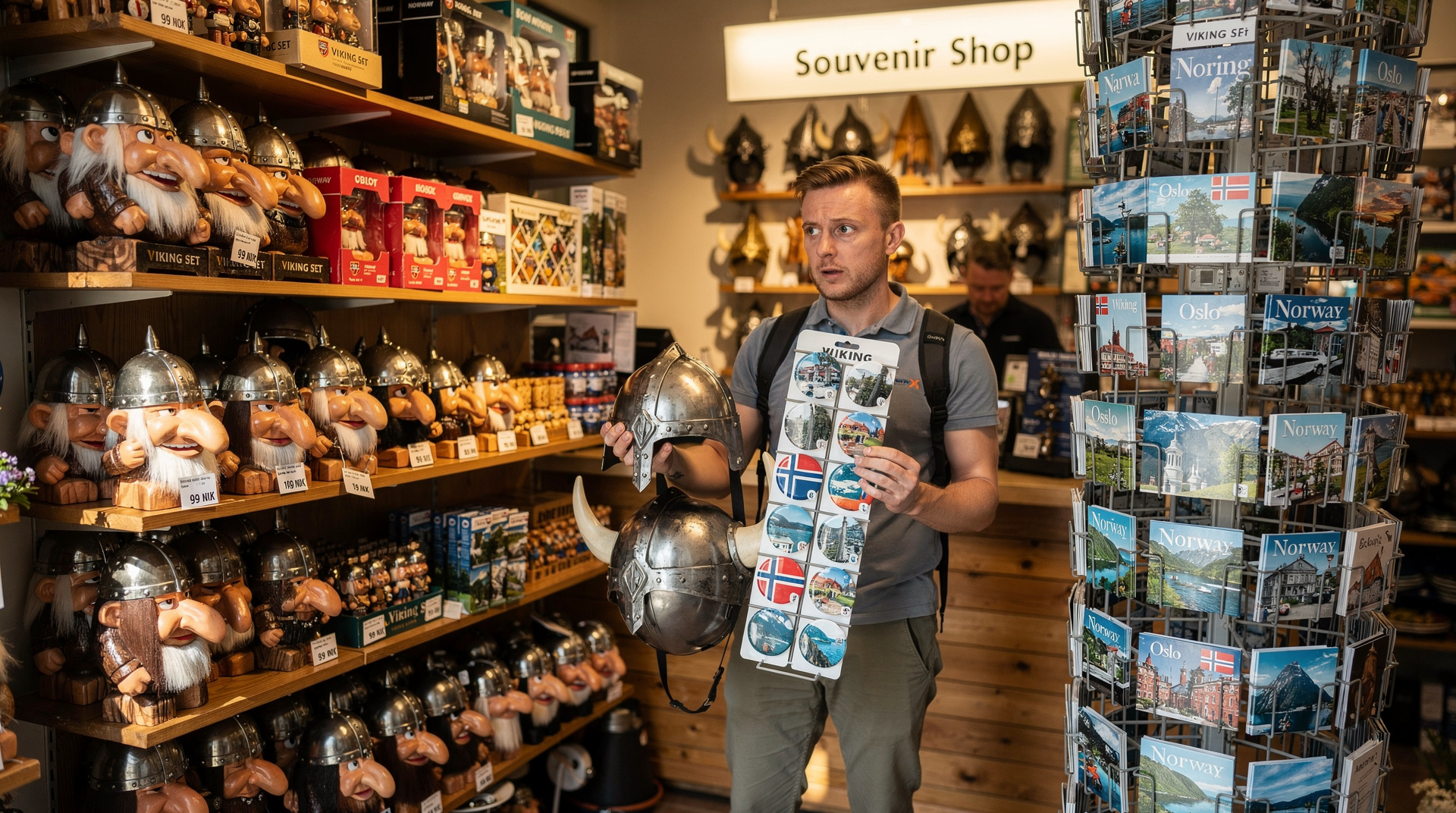
The vacuum-packed smoked salmon, “traditional” Norwegian cheese, and jam sold in tourist gift shops near the harbour are significantly more expensive than the same products at a regular supermarket. A Meny or Bunnpris supermarket near your hotel sells equivalent smoked salmon at NOK 60 to 90 per 200g; the tourist gift shops charge NOK 150 to 200 for branded versions.
Where to eat well without overpaying
Mathallen food hall (Vulkan, Grünerløkka)
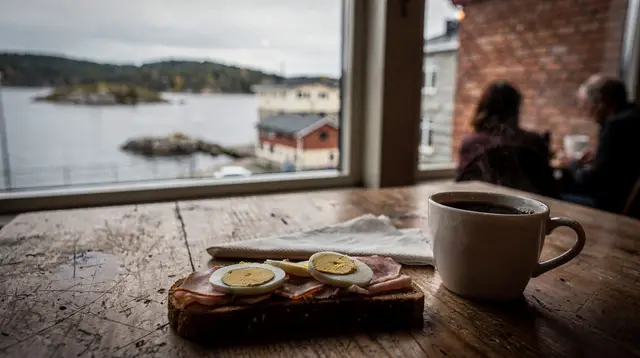
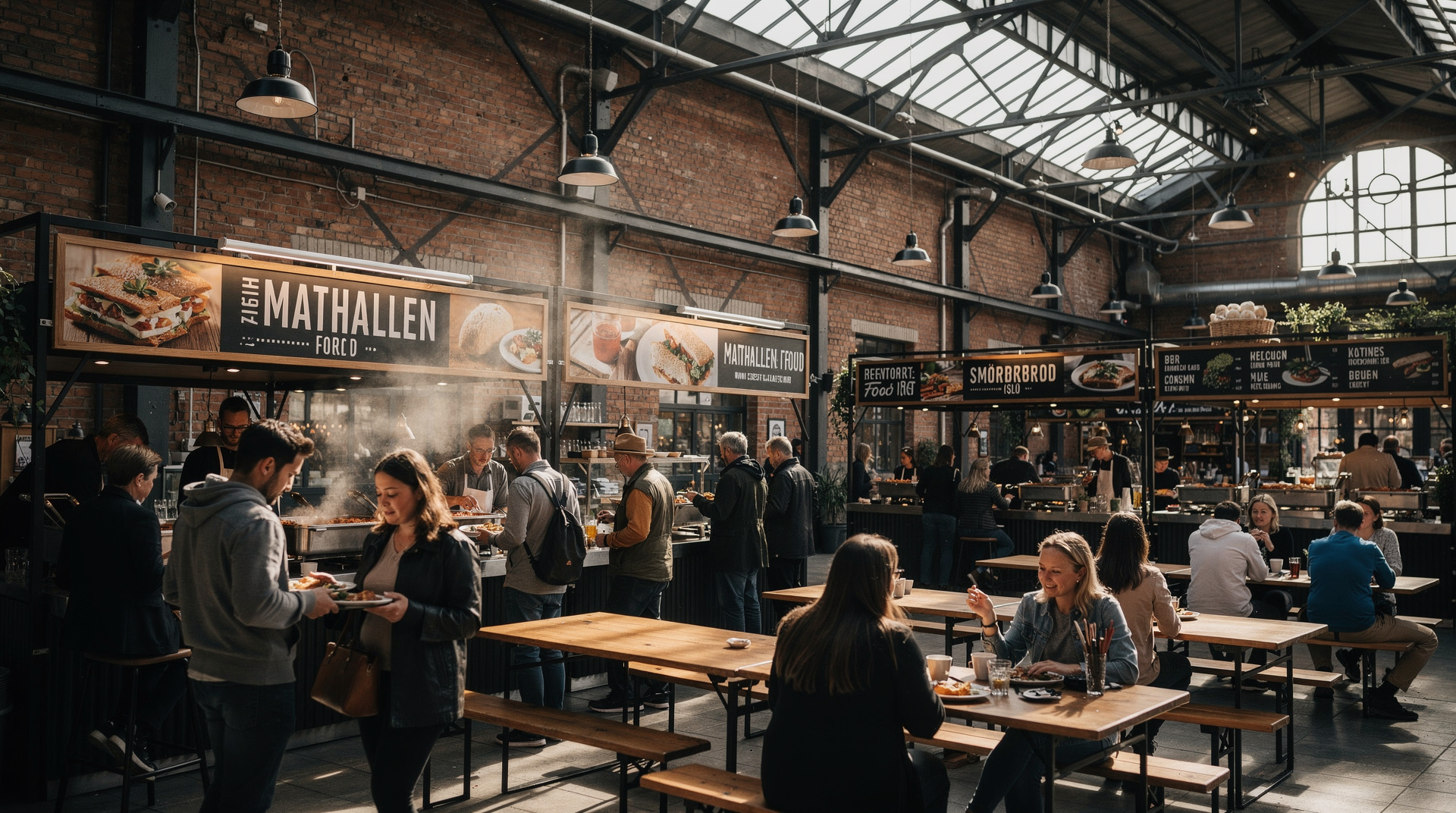
This is the most honest food recommendation in Oslo. Mathallen is a covered market hall with 30+ independent food vendors selling everything from Norwegian smoked salmon and traditional open sandwiches (smørbrød) to Spanish charcuterie, Asian cuisine, and artisan cheese.
Budget: NOK 150 to 280 for a generous lunch (approximately USD 16 to 30). Eat at the communal tables or take your food outside on the terrace in summer. It is genuinely good, the produce quality is high, and you are paying market prices rather than tourist prices.
Grünerløkka: the reliable mid-range zone
The neighbourhood along and around Thorvald Meyers gate and Markveien has the highest density of good, reasonably priced restaurants in Oslo. Typically: main courses NOK 170 to 280, no location premium. Highlights include:
- Smalhans: small, seasonal, excellent value for the quality. NOK 200 to 300 per main.
- Villa Paradiso (pizza): excellent Neapolitan pizza, NOK 180 to 240. Often has a queue at dinner.
- Delicatessen: creative small dishes, good wine list. NOK 160 to 250 per dish.
Grünerløkka is a 15-minute walk or quick tram (11 or 12 from Nationaltheatret) from the city centre.
Grønland: international food at city-honest prices
Grønland (a 10-minute walk east of Oslo Central Station, or two stops on T-bane) is Oslo’s most culturally diverse neighbourhood and has the city’s best-value international food. Pakistani restaurants, Turkish bakeries, Middle Eastern grocers, and Vietnamese restaurants offer main courses at NOK 120 to 200 (approximately USD 13 to 22). Quality varies, but the best options significantly outperform what the same budget buys at tourist-area restaurants.
Supermarket breakfast and lunch: the most effective budget strategy
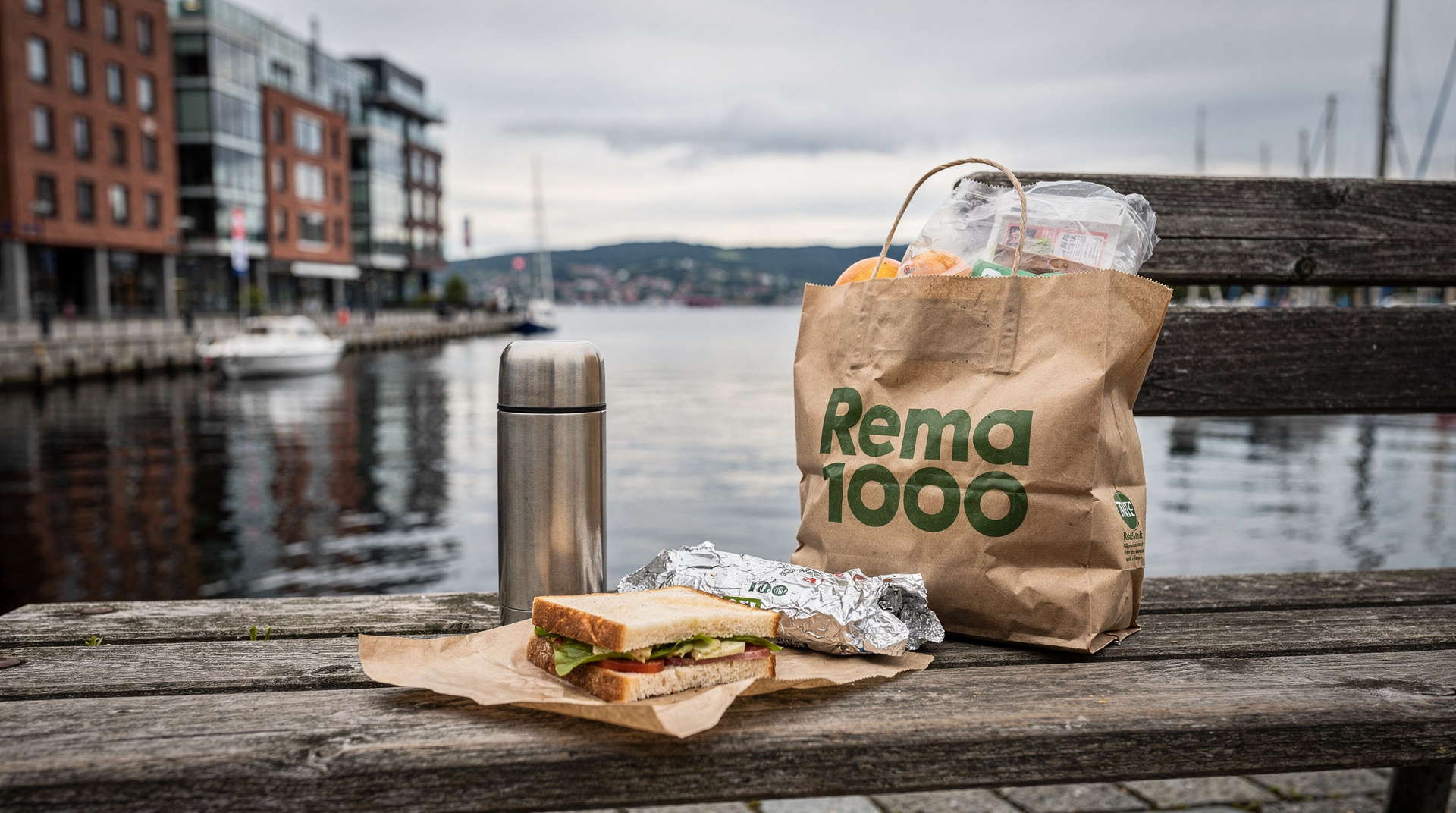
Norway’s supermarket chains (Kiwi, Rema 1000, Bunnpris for budget; Meny for premium) sell exceptional ingredients: excellent bread, high-quality smoked salmon, a full range of Norwegian cheeses, and good produce. Building your own breakfast and packed lunch from supermarket shopping costs NOK 100 to 180 per person per day (approximately USD 11 to 19). This frees your restaurant budget for dinners worth having.
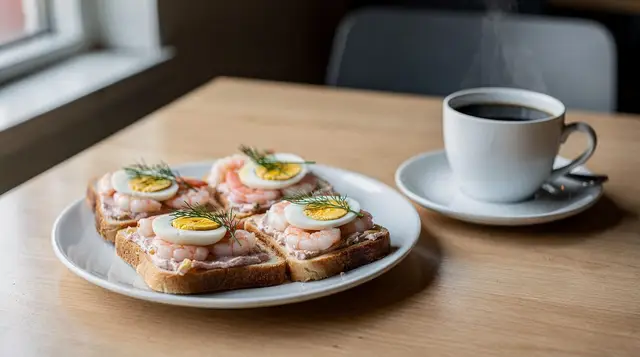
Practical tip: buy an insulated bag or use the reusable bag from a Kiwi (sells for NOK 15 to 25). Pack a proper smørbrød lunch (open sandwich with shrimp, salmon, or cheese) for Vigeland Park or the Oslo islands.
The alcohol budget reality
This deserves its own section. Oslo’s alcohol costs are not just “expensive” — they are genuinely shocking for visitors from most countries.
The structure: beer above 4.7% ABV and all wine and spirits must be purchased from Vinmonopolet, the state monopoly. This is not just a pricing monopoly — it is a physical limitation. Vinmonopolet stores are closed on Sundays and close at 18:00 on Saturday. If you want wine for Saturday dinner, buy it before 18:00 Saturday or not at all.
Bar prices: draught beer at a bar (0.4L) costs NOK 90 to 130 (approximately USD 10 to 14). A gin and tonic is NOK 130 to 180 (approximately USD 14 to 19). A glass of restaurant wine is NOK 100 to 170 (approximately USD 11 to 18). An evening out with 3 to 4 drinks can easily cost NOK 450 to 700 per person without food (approximately USD 48 to 75).
The practical strategy: many visitors — including many Norwegians — buy wine or beer from Vinmonopolet and drink at their accommodation or at outdoor public spaces (drinking in parks is legal in Norway). A Vinmonopolet bottle of decent wine costs NOK 120 to 200 (approximately USD 13 to 22) — significantly less than two restaurant glasses. This is not a tourist tip — it is what Oslo residents do.
For a full comparison of Oslo’s costs against other cities, and day-by-day budget examples, see our Oslo trip cost guide. The budget eats guide maps specific restaurants worth visiting at each price level.
A final note on tipping
Tipping in Oslo is not obligatory. Norwegian service staff earn professional wages. Rounding up the bill or leaving 10% for genuinely good service is appreciated. Do not let international tipping norms guilt you into tipping 15 to 20% on top of already-expensive Norwegian restaurant prices — this is not the local custom.
How to spread your food budget across a trip
The most useful mental shift is to stop thinking about each meal in isolation and think about the whole day. Oslo rewards visitors who decide in advance which meal is the “event” and which meals are simply fuel. A supermarket breakfast and a packed lunch, followed by one properly chosen dinner, will taste better and cost less than three mediocre restaurant stops. If you are still sketching out the overall size of the trip, the Oslo daily costs guide and the Oslo trip cost guide show where food sits in the larger picture, and is Oslo expensive explains why the whole city feels this way.
Timing matters too. Many visitors arrive hungry after a long day of sightseeing and end up eating wherever they happen to be standing, which is exactly how the waterfront and the main boulevard collect their customers. Decide on a neighbourhood before you leave your hotel, and treat the walk or tram ride as part of the evening. The Oslo public transport guide covers how the tram, metro and buses work, and the getting around Oslo guide helps you judge which areas are easy to reach from where you are staying.
Eating around your sightseeing
Food planning works best when it follows your itinerary rather than fighting it. If your morning is at the museums on Bygdøy, bring your lunch rather than paying for the limited cafés near the attractions; the Bygdøy guide and the Fram Museum guide are useful for planning that day. If you are spending an afternoon in the park, a picnic from a nearby supermarket is a cheerful and entirely normal way to eat, and the Vigeland sculpture park guide is a good example of a visit that pairs naturally with a packed lunch. Save your restaurant meal for the evening, when you have the time to enjoy it.
Cultural days are the easiest to plan this way. The Oslo best museums ranked list helps you cluster visits, and building a meal break around the one museum café you actually want to try is better than grazing on overpriced snacks between buildings.
Drinks, coffee and the small purchases that add up
It is rarely the dinner that wrecks a food budget; it is the accumulation of coffees, soft drinks, bottles of water and a drink or two before bed. Because coffee is such a large part of daily life here, it is worth choosing a few places you actually like rather than buying one every time you are tired. The Oslo coffee culture guide points you towards the places locals use, and the Oslo craft beer guide is the place to start if you want to spend your drinks budget on something memorable rather than on a forgettable pint at a tourist terrace. For a night out, the best bars in Oslo guide and the Oslo nightlife guide are better starting points than whatever happens to be open nearest your hotel.
When a splurge is worth it
Honest advice about overpriced food should not turn into a lecture against ever spending money. Oslo has restaurants where the cost is justified by the cooking, the sourcing and the service, and a single memorable dinner can be the highlight of a trip. The Oslo fine dining guide covers that end of the market. Equally, a guided tasting experience can be a more efficient way to sample many dishes in one sitting than ordering several full plates yourself; the Oslo food tours guide compares those options. The point is not to avoid spending, but to make sure each krone goes to something you chose rather than something that simply happened to be nearby.
Trying local specialities without the markup
Many first-time visitors want to taste something distinctly Norwegian and assume the nearest harbour restaurant is the place to do it. It usually is not. The Norwegian food to try guide and the brown cheese and specialties guide describe what is worth seeking out, and many of those items can be found at a supermarket or a market hall for a fraction of the restaurant price. Tasting a few things at a counter, rather than committing to a full sit-down meal of unfamiliar dishes, also lowers the risk of paying a lot for something you do not enjoy.
Same dish, four price points
To make the price gap concrete, here’s roughly what a simple salmon main course costs across Oslo’s price tiers:
| Setting | Price | What you’re paying for |
|---|---|---|
| Supermarket (self-prepared) | NOK 60–90 | Ingredients only |
| Grønland/Grünerløkka casual | NOK 170–220 | Local, honest cooking, no premium |
| Aker Brygge waterfront | NOK 320–450 | The view and the postcode |
| Fine dining tasting menu | NOK 500–800+ per course sequence | Craft, presentation, pairing |
The lesson: the food itself does not improve linearly with price in Oslo. The jump from Grünerløkka to Aker Brygge buys location, not quality.
Neighbourhoods, compared for value
If you’re deciding where to base your evening meals, this is the honest ranking by value:
- Grønland — cheapest genuinely good food, most authentic international options, 10-minute walk or two T-bane stops from Oslo S.
- Grünerløkka — best all-round value, widest range of quality, no location premium, easy tram access.
- Mathallen food hall — reliable mid-price quality in a market setting, good for groups with different preferences.
- Sentrum (away from Karl Johans gate) — mixed, some good options a block or two off the main tourist drag.
- Aker Brygge/Karl Johans gate — highest prices, most tourist-facing, worth one meal for the setting but not your daily base.
See the where to eat in Oslo guide for specific restaurant picks in each zone, and the Grünerløkka food guide for a deeper dive into Oslo’s best-value neighbourhood.
Frequently asked questions about Oslo overpriced food warning — how not to overpay, and the real costs
What does a meal for two cost at a typical Oslo restaurant?
A casual mid-range restaurant: NOK 700–1,000 for two with one drink each (approximately USD 75–108). A mainstream tourist restaurant on Aker Brygge: NOK 1,200–1,800 for two with wine (approximately USD 130–194). A fine dining restaurant: NOK 2,000–4,000+ for a full menu with wine pairing.Why is alcohol so expensive in Oslo?
Norway taxes alcohol heavily and operates a state monopoly (Vinmonopolet) for spirits and wines over 4.7% ABV. Beer over 4.7% must be bought through Vinmonopolet or at licensed premises. The combination of high taxes, state monopoly pricing, and high Norwegian wages means a bar beer costs roughly double or more what you would pay in Germany or Spain.What is the cheapest way to eat in Oslo?
Buy groceries at Kiwi, Rema 1000, or Meny supermarkets for breakfast and lunch. A packed lunch of good Norwegian bread, cheese, smoked salmon, and fruit costs NOK 80–130 per person per day (approximately USD 9–14). Reserve restaurant spending for dinners where the experience justifies the cost.Are there affordable restaurants in Oslo?
Yes — but they require leaving the tourist trail. Grünerløkka has mid-price restaurants with main courses around NOK 180–260. Mathallen food hall at Vulkan has stalls offering good food for NOK 150–280. The Ruter-accessible outer neighbourhoods (Grønland, Tøyen) have ethnic restaurants with main courses at NOK 130–200.Can you buy alcohol at supermarkets in Oslo?
Beer up to 4.7% ABV can be bought at supermarkets. Wine, spirits, and stronger beer must be purchased from Vinmonopolet shops. Vinmonopolet is closed on Sundays and closes at 18:00 on Saturdays. Plan your alcohol purchases accordingly, especially around weekends.Is tipping expected in Oslo restaurants?
Tipping is not mandatory and Norwegian service staff are paid professional wages. Rounding up the bill or leaving 10% for good service is appreciated but not expected. Some restaurants add a service charge to the bill (check before tipping twice). Unlike in the US, you will not receive social pressure for not tipping.Why do restaurants near Aker Brygge cost more than Grünerløkka for similar food?
Location premium, not quality. Aker Brygge restaurants pay higher rents for waterfront positions and serve a captive audience of tourists and finance workers who prioritise the view over price. Grünerløkka's independent restaurants compete on quality and value for a local crowd, which keeps prices 20–40% lower for comparable dishes.Do restaurant prices change much by season in Oslo?
Menu prices themselves stay fairly constant year-round — Oslo's high food costs are structural, not seasonal. What changes is availability of outdoor seating and seasonal menu items (game and root vegetables in autumn/winter, more seafood-forward dishes in summer), not the underlying price level.
Top experiences
Bookable activities with verified prices and instant confirmation on GetYourGuide.