Drøbak — the fjord's Christmas town
Drøbak is 40 km south of Oslo on the Oslofjord: a year-round Christmas shop, the fortress that sank the Blücher, and a pretty wooden town.
From Oslo: Drøbak and Oscarsborg Fortress day trip
Duration: Full day
- Fjord cruise
- Historic fortress
Quick facts
- Best time
- Year-round; December for Christmas atmosphere; summer for ferry and beach
- Days needed
- Half-day to full day
- Getting there
- Bus 500 from Nationaltheatret (~1 hour) or ferry from Aker Brygge in summer
- Budget per day
- NOK 200–600 (USD 22–65) including transport and lunch
A small town with a large story
Drøbak sits at the narrowest point of the inner Oslofjord, where the channel squeezes to about 700 metres before opening into the broader southern basin. This geography is not merely scenic — it is historically decisive. It was here, on the night of 8–9 April 1940, that the guns of Oscarsborg Fortress sank the German cruiser Blücher, delaying the Nazi invasion of Norway by several hours and allowing the royal family and parliament to escape Oslo. The Blücher still lies on the fjord bed, 60 metres down, visible on calm days as a darker shadow in the water.
Most visitors come to Drøbak for the Christmas house. Both are worth your time. Together, they make a day trip that’s more layered than its modest reputation suggests.
Getting there from Oslo
By bus: The most reliable year-round option. Bus 500 (Ruter network) departs from Nationaltheatret station in central Oslo and reaches Drøbak in approximately 50–65 minutes depending on traffic. The journey is covered by a standard Ruter fare (or day pass). Buses run roughly every 30–60 minutes.
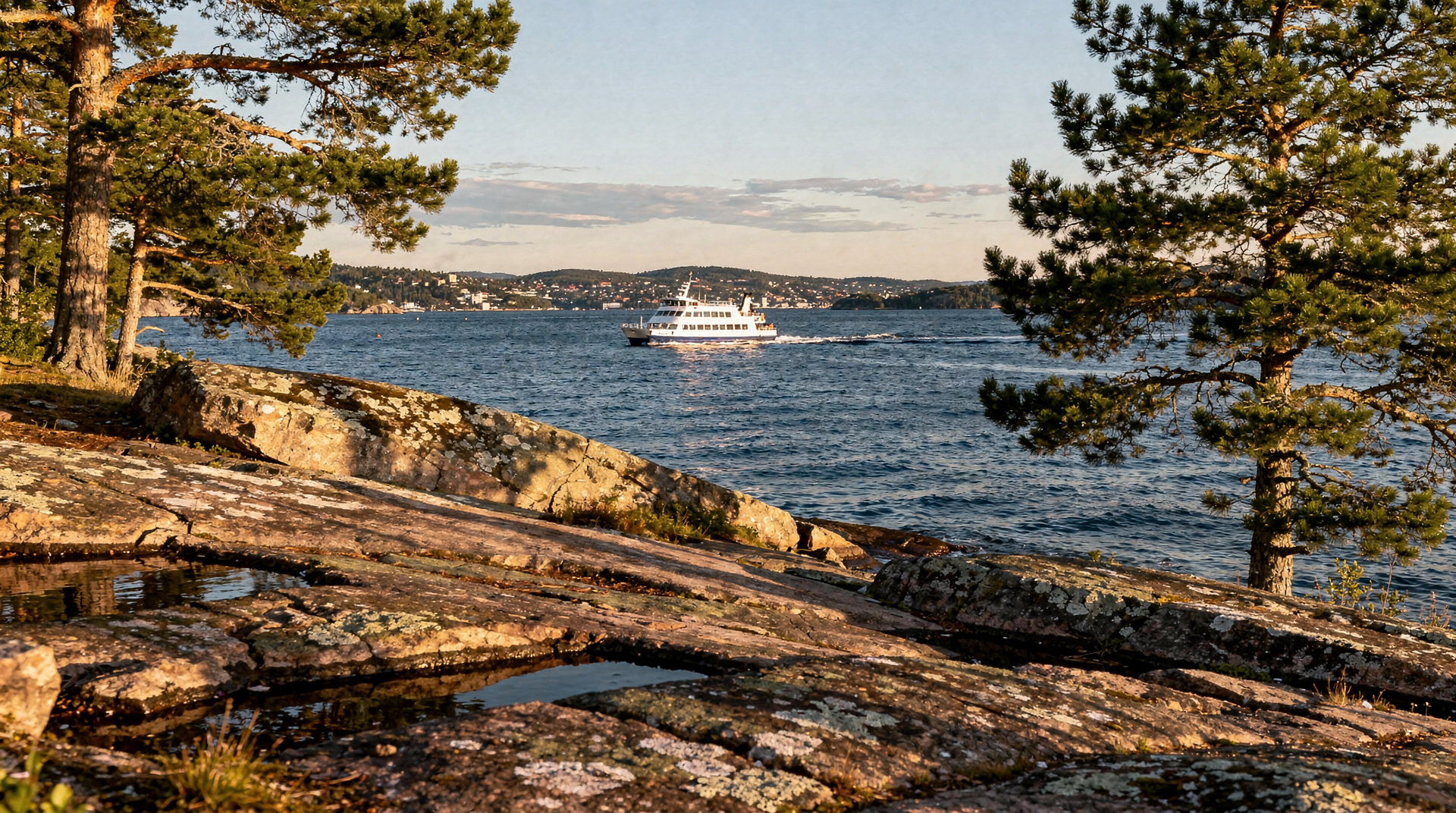
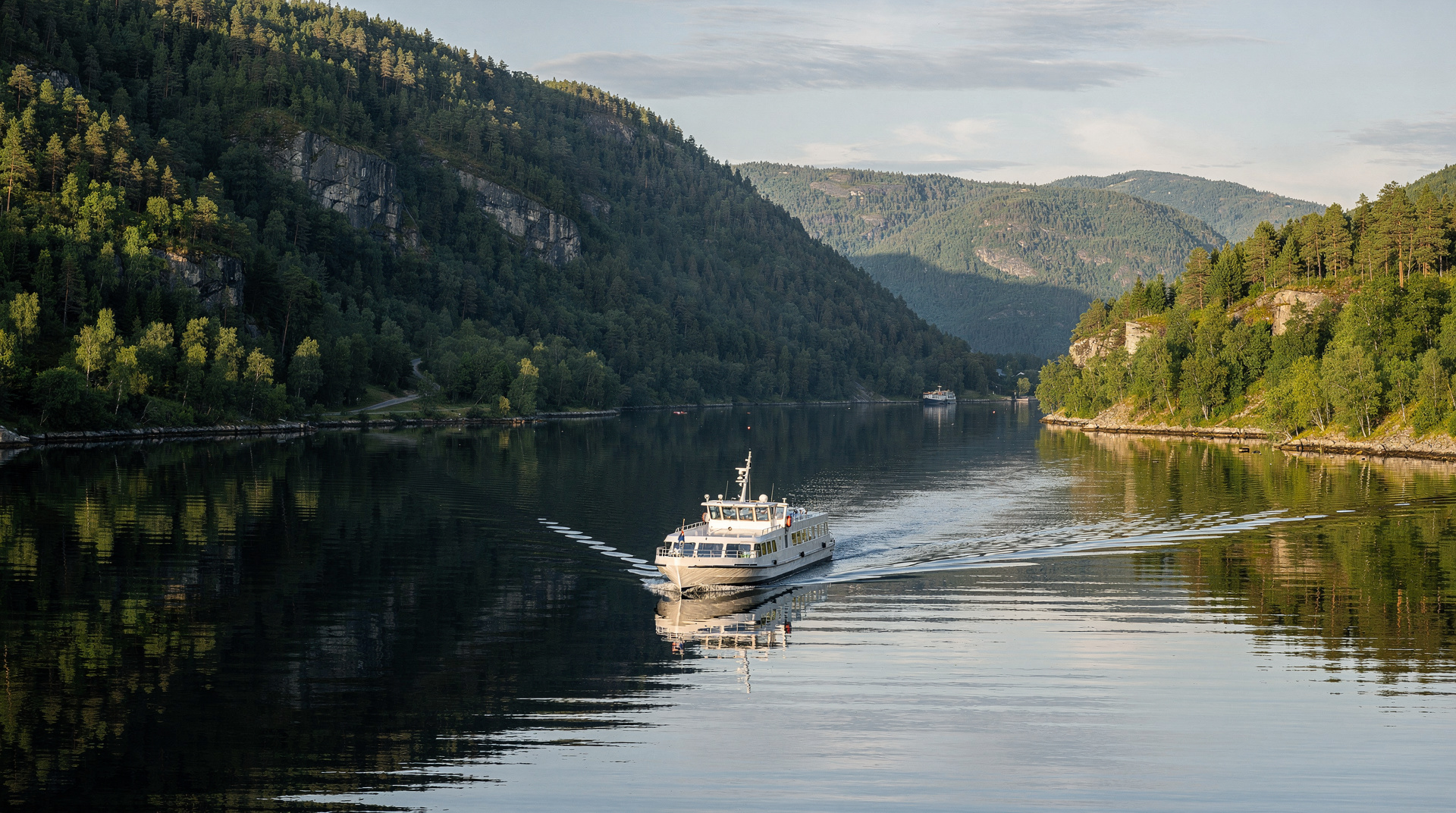
By express boat (summer only): A ferry service operates seasonally from Aker Brygge directly to Drøbak, taking about 1 hour along the eastern fjord shore. This is the more atmospheric approach — arriving by water gives you a view of Oscarsborg Fortress from the sea, as the German fleet would have seen it. Check current Ruter or Båtservice schedules before relying on this option; summer services vary by year.
By car: About 40 minutes from Oslo via the E6 motorway south, then the Rv23. Parking in Drøbak town centre is limited in summer but manageable on weekdays.
If you have not used Oslo’s buses before, the Ruter public transport guide explains how tickets and the app work, and getting around Oslo puts the bus into the wider picture. For a step-by-step plan of the day itself, the Drøbak day trip guide follows the route from departure to the return bus.
Oscarsborg Fortress — what actually happened in 1940
The fortress sits on the small island of Oscarsborg, directly in the middle of the Drøbaksund channel. It was built between 1853 and 1855, upgraded with German Krupp guns in the 1890s, and considered partially obsolete by 1940. The garrison that night was undermanned and many of the guns had not been test-fired in years.
When the German invasion fleet entered the fjord in the early hours of 9 April, the fortress commander Colonel Birger Eriksen gave the order to fire. The main 28 cm guns hit the Blücher repeatedly, and torpedoes fired from a shore battery below the fortress sealed the ship’s fate. The Blücher capsized and sank within two hours, taking over 850 German soldiers and crew with it. The delay was enough for King Haakon VII, the government, and the national gold reserves to be evacuated north by train from Oslo.
Today Oscarsborg is accessible by a short ferry from the Drøbak harbour (the ferry runs in summer; the fortress is managed partly as a heritage hotel and conference centre). The museum on the island details the events of April 1940 with reasonable depth. The guns still exist, though the original Krupp cannons have been removed to museum storage and replicas installed. The strategic point of the fortress is immediately apparent from the water — anyone approaching from the south has absolutely nowhere to hide.
For context on how this event fits into Norway’s WWII experience, the Historical Museum in Oslo provides good background before or after your visit.
Tregaarden’s Christmas house
Julenissen’s Postkontor — the “Christmas house” — operates year-round in a traditional wooden building near Drøbak’s central square. This is Norway’s official address for Father Christmas (Julenissen, in Norwegian tradition), and children can post letters that receive personalised replies. The shop sells Norwegian Christmas decorations, traditional wooden items, and enough seasonal merchandise to satisfy anyone who arrived without shopping intentions.
The honest assessment: in December, with real snow and the wooden town buildings lit up, Drøbak is genuinely beautiful and the Christmas house earns its reputation. In July, it’s a slightly peculiar experience — a Christmas shop surrounded by sunbathers — but still charming if you’re in the right mood. The quality of the traditional crafts is genuinely good; this is not cheap tourist tat.
The streets around the Christmas house repay a walk: Drøbak’s wooden buildings date from the 18th and 19th centuries and are among the better-preserved examples in the Oslo region. The town escaped the fires that destroyed many comparable Norwegian coastal settlements.
The aquarium and marine centre
Drøbak Aquarium (Drøbak Akvarium) near the harbour is small but well-regarded for family visits. The focus is on native Norwegian marine species — cod, halibut, flatfish, the occasional lobster — rather than exotic imports. It’s a compact attraction that works well as a 45-minute stop if you’re visiting with children. Entry is modest: around NOK 100–120 (USD 11–13) for adults.
Walks around Drøbak
The coastal forest south of Drøbak town offers some of the Oslofjord’s most accessible hiking. The trail running along the eastern shore — sometimes called the kyststi, or coastal path — passes through mixed pine and birch forest with occasional fjord viewpoints. A moderate walk of 6–8 kilometres follows the coast south from Drøbak, passing small beaches and rocky lookout points.
The northern route towards Håøya (a larger island in the fjord visible from Drøbak) is less developed and quieter. Håøya itself is a nature reserve accessible in summer by a small local ferry; it has forest trails and a few sheltered coves.
These walks are not dramatic Alpine terrain — this is gentle fjord-forest walking suitable for most fitness levels. The appeal is the quiet, the views over the water, and the absence of crowds even in high summer.
If these gentle paths leave you wanting something longer, the best Oslo hikes and the forest trails of Nordmarka offer more demanding days back near the capital. And if you would rather see the fjord from the water than from the shore, kayaking on the Oslofjord is a quieter way to appreciate the same landscape.
Drøbak town: the wooden buildings and their history
Drøbak’s townscape is worth examining beyond the Christmas house. The town developed as a pilot station and custom post in the 17th century, when all ships entering or leaving the Oslo fjord were required to take on a local pilot for the dangerous Drøbaksund channel. The narrow strait, with its submerged rocks and tidal variations, sank enough vessels over the centuries that pilotage was mandatory until well into the 20th century. The oldest buildings in Drøbak date from this era of maritime commerce.
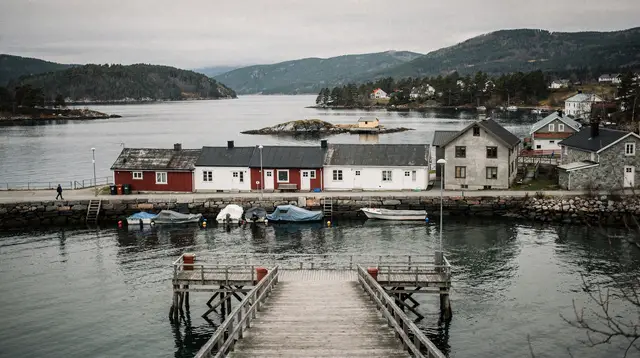
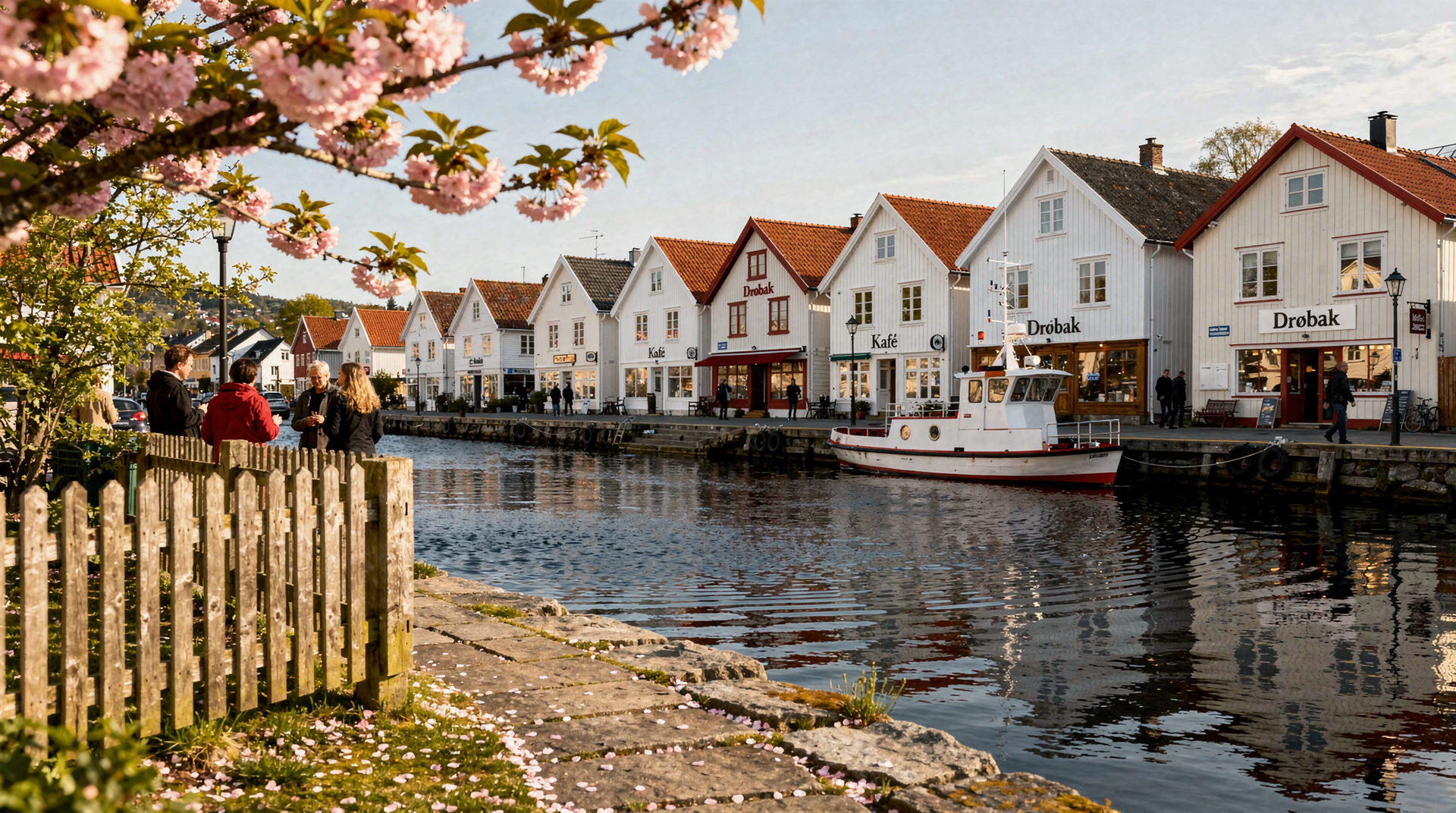
The wooden buildings lining the harbour and the main street (Niels Carlsens gate) are in a traditional Norwegian coastal style: painted in warm ochre, cream, and red, with carved wooden details around the windows. The town council has maintained strict preservation rules, and new construction within the historic core is heavily regulated. This is not a restoration project — these are original buildings maintained rather than rebuilt.
Worth seeking out: the Follo Museum’s Drøbak branch in the old white customs house near the harbour. The building dates from 1783 and is itself a listed structure; the collection inside covers the maritime history of the Drøbaksund passage, including the pilot station’s role and some documentation of shipwrecks in the channel. Small, unhurried, and often overlooked in favour of the Oscarsborg ferry.
The Drøbak church (1776) near the central square is one of the oldest surviving churches in the Follo region and worth five minutes of your time if it’s open. The interior is simple and well-preserved, in the Lutheran tradition.
Food and drink in Drøbak
Drøbak’s restaurant scene is small. For a fjord town, the fish is predictably good at the harbour-side establishments. Lehmanns is the longest-established option on the main square, serving traditional Norwegian seafood and open year-round. Prices are high by Norwegian standards (which is saying something): expect NOK 250–400 (USD 27–43) for a main course.
For cheaper eating, the bakeries along the main street offer smørbrød (open sandwiches) and coffee at typical Norwegian bakery prices. The Drøbak kiosk by the ferry dock sells hot drinks and pastries.
One honest note: Drøbak is not a food destination. If cuisine is the priority, Oslo has vastly more to offer. Drøbak is worth visiting for the fortress, the town, the walk, and the atmosphere — food is sustenance rather than destination.
The Blücher underwater — a footnote worth knowing
For divers, the wreck of the Blücher is one of Norway’s most visited dive sites. It lies in 60–90 metres of water — too deep for recreational scuba without technical certification — but the upper structure is accessible to advanced recreational divers at around 30–40 metres. The wreck is largely intact, encrusted with anemones and colonised by large cod. It contains unexploded ordnance and should only be dived with an experienced guide familiar with the site. Visibility varies by season; summer gives the best conditions.
For non-divers, you can sometimes see the wreck outline from the water surface on exceptionally clear, still days when the light angle is right — the ship’s bulk shows as a darker shape in the channel. It’s not reliably visible, and anyone telling you otherwise is selling hope rather than experience. The museum exhibition at Oscarsborg is the more reliable way to understand what happened that night.
The surrounding region: Follo and the outer fjord
Drøbak sits within the Follo region — the area immediately south of Oslo along both fjord shores — which rewards exploration beyond the town itself. The Follo Museum (Follomuseet) at Drøbak covers regional history from the Stone Age through to the 20th century; it’s a modest but well-organised local museum that provides context for the area’s settlement history.
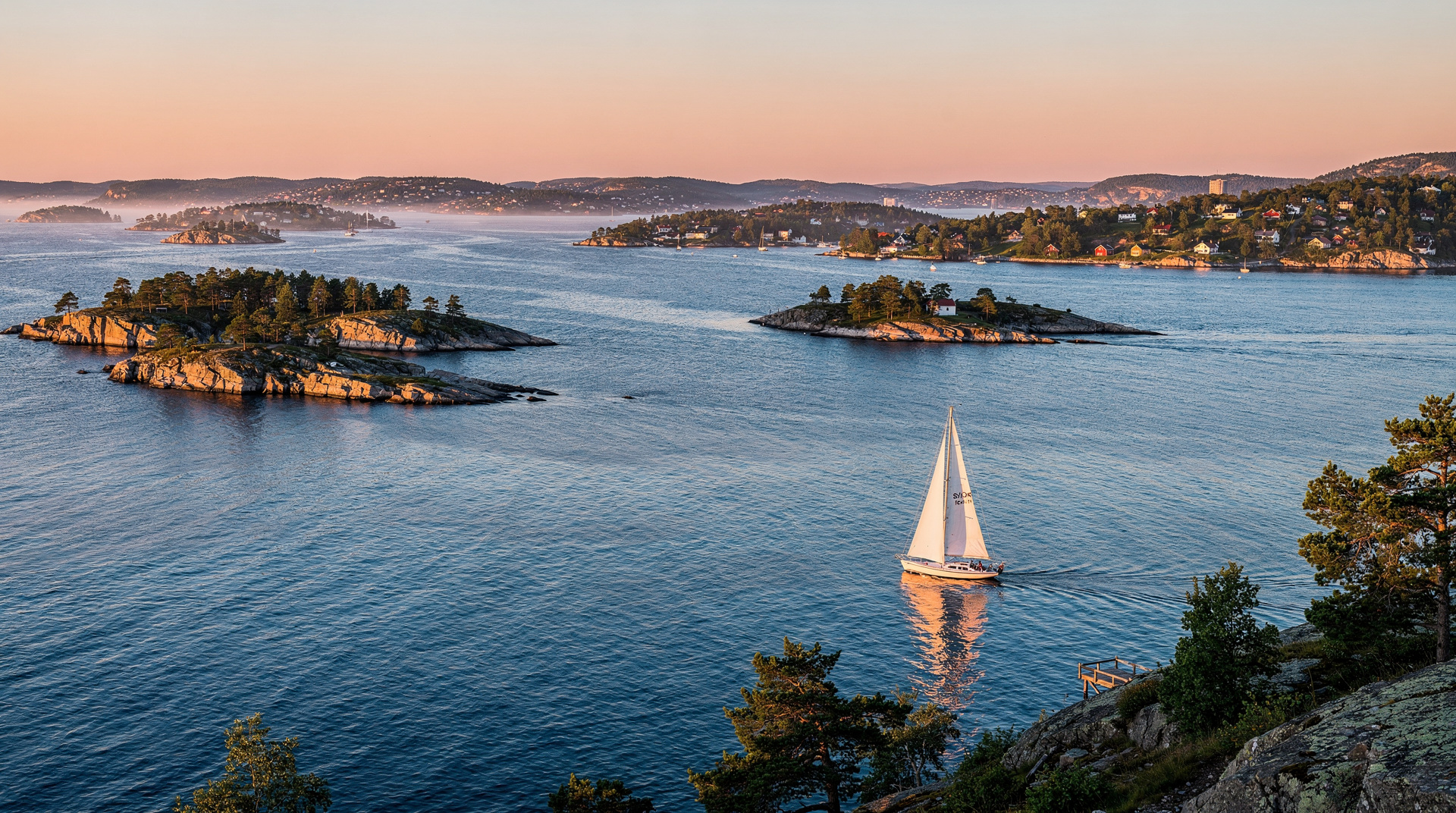
Further south of Drøbak, the outer Oslofjord opens dramatically. The narrow Drøbaksund channel — where the Blücher was stopped — gives way to a wider basin where the fjord no longer feels like a river. The coastal road south (Rv23 and smaller county roads) passes a series of small beaches, fishing harbours, and wooden summer cottages characteristic of Norwegian fjordside living. If you have a car, this southern stretch towards Moss and Rygge reveals a different, quieter face of the Oslofjord than the island-focused activity north of Drøbak.
The Oslofjord guide covers the full context of this geography and what distinguishes the inner and outer sections.
What to combine with a Drøbak day
Drøbak and Nesodden are often paired on a two-day fjord circuit, though in practice they work better as separate half-days: Drøbak is southeast of the fjord, Nesodden is on the western peninsula, and there’s no direct crossing between them without returning to Oslo. See the Nesodden guide for its separate logic.
If you’re combining Drøbak with a broader Oslofjord day, the ferry route down from Oslo — calling at the islands en route in summer — is more satisfying than the bus approach. The Oslofjord ferries guide covers current routes and timetables.
For those planning a multi-day Oslo itinerary with day trips as a component, the best day trips from Oslo ranks all the options honestly, including a frank comparison between Drøbak and Fredrikstad (the other fortress-town option).
Travellers who like the idea of a fjord outing but want something closer to the city can look at island hopping around Oslo and the car-free Hovedøya island. The Oslo and Oslofjord islands day itinerary shows how to build a full day around the water, while the Fredrikstad day trip covers the alternative fortress town in more detail.
December in Drøbak: what it’s actually like
Drøbak in December has earned genuine praise from travel writers, and the praise is largely deserved — but a few expectations need managing. The town is small: the Christmas market, when it runs (typically late November through Christmas Eve), occupies roughly two streets. It doesn’t take long to walk through. The real appeal is cumulative: the wooden buildings lit by lanterns, Oscarsborg illuminated across the water, Norwegian gløgg (mulled wine) in your hand, and the understated, non-commercial quality of a small coastal town doing Christmas at its own pace.
It is genuinely better than the larger, more packaged Christmas markets in central Oslo. But if you’re expecting the scale of a German or Austrian Christkindlmarkt, this is not that. It’s intimate, quiet, and best appreciated in combination with a walk through the town and possibly a Oscarsborg visit if the fortress museum is open on the date you choose.
The bus from Oslo runs throughout December and is the most reliable transport option in winter — the summer ferry service does not operate. Check current times on Ruter’s app.
To see how Drøbak sits alongside the capital’s own seasonal offer, read Christmas in Oslo and the personal take in the blog post on Christmas markets in Oslo. For planning around the short winter days, the guide to Oslo in winter activities helps you decide what else to fit around a Drøbak outing.
Frequently asked questions about Drøbak
How far is Drøbak from Oslo and how long does the trip take?
Drøbak is 40 kilometres south of Oslo, taking 50–65 minutes by bus from Nationaltheatret or about 1 hour by summer ferry from Aker Brygge. By car, the E6 motorway makes it about 40 minutes in normal traffic.
Is Oscarsborg Fortress worth visiting?
Yes, particularly if you have any interest in WWII history or Norwegian history. The story of the Blücher sinking and its consequences for the Norwegian resistance is genuinely significant. The museum is honest and well-documented. The island itself, accessed by a short ferry from Drøbak harbour, is atmospheric. Combine with a walk along the Drøbak harbourfront for a rounded half-day.
Can you visit Drøbak in winter?
Yes — winter is arguably when Drøbak is at its most distinctive, particularly in December. The bus runs year-round. The Oscarsborg ferry may have reduced hours outside summer. The Christmas house is open all year. Snow transforms the wooden buildings dramatically. Dress warmly and accept short daylight hours (around 6–7 hours in December).
What is the Christmas house in Drøbak?
Tregaarden’s Christmas house (Julenissen’s Postkontor) is a permanent Christmas shop and post office operating year-round. It’s the official Norwegian address for letters to Father Christmas. Children can send letters and receive personalised replies. Adults can browse traditional Norwegian decorations and crafts. It’s charming rather than kitschy and worth 30–45 minutes.
Is Drøbak suitable for a family day trip with children?
Yes — the aquarium, the Christmas house, the short ferry to Oscarsborg, and the relatively flat harbour area make Drøbak well-suited for children. The coastal walks can be adapted to shorter routes. The bus journey from Oslo is manageable with children, and the town is small enough that logistics are simple. The Oslo with kids guide includes Drøbak in its day-trip recommendations.
Is there accommodation in Drøbak?
The Oscarsborg Hotel on the fortress island is the most distinctive option — sleeping in the same complex that fired on the Blücher is a memorable experience. It’s primarily a conference and events venue but accepts leisure guests when space allows. Advance booking is essential. There are also a handful of guesthouses in the town itself for those wanting an overnight stay rather than a day trip.
Top experiences
Bookable activities with verified prices and instant confirmation on GetYourGuide.