Nesodden — a 30-minute fjord escape
Nesodden is Oslo's quiet peninsula escape: 30 minutes by Ruter ferry, coastal forest walks, swimming coves, and a thriving artists' community.
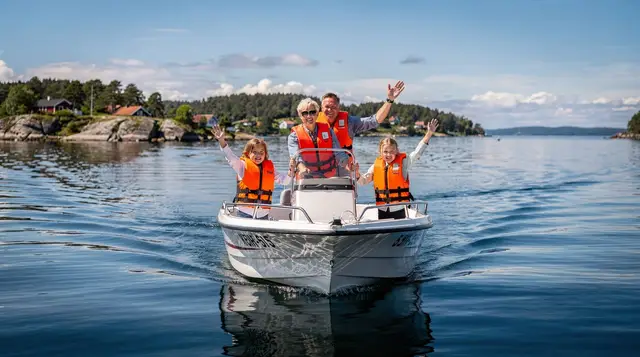
Oslo: guided sightseeing fjord cruise on a premium silent electric boat
Duration: 2 hours
- Silent electric boat
- Free cancellation
- Best seller
Quick facts
- Best time
- May–September for swimming and full ferry schedule; year-round for walks
- Days needed
- Half-day to full day
- Getting there
- Ruter public ferry from Aker Brygge — 30 minutes, included in Ruter day pass
- Budget per day
- NOK 100–400 (USD 11–43) — ferry included in pass; bring your own food
The peninsula most visitors overlook
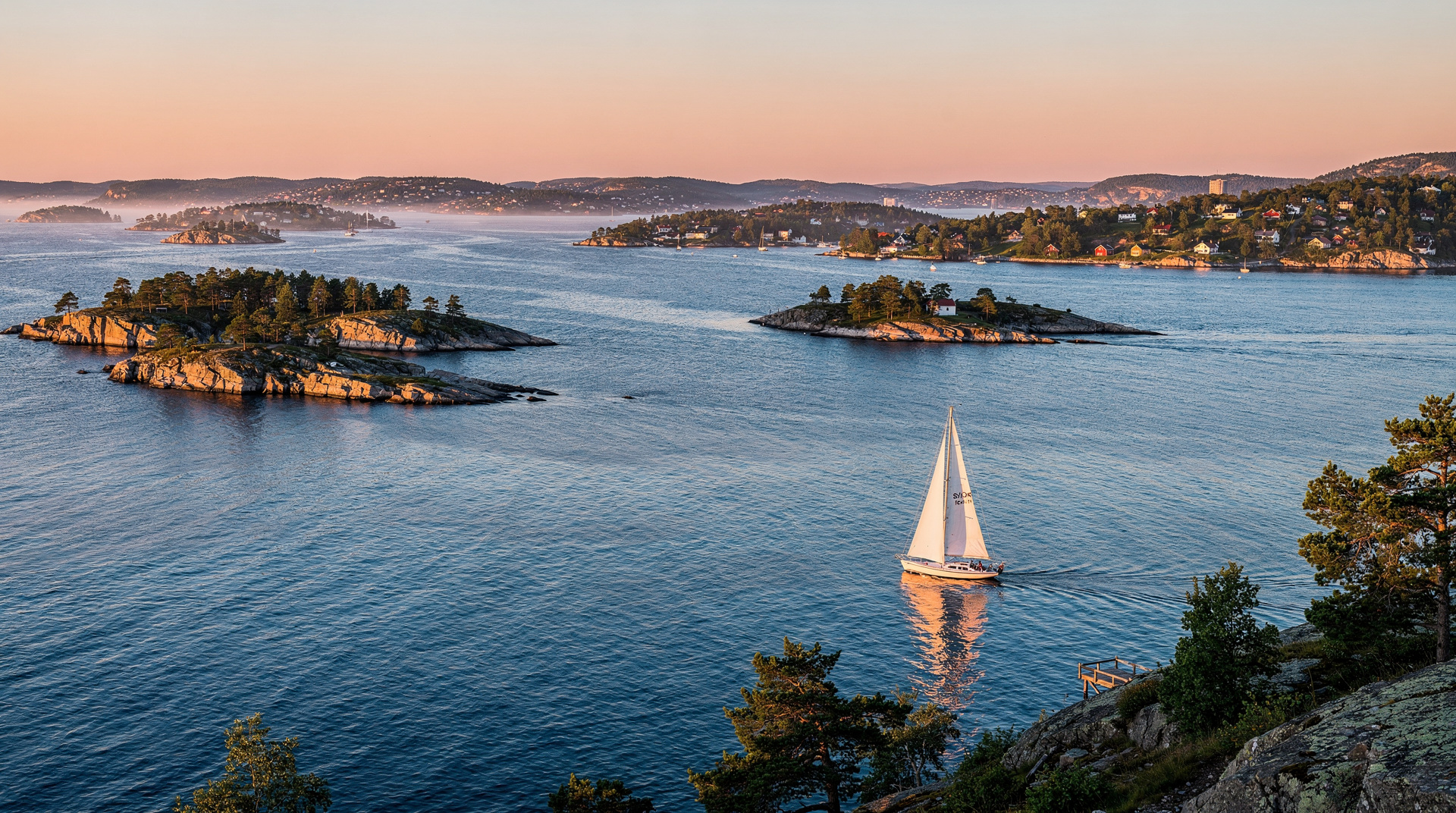
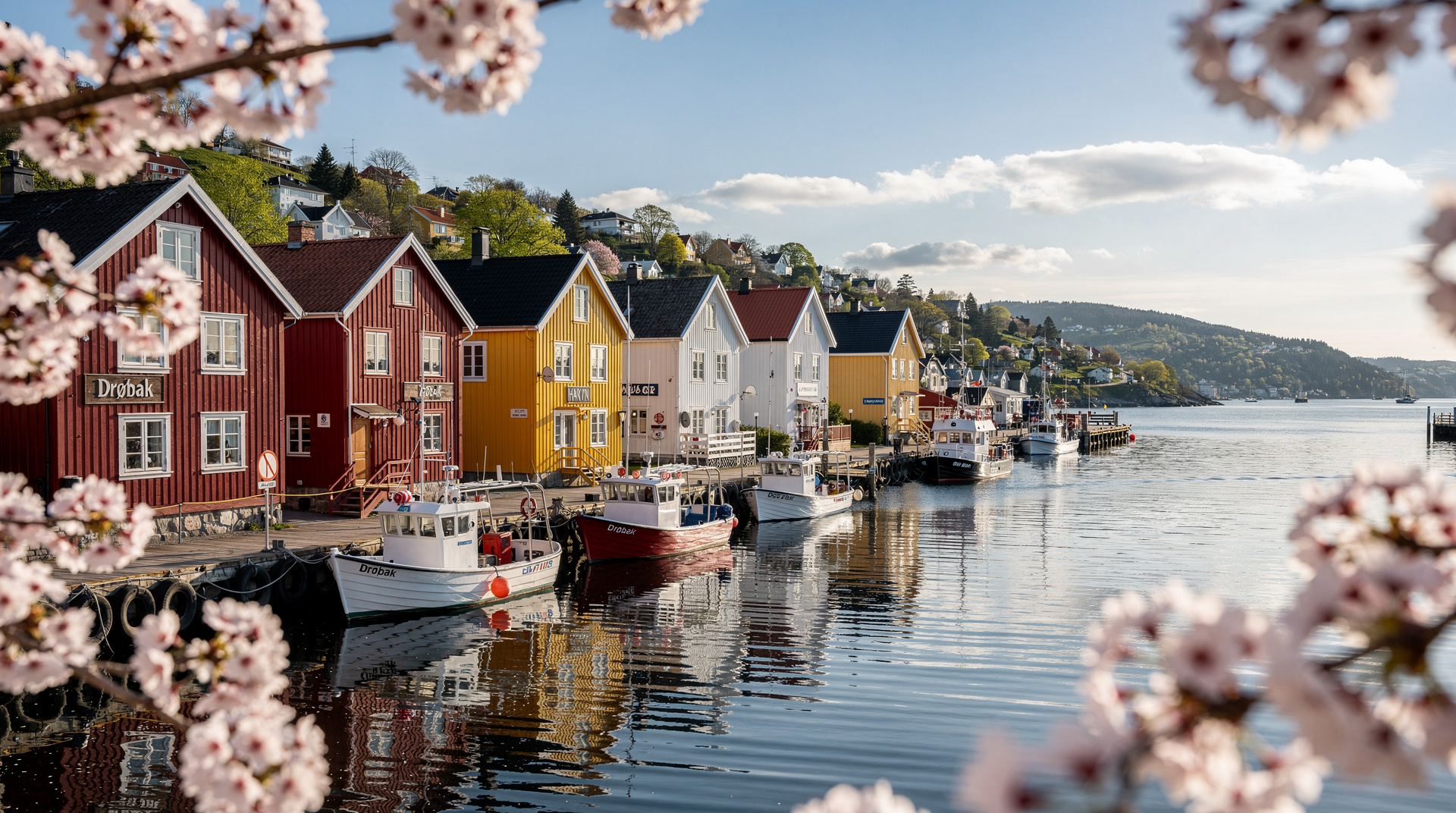
Oslo’s Oslofjord has two distinct sides. To the east, the land slopes towards the Swedish border in gentle hills. To the west, a long forested peninsula — Nesodden — curves southward from the city, separating the inner fjord from the broader outer basin. This peninsula is less than 5 kilometres from central Oslo at its closest point, yet it receives a fraction of the visitors who cross to the eastern islands or head south to Drøbak.
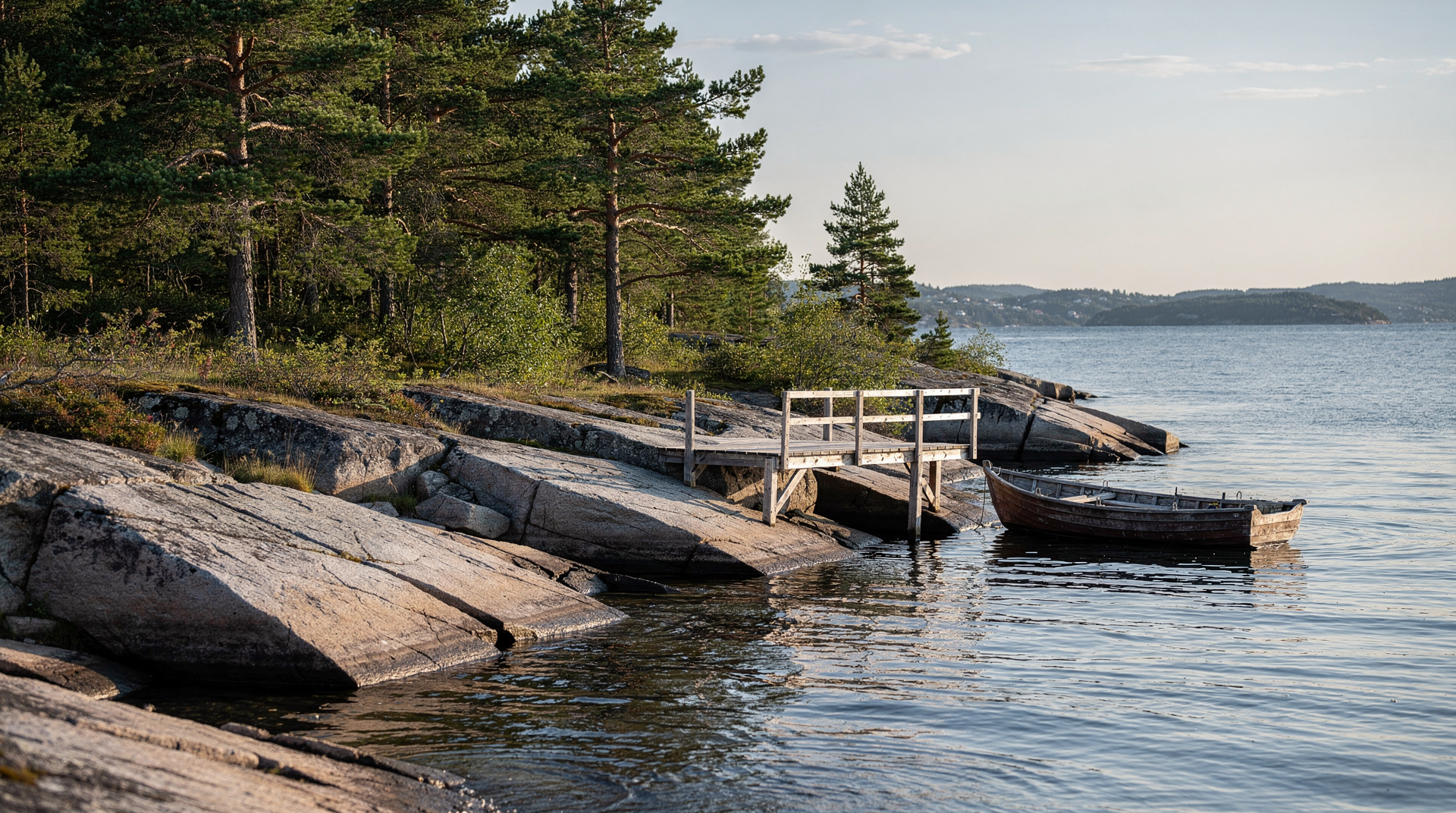
The reason is partly cultural: Nesodden is where Oslo’s artists, musicians, and writers have lived for over a century. It has a self-sufficient, slow quality that attracts people who have chosen it deliberately and don’t particularly want to be a tourist destination. There are no big-ticket attractions, no aquariums, no Christmas houses. What you find instead is a coast of small coves and swimming spots, forest trails through mature birch and pine, and scattered studios and galleries that are genuinely part of the working life of the peninsula rather than shops performing art for visitors.
This is one of Oslo’s best half-day escapes precisely because it requires no planning beyond looking up the ferry time.
| Where | West side of the Oslofjord, opposite Aker Brygge |
| Getting there | Ruter ferry B1 from Aker Brygge, about 30 minutes |
| Time needed | Half-day to full day |
| Cost | Covered by a standard Ruter day pass — bring your own food |
| Best time | June–September for swimming; year-round for walking |
The ferry from Aker Brygge
The Nesodden ferry is one of the Ruter public ferry routes — the B1, departing from pier 5 at Aker Brygge. Journey time to Nesoddtangen (the southern tip of the peninsula) is around 30 minutes, though the ferry makes stops along the western Nesodden shore en route, so depending on where you disembark the crossing may be 15–25 minutes.
The fare is covered by a standard Ruter day pass or travel card — no supplement, no booking required. Ferries run roughly hourly in the main season, with reduced service outside summer. The boats are standard Ruter vessels, not scenic tour boats, and the crossing itself is pleasant: good views of the fjord, the Oslo skyline receding behind you, and Nesodden’s wooded hills approaching.
One practical note: the last ferry back to Oslo from Nesoddtangen is typically around 11pm in summer and earlier in winter. Check the current Ruter timetable before your last swim.
What to do on Nesodden
Coastal walks on the southern tip
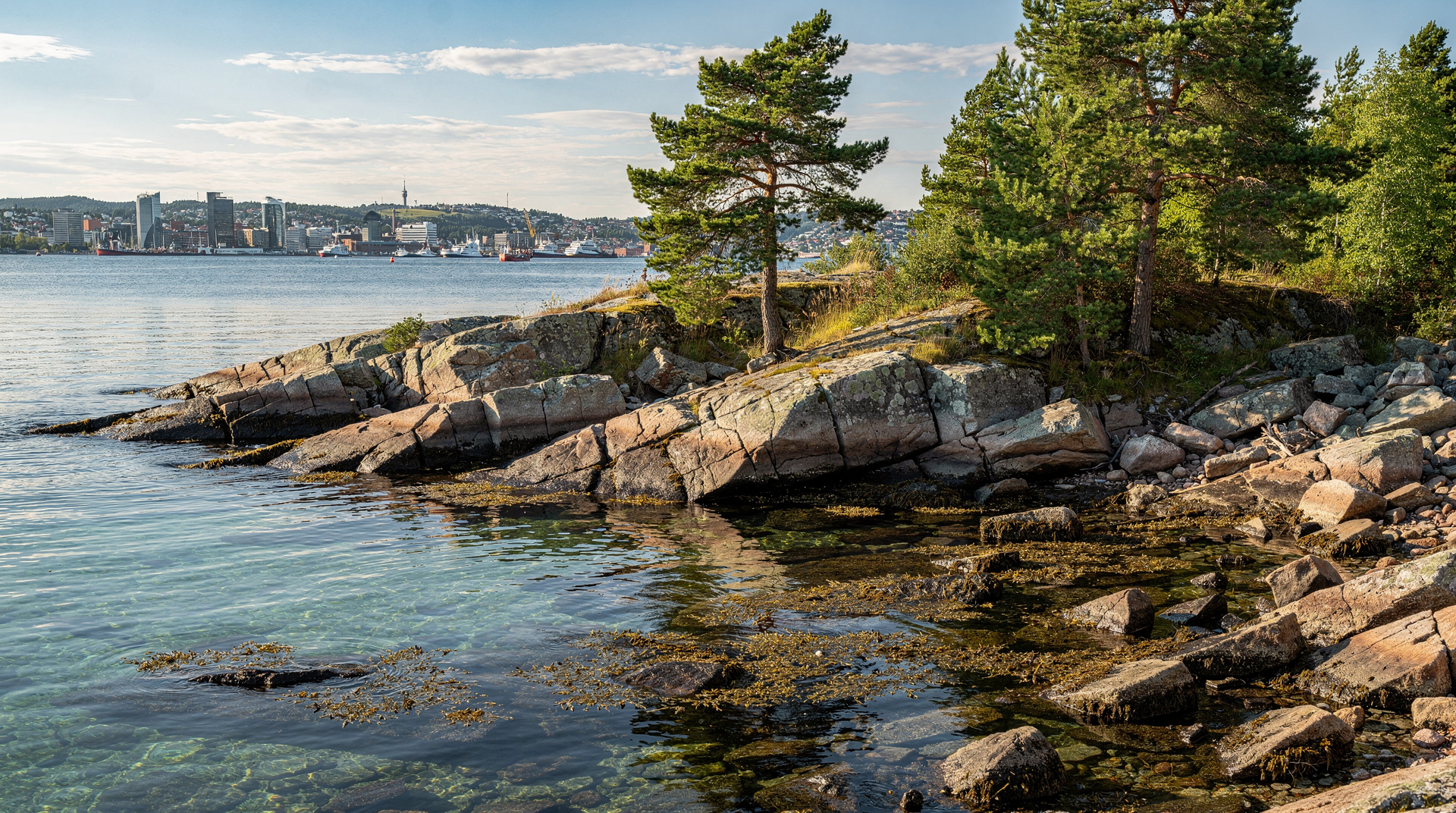
The southern end of the peninsula, around Nesoddtangen itself, has the best public walking access. The coastal path (kyststi) runs along rocky shoreline through mixed forest, passing several small swimming coves. The terrain is gentle — this is fjord-forest walking, not mountain hiking — and the path is well-maintained enough for regular trainers, though trail shoes are more comfortable in wet weather.
The western shore faces directly onto the inner fjord and gets afternoon sun. The eastern shore faces towards the Oslo islands and is more sheltered from the wind. Both are worth exploring; the western path gives better views of the broader fjord, including Oscarsborg Fortress visible to the south on a clear day.
A circuit of the southern tip, including both shores and the interior trails, takes about 3–4 hours at a relaxed pace. For a shorter visit, the western shore path from the main ferry stop to the first viewpoint takes about 45 minutes return.
Swimming coves
Nesodden has several small beaches and rocky coves where local residents swim from June through September. The water quality is good — the western fjord side is generally cleaner than the eastern shore. The coves don’t have lifeguards, facilities, or kiosks, so this is swimming as Oslonians do it: find a rock, leave your things, jump in.
The best-regarded spots are accessible from the coastal path near the ferry landing. The exact locations are known to locals and passed on informally; the first cove 10 minutes south of the main pier is a reliable starting point. On sunny July weekends, even these quiet spots attract families from the surrounding community, but they never approach the density of Langøyene.
Art studios and galleries
Nesodden has been an artists’ peninsula since the early 20th century, when Oslo’s art world began decamping to the peninsula for summer residencies. The Norwegian painter Edvard Munch spent significant time here — he lived and worked in Aasgårdstrand on the western Oslofjord shore, and Nesodden formed part of the broader landscape that influenced his palette and subjects.
Today the peninsula has a disproportionately high concentration of working artists, musicians, and writers relative to its population. Several have studios that are periodically open to visitors, particularly during the annual Nesodden open studio days (Kunst på Nesodden) held in summer. The cultural centre at Nesoddtangen has a small gallery with rotating exhibitions and occasional concerts.
These are not the curated, tourist-friendly gallery experiences of central Oslo. They’re genuine working spaces where the output varies in quality and the welcome depends on whether the artist is in the middle of something. Which is, paradoxically, exactly what makes them interesting.
Birdwatching
The southern tip of the peninsula is part of a protected natural area and is good for coastal birdwatching year-round. The outer rocks attract eider ducks, cormorants, and mergansers in winter. Spring and autumn migration brings a variety of waders and passerines through the coastal scrub. Oystercatchers are permanent residents and reliably vocal.
For serious birdwatching, the rocky points on the western shore facing the fjord are more productive than the sheltered eastern side. Bring binoculars — the birds are used to people walking the path but not to people stopping in predictable spots.
Where to eat and drink
This is where honest Nesodden planning requires a frank adjustment of expectations: there is almost no food infrastructure for visitors. The main Nesoddtangen ferry stop has a small kiosk selling coffee and simple snacks in summer. There are a few cafés in Tangen (the main settlement near the ferry) that cater primarily to local residents. That’s it.
The practical approach is to bring everything you need from Oslo. Buy lunch at one of the excellent Mathallen vendors or a good deli in Aker Brygge before boarding the ferry, and treat the peninsula as a picnic destination. This is exactly how Oslonians use it. The Mathallen food hall guide covers the best vendors for takeaway.
If you want to eat out before or after the Nesodden ferry, the Aker Brygge restaurant strip is directly at the ferry pier, though quality varies and the tourist-facing quayside places are overpriced. Inland one block, the options are better.
Combining Nesodden with other fjord activities
Nesodden is a natural pairing with an Oslofjord cruise. The electric silent cruise boats pass along the Nesodden shoreline and give good views of the peninsula’s wooded character and the coves below. If you take a morning cruise and afternoon Nesodden ferry (or reverse), you see the western fjord shore from both water and land.
See the Oslofjord guide for the full picture of what’s available on the water. The best Oslofjord cruises guide helps choose which cruise fits best with a Nesodden visit.
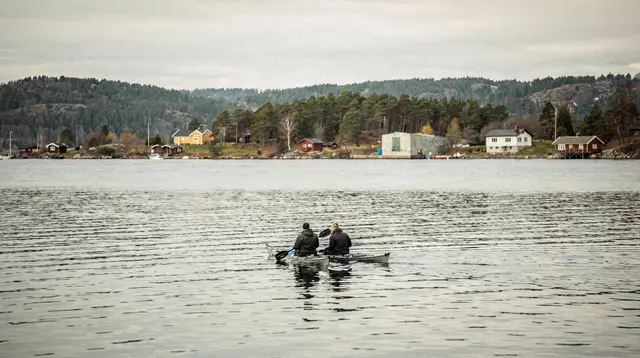
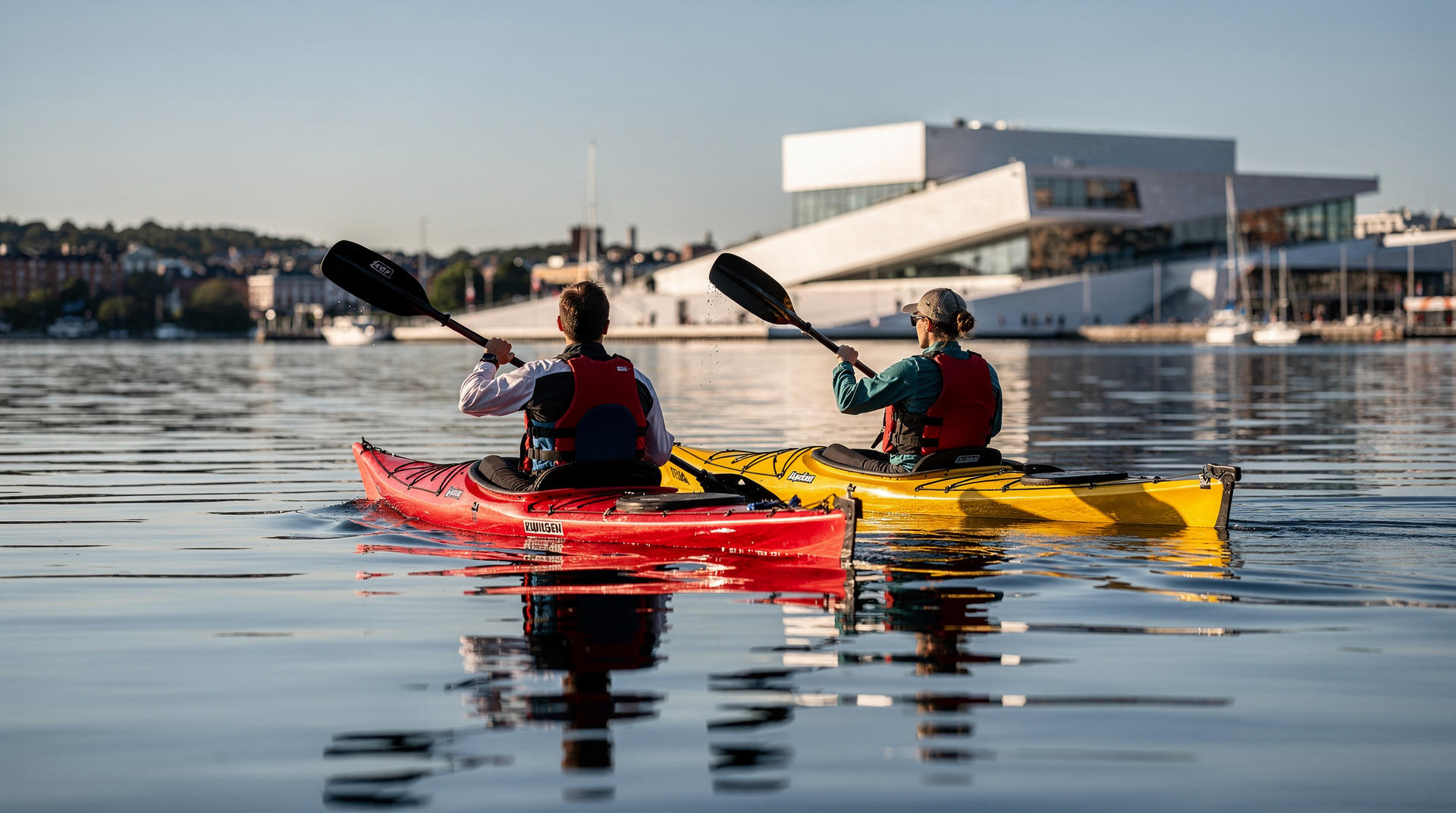
For kayakers, the crossing from Tjuvholmen to Nesodden’s southern coast is a classic Oslo paddle — about 5–6 kilometres of open water, then exploring the coves. The kayaking guide covers conditions and the specific approach to the western Nesodden shore.
If you would rather keep the day on the water without paddling yourself, the silent electric boat cruise and the sunset fjord cruise both suit a Nesodden day, since you can match a quiet cruise to a quiet shoreline. Visitors who want to string several stops together will find the Oslo island hopping guide and the Oslofjord ferries guide useful for seeing how Nesodden fits alongside the islands. The Oslo public transport guide explains the ticketing that makes the ferry so simple.
The music connection: Nesodden’s festival culture
The artists’ community on Nesodden includes a disproportionate number of musicians alongside the visual artists and writers. This manifests in a surprisingly active local concert culture for a peninsula of 20,000 people. The Nesodden Kulturhus (cultural centre at Nesoddtangen) hosts regular concerts — jazz, classical, folk, and contemporary — that draw audiences from Oslo across the fjord. In summer, outdoor concerts in the garden of the cultural centre are a particular draw.
The Nesoddtangen Jazz Festival, held annually in August, is the most significant event: a weekend of jazz performances spread across the cultural centre and outdoor stages, with ferry services boosted to handle the increased passenger load. Tickets are affordable by Oslo standards and the atmosphere — outdoor jazz with fjord views — is distinct enough to justify planning a visit around the festival dates.
Beyond the jazz festival, Nesodden’s concert calendar is worth checking for any visit in summer: a classical quartet in the Nesoddtangen hall on a long June evening, with the fjord visible through the windows and the light still full at 9pm, is one of those experiences that travellers remember disproportionately long after more heavily marketed attractions have faded.
The landscape through the seasons
Nesodden’s character changes substantially across the year, and visitors who only know the summer version miss something. The peninsula’s deciduous forest — birch and elm and oak on the southern tip, mixed with spruce and pine further north — turns a vivid yellow and orange in October. The coastal trail on a calm October afternoon, with fallen leaves on the path and the fjord flat and grey-silver beside you, is more beautiful in a muted way than the busy July version.
In winter, the same trail becomes a snow-dusted walk through bare forest, the water dark and still, the ferry crossing in the early afternoon light. This is not a summer-only destination. The ferry runs year-round (reduced frequency) and the coast is accessible in all conditions. The practical constraint is temperature: below about minus 10 °C, the walk is challenging without proper winter clothing, and the swimming is obviously out.
Spring (April–May) is the least appreciated Nesodden season: the birches leaf out in yellow-green, the coastal path is clear of ice but not yet crowded, and the sea temperature is still too cold to swim but the light is already returning strongly. Early May on the southern tip, with the first green on the trees and Oscarsborg faintly visible to the south across the water, is one of the understated pleasures of the Oslo region.
A sample half-day itinerary
11:00 — Take the Ruter B1 ferry from Aker Brygge pier 5 to Nesoddtangen (about 30 minutes). Buy your lunch at Mathallen or an Aker Brygge deli before boarding, since food options on the peninsula itself are minimal.
11:30–13:00 — Walk the western shore coastal path from the ferry landing, taking in the fjord views back towards Oslo and, on clear days, Oscarsborg Fortress to the south. Stop at the first swimming cove if the weather allows.
13:00–13:45 — Picnic lunch at one of the rocky viewpoints, or a light meal at one of the small cafés in Tangen if you prefer not to carry food.
13:45–15:30 — Continue onto the interior forest trails or double back along the eastern shore for a different perspective, depending on wind direction and energy levels.
15:30 — Ferry back to Aker Brygge, timed to arrive in Oslo with the afternoon still ahead for a coffee in Sentrum or Grünerløkka.
This structure covers the peninsula’s best features — the ferry crossing, coastal walking, and swimming — in under five hours door to door, leaving the rest of the day free. For a longer visit, extend the interior loop or combine with an Oslofjord cruise earlier in the day.
Nesodden versus the fjord islands: how to choose
The Oslo islands — Langøyene, Hovedøya, and the rest — offer more infrastructure, more company, and specific attractions like the monastery ruins. Nesodden offers more solitude, longer walks, and a sense of real place rather than day-trip destination.
If you have one summer afternoon: choose an island for the first visit, then Nesodden if you want something quieter.
If you have a full day and want to walk: Nesodden’s coastal circuit is substantially longer and more varied than anything on the islands.
If you’re visiting with children: the islands have slightly more to do (kiosk, beach, defined attractions); Nesodden is better suited to children who are happy walking and swimming without organised activities.
The Nesodden escape guide goes deeper on specific routes and seasonal recommendations.
For more on the islands themselves, see the Hovedøya island guide. If a quiet day outdoors appeals more than a swim, the Oslo swimming spots guide and the Drøbak day trip guide offer other ways to leave the city for a few hours, and the Oslo in 2 days itinerary shows where a Nesodden half-day can slot into a slightly longer stay.
Practical details
Parking at Nesoddtangen: limited; the ferry is strongly preferable.
Mobile coverage: reliable near the pier, patchy further into the forest.
Toilets: available at the main ferry stop; none on the coastal trails.
Dogs: allowed on the coastal paths and beaches (most are not designated swimming beaches with dog restrictions). Keep dogs on leads in the nature reserve section near the southern tip.
Weather sensitivity: the western shore gets direct wind from the fjord; if it’s blowing from the west, the eastern trails are more sheltered. Check the forecast before choosing your route.
Frequently asked questions about Nesodden
How long is the ferry from Oslo to Nesodden?
The Ruter B1 ferry from Aker Brygge takes approximately 30 minutes to the main Nesoddtangen stop. Stops on the Nesodden shore closer to Oslo are reached in 15–20 minutes. The fare is covered by a standard Ruter day pass.
Is Nesodden worth visiting if you only have one day in Oslo?
With only one day in Oslo, Nesodden is probably not the priority — the city centre, Bygdøy museums, and the Oslo fjord from Aker Brygge will absorb that day. Nesodden suits visitors who have already seen the main city sights and want a quieter, more nature-focused experience. For one-day planning, see the Oslo in 1 day itinerary.
Can you swim off Nesodden?
Yes — the coves on the western fjord shore are clean and swimmable from June through September. There are no lifeguards or facilities; this is wild swimming in the Norwegian sense. The water is cold (17–22 °C in peak summer) and the rocky entries are not always beginner-friendly. Bring something to stand on if the rock ledges are slippery.
Is there accommodation on Nesodden?
A handful of guesthouses and B&Bs operate on the peninsula, mostly catering to visitors who want a quiet retreat rather than the urban Oslo experience. These are not luxury options. Most visitors come as a day trip from central Oslo, which is straightforwardly the most practical approach.
What’s the artistic connection to Nesodden?
The Nesodden artists’ community has roots in the early 20th century. The peninsula’s landscape — the light over the fjord, the pine forests, the narrow coves — attracted painters from the Oslo bohemian scene who wanted rural conditions without being far from the city’s cultural life. That tradition has continued across generations. Today the peninsula hosts a disproportionate number of working artists relative to its 20,000 residents, and summer open studio events draw visitors from Oslo.
Is Nesodden accessible without a boat?
By road, Nesodden is a 25–30 minute drive from central Oslo via Mosseveien and the E18, then the Rv152 down the peninsula. But parking is limited near Nesoddtangen and most of the interesting coastal walking starts from points near the ferry landing. The ferry is strongly preferable unless you’re visiting friends who live on the peninsula.
Top experiences
Bookable activities with verified prices and instant confirmation on GetYourGuide.