Nesodden: the easy 30-minute ferry escape from Oslo
Oslo: nature walks island hopping tour
Duration: 3 hours
- Island hopping
- Public ferry
How do you get to Nesodden from Oslo?
Ruter B1 ferry from Aker Brygge pier 5, 30 minutes to Nesoddtangen. Standard Ruter ticket (NOK 41 / USD 4.40) or day pass. Ferries run roughly hourly in season. Nesodden is a forested peninsula with coastal walks, quiet swimming coves and an artists' community — no tourist attractions, all genuine landscape.
Thirty minutes away: why almost no tourists go
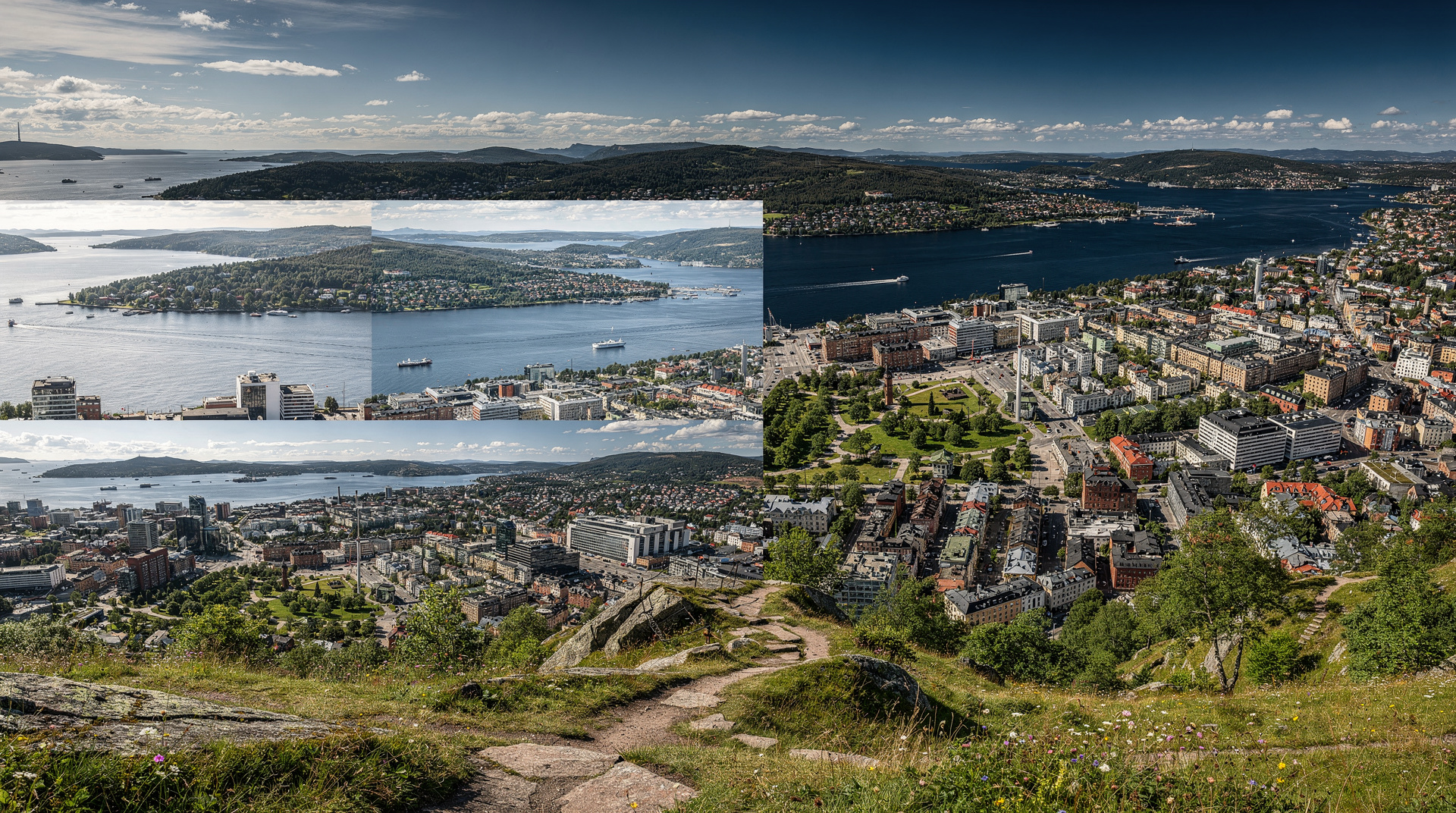
The ferry from Aker Brygge pier 5 takes 30 minutes to reach Nesoddtangen, the southern tip of the Nesodden peninsula. In those 30 minutes the Oslo skyline recedes behind you, the water widens, the forested hills of the peninsula get closer, and by the time you disembark you’re in a place that feels genuinely far from the city — not because it’s far (it isn’t) but because its character is entirely different.
| Where | Nesoddtangen, 30 min by Ruter B1 ferry from Aker Brygge pier 5 |
| Cost | Standard Ruter fare, around NOK 41 / USD 4.40 |
| Time needed | Half-day (4–5 hrs incl. travel), full day for the interior routes |
| Getting there | Ruter B1 ferry, roughly hourly in season |
| Best time | June–August for swimming; weekday mornings for solitude |
Nesodden doesn’t appear on most tourist itineraries. There’s no monastery ruin, no Christmas house, no scenic railway. There’s forested hillside, rocky shoreline, clean fjord water, and a peninsula-wide culture of artists and musicians who have been living here deliberately for over a century. This is Oslo’s secret half-day, kept by the fact that it doesn’t photograph particularly dramatically and can’t be described in three bullet points for a travel brochure.
Getting there: the B1 ferry
The Nesodden ferry is Ruter route B1, departing from pier 5 at Aker Brygge. This is a different pier from the island ferries (pier 3 for the islands); look for the B1 signage at the far end of the Aker Brygge waterfront, past the island ferry piers.
The B1 ferry makes several stops along the Nesodden western shore before reaching the main Nesoddtangen terminus — depending on which stop you disembark at, the crossing is 15–30 minutes. For the full coastal walk around the southern tip, disembark at Nesoddtangen (end of the line, 30 minutes).
Fare: Standard Ruter ticket (NOK 41 / USD 4.40) or day pass (NOK 119 / USD 12.80). Children under 18 travel free. Oslo Pass covers the B1 ferry. No booking needed.
Frequency: Roughly hourly in peak season (May–September); reduced in shoulder season. Check the Ruter app for current timetable. The last B1 ferry back to Aker Brygge from Nesoddtangen is typically around 11pm in summer.
At the pier: Nesoddtangen pier is a basic public ferry landing with a small kiosk (seasonal) and the start of the coastal path. There is no tourist information office or visitor centre.
The coastal path and what to expect
From the main pier, the coastal walking path (kyststi) immediately splits into two directions along the shoreline — west (facing the open fjord) and east (facing toward the inner fjord and Oslo islands).
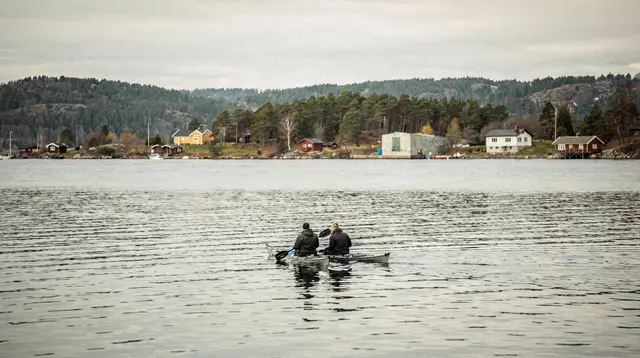
The western shore path is the more dramatic of the two: it runs along rocky coast with direct views over the inner Oslofjord, catches afternoon sun from late morning, and has the best swimming spots. On a clear day, Oscarsborg Fortress is faintly visible to the south. The path here is occasionally steep at rocky points but generally manageable in regular trainers; trail shoes are better in wet conditions.
The eastern shore path is more sheltered, more wooded, and quieter. The views are toward Gressholmen and Hoofdøya rather than the open fjord. This is the right choice for a birdwatching walk or for those who find the western shore too exposed in wind.
The full southern circuit (both shores and the interior trails) takes approximately 3–4 hours at an unhurried pace — enough for a proper half-day walk with stops for swimming and lunch.
The trails are unpaved earth and stone paths maintained for use but not signed to tourist-infrastructure standards. Carry the Ruter app map or download an offline map of the Nesoddtangen area before arriving — there are spots where the paths junction without signage.
Swimming from the western shore
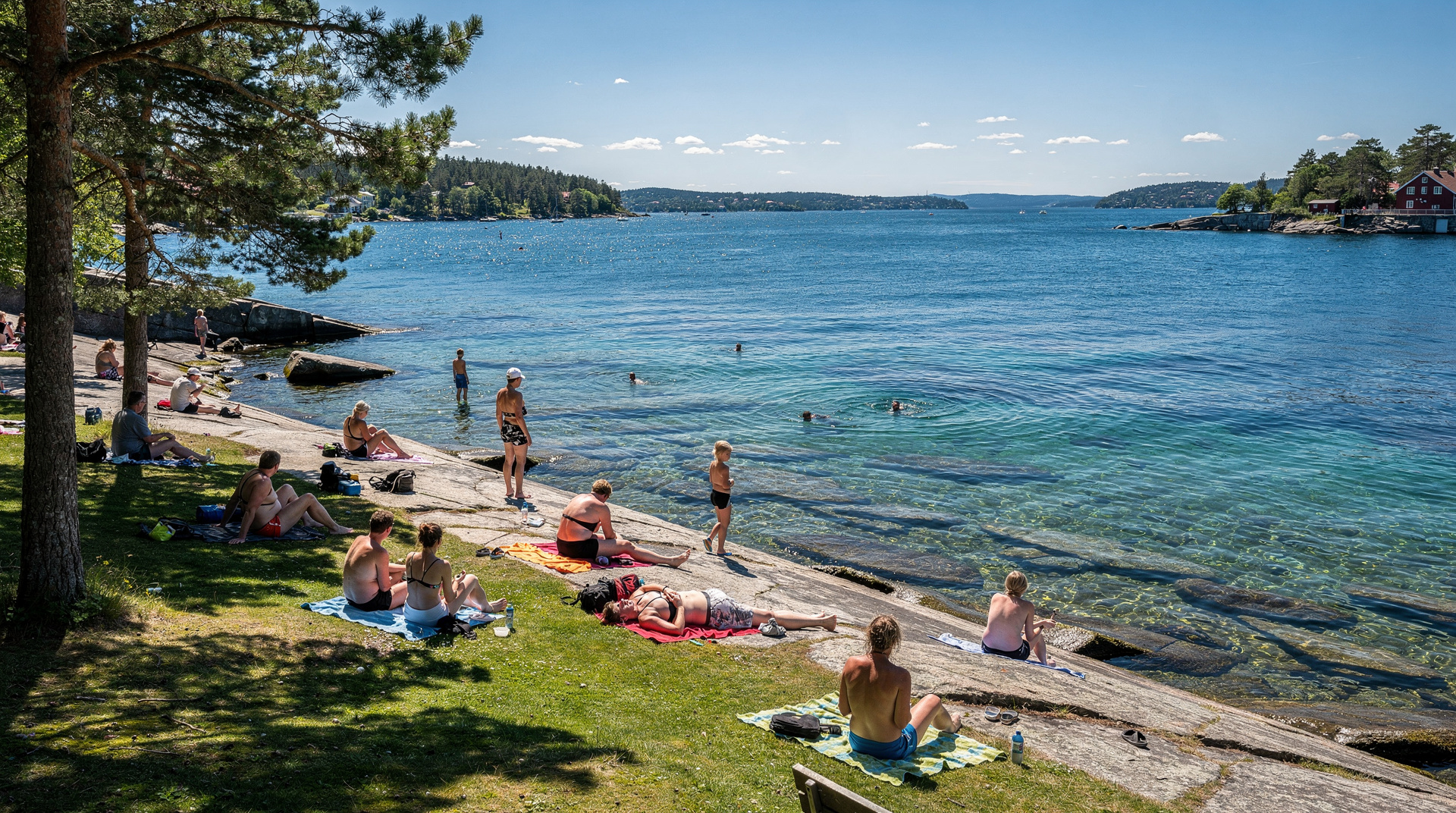
The rocky coves on the western side of Nesoddtangen are Nesodden’s best swimming spots. The water quality here is considered among the best of the inner fjord — farther from the harbour than the city beaches, with good exposure to fresh fjord flow. The coves are flat-rock rather than sandy; you enter from ledges 30–50 cm above the waterline.
The most accessible swimming area is the first open cove south of the main pier, approximately 10–15 minutes along the western path. This spot is used by local residents and is reliably clean and calm in summer. Later in the day (after 4pm), it has almost no one on it even in peak July.
Specific practical notes:
- Water shoes are useful — the algae patches above the waterline are slippery
- The rocks below the waterline are mostly sand and stone; visibility is reasonable on calm days
- Water temperature in peak July: 17–21°C
- No facilities (no changing rooms, no toilets) at the coves themselves; toilets available back at the pier
The artists’ community: background, not attraction
Nesodden’s artists’ community is one of the more interesting cultural facts about the Oslo region, but it’s not something you visit in the tourist sense — it’s simply the character of the peninsula.
From the early 20th century, Oslo’s artists and writers began spending summers on Nesodden, drawn by the landscape and the proximity to the city without the city’s intensity. Edvard Munch worked on the wider western Oslofjord coast; the Nesodden tradition is similar. Over generations, the community consolidated — musicians, painters, writers, sculptors — to the point where today the peninsula has a disproportionate concentration of working artists for a community of 20,000 people.
The public interface with this community is:
- Kunst på Nesodden (annual open studio event in summer) — dates vary; check kunstpaanesodden.no
- Nesoddtangen Kulturhus concerts — local cultural centre with regular events including the Nesodden Jazz Festival in August
- Individual studio signs along walking paths in summer — some studios are open informally when the artist is in
None of this is structured for tourist consumption. If you arrive on a random Tuesday, you’ll see the landscape and the paths; you won’t necessarily encounter any of the artist community directly. That’s fine — the point of Nesodden is the place, not the programme.
What to bring
There is effectively no food infrastructure on Nesodden beyond the pier kiosk. Bring:
- Lunch and snacks for the full visit
- Plenty of water
- Swimwear and a towel (the coves are genuine swimming spots)
- Water shoes for rocky entry
- A lightweight waterproof layer (the western shore is exposed)
- Offline map of the trail network
Good provisioning: Mathallen Oslo in Vulkan (Grünerløkka) is an excellent source for picnic supplies — artisan bread, cured meats, cheeses, pastries. It’s a 15-minute tram ride from Aker Brygge. Alternatively, Kiwi or Rema 1000 supermarkets near Nationaltheatret stock everything needed for a simpler picnic.
The Mathallen guide covers the best vendors for takeaway food.
Nesodden in different seasons
June–August: The full experience — coastal path clear, swimming warm (17–21°C), ferry at full frequency, the occasional open studio. The peninsula is used by local residents for evening walks and swimming rather than tourists; you’ll share it primarily with Oslonians rather than visitors.
May and September: The ferry runs but the kiosk may not be open. Water is cold (May: 10–14°C, September: 14–17°C) but the walk is excellent. Noticeably fewer people.
October: The birch and oak canopy on the southern tip turns yellow and orange. The western shore path is beautiful. Bring warm clothing; the coastal wind is stronger without summer warmth.
Winter: The ferry runs on a reduced schedule. The path is accessible except in icy conditions. This is a committed winter walk rather than a casual outing — suitable for those who specifically enjoy winter coastal landscapes.
Comparing Nesodden with the Oslo islands
For anyone choosing between Nesodden and an island ferry day:
Choose Nesodden if: You want longer walking (3–4 hour circuit vs 45 min on Hoofdøya), more solitude, no kiosks and no organised tourist infrastructure, and you’re comfortable bringing your own food.
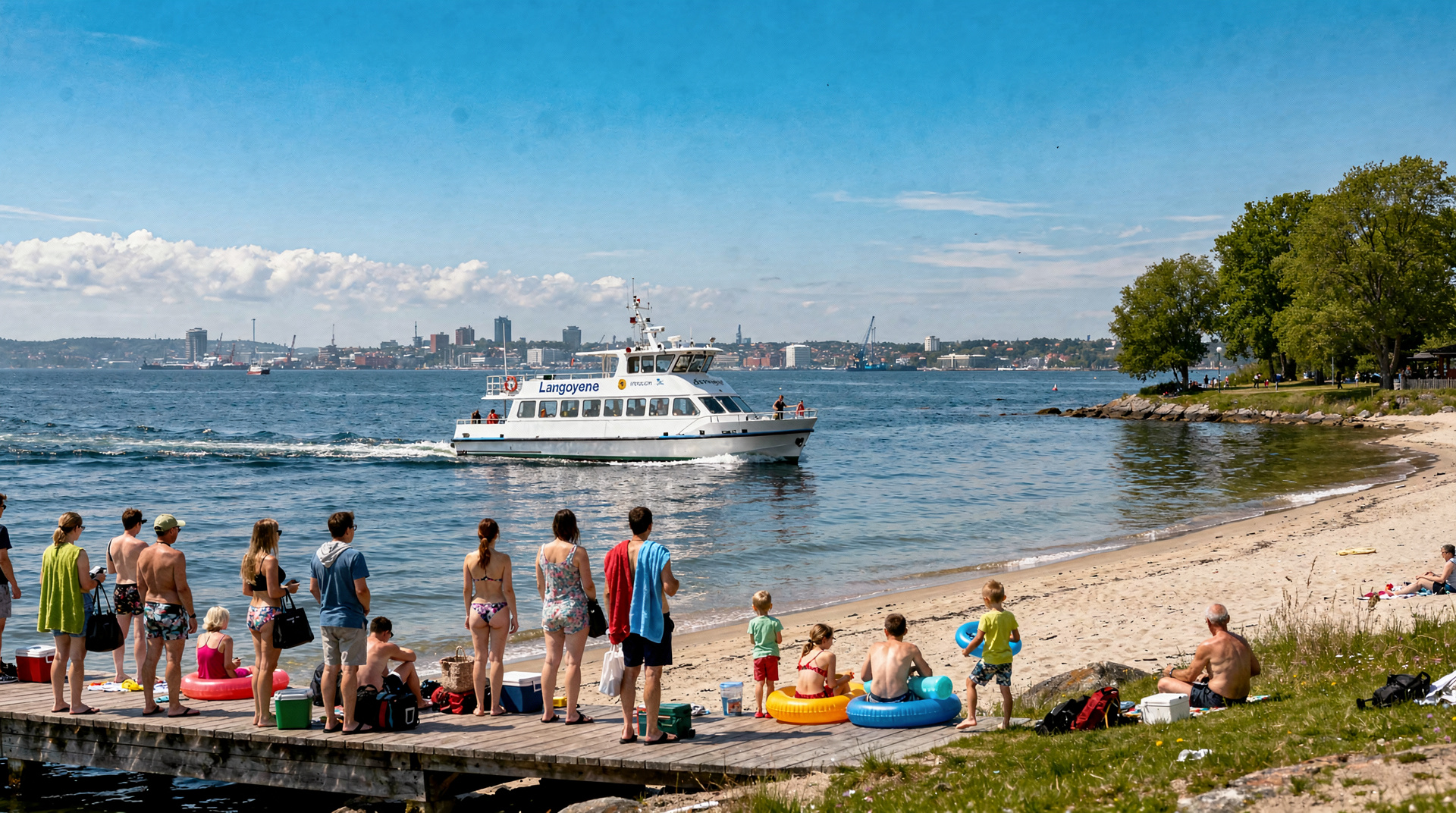
Choose the islands if: You want beach facilities (Langøyene), a historical site (Hoofdøya monastery), shorter circuit options, or you’re with children who need the infrastructure that islands provide.
Combine both if: You have multiple days and want to see the fjord from different perspectives. An island morning and Nesodden afternoon (or vice versa) in one day is possible — the ferry piers are close to each other at Aker Brygge — but makes for a long day.
The island-hopping guide covers the island options. The Nesodden destination guide goes into the geography and history of the full peninsula rather than just the southern tip walkable in a half-day.
Cycling Nesodden
Walking suits the southern circuit, but the peninsula is large — roughly 15 km end to end — and a bike opens up considerably more territory in the same half-day. There’s no bike hire at Nesoddtangen pier, so plan ahead: fold-up bikes travel free on the B1 ferry, or rent a standard bike from one of central Oslo’s bike-share or rental points before crossing. Once on Nesodden, quiet paved roads connect the settlements along the western shore, and unpaved forest tracks cut through the interior — a good route links Nesoddtangen to Fagerstrand in the north, passing through farmland and forest largely unseen by foot visitors. Traffic is light throughout; this is not a peninsula built around cars.
A note on accessibility
The ferry crossing itself, the pier at Nesoddtangen, and a short stretch of level path near the settlement are manageable for visitors with limited mobility or those using a stroller. Beyond that point, the coastal kyststi becomes uneven earth, exposed rock, and tree roots — unsuitable for wheelchairs and difficult with a stroller. Anyone planning a Nesodden visit around accessibility needs should treat it as a ferry-and-pier outing rather than a full coastal walk, and should check current conditions with Ruter before travelling, since rough weather can make the pier approach slippery.
Pairing Nesodden with the rest of your Oslo days
Nesodden works best as the quiet counterweight to a busy city schedule. After a morning of museums, an afternoon on the peninsula resets the pace; the Oslo in 2 days and Oslo in 3 days plans both have room for a slow half-day like this one, and the Oslo and Oslofjord islands day shows how the fjord can fill a whole day instead.
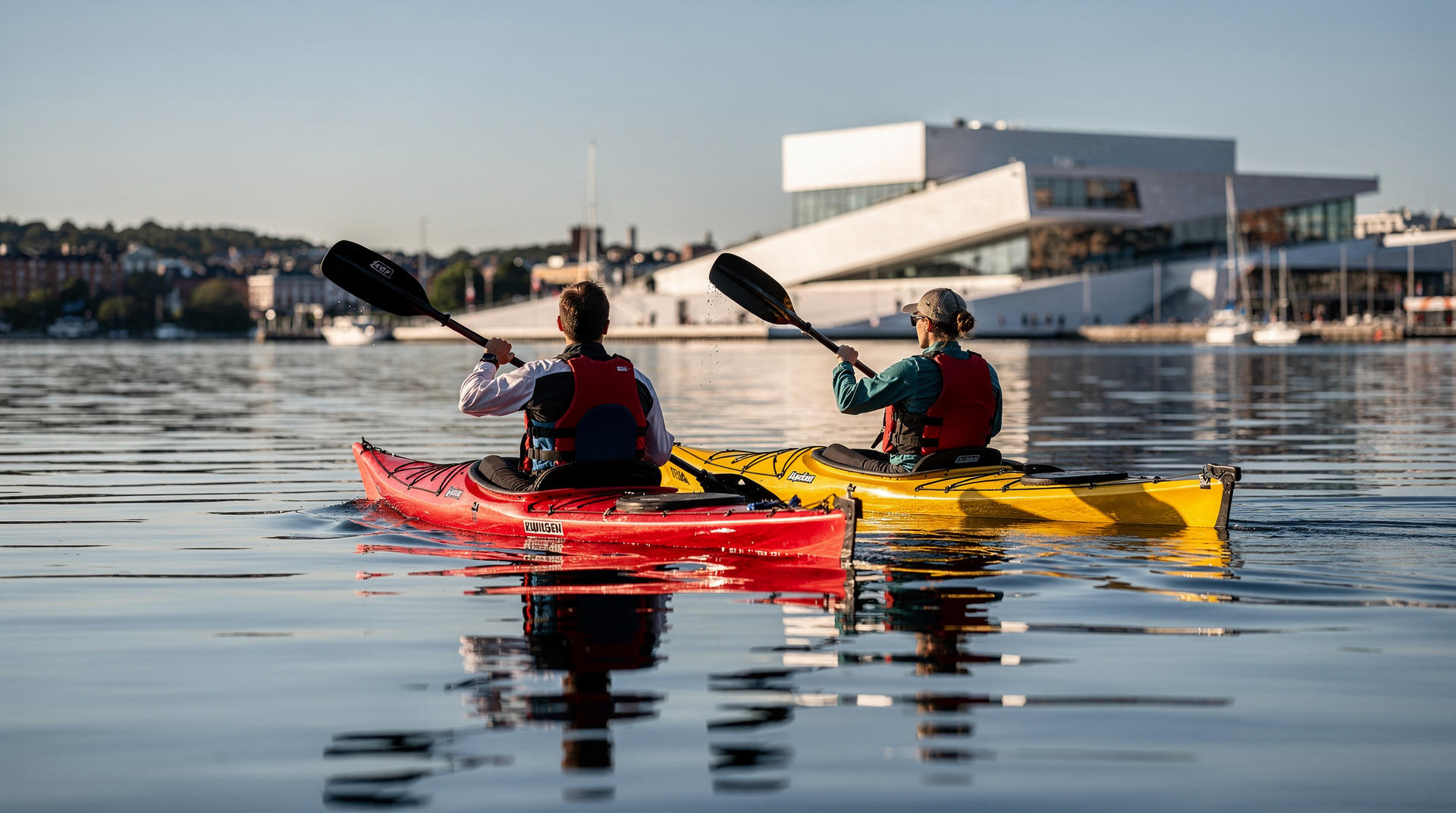
If you like the idea of being on the water but want something more organised, the best Oslofjord cruises cover the guided options, while kayaking the Oslofjord gets you onto the same water under your own power. For other places to cool off, Oslo swimming spots compares the options side by side, and the broader Oslofjord destination page places Nesodden within the wider fjord geography.
Walkers who enjoy the coastal circuit may also like the forest trails north of the city, described in the Nordmarka hiking guide and the best Oslo hikes. Anyone watching the budget will find that Nesodden fits well with the free things to do in Oslo — the ferry fare is the only real cost of the day. For the ferry network more generally, see the Oslofjord ferries guide.
Practical notes
Dogs: Allowed on coastal paths and most walking areas. Keep on lead in protected nature reserve sections near the southern tip.
Mobile coverage: Good near the pier; patchy inland.
Toilet facilities: At the main pier; none on the coastal trails.
Accessibility: The pier is accessible; the coastal trails involve uneven terrain not suitable for wheelchairs or strollers.
Car access: Nesodden is accessible by road (Rv152 south from Oslo) but parking is very limited at Nesoddtangen and the ferry is strongly preferable. Drive only if meeting friends who live on the peninsula and have parking.
The getting around Oslo guide covers Ruter in detail. The Oslo Pass guide confirms the B1 ferry is included in the pass. For the full picture of fjord day trips and island options around Oslo, see the best day trips guide.
Frequently asked questions about Nesodden
Is Nesodden worth visiting?
Yes, if you want quiet nature and coastal walking rather than historical sites or beach facilities. Nesodden has no major tourist attractions — it's a residential peninsula of 20,000 people with forest trails, rocky swimming coves, and a working artists' community. The right expectations make it a highlight; the wrong expectations (expecting Langøyene's beach facilities or Drøbak's town) lead to disappointment.Can you swim at Nesodden?
Yes — the western fjord shore has rocky coves with clean water swimmable June through September. There are no sandy beaches; swimming is from flat rocks. Water temperature peaks at 18–21°C in July. The coves are quiet and uncrowded compared to city beaches and Langøyene. No lifeguards — bring water shoes for rocky entry.How long should you spend on Nesodden?
A half-day (4–5 hours including travel) covers the coastal circuit near Nesoddtangen and a swim. A full day allows longer walks along the peninsula's interior and coast. Most visitors find 3–4 hours on the ground satisfying — long enough for a proper coastal walk, a swim, and a picnic.Is there food available on Nesodden?
Minimal — a small kiosk at Nesoddtangen pier (seasonal, coffee and snacks only) and a couple of local cafés in the Tangen settlement. There is no restaurant infrastructure. Bring your own food for any visit longer than a couple of hours. This is standard practice for Nesodden regulars.Is Nesodden better than the Oslo islands for a half-day escape?
Different rather than better. Nesodden offers more walking (the coastal circuit is 3–4 hours versus 45 minutes on Hoofdøya), more solitude, and no organised tourist infrastructure. Langøyene has better beach facilities and sandy swimming. Nesodden suits walkers and those wanting genuine quiet; the islands suit beach-goers and those who want some visitor services.Can you cycle on Nesodden?
Yes, and it's a good option for covering more ground than walking allows. Bikes are not for hire at the pier, so bring a folding bike on the ferry (free) or rent in central Oslo beforehand. The peninsula's quiet roads and forest tracks suit a half-day loop well beyond what's realistic on foot.Is Nesodden accessible for visitors with limited mobility?
The ferry and the pier area are accessible, and there's a short stretch of level path near Nesoddtangen. Beyond that, the coastal trails involve uneven, unpaved terrain, tree roots, and rocky sections not suitable for wheelchairs, strollers, or anyone unsteady on uneven ground. Nesodden is best suited to visitors comfortable with informal walking trails.
Top experiences
Bookable activities with verified prices and instant confirmation on GetYourGuide.