Oslo beaches: where to go, when they're worth it, and the honest verdict
Oslo: island walks — island hopping tour (3 islands)
Duration: 3 hours
- 3 islands
- Local guide
Does Oslo have good beaches?
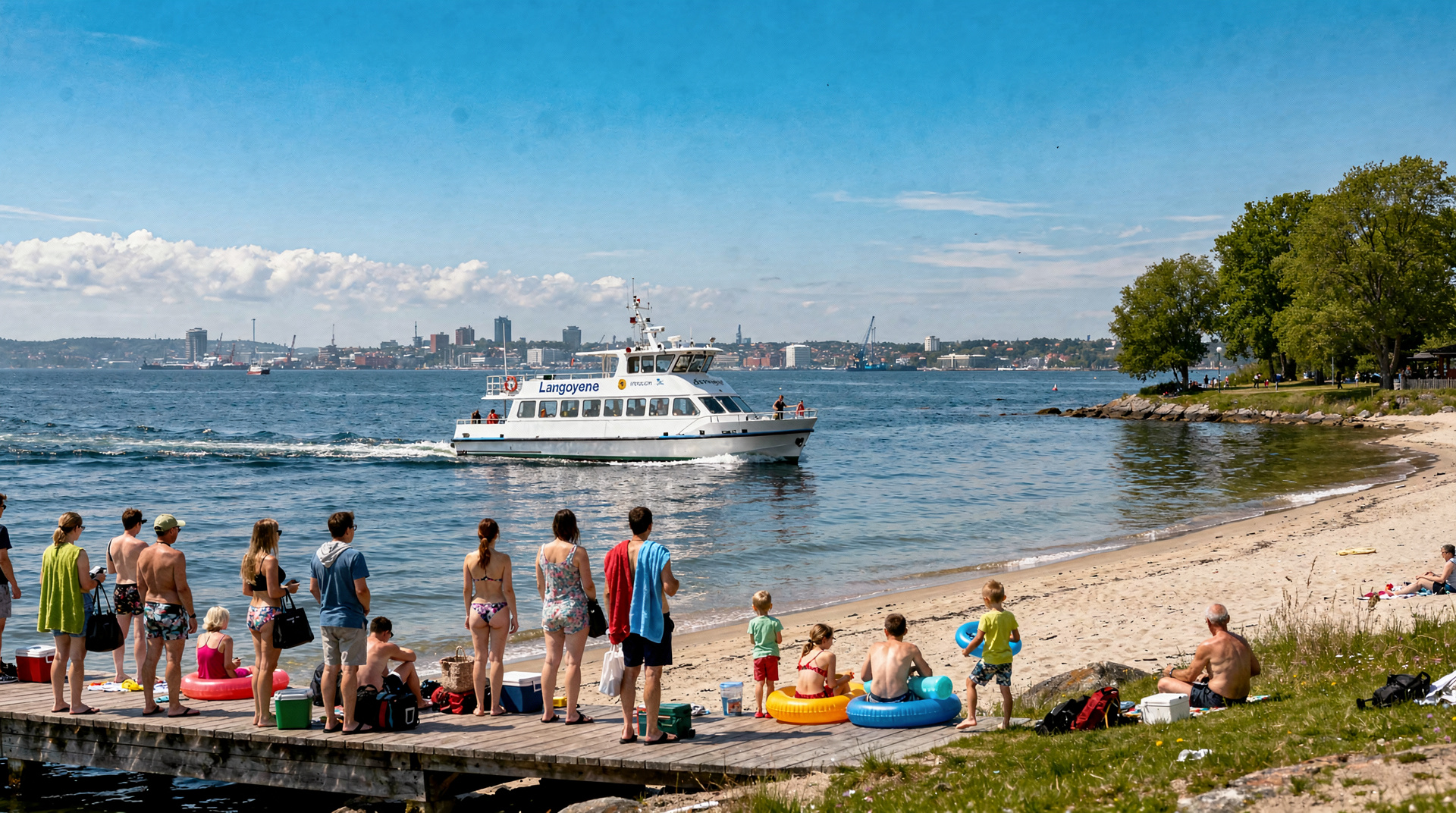
Oslo has good fjord swimming spots rather than classic sandy beaches. The best is Langøyene island (sandy, 25 min by Ruter ferry). City options include Sørenga Seawater Pool and Huk on Bygdøy. Water is swimmable mid-June through August, peaking at 19–22°C in July. All are free except the ferry (NOK 41 / USD 4.40).
The honest beach verdict: Oslo is not the Adriatic
| Best overall | Langøyene (sandy, 25 min ferry from Aker Brygge) |
| Cost | Free; ferry around NOK 41 (USD 4.40) |
| Season | Mid-June to late August, peaking in July |
| Water temp | 18–22°C in July, cooler either side of that |
| Best for families | Sørenga Sjøbad or East Huk |
Let’s establish this early: Oslo is not a beach city in the conventional tourist sense. It sits at 59.9°N — roughly the latitude of Anchorage, Alaska — and its summer is genuinely short. The beach season runs from mid-June to late August, sometimes barely three months. The water peaks at around 20–22°C on exceptional years and is often cooler.
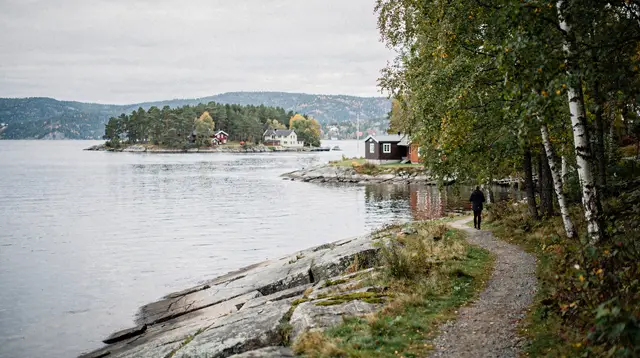
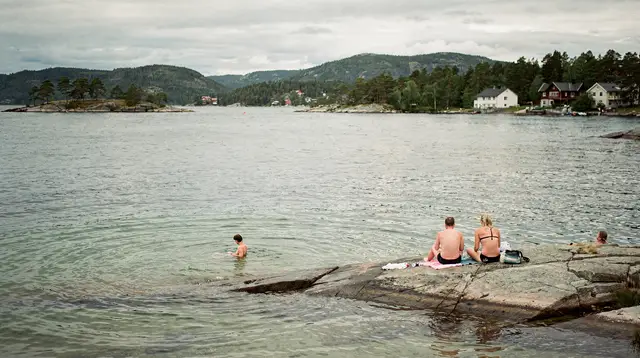
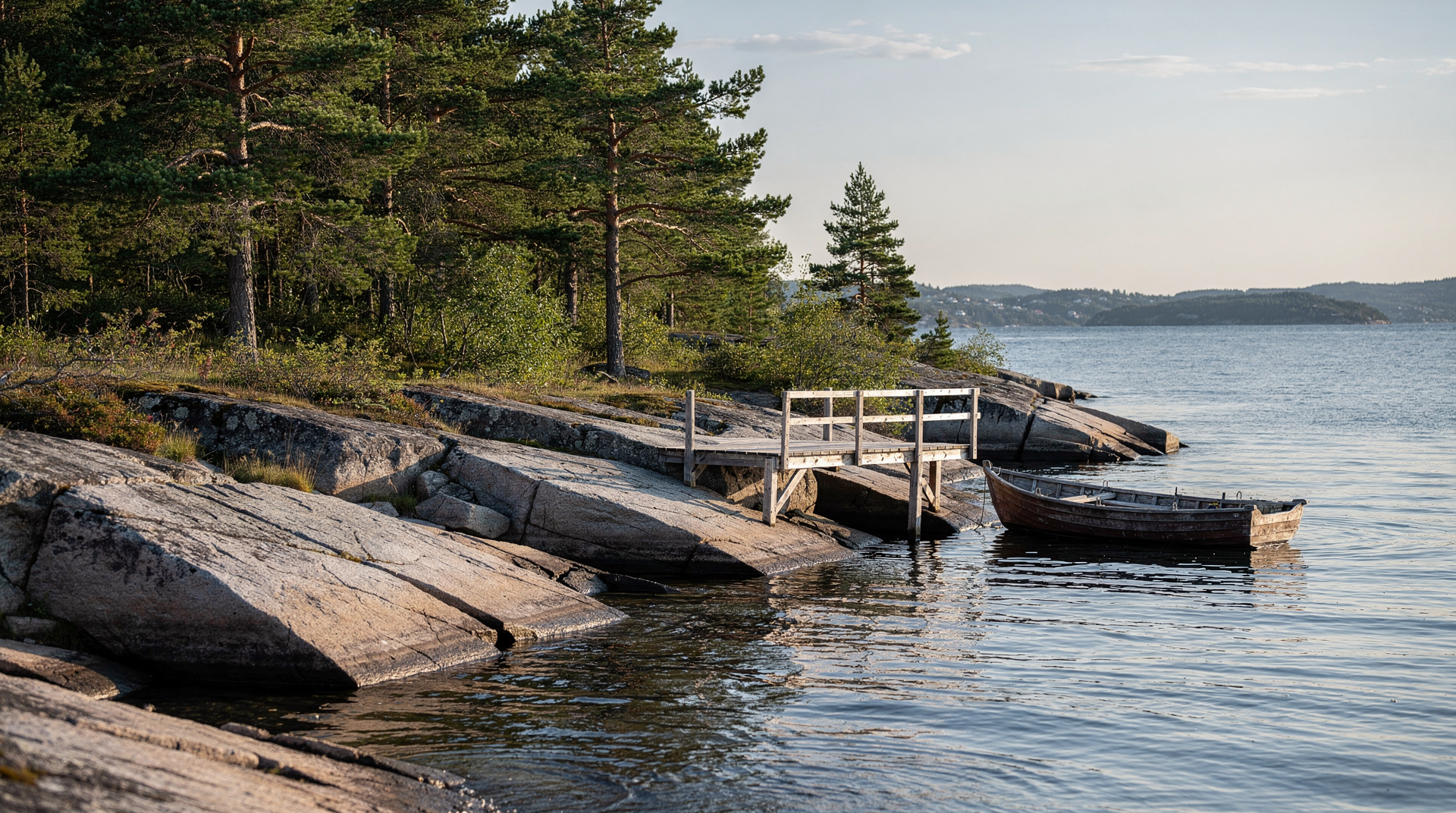
What Oslo does have is something quite different: a network of fjord swimming spots, harbour baths, and island beaches that Oslonians use with great intensity during the compressed summer months. These are not the package-holiday beaches of the Mediterranean, but they have a quality — clean water, dramatic fjord scenery, long evening light — that is entirely their own.
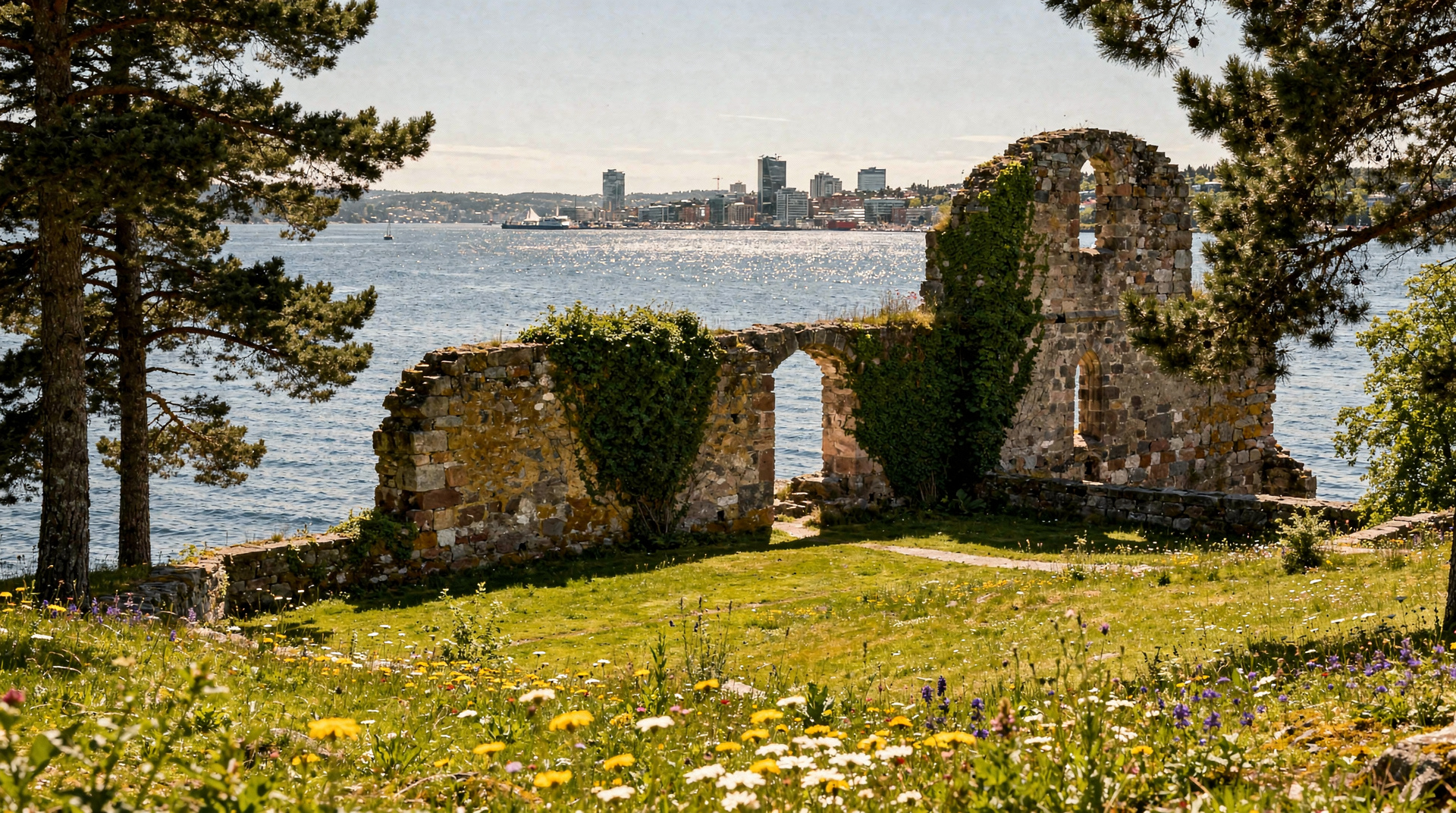
For visitors expecting sun-baked sand and 26°C water, Oslo’s beaches will disappoint. For visitors curious about swimming from a medieval-monastery island 8 minutes from a major European capital, or jumping into clear fjord water from a Bauhaus-era concrete tower at Ingierstrand, the beaches here are genuinely worth seeking out.
This guide maps every significant beach, explains the seasonal reality, and helps you decide which are worth your time.
Langøyene: Oslo’s real beach
Langøyene is the only Oslo beach with significant sandy coverage, and it’s the main reason the island is the most popular summer destination in the inner fjord. The ferry (Ruter B4 route from Aker Brygge, pier 3) takes about 25 minutes and runs every 20–30 minutes in peak season.
The beach faces east and south across the outer fjord, catches morning and afternoon sun, and is long enough that even on Oslo’s busiest summer days there’s generally room to put down a towel. There’s a seasonal kiosk, basic toilets, and a designated camping area. The water entry is gradual on the sandy sections, making Langøyene the most accessible beach for children and less confident swimmers.
The honest reservation: on a hot Saturday or Sunday in July, Langøyene becomes very busy. The ferries fill up, the beach fills up, and the island has more of a city-beach-on-a-summer-holiday feel than a Norwegian wilderness experience. This is not necessarily bad — the atmosphere is cheerful and social — but it’s worth knowing what you’re getting.
For the best Langøyene experience: arrive early (before 10am), bring your own food and drink, and have realistic expectations about the crowd. Weekday visits are dramatically quieter.
Huk: the classic Bygdøy beach
Huk is Oslo’s most established public beach and operates as the city’s traditional family beach in the way that resorts have a “town beach.” Located at the southern tip of Bygdøy peninsula, it’s accessible by Bus 30 from Nationaltheatret (final stop: Huk, about 15 minutes).
The beach has two sections:
- East Huk: gradual sandy entry, shallow water for children, lifeguards in season, kiosk and changing facilities. The more family-oriented side.
- West Huk: rockier, more open to the fjord, and informally designated by long convention as a naturist beach. Not enclosed or signposted as such — it’s simply the accepted local norm.
Huk is at its best on summer mornings before the main crowds arrive, or on those slightly cool overcast days when the beach is pleasant but the sun-seekers have stayed home. The Bygdøy museums are 5–10 minutes’ walk away, making a morning museum visit and afternoon Huk swim a natural pairing.
See the Bygdøy destination guide for the full peninsula layout, and the Fram Museum and Kon-Tiki Museum guides for the museum side of the day.
Sørenga: the harbour bath
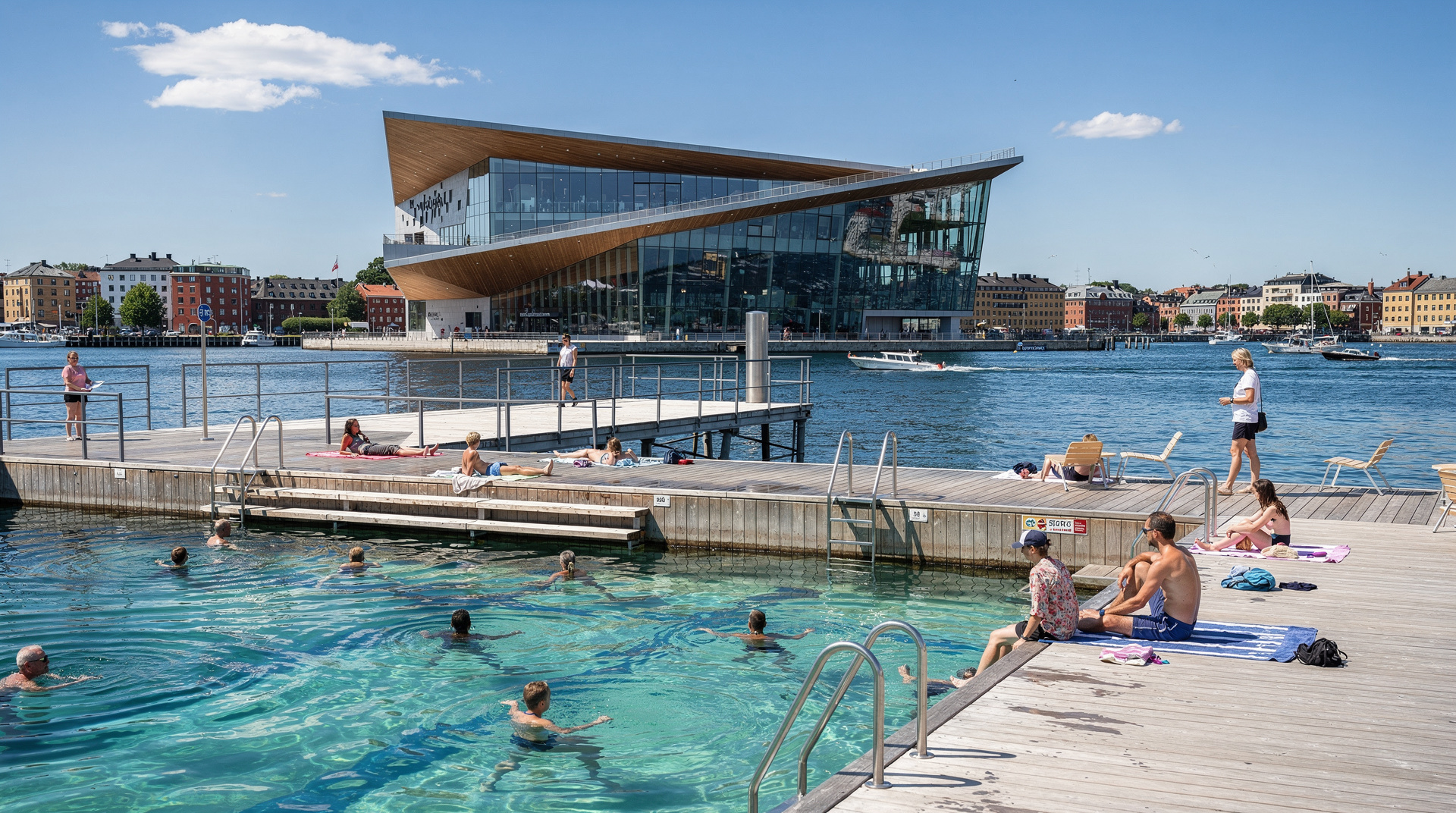
Sørenga Sjøbad in Bjørvika is technically not a beach — it’s an outdoor seawater pool fed by the fjord, with sun terraces, a children’s shallow pool, and diving boards. But in practice it functions as the central city’s primary swimming destination, and it’s the most polished of all Oslo’s summer swimming options.
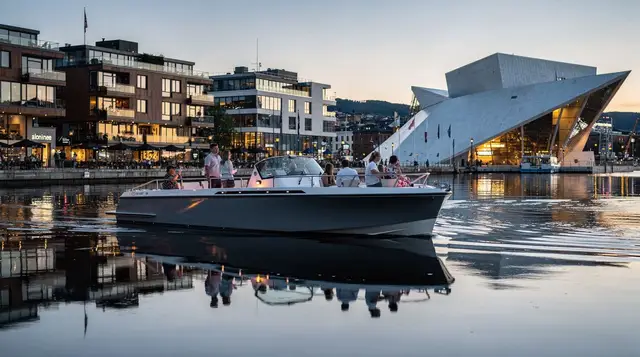
The advantages of Sørenga: changing facilities, showers, a children’s pool with sandy floor and very gentle entry, lifeguard presence in season, and a location directly adjacent to the Oslo Opera House and Munch Museum. It works well as part of a Bjørvika neighbourhood day — see the Opera House roof walk, visit the Munch Museum, then swim at Sørenga in the afternoon.
The disadvantages: it’s the most popular free swimming spot in central Oslo, which means it fills up quickly on warm days. On a hot Tuesday in July, Sørenga is busy by 10am; on a hot Saturday it can feel overwhelmingly crowded from mid-morning through the afternoon.
Getting there: Tram 13 to Operaen, 5 minutes on foot. The Opera House guide explains what else to see in the same district.
Ingierstrand: the art deco beach worth the journey
Of all Oslo’s beaches, Ingierstrand is the one with the most individual character. Built in 1934 by the Oslo municipality as a public bath, it is a masterpiece of functionalist design: a curved concrete sun terrace cut into the hillside, a wooden kiosk building, a diving tower, and dressing rooms that have survived almost intact from the original construction. Everything is maintained with a low-key care that feels like genuine heritage preservation rather than heritage performance.
The beach itself is a mix of flat rocks and a small sandy section at the water’s edge. The shallow bay traps warm water particularly well — Ingierstrand often records the highest water temperatures of any Oslo swimming spot, reaching 22–24°C on good days in July. The fjord here is narrower than at the city beaches, which adds to the warmth and sheltered feel.
Getting there: Bus 500 from Oslo Bussterminal toward Drøbak, stop at Ingierstrand (approximately 25 minutes). No parking on site; the bus is straightforwardly the right approach. The same bus route passes Ingierstrand on the way to Drøbak, so it can be combined with a Drøbak day trip.
Ingierstrand suits visitors who want an architectural experience alongside swimming and are happy to take a 25-minute bus ride. It’s less convenient than Sørenga or Huk for those staying in the city centre, but on a good day it’s the most beautiful of all Oslo’s swimming destinations.
Hvervenbukta: the quiet east-side bay
On the opposite side of Oslo from Bygdøy, Hvervenbukta is a small bay on the Ekeberg hillside, reached by Bus 34 from Oslo S (stop: Ljanskollen) and a 15-minute walk down the hill. The effort required keeps the crowds down — this is primarily a neighbourhood beach for east Oslo residents rather than a tourist destination.
The bay has a small sandy beach, shallow water safe for young children, and surrounding oak forest that gives genuine shade — rare among Oslo’s mostly exposed beaches. The atmosphere is local and unhurried. There’s no lifeguard and no kiosk; bring everything you need.
This suits visitors who have already done the main beaches and want to experience a quieter, more residential side of Oslo’s summer life.
Tjuvholmen: urban beach at the gallery strip
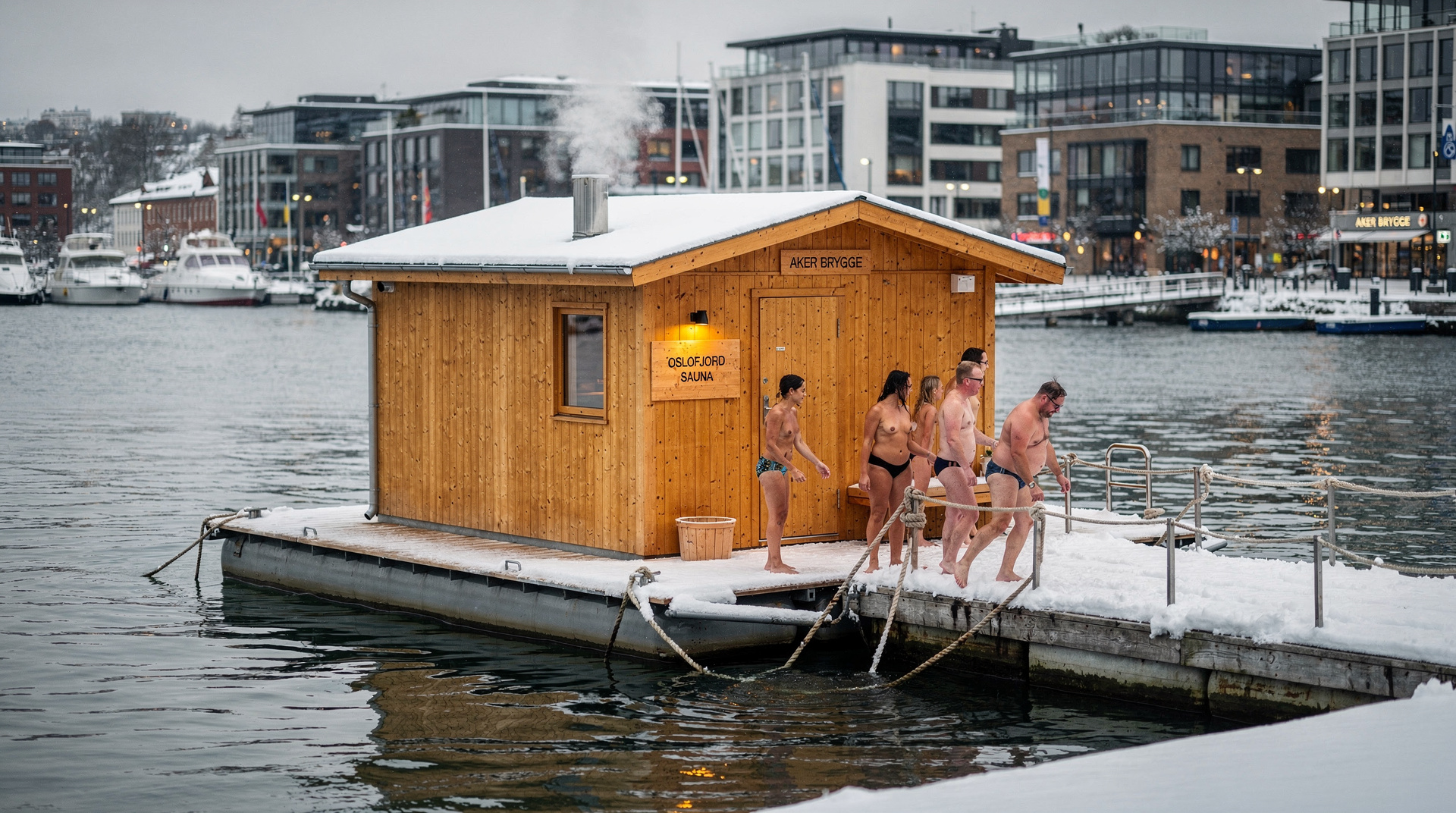
The two small beaches at the outer tip of Tjuvholmen, the art district at the western end of Aker Brygge, are more swimming spot than proper beach — the shoreline is pebbly, and the space is limited. But the setting is distinctive: floating saunas bob in the water 50 metres away, the Astrup Fearnley Museum sits overhead, and the fjord entrance is visible directly ahead.
Tjuvholmen beaches are best used in combination with the floating saunas (paid, book in advance) or as a post-gallery dip after the Astrup Fearnley Museum. As a standalone beach destination, the combination of limited space and frequent boat traffic makes it less appealing than Langøyene or Huk.
Getting there: Tram 12 to Aker Brygge, 10-minute walk through the quayside.
Seasonal calendar: the honest truth
Oslo’s beach season is compressed by northern latitude and Atlantic weather patterns. Here is what to actually expect each month:
May: The ferry to Langøyene starts but the water is 10–13°C. Brave swimmers do brief dips. Most people use the islands for walking, not swimming.
June (first half): Water is 13–16°C — cold. The islands and beaches are open but a dedicated swimming day needs resolve.
June (last week): Water typically crosses 16°C. Proper swimming begins. Sørenga and Huk open for the season. Long evenings make late-afternoon swims beautiful.
July: Peak swimming season. Water at 18–22°C. Long days. Crowds at all main spots. Go early or go late.
August (first half): Still good — often the warmest water of the year (temperatures can lag sunshine by a few weeks). Less crowded than July.
August (last week–September): Water dropping. Still swimable (14–18°C), but noticeably cooler. The sauna-plunge crowd thrives; casual beach visitors less so.
The best time to visit Oslo guide covers the full seasonal picture beyond swimming. The Oslo in summer guide explains how to structure a summer visit around the long days.
Comparing Oslo’s beaches: a quick ranking
For a first visit with limited time: Sørenga (infrastructure, central location, children’s pool).
For the best sand: Langøyene (Oslo’s only real sandy beach, 25 minutes by ferry).
For architecture and character: Ingierstrand (1930s design, warmest water, worth the bus ride).
For museum combination: Huk on Bygdøy (easy pairing with Fram/Kon-Tiki, reliable facilities).
For a quiet local experience: Hvervenbukta (east Oslo, minimal crowds, bring your own food).
For urban cool: Tjuvholmen (floating saunas, gallery district, limited actual beach space).
For wild fjord swimming: Gressholmen island (rocky, clean, quiet — not a beach but the best pure swimming).
The swimming spots guide goes deeper on the island options and the floating sauna culture. The island-hopping guide covers the Ruter ferry logistics for reaching Langøyene and Gressholmen.
Cold-water swimming and the sauna season
Oslo’s beach culture doesn’t fully stop when the official swimming season ends in late August. A dedicated cold-water swimming community uses the fjord year-round, typically in short, deliberate dips followed by warming up in a floating sauna — a pattern that has grown considerably in Oslo over the past decade.
This is a different activity from casual summer beach swimming: sessions are brief (often under a minute in winter), always followed immediately by warming, and rarely done alone for safety reasons. If you want to try it without committing to your own cold-water routine, the floating saunas guide covers the operators who combine sauna heat with a supervised fjord dip — a good entry point for curious visitors rather than a solo attempt.
Beach etiquette and local norms
Oslo’s beaches operate on a few unwritten but widely observed norms worth knowing. Space is claimed informally with a towel and generally respected without needing to ask; arriving early on a hot weekend is normal practice rather than an aggressive move. Topless sunbathing is common and unremarked at most city beaches, though full nudity is specifically associated with West Huk’s naturist tradition rather than beaches generally. Bringing your own food and drink is standard — kiosks exist but Norwegians overwhelmingly pack their own, partly from cost-consciousness and partly from habit. Litter is taken seriously; bins are provided and used, and leaving rubbish behind draws visible disapproval.
Practical information
Water quality reports: Oslo municipality (bymiljoetaten.oslo.kommune.no) publishes swimming water quality data. Current flags and advisories are visible before you make the journey. Quality is reliably good except occasionally after heavy rainfall events.
Facilities: Sørenga and Huk have changing rooms, showers, and toilets. Ingierstrand has changing rooms. Hvervenbukta and Tjuvholmen have minimal facilities — outdoor showers at Tjuvholmen only. Island kiosks are seasonal.
Safety: Lifeguards are present at Huk and Sørenga in peak season (June–August). Other spots are unsupervised. The fjord currents in the inner harbour are mild, but the outer harbour near the island ferries has more boat traffic — be aware of vessel paths.
Rules: No motorised watercraft within designated swimming zones. Dogs are allowed at most spots on leads; specific dog-free zones apply at Huk east and Langøyene’s main beach area. Check signs on arrival.
Getting around: All main city beaches are accessible by Ruter public transport. No parking is available at most swimming spots. The Ruter guide explains the transit system. The Oslo Pass covers the island ferries if you’re doing Langøyene as part of a multi-day pass.
Frequently asked questions about Oslo beaches
What is the best beach in Oslo?
Langøyene island has the best proper sandy beach and is Oslo's summer swimming island — 25 minutes by Ruter B4 ferry from Aker Brygge. Within the city, Sørenga Seawater Pool offers the best infrastructure (children's pool, sun terrace, showers). Huk on Bygdøy combines a proper beach with easy museum access.Is Oslo's fjord water clean enough to swim in?
Yes. The inner Oslofjord underwent a major cleanup from the 1980s through the 2000s. Current water quality is monitored continuously and meets Blue Flag standards at the main swimming spots. Oslo municipality publishes real-time advisories on the rare occasions when quality dips after heavy rain.When does beach season start in Oslo?
The ferry to Langøyene typically starts in late April or May, but serious beach season doesn't begin until mid-June when water temperatures reach a swimmable 16–18°C. Peak season is July to mid-August. By late August the water cools rapidly. Oslo's beach season is shorter than continental Europe — plan accordingly.Can you camp on Oslo's beaches?
Camping is permitted on Langøyene island only — a designated camping area without facilities beyond toilets. Camping is not permitted on other island beaches or city beaches. The Langøyene camping is free, first-come, and open roughly late June through mid-August.Is there nudist or naturist swimming in Oslo?
The western section of Huk beach on Bygdøy has a long-standing naturist tradition and is informally used as a nudist beach. This is not a designated or enclosed area — it's the accepted local convention. Oslo has no other officially designated naturist beach.Are Oslo's beaches good for families with young children?
Sørenga and East Huk are the best choices — both have gradual entry, shallow sections, lifeguards in season, and full facilities (changing rooms, toilets, kiosks). Langøyene's sandy sections also suit children, though the ferry crossing and busier crowds make it slightly more effort. Hvervenbukta and Tjuvholmen have minimal facilities and suit families less well.Can you swim in Oslo outside the official beach season?
Some people do, particularly cold-water swimmers using floating saunas as a warm-up and cool-down cycle through autumn and winter. Outside mid-June to late August, water temperatures drop into single digits, and swimming becomes a deliberate cold-exposure activity rather than casual recreation — not recommended without preparation and ideally not alone.
Top experiences
Bookable activities with verified prices and instant confirmation on GetYourGuide.