Oslo public transport and Ruter: the complete guide
Oslo: Oslo Pass with public transport and free museum entry
Duration: 24-72 hours
- Instant confirmation
- Free public transport
- Skip museum queues
How does Oslo public transport work?
All buses, trams, metro (T-bane), local trains, and harbour ferries in Oslo operate under the Ruter system on a unified ticketing model. A single zone 1 ticket (NOK 42 via app) gives 90 minutes of travel on any combination of modes. Buy tickets in the Ruter app before boarding — you cannot pay the driver.
What Ruter is and why it matters
Ruter is the public transport authority for Oslo and the surrounding Viken county. It doesn’t operate the vehicles directly — those are run by contracted operators — but it sets the fares, zones, timetables, and ticketing system that unify every mode of transport in the region under one umbrella.
For travellers, the practical result is powerful: buy one ticket, use any combination of bus, tram, T-bane, local train, and harbour ferry, transfer freely within 90 minutes, and you’ve navigated the entire city with one tap on your phone.
| Single ticket | NOK 42 via app (zone 1), 90 min transfers |
| Where to buy | Ruter app (English available) before boarding |
| 24-hour pass | NOK 155 (zone 1) |
| 7-day pass | NOK 360 (zone 1) |
| Fine if no ticket | NOK 950, no exceptions |
The zone system
Oslo and its surroundings are divided into fare zones. Almost everything a visitor needs is in Zone 1.
Zone 1 (central Oslo): Covers all tram and T-bane lines within Oslo city, most bus routes within the city boundaries, local trains within the municipal boundary, and the harbour ferries (Bygdøy line 91 and the island ferry lines 82–85 from Vippetangen). All of Grünerløkka, Bygdøy, Vigeland Park, Holmenkollen, and Nordmarka’s T-bane terminus are Zone 1.
Zone 2 (inner suburbs): Covers Bærum, Lørenskog, and the inner suburban ring. Needed for some local train journeys east of Oslo.
Zone 3 and 4 (outer areas): Needed for Drøbak (bus via E6), Fredrikstad, and some day-trip routes. Check the Ruter app for specific zones before booking day trips.
Zone 4V (Viken/airport): A special zone for the Vy regional train to Oslo Gardermoen Airport. This is separate from the standard zone ladder and has its own pricing.
The Ruter app shows you exactly which zones your journey requires and prices the ticket accordingly.
Ticket types
Single journey
- Via app: NOK 42 / USD 4.50 (zone 1)
- Via machine or kiosk: NOK 55 / USD 5.90 (zone 1)
- Via on-board (not possible): You cannot buy a ticket on the bus, tram, or T-bane. There is no on-board sales. Always purchase before boarding.
Single tickets are valid for 90 minutes from activation. You can transfer between any modes (tram to metro to bus) freely during those 90 minutes.
Day and multi-day passes
- 24-hour zone 1: NOK 155 / USD 17 (app); NOK 185 / USD 20 (machine)
- 7-day zone 1: NOK 360 / USD 39 (app)
- 30-day zone 1: NOK 890 / USD 96 (app)
For visitors staying 2–3 days, the 24-hour pass is efficient if you make more than 3–4 journeys per day. For visits of 4 or more days with regular transport use, the 7-day pass breaks even and simplifies everything.
The Oslo Pass
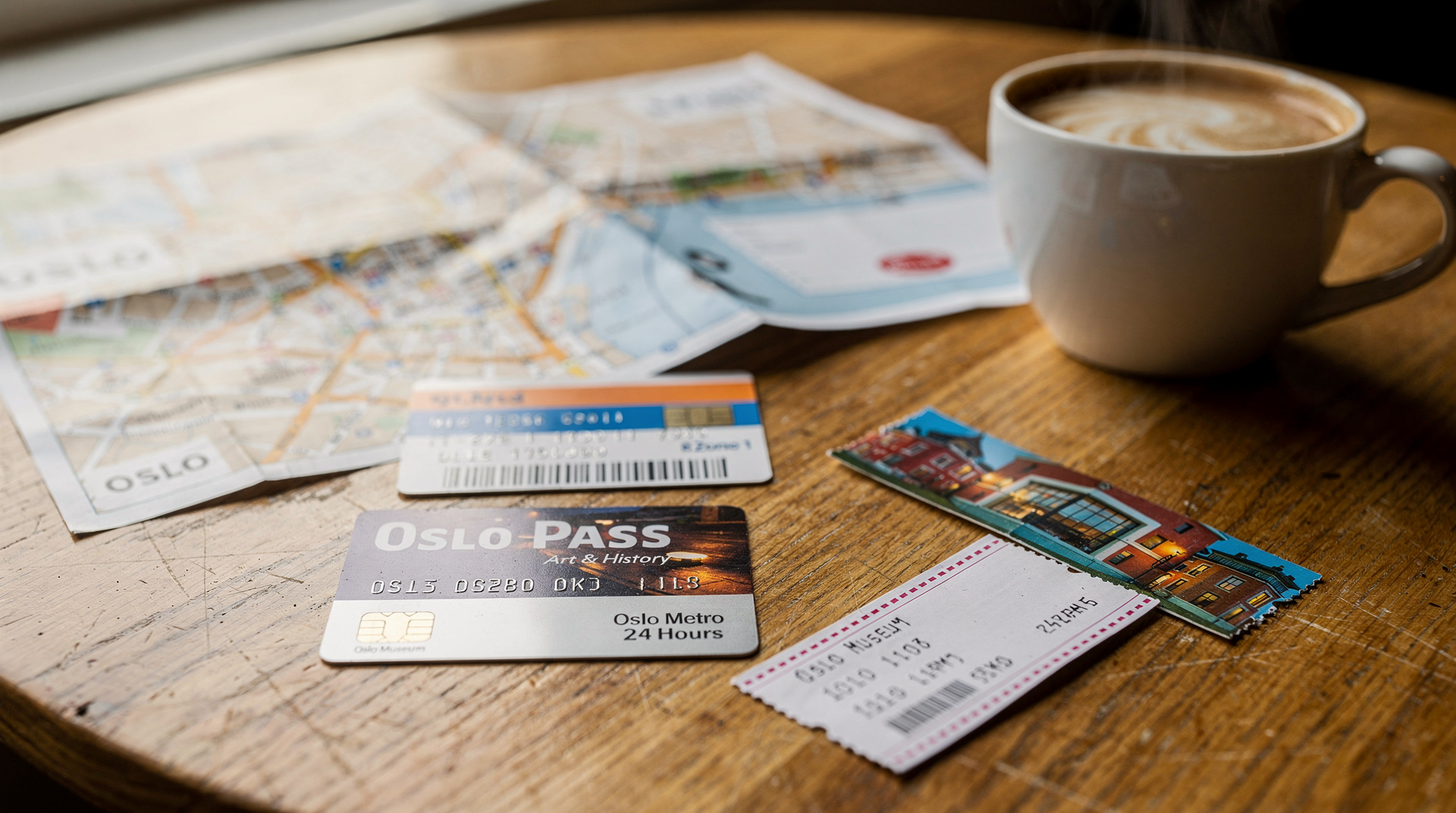
The Oslo Pass (24-hour: NOK 595 / USD 64; 48-hour: NOK 895 / USD 96; 72-hour: NOK 1 095 / USD 118) bundles unlimited Zone 1 Ruter transport with free or discounted entry to 30+ museums and attractions. If you plan to visit 3 or more paid museums in 2 days, the pass typically makes sense. See the detailed analysis at is the Oslo Pass worth it.
Night fares
Late-night services (approximately 01:00–05:00 on weekends) operate on a night ticket: NOK 75 / USD 8 per single zone 1 journey (in-app). Night trams and buses follow numbered routes N1–N5.
Children and concessions
- Children under 4: Always free
- Children 4–17: Half the adult price
- Seniors 67+: Half price with Norwegian senior card
- Student/youth discounts: For Norwegian university students only; not applicable to tourist visitors
The Ruter app
Download the Ruter app (available on iOS and Android, English language supported). This is the primary way to purchase and manage tickets.
Key functions:
- Buy a ticket: Choose zone, fare type, and number of passengers. Activate when you’re about to board. Tickets are valid from activation, not purchase.
- Journey planner: Enter start and end points. The app gives you multiple route options with departure times and connections. The “accessible journey” filter routes via step-free stops.
- Real-time departures: Shows live timetable data for nearby stops. Invaluable when checking whether a tram is delayed.
- Ticket storage: All purchased tickets are stored in the app. Inspectors check via the app screen — you show your activated ticket on screen.
Practical tip: purchase before you arrive at the stop. If you’re standing at a tram stop and the tram arrives, don’t scramble to buy the ticket as you board — the 90-second purchase process can cause you to miss the tram. Instead, start the purchase 2 minutes before your expected boarding time.
The T-bane (metro): line by line
The T-bane has five lines sharing a central tunnel. Line identification on platform boards and at entry gates:
- Line 1 (Frognerseteren ↔ Bergkrystallen): West to Holmenkollen, Voksenlia, Frognerseteren. Essential for Nordmarka forest access. Also serves Majorstuen, Blindern.
- Line 2 (Østerås ↔ Ellingsrudåsen): Northwest to Bærums Verk area; southeast to Ellingsrudåsen.
- Line 3 (Kolsås ↔ Sognsvann): Northwest to Kolsås; northeast branch to Sognsvann lake (popular for swimming, hiking, running loop).
- Line 4 (Ringen ↔ Bergkrystallen): Serves Tørtberg, Mortensrud, and southeastern suburbs.
- Line 5 (Vestli ↔ Ringen): Northeast to Stovner, Vestli.
All five lines share stations from Majorstuen to Tøyen. Within this central section (the “common tunnel”), any train serves any stop — useful for transfers.
For visitors, T-bane line 1 is the most important. It serves the central hub (Nationaltheatret, Stortinget, Jernbanetorget), passes Majorstuen (for tram connections west), and runs all the way to Holmenkollen and Frognerseteren.
Trams: network overview
Oslo’s tram network covers the inner city. Lines run at 7–15 minute intervals during the day.
- Line 11 (Kjelsås ↔ Majorstuen): Runs through Grünerløkka via Thorvald Meyers gate — the closest thing to a “neighbourhood tram.” Useful for Grünerløkka food and café scene.
- Line 12 (Disen ↔ Majorstuen via Nationaltheatret): The main tourist-useful central tram. Runs past Aker Brygge, Karl Johans gate, and the city centre.
- Line 13 (Bekkestua ↔ Ljabru): Similar route to line 12 through the centre.
- Line 17, 18, 19: Cover southern and eastern routes; line 18/19 serve Ekebergparken sculpture park.
Buses: key routes for visitors
- Bus 30 (Nationaltheatret ↔ Bygdøy): The year-round alternative to the seasonal Bygdøy ferry. Stops at all Bygdøy museums. Runs every 15–20 minutes.
- Bus 31, 54: Connect eastern suburbs and useful for day trips.
- Flybussen (airport bus, not Ruter): Separate operator for the airport; does not accept Ruter tickets.
Harbour ferries
Ruter operates the following ferry services on Zone 1 tickets:
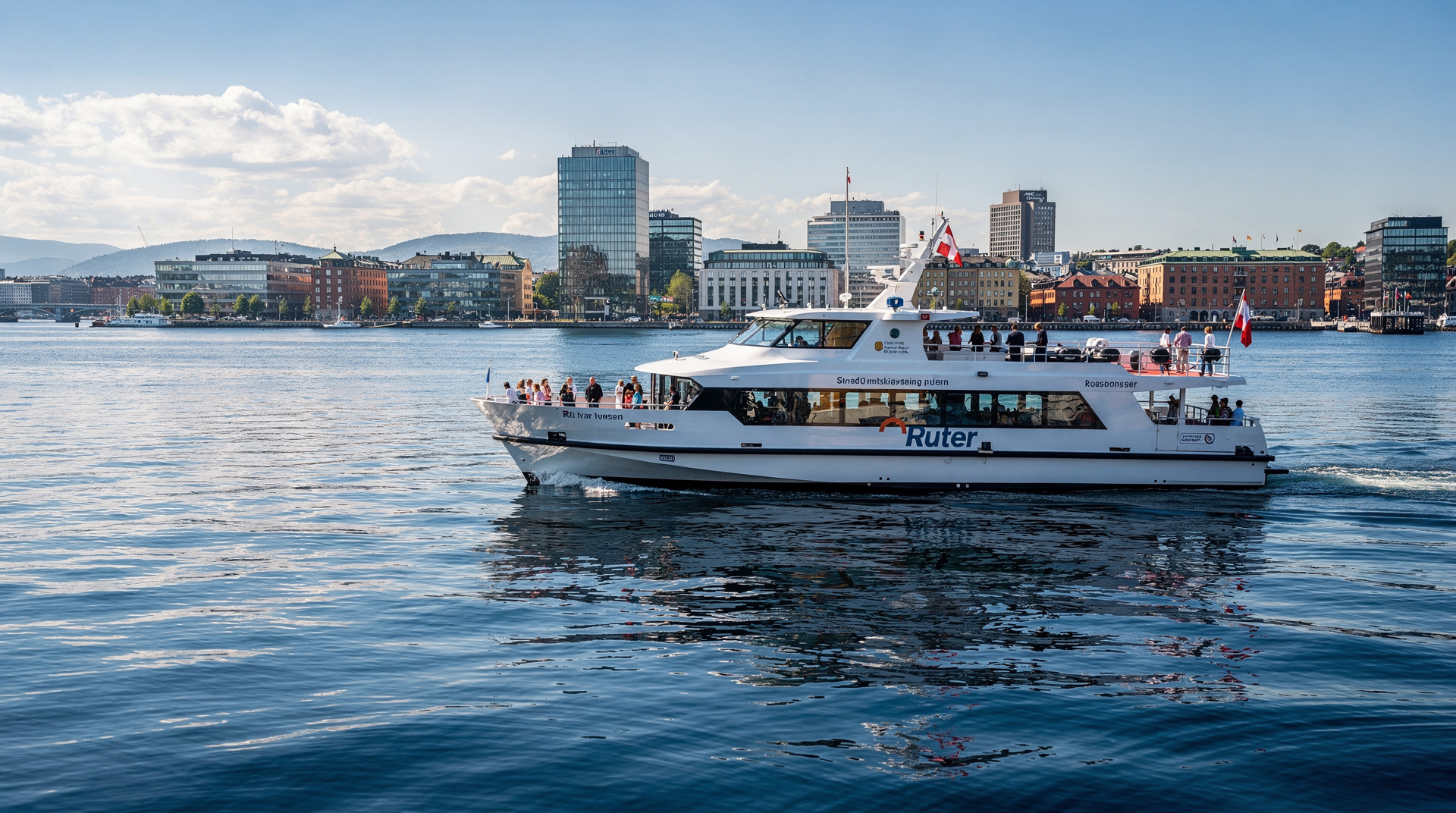
- Line 91 (Bygdøy ferry): Aker Brygge → Dronningen (Bygdøy) → Bygdøykilen. Runs approximately April–October. 10-minute crossing. Very scenic.
- Line 82 (Ruters Island Ferry): Vippetangen → Hovedøya → Gressholmen → Nakholmen → Bleikøya → Langøyene. Covers the main inner-fjord islands. Summer daily service; reduced in winter.
- Lines 83, 84, 85: Additional island routes and variations.
For full island ferry details, see the Oslofjord ferries guide.
Fines and ticket checking
This is not optional reading. Ruter’s transport police (Ruter-kontrollørene) conduct regular checks on all modes. The fine for travelling without a valid ticket is NOK 950 / USD 102, issued on the spot. No exceptions for tourists, language barriers, or “I didn’t know.”
The most common tourist mistakes:
- Boarding and then trying to buy a ticket: You must have an activated ticket before you step onto the vehicle.
- Forgetting to activate: Buying a ticket in the app and not pressing “activate.” The ticket must be activated and showing the remaining time.
- Expired transfer: A single 90-minute ticket used for a journey taking 95 minutes. The inspector checks activation time, not purchase time.
- Wrong zone: Travelling to Zone 2 or 3 on a Zone 1 ticket. Always check the zone your destination falls in.
Integration with day trips
For day trips beyond Oslo, Ruter’s zone pricing extends outward:
- Drøbak (day trip by bus): Requires Zone 3 or 4 depending on route. Buy a zone extension in the app.
- Nesodden (ferry): The Nesodden passenger ferry from Aker Brygge is a Ruter-operated service using zone 1 tickets during peak hours and a slightly higher zone during off-peak. Check the app before travelling.
- Fredrikstad / Lillehammer: Not covered by Ruter — these use Vy trains with separate ticketing.
The day trips from Oslo guide specifies which transport mode and zone each excursion requires.
Real-time tools and traveller resources
Real-time departure information
The Ruter app’s live departures screen is the most accurate source for current timetables. You can also check ruter.no on any mobile browser. Both show live delays and service disruptions.
For Oslo S specifically, the large departure boards in the station hall (upper level) list all Vy and Flytoget departures in real time. Tram departures are shown on digital displays at the tram stops.
What to do if you can’t buy a ticket
If your phone dies or you can’t access the app, you have two options:
- Ticket machine at any T-bane station entrance or major tram stop. Accepts all major credit and debit cards. Select language (English available) before starting.
- Kiosk (Narvesen, 7-Eleven, or Ruter service centre at Oslo S): Sells single and multi-day tickets.
Never board without a ticket on the assumption you’ll sort it out. Inspectors do not accept “my phone died” as a reason — the fine (NOK 950 / USD 102) applies regardless.
What happens when there are disruptions
Oslo’s transport network is generally reliable, but strikes, maintenance, and weather can cause service reductions. Ruter communicates disruptions via:
- The Ruter app (push notifications if enabled)
- ruter.no news section
- Announcements at stations
When a T-bane line is disrupted, Ruter typically runs replacement buses on the same route (erstatningsbuss). These are not always obvious — look for yellow Ruter buses at the affected stations.
Night transport: what runs after midnight
On Friday and Saturday nights, Oslo runs enhanced late-night services:
- Night trams (nattrikk): Lines 11, 12, 13 and some other routes run until approximately 04:00–05:00. Look for the N suffix on departure boards.
- Night buses (nattbuss): Routes N1–N5 cover the main corridors not served by night trams.
- Night ticket pricing: NOK 75 / USD 8 for zone 1 (higher than a daytime single at NOK 42). Buy in the Ruter app.
- T-bane: Standard services resume around 05:30. There is a gap approximately 01:00–05:30 where the metro doesn’t run. Taxis or night buses fill this gap.
On weeknights (Monday–Thursday), the last T-bane and regular trams run approximately 00:45–01:00. After that, night buses cover the network until the morning service.
Understanding the ticketing zones in detail
Zone 1 boundary notes for common visitor destinations:
| Destination | Zone | From zone 1 |
|---|---|---|
| Vigeland Park | Zone 1 | Included |
| Holmenkollen (T-bane) | Zone 1 | Included |
| Frognerseteren (T-bane) | Zone 1 | Included |
| Bygdøy (ferry or bus) | Zone 1 | Included |
| Vippetangen/Islands | Zone 1 | Included |
| Sognsvann (T-bane) | Zone 1 | Included |
| Kolsås (T-bane) | Zone 1 | Included |
| Nesoddtangen ferry | Zone 1 | Included (peak) |
| Asker (local train) | Zone 2 | Add NOK 42 |
| Drøbak (bus) | Zone 3/4 | Check app |
| Gardermoen Airport | Zone 4V | Separate pricing |
Zone 1 is very generous — it covers a significant geography. The only common situation where visitors accidentally pay the wrong zone is on bus routes toward Drøbak (South Oslofjord) or toward outer areas of Bærum.
Monthly and period passes
For visitors staying a month or more (work, extended stays), Ruter offers a 30-day zone 1 pass for NOK 890 / USD 96. This is comparable to Copenhagen or Stockholm monthly travel cards and represents good value for daily commuting within the city.
Student period passes require Norwegian student registration. Not applicable to tourist visitors.
Cycling vs transport
Oslo Bysykkel (city bike scheme) complements the Ruter network well. The bikes are heavy and have 3 gears — suitable for flat city riding along the waterfront, through Grünerløkka, and around Frogner. The NOK 49 / USD 5.30 day pass with free 45-minute trips suits most tourist riding patterns.
For longer or hillier routes (Holmenkollen, Nordmarka, eastern hills), the T-bane is faster and less exhausting. The Bysykkel docking stations don’t reach beyond the inner city — you can’t cycle to Holmenkollen on a city bike and return it there. E-bike rentals via Ryde and Bolt apps cover more territory.
Getting to specific sights by Ruter
A few common visitor destinations deserve a direct answer rather than a general zone table entry:
- Vigeland Sculpture Park: Tram 12 to Vigelandsparken stop, or a 20-minute walk from Majorstuen T-bane. Covered in full in the Vigeland Park guide.
- Holmenkollen: T-bane line 1 to Holmenkollen station, then a short uphill walk to the ski jump. See the Holmenkollen guide for the walk from the station.
- Sognsvann lake: T-bane line 3 direct to Sognsvann, the terminus — you step off the platform straight onto the lake path. Full details in the Sognsvann guide.
- Karl Johans gate: Any T-bane line to Stortinget or Jernbanetorget, or trams 12/13/17/18/19 to Nationaltheatret. See the Karl Johans gate guide.
Do you need a car in Oslo?
For nearly every visitor, the answer is no. Ruter’s Zone 1 network is dense enough that a car adds parking cost and stress without adding speed — central Oslo parking runs NOK 300–500 (USD 32–54) per day, and driving into the centre from most day-trip destinations (Drøbak, Fredrikstad) is not meaningfully faster than the train or bus once you account for finding parking. The exception is genuinely rural day trips off the main rail corridors. The do you need a car in Oslo guide goes through the specific cases where a rental makes sense.
Families using Ruter
Travelling with children on Ruter is straightforward: under-4s ride free on every mode, and 4–17s pay half price with no separate child ticket type to hunt for — the app applies it automatically when you select “child” in the passenger count. Pushchairs are accommodated on all trams and most buses via the low-floor doors (marked with a wheelchair symbol), though T-bane platforms can require a short walk to the lift at older stations. The Oslo with kids guide and the daily costs guide both factor Ruter fares into a realistic family budget.
Accessibility on Ruter
Most of Oslo’s tram fleet and newer buses are low-floor with step-free boarding, and the T-bane’s central stations (Jernbanetorget, Stortinget, Nationaltheatret, Majorstuen) have lifts, though a handful of older suburban stations still rely on stairs only — check the Ruter app’s “accessible journey” filter before planning a route that depends on step-free access throughout. Harbour ferries to Bygdøy and the islands have a boarding ramp but can be tricky in a wheelchair when the tide affects the ramp angle; staff will assist if asked. The accessible Oslo guide covers this in more depth across transport, museums, and hotels.
Comparing Ruter to other Scandinavian city transport systems
For travellers who have used the Copenhagen Metro or Stockholm SL (Stockholms Lokaltrafik), Oslo’s Ruter system is broadly comparable:
- Copenhagen Metro: Newer rolling stock, no above-ground trams, but the Metro covers the city core efficiently. Price-comparable to Ruter.
- Stockholm SL: More extensive suburban rail network (pendeltåg), similar pricing, similar app experience. T-bana layout is more complex than Oslo’s T-bane.
- Helsinki HSL: Similar unified ticketing model; Helsinki’s tram network is denser than Oslo’s.
Oslo’s T-bane is the smallest network of the four but covers the inner city perfectly for visitor purposes. The addition of harbour ferries and the immediate Nordmarka connection via line 1 are distinctly Oslo advantages.
Frequently asked questions about Oslo public transport and Ruter
How much does a Ruter ticket cost in Oslo?
Single zone 1 ticket via app: NOK 42 (USD 4.50). Via machine or kiosk: NOK 55 (USD 5.90). 24-hour pass zone 1: NOK 155 (USD 17). 7-day pass zone 1: NOK 360 (USD 39). Children 4–17: half price. Under 4: free.What is Zone 1 in the Ruter system?
Zone 1 covers all of central Oslo, including Grünerløkka, Bygdøy, Frogner, Holmenkollen, Nordmarka (T-bane stations), and the Oslofjord island ferries from Vippetangen. Most visitors only ever need Zone 1.Can I use the Oslo Pass instead of buying Ruter tickets?
Yes. The Oslo Pass includes unlimited Ruter Zone 1 travel for its duration (24, 48, or 72 hours). If you're visiting multiple museums anyway, the Oslo Pass may be the most economical option.Does Ruter cover the Flytoget airport train?
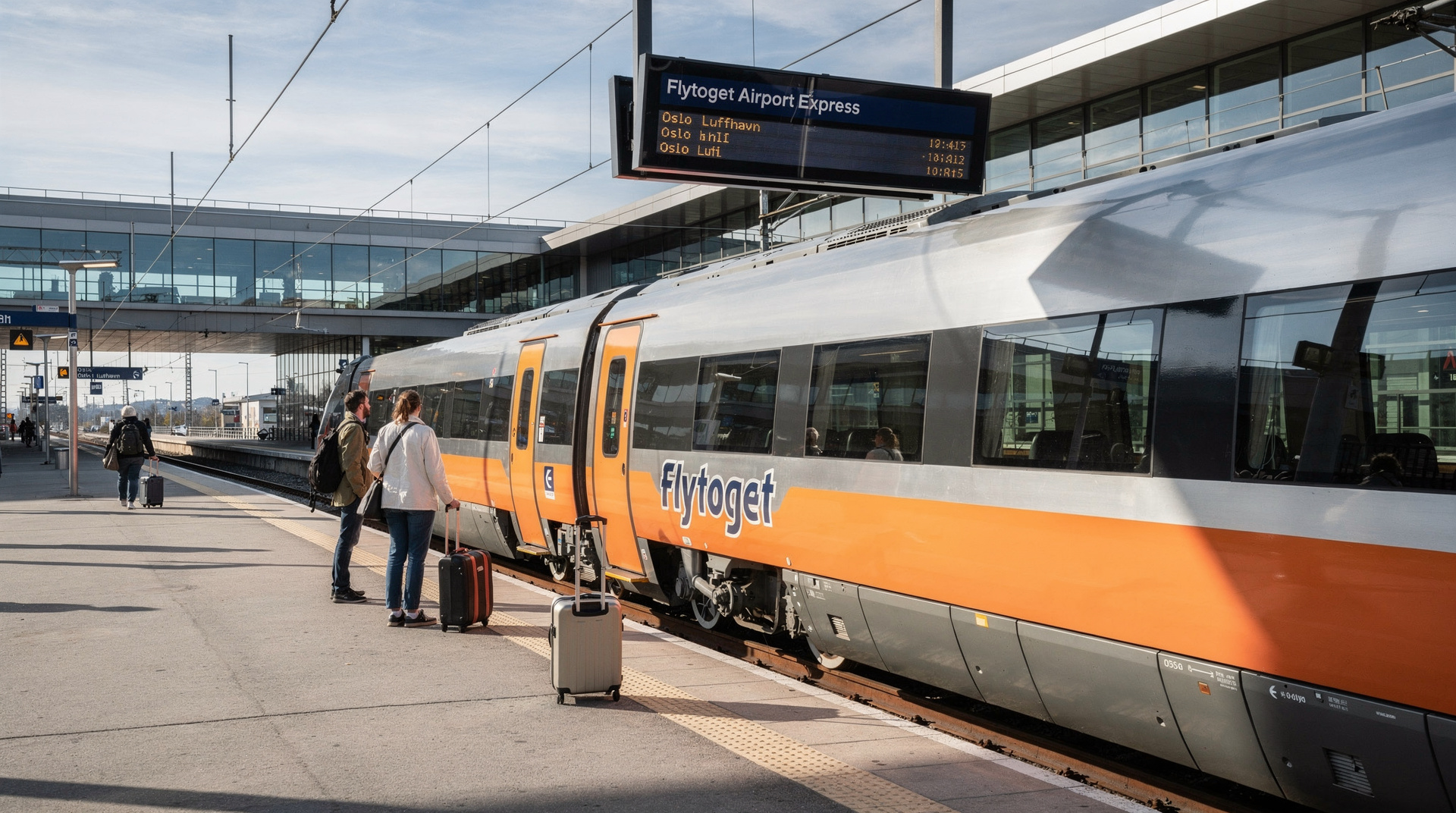
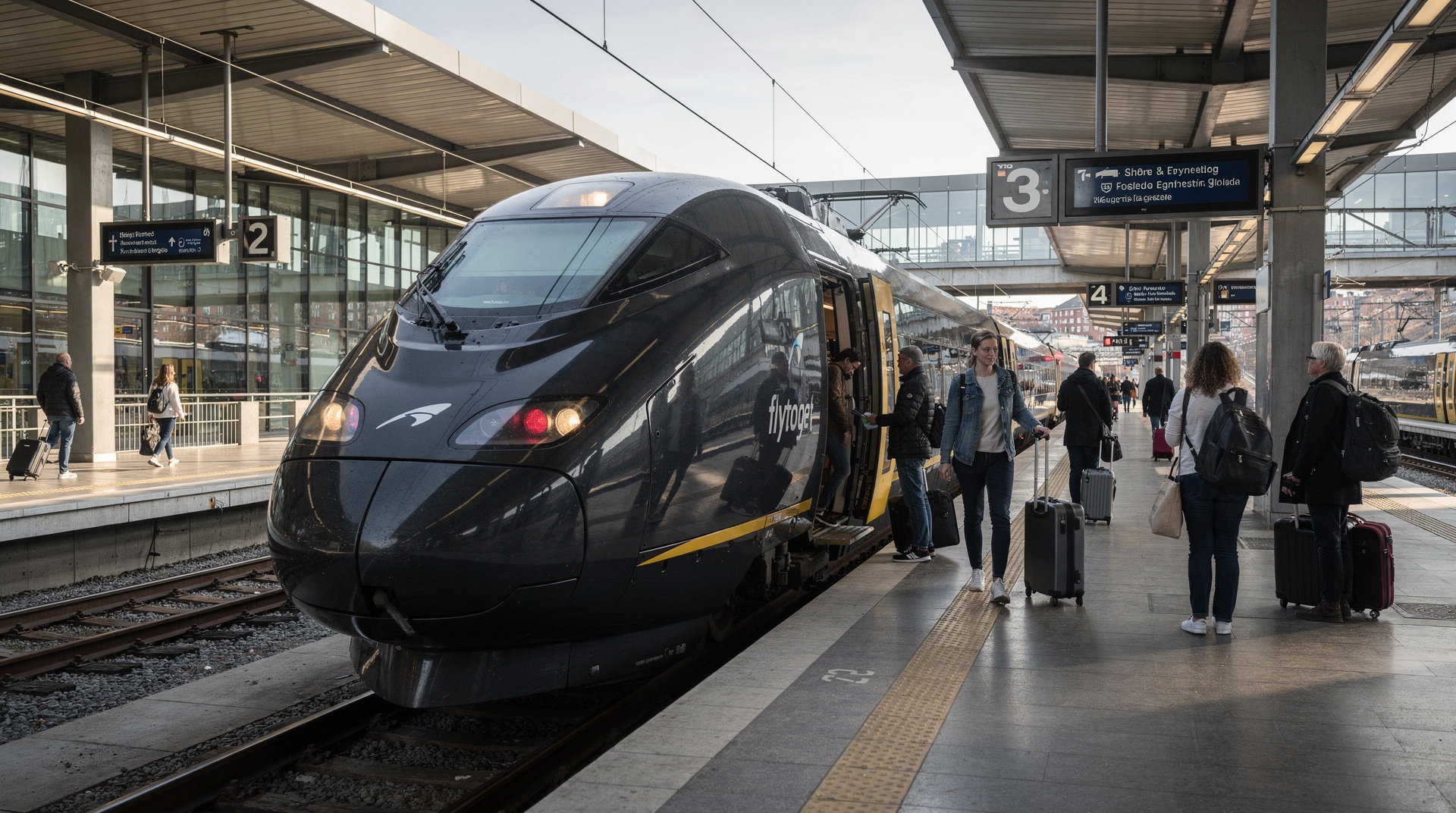
No. Flytoget is a separate operator with separate pricing (NOK 243 one-way). The Vy regional train to the airport can be purchased on a Ruter zone 4V ticket, but this is a specific purchase. Check the Ruter app for zone details before buying.What happens if I board without a valid Ruter ticket?
Inspectors check regularly on all modes. The fine for boarding without a valid ticket is NOK 950 (USD 102). Inspectors will not waive this for tourists. There is no grace period — if you don't have a valid, activated ticket when checked, you pay the fine.Does the Ruter ticket cover the Bygdøy ferry?
Yes. The summer harbour ferry (Ruter line 91) from Aker Brygge to Bygdøy is covered by a standard Zone 1 ticket, exactly like any bus or tram ride.Can one Ruter ticket cover a group of travellers?
The app lets you buy multiple passenger tickets in a single purchase — select the number of adults and children before paying, and each traveller's ticket appears as a separate activation on the buyer's phone. Everyone in the group needs their own device or a printed/shown ticket at inspection; a single phone screen does not cover the whole group unless the app explicitly shows multiple valid tickets.Is there a family or group discount on Ruter?
There's no blanket family discount beyond the standard child half-price fare. Groups of 4 or more travelling together sometimes benefit more from a 24-hour pass per person than from stacking single tickets, since a single ticket only covers one 90-minute window.
Top experiences
Bookable activities with verified prices and instant confirmation on GetYourGuide.