Getting around Oslo: the planning-level guide
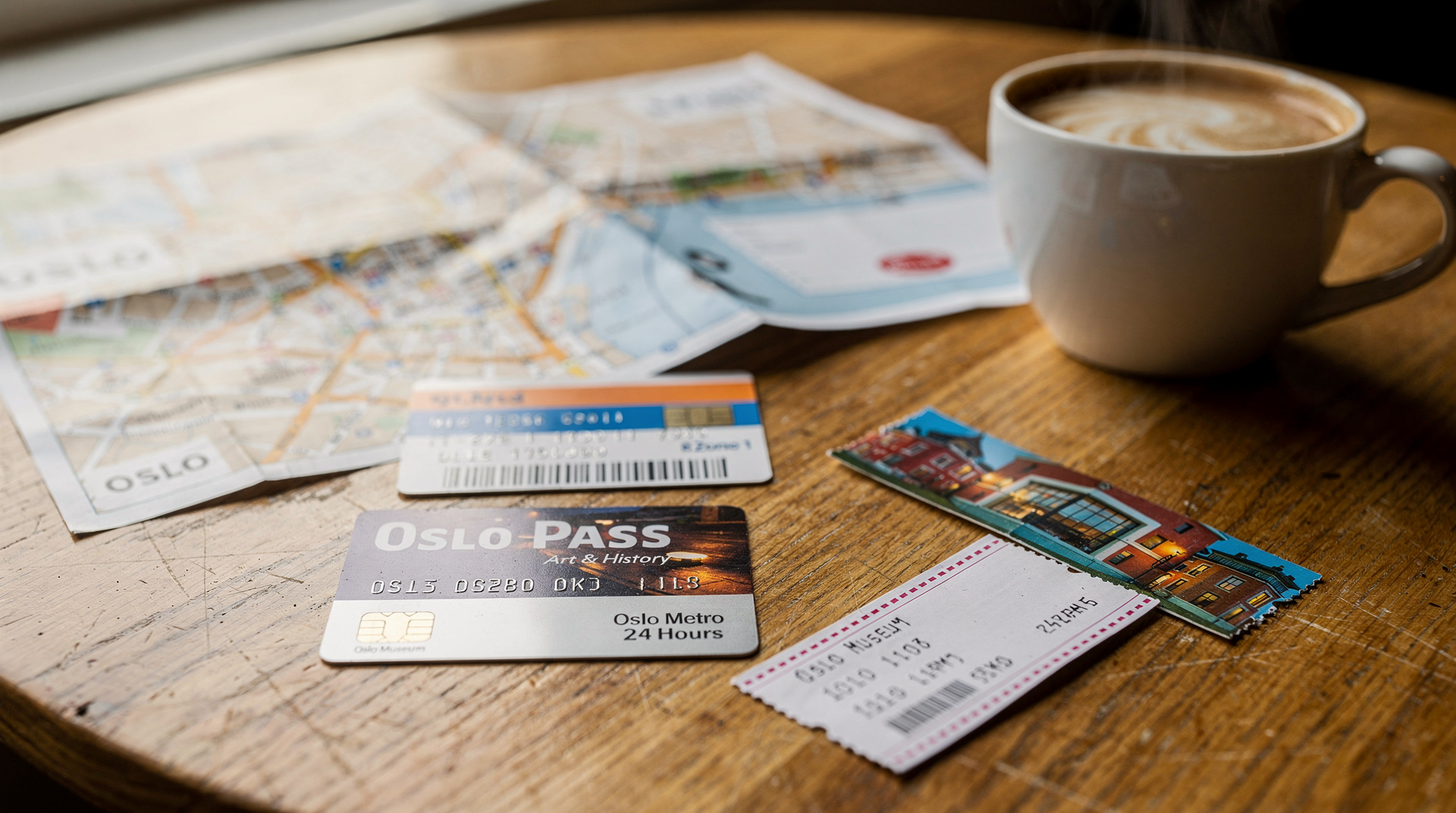
Oslo: Oslo Pass with public transport and free museum entry
Duration: 24-72 hours
- Instant confirmation
- Free public transport
- Skip museum queues
How do you get around Oslo?
Oslo has an excellent integrated public transport network run by Ruter, covering bus, tram, metro (T-bane), local trains, and harbour ferries — all on one ticket. A single-trip zone 1 ticket costs NOK 42 (USD 4.50). Most central sights are walkable, with trams and the metro filling in the gaps. You don't need a car in the city.
The big picture: Oslo is compact and well-connected
Oslo is a smaller city than visitors often expect. The core area — from the Opera House in Bjørvika west to Aker Brygge, north to Grünerløkka and Karl Johans gate, and west to Frogner — can be covered by walking, with trams filling in the longer stretches. The T-bane (metro) extends your reach to neighbourhoods further out: Holmenkollen, Nordmarka, and eastern areas like Bøler and Ellingsrudåsen.
The key insight for getting around Oslo: one ticket covers everything. Ruter operates all buses, trams, metro lines, local trains within Oslo, and the harbour ferry to Bygdøy. Once you understand the zone system and how to buy tickets in the app, navigating the city becomes straightforward.
| System | Ruter (bus, tram, T-bane, local ferry, one ticket) |
| Single ticket | Around NOK 42 in-app (zone 1) |
| Ticket window | 90 minutes, any combination of modes |
| Buy where | Ruter app before boarding — no cash on buses |
| You’ll need it for | Holmenkollen, Bygdøy, Nordmarka, islands |
Walking: more useful than you’d think
Central Oslo’s main sights cluster within about 3 km of each other. You can walk from Oslo S to the Royal Palace in 15 minutes along Karl Johans gate — this is literally the central spine of the city. The Havnepromenaden (harbour promenade) runs continuously from the Opera House around the waterfront past Aker Brygge to Tjuvholmen.
Good walking routes to know:
- Karl Johans gate: Oslo S east end to the Royal Palace west end, about 1.5 km. This street passes the Parliament (Stortinget), National Theatre, and University.
- Havnepromenaden: Opera House to Tjuvholmen, about 3 km along the fjord edge. Flat and scenic.
- Grünerløkka: Best reached by tram 11, 12, or 13 from Nationaltheatret, then walk the neighbourhood on foot.
- Vigeland Park: 3 km from the city centre — walkable in 40 minutes, but tram 12 is faster.
Ruter: one system, one ticket
Ruter is the ticketing and coordination authority for all public transport in Oslo and Akershus county. Whether you’re on a tram, T-bane, bus, local train, or the Bygdøy ferry, the same ticket system applies.
Key points for visitors:
- Buy tickets in the Ruter app (Android and iOS, English interface) — it is significantly cheaper than buying at ticket machines or on-board.
- Tickets must be purchased before boarding. You cannot buy a ticket from the driver or on-board; this is enforced with fines.
- A single zone 1 ticket is valid for 90 minutes on any combination of modes.
- Zone 1 covers all of central Oslo including Bygdøy, Grünerløkka, Holmenkollen, and Nordmarka’s T-bane terminus.
For a full breakdown of zones, ticket types (24-hour, 7-day, period passes), and the Ruter app’s features, see the dedicated Ruter transport guide.
The T-bane (metro): five lines, one tunnel
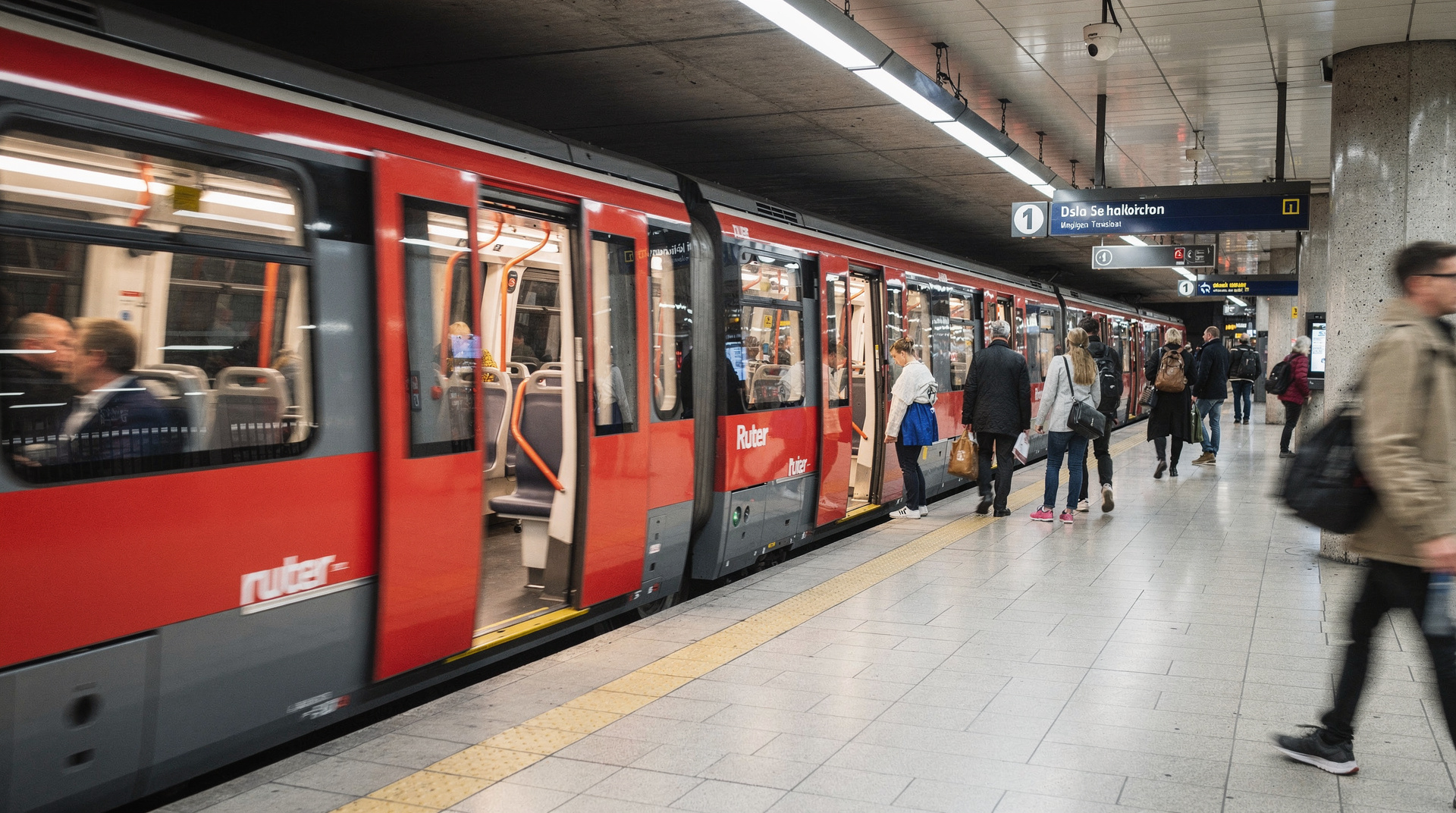
The Oslo metro is called T-banen (often just “T-bane”). It has five lines, numbered 1–5, that all share the same central tunnel between Majorstuen in the west and Tøyen in the east. This means every T-bane line passes through the same central stations (Nationaltheatret, Stortinget, Jernbanetorget/Oslo S, Grønland, and Tøyen).
Most useful lines for visitors:
- Line 1 (Frognerseteren): Goes through Majorstuen, Holmenkollen (ski jump), and ends at Frognerseteren — the gateway to Nordmarka. Best for skiing in winter, hiking in summer.
- Line 2 (Ellingsrudåsen): Eastward from the central tunnel — useful for reaching the eastern suburbs.
- Line 3, 4, 5: Fan out northeast, northwest, and southeast from the central stations. Less used by tourists but useful for reaching Sognsvann lake (line 3) — a popular swimming and jogging destination.
Trains run every 5–10 minutes on weekdays and every 10–15 minutes on weekends. The system operates approximately 05:30–01:00 on weekdays and later on weekend nights.
Trams: the most scenic surface transport
Oslo’s tram network is well-used and covers much of the inner city. The most useful tram lines for visitors:
- Line 12 (Majorstuen to Disen via Nationaltheatret): A workhorse line passing Vigeland Park, the city centre, and eastward. Gets you from Aker Brygge to Grünerløkka.
- Line 13 (Bekkestua to Ljabru via the centre): Similar central route.
- Line 18 and 19 (south toward Ljabru and Bøler): Less useful for tourists but covers Ekebergparken sculpture park.
- Line 11 (Majorstuen to Kjelsås): Passes through Grünerløkka along Thorvald Meyers gate, the closest thing Oslo has to a café-culture promenade.
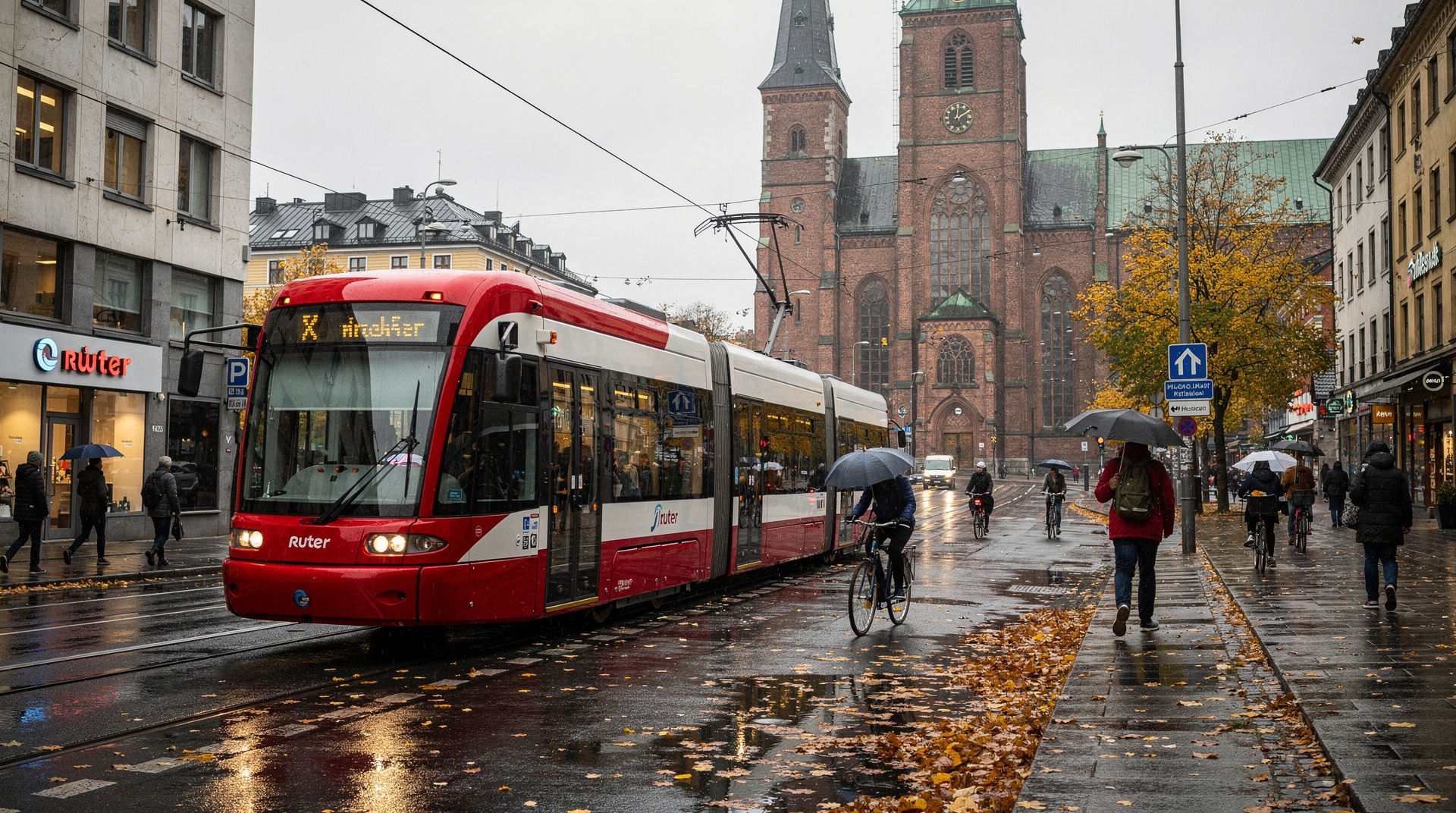
Trams run frequently (every 7–12 minutes on main routes) and are a pleasant way to travel — the older Duewag trams have been replaced with modern Stadler low-floor vehicles on most routes.
Buses: fill the gaps
Oslo’s bus network fills corridors the tram and T-bane don’t cover:
- Bus 30 (from Nationaltheatret): Goes to Bygdøy — useful in winter when the harbour ferry to Bygdøy doesn’t run. Stops near Norsk Folkemuseum, Fram Museum, and Kon-Tiki Museum.
- Bus 31 and 33: Connect the city centre with eastern districts.
- Night buses: Run on weekend nights when the T-bane and tram service thins after midnight. Routes are numbered N1–N5.
Bus tickets use the same Ruter system. Do not board without a valid ticket; unlike some trams, buses have conductor checks.
Harbour ferries to Bygdøy and the islands
Ruter operates two ferry routes that are especially useful for visitors:
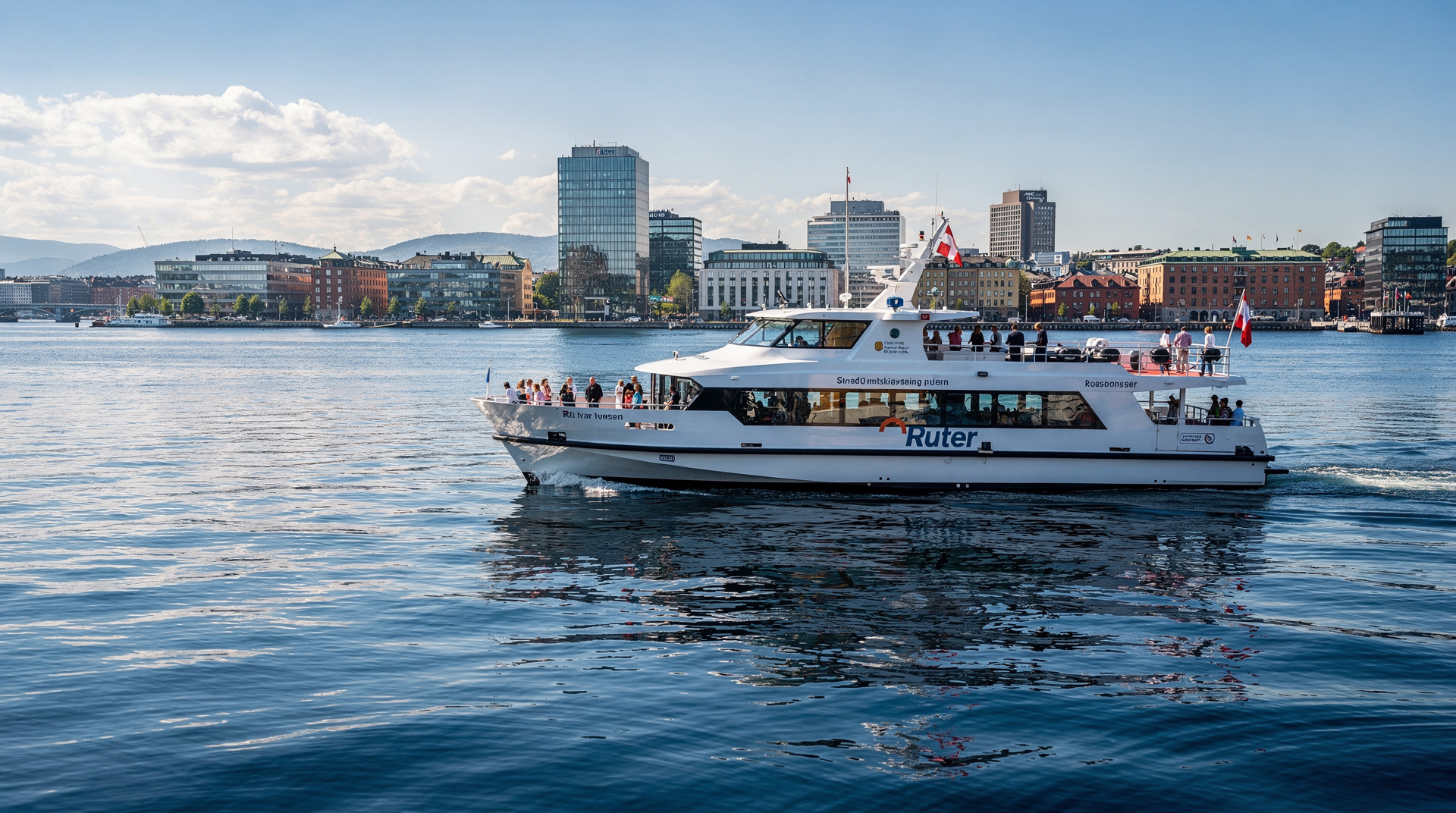
Line 91 — Bygdøy ferry: Runs from Aker Brygge pier 3 to Bygdøy (Dronningen stop), then Bygdøykilen. Service runs approximately April to October. The 10-minute ride across the fjord is the most pleasant way to reach the museum peninsula. Standard Ruter ticket valid.
Lines 82, 83, 84, 85 — Oslofjord island ferries: These run from Vippetangen pier (south of Akershus Fortress) to the inhabited and uninhabited islands in the inner Oslofjord — Hovedøya, Gressholmen, Nakholmen, Bleikøya, Langøyene. All covered by a standard Ruter zone 1 ticket (or Oslo Pass). The full guide to Oslofjord ferries explains all routes, timings, and what to do on each island.
Cycling and city bikes
Oslo Bysykkel is the city bike scheme. Docking stations cover most of the inner city. A 24-hour pass costs NOK 49 (USD 5.30) via the Oslo Bysykkel app; trips under 45 minutes are included in the day pass (extra fees for longer rides). The bikes are 3-gear, heavy, upright, and good for flat city riding. Not ideal for the hilly northern suburbs or Nordmarka.
Private rental bikes are also available through Ryde and Bolt apps, which operate dockless e-bikes.
Taxis and ride-hailing
Taxis in Oslo are licensed and metered. Starting fare is approximately NOK 75 / USD 8; a 15-minute city trip costs around NOK 200–300 / USD 22–32. Uber operates in Oslo and is often slightly cheaper than metered taxis.
Taxis are not economically sensible for airport transfers when the train is NOK 124–243 vs a taxi’s NOK 700–900. Within the city, they’re a reasonable late-night option if you miss the last T-bane run, but the night buses usually fill the same need at NOK 42 / USD 4.50.
The Oslo Pass and transport
The Oslo Pass (24-hour: NOK 595 / USD 64; 48-hour: NOK 895 / USD 96; 72-hour: NOK 1 095 / USD 118) includes unlimited Ruter zone 1 transport plus free or discounted entry to most major museums. Whether it saves you money depends on your itinerary — use the Oslo Pass calculator to check. The honest Oslo Pass review covers specific scenarios where it does and doesn’t make sense.
Practical tips at a glance
- Download the Ruter app before you arrive. Set it to English in settings.
- Never board a tram or bus without a valid ticket — inspectors check regularly and fines are NOK 950 (USD 102).
- Zone 1 covers almost everywhere you’ll want to go in the city, including all Bygdøy museums and Holmenkollen.
- The ferry to Bygdøy is seasonal (roughly April–October). Outside these months, use bus 30 from Nationaltheatret.
- Night trams and buses run on weekends until 04:00–05:00; standard tram/T-bane resumes around 05:30.
- Contactless card payment works on Oslo S Flytoget and Vy machines, but not directly on trams and buses. Buy in the app.
For the complete technical deep-dive on Ruter zones, ticket types, and the app features, continue with the Ruter guide. For day trips beyond Oslo, see whether you need a car.
Navigating specific journeys for visitors
Getting from central Oslo to Vigeland Park
Vigeland Sculpture Park is in Frogner, roughly 3 km west of the city centre. Options:
- Tram 12 from Nationaltheatret: Direction Majorstuen. Get off at Vigelandsparken stop. Journey time approximately 10 minutes. This is the simplest option.
- Walk from the city centre: About 35–40 minutes from Karl Johans gate. A pleasant walk through Frogner’s residential streets.
- T-bane line 1 to Majorstuen: Then 10-minute walk south to the park entrance on Kirkeveien.
Getting from Oslo S to Grünerløkka
Grünerløkka is the neighbourhood most visitors want for cafés, restaurants, and local atmosphere.
- Tram 11 or 13 from Stortorvet (one tram stop east of Nationaltheatret on Karl Johans gate): Direction Kjelsås or Grefsenkollen. Get off at Schous plass or Olaf Ryes plass. Journey time 8–12 minutes.
- Walk: 20–25 minutes from Oslo S, through Grønland or along the Akerselva river.
- T-bane line 5 from Stortinget or Jernbanetorget: Get off at Grünerløkka / Schous plass (new station).
Getting to the Bygdøy museums
In season (mid-April to mid-October):
- Ruter ferry line 91 from Aker Brygge (pier 3): 10 minutes. Buy a zone 1 Ruter ticket.
Out of season:
- Bus 30 from Nationaltheatret: 15–20 minutes. Stops at Norsk Folkemuseum, Fram Museum (Bygdøynes), and Kon-Tiki Museum.
Getting to Holmenkollen ski jump
- T-bane line 1 from Nationaltheatret to Holmenkollen station: approximately 22 minutes. Zone 1 ticket. The station is a 5-minute walk from the jump.
Getting to Nordmarka (forest hiking)
- T-bane line 1 from Nationaltheatret to Frognerseteren (end of line): approximately 25 minutes. Zone 1 ticket. Trailhead is immediately outside the station.
- T-bane line 3 to Sognsvann: End of line, zone 1. The lake and surrounding trails are 2 minutes from the station.
Getting to the Oslofjord islands
- Walk or take tram 12 to Aker Brygge (stops at Rådhusplassen), then walk 15 minutes south past Akershus Fortress to Vippetangen pier. Ruter island ferries (lines 82–85) depart here. Zone 1 ticket.
Rules of the road: things that confuse first-time visitors
Tram priority: Oslo’s trams have right of way over cars and pedestrians. Do not walk in front of a tram crossing — the tracks are often slightly recessed in the road and easy to step onto accidentally. Look both ways before crossing tram tracks on foot.
No off-road cycling on footpaths: Oslo’s cycling culture is generally thoughtful, but cyclists are not allowed on pedestrian footpaths (gangvei). If you rent a city bike, stick to cycle lanes (sykkelsti) and the road. The harbour promenade has a mixed-use path but speeds are kept low.
Tap or app, not cash: Bus drivers in Oslo do not accept cash. There are no on-board ticket sales. If you board a bus without a valid Ruter ticket (pre-purchased via app, machine, or kiosk), you can be fined NOK 950 / USD 102. There are no exceptions. Buy the ticket before you board.
The Ruter app confirmation screen: When inspectors check tickets, they look for the green “active” confirmation screen on your Ruter app. This displays your ticket type, expiry time, and a moving animation (anti-fraud). Make sure this screen is visible — not the purchase confirmation or receipt screen, but the activated ticket screen.
Transferring between modes: Your 90-minute ticket window starts from the moment you activate the ticket, not when you first board. If your journey involves a connection — say, T-bane to tram — and the total door-to-door time exceeds 90 minutes, you’ll need to buy a second ticket for the final leg.
Late nights and early mornings
Oslo’s core network winds down between roughly 01:00 and 05:30 on weekdays, but weekend nights are covered by a dedicated network of night buses (routes N1–N5) that keep the city connected until the T-bane and trams resume around 05:30. Fridays and Saturdays see extra services on the busiest corridors — toward Grünerløkka, Frogner, and the eastern districts — but they fill up fast after midnight, so budget extra waiting time versus a daytime journey.
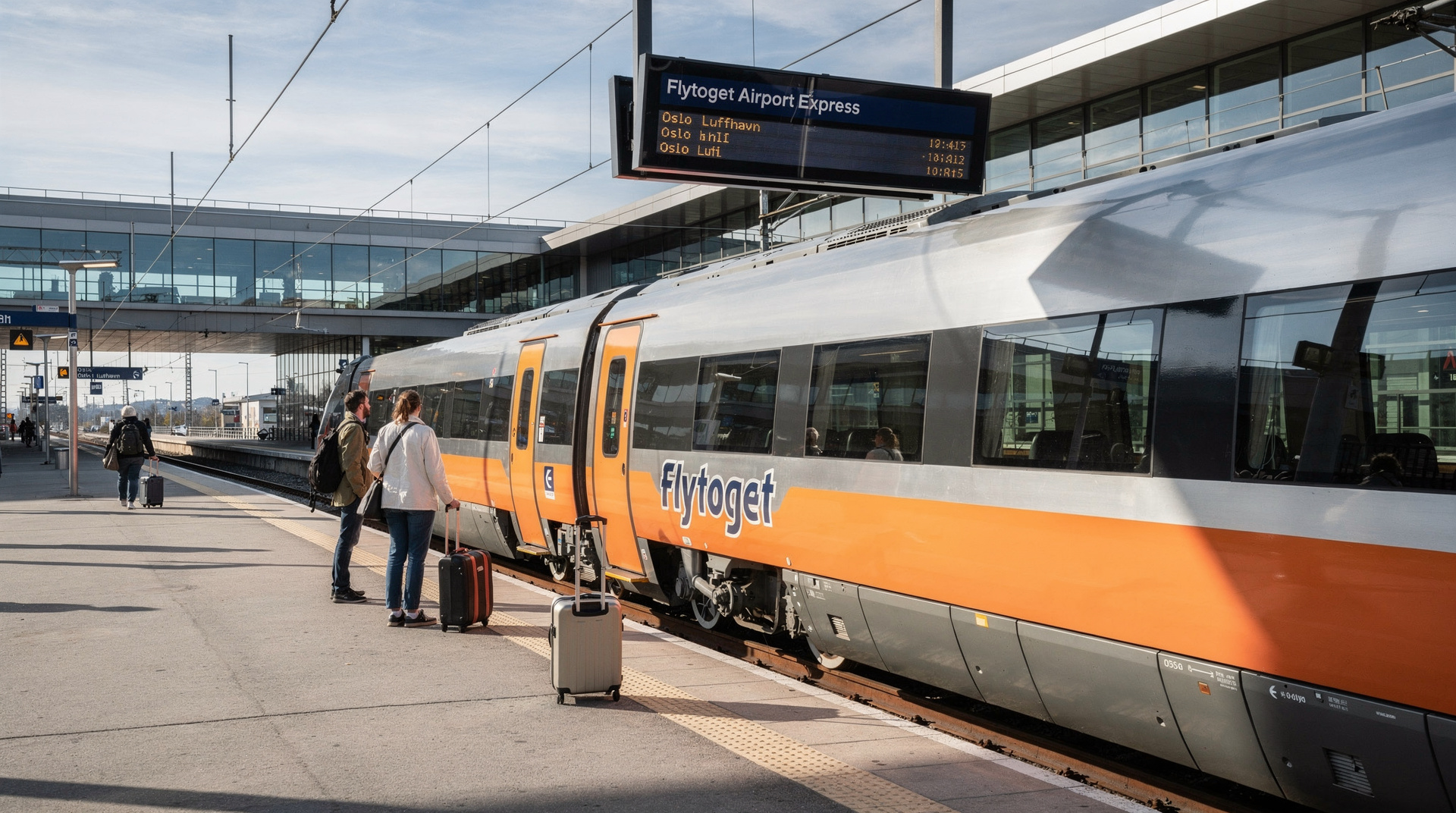
For an early flight, the Vy and Flytoget airport trains both start running well before the rest of the network, typically from around 04:30–05:00, so an early departure doesn’t automatically mean a taxi. Check the exact first-departure time for your travel date in the relevant app rather than assuming a fixed schedule, since services shift slightly with seasonal timetables.
Apps worth having on your phone
Three apps cover almost everything: the Ruter app for all city transport tickets and live departures, Entur (the national journey planner) if you’re also travelling beyond Oslo by train or long-distance bus, and Flytoget or Vy specifically for the airport line, since neither is bundled into the Ruter app. Having all three installed and set up (with a payment card linked) before you land removes almost every friction point described in this guide.
Oslo transport during special events
The city hosts several major events where transport becomes significantly busier:
- Oslo Marathon (September): Several road closures affect tram and bus routes through the centre. Allow extra time and check the Ruter website.
- Holmenkollen Ski Festival (March): Massively increased T-bane line 1 traffic toward Holmenkollen. Services are enhanced but platforms are crowded. Go early.
- 17 Mai (Constitution Day): Karl Johans gate and the route to the Royal Palace is pedestrianised from morning. Some tram lines are diverted. The T-bane runs to schedule.
- Øya Music Festival (August, Tøyenparken): Late-night crowds on T-bane lines 3 and 5 (toward Tøyen). Extra services run but they fill quickly.
Saving money on transport
- Buy tickets in the Ruter app, not at machines (saves NOK 13 per single trip).
- Use a 7-day pass if staying 4+ days with regular transport use (NOK 360 vs. buying daily passes).
- The Oslo Pass includes unlimited transport — if you’re visiting multiple paid museums, check whether the pass saves money overall via the Oslo Pass calculator.
- For airport transfer, the Vy regional train (NOK 124 / USD 13) is half the price of Flytoget (NOK 243 / USD 26) for a journey that’s only 6–10 minutes longer.
- Children under 4 travel free. Children 4–17 pay half price.
Which mode for which trip
| Trip | Best mode | Why |
|---|---|---|
| Sentrum sightseeing | Walking | Everything within 10–20 minutes on foot |
| Vigeland Park / Frogner | Tram 12 | Direct, 10 minutes from Nationaltheatret |
| Grünerløkka | Tram 11/13 or T-bane line 5 | Faster than the 20-minute walk |
| Bygdøy museums | Ferry line 91 (Apr–Oct) or bus 30 | Ferry is scenic; bus works year-round |
| Holmenkollen / Nordmarka | T-bane line 1 | Only practical option, ~22–25 minutes |
| Oslofjord islands | Ferry lines 82–85 from Vippetangen | Zone 1 ticket, no separate fare |
| Airport transfer | Vy train | Half the price of Flytoget for a few extra minutes |
Do you actually need a car for anything beyond the city? Almost never for Oslo itself — see the dedicated do you need a car in Oslo guide for the day-trip exceptions where renting one makes sense.
Frequently asked questions about Getting around Oslo
Do I need to buy a separate ticket for each mode of transport?
No. A single Ruter ticket is valid for 90 minutes on any combination of bus, tram, T-bane, and local ferry within the zone(s) you've paid for. You can transfer freely between modes during those 90 minutes.How much does a single Ruter ticket cost?
A single adult zone 1 ticket costs NOK 42 (USD 4.50) when bought via the Ruter app. Buying at a machine or kiosk costs NOK 55 (USD 5.90). Children under 4 travel free; ages 4–17 pay half price.Is the Oslo metro easy to use?
Very. The T-bane has five lines that all converge in the city centre between Majorstuen and Stortinget. Lines 1–5 fan out from this central tunnel. Line 1 is especially useful for visitors, running east-west from Frogner to Holmenkollen and the forest.Can I walk between major Oslo attractions?
Many central sites are walkable in 10–20 minutes from each other. The Opera House to Aker Brygge is about 1.5 km (20 minutes). Karl Johans gate to Vigeland Park is 3 km (40 minutes). For Bygdøy, a tram or bus is faster.Is cycling practical in Oslo?
Yes, especially in summer. Oslo has a city bike scheme (Bysykkel) with docking stations across the city. A 24-hour pass costs NOK 49 (USD 5.30). The waterfront path and Nordmarka forest trails are especially good. Be aware that some city roads are narrow and traffic moves quickly.What's the single biggest mistake first-time visitors make with Oslo transport?
Boarding a bus or tram without a pre-purchased ticket. Unlike many European cities, Oslo has no on-board ticket sales and no cash payment on buses — you must activate a ticket in the Ruter app, at a machine, or at a kiosk before you board. Inspectors check regularly and the fine is NOK 950 (USD 102), with no exceptions for tourists unfamiliar with the system.Do I need a different ticket for the airport train?
Yes — Flytoget and the Vy airport train are not covered by a standard Ruter zone 1 ticket, since Oslo Airport sits outside the Ruter zones. Buy a Flytoget or Vy ticket separately for that leg; once you're within the city, your regular Ruter ticket covers everything else.
Top experiences
Bookable activities with verified prices and instant confirmation on GetYourGuide.