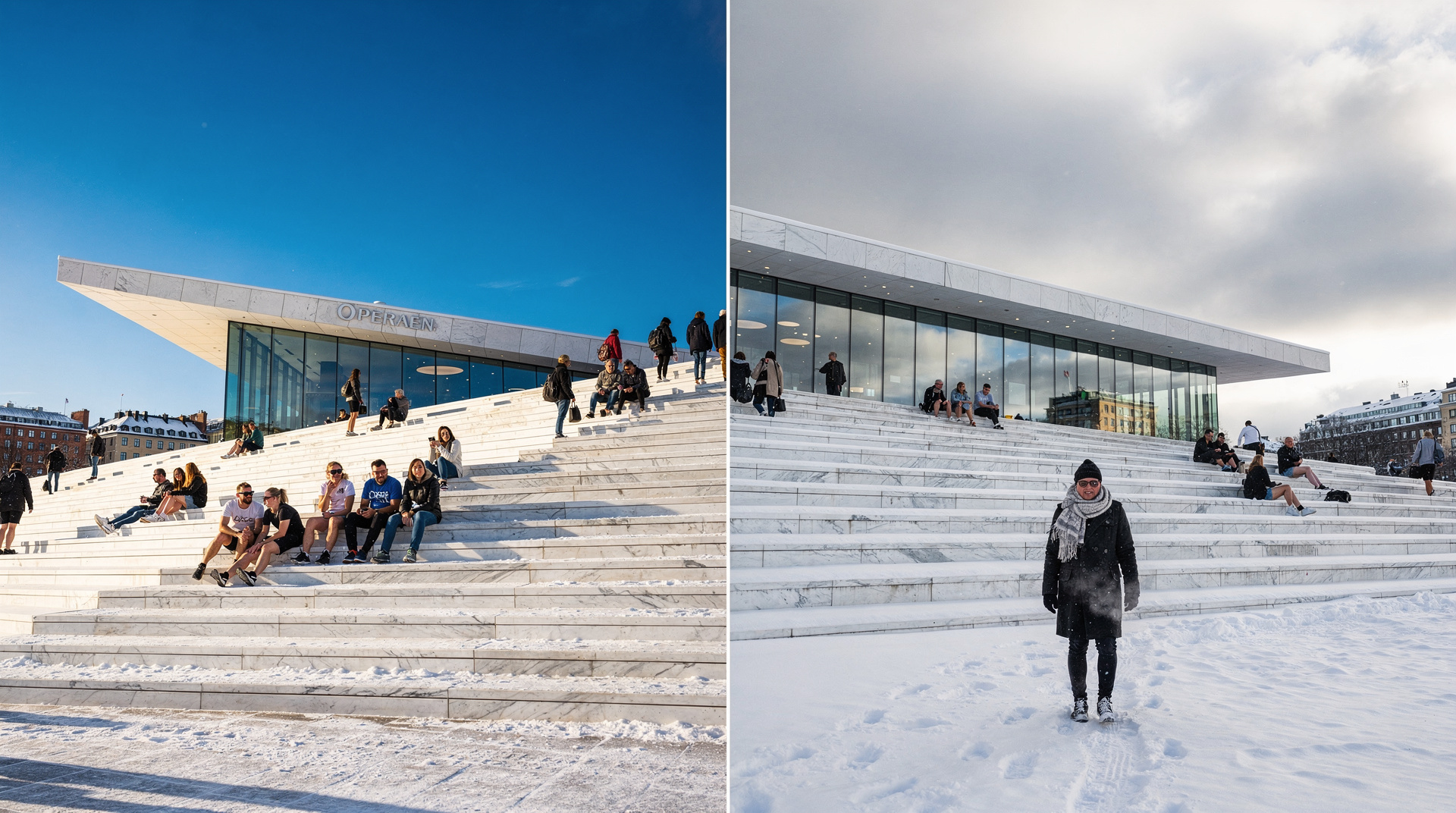
Best time to visit Oslo — honest month-by-month guide
Oslo: guided sightseeing fjord cruise on a premium silent electric boat
Duration: 2 hours
- Silent electric boat
- Free cancellation
- Best seller
When is the best time to visit Oslo?
Late May and September offer the best combination of decent weather, long days, fewer crowds, and slightly lower prices. Peak summer (June–August) is great for fjord activities and outdoor life but busier and pricier. Winter (December–March) suits ski and Christmas market visitors but brings very short days.
Why the honest answer is “it depends on what you want”
Oslo is a year-round city, not a one-season destination — but the experience shifts dramatically between January and July. Spend three days in mid-June and you will barely sleep in total darkness, eat at outdoor terraces until 22:30, and catch a fjord cruise on a bright evening. Arrive in late January and you get six hours of pale winter light, empty museums, and cross-country ski tracks through snowy Nordmarka. Both versions are genuinely good — they are just completely different trips.
| Best overall | Late May or September |
| Cheapest | January, November |
| Warmest | July (avg 16–22°C) |
| Darkest | December (6–7h daylight) |
| Fjord cruise season | May–September |
| Ski season | January–March |
What follows is a candid month-by-month analysis. Ignore the generic “spring is lovely!” summaries you will find elsewhere: we will give you real temperatures, real daylight hours, and honest verdicts on what is actually worth doing in each period.
January — quiet, cold, surprisingly affordable
January is Oslo’s quietest tourist month. Hotels drop significantly in price (sometimes half the summer rate), and the city’s museums are uncrowded. Temperatures average around minus 7°C to minus 3°C, snow is common, and daylight runs to roughly 7 hours.
The upside: Nordmarka’s cross-country ski trails are usually in excellent condition. The T-bane (metro line 1) reaches Frognerseteren in about 30 minutes, depositing you directly onto prepared tracks. Holmenkollen and the surrounding network offer hundreds of kilometres of marked routes. For a guided introduction, cross-country skiing in Oslo is a genuine highlight of any winter visit.
Verdict: ideal for ski enthusiasts and budget travellers who do not mind darkness and cold.
February — best ski conditions, growing light
February typically brings the most reliable snow and the best skiing conditions. Daylight stretches to about 9 hours. Prices remain low outside school holiday weeks (Norwegian winter break, usually mid-February, temporarily lifts hotel rates).
The main event approaching: the Holmenkollen Ski Festival arrives in early March, so February is a smart time to book accommodation near that date.
Verdict: excellent for winter sports; the sweet spot before Holmenkollen crowds arrive.
March — ski festival and the turn of light
Early March brings the Holmenkollen festival. This is a serious competition event attended by tens of thousands of Norwegians — hotel prices spike and accommodation books out well in advance. If you are not there for the festival, the second half of March is calmer and daylight begins to grow noticeably.
By late March, temperatures edge above zero. Snow starts melting in the city centre, making conditions icy and messy. Nordmarka still has good ski tracks in the upper forests.
Verdict: go early March for Holmenkollen or skip to April.
April — unpredictable but awakening
April in Oslo is a transition month. Temperatures range from 2°C to 10°C. Easter week (dates vary) brings Norwegians back to mountain cabins — the city actually empties out as locals head to ski resorts. You may find Oslo pleasantly quiet.
Outdoor terraces begin opening tentatively. The fjord boat season has not started in earnest, and some attractions are still on winter schedules. Daylight grows to 14–15 hours by the end of April.
Verdict: decent for a budget city break; do not plan a fjord cruise.
May — the locals’ favourite shoulder season
May is our top recommendation alongside September. Temperatures climb to 13–17°C. The city bursts with energy around Constitution Day (17 May), one of Europe’s most colourful national day celebrations: Karl Johans gate fills with children in traditional dress (bunad), brass bands, and Norwegians in genuinely festive mood. Book accommodation well ahead for the 16–18 May period.
By late May, the fjord cruise season opens. The silent electric boat cruise starts its daily schedule, and the Oslo islands are accessible again on the Ruter ferry network. Daylight is already at 17–18 hours, and crowds are still lighter than July.
Verdict: excellent. Constitution Day (17 May) is genuinely special. Late May is arguably the best overall window.
June — long evenings, summer begins
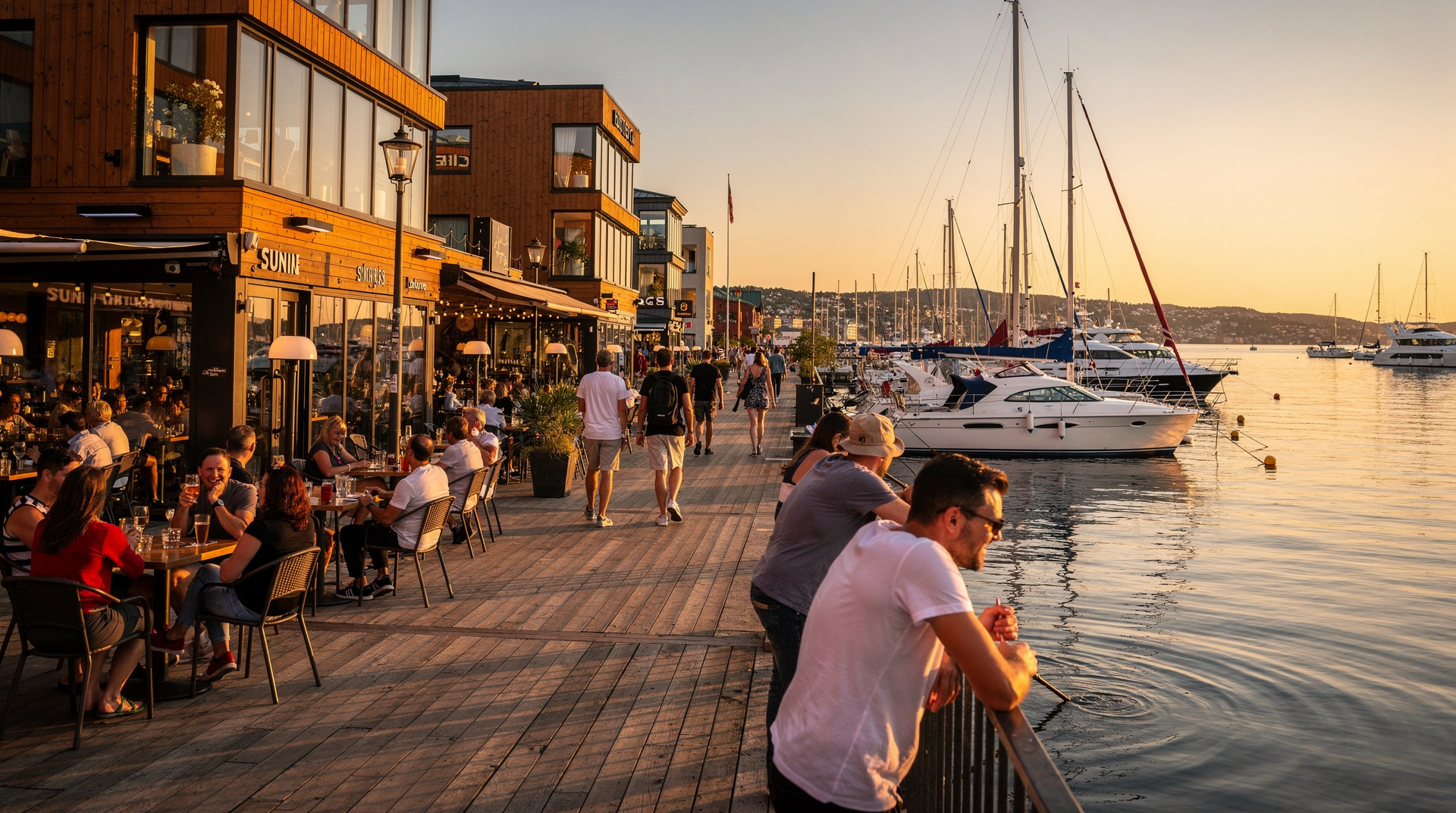
June is when Oslo truly comes alive. The sky stays light until nearly midnight, evening fjord cruises run in beautiful warm light, and outdoor swimming at Sørenga and the Oslo islands begins for the hardy (water temperature around 18–20°C by late June). Hotel prices start climbing but are not yet at peak July rates.
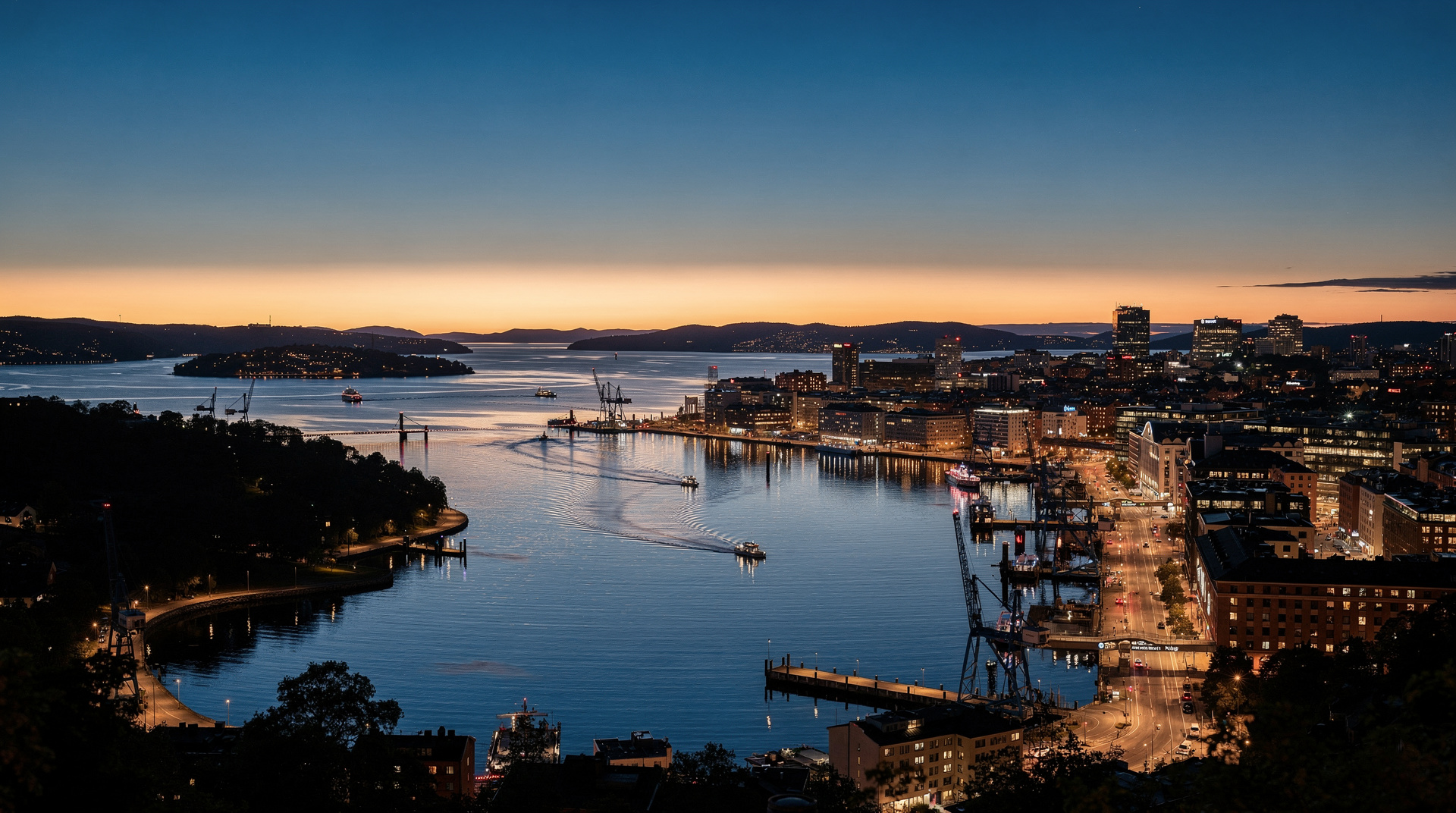
The fjord is at its best: the island-hopping tours run fully, Bygdøy peninsula beaches attract picnickers, and kayak rentals operate on the fjord. A fjord cruise in June’s evening light is a genuine Oslo highlight.
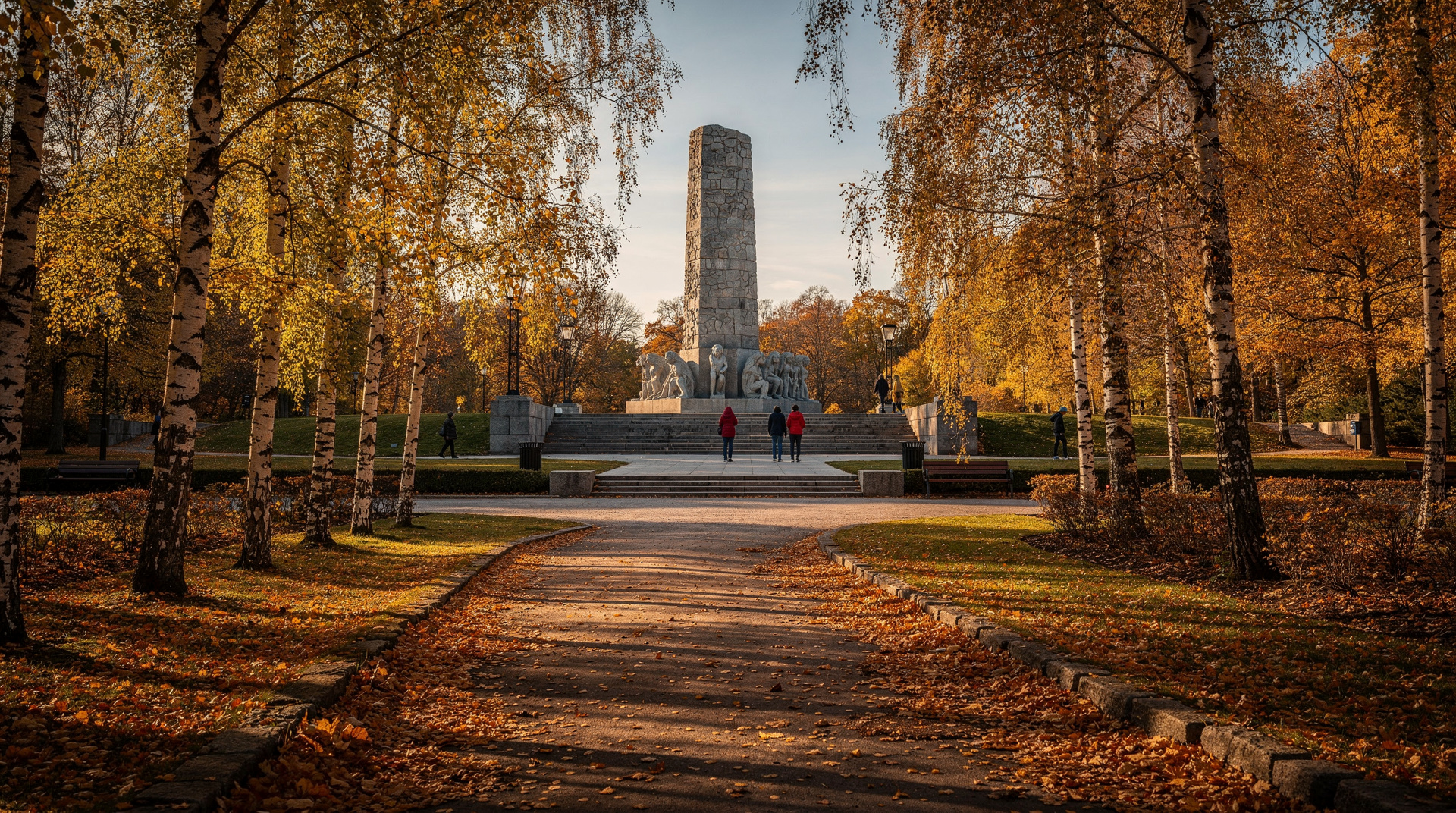
Note: some attractions run crowded. The Vigeland Sculpture Park in Frogner Park draws enormous numbers on sunny June days.
Verdict: very good, slightly cheaper than July-August. The best summer month for most visitors.
July — peak season, peak prices
July is Norway’s main holiday month. Hotels reach their highest prices of the year. Aker Brygge and the popular waterfront restaurants are packed. The islands are crowded on sunny weekends.
That said, July offers the longest and warmest days (average highs around 22°C), the widest range of outdoor activities, and the best ferry connections to the Oslo islands. It is simply the most expensive and busiest time to visit — factor that into your budget.
Important budget reality: a restaurant meal for two with wine on Aker Brygge can easily reach NOK 1,200 to 1,600 (approximately USD 130 to 172). Plan your food costs carefully. See our guide to avoiding overpriced food in Oslo for practical strategies.
Verdict: the most popular time for good reason, but plan your budget carefully and book accommodation 2–3 months ahead.
August — summer fades gracefully
August remains warm (average highs 21–22°C) and most activities are still running fully. Daylight starts decreasing noticeably toward the end of August — sunsets move from 22:00 in early August to around 20:30 by the 31st. Hotel prices begin easing from their July peak.
This is a strong month for outdoor activities: paddleboarding on the fjord, hiking in Nordmarka, island day trips, and evening cruises all remain excellent. Late August can feel like the city is gently winding down after the summer peak — a pleasant effect.
Verdict: very good, slightly less crowded and slightly cheaper than July.
September — the other best month
September is our joint top pick alongside May. The summer crowds thin considerably after Norwegian schools resume. Temperatures stay pleasant (12–18°C in early September, dropping to 8–13°C by the end). Daylight falls from about 13.5 to 11 hours across the month.
The city’s colour palette shifts: Nordmarka’s forests turn amber and red. Hikes in the hills around Oslo reward with autumn colour, and the trails are far less crowded than summer. Most fjord cruises continue through September, though check for late-season schedule reductions.
The key advantage of September: everything is open, the weather is still walkable, and hotel rates drop meaningfully from July–August peaks.
Verdict: excellent for a value-for-money trip with good weather and manageable crowds.
October — autumn deepens, things begin to close
October brings temperatures of 5–12°C and daylight dropping toward 10 hours. The Oslo islands stop their regular Ruter ferry service by mid-October. Many outdoor boat tours scale back or close for the season.
The upside: museums are beautifully quiet, autumn colour in Nordmarka peaks in early October, and hotel prices are competitive. The National Museum, Munch Museum, and Astrup Fearnley are all excellent in this period.
Verdict: good for a culture-focused trip on a budget. Not ideal if outdoor activities are your priority.
November — the grey month
November is arguably Oslo’s least appealing month. Temperatures drop to 0–6°C, it is often rainy or grey, and daylight falls to about 7–8 hours. Most outdoor activity providers have closed. It is not cold enough for good ski conditions.
Hotel prices are at their lowest alongside January. If you are a museum enthusiast or want a cheap city break focused on culture, coffee, and galleries, November works. Otherwise, wait until December for the Christmas transformation.
Verdict: for budget travellers focused on indoor culture only.
December — Christmas magic, genuine cold
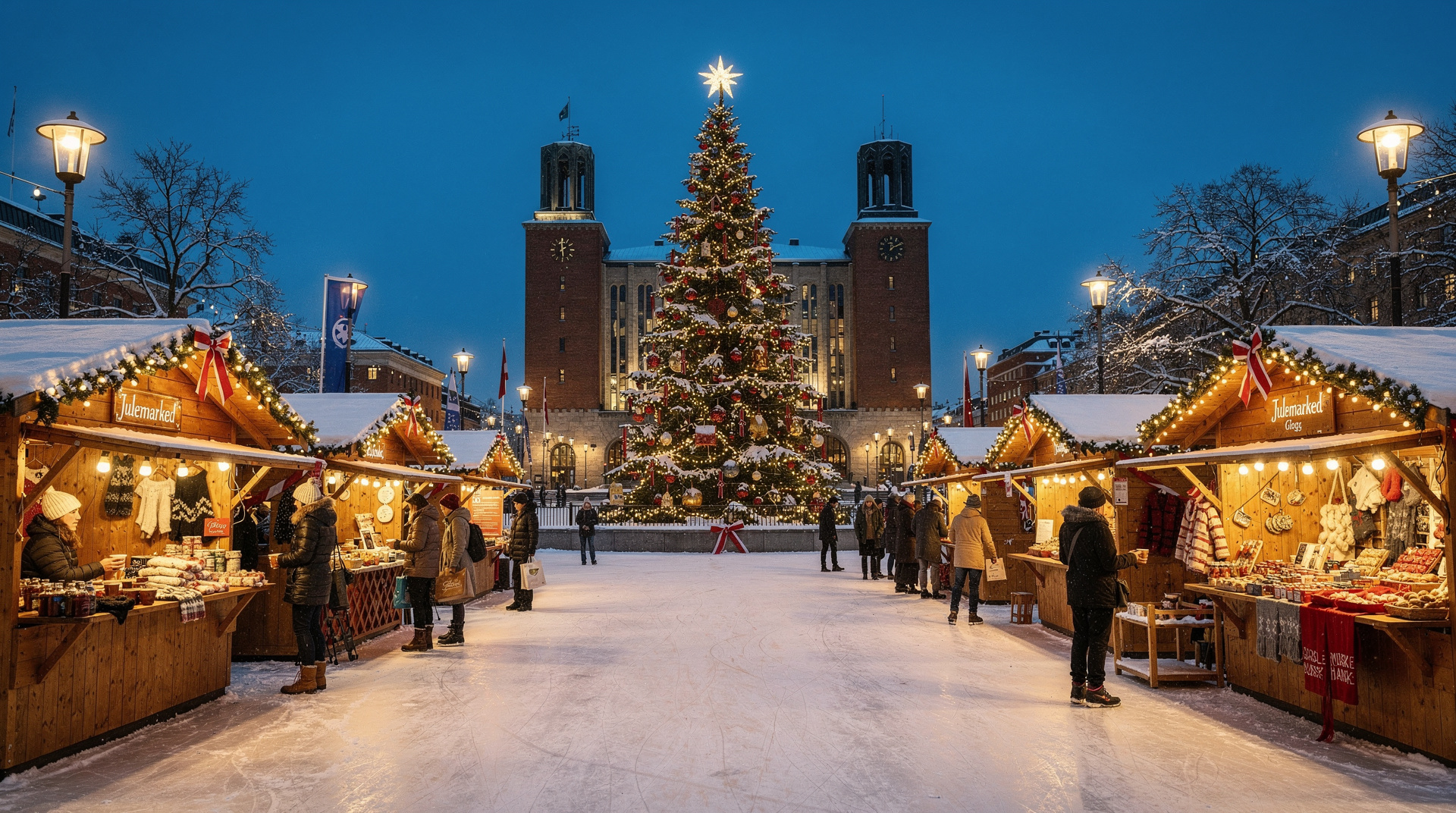
December is the city’s winter reset. Christmas markets open across the city — at Spikersuppa by the National Theatre, at Aker Brygge, and at Karl Johans gate. Ice skating at Spikersuppa (free admission) is a genuinely atmospheric Oslo experience. The city is decorated and festive in a low-key, Nordic way.
Daylight drops to its minimum around 6–7 hours at the solstice. Average temperatures sit around minus 4°C to 0°C. The Christmas in Oslo guide covers the full December calendar.
Verdict: very good for a Christmas atmosphere trip. Book the Christmas gløgg walking tour well in advance.
Quick summary table
| Month | Avg temp (°C) | Daylight | Crowds | Price level | Best for |
|---|---|---|---|---|---|
| Jan | -7 to -1 | 7h | Low | Low | Skiing |
| Feb | -6 to 0 | 9h | Low-Med | Low | Best ski |
| Mar | -2 to 5 | 11h | Med | Med | Holmenkollen |
| Apr | 2 to 10 | 14h | Low | Low | Culture |
| May | 8 to 17 | 17h | Med | Med | Best overall |
| Jun | 13 to 21 | 19h | Med-High | High | Fjord + city |
| Jul | 16 to 22 | 18.5h | High | Highest | Full summer |
| Aug | 15 to 22 | 16h | High | High | Outdoor |
| Sep | 8 to 18 | 13h | Med | Med | Best overall |
| Oct | 5 to 12 | 10h | Low | Low-Med | Culture |
| Nov | 0 to 6 | 8h | Low | Low | Budget |
| Dec | -4 to 2 | 6.5h | Med | Med | Christmas |
Planning your trip around seasonal activities
If a fjord cruise is on your list, plan for May through September — that is when the full schedule of Oslofjord cruises runs. The island ferries (Ruter line B1 and others) run on a fuller schedule May through September. For winter activities, you need reliable snow, which typically means mid-January through early March in Nordmarka.
The Viking Ship Museum remains closed until approximately 2027 — do not plan a Bygdøy museum day around it. The Viking Planet and the Historical Museum are the current alternatives for Viking history.
For budget planning, our Oslo trip cost guide gives realistic daily spend figures by travel style across seasons. Alcohol costs especially are worth understanding in advance — Norway’s licensing laws mean all spirits are sold through the state Vinmonopolet monopoly, and a beer at a bar typically costs NOK 90 to 130 (approximately USD 10 to 14).
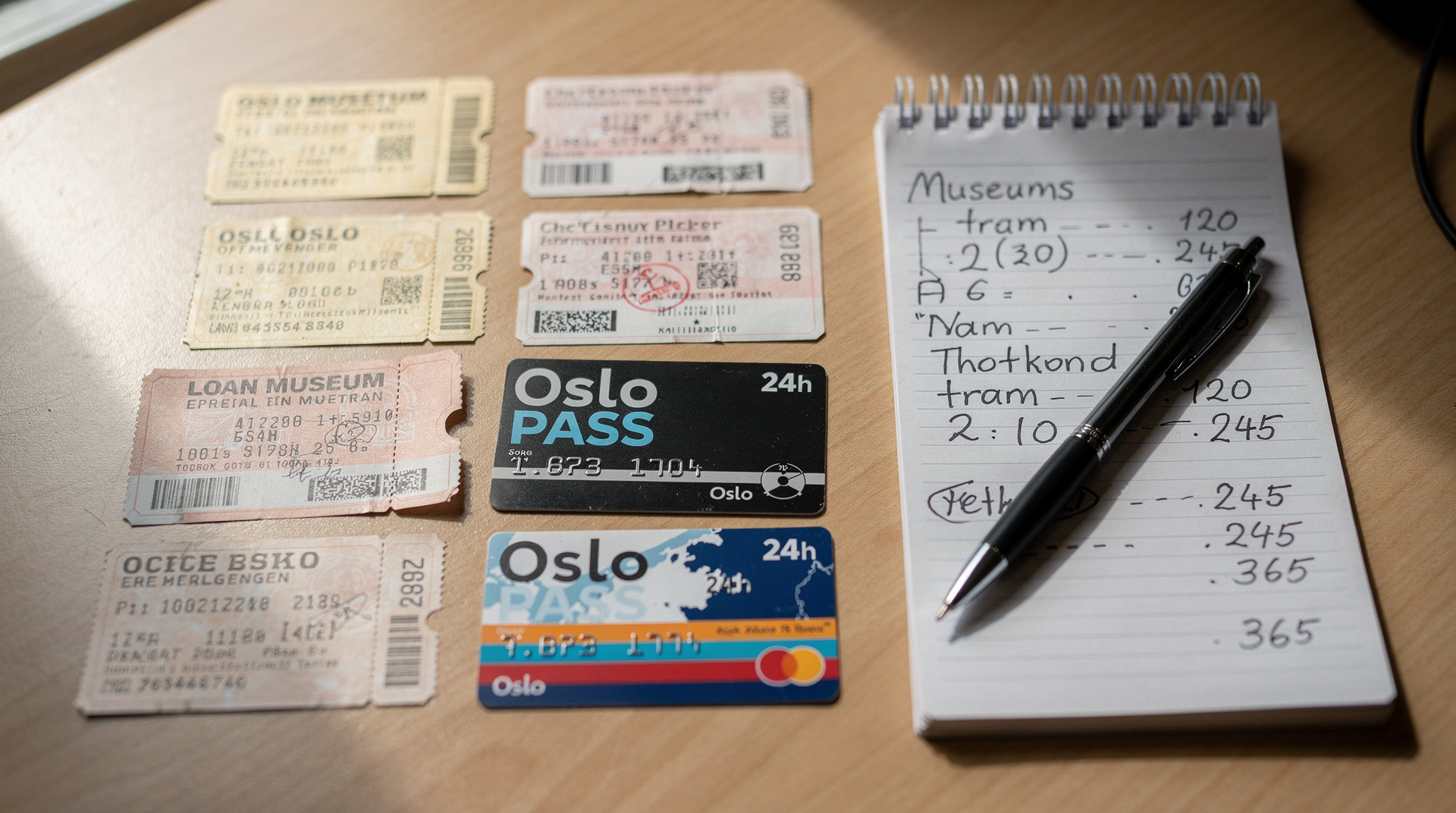
The Oslo Pass can be a worthwhile purchase in summer when you will visit several museums and use public transport heavily — but does not make financial sense for every travel style. The honest analysis is in our dedicated guide.
Matching the season to your trip type
Not every traveller wants the same Oslo. A few honest pairings:
First-time visitor wanting the highlights without extremes: late May or September. Long enough days for full sightseeing, fjord cruises running, museums open, and none of July’s price spike or January’s darkness.
Budget traveller: January, November, or early March (outside the Holmenkollen festival window). Hotel rates drop by roughly a third to a half compared with July, and the museums, Munch Museum, and Akershus Fortress are just as good indoors regardless of season.
Outdoor and fjord enthusiast: June through August for kayaking the Oslofjord, swimming at Oslo’s beaches, and island hopping. Accept the crowds and prices as the cost of the activities.
Winter sports visitor: mid-January through early March, when Nordmarka’s snow is most reliable and cross-country skiing conditions peak. Book Holmenkollen-adjacent accommodation early if the ski festival dates overlap your trip.
Christmas-market visitor: the first three weeks of December, before the 20–27 December accommodation squeeze. See the Christmas in Oslo guide for the full market and gløgg-tour calendar.
Culture-only visitor uninterested in outdoor activity: October, November, or February. Museums are uncrowded, hotel rates are low, and Oslo’s best museums are unaffected by weather.
Frequently asked questions about Best time to visit Oslo — honest month-by-month guide
Is Oslo worth visiting in winter?
Yes — if you embrace the cold. December brings Christmas markets and festive atmosphere. January to March is prime cross-country skiing in Nordmarka. Expect 6–7 hours of daylight, temperatures of minus 7 to 0°C, and fewer tourists than summer.Does Oslo get midnight sun?
No. Oslo sits at 59.9°N, which is far too south for true midnight sun. In June the sky stays bright until around 23:00 and never fully darkens, but the sun does set. True midnight sun requires being above the Arctic Circle (66.5°N), roughly at Tromsø or further north.Can you see northern lights in Oslo?
Not reliably. Oslo's latitude (59.9°N) is too far south for dependable auroras. Strong geomagnetic storms occasionally make them visible from dark hilltops outside the city, but this is the exception, not a reason to visit. Go to Tromsø or Alta for a real northern lights trip.What months are cheapest in Oslo?
January to early March and November offer the lowest hotel and flight prices. Shoulder seasons (May and September) are also significantly cheaper than July–August.When do Oslo fjord cruises run?
The silent electric boat cruises and island-hopping tours typically run from May through September. Some winter cruises operate (fish soup cruise, sailing ship) but options are much more limited outside summer. Always check availability before booking.Is the Viking Ship Museum open?
No. The Viking Ship Museum on Bygdøy is closed for a major renovation expected to complete around 2027. The collection has moved to the Viking Planet experience and parts to the Historical Museum. Plan accordingly.When is the Holmenkollen ski festival?
The Holmenkollen Ski Festival runs in early to mid-March each year. It is one of the world's oldest and most prestigious cross-country and ski-jump competitions and draws large crowds to Holmenkollen.
Top experiences
Bookable activities with verified prices and instant confirmation on GetYourGuide.

Oslo: guided sightseeing fjord cruise on a premium silent electric boat
- Silent electric boat
- Free cancellation
- Best seller

Oslo: island walks — island hopping tour (3 islands)
- 3 islands
- Local guide

Oslo: 3-hour cross-country skiing trip with equipment and guide
- Winter only
- Gear + guide

From Oslo: Oslomarka forest guided snowshoeing tour
- Winter only
- Snowshoes included