Oslo daylight hours by season — the real data and what it means for your trip
Oslo: guided sightseeing fjord cruise on a premium silent electric boat
Duration: 2 hours
- Silent electric boat
- Free cancellation
- Best seller
How many daylight hours does Oslo get?
Oslo ranges from about 6.5 hours of daylight in December to around 19 hours in June. The city does not get midnight sun (it is too far south at 59.9°N), but June nights never fully darken. Winter days are genuinely short — plan accordingly.
Why daylight hours matter more in Oslo than most destinations
Few cities in Europe swing as dramatically through the year in terms of light as Oslo. A July visitor experiences almost 19 hours of usable daylight; a December visitor gets barely 6.5 hours. This is not just a scheduling curiosity — it profoundly shapes what your trip will feel like and what you can realistically do each day.
Most travel guides acknowledge this vaguely. This guide gives you the actual numbers and translates them into concrete planning implications.
| Longest days | ~18.8 hrs daylight in June (sunset ~22:55) |
| Shortest days | ~6.2 hrs daylight in December (sunset ~15:17) |
| Midnight sun | No — Oslo sits below the Arctic Circle |
| Northern lights | Rare and unreliable from Oslo |
| Best light for photography | June evenings or clear December midday |
| Plan around | Winter: 09:30–15:00 outdoor window |
The honest myth-busting you need first
Before the data: two myths to clear up.
Myth 1: Oslo has midnight sun in summer. False. Oslo sits at 59.9°N latitude. True midnight sun — the sun visible above the horizon at midnight — requires being above the Arctic Circle at 66.5°N. That is Tromsø, the Lofoten Islands, and north of there. Oslo’s midsummer nights are extraordinary: the sky stays bright until around 23:00, turns a deep amber and pink twilight, and begins lightening again before 04:00, so the darkness window lasts only 2 to 3 hours. But it is not midnight sun. Do not travel to Oslo expecting it.
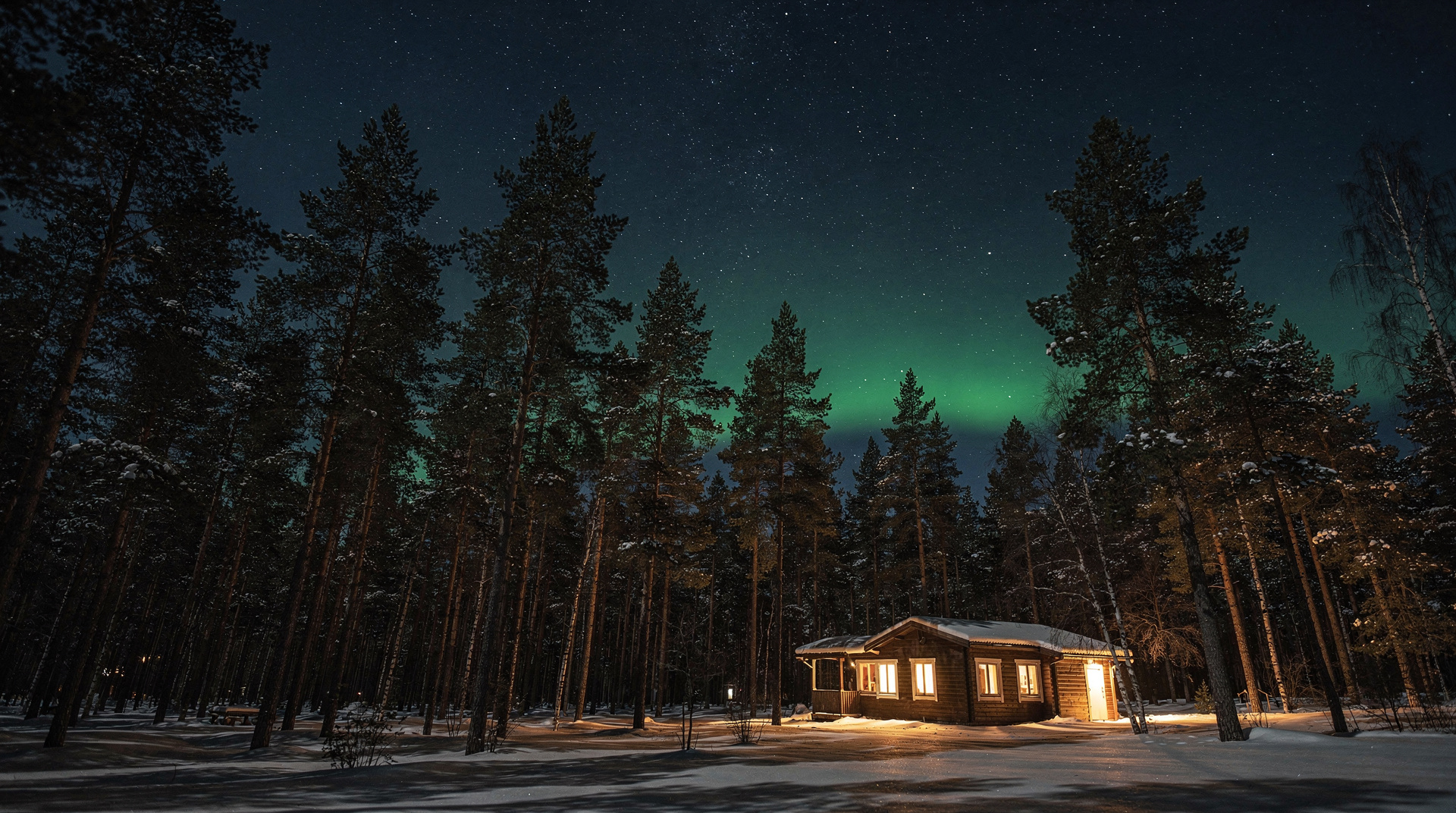
Myth 2: Northern lights are visible from Oslo in winter. Not reliably. Oslo’s southern latitude means auroras require exceptionally strong geomagnetic storms to be visible. It happens very occasionally, but you cannot plan a trip around it. See our full northern lights in Oslo myth-busting guide for the honest story.
Oslo daylight hours: month-by-month data
| Month | Sunrise | Sunset | Daylight hours | Sky character |
|---|---|---|---|---|
| January | 09:03 | 15:58 | ~7 h | Cold pale light |
| February | 08:13 | 17:05 | ~8.9 h | Light grows noticeably |
| March | 07:00 | 18:13 | ~11.2 h | Longer days, spring light |
| April | 06:30 | 20:20 | ~13.8 h | Bright evenings return |
| May | 05:07 | 21:35 | ~16.5 h | Long, warm evenings |
| June | 04:07 | 22:55 | ~18.8 h | Near-white nights |
| July | 04:33 | 22:38 | ~18.1 h | Long summer light |
| August | 05:42 | 21:17 | ~15.6 h | Days shorten noticeably |
| September | 07:01 | 19:44 | ~12.7 h | Crisp autumn light |
| October | 07:22 | 18:12 | ~10.8 h | Short but warm-toned |
| November | 07:50 | 15:48 | ~8 h | Grey and dim |
| December | 09:08 | 15:17 | ~6.2 h | Minimum light |
Times are approximate for Oslo city centre and will vary by a few minutes across the month. Dates around solstices and equinoxes (21 March, 21 June, 23 September, 21 December) are the turning points.
What the light means for each season
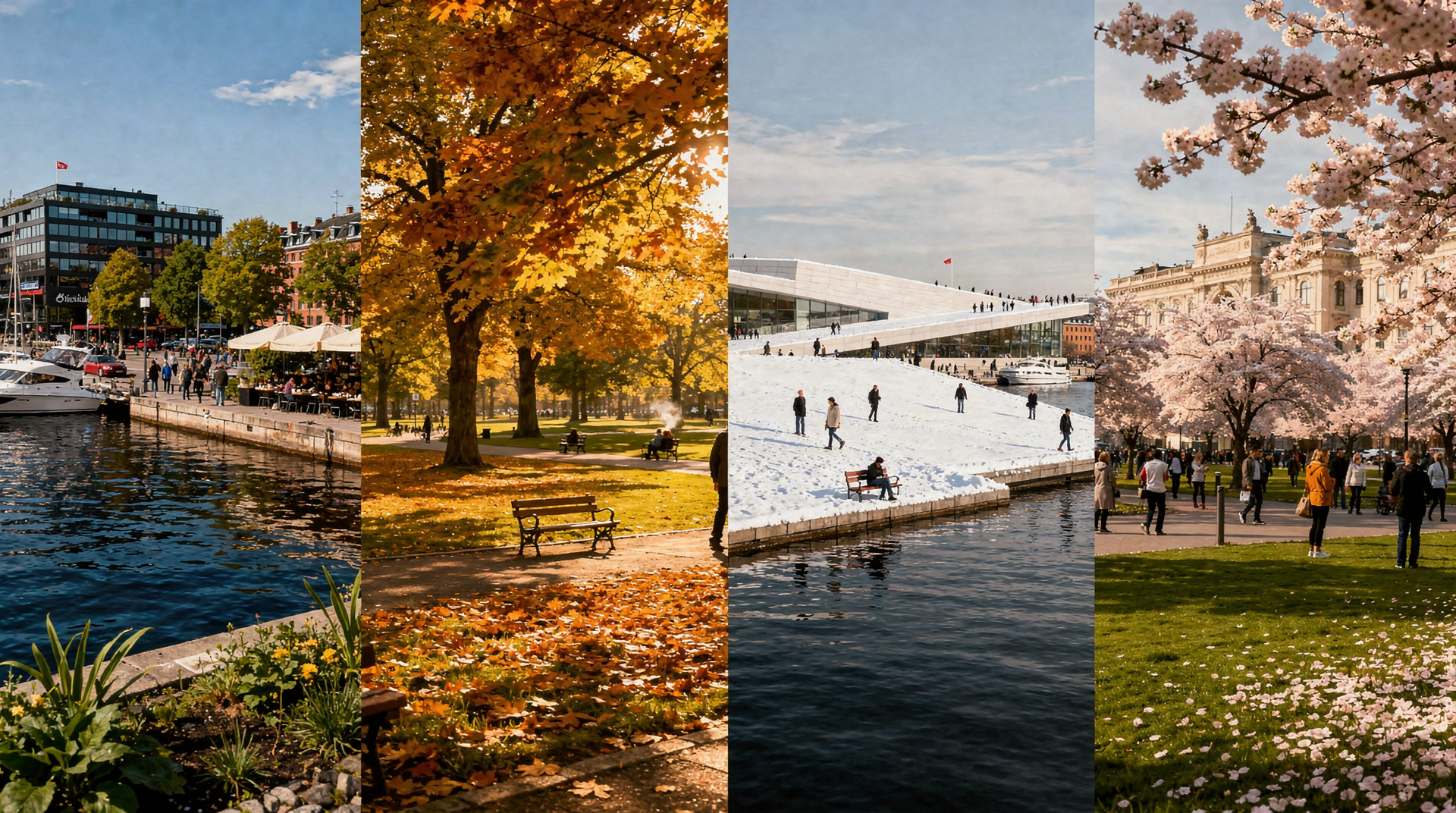
Summer (June–August): the extended golden hour
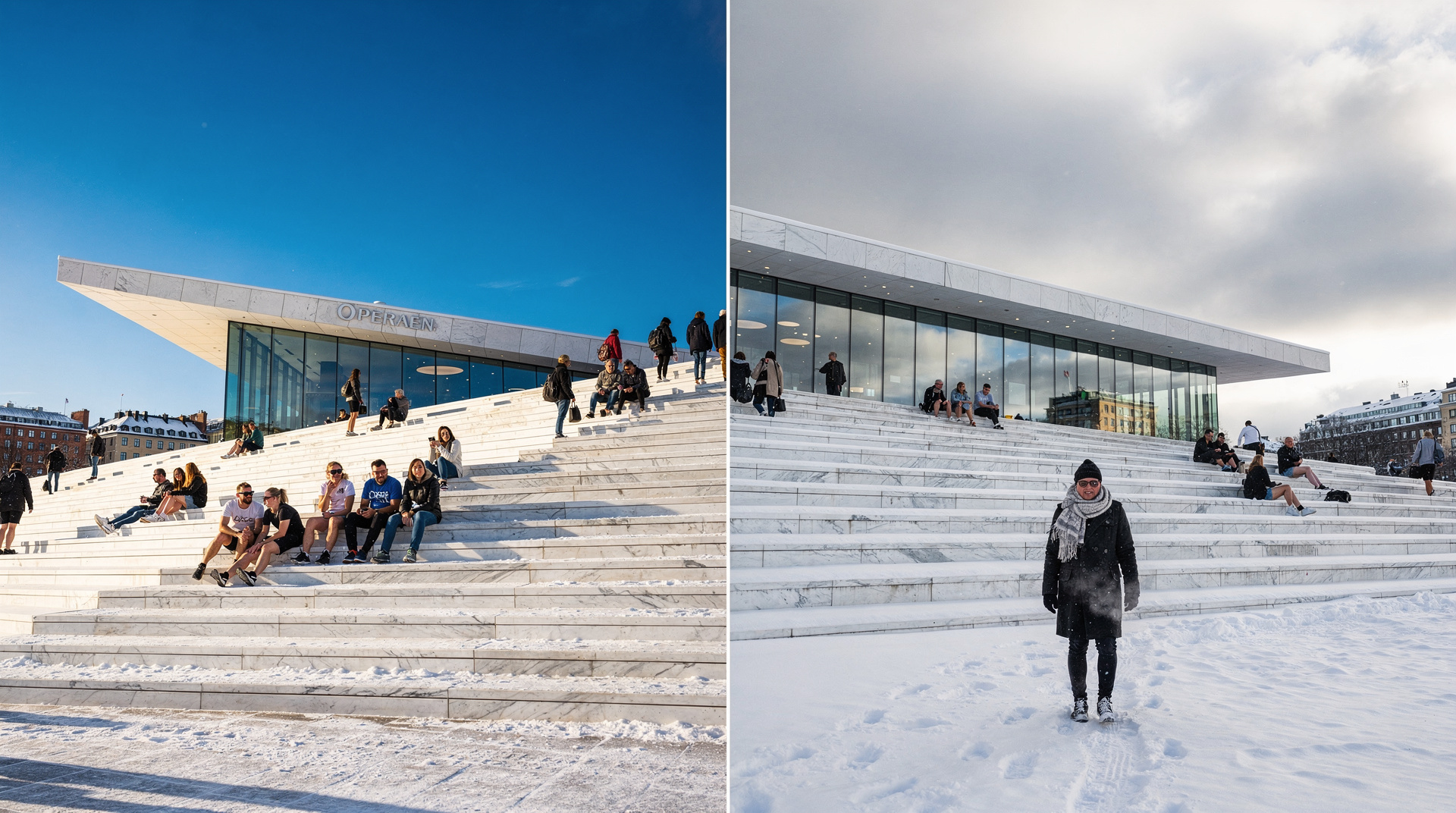
June is the golden month for photographers. The low-angle summer sun creates a warm, amber quality of light from around 19:00 through to 23:00 — a golden hour that lasts three to four hours. The Opera House from the fjord at 22:00, Akershus Fortress in the long evening light, or a kayak on the Oslofjord at 21:30 — these are genuinely extraordinary light conditions.
The practical consequence for non-photographers: you can fill your day without any awareness of time pressure. Oslo in June is nearly never dark in the 24 hours you are there. Sleep can be disrupted — the sky at 03:00 in June has the quality of early morning light, which confuses body clocks. Bring a sleep mask.
By August, the balance shifts. By late August, sunset at 20:30 creates a conventional evening structure. The city becomes more European in its rhythm — dinner before dark, evening walks before darkness.
Autumn (September–November): light falls fast
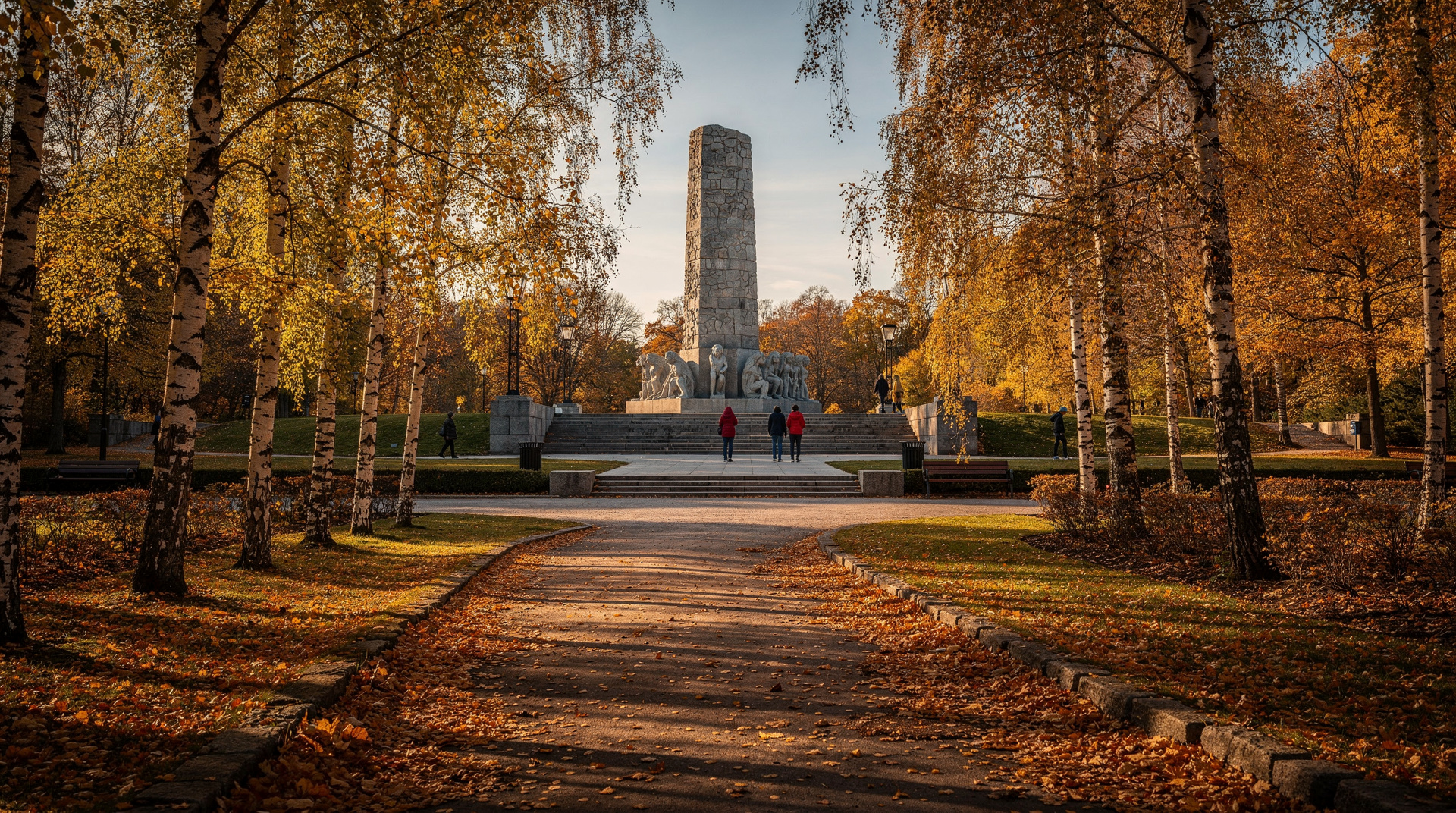
September still offers 12 to 13 hours of daylight and pleasant light conditions. The sun is lower than in summer, creating longer shadows and a more dramatic quality of light that suits Nordmarka’s autumn colours.
October is the month where daylight starts to feel genuinely short. By the end of October, you are down to about 10 hours, and November drops to 7 to 8 hours. Plan outdoor sightseeing earlier in the day; museums and cafés become more central to the itinerary.
Winter (December–February): the dark season, but not hopeless
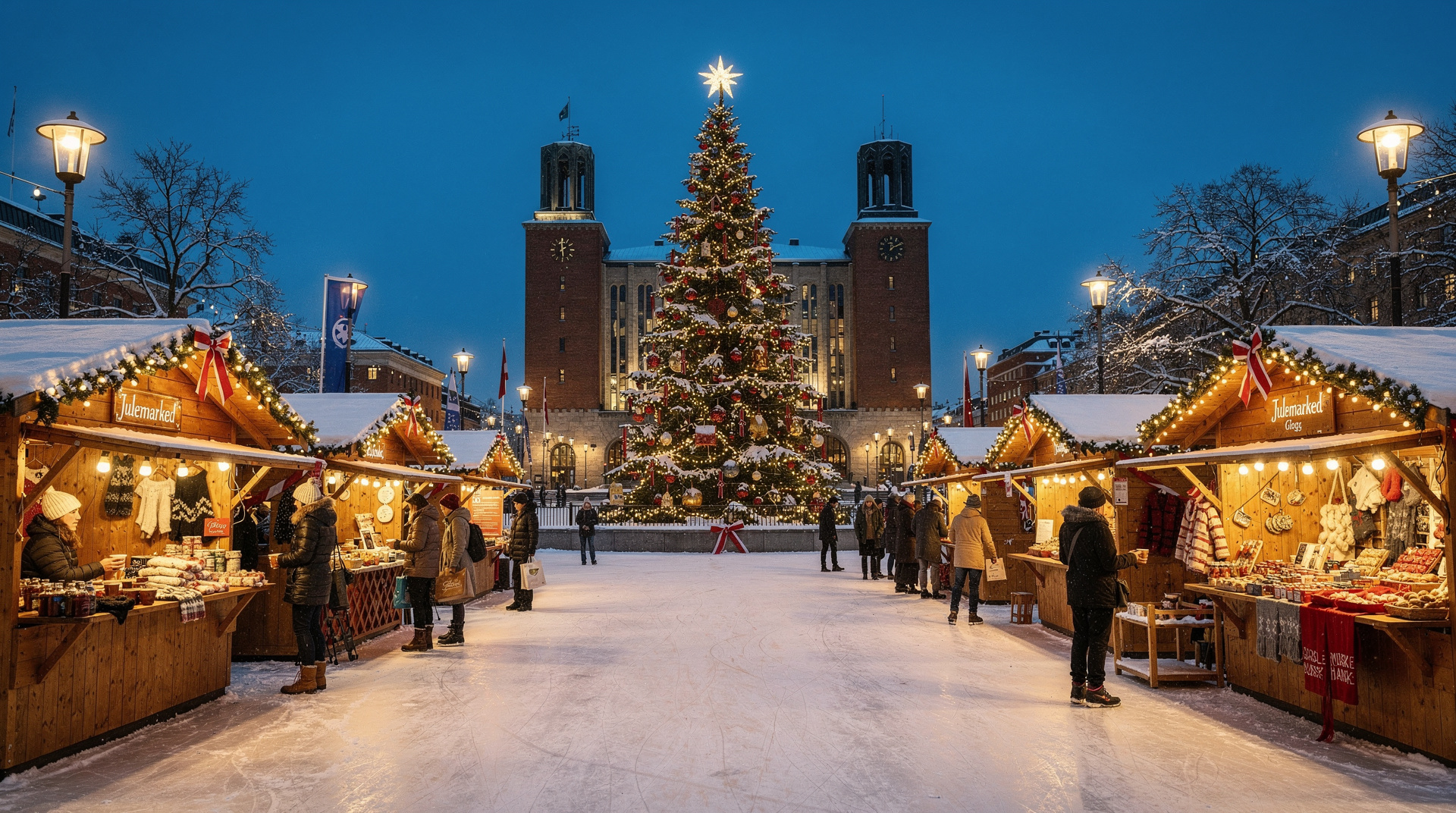
December has about 6.5 hours of daylight. The sun arc is low — on a clear day, the light has a rich, golden quality reminiscent of a permanent golden hour. This can be extraordinarily photogenic: Karl Johans gate at 14:00 in December, with the Royal Palace visible in pale winter sun and Christmas lights beginning to glow, is a beautiful sight.
The key planning implication: all outdoor sightseeing must happen between approximately 09:30 and 15:00. After 15:30, it is dark. Plan your days accordingly — outdoor attractions and parks in the morning, museums in the afternoon, and then the Christmas markets or Nordmarka ski trails (which are lit) in the evening.
January and February gain light noticeably. February at 9 hours feels significantly less oppressive than December at 6.5. By late February, the light is genuinely improving daily.
Spring (March–May): the reawakening
March is when Norwegians visibly brighten. The equinox on 21 March brings 12 hours of daylight, and by May the long evenings return. Norwegian Constitution Day (17 May) falls at around 17 hours of daylight — the long, light evening is central to the celebration.
April has good light but variable weather. May is arguably the most photogenic month in Oslo: long evenings, fresh foliage, and a city shaking off winter.
Planning implications by traveller type
Museum and culture visitors: any month works. Prioritise morning visits in winter to use daylight for incidental street photography and outdoor walks. Afternoons for indoor attractions.
Outdoor and active visitors: June through September is optimal. Winter requires accepting a compressed activity window and choosing activities designed for the dark season (skiing on lit trails, snowshoeing in afternoon, ice skating in the evening).
Photographers: June is extraordinary for light quality and quantity. December has dramatic winter atmosphere and rich winter light in the brief midday window. Avoid November and mid-October if light quality matters to you.
Family with young children: the long summer days are genuinely useful — children’s bedtimes become a challenge (sleep masks recommended), but the flexibility to do evening activities without worrying about darkness is a real benefit.
Budget travellers: the cheapest months (January, February, November) coincide with the darkest. If you can handle short days, the cost savings are significant.
Seasonal activity availability and light
Certain Oslo experiences are inherently seasonal and tied to light:
Fjord cruises: run May through September (some winter cruises exist). An evening fjord cruise in June light is one of Oslo’s great experiences. The same cruise in November does not have the same appeal. See Oslofjord cruises guide for details.
Island hopping: Ruter ferries to the Oslo islands run year-round but on reduced schedules outside summer. The beach experience requires summer; the monastery ruins at Hovedøya are interesting in any season.
Cross-country skiing: January through March. The Nordmarka trail network has lit sections for after-dark skiing — Norwegians commonly ski after work in January and February under artificial lights. A guided tour helps if you are new to the sport.
Hiking: best April through October. June and September are the sweetest spots — good weather, excellent light for views. Nordmarka trails are accessible year-round but can be icy in winter.
A note on screen time and light adjustment
Something few guides mention: the disorienting effect of Oslo’s summer light on your internal clock is real. If you are visiting in June for 5 or more days and you are sensitive to light, jet lag effects compound with the never-dark-sky to create genuine sleep disruption. Practical solutions: blackout curtains (ask your hotel if they have them), a good sleep mask, and sticking to a meal-and-activity schedule that helps anchor your body clock.
For detailed itinerary advice that accounts for daylight, see our how many days in Oslo guide and the best time to visit breakdown.
Aligning daylight with museum and attraction hours
Most Oslo museums open around 10:00 and close between 16:00 and 18:00, which matters differently depending on the season. In summer, opening hours barely constrain you — there’s still light for hours after the National Museum or Munch Museum closes, so you can pair an afternoon museum with an evening walk along Aker Brygge or a late fjord cruise. In winter, the museum’s closing time and the sunset often line up within an hour of each other, so a 16:00 closing means you step out into near-darkness.
The practical fix: front-load outdoor sightseeing (Vigeland Sculpture Park, Akershus Fortress grounds, Karl Johans gate) into the 09:30–14:00 window when winter light is at its best, and save museums for the 14:00 onward slot when you’d be indoors anyway. See the best museums ranked guide for which institutions reward a dedicated morning slot.
Daylight and the Oslo Pass: does timing change the value?
The Oslo Pass’s value doesn’t shift with the seasons in terms of price, but how much you can pack into a 24- or 48-hour pass does. In June, an 18-hour daylight window means you can realistically combine two museums, a fjord cruise, and an evening walk within a single pass day — genuinely stretching its value. In December, with just 6 hours of usable light, the same pass period naturally compresses to fewer outdoor add-ons and more museum time, which is still worthwhile since museums are indoor and light-independent. If you’re optimising the pass around your trip’s season, see the Oslo Pass guide for the full break-even numbers.
Building a day around the light
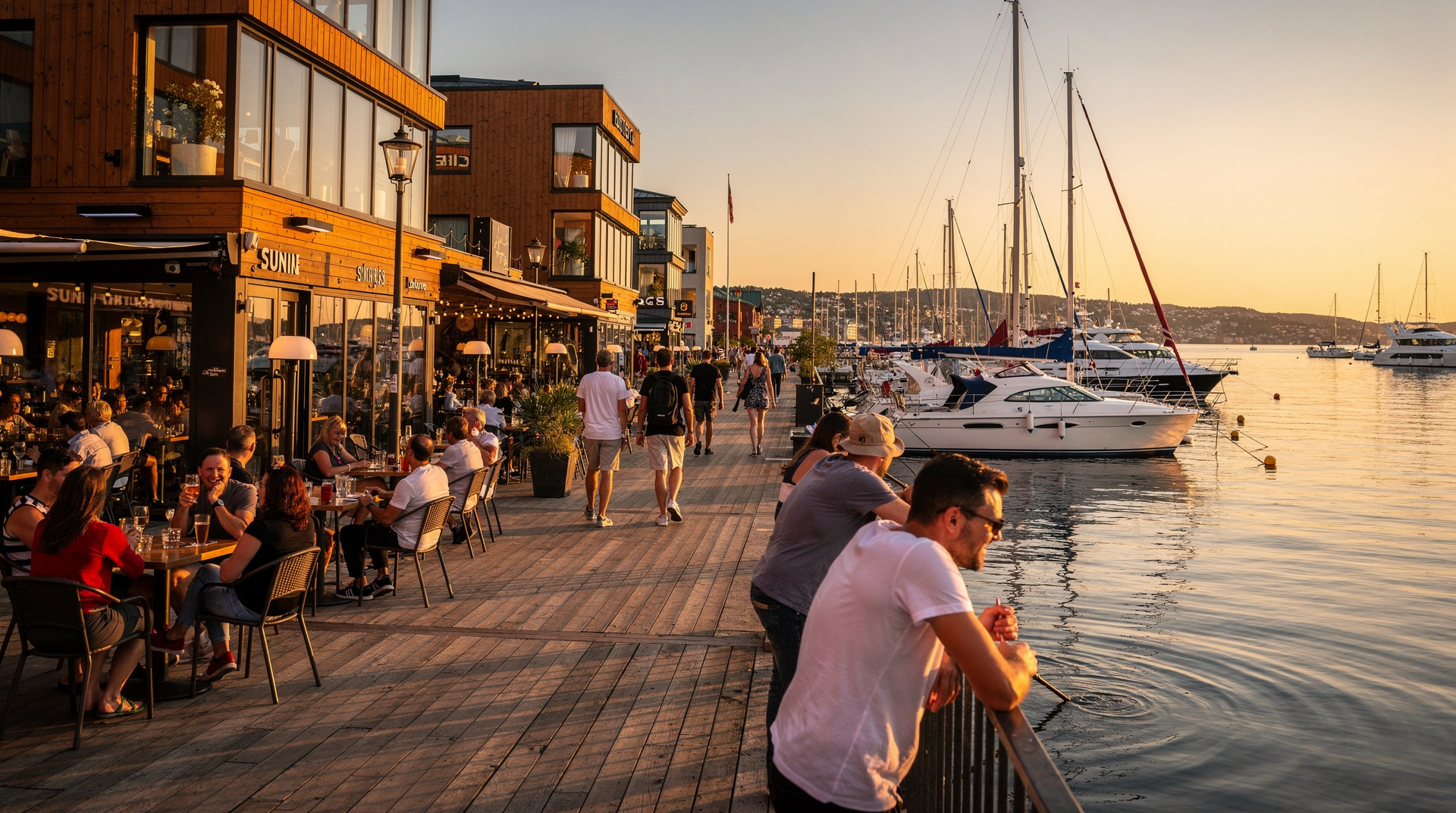
The easiest way to use the table above is to decide which part of the day is your anchor. In summer the anchor is the evening: leave the heavy sightseeing for the morning and midday, then keep the long golden hours for something that rewards them. A sunset fjord cruise is the obvious choice, and a walk through Bjørvika and the Opera House area works just as well when the sky stays bright late into the night. In winter the anchor flips to the middle of the day, and everything you want to see outdoors has to fit around it.
If you are visiting in the dark months, think of the day as two halves. The bright window is for the places where light genuinely changes the experience: the grounds of Vigeland Sculpture Park, the hillside views at Holmenkollen, or a gentle walk on Karl Johans gate. The second half belongs to indoor plans, and our list of rainy day museums works equally well for a dark afternoon, since a museum does not care what the sky is doing.
Evening plans that make the most of dark and light
Darkness is not a problem in Oslo so much as a different setting for the same city. A winter evening suits warm, enclosed experiences, and the floating saunas guide explains how a sauna session after sunset on the fjord became one of the signature things to do in the cold months. Skiers will find the lit-trail idea covered in more depth in the cross-country skiing guide.
In summer the opposite applies. Because the evenings stay bright, dinner can be late, walks can be long, and nobody feels hurried. It is the season to treat the Oslo islands as an evening destination as well as a daytime one, rather than racing to be back before dark. Whichever season you choose, check the sunrise and sunset times for your exact dates before fixing the order of your days, because a few minutes of difference matters most in the shoulder months, when the light changes fastest from one week to the next.
If you are still choosing when to go, the summer versus winter comparison sets the light against weather, crowds and activities, so you can weigh daylight alongside everything else that shapes the trip.
Frequently asked questions about Oslo daylight hours by season — the real data and what it means for your trip
Does Oslo have midnight sun?
No. Oslo is at 59.9°N, below the Arctic Circle at 66.5°N. The sun sets even at midsummer, around 22:55 in late June. You get very long twilight and a sky that never fully darkens in mid-June, but true midnight sun — where the sun is literally visible above the horizon at midnight — does not happen in Oslo. Head to Tromsø or the Lofoten Islands for midnight sun.When is the best daylight for photography in Oslo?
In summer, the golden hour extends for extraordinary lengths — from around 21:00 to 23:00 in late June, giving photographers hours of warm, low light. Winter offers dramatic blue hour windows around 15:00 to 15:30. Spring and autumn offer conventional golden hour timing.How dark does Oslo get in December?
Oslo gets about 6.5 hours of daylight at the solstice (around 21 December). The sun rises around 09:08 and sets around 15:17 in mid-December. This is genuinely dark — plan outdoor sightseeing and photography in the midday window between 10:00 and 15:00.Is jet lag a problem in summer Oslo?
Light pollution from the near-midnight sky can disrupt sleep for visitors not accustomed to it. Bring a sleep mask. The extra light exposure in the evening can also shift your body clock later. Hotels sometimes provide blackout curtains — check when booking.Can I do outdoor activities in winter with so little daylight?
Yes, if you choose the right activities. Cross-country skiing in Nordmarka runs on lit trails in the evening — many Norwegians ski after work in the dark. Snowshoe tours operate in early afternoon. The short day concentrates activity into a smaller window but does not preclude outdoor fun.
Top experiences
Bookable activities with verified prices and instant confirmation on GetYourGuide.