No northern lights in Oslo — the myth busted, and where to actually go
Oslo: Oslo Pass with public transport and free museum entry
Duration: 24-72 hours
- Instant confirmation
- Free public transport
- Skip museum queues
Can you see northern lights in Oslo?
Not reliably. Oslo is at 59.9°N — far south of the aurora oval. You need to be at roughly 65–70°N for reliable sightings. Tromsø (69.7°N) and Alta (69.9°N) are the proper destinations. Strong solar events occasionally allow faint auroras to be visible from Oslo, but you cannot plan a trip around this.
The myth that costs travellers real money
Every year, visitors arrive in Oslo in winter expecting to see the northern lights. Some have bought tours marketed with aurora photography on the promotional material. Many go home having seen nothing but a dark Norwegian sky.
| Oslo latitude | 59.9°N — well south of the aurora oval |
| Reliable latitude | 65–70°N (Tromsø, Alta) |
| Odds from Oslo | Single digits % on any given winter night |
| Odds from Tromsø | 80–90% on a dedicated 3-night chase |
| Best fix | Fly 1.5 hrs north to Tromsø or Alta instead |
This is not bad luck. It is basic geography, and the travel industry is slow to correct it because the aurora is one of the world’s most desirable travel experiences and “Norway” is loosely associated with it in popular imagination. Oslo is in Norway. Norway has northern lights. Therefore, Oslo has northern lights.
This logic is wrong. Here is the exact reason why, and what you need to do if northern lights are genuinely on your wish list.
The science: why latitude matters
The aurora borealis occurs when charged particles from the sun interact with Earth’s magnetic field and upper atmosphere. This interaction creates light visible in an oval-shaped band around the Earth’s magnetic poles — the “aurora oval.”
Under normal geomagnetic conditions, this oval sits between roughly 65°N and 72°N. Tromsø, at 69.7°N, is near the centre of it. Alta, at 69.9°N, is similarly positioned. These cities are not just “further north than Oslo” in the way that Birmingham is further north than London — they are in an entirely different atmospheric zone.
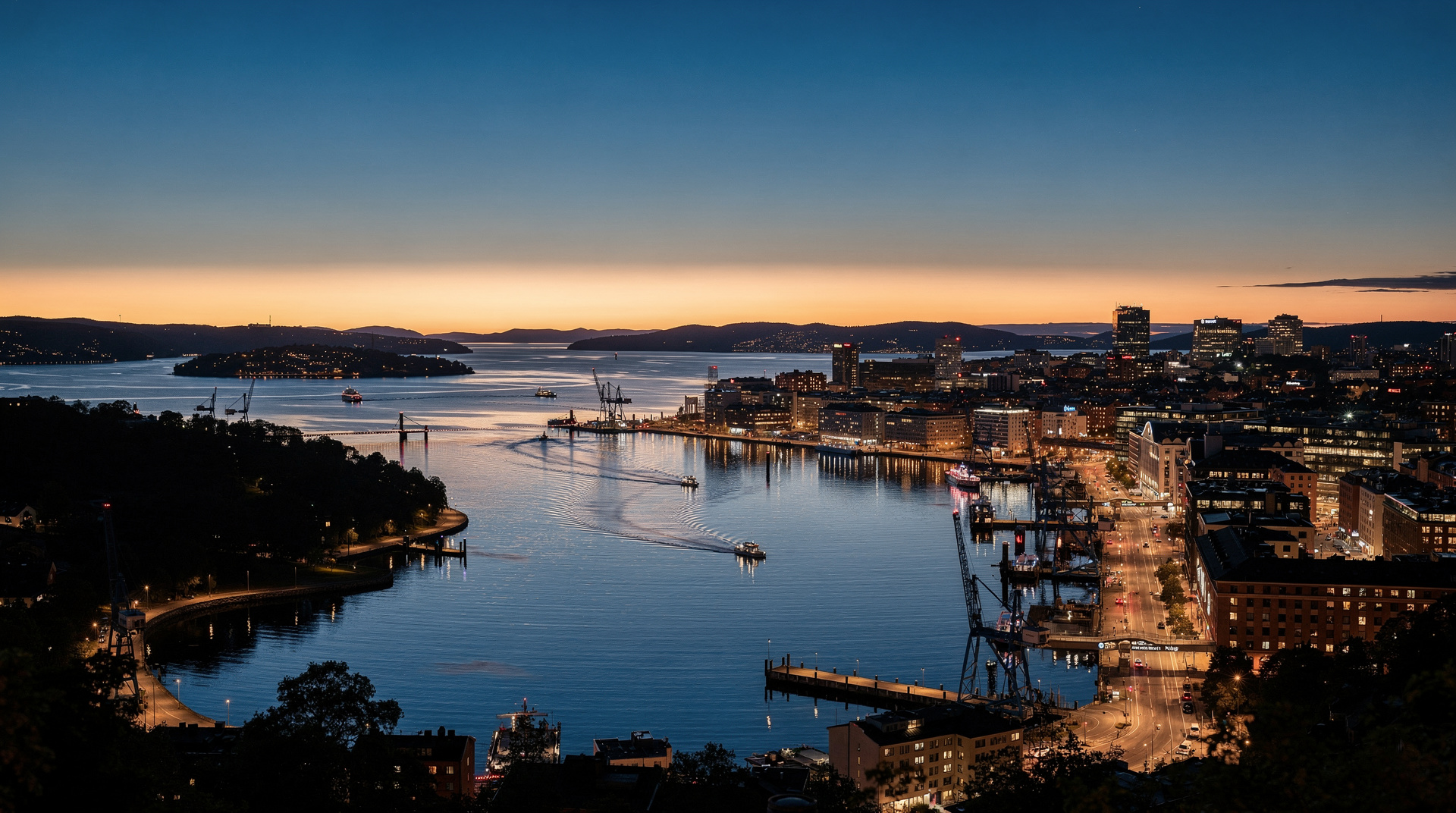
Oslo is at 59.9°N. This puts it approximately 600 to 700km south of the aurora oval. To reach Oslo from the oval’s southern edge, the geomagnetic activity must be so intense that it expands the visible aurora radius to cover an additional 5 to 10 degrees of latitude. This requires a Kp index of 7, 8, or 9. The scale runs to 9; a Kp 7 event is considered a moderate to strong geomagnetic storm.
How often does this happen? According to the US National Oceanic and Atmospheric Administration (NOAA), Kp 7+ events occur on average around 5 to 15 days per year. But the aurora must also be visible at night (not in summer) and the sky must be clear (often not the case in cloudy Norwegian winter). The net probability of seeing a meaningful aurora from Oslo on any given winter night is estimated in single-digit percentages.
What happens on a “northern lights tour” from Oslo
Tour operators in Oslo typically drive you 30 to 60km outside the city to a dark area — a hilltop in Nordmarka, a farm outside the city, somewhere with minimal light pollution. Then you wait.
On a Kp 7+ night with clear skies, you may see a genuine aurora display. It will be less impressive than what you would see from Tromsø on a Kp 3 night, but it will be real. A handful of lucky visitors each winter have a genuine aurora moment from Oslo’s surroundings.
On a typical night, you see stars (possibly, if clear) and nothing else. The guides are experienced and honest about this — many will tell you directly that the chance tonight is low. You drive back having paid NOK 600 to 1,500 (approximately USD 65 to 161) for a dark bus ride.
This is not a scam in the strict sense — the operators cannot control the atmosphere. But it is a product with a very poor probability-of-satisfaction ratio sold to people who may not fully understand that probability.
Where to actually go for northern lights
Tromsø: the most established aurora destination in Norway. The city has dozens of tour operators, excellent infrastructure, and sits at the heart of the aurora oval. A dedicated 3-night northern lights chase from Tromsø with a reputable van tour operator has an estimated 80 to 90% success rate in November to February. Tours cost NOK 1,200 to 2,000 (approximately USD 130 to 215).
Alta: slightly further north than Tromsø. Home to the Northern Lights Observatory and the Aurora Sky Station. Fewer tourists than Tromsø, excellent visibility from dark countryside locations.
Svalbard: at 78°N, the archipelago is deep within the aurora oval. The Aurora season from late October to February is excellent. Svalbard also offers the unique experience of aurora viewing on dog-sled tours or snowmobile expeditions.
Northern Sweden and Finland: Abisko (Sweden) and Saariselkä (Finland) are also excellent aurora locations with a dry, clear microclimate that makes them particularly good for cloud-free sightings.
The honest approach to aurora tourism from Norway
A sensible Norway trip for aurora-seekers:
- Fly to Oslo Gardermoen. Spend 2 to 3 days seeing the city.
- Take a 1.5-hour flight to Tromsø (Norwegian Air and SAS have frequent connections, typically NOK 400 to 900 return if booked in advance).
- Spend 3 to 5 nights in Tromsø with a morning or evening tour each night.
- Return to Oslo for the flight home, or fly direct home from Tromsø.
This approach separates the city experience from the aurora experience and gives each the conditions they actually need.
A note on aurora forecasting
The aurora forecast services — SpaceWeather.com, the NOAA Space Weather Center, and the Norwegian Meteorological Institute’s aurora forecast — provide Kp predictions 1 to 3 days ahead. No service reliably predicts aurora activity weeks in advance. Do not book a specific night’s tour in Oslo based on aurora hopes formed months earlier.
In Tromsø, even with a Kp 2 reading and clear skies, you may see the aurora — because you are in the oval itself. In Oslo, a Kp 2 night produces nothing visible. The oval is the only place that matters.
How this compares to other Oslo tourist myths
The northern lights are not the only Oslo expectation that needs adjusting before you arrive. See the Oslo tourist traps guide and the overrated attractions guide for other cases where the marketing outpaces reality. In each case the advice is similar: know exactly what a place or activity can and can’t deliver before you pay for it, and redirect the budget toward what Oslo does genuinely well.
Daylight, not darkness, is the bigger winter planning factor
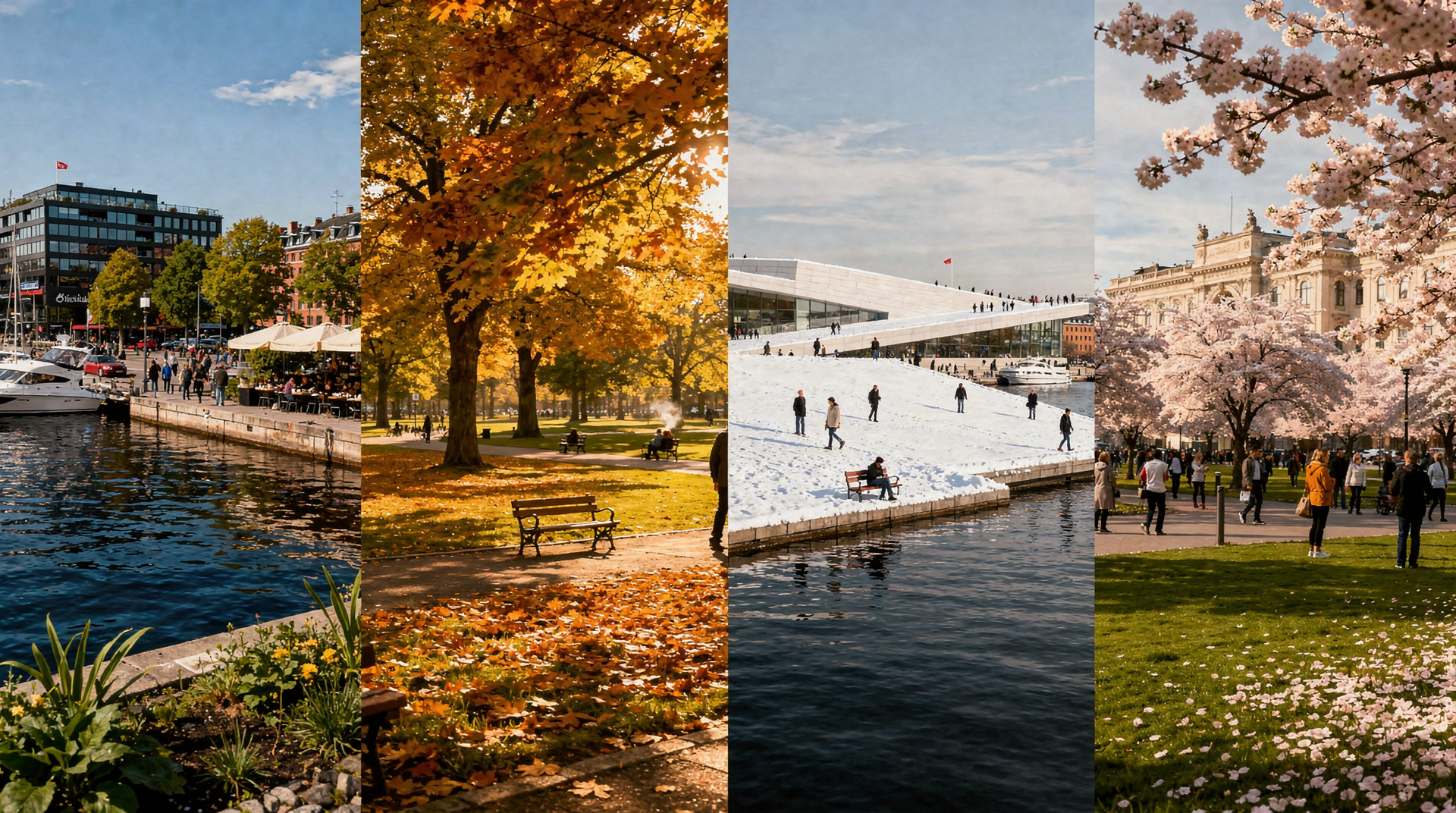
Visitors chasing the aurora from Oslo often overlook a more relevant winter fact: daylight hours change dramatically by season, and this affects your whole itinerary far more than any slim aurora chance. In December, Oslo gets barely 6 hours of daylight; by contrast, June offers nearly 19 hours.
The daylight hours by season guide breaks down exactly what to expect month by month, which matters for planning museum visits, outdoor time, and when the city looks its most atmospheric. If you’re deciding between a winter or summer Oslo trip for reasons beyond the aurora, the Oslo summer vs winter guide and the best time to visit guide cover the full trade-offs.
What you CAN do for winter magic in Oslo
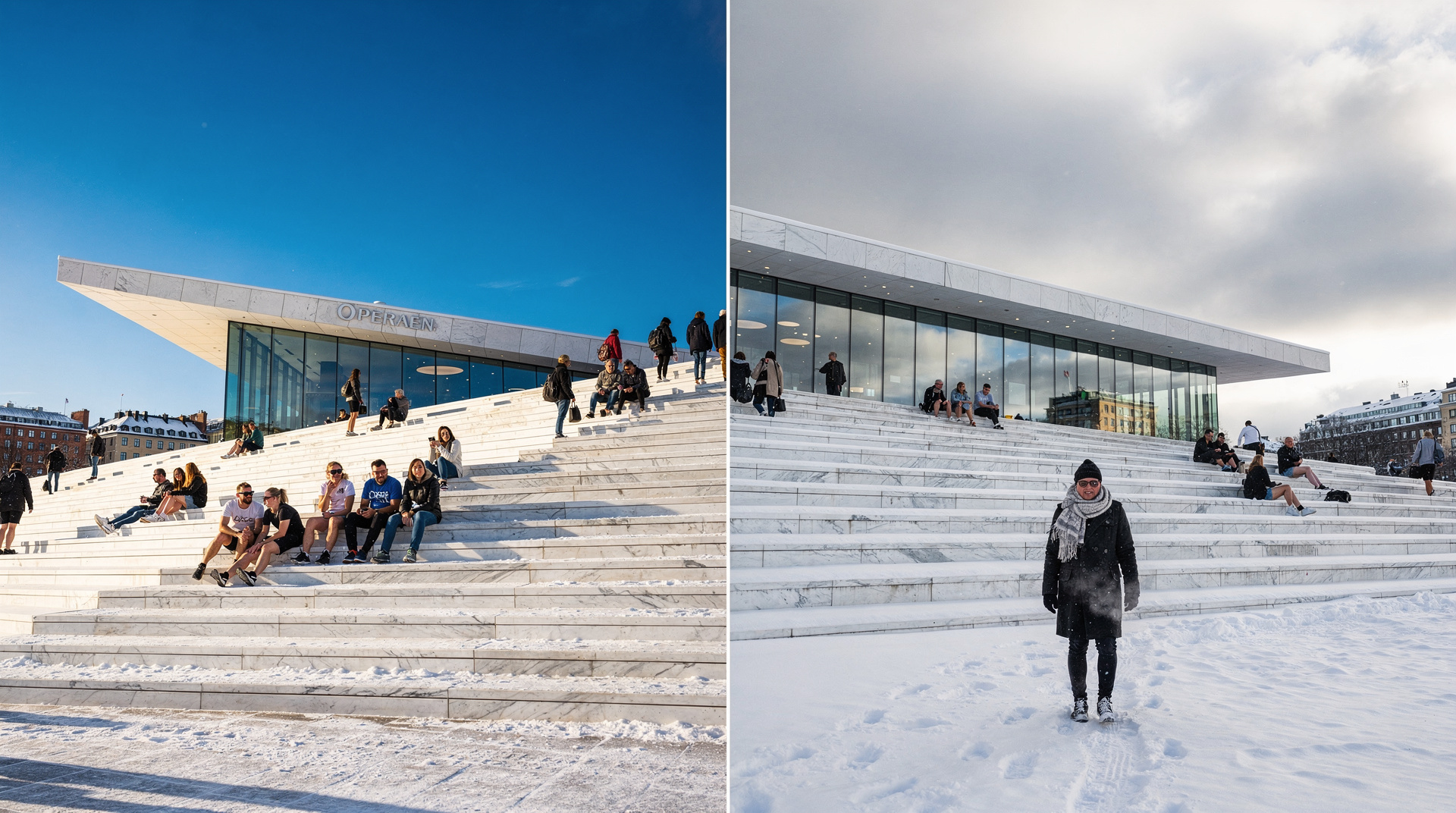
If you are visiting Oslo in winter hoping for the northern lights and have now learned it is not reliably on the table, the good news is that Oslo in winter has its own genuine magic:
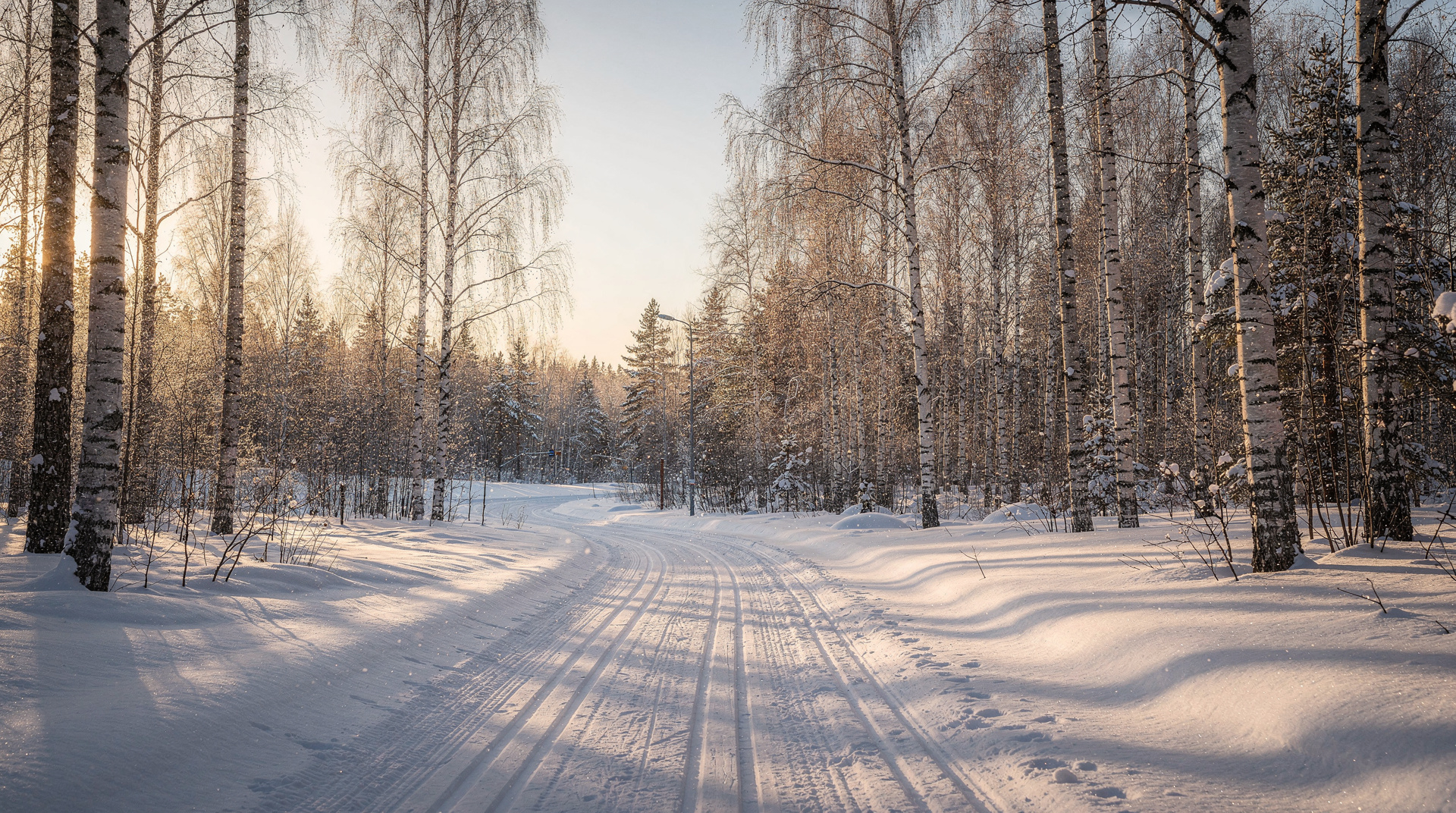
- Cross-country skiing in Nordmarka on lit trails through snowy forest
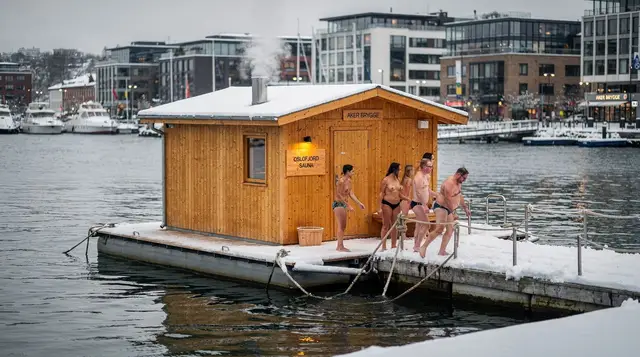
- The floating saunas with snow on the ground and cold fjord water
- Christmas markets and ice skating at Spikersuppa (December)
- Snowshoeing tours in Oslomarka with forest and fjord views
- The Holmenkollen ski festival in early March
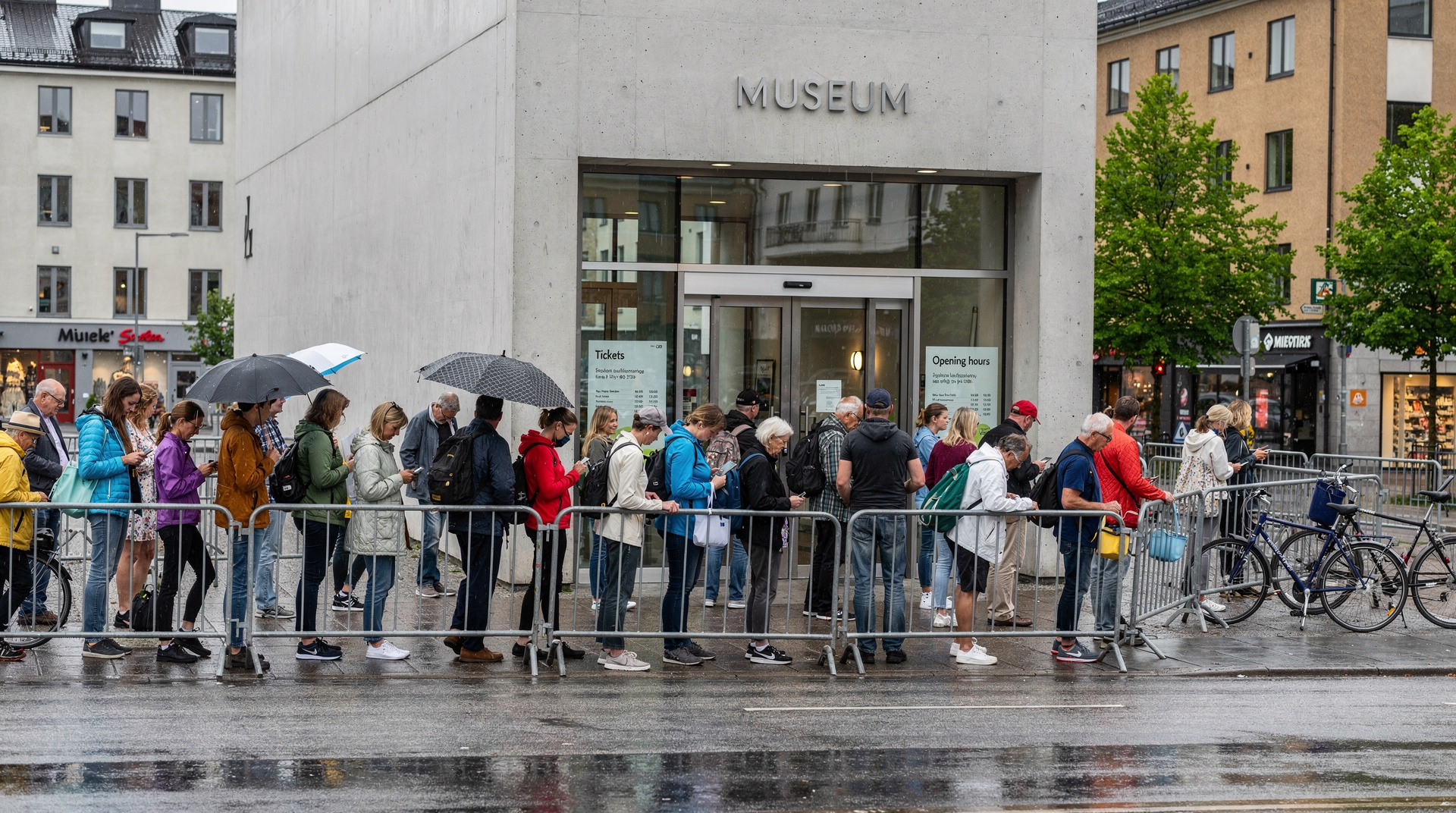
- Uncrowded museums in a cosy, dark-season atmosphere
Oslo’s winter is genuinely good. It is just not an aurora destination. The Oslo in winter guide covers all of these properly. Cross-country skiing in Nordmarka and the annual Holmenkollen ski festival are both genuine, deliverable winter highlights — unlike the aurora, they don’t depend on a rare geomagnetic event to be worth the trip.
Building a winter trip that does not depend on the sky
The smartest way to treat the aurora is as a bonus, never as the reason for the trip. If you plan Oslo around things that happen whatever the solar wind is doing, a clear and active night becomes a pleasant surprise instead of a make-or-break disappointment. Start with the Oslo winter 3-day itinerary, which is built around daylight, warmth and evenings that feel special without any celestial help. If you only have a short window, the Oslo in 2 days itinerary keeps the essentials tight, and the Oslo in 3 days itinerary gives you room to breathe between indoor and outdoor plans.
Winter evenings in Oslo are long, and that is where the city does its quiet best. Warm up with a sauna and cold plunge session, follow it with a slow dinner, and let the dark hours become part of the experience rather than something to fill. Our sauna etiquette guide explains what to expect if it is your first time, so you can relax instead of worrying about the unwritten rules.
If you still want to try from Oslo
Some people will want a go regardless, and that is a perfectly reasonable choice as long as you keep your expectations honest. A few practical thoughts:
- Keep it cheap and flexible. Do not prepay for anything non-refundable weeks ahead. Watch the short-range forecast, and only commit on a night when conditions look promising and the sky is forecast to be clear.
- Go where it is dark. Light pollution matters far more than most visitors expect. Open ground away from streetlights, such as the forest and lake areas described in the Nordmarka hiking guide and the Sognsvann lake guide, is better than anywhere in the centre. Check the Oslo daylight hours guide so you know when real darkness actually arrives in your month.
- Dress as if you will stand still. Waiting for a faint glow is mostly standing around in the cold. Layers, a warm hat and something hot to drink make the difference between a good evening and a miserable one. The Oslo in winter activities guide has practical clothing thinking that applies here too.
- Pair it with something that always delivers. A day of cross-country skiing or snowshoeing near Oslo followed by a late look at the sky means the day is a success whatever happens overhead.
If you would like a first-hand account of how the decision felt on the ground, our blog post on why we skipped the northern lights tour explains the reasoning, and winter in Oslo: what to expect sets out what the season is really like when you stop looking upward.
Money, honesty and where to spend it instead
Because Oslo is already an expensive city, a speculative aurora tour is a costly gamble on top of a costly trip. Before paying for anything, it helps to see the whole picture: the Oslo trip cost guide and the is Oslo expensive guide show how quickly a winter break adds up, and the Oslo tourist traps guide names the other products that promise more than they can deliver.
Redirecting money towards experiences that do not depend on luck is usually the better call. A winter visit to the Holmenkollen ski jump and museum, a rainy or freezing afternoon in the best Oslo museums, or a warm evening in the floating saunas all give you something concrete for your money. If the weather turns bad, the rainy day museums guide gives you plenty of indoor options, and travelling with children is covered in the Oslo with kids guide.
Choosing between Oslo and the far north
It helps to be clear about what each place is for. Oslo is a compact, walkable capital with museums, waterfront architecture, saunas and forest on the doorstep. The far north is a wilderness destination where the sky itself is the attraction and the whole trip is organised around dark hours, tour vans and patience. Trying to get both from a single base usually means doing neither well.
If you are weighing the capital against another Norwegian city for your main stay, the Oslo vs Bergen comparison lays out the differences, and the Oslo to Bergen options guide shows how to link the two. For a broader decision about timing, the best time to visit Oslo guide and the how many days in Oslo guide will help you decide how much of your trip should be spent in the capital before heading north. Once you have settled that, the top things to do in Oslo fills your city days with things that are certain to happen.
Frequently asked questions about No northern lights in Oslo — the myth busted, and where to actually go
Why can't you see northern lights in Oslo?
The northern lights (aurora borealis) occur in an oval band around the Earth's magnetic poles, typically between 65° and 72°N. Oslo is at 59.9°N — roughly 600km south of this oval. Only very strong geomagnetic storms (Kp index 7+) push the aurora far enough south to be visible at Oslo's latitude. These happen a few times per year at most and are not predictable months in advance.What is the Kp index?
The Kp index is a global measurement of geomagnetic activity on a scale of 0 to 9. At Kp 0–3, auroras are only visible from within the polar zone (Tromsø and above). At Kp 5–6, they can be seen from northern Norway's coast. At Kp 7+, southern Scandinavia including parts of Norway may see a display. Oslo needs Kp 7 or higher — a rare event.Are northern lights tour operators from Oslo legitimate?
Some are honest about the low probability; others are not. Any operator that guarantees or implies reliable northern lights viewing from Oslo is misleading you. The honest ones will tell you straight: the chance of a meaningful aurora from Oslo or its surroundings is low. You are gambling on unlikely atmospheric conditions.Where in Norway can I reliably see northern lights?
Tromsø (69.7°N) and Alta (69.9°N) are the main bases. Both sit within the aurora oval and have well-established tour industries. October to March is the optimal window. A good operator will chase the lights by van to get clear sky. Success rates on dedicated multi-night trips to Tromsø are typically 80–90%.When is the best time to see northern lights in Tromsø?
Late September through March, with November to February offering the darkest skies. The lights occur year-round but are only visible at night — and northern Norway has midnight sun from late May to late July, making summer sightings impossible. The equinoxes (September and March) are traditionally good periods for geomagnetic activity.Can you combine northern lights and an Oslo city trip?
Yes — fly into Oslo, spend 2–3 days in the capital, then fly north to Tromsø or Alta for your aurora hunt. Return via Oslo or fly direct. Tromsø is 1.5 hours from Oslo Gardermoen on Norwegian Air or SAS, with frequent connections.Do Oslo tour operators ever admit the low probability upfront?
The better ones do — reputable Oslo-based aurora tour operators will state clearly, before you book, that any sighting depends on a rare geomagnetic event and that most nights produce nothing. Treat unqualified guarantees or heavily aurora-focused marketing photos as a red flag, and check recent reviews for how often groups actually saw anything before paying.Is there a better time of year to at least try from Oslo?
If you're set on trying despite the odds, the weeks around the equinoxes (March and September) see statistically higher geomagnetic activity, and longer, darker nights than autumn's early winter help too. Even then, treat any Oslo attempt as a bonus activity on a trip built around the city itself, not the main event.
Top experiences
Bookable activities with verified prices and instant confirmation on GetYourGuide.