Oslo in winter — complete activities guide
From Oslo: Oslomarka forest guided snowshoeing tour
Duration: 3 hours
- Winter only
- Snowshoes included
What are the best winter activities in Oslo?
Cross-country skiing in Nordmarka (trail access directly from T-bane), snowshoeing guided tours, the Korketrekkeren toboggan run (tram up, free sledge down), Holmenkollen ski jump visit, and the SNØ indoor ski dome at Lørenskog. Oslo is one of Europe's best winter cities for active travellers.
Why Oslo is one of Europe’s finest winter cities
Most European travellers think of Oslo as a summer destination — fjord cruises, island hopping, midnight light. But Norwegians consider winter the better season for reasons that become immediately obvious once you step off the train at Oslo Central Station on a crisp February morning to find the city blanketed in snow and the T-bane ferrying cross-country skiers to the forest.
Oslo in winter is quieter, cheaper, and — for the right traveller — more authentically Norwegian. The cultural calendar is full (this is museum season), the outdoor infrastructure is extraordinary, and the city’s relationship with winter sport is not performance — it is daily life. Before you arrive, dispel one myth: the northern lights are not visible from Oslo. At 59.9°N, Oslo is too far south. If northern lights are your goal, book flights to Tromsø. If skiing, sledging, snow, good food, and one of the world’s great ski museums are your goal, Oslo delivers.
| When | December–March, best snow typically Jan–early March |
| Temperatures | −7 to −2°C (Jan/Feb), milder shoulder months |
| Daylight | 6–8 hours in Dec/Jan |
| Signature activity | Free T-bane access to Nordmarka ski trails |
| Budget | 15–25% cheaper than summer, food/drink unchanged |
Cross-country skiing — Norway’s national language
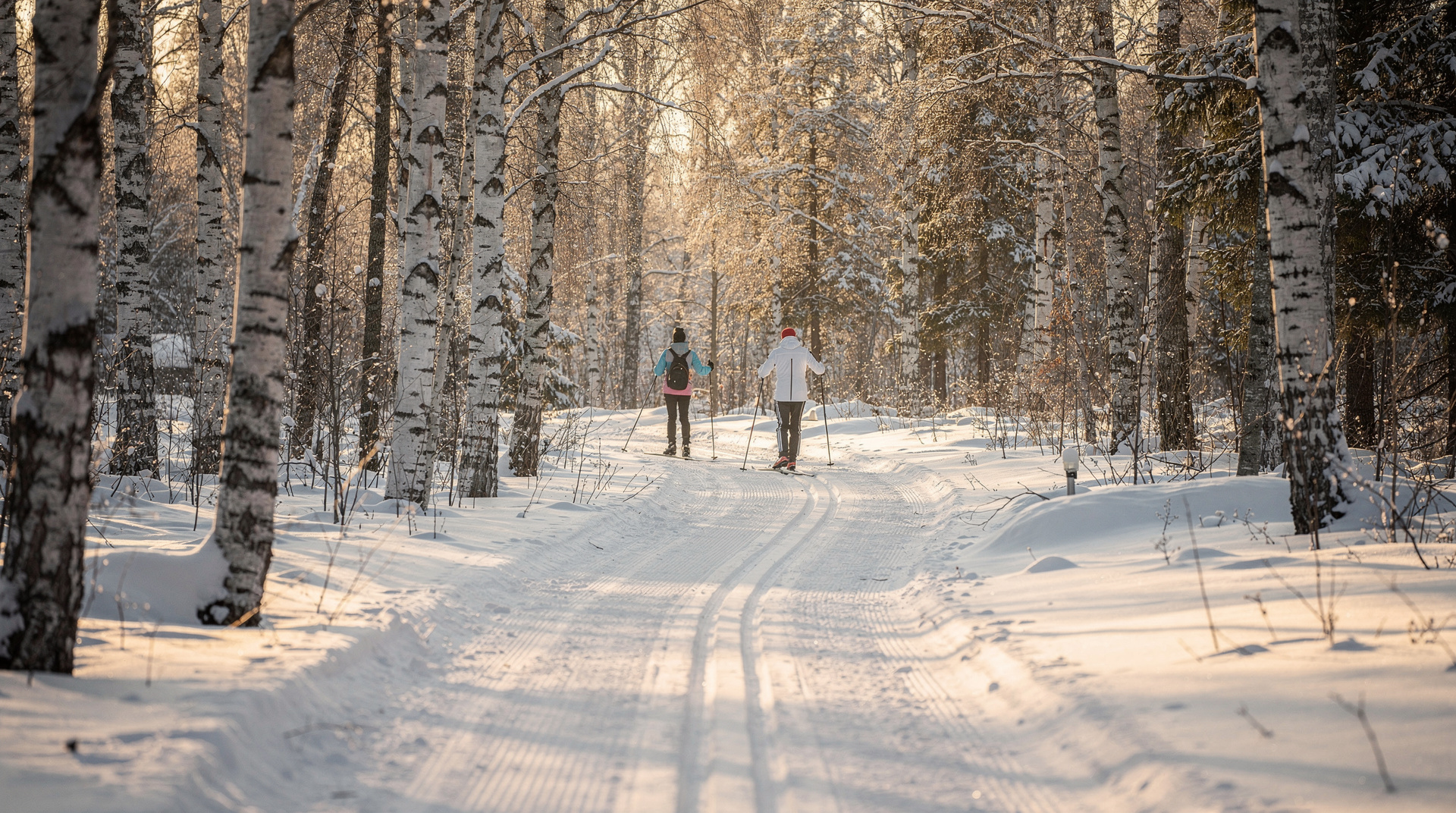
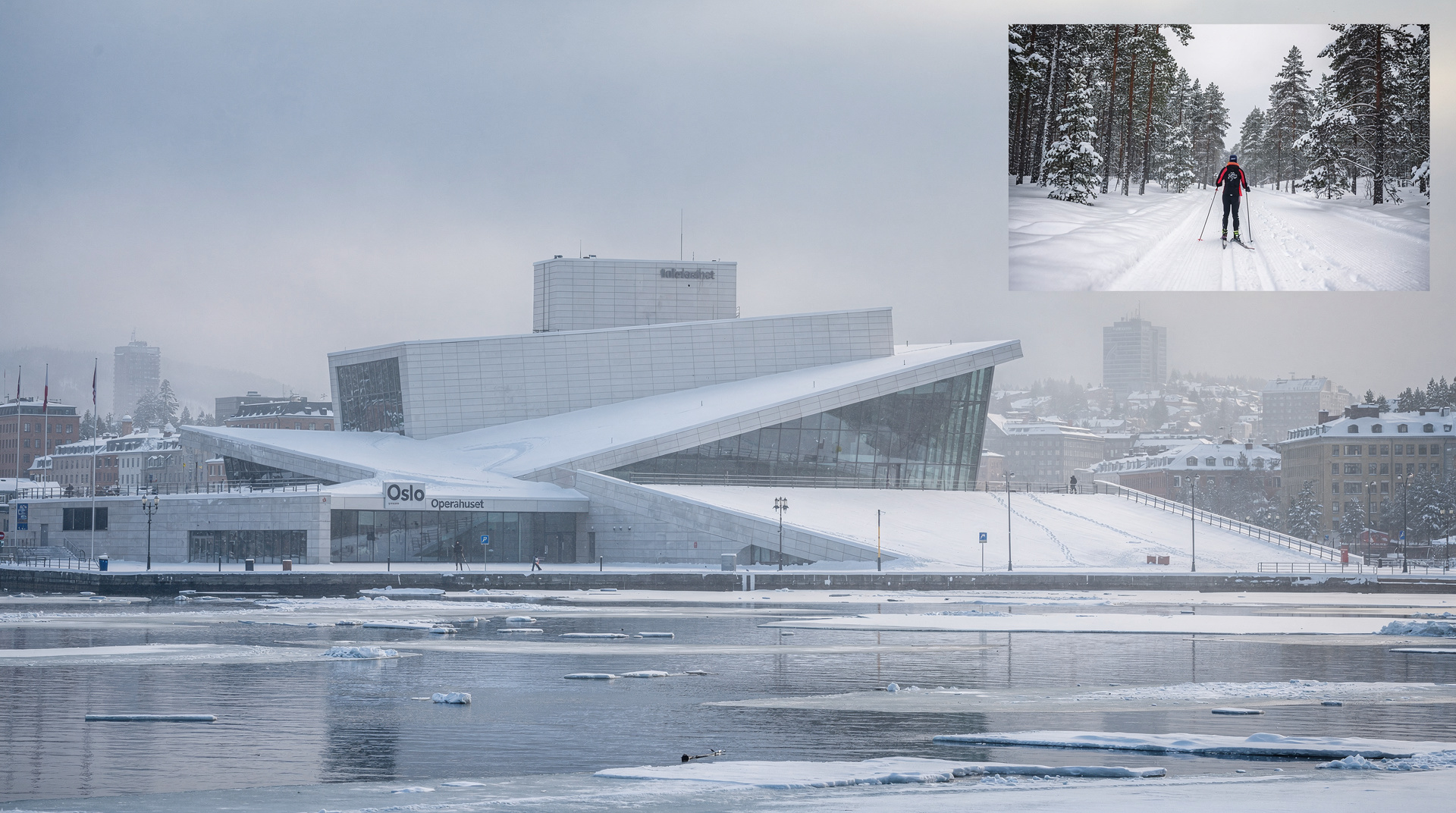
The Nordmarka forest north of Oslo converts into an enormous groomed cross-country ski trail network as soon as snow depths permit — typically late November or December in a normal year. The trails are maintained by Oslo Skisenter and partner organisations, with grooming machines running overnight to maintain classic and skating lane corridors.
Access: T-bane line 1 to Frognerseteren (end of line) or Holmenkollen, or line 3 to Sognsvann. These stations are within 5 minutes’ walk of groomed trail entrances. You can rent equipment at several stations on the T-bane line — rental prices are approximately NOK 300–450 per day (USD 32–48) for skis, boots, and poles.
Ability required: Complete beginners can take a lesson (see our cross-country skiing guide for lesson options). The classic technique is relatively accessible; skating takes more coordination. Total beginners should take a 2-hour introduction lesson before attempting solo trails.
Trail lengths: The Nordmarka network has hundreds of kilometres of trails at all levels. The easiest circuits near Frognerseteren are 5–8 km and follow well-marked, relatively flat terrain. Advanced circuits extend 20+ km into the forest interior.
Snowshoeing in Nordmarka
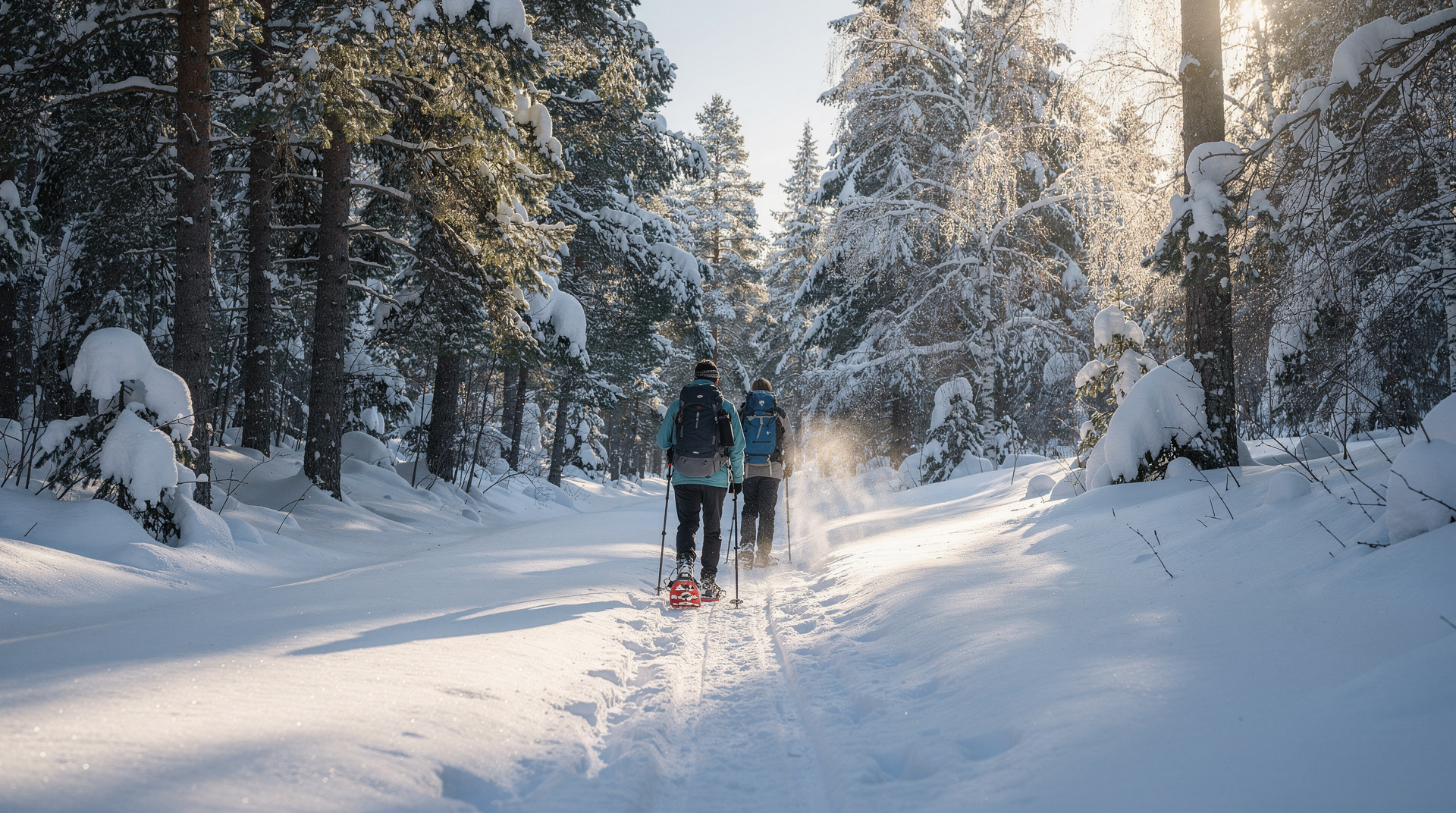
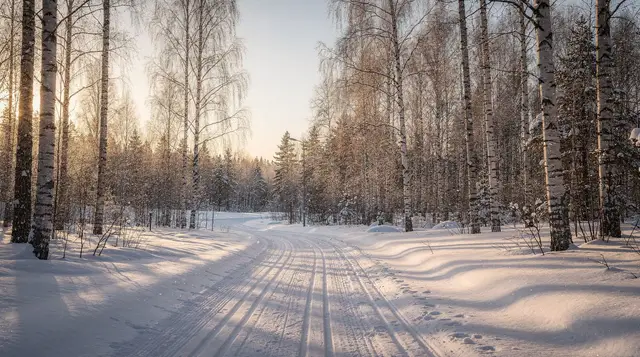
Snowshoeing has grown significantly in Oslo as an accessible alternative for those who cannot or do not want to ski. Snowshoes — wide frames attached to hiking boots that distribute your weight over snow — allow anyone who can walk to move through Nordmarka’s winter landscape.
Guided snowshoe tours are the most recommended format for visitors. A guide handles the equipment, leads the route, and typically includes a warming campfire and hot drink stop. Our detailed snowshoeing guide covers the options in full. The classic guided snowshoe tour with a Norwegian BBQ (pølse grillet over open fire, hot berry juice) is one of Oslo’s most memorable winter experiences.
Self-guided snowshoeing is possible with rental gear from outdoor shops — Fjellsport Oslo on Bogstadveien (near Majorstuen metro) stocks rental snowshoes from approximately NOK 200/day (USD 22). Combine with a Ut.no offline map of Nordmarka.
Korketrekkeren — the free toboggan run
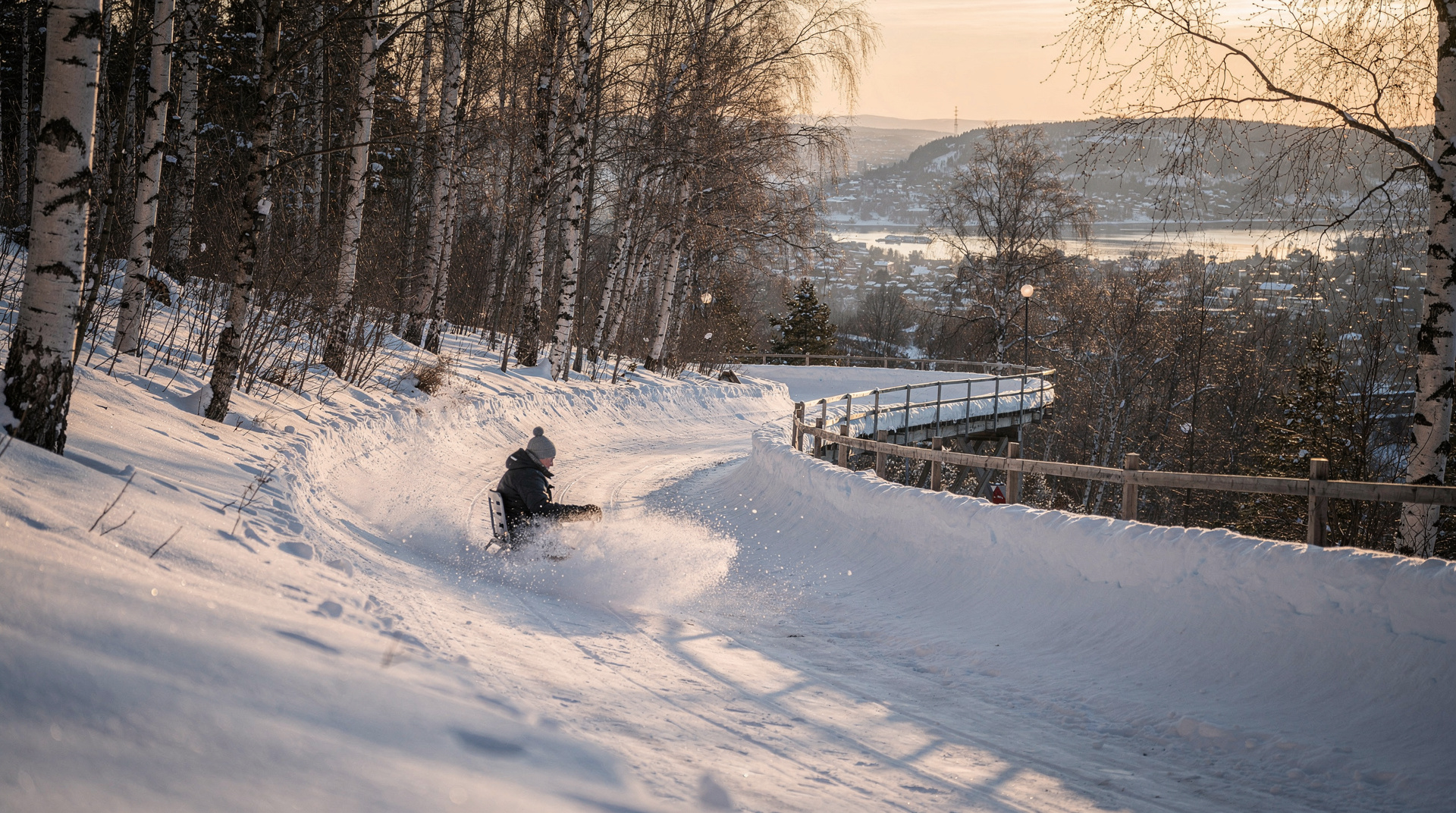
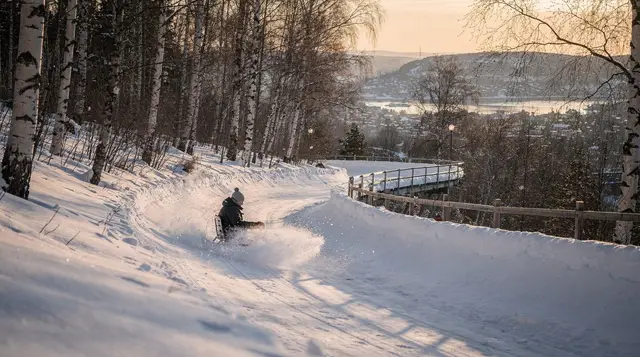
The Korketrekkeren is a 2-kilometre toboggan track running from Frognerseteren (T-bane line 1) down to Midtstuen. It is a genuine Oslo institution: families, couples, and groups rent plastic sledges (or bring their own) and slide down the groomed run, then take the T-bane back up and do it again.
Cost: free for those with their own sledge. Sledge rental available at the top for NOK 50–80 (USD 5–9). The run is open whenever there is sufficient snow, typically December through early March. There is no booking required — queue at the top and go.
This is one of Oslo’s most purely fun activities and costs almost nothing. Our dedicated Korketrekkeren guide has full detail on the run, transport, and practical advice.
Holmenkollen — ski jump, museum, and city views
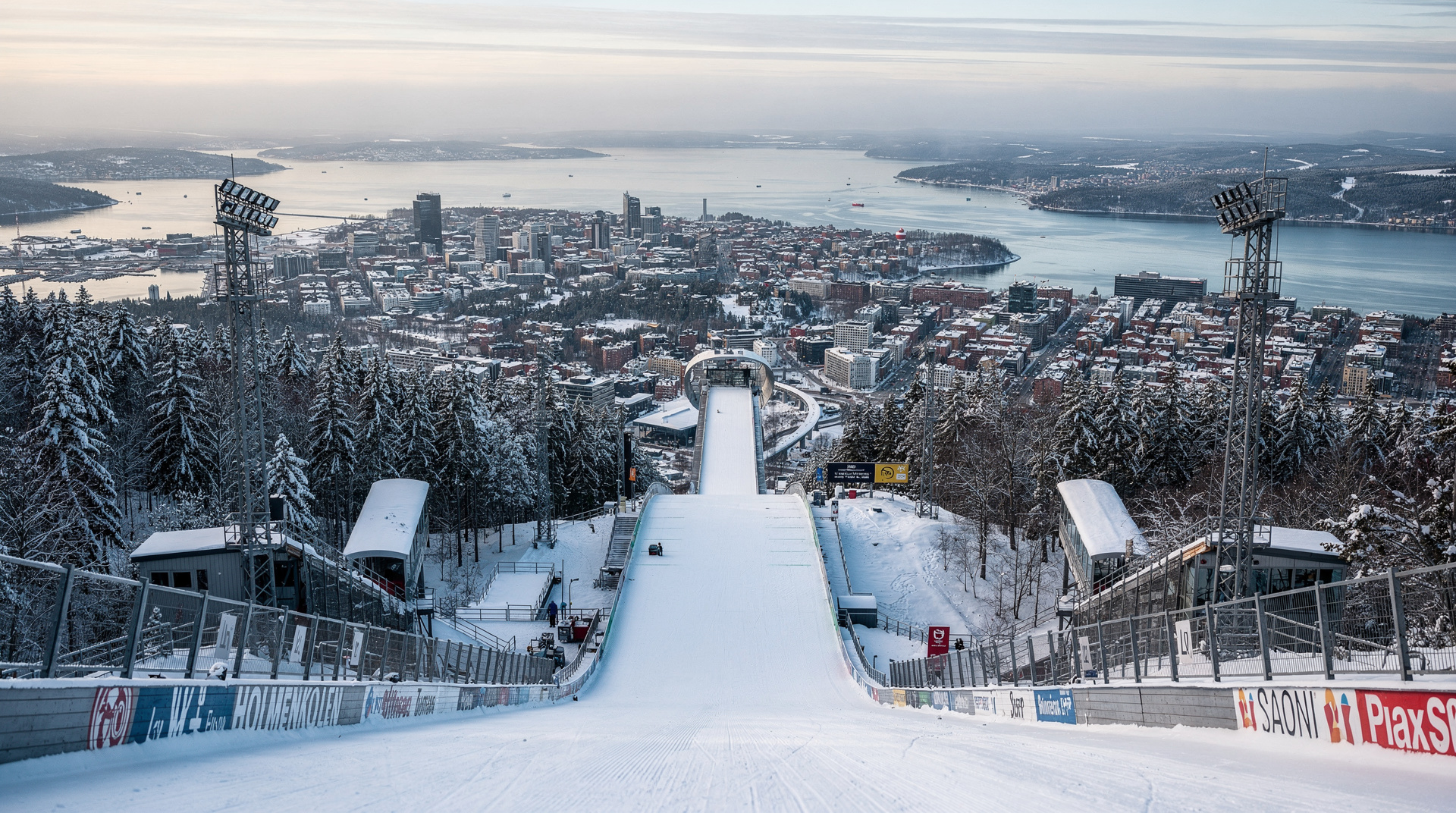
Holmenkollen is on every winter itinerary for good reason. The ski jump tower (opened 2010) is the world’s most photographed ski jump structure. The ski museum inside the jump structure is the world’s oldest ski museum and covers Norwegian skiing history from 4,000-year-old rock carvings to Olympic gold medals.
For non-skiers, the jump tower viewing platform is accessible by lift (included in the museum ticket) and offers arguably the best view of Oslo and the fjord of any structure in the city — better than from a restaurant or rooftop because you are looking slightly from above the treeline into the bowl of the city.
Admission to the ski museum and jump platform: NOK 185 for adults (USD 20), NOK 110 for children (USD 12), as of early 2026 — verify current prices on the Holmenkollen website. The museum is open year-round but the atmosphere is best in winter with snow.
Our full Holmenkollen guide covers the ski festival (annually in early March — the biggest Nordic skiing event outside the Olympics), the new biathlon venue, and the best approach routes.
SNØ — indoor ski dome at Lørenskog
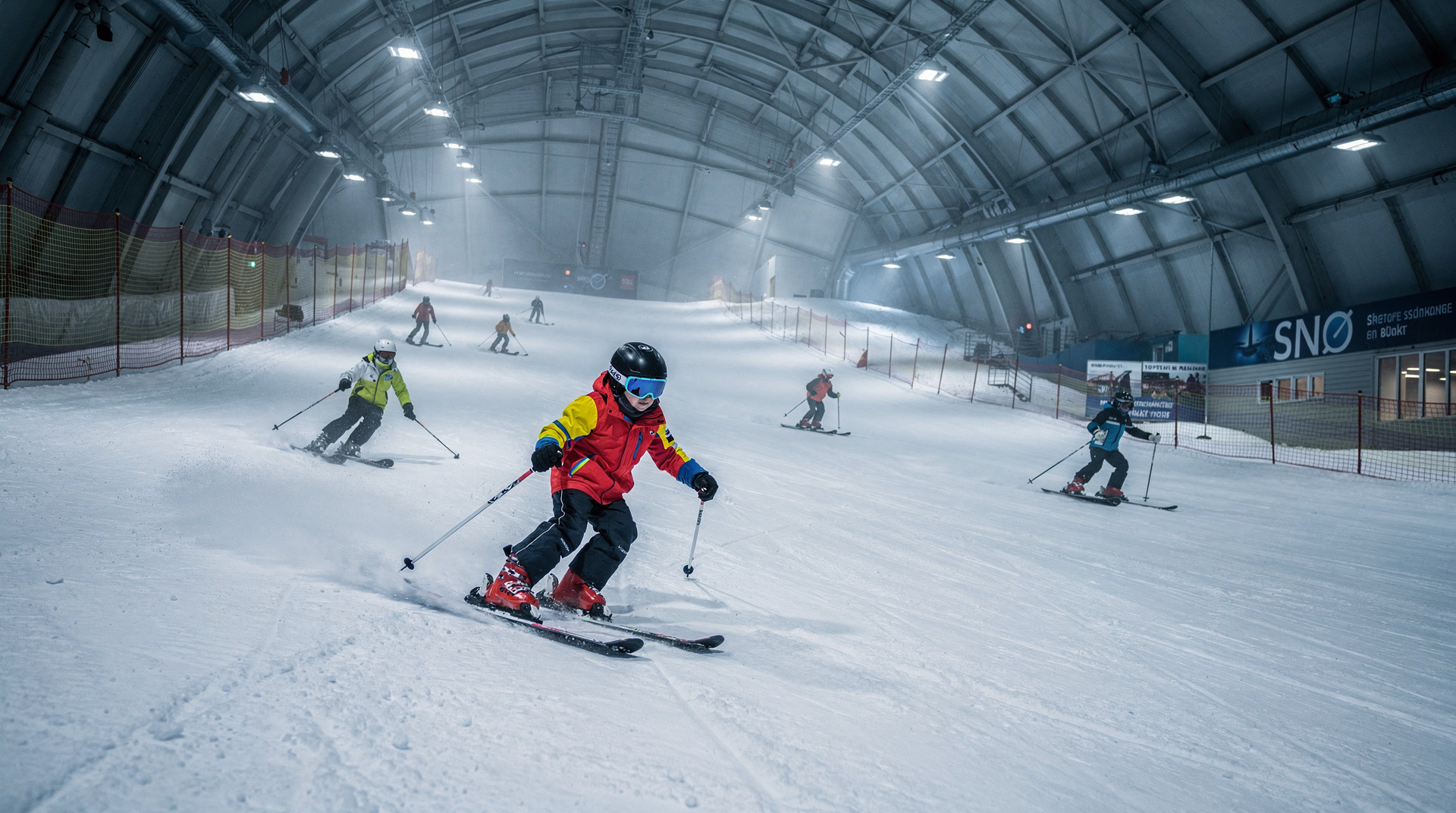
When snow is unreliable in Oslo itself, or when you want guaranteed slopes any time of year, the SNØ ski dome at Lørenskog is the answer. This large indoor ski facility, 20 minutes by Ruter from central Oslo, offers a full ski slope, dedicated children’s area, cross-country trails under one roof, and ski rental and instruction. See our dedicated SNØ ski dome guide.
Admission plus one slope session: approximately NOK 380–520 (USD 41–56) depending on age and slot. Equipment rental additional. A good option for families, beginners, and travellers visiting in shoulder season when Nordmarka’s natural snow is thin.
Winter fjord activities
The Oslofjord does not freeze in central Oslo in normal winters (the salt content and currents prevent it). This means fjord cruises are possible in winter, though most summer operators reduce their schedules. The winter fjord cruise — a wrapped-up trip on a heated vessel — is a particular Oslo experience. See our winter fjord cruise guide for what is actually available.
Floating saunas operate year-round from several Oslo harbourfront locations. A sauna session followed by a plunge into 4°C fjord water in January is extreme but thoroughly Norwegian — and operators run these at full tilt all winter. Our floating saunas guide has the details.
Torchlight and campfire walks
For those who want the winter forest atmosphere without skis or snowshoes, guided torchlight walks through Nordmarka — with a campfire stop for warmth and Norwegian snacks — are a popular alternative. These typically run in the evenings (18:00–21:00) and are designed for groups wanting a social winter forest experience. The combination of dark pine forest, torches, and an open fire in the snow is genuinely atmospheric.
Practical winter logistics
Daylight: Oslo has 6–7 hours of usable daylight in December and January. Plan outdoor activities between 09:00 and 15:00; evenings are dark by 15:30 in the darkest week. The flip side: dusk light over snow and fjord is exceptional for photography.
Clothing: The standard Norwegian layer system: merino wool base layer, fleece or down insulating layer, windproof/waterproof outer shell. Wool socks, warm gloves, and a hat rated to at least −10°C. Avoid cotton base layers — they hold moisture. Ski shops on Bogstadveien have rental gear if you have not packed sufficiently warm clothing.
Transport: Ruter operates normally in all but severe storm conditions. Cross-country ski trails begin at the T-bane stations — no car needed for any of the activities listed above.
Budget: Oslo winter is generally cheaper than summer. Hotel rates drop 20–40% from summer peaks. The main winter activities (cross-country skiing, Korketrekkeren) are low-cost. Restaurant prices are constant year-round (and high). Plan NOK 1,500–2,000 per day (USD 161–215) for mid-range winter travel excluding accommodation.
For a structured winter visit, our 3-day winter itinerary combines Holmenkollen, Nordmarka skiing, and the city’s best winter museums into a coherent programme.
Oslo’s winter culture — understanding the season
Oslo in winter is not a truncated version of Oslo in summer with colder weather. It is a different city operating according to a different seasonal logic. The Norwegians who live here do not endure winter — they build their cultural calendar around it. Understanding this makes winter Oslo make sense in a way that a “what to do in winter” list cannot fully convey.
The concept of koselig (pronounced “koo-sheh-lee”) is the Norwegian equivalent of the Danish hygge — warmth, candles, blankets, good company, the pleasure of being warm inside while it is cold outside. Oslo’s restaurants, cafés, and apartments lean into this hard in winter. The city has a lower ambient social energy than summer — fewer outdoor cafés, fewer tourists, fewer visible reasons to be outside — but a higher interior energy, if that distinction makes sense.
Winter is also the season when Oslo’s performance venues are fullest. The Oslo Philharmonic, the National Theatre, Det Norske Teatret, and the Norwegian National Opera all have their main programming seasons from September through May. If you have any interest in classical music, theatre, or opera, winter is when the city’s cultural life is richest.
Winter museum highlights
The museums that feel most appropriate and most rewarding in Oslo’s winter:
The National Museum (Nasjonalmuseet): Opened 2022 in a vast new building at Aker Brygge, this is Norway’s national gallery for art, design, and architecture. The permanent collection includes Munch’s “The Scream” and major works by J.C. Dahl, Christian Krohg, and international masters. Entry NOK 200 (USD 22) for adults. Closed Mondays.
The Munch Museum (MUNCH): The 13-floor tower at Bjørvika is one of Oslo’s most architecturally striking buildings and contains the world’s largest collection of Edvard Munch’s work. The building is a destination in itself — the fjord-facing windows on the upper floors are extraordinary in winter light. Entry NOK 180 (USD 19). Our full Munch museum guide covers the collection in detail.
Norsk Folkemuseum (Norwegian Folk Museum) at Bygdøy: The outdoor open-air museum has 160 historic buildings relocated from around Norway — including the spectacular 12th-century Gol stave church. In winter, the museum is snow-covered and somewhat reduced in opening, but the core buildings are accessible and the atmosphere with snow on the sod roofs is exceptional. Check winter opening hours before visiting.
The Viking Planet: Near Oslo Central Station, this is the contemporary Viking-era museum that has partially filled the gap left by the closed Viking Ship Museum (which remains closed until approximately 2027 for renovation). Entry NOK 199 (USD 21). Our Viking Planet guide gives an honest review of what it covers.
Winter food and drink
Oslo’s restaurant scene does not slow in winter. If anything, the post-museum dinner or the long-lunch culture is more comfortable when there is no pressure to be outside enjoying the weather.
Christmas markets (December): Oslo does not have the scale of German Christmas markets but the market at Rådhusplassen (City Hall square) and the historic Christmas market at Norsk Folkemuseum are genuine and locally popular. The Folkemuseum market in particular — candles, traditional craft goods, mulled wine (gløgg) — is charming. Both run in December only.
Julenissemat (Christmas season food): From late November, restaurants add seasonal dishes: pinnekjøtt (salted and dried lamb ribs, steamed over birch twigs, the classic western Norwegian Christmas dish), ribbe (roasted pork belly), and lutefisk (reconstituted dried cod — an acquired taste but a cultural experience). These are on the menus of traditional Norwegian restaurants throughout December.
Aquavit: Norway’s signature spirit is at its most culturally prominent in winter. Linie Aquavit (aged in sherry casks on ships that cross the equator twice) and various Norwegian distillery aquavits are served warm alongside winter food. At Oslo bars, a shot of aquavit with a cold beer (en og en — one and one) is the classic winter pairing.
Budget for a winter Oslo visit
Oslo in winter runs 15–25% cheaper than summer for accommodation. Flight prices also tend to be lower except over Christmas and New Year. The main activities — cross-country skiing, Korketrekkeren, Holmenkollen — are low-cost. Where the savings disappear is in food and restaurants, which are unchanged year-round (and high by international standards).
Indicative daily budget in winter:
- Backpacker/budget: NOK 900–1,100/day (USD 97–118) — hostel, self-catered meals, free activities
- Mid-range: NOK 1,700–2,200/day (USD 183–237) — 3-star hotel, one restaurant meal, 2 activities
- Comfortable: NOK 2,800–3,500/day (USD 301–376) — 4-star hotel, two restaurant meals, premium activities
Note that these are per-person estimates for solo travellers; couples sharing a hotel room significantly reduce the accommodation cost.
For detailed budget planning including specific activity prices and honest food cost estimates, our Oslo trip cost guide and is Oslo expensive article give the full picture.
Packing for Oslo in winter
The question visitors ask most frequently before a winter Oslo trip is what to pack. The honest answer: more insulation than you think, less bulkiness than you fear. Norwegian winter is cold but manageable in proper clothing. Most visitors underpack for the cold and then buy replacement gear at Norwegian outdoor shops (Fjellsport, Intersport, XXL) — which is expensive but tells you what Norwegians actually wear.
Essential layers:
-
Merino wool or synthetic base layer (top and bottom) — NOT cotton. Cotton holds moisture and chills you. Merino wool is worth the price for winter travel.
-
Insulating mid-layer: a 200-weight fleece or a light down jacket. Down compresses well for packing.
-
Windproof/waterproof outer shell: a ski jacket if you are skiing, a good travel outer layer if you are mostly urban. Oslo’s winter wind off the fjord is sharp.
-
Warm hat rated to at least −10°C. Nordic-style woollen hats are sold everywhere and are excellent.
-
Gloves with insulation — ski gloves or insulated hiking gloves. Fleece gloves alone are not sufficient at −10°C.
-
Wool socks: at least 3 pairs. Cold feet make a cold day miserable.
-
Waterproof boots with insulation: essential for Korketrekkeren, Nordmarka hiking, and any day with snow on the ground. Stylish but uninsulated leather boots will leave you cold.
Not necessary:
- Multiple layers of heavy down jackets. One good synthetic insulating layer and a windproof outer handle most Oslo winter conditions.
- Heavy ski clothing for city sightseeing. The museums, restaurants, and indoor spaces are heated to Norwegian comfort standards (22–23°C). You will be carrying heavy gear between heating zones if you overdress.
Norwegian outdoor shops in Oslo sell Helly Hansen, Bergans, Norrøna, and Swix gear — these are excellent quality and available in a full range. If you need to supplement your packing in Oslo, Bogstadveien near Majorstuen is the street with the highest concentration of outdoor gear shops.
Travel insurance and winter sports
If you plan to ski, snowshoe, or take any guided winter outdoor activity, check your travel insurance policy specifically for winter sports coverage. Standard travel insurance policies often exclude winter sports, particularly skiing, as a default. A winter sports add-on typically costs EUR 15–30 for a week’s coverage and covers ski patrol fees, mountain rescue, and skiing injury medical treatment.
In Norway, emergency medical treatment is covered for EU/EEA visitors under the European Health Insurance Card (EHIC). Non-EU visitors (US, UK post-Brexit, Australians, Canadians) should carry private travel insurance that explicitly covers winter sports activities. Medical costs in Norway without insurance are high — a helicopter rescue from Nordmarka, while rare, can cost NOK 50,000+ (USD 5,400+) without insurance coverage.
Winter month by month
December combines the shortest days of the year with Christmas market season — Rådhusplassen and the Norsk Folkemuseum market both run through the month. Snow is not guaranteed until later in the month in a normal year, so check conditions before booking a ski-focused trip this early.
January and February are the coldest months and typically the most reliable for snow depth on the Nordmarka trails and at Korketrekkeren. Daylight is at its shortest (6–7 hours), so outdoor plans need to be front-loaded into the 09:00–15:00 window.
March brings the Holmenkollen ski festival in early March — statistically the snowiest and most festival-rich week of the season — plus noticeably longer daylight than January. It is often the single best month for a ski-focused visit, combining reliable snow with an extra hour or two of usable light each week.
Choosing between Oslo’s main winter activities
| Activity | Cost level | Skill needed | Best for |
|---|---|---|---|
| Cross-country skiing | Rental ~NOK 300–450/day | Beginner-friendly with a lesson | Active travellers wanting the classic Norwegian experience |
| Snowshoeing (guided) | Mid | None | Anyone who can walk; no ski skill required |
| Korketrekkeren toboggan | Free–low | None | Families, a quick fun burst between other plans |
| Holmenkollen ski jump + museum | Mid | None | Non-skiers wanting views and ski history |
| SNØ indoor dome | Mid–high | Beginner-friendly | Guaranteed snow regardless of natural conditions |
Frequently asked questions about Oslo in winter — complete activities guide
Does Oslo get enough snow for skiing?
In most years, yes. The Nordmarka forest above Oslo typically has reliable snow from late November through March, though the amount varies year to year. The T-bane-accessible ski trails at Frognerseteren, Holmenkollen, and Sognsvann open when snow depth reaches 25–30 cm. In poor snow years, the SNØ indoor dome is a guaranteed alternative.When is winter in Oslo?
True winter — snow on the ground, ski season open — runs roughly December through March. January and February are the coldest months (average −7 to −2°C). The Holmenkollen ski festival takes place in early March, which is also statistically the most reliable snow month.Is Oslo too cold in winter?
Oslo's cold is dry and manageable. The Norwegian concept of 'there is no bad weather, only bad clothing' applies. Dress in warm layers (merino base, insulating mid, windproof outer) and temperatures between −15°C and 0°C are comfortable for outdoor activity. The flip side: daylight is only 6–8 hours, so plan outdoor activities between 09:00 and 15:00.Are the northern lights visible from Oslo in winter?
No. Oslo sits at 59.9°N latitude, which is too far south for reliable northern lights viewing. You need to travel at least to Tromsø (69.6°N) or the Lofoten Islands for a realistic chance. Anyone selling northern lights tours from Oslo is misleading you. See our detailed explainer at the honest-planner section.What indoor activities are available in Oslo winter?
The Munch Museum, National Museum, Norwegian Folk Museum (Norsk Folkemuseum), and Viking Planet are all open year-round. Mathallen food hall is busy and warm. The SNØ ski dome at Lørenskog provides guaranteed snow. The Holmenkollen ski museum is excellent for skiing culture.Is the Oslo Pass worth it in winter?
It depends on your programme. If you plan to visit several museums in one or two days, yes. If your focus is outdoor skiing and snowshoeing (which the pass doesn't cover), a Ruter travel card is better value. Run the numbers with our pass calculator.What is the coldest month to visit Oslo?
January is typically the coldest, averaging −7 to −2°C, with February close behind. Cold snaps below −15°C happen most winters but rarely last more than a few days. The cold is dry rather than damp, which makes it more manageable than similar temperatures in a humid climate — proper layering matters more than the raw number.Do I need to bring my own skis to Oslo?
No. Rental is straightforward and widely available at T-bane stations near the trailheads (Frognerseteren, Holmenkollen, Sognsvann) for approximately NOK 300–450 per day, and beginner lessons can be booked alongside rental. Bringing your own gear only makes sense if you already own boots that fit and plan multiple ski days.
Top experiences
Bookable activities with verified prices and instant confirmation on GetYourGuide.
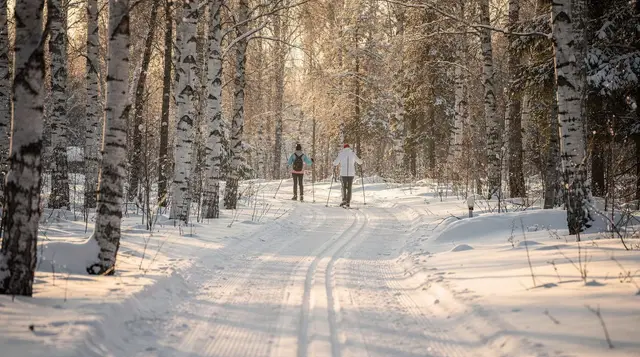
Oslo: 3-hour cross-country skiing trip with equipment and guide
- Winter only
- Gear + guide
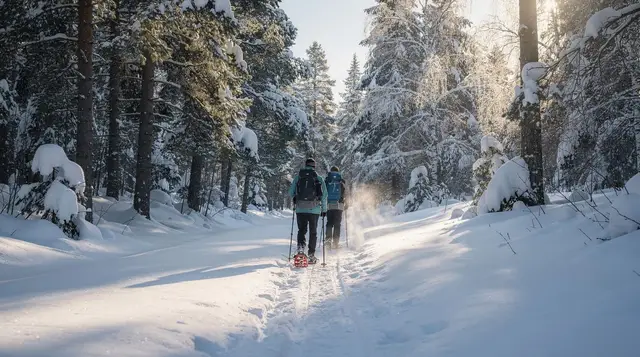
Oslo: snowy forest torchlight walk with campfire
- Winter only
- Campfire
Oslo: snowshoeing in the forest with Norwegian BBQ
- Winter only
- BBQ included
Oslo: sledging experience at Holmenkollen
- Winter only
- Family friendly