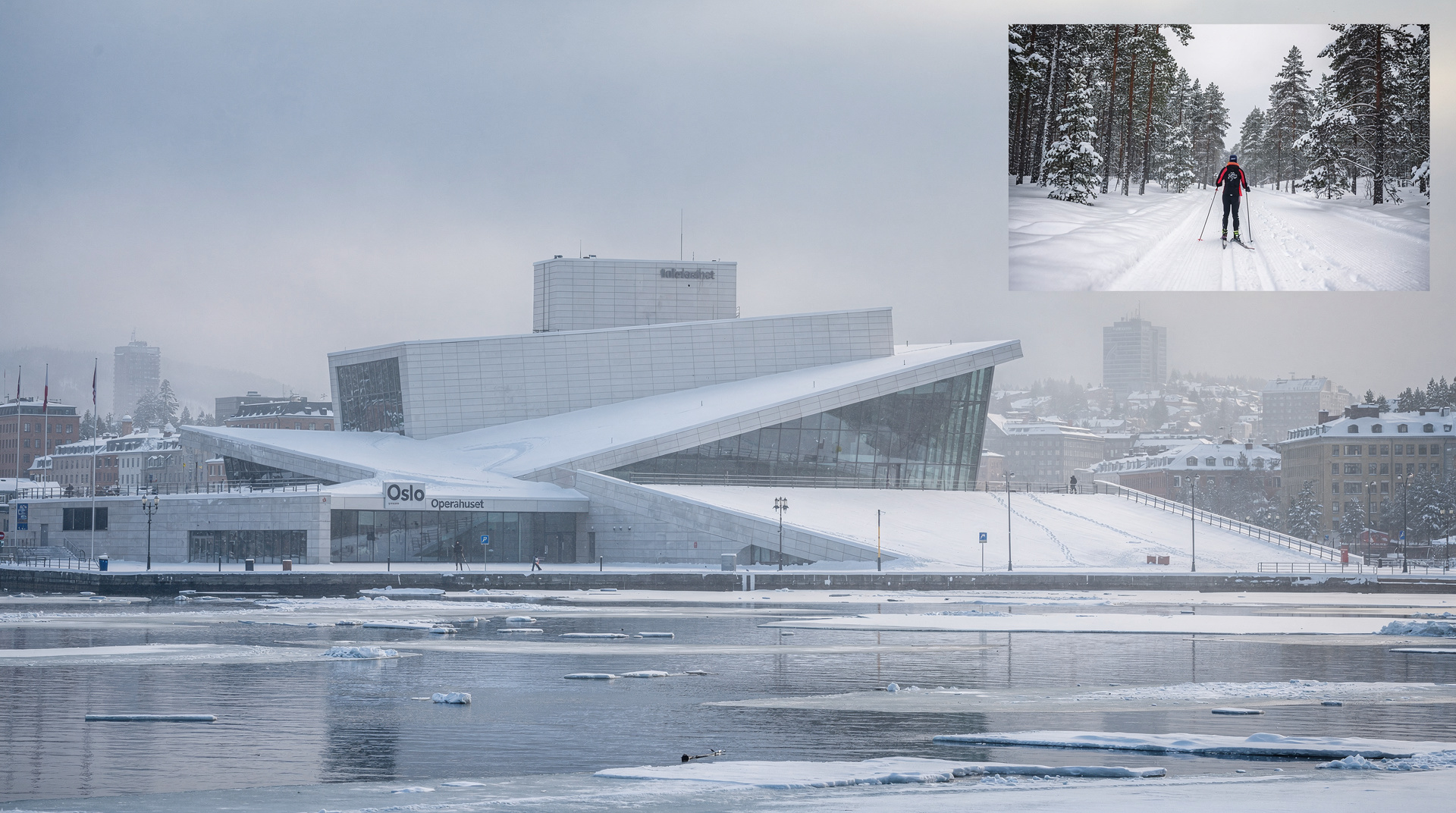
Korketrekkeren — Oslo's free toboggan run
Oslo: sledging experience at Holmenkollen
Duration: 2 hours
- Winter only
- Family friendly
What is Korketrekkeren and how does it work?
Korketrekkeren (the corkscrew) is a 2-kilometre groomed toboggan run from Frognerseteren (top of T-bane line 1) down to Midtstuen station. You ride the T-bane up and sledge down — free if you bring your own sledge. Sledge rental is available at the top for NOK 50–80 (about USD 5–9). Open whenever snow conditions permit, typically December through March.
| Where | Frognerseteren (T-bane line 1) to Midtstuen |
| Cost | Free ride; T-bane fare + sledge rental NOK 50-80 |
| Time needed | 7-12 min per descent; most ride several times |
| Getting there | T-bane line 1 to Frognerseteren, 5 min walk to start |
| Best time | Weekday mornings for short queues; December-March conditions permitting |
The corkscrew: Oslo’s best free winter activity
There is a particular kind of joy available in Oslo on a snowy day that costs less than a cup of coffee. It involves riding a plastic sledge down 2 kilometres of groomed toboggan track through a dark pine forest, arriving at a metro station at the bottom, then taking the T-bane back up to do it again. The Korketrekkeren (literally “the corkscrew”) has been running in this form since 1905 and remains one of the most genuinely Norwegian things a visitor can do in winter.
It is not extreme sport. The run is banked and safe, and the pace is brisk rather than terrifying. But it delivers the kind of simple pleasure that expensive guided activities sometimes fail to — a rush of cold air, trees blurring past, and the satisfying thump of a curve banked perfectly into the slope. Entire Oslo families spend winter Sundays riding it repeatedly. You should too.
The run in numbers
- Length: approximately 2 km
- Elevation drop: 280 metres (Frognerseteren at 371 m to Midtstuen at 96 m)
- Descent time: 7–12 minutes depending on snow hardness and sledge
- Opening period: typically mid-December to mid-March, conditions dependent
- Cost to ride: free (plus T-bane fare, plus sledge rental if needed)
How to do it
Step 1: Get to the top
Take T-bane line 1 (Frognerseteren direction) to Frognerseteren station, the end of the line. Journey time: approximately 30 minutes from Nationaltheatret, 27 from Majorstuen. Single Ruter ticket NOK 42 (USD 4.50) in app or NOK 80 (USD 8.60) on board. The 24-hour tourist ticket (NOK 130, USD 14) is good value if you plan multiple T-bane trips.
From the station, the Korketrekkeren start point is a 5-minute walk downhill. Signs are posted; the queue of people carrying colourful plastic sledges is a reliable directional indicator on busy days.
Step 2: Get a sledge
Option A — rent at the top. A rental service at the start point offers basic plastic sledges for NOK 50–80 (USD 5–9) per ride, or you may be able to rent for the day. Rental also includes a small pull-cord for dragging the sledge back when walking. Helmet rental for children: NOK 50 (USD 5).
Option B — buy your own. Norwegian supermarkets and sports shops sell simple plastic sledges for NOK 100–200 (USD 11–22) during the winter season. REMA 1000 and Coop have them stocked from December. Buying makes sense if you plan to visit more than twice, and the sledge makes excellent hand luggage on the T-bane.
Option C — bring from home. If you own a compact plastic sled, bring it. This is what Norwegian children do. No special equipment is required.
Step 3: Ride down
Queue at the top (queue times on busy weekend afternoons can reach 20–30 minutes). Sit on the sledge, lean back slightly, and push off. Steer by leaning or dragging a foot. The first curve arrives within 30 seconds of the start — a banked left-hander that sets the tone for the descent. The corkscrew sections in the middle are the most fun.
Braking is by foot dragging on the snow edge or by putting both feet down on the track. The run ends naturally at Midtstuen station — the gradient flattens and the track transitions to the station area.
Step 4: Go back up
From Midtstuen, the T-bane line 1 returns to Frognerseteren in approximately 6 minutes. Bring your sledge onto the carriage (hold it upright — other passengers are tolerant). Repeat as desired.
On busy days and safety
Korketrekkeren is very popular on fine weekend days in January and February. Queues at the top can reach 30 minutes; at the bottom you may need to wait for the T-bane. Neither is a problem, but plan for these delays if your schedule is tight.
Speed management matters. The run is designed to be safe on a standard flat sledge with no steering mechanisms, but significant speed is possible on icy sections after heavy frost. Children and inexperienced riders should drag a foot to moderate speed on the faster upper section. Helmets are strongly recommended for children and available for rental.
A few rules posted at the start: no standing on the sledge, no stopping in the middle of the run (pull to the side if you fall off), give the rider ahead enough space.
Combining Korketrekkeren with other activities
+ Frognerseteren restaurant: The restaurant above the T-bane station serves traditional Norwegian food — sour cream porridge, elk soup, and the famous apple cake. Lunch before the toboggan run is a classic combination. Budget NOK 200–280 for a main course (USD 22–30). The terrace view over Oslo is excellent.
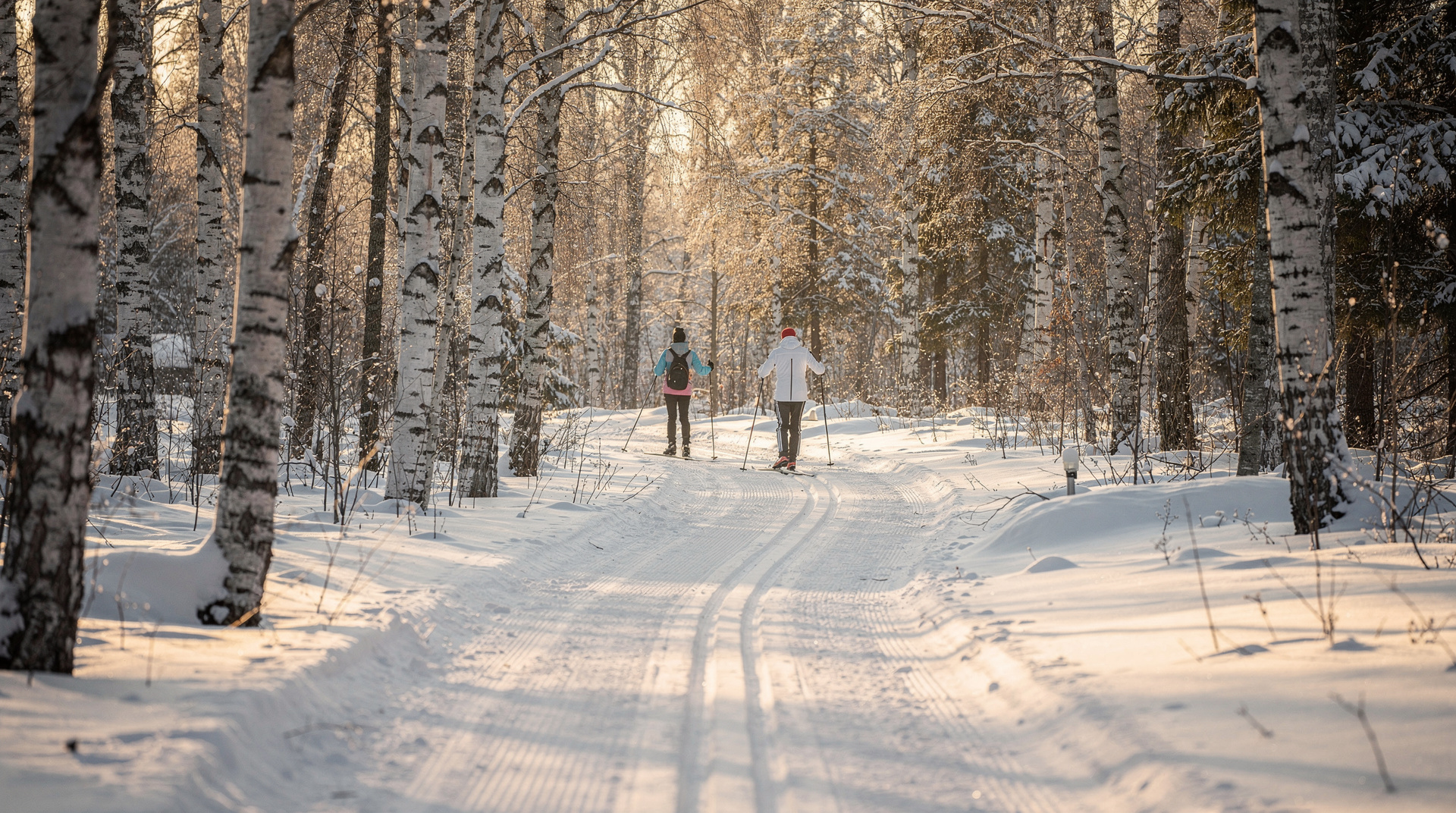
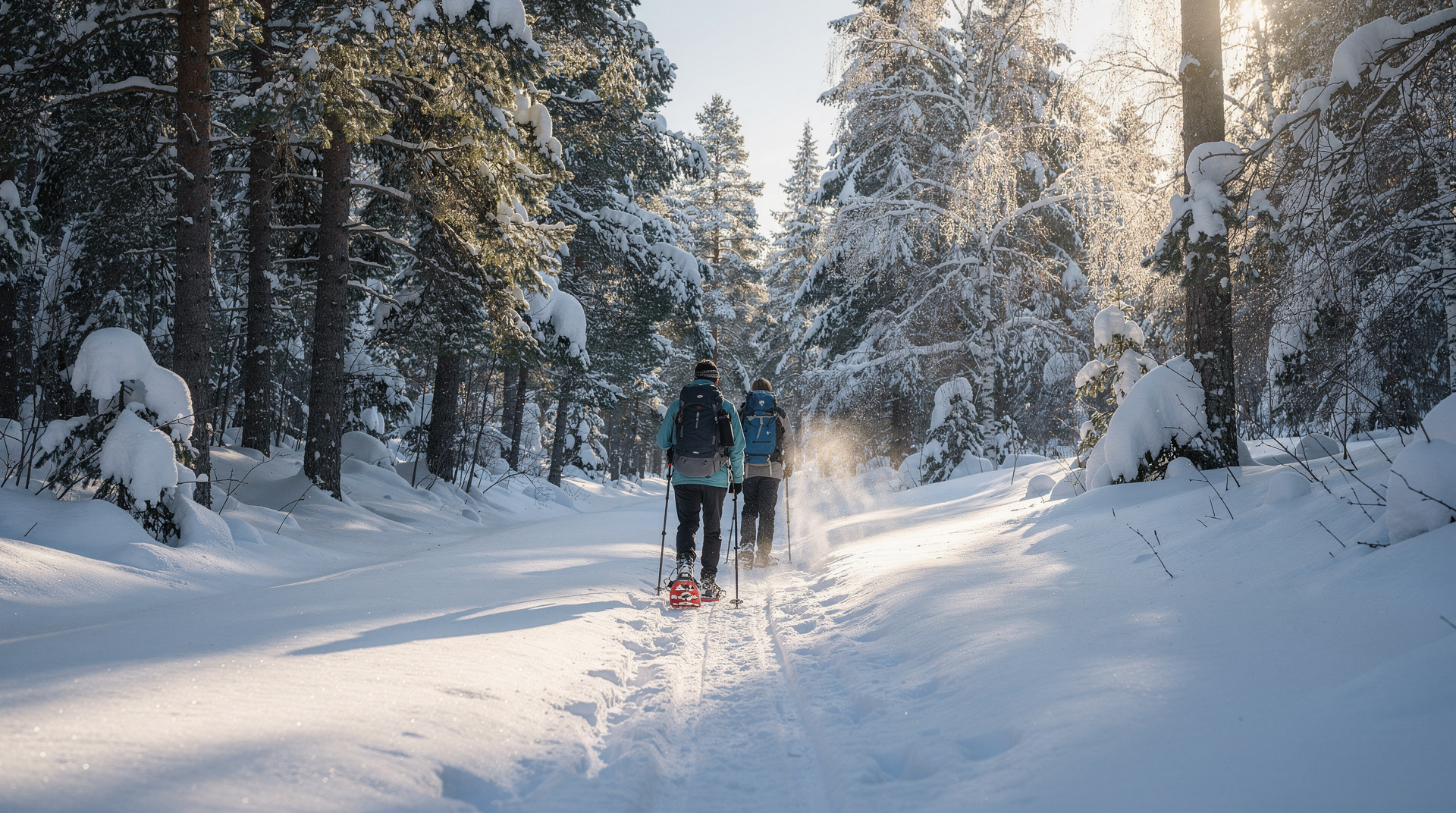
+ Nordmarka walks or skiing: Frognerseteren station is the starting point for cross-country ski trails and snowshoe routes into Nordmarka. A morning of skiing or snowshoeing followed by afternoon Korketrekkeren runs is a full and deeply Norwegian winter day. See our cross-country skiing guide and snowshoeing guide for trail options.
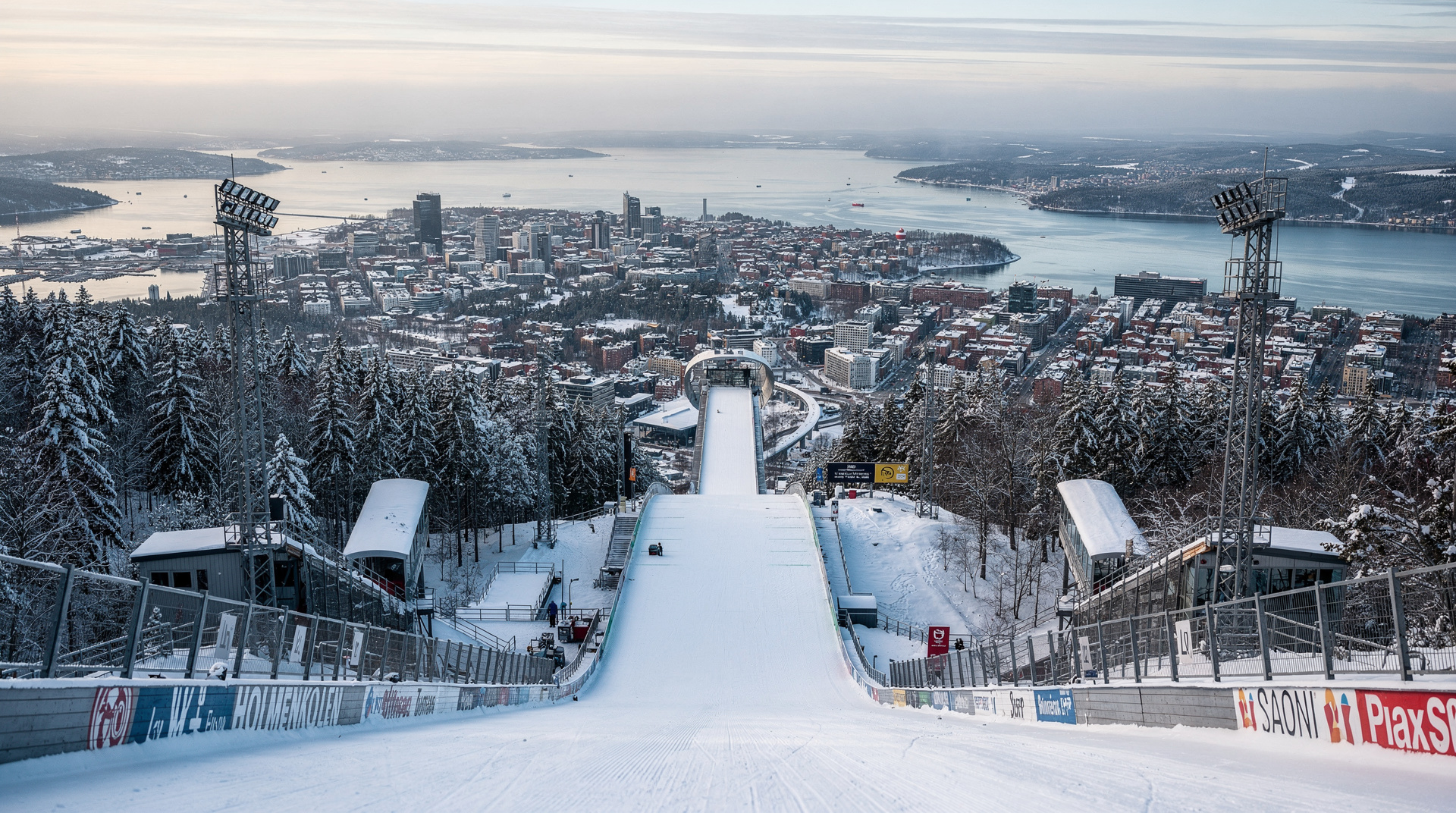
+ Holmenkollen (2 stops downhill on line 1): After your Korketrekkeren runs, hop back on the T-bane for two stops to Holmenkollen for the ski museum and jump tower view. This adds 1.5–2 hours and rounds out a full Nordmarka winter day. Our Holmenkollen guide covers what to see there.
The honest take for visitors
Korketrekkeren is not a tourist attraction in the usual sense — it is an Oslo institution that tourists are welcome to join. No one is curating it for visitors. The queue includes Oslo families with toddlers, teenagers, couples, and the occasional confused tourist wondering if this is really the right spot.
That un-curated quality is entirely the point. The run costs next to nothing, works as long as there is snow, and has been working since 1905. It is one of the few Oslo outdoor activities where the experience is simply: cold air, speed, trees, joy. Highly recommended.
For a structured winter day that builds Korketrekkeren into a broader programme, see our 3-day Oslo winter itinerary and the complete winter activities guide.
The history of the run
Korketrekkeren has been in use as a toboggan track since the early 20th century, though the exact start date varies by historical source. The name — corkscrew — refers to the winding, banked curves in the middle section of the run that rotate the rider through a series of direction changes. The distinctive curves were cut into the hillside to manage speed and keep the run safe at the gradients involved.
The run has been rebuilt and resurfaced several times over the decades. The current track uses groomed natural snow on a prepared earth base, maintained by Oslo Skisenter (the same organisation that grooms the Nordmarka cross-country ski trails). The infrastructure is deliberately minimal: no fencing beyond the necessary safety barriers, no lighting (the run is daylight only), no commercial presence on the track itself.
This minimalism is the point. The run is not a commercial product — it is a public amenity, as much a part of Oslo’s winter infrastructure as the T-bane itself. The city maintains it because Osloers use it and because it has always been there.
Who uses Korketrekkeren
On a good snow Saturday in February, the mix of users at the top of Korketrekkeren is genuinely diverse in a way that captures something about Oslo as a society:
Families with children from about 4 upward. Teenagers on homemade or second-hand sledges who have been coming here since childhood. University students treating it as a social event. Older couples for whom this is an annual tradition. First-time visitors who read about it online and are slightly uncertain whether they are in the right place. Cross-country skiers who have finished their run at Frognerseteren and are making one last descent as a treat.
The absence of an admission charge and the T-bane access means the run is genuinely classless in its user base. An Oslo family in modest circumstances and a family staying at the Grand Hotel have exactly the same experience here. This is unusual for any leisure activity in one of the world’s most expensive cities.
Managing speed and safety
The run is designed for plastic flat-bottomed sledges, which naturally self-limit speed through snow drag and the rounded base creating braking friction. Riders on disc-shaped sleds, foam boards, or inflatable tubes may find speeds higher than intended — these formats are not recommended, though not prohibited.
The first 200 metres from the start are the fastest — the steepest section before the first banked curve. This is where falls are most likely for first-timers. The technique for this section is to lean back, keep weight centred, and avoid steering aggressively. The track is banked to push you through the curves naturally; fighting the banking tends to cause problems.
Helmets for children under 12 are strongly recommended. Children under 6 should ride with an adult on a tandem or a larger sledge unless they are experienced. An older child who falls and slides into the curve wall will encounter compacted snow at moderate speed — protective clothing (ski jacket, padded ski trousers) is appropriate.
The run closes in very icy conditions when the track surface becomes genuinely dangerous. Oslo Skisenter makes this call and posts closures at oslokorketrekkeren.no. If in doubt, check before the journey.
What people say about Korketrekkeren
The consistent visitor reaction is surprise at how much fun it is in proportion to its simplicity. There is no technology involved, no instructor, no facility beyond the run itself and the T-bane. The pleasure is purely physical — speed, cold air, the slight panic of a curve, the satisfying arrival at the bottom — and this simplicity is the activity’s greatest quality.
Visitors who have brought children report that the children want to go repeatedly — the classic iteration that good outdoor activities generate. Adults who visit without children often report the same. There is something about the directness of a toboggan run that connects to a physical pleasure that does not date.
The honest note for those expecting a professional alpine toboggan run: this is not the Cresta Run. The speeds are moderate, the run is short, and the experience is entirely safe for anyone with basic outdoor confidence. Manage your expectations accordingly, go in the spirit of Oslo locals rather than thrill-seekers, and you will have an excellent time.
Practical notes for the day
What to wear: Ski jacket and ski trousers are ideal because they are waterproof (expect snow contact if you fall) and warm. Waterproof boots. Gloves — the T-bane ride up is cold enough that bare hands will be uncomfortable. Hat. Warm base layers under everything.
Timing: The run is busiest between 11:00 and 15:00 on fine winter weekends. It is quietest on weekday mornings and evenings. The run cannot be used in darkness — it closes at dusk, typically 15:30–16:00 in January.
Combining with Frognerseteren: The restaurant at the top of T-bane line 1 (Frognerseteren) is 2 minutes walk from the Korketrekkeren start. A pre-run lunch (NOK 195–280 for main dishes, USD 21–30) or a post-run hot chocolate while warming up is a natural combination. The restaurant is popular — arrive before 12:00 or after 14:00 on weekends to avoid the queue.
Korketrekkeren for visitors with young children
Oslo’s winter family offer clusters around Frognerseteren and Holmenkollen for good reason: the T-bane access removes the car logistics, and the concentration of activities (Korketrekkeren, Nordmarka skiing, Holmenkollen museum) means you can keep the day flexible. Korketrekkeren is the anchor activity for families with children aged 5 and above.
A full family day at Frognerseteren: arrive by T-bane at 10:00, lunch at Frognerseteren restaurant (children’s menu NOK 120–150, USD 13–16), Korketrekkeren runs (12:00–14:00), return to Holmenkollen for the ski museum and jump tower (14:30–16:00), T-bane home. Total cost per adult: NOK 360 (transport + museum), approximately USD 39. Per child: NOK 200 (transport + children’s museum ticket), approximately USD 22. Plus food.
This is one of the most affordable full-day family outings in Oslo — a city where family entertainment is not known for budget pricing.
The experience through Oslo residents’ eyes
Korketrekkeren is the kind of activity that Oslo residents have complex feelings about — they love it deeply, treat it as their own, and are mildly suspicious of the tourist guides that have started directing visitors there. The concern is not unfounded: on peak days the run is crowded, the atmosphere slightly less the communal Oslo family tradition and more the organised activity.
The counter-argument is that Korketrekkeren’s public, unrestricted, no-booking-required character means it cannot really be over-commodified. There is no way to “ruin” Korketrekkeren with tourism because the run itself is a public infrastructure — it belongs to everyone who gets on the T-bane and buys or brings a sledge. The Oslo families and the visitors are doing exactly the same thing on the same track. That equality of access is the point.
After Korketrekkeren — returning to the city
From Midtstuen station (bottom of the run), T-bane line 1 heads back to central Oslo. The journey takes approximately 15 minutes to Nationaltheatret. If you have tired children, a hot chocolate at the Frognerseteren restaurant (reached by going back up 2 stops) is a good option before the return journey.
If you are returning hungry to the city, the Majorstuen neighbourhood (T-bane interchange station, 5 stops from Midtstuen) has a good selection of affordable restaurants and the Vinmonopolet (state alcohol shop) for those wanting to pick up Norwegian craft beer or aquavit for the evening. The neighbourhood around Bogstadveien is characterised by local Oslo residents doing their daily shopping — a pleasant contrast to the tourist-focused Karl Johans gate area.
If the day leaves you wanting more time in the forest, the Nordmarka destination page and our Nordmarka hiking guide show what lies beyond the end of the line, while the daylight hours guide explains why an early start matters so much in midwinter. Travelling with children? Our rainy-day guide for families is a useful fallback for a thaw, and the getting around Oslo guide covers the wider transport picture. For a sauna to finish the day, see the comparison of Oslo’s saunas.
For a complete picture of Oslo’s winter activities, including snowshoeing, cross-country skiing, and indoor options, see our complete Oslo winter guide.
Frequently asked questions about Korketrekkeren — Oslo's free toboggan run
Is Korketrekkeren free?
The run itself is free — there is no ticket or admission charge. You pay only for the T-bane (NOK 40–80 per single trip, USD 4–9) and sledge rental if you don't bring your own (NOK 50–80, USD 5–9). Bringing your own plastic sledge from a local supermarket (NOK 100–200, USD 11–22) is the cheapest option.How long is the Korketrekkeren run?
The run is approximately 2 kilometres and drops about 280 metres in elevation from Frognerseteren (371 m) to Midtstuen (96 m). The descent takes roughly 7–12 minutes depending on snow conditions and speed. Most visitors ride it multiple times — take the T-bane back up and go again.Is Korketrekkeren suitable for young children?
The run involves a genuine descent with curves and some speed — not suitable for very small children alone. Children aged 5–6 can ride with a parent on a tandem sledge. Children 8 and above are typically confident enough to ride alone on the standard run. Helmets are recommended for children and available for rent at the top.When is Korketrekkeren open?
Korketrekkeren opens when snow and ice conditions on the run reach a safe standard, typically late November or December. It closes when the snow melts, usually March. Live status is posted at oslokorketrekkeren.no. No booking required — queue at the top and go.What is the gradient like on Korketrekkeren?
The first section from Frognerseteren is the steepest and fastest — about a 20% gradient. The run then winds through banked curves (the corkscrew sections that give it the name) before easing off in the lower section toward Midtstuen. The curves are banked and designed to be rideable on standard flat sledges.
Top experiences
Bookable activities with verified prices and instant confirmation on GetYourGuide.