Oslo with kids: the complete family travel guide
Oslo: TusenFryd amusement park entry ticket
Duration: Full day
- Theme park
- Family friendly
Is Oslo good for families with children?
Oslo is excellent for families: free natural spaces (fjord islands, forests), world-class interactive museums, an easy transit system, and very low crime. The main challenge is cost — budget USD 40–80 per child per day for food and activities. Many museums offer free or reduced entry for children. Langøyene island (25 min by public ferry) is the top summer family destination.
Why Oslo works surprisingly well for families
Oslo has an unearned reputation as a difficult city for family travel — the main deterrent being the cost, which is real and documented. But the actual experience of visiting with children is better than the price tag suggests. The city is compact and walkable, public transport is reliable and comprehensive, the fjord and its islands are extraordinary free (or near-free) spaces, and the museums — particularly the science and maritime ones on Bygdøy — are among the most child-friendly in Scandinavia.
The key to a successful Oslo family trip is sequencing: free and low-cost activities (parks, fjord, islands, Opera House roof) mixed strategically with paid museum visits, rather than museum-heavy days that exhaust both children and parental finances.
This guide works through the best family activities in Oslo, neighbourhood by neighbourhood and season by season, with honest pricing in NOK and USD and specific practical tips that most family travel content glosses over.
| At a glance | |
|---|---|
| Where to base | Sentrum or Bjørvika, walkable to museums and the Opera House |
| Budget | Around USD 40–80 per child per day for food and activities |
| Best free activity | Langøyene island ferry (25 min from Aker Brygge) |
| Best paid activity | Fram Museum, Bygdøy — consistently the top-rated kids’ museum |
| Getting around | Ruter transit; under-18s ride free |
The budget reality: don’t panic, but do plan
Oslo is expensive. A family of four eating a mid-range restaurant dinner will spend NOK 1,200–1,800 (USD 129–193). Museum entry runs NOK 180–300 (USD 19–32) per adult. A tram ride costs NOK 41 (USD 4.40) per person without a pass.
The good news: significant cost mitigation is available if you plan.
Children under 18 travel free on Ruter — zero transit cost for the children, and family Ruter day passes cover the adults at NOK 119 (USD 12.80) each. The Oslo Pass gives children under 16 free museum entry when accompanied by a paying adult, plus free transit. For two adults and two children doing 2–3 museums per day, the Oslo Pass often pays off from day two. Use the Oslo Pass calculator with your actual itinerary.
Picnics are the family strategy in Oslo. Every beach, park, and island is picnic territory. A supermarket shop (Kiwi, Rema 1000, Meny) provides excellent food at normal European prices. Building two picnic days into a four-day family trip cuts catering costs dramatically.
Day 1: the waterfront and the Opera House
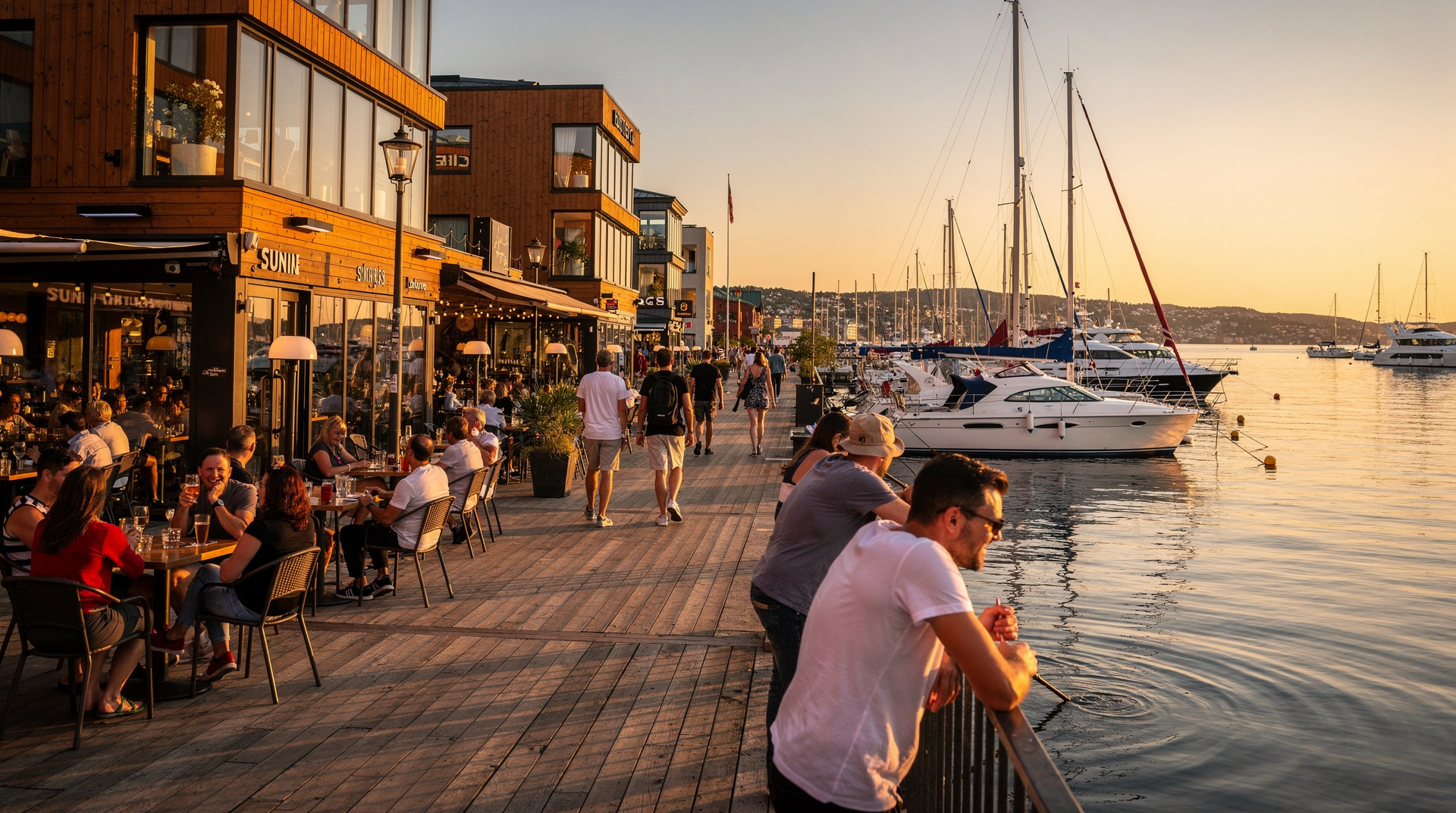
Start on the Oslo waterfront, walking the kilometer from the Opera House in Bjørvika west to Aker Brygge. This is the most architecturally dramatic walk in Oslo and requires no ticket.
The Oslo Opera House roof walk is free and genuinely exhilarating for children: the sloping white marble roof descends to the fjord edge and you walk up the outside of the building to the top. Children instinctively run up it. The views from the top across the fjord and back to the Oslo skyline are excellent. Allow 45 minutes.
At the Munch Museum (Bjørvika), the Munch content is more suited to older children and teenagers, but the building itself — a dramatic leaning tower of glass — is interesting architecturally, and the café at water level is good for a break. Skip the full museum visit with under-10s unless they’re unusually art-interested.
Sørenga Seawater Pool is five minutes walk from the Opera House and has a dedicated children’s shallow pool with a sandy floor. On warm days, this is an irresistible stop. The main pool has diving boards popular with older children. See the swimming spots guide for full details.
Day 2: the Bygdøy museums
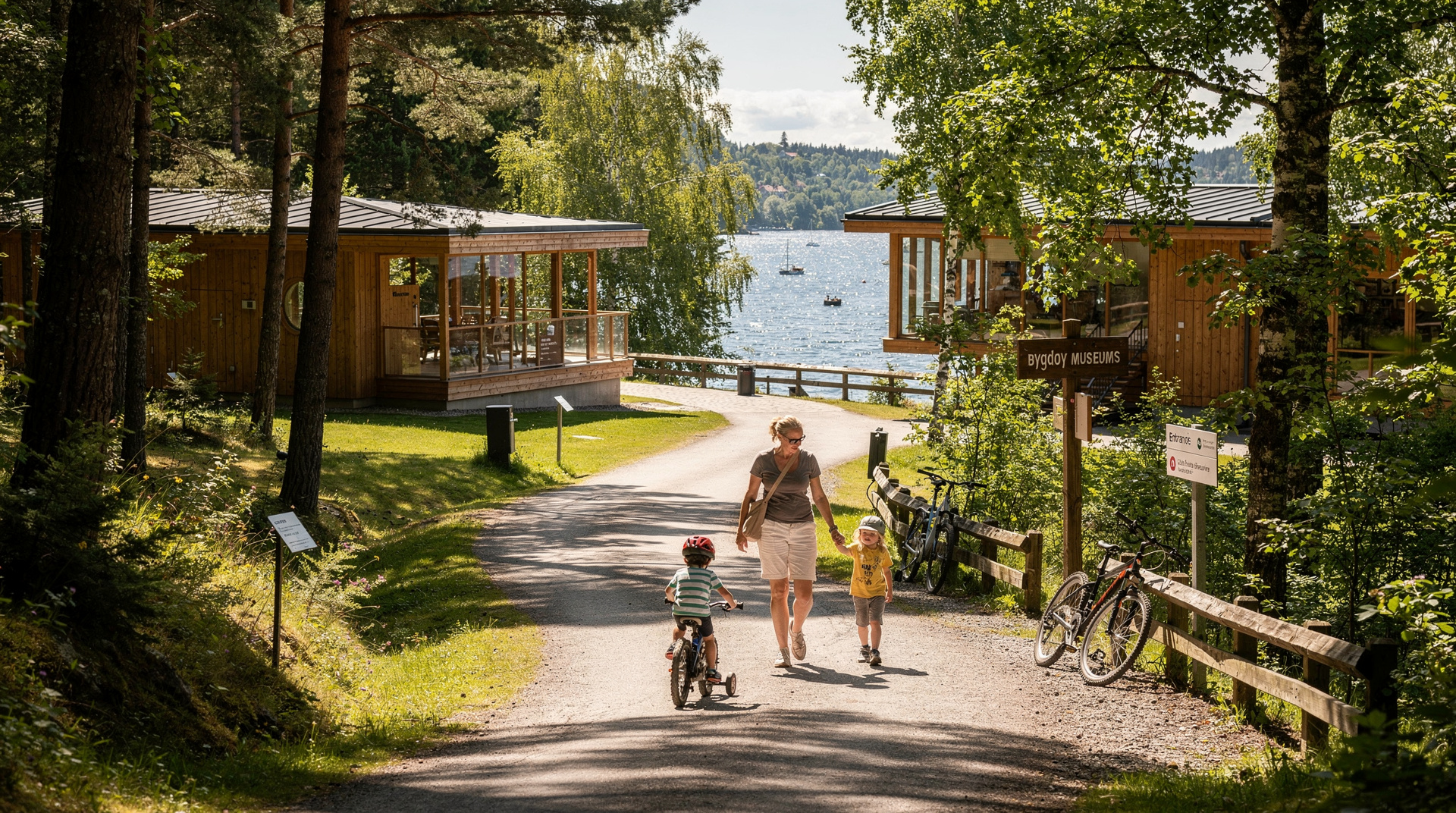
Bygdøy is the most important family half-day in Oslo. The peninsula holds five major museums within walking distance of each other; two are specifically excellent for children.
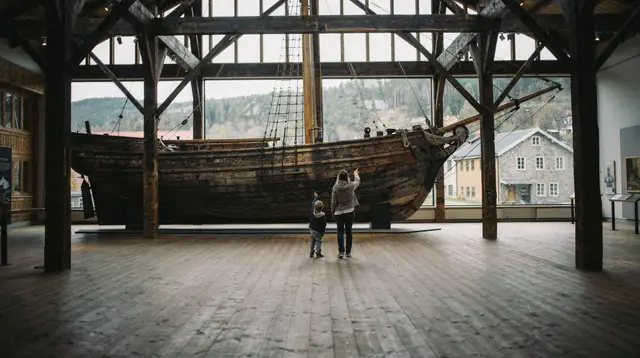
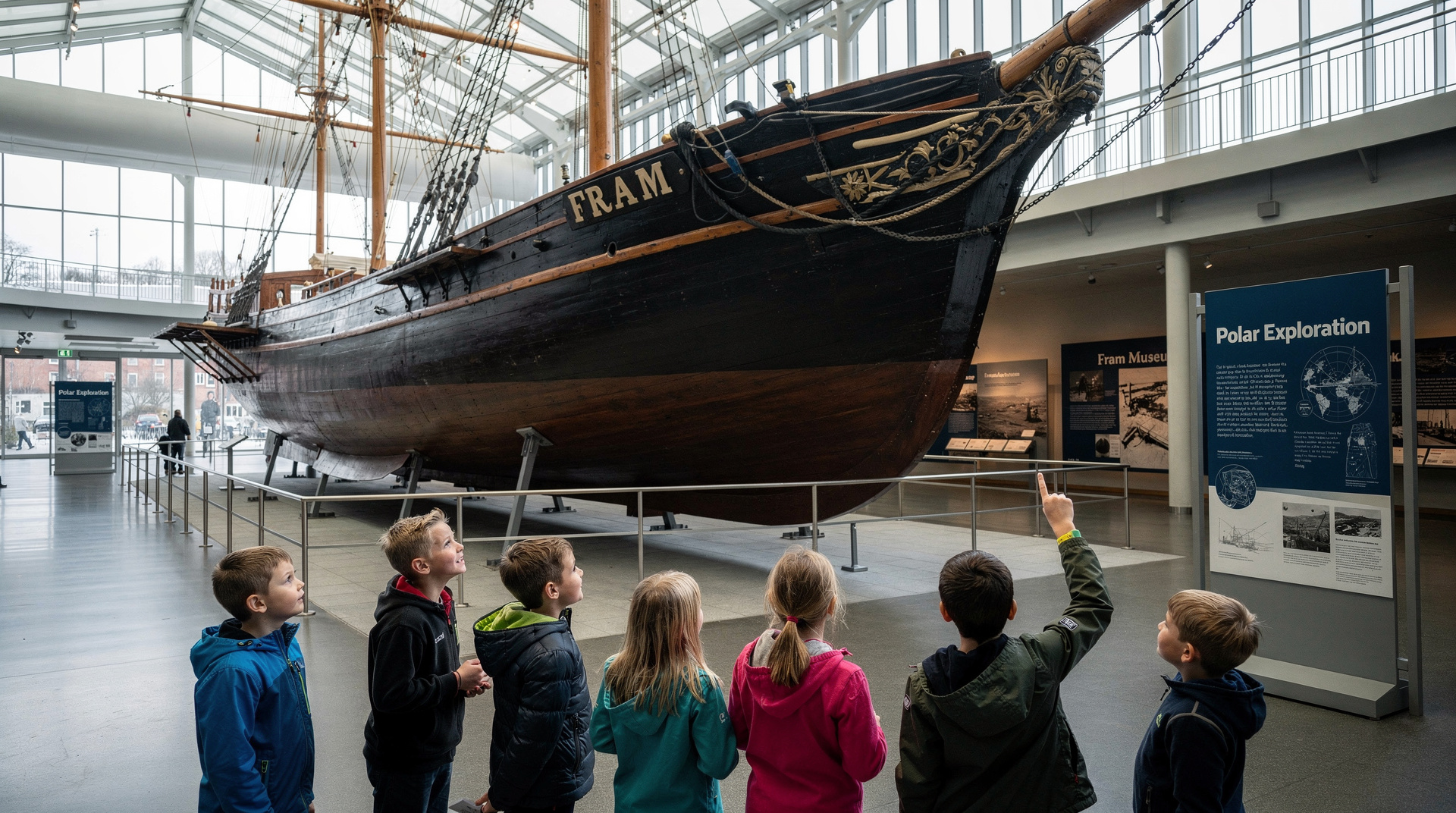
Fram Museum is the world’s most compelling polar ship museum. The vessel Fram — used in both the Nansen and Amundsen polar expeditions — sits inside a purpose-built museum hall that you enter by walking across a gangplank. You can go aboard the ship and explore the cabins, hold the wheel, and sit in the crow’s nest (on a reconstruction). Children between 5 and 15 consistently rate this as their favourite Oslo museum. Entry: NOK 185 (USD 20) adults, NOK 85 (USD 9) children. Free with Oslo Pass.
Norsk Folkemuseum (Norwegian Folk Museum) is an outdoor museum of historic Norwegian buildings — farmhouses, workshops, a stave church — spread across a large park. There are demonstrations of traditional crafts, sometimes farm animals, and spaces where children can run freely between buildings. The museum is at its best in summer (June–August) when all outdoor areas and demonstrations are active. Entry: NOK 220 (USD 24) adults, NOK 110 (USD 12) children. Free with Oslo Pass.
Kon-Tiki Museum suits older children who can engage with the expedition story. The raft is impressive physically; the story of Thor Heyerdahl’s 1947 Pacific crossing is genuinely dramatic. Entry: NOK 160 (USD 17) adults, NOK 80 (USD 9) children. Free with Oslo Pass.
Getting to Bygdøy: Bus 30 from Nationaltheatret, or a pleasant 3-km walk/cycle along the waterfront. See the Bygdøy destination guide for the full layout.
Day 3: Viking Planet and Aker Brygge
Viking Planet in central Oslo (near the Nobel Peace Center) is the Viking museum Oslo needed while the historic Viking Ship Museum remains closed for renovation (expected reopening ~2027). The Viking Planet has been deliberately designed for interactive engagement: VR headsets, combat simulations, reconstructed environments. The VR movie experience — where you fly over Viking-age Norway — is particularly popular with children aged 7 and up.
Entry: NOK 285 (USD 31) adults, NOK 150 (USD 16) children 6–16, under 6 free. Free with Oslo Pass. Allow 90 minutes to 2 hours. See the Viking Planet guide for detailed content and booking advice.
After Viking Planet, the short walk to Aker Brygge brings you to Oslo’s main waterfront dining and shopping area. The harbour area has good spots for children to watch the island ferries coming and going. Ice cream from one of the kiosks at the pier is a reliable midday peace treaty.
Day 4: Tusenfryd and the island
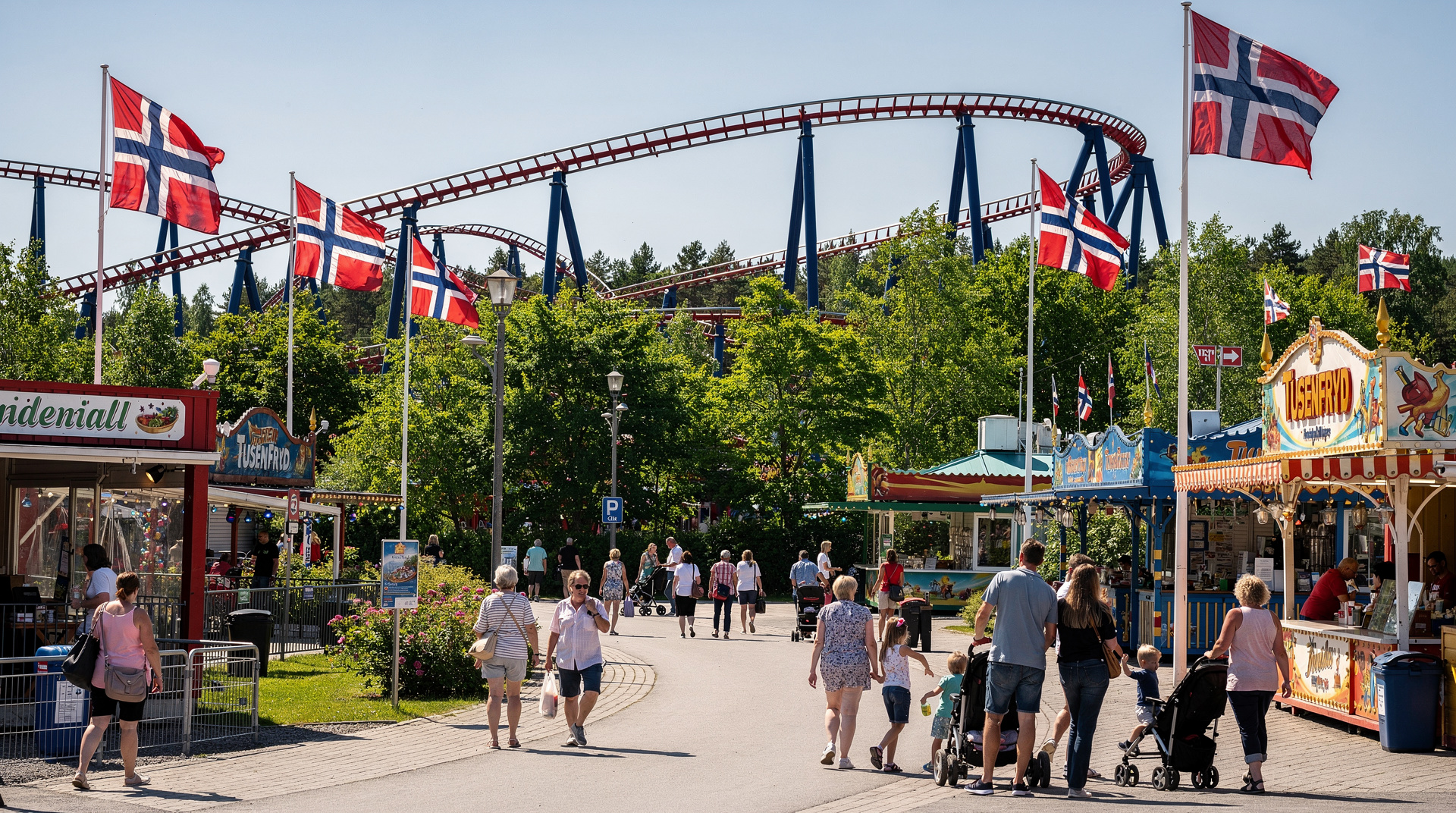
Tusenfryd is Norway’s largest amusement park, located 20 km south of Oslo — a 30-minute bus ride from Nationaltheatret (Bus 541 from Jernbanetorget, about 35 minutes, then a short walk). It’s a conventional amusement park with roller coasters, water rides, and children’s areas, sized similarly to mid-tier European parks. Not in the category of Legoland or Tivoli for overall quality, but a solid full-day option for families with children aged 5–15 who want the amusement park experience.
Entry: NOK 389–545 (USD 42–59) depending on height; check current prices before visiting as they adjust seasonally. Opening hours: typically May through September, 10am–6pm (later in peak summer). See the Tusenfryd guide for specific rides, age recommendations, and how to get there cheaply.
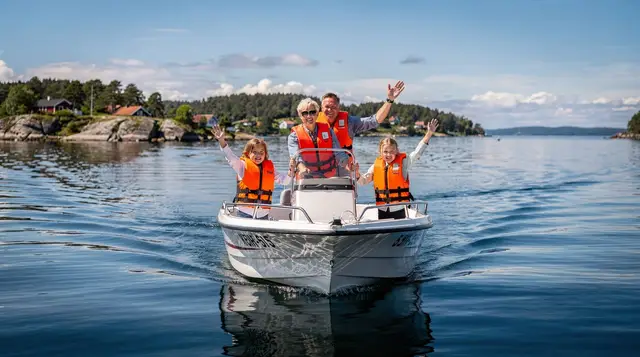
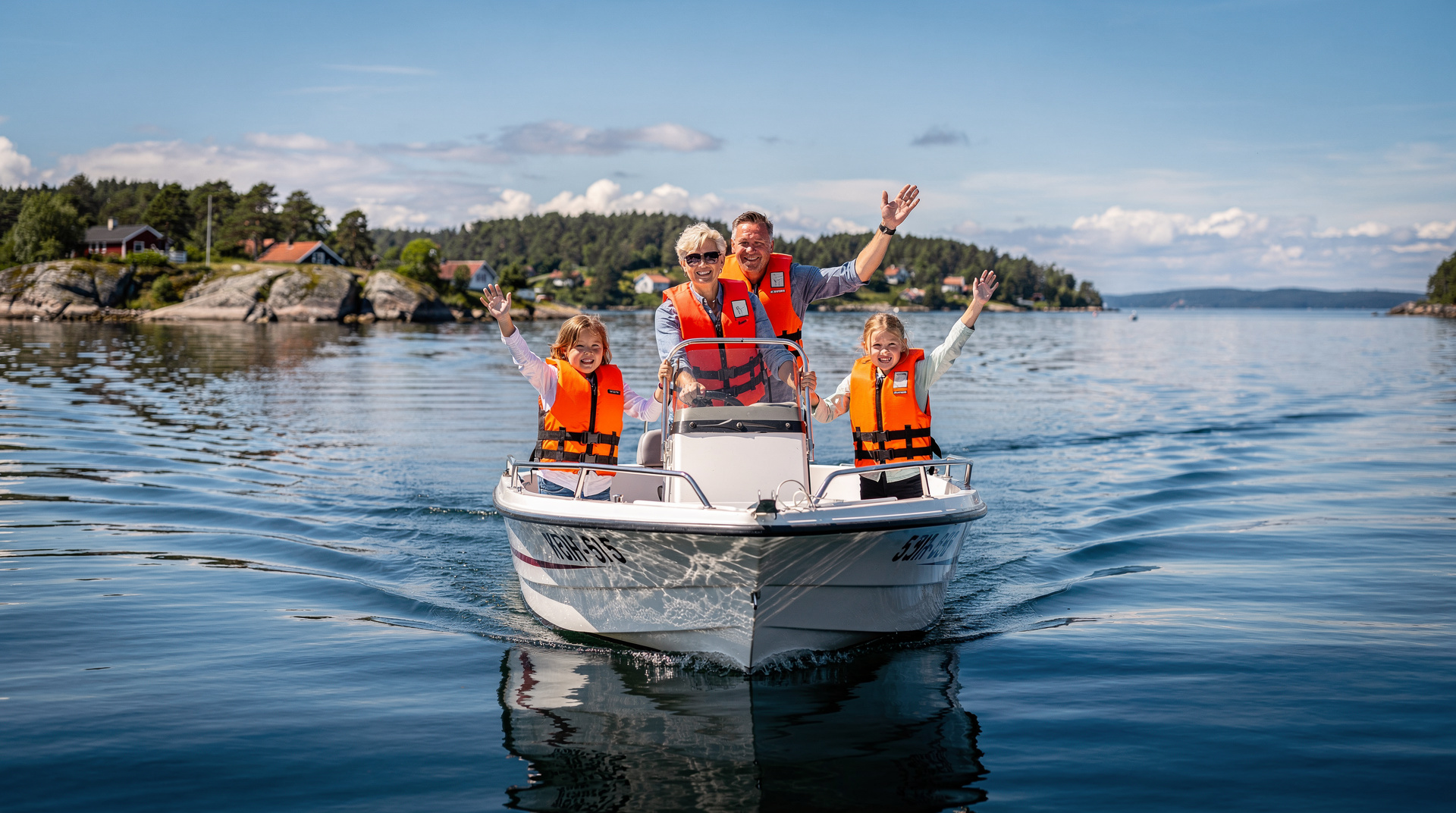
On any day not dedicated to Tusenfryd, the island ferry to Langøyene (Ruter B4, Aker Brygge pier 3, 25 minutes) is the best summer family half-day. Sandy beach, safe shallow water, kiosk, and the experience of being on a fjord island inside a major city. See the family fjord activities guide for more island options.
Rainy days: don’t improvise
Oslo has rain. In summer, rain is generally brief and not all-day, but a full rainy day without a plan is expensive and miserable in a city this costly.
The best rainy-day strategies:
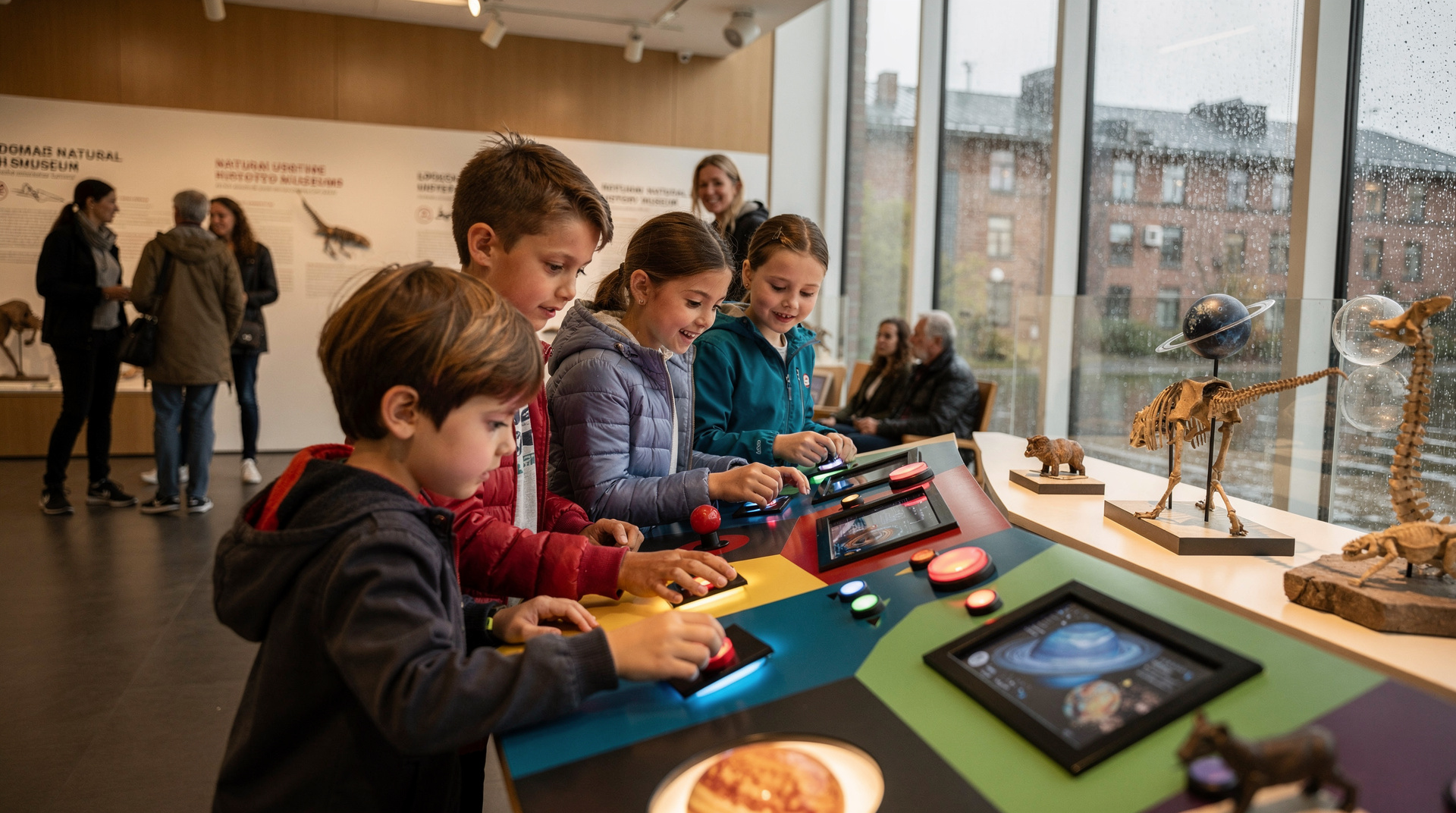
Teknisk Museum (Norwegian Museum of Science and Technology), near Kjelsås — 15 minutes by metro (line 5) from the city centre. The most hands-on, physically interactive museum in Oslo: you push buttons, pull levers, run simulations, and engage with technology exhibits from the Stone Age to the digital era. Children are specifically the target audience. Entry: NOK 195 (USD 21) adults, NOK 75 (USD 8) under-16. Free with Oslo Pass.
Oslo escape rooms — several operators near Karl Johans gate and Aker Brygge offer family-friendly 60-minute escape rooms. Suitable for children aged 10 and up; some operators have specific children’s rooms accessible to younger kids. Typically NOK 180–280 (USD 19–30) per person. Book in advance for peak season. See the rainy day with kids guide for a full indoor plan.
Mathallen Food Hall in Grünerløkka — covered market with excellent food vendors, warm and dry, with seating. Good for a long lunch on a wet afternoon, and a genuine taste of Oslo’s food culture. The Mathallen guide covers the vendors.
Practical family logistics
Strollers/buggies: Oslo’s city streets and most museum interiors are well-accessible. The island trails are unpaved; collapsible carriers or carrier backpacks work better than full-size strollers for island visits.
Public transport: Ruter is simple to navigate with children. The metro (T-bane) has 6 lines; key stops are Nationaltheatret and Oslo S. Children under 18 ride free. The Ruter app handles trip planning.
Car hire: Unnecessary for the city; consider for trips south (Tusenfryd, Ingierstrand). One-way car rental is expensive in Norway — NOK 900–1,400 (USD 97–150) per day from the main city providers.
Emergency healthcare: Oslo has EU-standard emergency services. The emergency number is 113 (ambulance), 110 (fire), 112 (police). The main emergency room is at Oslo University Hospital Ullevål.
Food for picky eaters: Norwegian supermarkets carry everything familiar. Bread, cheese, ham, pasta, yoghurt — all available at Kiwi or Rema 1000. Pizza and pasta are widely available at mid-range restaurants; the budget eats guide has specific recommendations.
Jet lag and light: Oslo’s summer nights have almost no darkness (18–19 hours of light at midsummer). Children’s sleep routines will be disrupted. Pack blackout blinds or a sleep mask for children who need darkness to sleep; most Oslo hotels have blackout curtains, but budget options may not.
Day trips from Oslo with children
For families staying more than three days, day trips add variety and scope.
Drøbak (the fjord town with the Christmas House) is 50 minutes by bus (Bus 500 from Jernbanetorget) and appeals to younger children for its Julehuset (Christmas shop open year-round) and the fjord swimming at Drøbak beach. See the Drøbak day trip guide.
Lillehammer (Olympic town, 2 hours by Vy train) has the Norwegian Olympic Museum and a good bobsled experience in summer. A longer day trip, best for families with sporty older children. See the Lillehammer guide.
Nesodden (30 minutes by Ruter ferry from Aker Brygge) offers coastal walks and quiet swimming coves for families who want a full-day escape without the crowds of Langøyene. See the Nesodden escape guide.
The Oslo family long weekend itinerary sequences all the above into a 3-day plan with realistic logistics.
Which season suits your family best
| Season | Strengths for kids | Watch out for |
|---|---|---|
| Summer (Jun–Aug) | Islands, fjord swimming, near-white nights | Highest prices, some crowding on Langøyene weekends |
| Autumn (Sep–Oct) | Fewer crowds, museums uncrowded, mild days | Shortening daylight, more rain |
| Winter (Nov–Feb) | Christmas markets, indoor museums, occasional snow play | Very short daylight (5–8 hrs), cold for young children outdoors |
| Spring (Mar–May) | Lower prices, lengthening days, Nordmarka thaw | Islands and outdoor swimming not yet in season |
Families with flexible dates get the best value in September — school holidays haven’t hit Norwegian pricing yet, the weather is often still mild, and the Bygdøy museums and Munch Museum are noticeably quieter than in July.
What Oslo gets right for families
Oslo’s child-friendliness goes beyond individual activities. The city infrastructure is built around inclusivity: wide pavements, safe crossings, universally accessible Ruter stops, public spaces designed for use rather than traffic flow, and a culture of families in public spaces that is noticeably different from many southern European capitals.
The safety record is exceptional — Oslo is consistently ranked among the safest cities in Europe for families. Children move independently on public transport here from a young age. The crime rate around tourist areas is low, and the worst you’re likely to encounter is petty theft in busy areas (take the usual precautions with bags).
The fjord is the hidden ace in the family hand. Most major European cities don’t have clean, swimmable waterfront 10 minutes from the city centre. Oslo does. On a good summer day, that changes everything.
Frequently asked questions about Oslo with kids
What age is Oslo suitable for?
Oslo works well for children from toddler age upward. Toddlers and young children love Sørenga's shallow pool, Vigeland Park, and the interactive exhibits at the Natural History Museum. School-age children (6–12) get the most from the Viking Planet VR experience, Fram Museum, Tusenfryd, and island hopping. Teenagers respond well to Holmenkollen, the islands, and escape rooms.How expensive is Oslo for families?
Very expensive by global standards. Budget NOK 200–400 (USD 21–43) per child for a main museum. A family of four eating out at a mid-range restaurant can spend NOK 1,000–1,500 (USD 107–161). The saving grace: many parks, beaches, and natural activities are free. The Oslo Pass provides free museum entry for children under 16 when accompanied by a paying adult.Which Oslo museums are best for kids?
Top picks: Viking Planet (interactive VR, great for 7–14), Fram Museum (actual polar ship to explore, free to climb), Norsk Folkemuseum (outdoor folk museum with farm animals), Teknisk Museum (hands-on science). Munch Museum and National Museum are less suited to under-10s. Kon-Tiki is good for adventurous older children.Is the Oslo Pass worth it for families?
Potentially yes — children under 16 travel free on Ruter and get free entry to most museums with a paying adult Oslo Pass. Run the numbers against your specific itinerary on the Oslo Pass calculator. For a family doing 2–3 museums plus fjord ferry, it often pays off.What is the best neighbourhood to stay in with children?
Sentrum (city centre) is most convenient — walkable to museums, the Opera House, and Karl Johans gate. Bjørvika (near the Opera House and Sørenga pool) is excellent for families who want the urban beach close. Frogner gives park access (Vigeland) but is quieter. Avoid Grønland and the station area for families — it's fine but less child-friendly in atmosphere.Are children safe on the Oslo fjord ferries?
Yes — the Ruter island ferries are standard public transport with railings, life jackets available, and calm inner fjord water. Children under 6 should be supervised at the pier and boarding. The crossing to Langøyene (25 minutes) is suitable from infant age. Rough weather is rare in summer but check conditions if it's been windy.
Top experiences
Bookable activities with verified prices and instant confirmation on GetYourGuide.