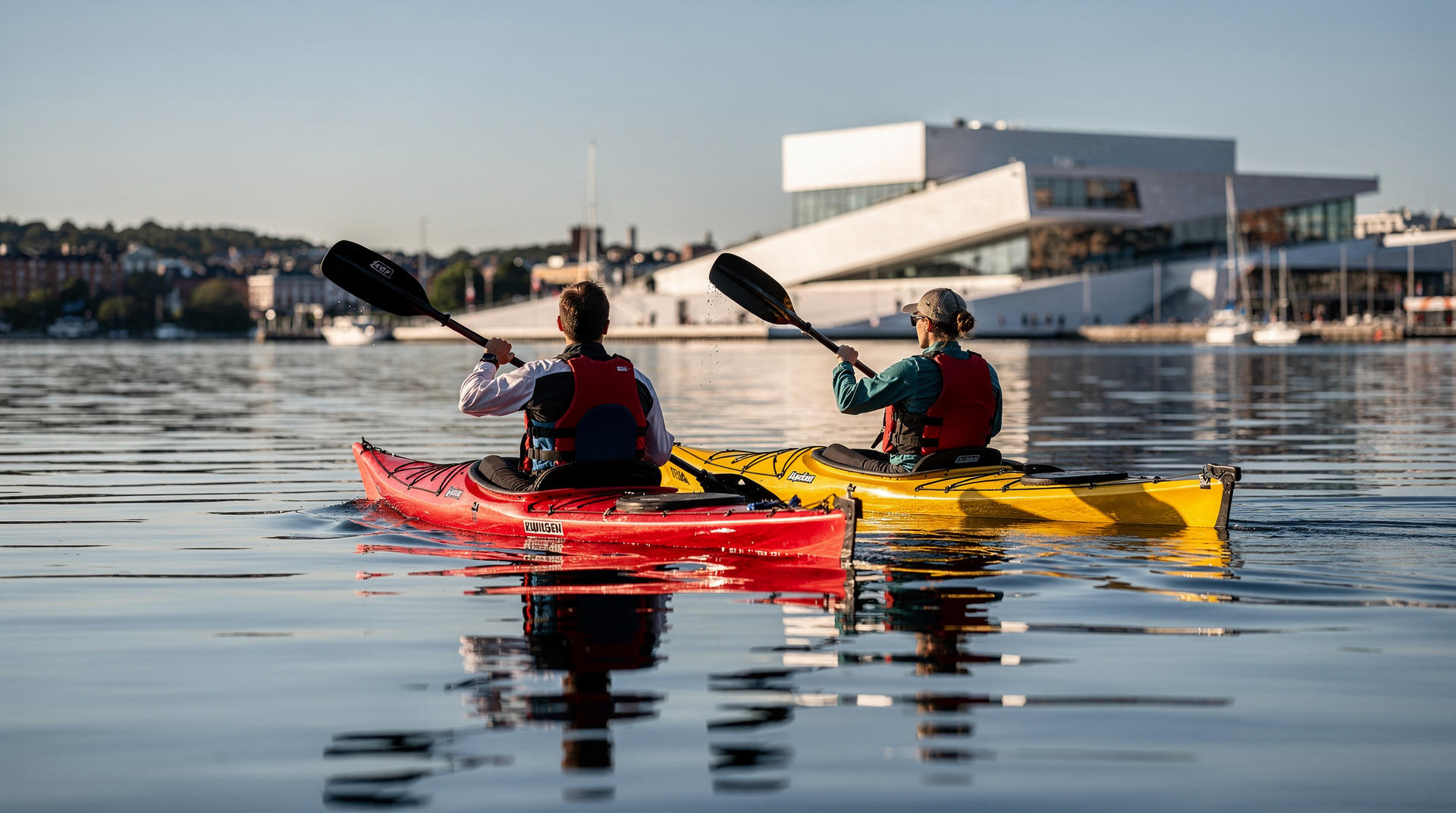
Best swimming spots in Oslo: fjord beaches, harbour baths and islands
Oslo: floating sauna and fjord swimming experience in central Oslo
Duration: 1.5 hours
- Floating sauna
- Cold plunge
Where can you swim in Oslo?
The main swimming spots are Sørenga Seawater Pool (Bjørvika), Tjuvholmen beach, and the inner fjord islands — Langøyene (sandy beach), Gressholmen and Hovedøya (rocky coves). All are free. Water is swimmable from mid-June through August, peaking at 19–22°C in July. Ferry tickets needed for the islands.
Why Oslo is a swimming city
Oslo is not obviously a beach city. It sits at 59.9°N — further north than Edinburgh, further north than Moscow — and its winters are genuinely cold. But from late June through August, the inner Oslofjord offers some of the most accessible and pleasant urban fjord swimming in Europe.
| Best months | Mid-June to late August |
| Peak water temp | 19–22°C (July) |
| Top city spot | Sørenga Seawater Pool (free) |
| Top island spot | Langøyene (sandy, ferry needed) |
| Cost | Free at all spots; ferry NOK 42/trip |
The key facts that make this possible: Oslo’s summer days are extraordinarily long (18–19 hours of daylight at midsummer), the fjord water warms quickly in June, and the city has invested in cleaning up the inner harbour to the point where Blue Flag-standard water quality is normal rather than exceptional. The result is a city where office workers swim at lunchtime from platforms at Sørenga, teenagers jump from rocks on Gressholmen at 9pm in full daylight, and families picnic beside the water at Tjuvholmen in a way that would seem impossibly idyllic in a city this far north.
This guide covers every main swimming spot — city beaches, harbour platforms, and the islands — with honest assessments of what each offers and when it’s worth going.
Sørenga Seawater Pool: the city’s best urban swim
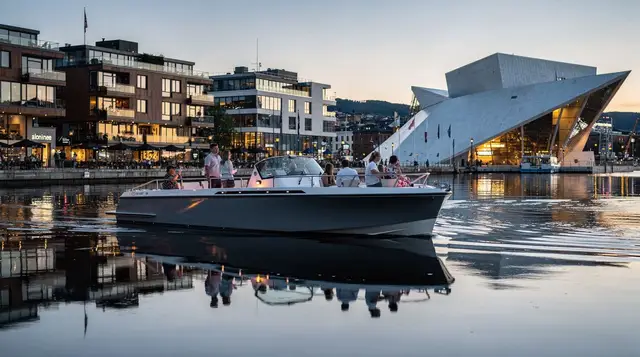
Sørenga Sjøbad is the most polished swimming destination in central Oslo, and the most popular. Located in the Bjørvika waterfront district — a short walk from the Oslo Opera House and the Munch Museum — it consists of a large outdoor seawater pool fed directly from the fjord, plus a separate children’s pool, diving boards, and a sun terrace with approximately 500 sun loungers.
The pool water is not chlorinated — it circulates through from the fjord continuously, which means water quality is directly linked to fjord quality (good) and you get the natural temperature variation of the open water. In peak July, the pool is typically 19–22°C. In late August it begins to cool.
The children’s section has a shallow wading pool with a sandy floor and very gradual entry — one of the few places in Oslo where young children can stand and play in fjord water without any danger. This makes Sørenga the top family swimming spot in the city, especially for those staying in the Bjørvika or Sentrum neighbourhoods.
Entry is free. On hot July days, Sørenga is busy by 10am and packed by noon. The sun terrace fills up fast. A weekday visit before 10am or after 4pm is noticeably more pleasant than a Saturday at midday. There are changing facilities, showers, and a small kiosk.
Getting there: Tram 13 to Operaen or Bjørvika, then a 5-minute walk past the Opera House. The Opera House guide covers the building worth seeing on the same visit.
Tjuvholmen: swimming with the art crowd
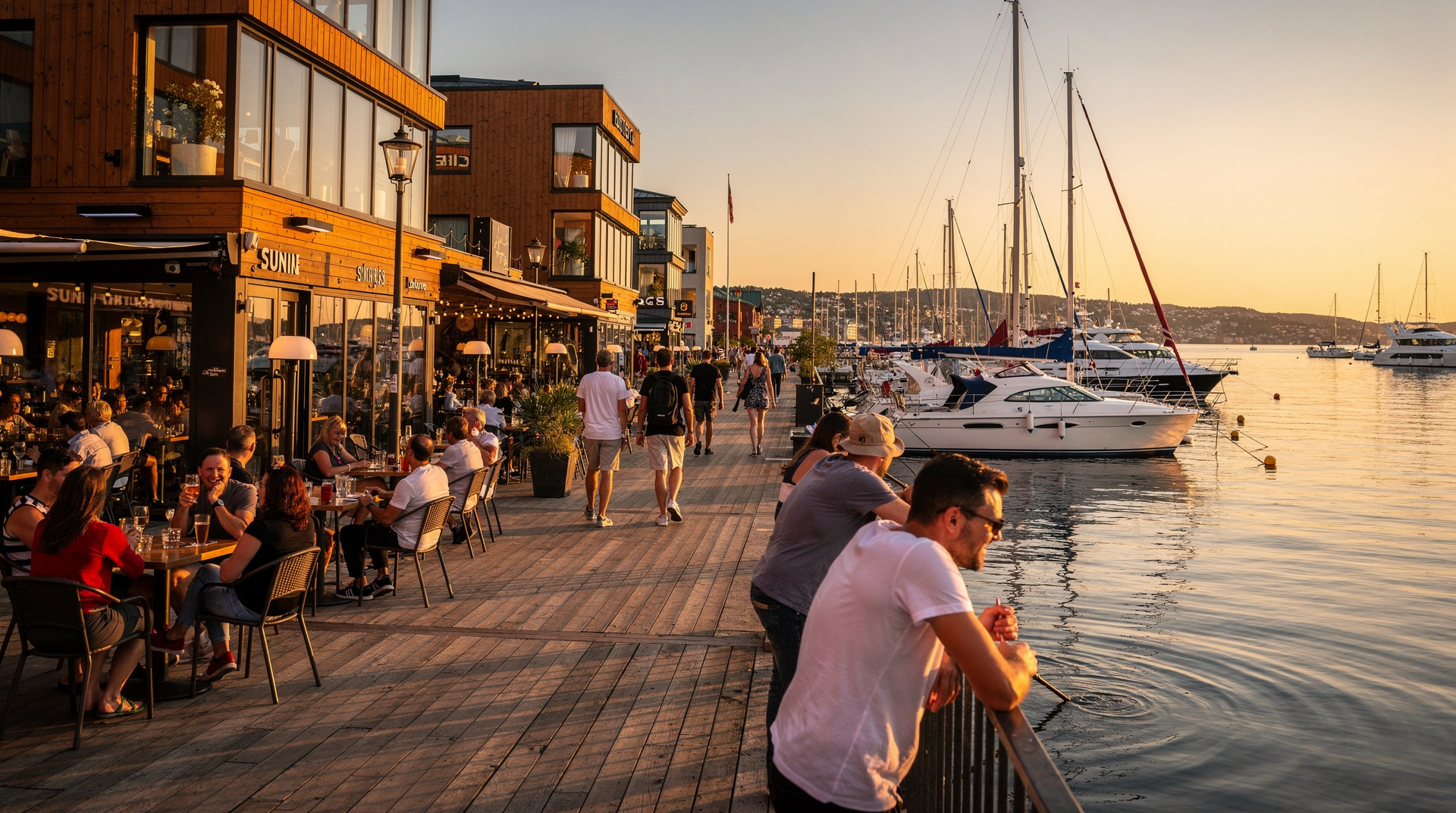
The Tjuvholmen neighbourhood — the art-gallery and design district at the western end of Aker Brygge — has two small public beaches at its outer tip. These are proper urban beaches: small, pebbly/sandy, right against the floating saunas and gallery buildings. The Astrup Fearnley Museum of Modern Art sits directly overhead.
The swimming here is not the best in Oslo — the beaches are small and the saunas displace some of the sunbathing space — but the setting is distinctive. Swimming in the shadow of contemporary Norwegian architecture, with a direct sightline to the fjord entrance and the island ferries going past, has a certain urban cool that the more suburban beach spots don’t replicate.
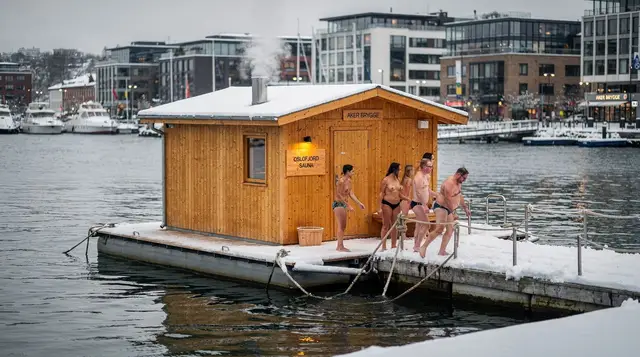
The floating saunas nearby are a paid activity, but the beach is free. The combination of cold fjord plunge and sauna is one of Oslo’s signature experiences — the floating saunas guide explains how the sauna culture works and which operators are worth using.
Getting there: Tram 12 to Aker Brygge, then a 10-minute walk through the quayside to Tjuvholmen.
The Oslo islands: the premium swimming experience
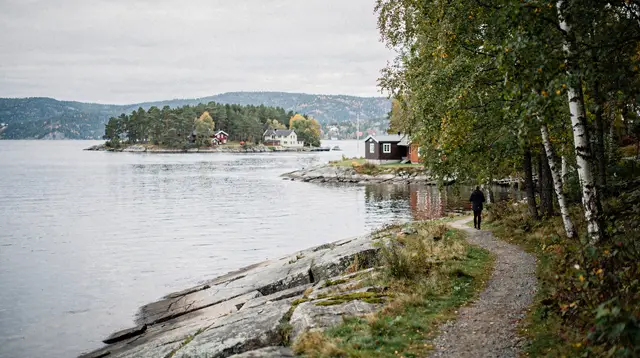
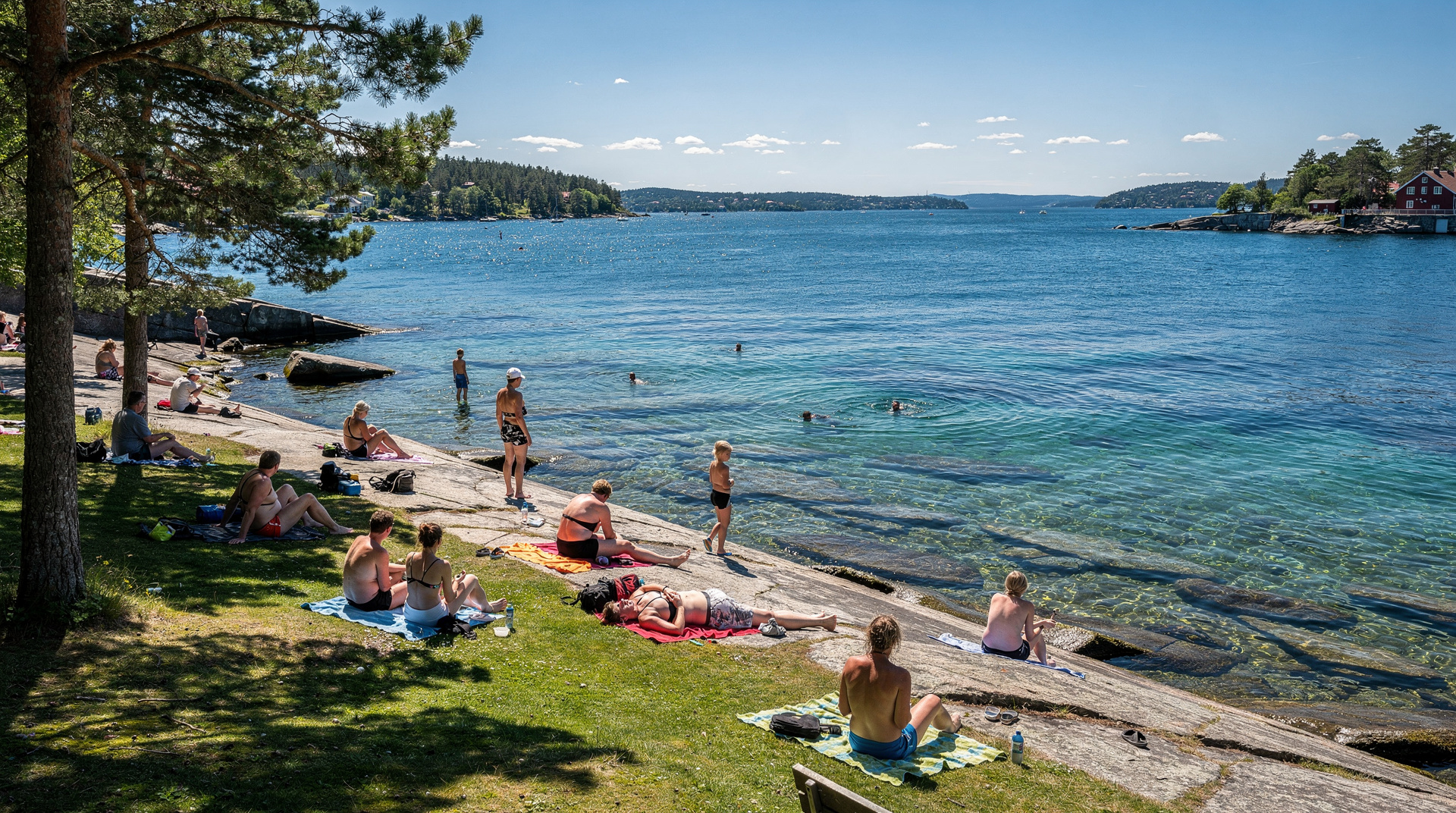
For the best fjord swimming experience, the inner-fjord islands deliver what city beaches can’t: open water, forest backgrounds, clean flat rocks, and enough space that you’re not swimming in a crowd.
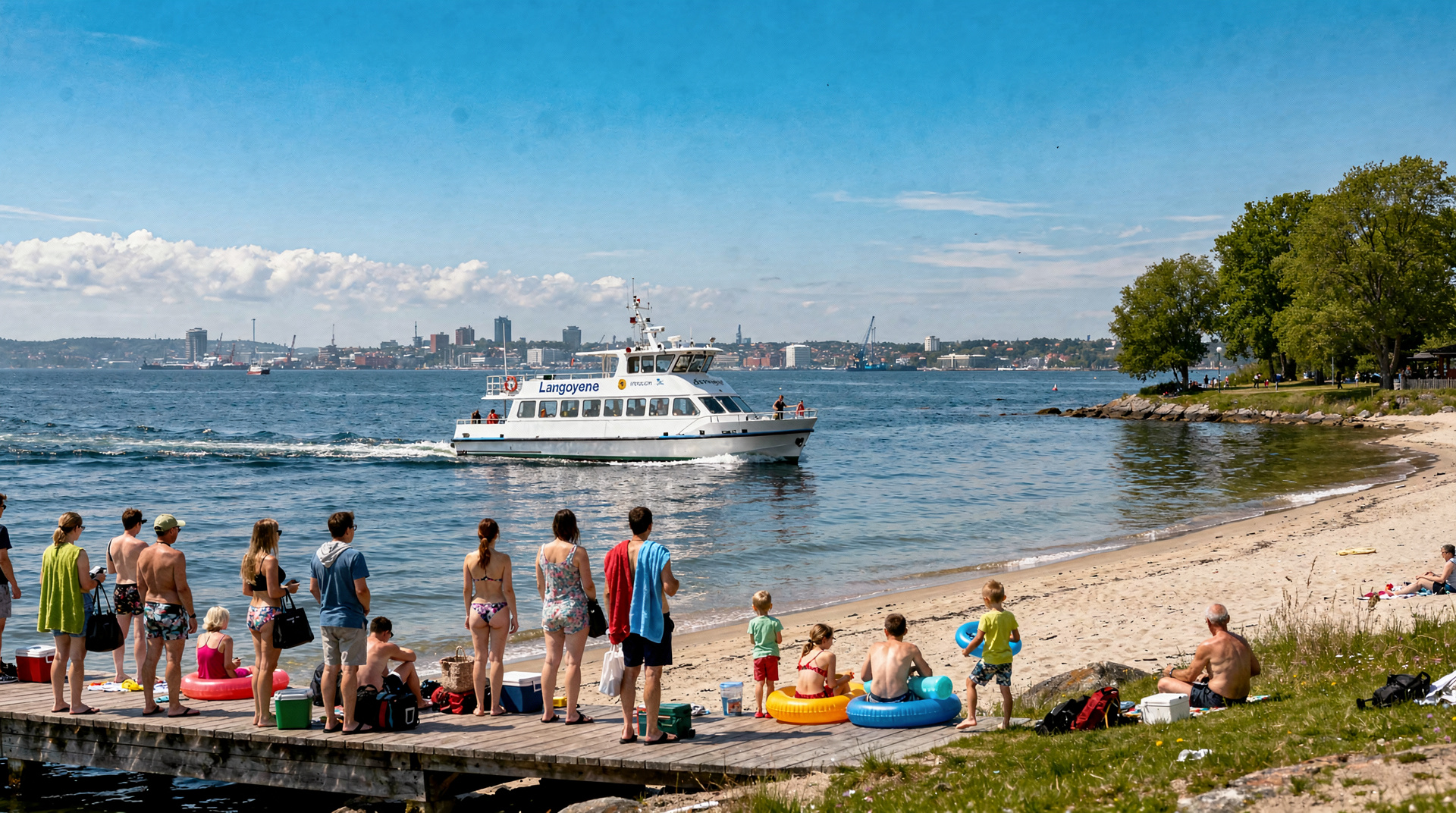
Langøyene is the island for beach swimming — a genuine sandy beach that is unusual in Oslo’s typically rocky island landscape. The ferry from Aker Brygge (B4 route, about 25 minutes) delivers you to a beach that is popular but large enough to spread out. On warm July days it’s busy, but the beach is long. A kiosk, toilets, and a camping area for overnight stays. Best for families and first-time island visitors.
Gressholmen is the island for serious fjord swimming. Flat rocky ledges on the south shore, clear water with good visibility, significantly fewer visitors than Langøyene. The lack of a sandy beach means less appeal for children who want to build sandcastles, but the water quality and sense of space are superior. The ferry (B5 route, about 20 minutes from Aker Brygge) runs slightly less frequently than the Langøyene service.
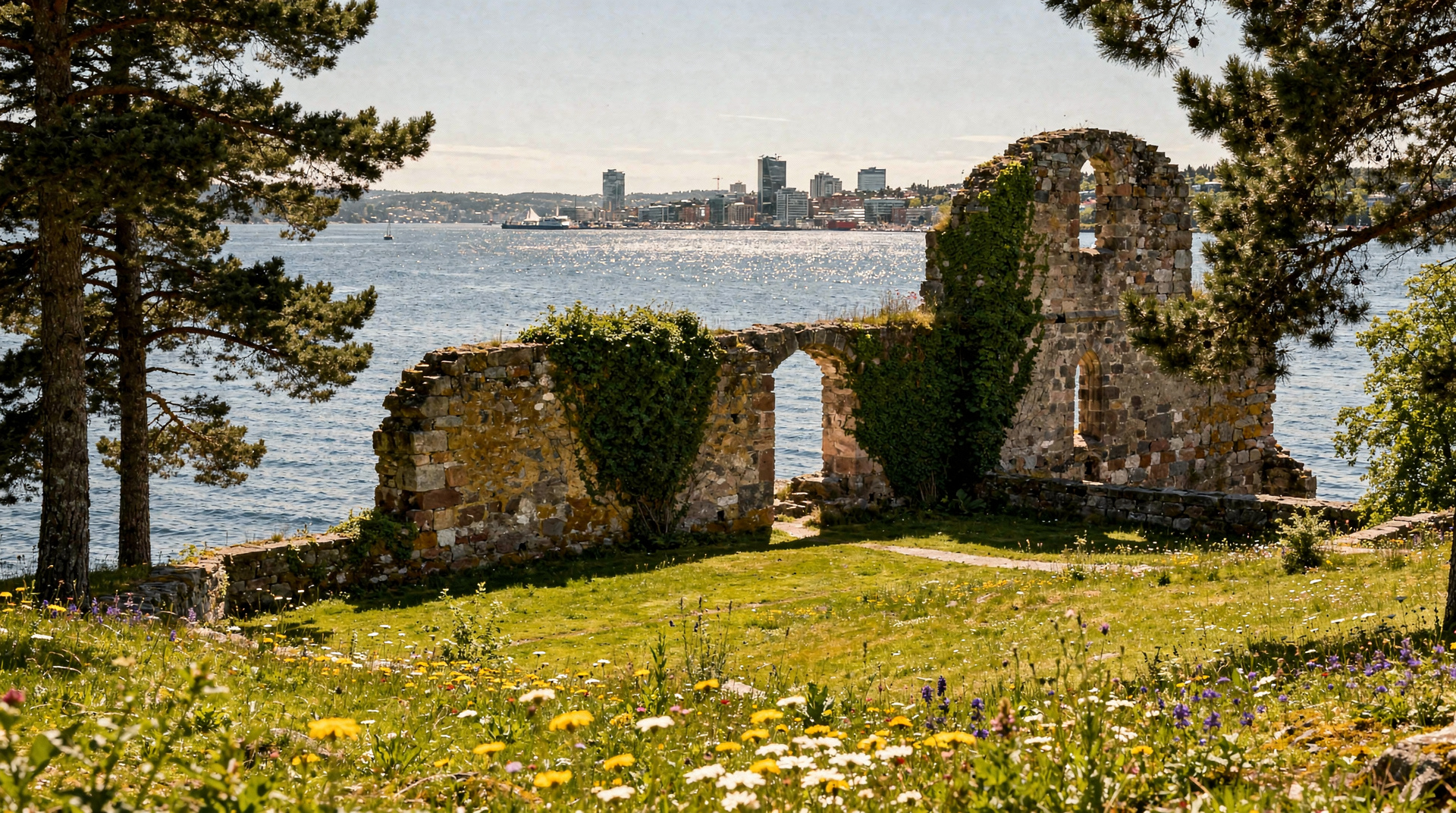
Hoofdøya has the monastery ruins and the island’s main walking circuit, but also a south-facing rocky shore with good swimming. Less ideal than Gressholmen for dedicated swimmers — the approach to the water involves navigating busier trails — but perfectly good if you’re combining history and swimming in the same visit.
The island-hopping guide covers the ferry logistics and best sequences for visiting multiple islands. The Oslo beaches guide adds context on how the island beaches compare to the city options.
Ingierstrand: Oslo’s retro beach
Ingierstrand is Oslo’s most characterful beach, and the least known to visitors. Located about 12 km south of the city centre along the Oslofjord’s western shore, it was built in the 1930s as a municipal public beach in a functionalist style that has aged remarkably well: a long curved sun terrace cut into the hillside, a concrete diving tower, changing rooms with art deco detailing. It looks like it was designed by someone who loved the Mediterranean and was trying to build it in Norway.
The beach itself is a mix of flat rocks and some sandy areas, with a small kiosk and café. The water tends to be slightly warmer than the central Oslo beaches — the shallow southern bay heats up faster than the inner harbour. On calm midsummer days it reaches 22–24°C, which is exceptional for 59.9°N.
Getting to Ingierstrand requires either a bus (Bus 500 from Oslo Bussterminal toward Drøbak, stop at Ingierstrand — about 25 minutes) or a car. It’s worth the journey for those who have more than two days in Oslo and want to see the fjord away from the city centre. The Drøbak day trip guide can be combined with an Ingierstrand stop since the bus route passes it.
Huk on Bygdøy: the classic family beach
Huk is Oslo’s most established public beach, located at the tip of the Bygdøy peninsula — the same peninsula that holds the Fram Museum, Kon-Tiki Museum, and Norsk Folkemuseum. After a morning at the museums, an afternoon at Huk is the classic Bygdøy summer day.
The beach is split into two sections by a small headland: the eastern side (family beach) has gradual sandy entry and is popular with children. The western side is more open fjord, rockier, and traditionally used as a naturist beach — visitors should be aware this is not a separated or fenced area, just the informal convention.
Huk has changing rooms, toilets, a café, and lifeguard supervision in peak season. Getting there: Bus 30 from Nationaltheatret toward Bygdøy, stop at Huk.
Museum and beach combinations are natural for Bygdøy. See the Fram Museum guide, Kon-Tiki guide, and Bygdøy destination overview.
Hvervenbukta: Oslo’s secluded south-east bay
On the eastern side of Oslo, Hvervenbukta is a small bay on the Ekebergskrenten hillside — less famous than Huk or Sørenga, better for those who want fewer crowds. The bay has a small sandy beach, shallow water suitable for young children, and tree shade from the surrounding oak forest.
Getting there: Bus 34 from Oslo S to Ljanskollen, then a 15-minute walk down the hill. The detour makes it less popular with casual tourists, which is most of the appeal. Local families have used this beach for generations.
Water temperature by month
This is honest information that most Oslo travel guides quietly omit:
- May: 10–14°C. Cold. Possible for a quick dip for the genuinely cold-water-tolerant. Most people don’t.
- June: 14–18°C. Getting there. Swimmable from mid-June for the determined. Last week of June is usually above 16°C.
- July: 18–22°C. Peak season. Generally comfortable for sustained swimming.
- August: 17–20°C. Still good, cooling slightly toward the end of the month.
- September: 14–17°C. Bracing. Shorter swims. Popular with the cold-water community (particularly the sauna-plunge crowd).
- October onwards: Below 14°C. Swimming season effectively over for most visitors.
The Oslo summer is genuinely shorter than cities further south, but the long daylight compensates significantly — a 9pm swim in full June sun is a different experience from anything possible at lower latitudes.
Oslo’s floating saunas: swimming’s companion
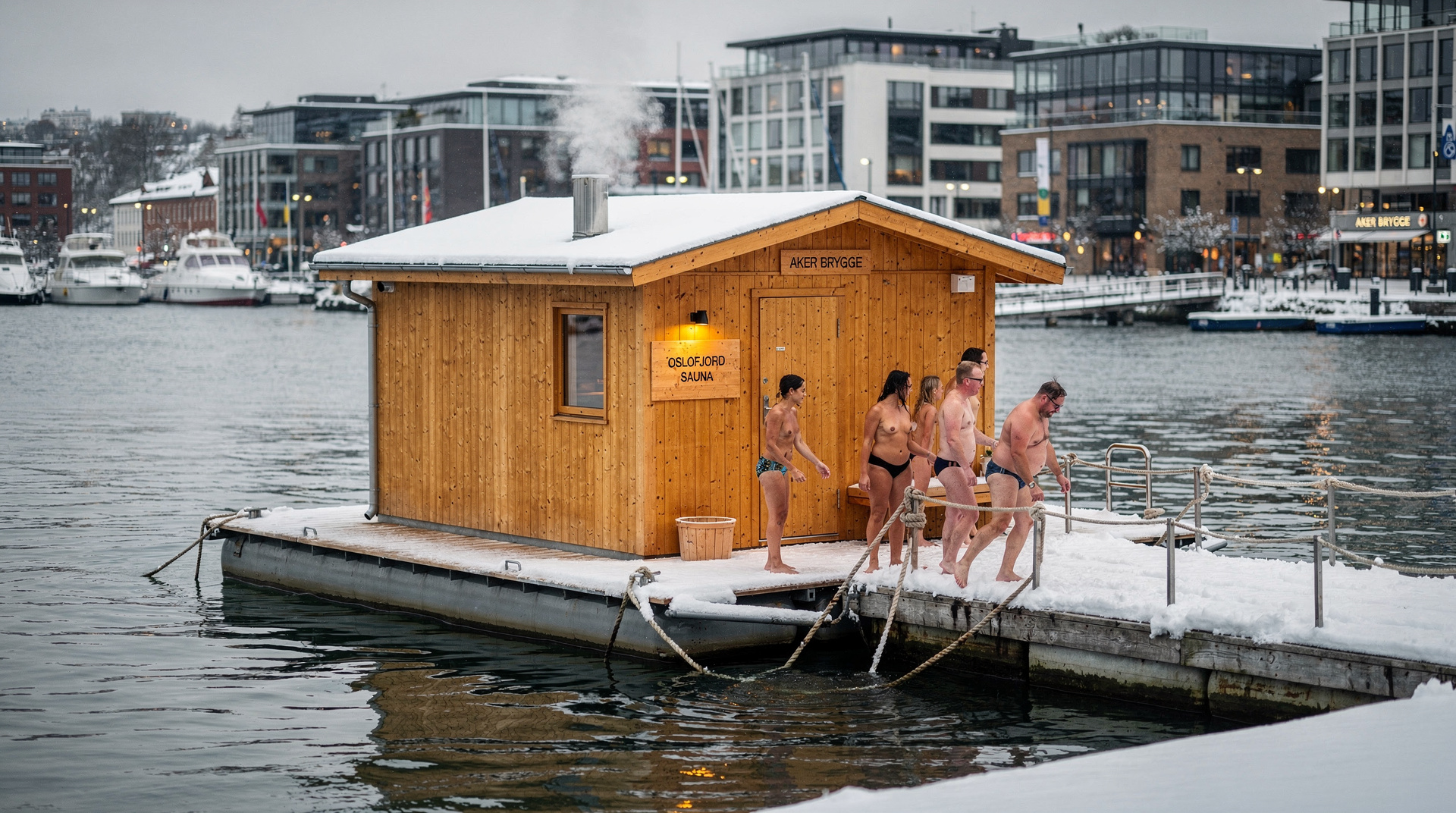
The floating saunas at Aker Brygge and Tjuvholmen are not free — sessions cost NOK 200–400 (USD 21–43) depending on the operator and whether you book in advance. But they’re integral to Oslo’s summer swimming culture in a way that deserves mention here.
The format: book a session (typically 2 hours), heat up in the sauna, plunge directly into the fjord from the sauna platform, repeat. The contrast between 70–80°C dry heat and 18–20°C fjord water is extreme and, according to most people who try it, immediately addictive. This is the same tradition as Finnish saunas by cold lakes, translated to an urban fjord context.
The floating saunas guide covers the main operators, prices, and the social protocol around mixed-gender sauna use (it’s normal in Norway; come without assumptions).
Practical swimming tips for Oslo
Go early or go late. Every main swimming spot in Oslo fills up on sunny summer weekday mornings by 10am and on weekends even earlier. Before 9am and after 4pm, the same spots have a fraction of the crowd.
Check the water quality advisory. Oslo municipality publishes updates at bymiljoetaten.oslo.kommune.no when any swimming area falls below quality thresholds. This is rare but happens after heavy rainfall (runoff can temporarily affect inner harbour quality). Check before a specific planned visit.
The sun doesn’t set until 10pm. At midsummer, Oslo has 18–19 hours of daylight. The practical implication is that an evening swim at 8pm is in full afternoon-intensity sun. This is one of Oslo’s genuine summer privileges and it’s worth planning around.
Bring your own food. Every beach and swimming spot in Oslo has either no food infrastructure or minimal seasonal kiosks. Oslonians bring picnics. Do the same — it’s cheaper, more reliable, and more pleasant.
The saunas require advance booking in peak season. The floating saunas are popular and book out quickly in July. Book a week in advance for summer visits; same-day availability exists but is not reliable.
Pack a dry bag. Phones, wallets, and car keys don’t mix well with wet towels and sandy hands. A cheap roll-top dry bag from any outdoor shop solves this at every spot on this list, city or island.
The Oslo in summer guide covers how to build a summer day around the long light, the fjord, and the city’s other seasonal activities. The saunas guide and SUP paddleboard guide cover the active water options that complement swimming.
Swimming safety for families
Norwegian swimming spots generally have less formal lifeguard coverage than visitors from some countries expect — Sørenga and Huk have seasonal lifeguards in peak summer, but the islands and quieter bays like Hvervenbukta typically do not. Supervise children directly rather than assuming a lifeguard presence. Water depth increases quickly beyond the shallow marked areas at Sørenga and Huk’s family side, and currents around the harbour entrance near Aker Brygge can be stronger than the calm surface suggests. The Oslo with kids guide covers which swimming spots pair well with a family day and which are better suited to confident swimmers.
Cold-water swimming beyond the summer season
A small but growing community swims year-round in Oslo, treating the November-to-April cold plunge as a wellness practice rather than recreation. This is a different activity from summer swimming: sessions are brief (often under a minute), always followed by warming up immediately, and rarely done alone for safety reasons.
If this interests you, it connects naturally with Oslo’s floating sauna culture, where the hot-cold contrast is the entire point rather than a swim in its own right — see the cold plunge guide for how the physiology and etiquette work. Do not attempt an unsupervised winter fjord swim without local guidance; the risk profile is entirely different from a July dip.
Combining swimming with other summer plans
Oslo’s swimming spots rarely need to be a dedicated half-day on their own — most visitors fold them into a broader day. A morning at the Fram Museum or Kon-Tiki Museum on Bygdøy pairs naturally with an afternoon at Huk, just a short walk or bus ride away. A day exploring the islands can build in a swim stop at Gressholmen or Langøyene between viewpoints. And a summer evening built around the Opera House roof works well with an earlier swim at Sørenga, since both sit within walking distance in the Bjørvika district.
Day trips with better swimming than the city
If the city and near-city spots don’t satisfy, two day trips are worth the extra travel time purely for swimming. Drøbak, on the western Oslofjord shore about an hour south, has a genuinely pleasant small-town swimming area alongside its own charm as a destination — see the Drøbak day trip guide for logistics. Further afield, the fjord widens and warms slightly as you move south, so day-trip beaches beyond Oslo’s immediate boundary can offer marginally warmer water and considerably fewer people than the city’s most popular spots in peak July.
The fjord’s unlikely comeback
It’s worth knowing that Oslo’s fjord was not always swimmable. Through the 1950s, 60s and 70s, the inner harbour was seriously polluted — sewage discharge, industrial runoff, and shipping fuel combined to make the water unappealing and often genuinely unsafe. The systematic cleanup that began in the 1980s, involving rerouted sewage infrastructure, reduced industrial discharge, and dedicated monitoring, took about two decades to complete.
The result — a city of 700,000 people with swimmable harbour water in the city centre — is not an accident. It’s a deliberate public investment. The Sørenga seawater pool sits where industrial storage once stood. The Tjuvholmen beaches replaced former dockland. The inner Oslofjord water quality is now something Oslonians are openly proud of, and rightly so.
When you swim from the platform at Sørenga and look back at the Opera House, you’re swimming in water that was considered unswimmable within living memory. That context makes the plunge feel a little different.
Frequently asked questions about Best swimming spots in Oslo
Is the water clean enough to swim in Oslo?
Yes — the inner Oslofjord was comprehensively cleaned up through the 1980s and 1990s and is now monitored for water quality. The municipality issues alerts if pollution levels rise (rare). The Blue Flag-standard water quality at places like Sørenga and the main islands is genuinely good by European urban swimming standards.When is the water warm enough to swim in Oslo?
The fjord water reaches a swimmable 16–18°C by mid-June. Peak temperature of 19–22°C is typical in July and early August. By late August the temperature is dropping (often 17–19°C). September is manageable for the cold-water-comfortable; October is cold enough to deter most swimmers.Is Sørenga suitable for children?
Yes — Sørenga has a dedicated shallow children's pool fed by fjord water, plus gradual entry points and a sandy-floor section. It's one of Oslo's most family-friendly swimming spots. Get there early on summer weekends; it becomes very busy by 11am.Do I need to pay to swim at Oslo's spots?
No. All the main city swimming spots — Sørenga, Tjuvholmen, Ingierstrand — are free. The islands require a Ruter ferry ticket (NOK 41 / USD 4.40). The floating saunas at Tjuvholmen and Aker Brygge are paid, but the adjacent swimming is free.What should I wear for fjord swimming in Oslo?
A standard swimsuit is fine. Many Oslonians wear a wetsuit top for extended swimming, especially in June and September when water temperatures are lower. Neoprene water shoes are useful at rocky spots (Gressholmen, Hoofdøya south shore). Bring a changing mat — facilities vary by location.
Top experiences
Bookable activities with verified prices and instant confirmation on GetYourGuide.