Stand-up paddleboarding in Oslo harbour
Oslo: stand-up paddleboard rental with safety briefing
Duration: Flexible
- SUP rental
- Summer
Where can you rent a paddleboard in Oslo?
SUP boards are available for rental at Tjuvholmen, Aker Brygge, and Sørenga waterfront from May through September. No experience is required for harbour conditions on calm days. Rental typically costs NOK 350–450 (about USD 38–48) for two hours.
Oslo from water level — the SUP perspective
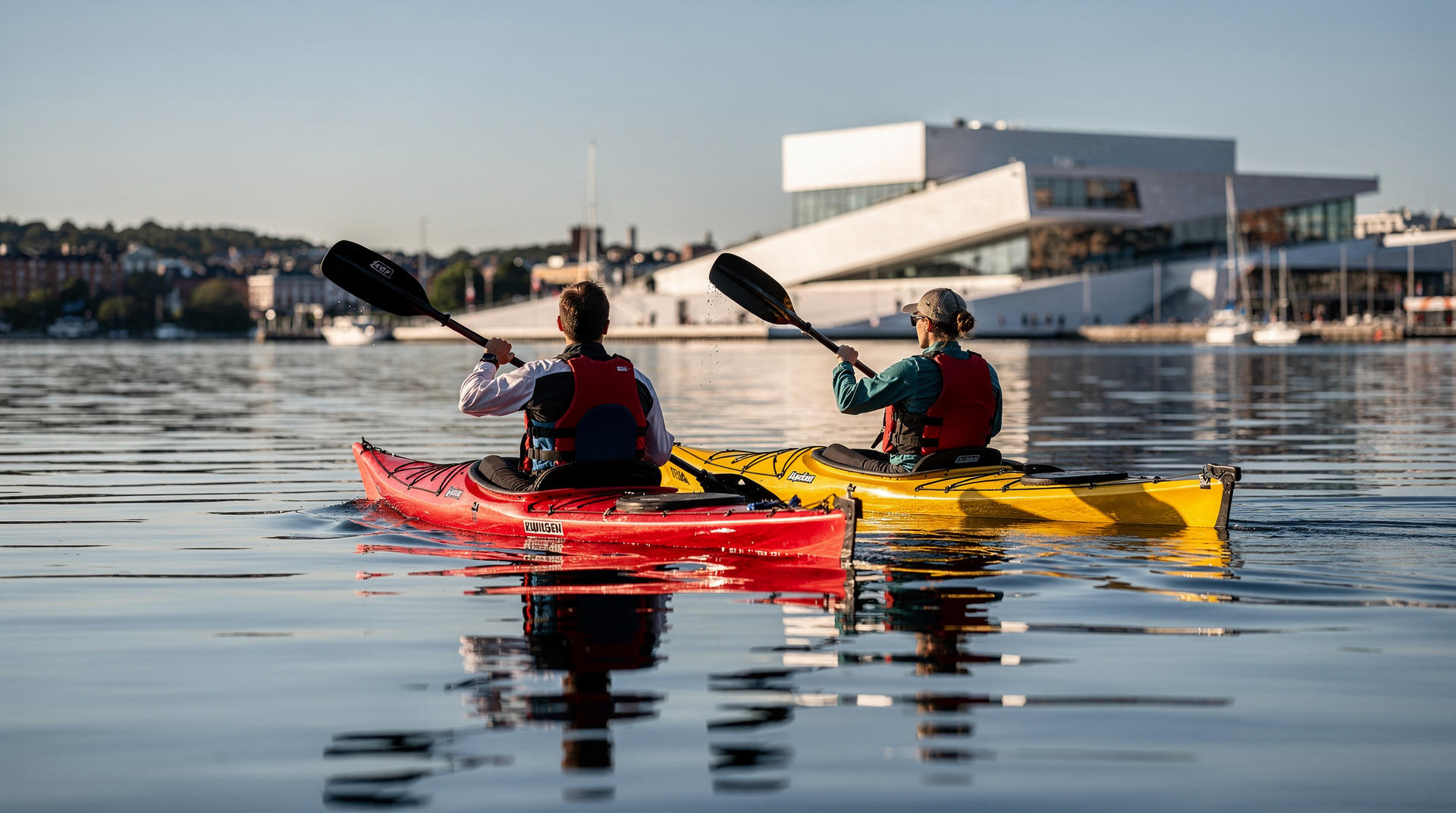
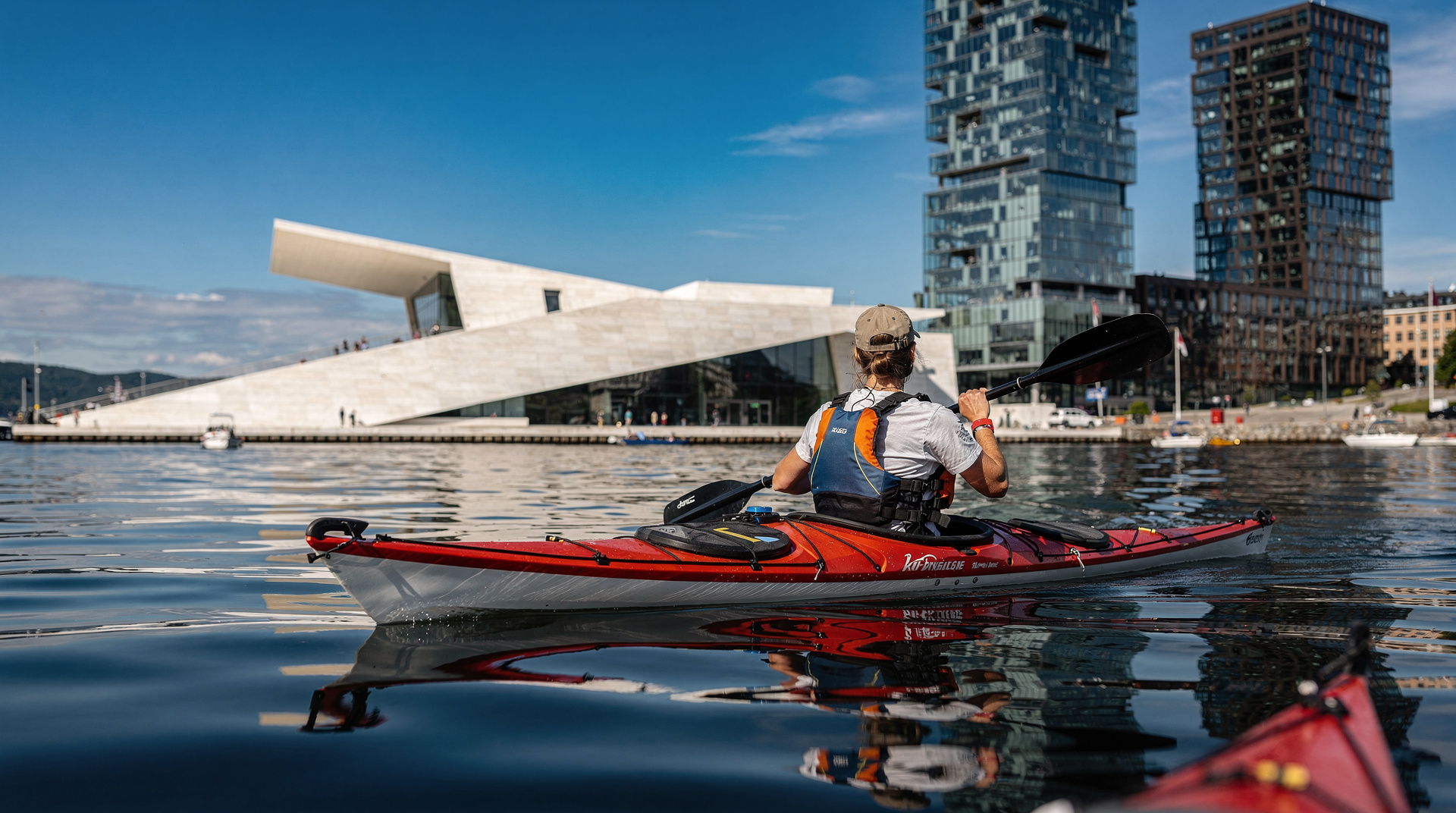
The Oslofjord has been a working harbour for a millennium and a recreational waterway for decades, but the stand-up paddleboard has given ordinary visitors access to a version of it that no land activity provides. At water level, with the Opera House roof curving above you to the left and the islands scattered south, Oslo’s relationship with its fjord is physically obvious in a way that a harbourfront walk only hints at.
Stand-up paddleboarding arrived in Oslo’s harbour about a decade ago and has grown steadily. The inner fjord — particularly the sheltered bays at Tjuvholmen, Aker Brygge, and Sørenga — is well suited to beginner SUP. No significant current, minimal tidal range, minimal commercial traffic in the designated paddling areas, and crystal-clear water that reaches 20°C in July.
This guide covers everything you need to know to get on a board in Oslo, from where to rent to what conditions to expect to how far you can reasonably paddle.
If you are still planning the rest of your trip, our guides to Oslo in summer and the best swimming spots in Oslo show how a paddleboard session fits alongside the other things the waterfront offers in the warm months.
| Where | Tjuvholmen, Aker Brygge, or Sørenga waterfront |
| Season | May–September; July is peak (warmest water, calmest mornings) |
| Cost | Around NOK 350–550 for 1–2 hours, equipment included |
| Best time of day | Mornings (09:00–11:00), before afternoon sea breeze picks up |
| Booking | Advance on summer weekends; often walk-up midweek |
Where to rent a paddleboard
Tjuvholmen and Aker Brygge
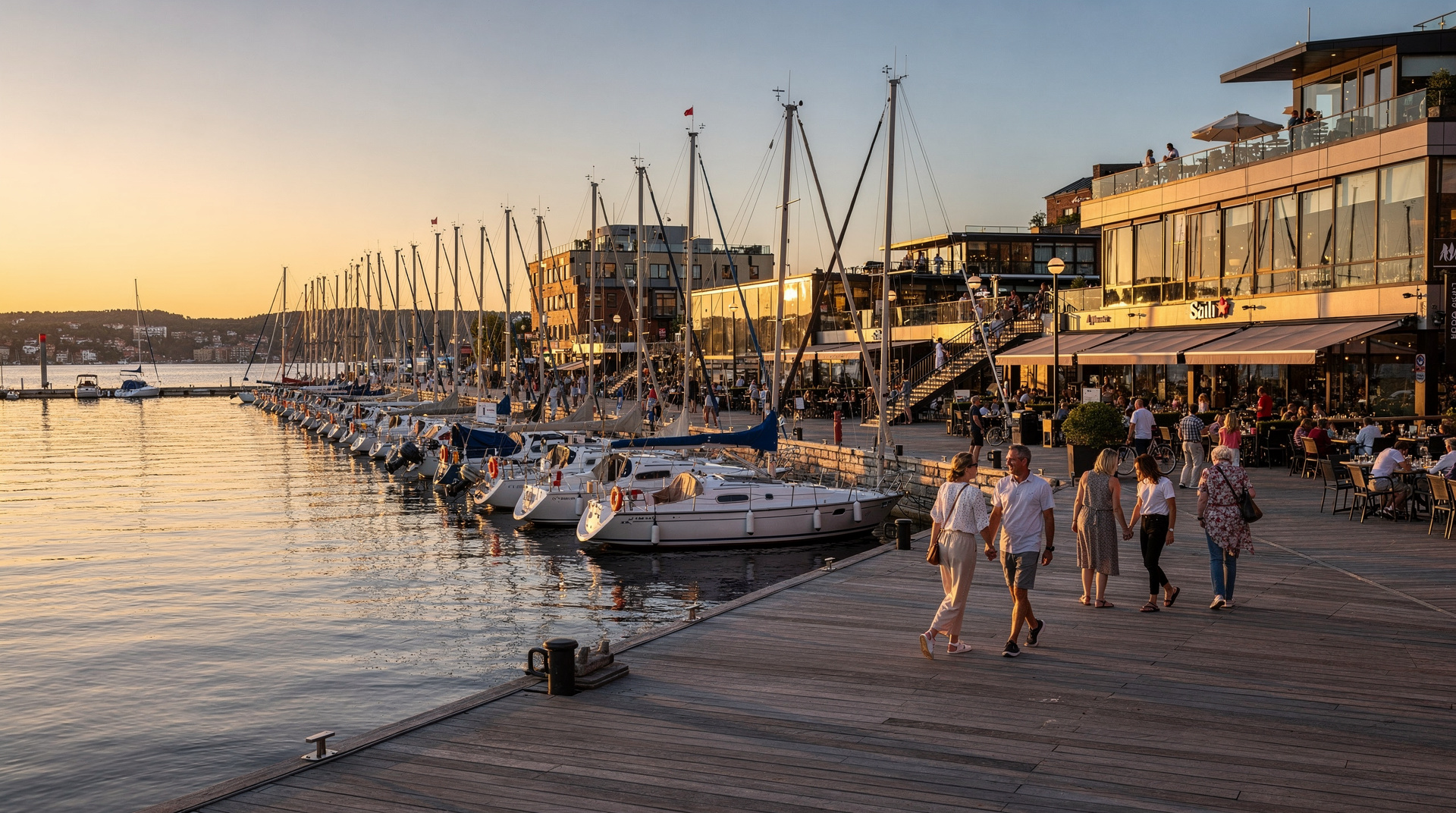
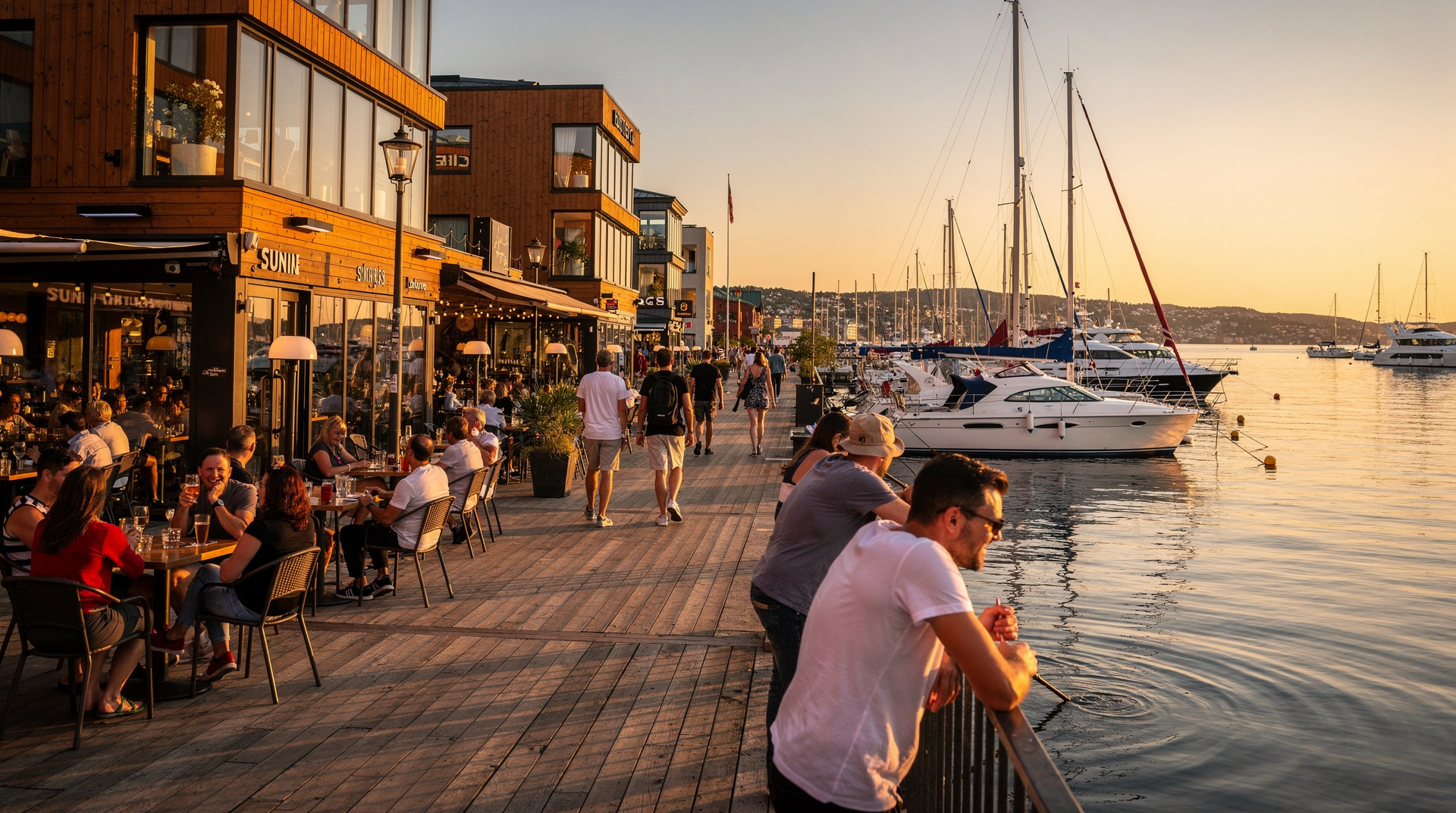
The western harbourfront at Aker Brygge and Tjuvholmen is the most social SUP zone in Oslo. Several operators set up on the pier below the Astrup Fearnley Museum and the Tjuvholmen sculpture park. The water here is sheltered by the Tjuvholmen breakwater on one side and the Aker Brygge marina on the other, making it the calmest launch zone in the inner harbour.
The view from a board here is one of Oslo’s finest: the city hall towers visible to the left, the forested Bygdøy peninsula ahead, the Oslofjord opening south between rocky islands. It is a genuinely beautiful urban paddling experience.
Rental rates (approximate):
- 1 hour: NOK 300–380 (USD 32–41)
- 2 hours: NOK 450–550 (USD 48–59)
- Half day (4 hours): NOK 700–850 (USD 75–91)
Sørenga
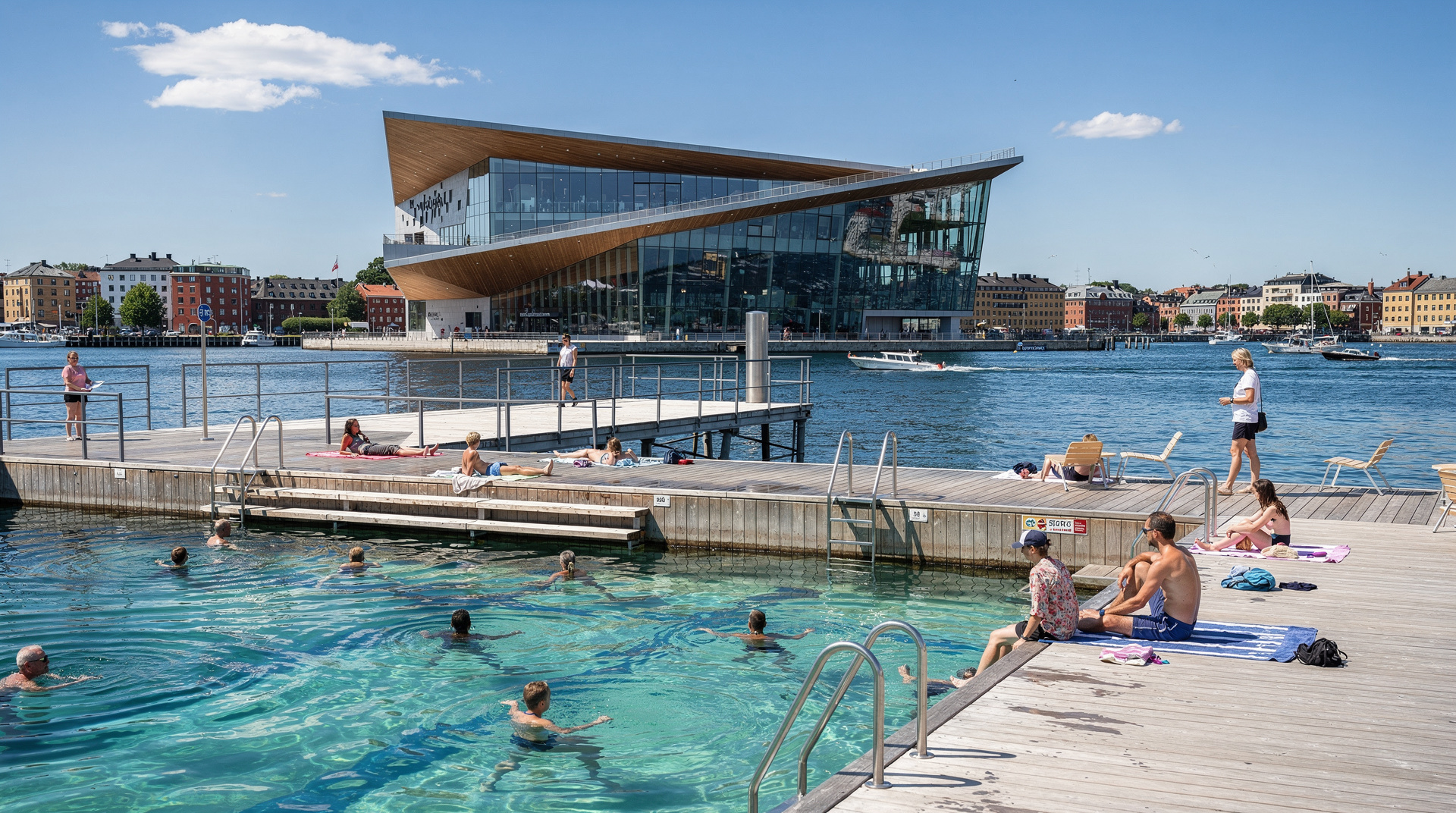
Sørenga, east of the Opera House, is the newer water-activity hub. It is home to the Sørenga Sjøbad (floating seawater pools and diving platforms) and several kayak and SUP rental operators. The bay at Sørenga is slightly more exposed to the main fjord but still well-sheltered for beginners. This is the better choice if you want to combine SUP with a swim in the heated fjord pools — the two facilities sit side by side.
Walking distance from Oslo Central Station: about 15 minutes. The Barcode skyscraper row provides a dramatic backdrop from the water.
What’s included in rental
Standard rental includes: inflatable or hard SUP board, paddle, leash, life jacket. Wetsuit rental is available at most operators for NOK 100–150 (USD 11–16) — recommended in May, June, and September when the water is cold. Lockers are available at most sites for phones and wallets (NOK 20–30, USD 2–3).
First-time SUP: what to expect
Getting on a board for the first time is easier in Oslo’s harbour than in many places because the water is calm, the board rental staff are patient, and falling in is understood as part of the process.
Getting up: Most operators will give you a 5-minute briefing. Start on your knees to find your balance, then rise to your feet in the wide stance position. The board will feel wobbly for the first few minutes; most beginners stabilise within 10–15 minutes.
Paddling: Keep your top hand on the T-grip, lower hand on the shaft, and rotate from your core rather than pulling with your arms. This is the most common technique correction instructors give.
Falling in: When you fall — and you likely will — the board stays attached via the leash. Get back on from the side (not the tail), roll your body onto the board, wait until it stops rocking, then regain your knees first.
The cold factor: Even in July the water is around 18–20°C — refreshing rather than warm. The shock of an unexpected fall is real. Wear the life jacket and leash. If you are a nervous swimmer, take the lesson format rather than solo rental.
Best conditions for Oslo SUP
Mornings are best. Sea breezes typically develop in Oslo’s harbour by early to mid-afternoon in summer as warm air rises over the city and cooler air flows in from the fjord. Morning sessions — before 12:00 — have the calmest water. An 09:00–11:00 session on a July morning is the gold standard.
Check Yr.no. Norway’s national weather service gives reliable hourly wind forecasts for the Oslo fjord. Wind above 5–6 m/s (about 12 mph) makes the inner harbour choppy and beginner SUP unpleasant. Above 8 m/s, beginners should stay off the water.
Avoid afternoon on hot days. On days when Oslo temperatures reach 25°C or above, the sea breeze is strongest by 14:00–16:00. These are also the most crowded hours on the water. Afternoon conditions can be challenging.
How far can you paddle?
From Tjuvholmen:
- Aker Brygge marina loop: 20 minutes, suitable for all beginners, entirely sheltered.
- Filipstad harbourfront: 30 minutes one way, passing the ferry terminals, still sheltered.
- Nakholmen island (nearest island): 3.5 km, 50–70 minutes at a comfortable pace. Requires calm conditions and paddling competence. The island has a small beach; the summer café serves basic food.
- Bygdøy peninsula beaches: 2.5 km, possible in calm conditions. The beaches at Huk are popular swimming spots.
From Sørenga:
- Opera House area: 10 minutes, harbour paddling.
- Gressholmen island nature reserve: 4 km, 60–80 minutes. Restricted landing — stay offshore.
- Langøyene island (free camping): 7 km, not recommended for beginner solo paddlers.
Combining SUP with other water activities
Oslo’s waterfront puts SUP, kayaking, swimming, and sailing within walking distance of each other. Practical combinations:
- SUP session in the morning (Tjuvholmen, 09:00–11:00) followed by a sauna at one of the Oslo floating saunas (fjord sauna bookings available from nearby operators, typically 2 hours at NOK 600–900 per person, USD 65–97)
- SUP at Sørenga followed by a swim at Sørenga Sjøbad (outdoor seawater pools, free to enter in summer)
- A kayak tour on one day, SUP rental the next — the two activities use the same waterfronts and complement each other
For those building a full active Oslo day, the active outdoors itinerary combines fjord paddling with Nordmarka hiking on a three-day schedule.
Honest assessment
Oslo harbour SUP is accessible, scenic, and a genuine pleasure on a calm summer morning. It is not a challenging adventure sport at this level — it is a way to experience the fjord from a unique angle while doing something mildly physical. For visitors who want a relaxed, social activity with excellent views rather than a serious workout, it delivers reliably.
The main risk to a good experience is weather: arriving on a windy afternoon and finding choppy water, limited equipment, and a disappointed session. Check the forecast, go in the morning, and the rest tends to look after itself.
At NOK 450 (USD 48) for two hours including equipment, it sits at the middle of Oslo’s activity price range — cheaper than a guided kayak tour, slightly more than a Ruter day ticket, and roughly the cost of lunch at a mid-range harbour restaurant. Worth it for the perspective alone.
SUP progression — from beginner to the islands
Stand-up paddleboarding has a clear progression structure that makes it accessible in different ways depending on your skill level.
Complete beginners: Start in the sheltered bay at Tjuvholmen or the protected inner section at Sørenga. Practice falling in and getting back on (this is essential — most rental operators will demonstrate it before you leave the dock). Work on basic forward paddling, sweeping turns, and basic braking. Two hours is enough for a beginner to gain confident harbour-level paddling.
Intermediate paddlers: Move to the outer harbour between Aker Brygge and the Bygdøy ferry point. The water here is slightly choppier on windy afternoons and exposed to ferry wake — good for practicing balance on moving water. Try reaching the outer edge of Tjuvholmen breakwater and looking back at the city from this angle.
Competent paddlers: Plan a route to Bygdøy beaches (Huk or Paradisbukta) or to the nearest island. The crossing to Nakholmen island (nearest inhabited island) is 3.5 km from Tjuvholmen — 50–70 minutes at a steady pace. This is within the range of any reasonably fit paddler in calm conditions. Carry a waterproof phone case with the Yr.no app showing the wind forecast.
SUP versus kayak — which is right for you?
Both activities provide fjord access at water level, but they suit different types of visitor.
Choose SUP if: You want maximum view (standing gives a panoramic perspective that sitting in a kayak cannot match), you are comfortable with the idea of falling in and swimming back to the board, and you prefer an activity that feels playful and social rather than purposeful and directional.
Choose kayaking if: You want to cover distance, reach the islands, stay reliably upright in all conditions, or go on a guided group tour with ecological commentary. Kayaks are more stable in choppy water and are the better platform for multi-hour paddling.
Many Oslo visitors do both on consecutive days or even consecutive sessions — SUP rental and kayak rental use the same harbour locations and the skills complement each other. Several operators offer combination packages.
If neither appeals and you would rather let someone else do the work, the island-hopping guide and the Oslofjord ferries guide explain how to reach the same islands without a paddle in your hands.
Oslo’s harbour in the context of Norwegian water culture
Norway’s relationship with small water craft is part of the same outdoor culture that produces the world’s most enthusiastic cross-country skiers. The word for it in Norwegian is friluftslivs vannliv — the water-version of the outdoor-life concept. In summer this manifests visibly: the inner Oslofjord on a warm July weekend is busy with kayaks, SUP boards, sailing dinghies, electric runabouts, and open wooden motorboats (the latter known as snekker — traditional Norwegian wooden pleasure craft that look as though they belong to a different era and are maintained lovingly by their owners).
Participating in this water scene — even as a tourist on a rented board for two hours — puts you in the middle of a genuine Oslo summer culture, not a constructed tourist experience. The people on the water around you are Oslo residents doing what Oslo residents do from May to September. That is worth something.
The floating saunas connection
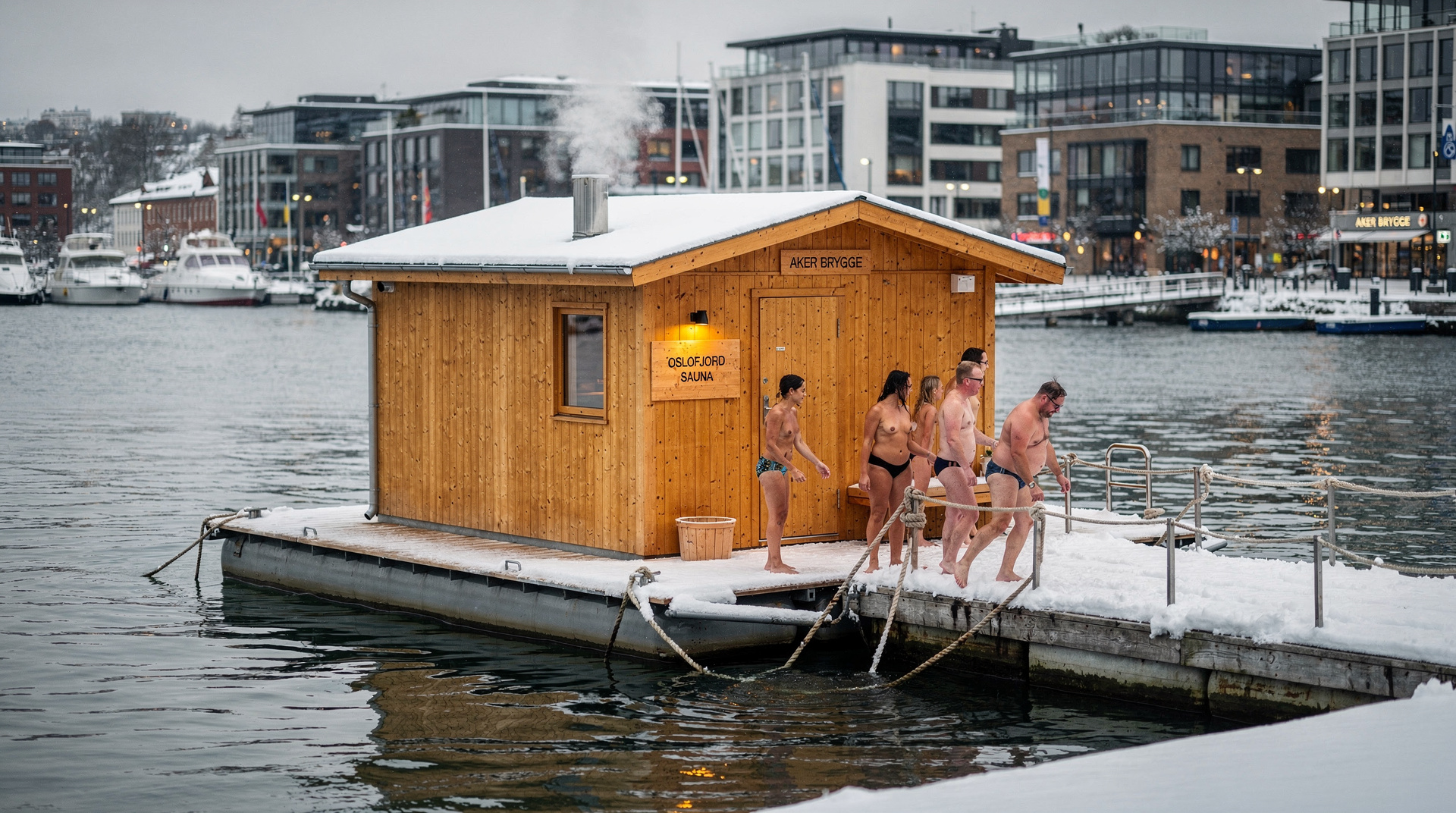
Oslo’s harbourfront has another distinctively Norwegian water culture offering: the floating saunas. Several operators run wood-fired saunas mounted on floating pontoons at Tjuvholmen, Kadettangen, and other waterfront locations. A sauna session (typically 2 hours, NOK 600–900 per person, USD 65–97) involves alternating between the hot sauna and a cold plunge directly into the fjord.
Combining a SUP session with a floating sauna is a natural Oslo day: active water sport in the morning, restorative heat and cold in the afternoon. Some operators at Tjuvholmen offer combined SUP-and-sauna packages. The full experience — paddleboard at 09:30, sauna at 14:00, cold plunge, harbour dinner — is a thorough introduction to Oslo’s water culture in one day.
Our floating saunas guide has the full detail on operators, booking, etiquette, and pricing.
Practical checklist before you go
Before your SUP session, run through this brief checklist:
- Check the Yr.no forecast for Oslo harbour — wind above 5 m/s means choppy water, above 8 m/s means beginners should stay on land.
- Book your session in advance on summer weekends — peak-hour slots (10:00–13:00 on warm Saturdays) sell out.
- Pack: swimwear (you will likely fall in), a dry change of clothes, sunscreen, sunglasses with a strap, a waterproof phone case.
- Leave: large bags, valuables that cannot get wet, any fear of cold water.
- Arrive 15 minutes early for your session — registration and equipment fitting take time.
SUP in Oslo versus other Scandinavian cities
Oslo’s harbour stands out among Scandinavian capital paddleboard destinations for a specific reason: the fjord is not a river or a lake but an arm of the sea, which means you are paddling on salt water with tidal characteristics and a connection to genuine open water to the south. Copenhagen’s paddleboarding takes place in canals; Stockholm’s on freshwater lakes and archipelago channels. Oslo’s inner harbour connects directly to the Oslofjord, which connects to the Skagerrak, which connects to the North Sea.
This gives Oslo SUP a different quality — the sense of being on water with significant depth and extent below and beyond you, with working boats and sailing vessels sharing the space, with the forest hills visible behind the city in three directions. It is a more dynamic and spatially expansive experience than canal paddling, even though the central harbour sections are well-sheltered.
The counterpoint is that the Oslofjord is colder than most Scandinavian city paddling venues (Helsinki’s harbour channels, Stockholm’s lakeside areas) and the afternoon wind can develop faster. These are manageable considerations with the right timing and preparation. If you are weighing Oslo against its neighbours for a wider Scandinavian trip, our comparisons of Oslo vs Copenhagen and Oslo vs Stockholm put the waterfront experience in context.
SUP as a social activity in Oslo
Stand-up paddleboarding has a pronounced social dimension in Oslo’s summer. The harbour areas at Tjuvholmen and Sørenga are gathering points on warm evenings, and groups of friends paddling together — sometimes with a paddleboard large enough for three people, with a cool box strapped between — are a common sight on summer weekend afternoons.
Solo SUP is perfectly comfortable and socially normal on Oslo’s water. But if you are visiting with a group of two or more, the shared experience of being on the water together — with the city at your back and the fjord ahead — is particularly Oslo. Rental operators can typically accommodate groups of up to 8–10 people on simultaneously rented boards.
For groups of 6 or more, some operators offer group SUP events with a guide who leads the group through a route and provides safety oversight. This is a good option for corporate groups or friend groups wanting a structured shared activity rather than independent rental.
Budget summary for a SUP day
| Item | Cost |
|---|---|
| T-bane/tram to harbour | NOK 40 (USD 4) |
| SUP rental 2 hours | NOK 450 (USD 48) |
| Wetsuit rental (May/Sept) | NOK 150 (USD 16) |
| Sunscreen from harbour kiosk | NOK 80 (USD 9) |
| Post-SUP coffee/snack | NOK 100–150 (USD 11–16) |
| Total | NOK 820–870 (USD 88–94) |
This is mid-range for an Oslo active experience — cheaper than a guided kayak tour (approximately NOK 850), more expensive than a T-bane hiking day (approximately NOK 400). For the combination of exercise, fjord views, and genuine novelty, it represents reasonable value in one of Europe’s most expensive cities.
For visitors building an Oslo water day, the natural sequence is: breakfast near the hotel, T-bane to Tjuvholmen or Sørenga, 09:30–11:30 SUP session, lunch at a harbour café (budget NOK 180–280 for a main, USD 19–30), afternoon sauna if booked. A thorough Oslo summer day for approximately NOK 1,600–2,000 (USD 172–215) per person, excluding accommodation and dinner.
SUP for visitors staying near Grünerløkka or the city centre
Most SUP rental points sit on the western and eastern waterfronts (Tjuvholmen, Aker Brygge, Sørenga), not near Grünerløkka itself. If you’re staying inland, the tram or T-bane connection to either waterfront takes 10–20 minutes, making a morning SUP session an easy add-on to a day that starts or ends in the city centre. Combining a SUP morning with an afternoon at Aker Brygge and Tjuvholmen — lunch, the Astrup Fearnley Museum, a sauna session — makes efficient use of the same neighbourhood without excessive backtracking.
Frequently asked questions about Stand-up paddleboarding in Oslo harbour
Is stand-up paddleboarding difficult?
Not in calm harbour conditions. Most beginners are paddling within 10–15 minutes of getting on the board. The Oslo inner harbour is sheltered and the water is calm on typical summer mornings. Wind and chop in the afternoon make it harder — beginners should aim for mornings.Do you need to know how to swim to paddleboard in Oslo?
Yes. All reputable rental operators require you to be a competent swimmer. You will be given a leash (connecting you to the board) and a life jacket. Falling in is common for beginners and the water is cold even in summer (18–22°C in July).Can you paddleboard to the Oslo islands?
Experienced SUP paddlers do reach the inner islands — Nakholmen is roughly 3–4 km from Sørenga — but it requires good fitness, calm conditions, and confidence. Beginners should stay in the sheltered harbour. Always check the Yr.no forecast before going far from shore.What time of year is best for SUP in Oslo?
Late June through August. July is peak season with the warmest water (up to 22°C) and most reliable calm mornings. May and September are possible in wetsuits but cooler. Most rental operators close by late September.Is there SUP instruction available in Oslo?
Yes. Most rental operators offer a short guided introduction session for beginners, typically 30–60 minutes including instruction time, for roughly NOK 550–700 (USD 59–75). Full lessons are available for those who want to progress to open water paddling.
Top experiences
Bookable activities with verified prices and instant confirmation on GetYourGuide.