Fram Museum Oslo: the polar ship, what to see, and visit tips
Oslo: skip-the-line Fram Museum private tour with tickets
Duration: 2 hours
- Skip the line
- Private guide
What is the Fram Museum in Oslo?
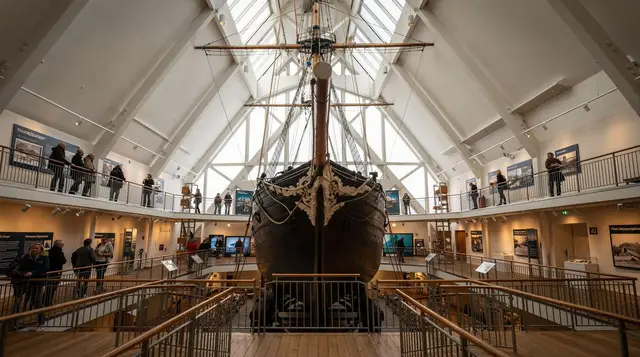
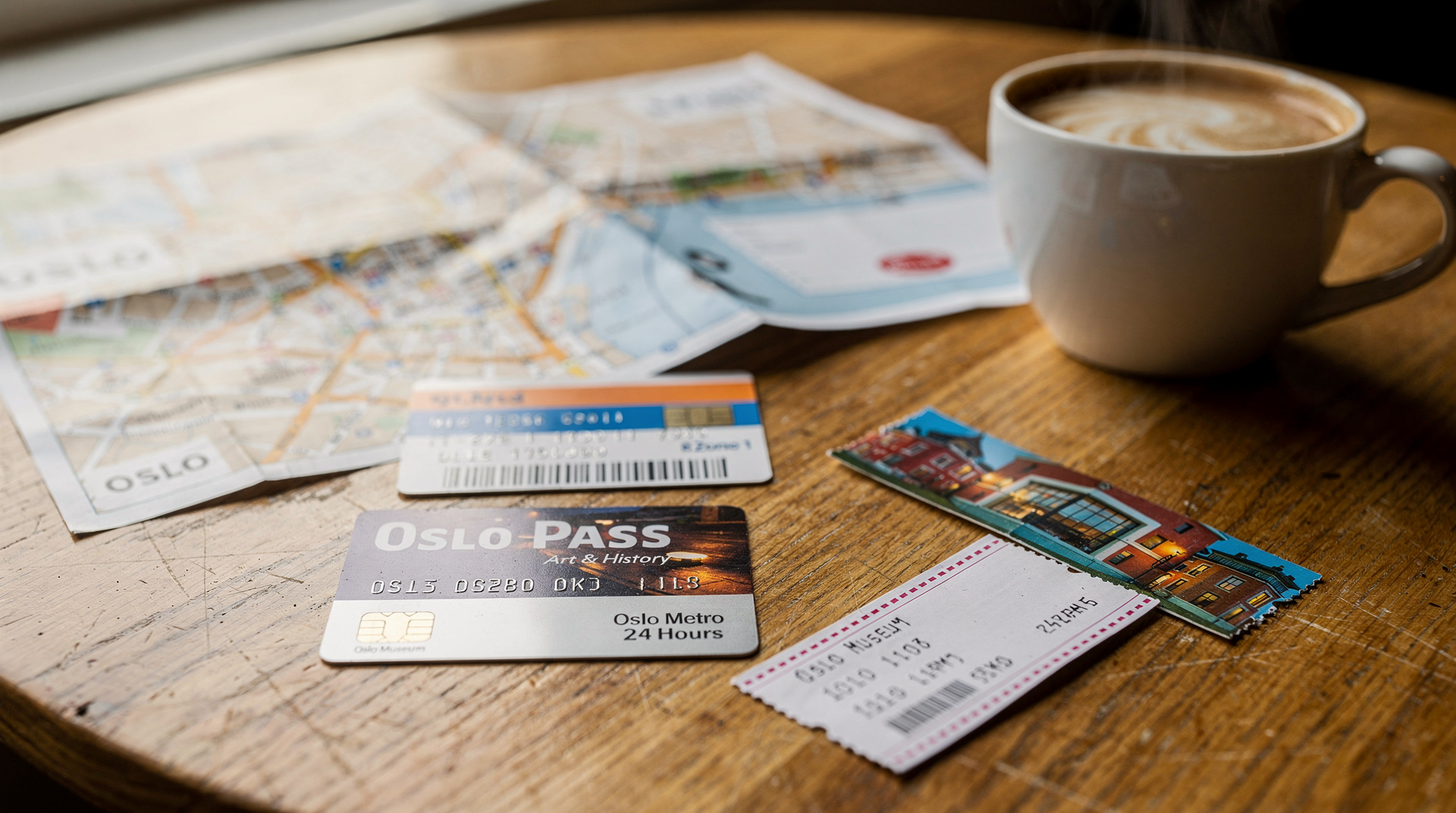
The Fram Museum at Bygdøy houses the Fram, the wooden ship that carried Fridtjof Nansen and Roald Amundsen into polar ice — the world's strongest wooden vessel ever built, and the one that sailed farthest north AND farthest south of any ship. You walk through the ship's interior. It's one of Norway's most viscerally impressive museum experiences. Admission is NOK 170 (USD 18), free with Oslo Pass.
The ship that went to both poles
The Fram is 39 metres long, weighs 500 tonnes, and has a hull designed specifically to be lifted by ice rather than crushed by it. Between 1893 and 1912, she completed three polar expeditions, sailing farther north than any ship before or since, then farther south than any ship had ever gone. She brought Fridtjof Nansen within 400 km of the North Pole (the closest any human had reached at that time), carried three years of Arctic research under Otto Sverdrup, and then transported Roald Amundsen and his team to Antarctica for the first successful South Pole expedition.
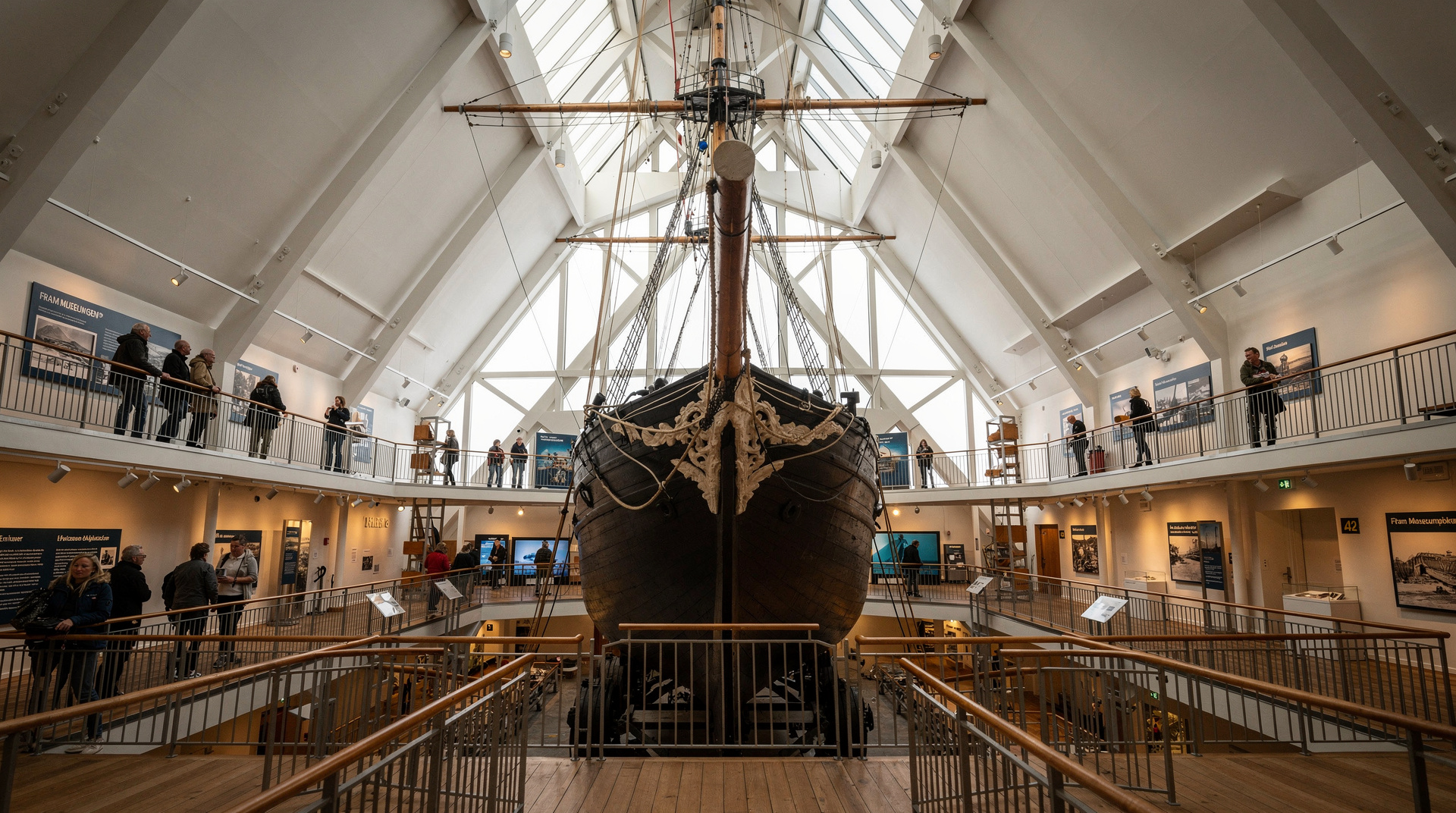
The Fram is also still intact. She sits inside a purpose-built hangar at Bygdøy, entirely preserved, and you walk on her deck.
The Fram Museum is, in this guide’s honest assessment, the most underrated major museum in Oslo. Visitors choose the Munch Museum first (reasonably), the National Museum second (also reasonable), and often run out of time for Bygdøy. This is a mistake.
| Where | Bygdøynesveien 36, Bygdøy peninsula |
| Cost | Around NOK 170 (USD 18) adults; free with Oslo Pass |
| Time needed | 1–2 hours |
| Getting there | Bus 30 from Nationaltheatret, or seasonal ferry from Aker Brygge |
| Best time | Any season — the ship is indoors year-round |
What you see at the museum
The ship herself: The dominant experience is the Fram. The hangar was built around the vessel in 1936, so the ship fills the entire central space of the museum. You enter at quayside level and look up at the hull. You then board via a gangway and walk the decks.
The ship’s interior is preserved from the expedition era. The crew quarters are minimal — 13 men in bunks barely wider than a shoulder, separated by thin wooden partitions, for up to three years at a time. The captain’s cabin is slightly larger but not much. The galley is equipped with the original cooking equipment. The engine room shows the triple-expansion steam engine that supplemented the sails.
Standing in the crew berths and understanding the physical reality of three years locked in polar ice is the museum’s most powerful element. These were not heroic abstractions — they were specific people in specific spaces, cold and confined, for years.
The expedition exhibitions: Three main exhibition areas surround the ship:
Nansen’s Fram expedition (1893-1896): Nansen designed a vessel capable of surviving Arctic ice by allowing the hull to be lifted rather than crushed — a revolutionary principle. The Fram drifted with the pack ice from Siberia to the Atlantic for three years. Nansen and Hjalmar Johansen left the ship on skis, reached 86°14’N (a new northernmost record), and survived the return across pack ice and by kayak. Original equipment, diaries, and photographs.
Sverdrup’s expedition (1898-1902): Otto Sverdrup led the second Fram expedition into the Canadian Arctic, mapping large areas of Ellesmere Island and discovering what are now the Sverdrup Islands. Less famous than Nansen and Amundsen, but the physical work was comparable.
Amundsen’s Antarctic expedition (1910-1912): The Fram’s final voyage. Amundsen used the ship to reach the Bay of Whales on the Ross Ice Shelf, from which he launched the overland assault on the South Pole. He reached 90°S on 14 December 1911, five weeks before Scott’s British expedition. The contrast between Amundsen’s systematic dog-sled technique and Scott’s disastrous pony-based approach is one of exploration history’s defining decisions. The museum covers this with appropriate directness.
Interactive elements: The museum has a simulator showing what it felt like to navigate through ice, and a children’s area with polar exploration activities. These are well-made rather than token.
What life was like on the Fram: the human reality
The physical spaces on the Fram are the most powerful element of the museum visit. Understanding what those spaces felt like in polar ice requires some context.
Temperature: The crew quarters on the Fram during the Arctic drift of 1893-96 were kept at approximately 8-15°C in winter — cold by modern standards but survivable. The external temperatures dropped to -50°C. The hull insulation was thick enough to maintain liveable interior temperatures, but the ship was always cold.
Lighting: Below deck, the Fram used oil lamps in the polar night. Winter at 85°N meant perpetual darkness for months. The crew maintained schedule through artificial routine — specific mealtimes, work periods, evening reading and socialising.
Food: The Fram carried substantial food stores including tinned meat, dried vegetables, and sufficient calories for a three-year drift. Nansen’s team supplemented the stores with fresh seal and bear meat, which provided Vitamin C and prevented scurvy. This was a deliberate dietary decision; Scott’s Antarctic team did not make it.
Space: Thirteen men shared the main cabin. The commander (Nansen, then Sverdrup) had a slightly larger cabin. The crew had individual bunks in a main dormitory area. The galley occupied a central space. Every inch was functional; there was essentially no private space for anyone on the ship for years at a time.
Work: The crew’s work during the drift included scientific observations (meteorological, oceanographic, magnetic), maintenance of the ship and rigging, hunting, and the ordinary ship operation tasks. The scientific programme was Nansen’s priority — the drift was not simply an endurance exercise but a floating research station.
Standing in the crew quarters and understanding that 13 people lived here for three years is the central emotional experience of the Fram Museum. No other visit in Oslo makes the past so physically present.
The private guided tour option
For visitors who want more context than the self-guided exhibition provides, a private guided tour of the Fram Museum is available and significantly enhances the experience. A guide with specialist knowledge of polar history can put the cramped crew bunks and equipment into the context of what the expeditions actually achieved — and what nearly killed them. Particularly good for families with interested older children or adults with a deeper historical interest.
Practical information
Address: Bygdøynesveien 36, 0286 Oslo.
Admission: NOK 170 (USD 18) adults. Children under 4 free; children 4-15 NOK 85 (USD 9). Free with Oslo Pass. Buy tickets at frammuseum.no — booking ahead avoids the queues at peak summer times.
Opening hours: Open daily year-round. Summer hours (June-August): 9am to 6pm. Winter hours: 10am to 4pm (Sunday 10am to 3pm). Check frammuseum.no for current times.
Facilities: The museum café serves Norwegian-style lunch (open-faced sandwiches, soup) at moderate prices. Good gift shop with polar exploration books.
Photography: Full photography permitted throughout the museum including inside the ship.
Accessibility: The museum entrance and exhibition floors are wheelchair accessible. The ship interior involves stairs and narrow passages — not suitable for wheelchairs. Staff can provide access to the upper deck view if complete ship interior access is not possible.
Fridtjof Nansen: the man who made the Fram possible
The Fram Museum cannot be understood without understanding Fridtjof Nansen, who commissioned the ship, designed the hull principle, and led the first Fram expedition in 1893-96. Nansen was one of the most remarkable figures in Norwegian history — explorer, scientist, diplomat, and humanitarian.
Born in 1861 near Oslo (then Christiania), Nansen trained as a zoologist and became the first person to cross Greenland on skis in 1888. The Greenland crossing established him as the preeminent polar explorer of his generation. He then developed the Fram idea: a ship that could be frozen into Arctic pack ice and drift across the polar basin, carried by the trans-Arctic current Nansen had theorised.
The Fram drift from 1893 to 1896 largely confirmed his theory. The ship and crew drifted from Siberia across the Arctic Ocean and emerged north of Svalbard — the longest continuous polar drift in history. During the drift, Nansen and Hjalmar Johansen left the ship in February 1895 and skied northward toward the pole, reaching 86°14’N — the farthest north any human had stood.
After his polar career, Nansen served as Norway’s first ambassador to London and then as a League of Nations diplomat. His work on behalf of displaced persons after World War I — creating the “Nansen passport” for stateless refugees — earned him the Nobel Peace Prize in 1922. He died in 1930; the Fram Museum on the Bygdøy peninsula is a few hundred metres from his home at Polhøgda, which is preserved as a separate museum.
Roald Amundsen: the last voyage of the Fram
Roald Amundsen used the Fram for his Antarctic expedition of 1910-12 — the most famous polar voyage of the 20th century. Amundsen’s team reached the South Pole on 14 December 1911, five weeks before Robert Falcon Scott’s British expedition. All five of Amundsen’s men survived the return journey; Scott and four companions died on the way back.
The success of Amundsen’s expedition was not luck. He made systematic decisions that Scott did not:
Dogs vs ponies: Amundsen used Greenland sled dogs throughout. Scott used Manchurian ponies (which failed in the cold) and motor sledges (which broke down). The dog-based approach was faster and more reliable.
Nutrition: Amundsen’s team ate seal meat throughout the expedition, providing sufficient Vitamin C to prevent scurvy. Scott’s team relied on tinned food and suffered from nutritional deficiency.
Ski technique: Amundsen’s Norwegians were skilled cross-country skiers from childhood. Scott’s team had to learn during the expedition.
Systematic depot-laying: Amundsen laid depots at precise 1-degree latitude intervals. The distance between depots was calibrated to the calories his team could carry. Scott’s depot-laying was less systematic.
The Fram Museum’s Amundsen exhibition covers these decisions without triumphalism. The tragedy of Scott is acknowledged. The museum shows Amundsen’s meticulous planning as a scientific achievement rather than a national boast.
The ship’s technical specifications
The Fram is fascinating as engineering rather than just as history. Some figures:
- Length: 39 metres
- Beam: 11 metres
- Displacement: 800 tonnes
- Hull: Specially constructed from interlocking layers of different wood species (oak outer layer, ironwood inner frame, Italian rye inner lining) to achieve a triple-thickness that could withstand lateral pressure
- Hull shape: Rounded hull with no flat surfaces below the waterline — designed so ice pressure would push the ship upward rather than inward
- Maximum ice squeeze recorded: 168 tonnes per square metre on the hull planking during the 1893-96 Arctic drift — the ship survived intact
- Engine: Triple-expansion steam engine for auxiliary power; the Fram was primarily a sailing ship
- Speed under sail: 7-8 knots in good conditions
The triple-layer hull and the rounded hull form were Nansen’s contributions to polar ship design. No previous wooden vessel had survived sustained Arctic ice pressure. The Fram was built in 1892 by shipwright Colin Archer at Larvik, Norway, in 10 months. It cost approximately NOK 170,000 (USD 18,000) at 1892 prices — roughly equivalent to NOK 6-7 million (USD 650,000) today.
Getting to the Fram Museum
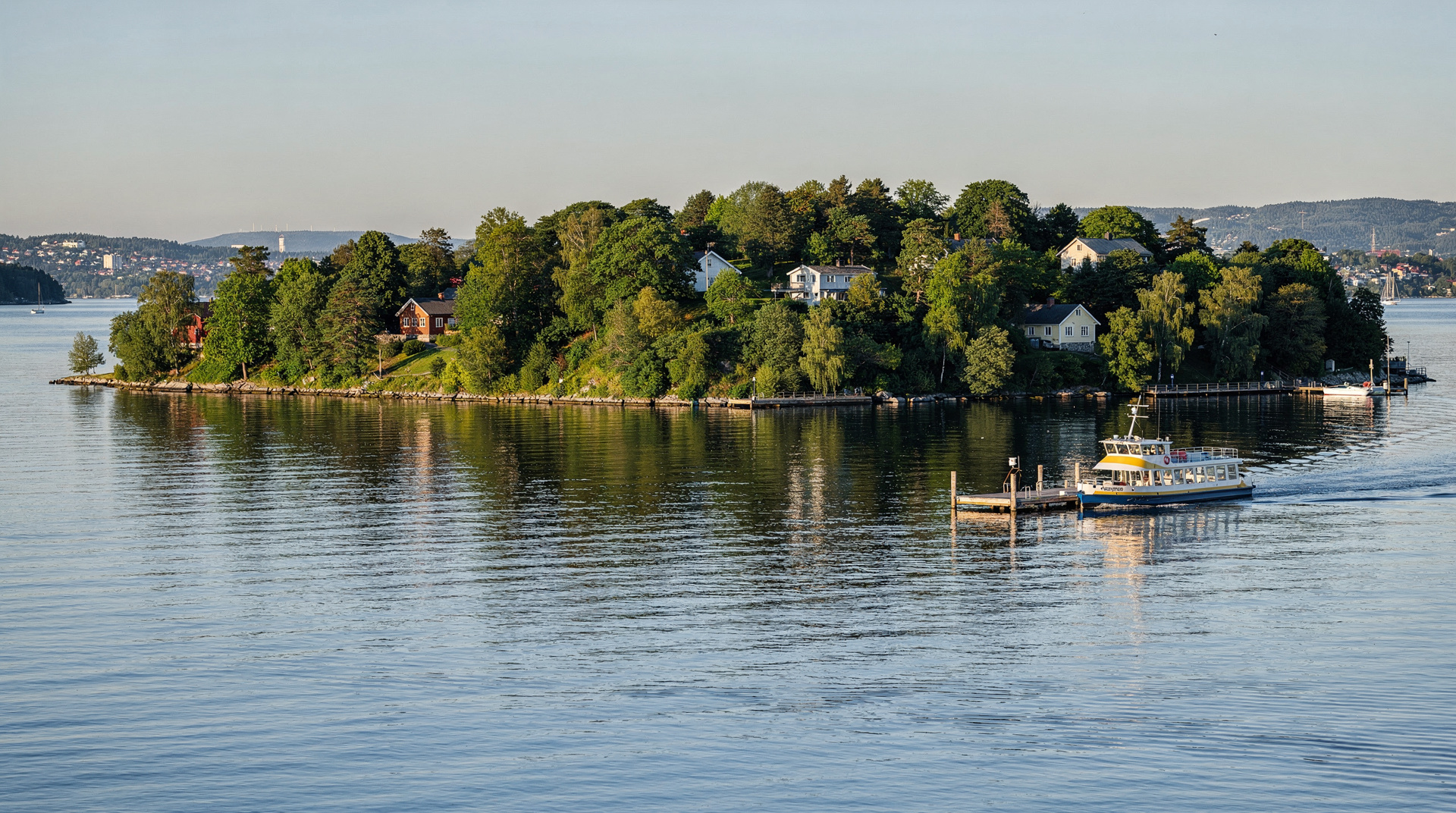
By Ruter ferry (summer, May-September): Take the passenger ferry from Aker Brygge (pier 3). The 10-minute fjord crossing is genuinely pleasant. Ferries depart roughly every 30-40 minutes. The fare is covered by a Ruter day pass or Oslo Pass.
By bus 30 (year-round): From Nationaltheatret stop, bus 30 goes direct to Bygdøynes (the Fram/Kon-Tiki stop). Takes approximately 15-20 minutes. Covered by Ruter day pass.
Walking or cycling: From Aker Brygge, the Bygdøy peninsula is accessible via a pleasant cycling/walking path along the coast. About 4 km — 15 minutes by bike, 50 minutes on foot.
Combining the Fram Museum with other Bygdøy museums
The Bygdøy peninsula houses several museums within walking distance. A Bygdøy day typically combines two or three:
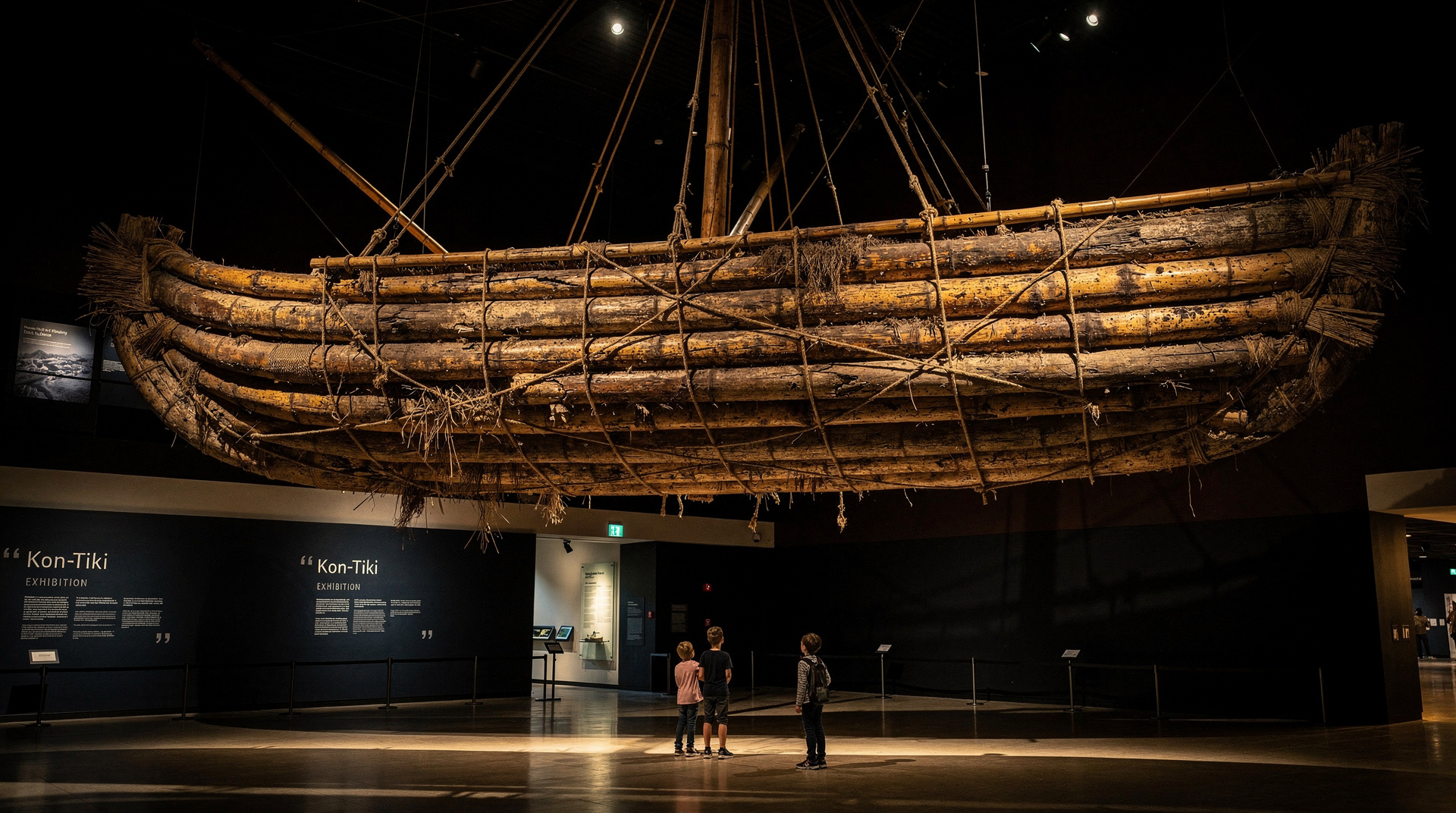
Kon-Tiki Museum (10-minute walk from Fram): Thor Heyerdahl’s original Kon-Tiki balsa raft and Ra II. Exploration history on a different register — Pacific rather than polar. See the full Kon-Tiki Museum guide.
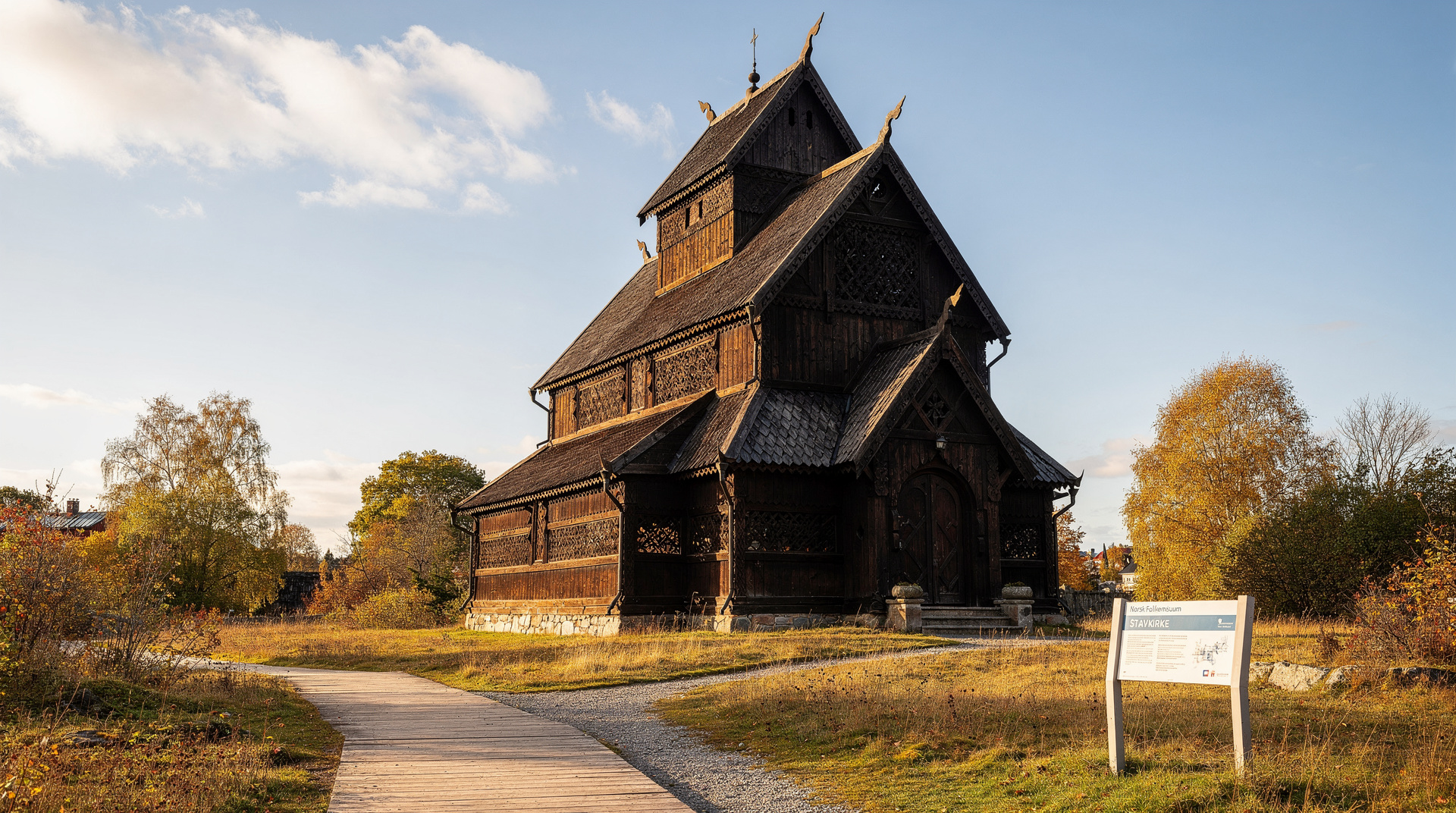
Norsk Folkemuseum (15-minute walk): The open-air folk museum with 160+ historic buildings. Entirely different character — social history rather than adventure. Allow 3-4 hours separately. See the Norsk Folkemuseum guide.
Norwegian Maritime Museum (5-minute walk): Traditional Norwegian boat-building and maritime history. Smaller than the other three; visit if you have time remaining.
For a Bygdøy day, the practical sequence is: arrive by ferry, Norsk Folkemuseum (3 hours), lunch at the folkemuseum café, walk to Fram Museum (1.5 hours), walk to Kon-Tiki (1 hour). Total: a full day.
The Bygdøy destination guide covers the full peninsula including the summer beach at Huk.
Fitting the Fram into a wider Oslo plan
The Fram works best as one anchor in a day rather than a stand-alone errand. If you are still shaping your trip, the Oslo in 2 days and Oslo in 3 days itineraries both give Bygdøy its own block of time, and how many days in Oslo helps you decide whether you can afford that. Travelling with children? The Oslo family long weekend and the Oslo with kids guide show where a polar ship fits next to playgrounds and shorter attractions.
For the journey itself, the getting around Oslo guide and the Ruter public transport guide explain tickets and routes in more detail, and the Oslofjord ferries guide is useful if you want to treat the summer crossing as part of the outing. If the museum leaves you curious about the Vikings, the where to see Vikings in Oslo guide and the Viking Ship Museum status update explain what is currently open on the same peninsula, while the top things to do in Oslo shows how the Fram sits among the city’s headline sights.
What to skip if you’re short on time
If you only have 45 minutes rather than the recommended 1–2 hours, prioritise in this order: board the ship itself first (10–15 minutes to walk the deck and one crew cabin), then the Amundsen Antarctic exhibition (the most dramatic single narrative), then whatever else fits. The Sverdrup expedition section, while historically significant, is the most skippable under time pressure — it covers similar Arctic terrain to the Nansen exhibition without the same emotional hook.
The café and gift shop are easy to skip entirely if time is tight; neither adds to the core museum experience, though the gift shop has a genuinely good selection of polar exploration books if you have a few extra minutes.
Fram vs the other Bygdøy museums: which to prioritise
If time is limited, here’s an honest comparison to help decide:
| Museum | Time needed | Best for | Standout element |
|---|---|---|---|
| Fram Museum | 1–2 hrs | Anyone — broadest appeal | Walking inside a real polar ship |
| Kon-Tiki Museum | 45–60 min | Adventure history fans, ages 10+ | The original 1947 balsa raft |
| Norsk Folkemuseum | 2–4 hrs | Families, social history | 160+ relocated historic buildings |
If you can only visit one Bygdøy museum, the Fram Museum is the strongest single recommendation in this guide’s assessment — it works for the widest range of ages and interests, and the ship itself needs no reading to be impressive. See the family museums guide for age-specific pairing advice and the Oslo’s best museums ranked guide for how it compares to the city-centre collections.
Is the museum worth it on a rainy day?
Yes, more than most Bygdøy options. The Fram Museum is entirely indoors, including the ship interior, making it one of the better wet-weather choices on the peninsula. The walk between the ferry or bus stop and the museum entrance is short. If your whole day is rained out, pair it with the rainy day museums guide for other indoor options across the city.
Frequently asked questions about Fram Museum Oslo
Can you go inside the Fram?
Yes. The ship is moored inside a purpose-built hangar at Bygdøy, and you can board the vessel and walk through the crew quarters, captain's cabin, and engine room. The interior is preserved from the expedition era — cramped, purposeful, and genuine.How long does the Fram Museum take?
Allow 1 to 2 hours. The museum is compact but dense — the ship plus contextual exhibitions covering the Nansen Fram expedition (1893-1896), the Sverdrup expedition (1898-1902), and Amundsen's Antarctic South Pole expedition (1910-1912).Is the Fram Museum included in the Oslo Pass?
Yes. The Oslo Pass includes free admission to the Fram Museum. Combined with the nearby Norsk Folkemuseum and Kon-Tiki Museum, Bygdøy is where the Oslo Pass delivers some of its best value.How do I get to the Fram Museum?
The museum is at Bygdøynesveien 36 on the Bygdøy peninsula. In summer (roughly May-September), take the Ruter passenger ferry from Aker Brygge pier 3 (the fjord crossing is part of the trip). Year-round, take bus 30 from Nationaltheatret. The museum is a short walk from both the ferry landing and the bus stop.Is the Fram Museum good for children?
Excellent for children. Walking through the actual polar ship, climbing into crew bunks, and seeing the ice-locked hull make polar exploration tangible in a way no film or photograph achieves. The museum has interactive exhibits for younger visitors. Ages 6+ handle it well; younger children will need to be carried through some areas.
Top experiences
Bookable activities with verified prices and instant confirmation on GetYourGuide.