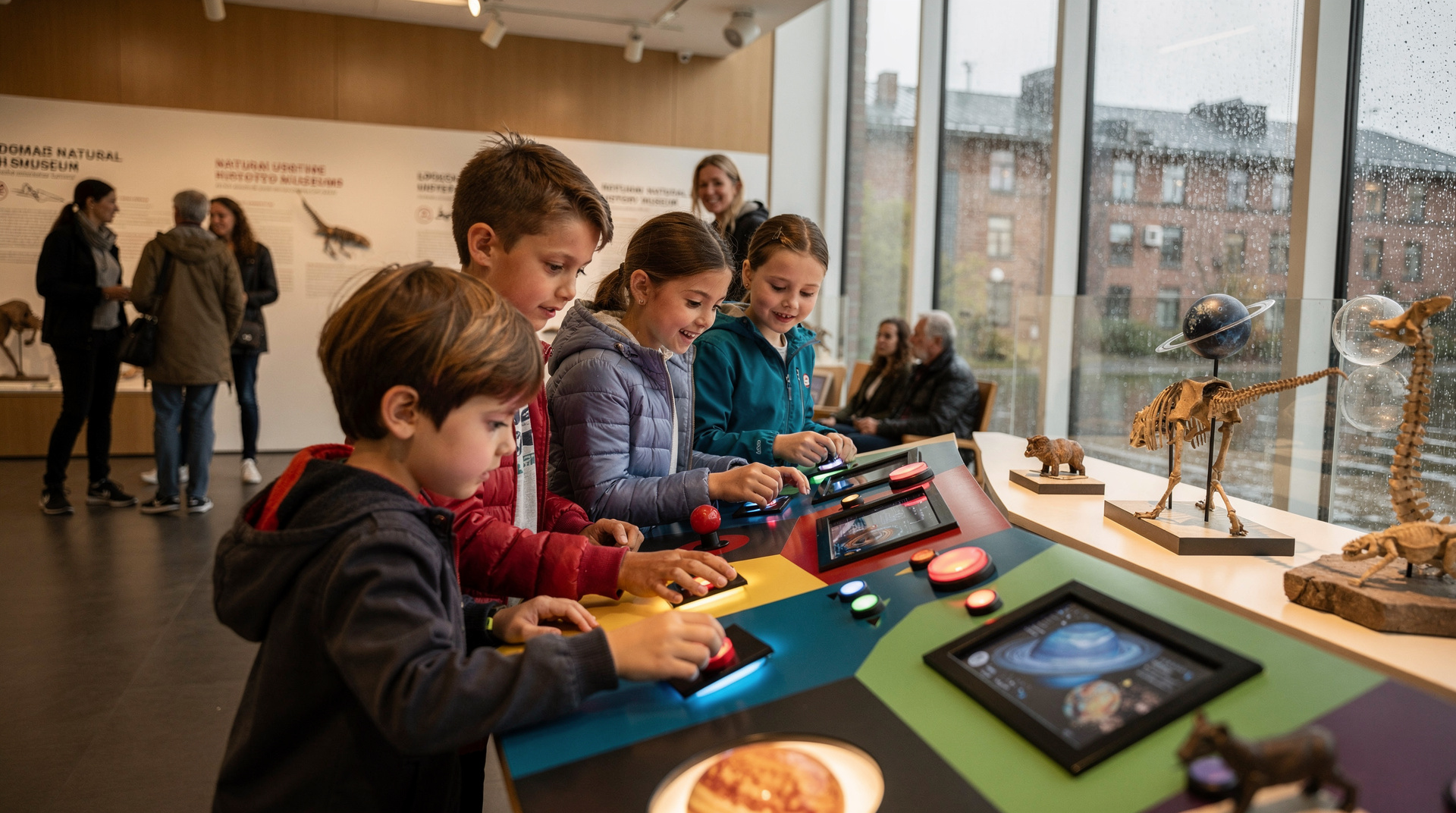
Rainy day museums in Oslo: the best indoor plan for wet weather
Oslo: Norwegian explorers and culture 3-museum tour
Duration: 4 hours
- Multiple museums
- Guided
What should I do on a rainy day in Oslo?
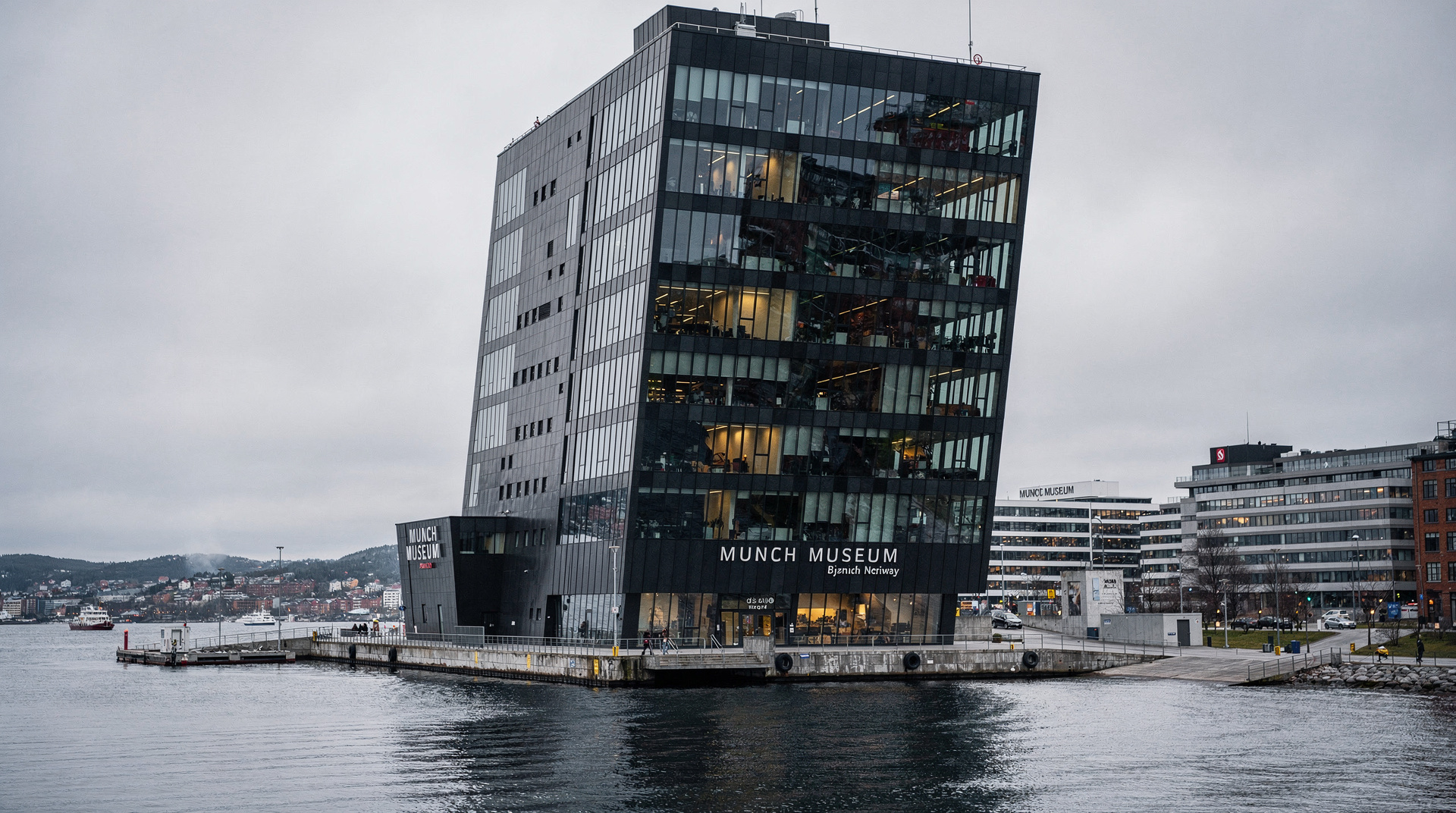
Oslo's best rainy day options are: Munch Museum (take the metro, dry from door to door), the National Museum at Aker Brygge (enormous, all indoor), the Deichman Bjørvika public library (free, 8 floors, fjord views), Mathallen food hall in Vulkan (covered indoor market), and the Oslo Central Station area with its underground connections. The Bygdøy museums (Fram, Kon-Tiki) are also fully indoor but require a bus journey.
Oslo in the rain: more common than you expect
| At a glance | |
|---|---|
| Best single stop | Munch Museum — dry from metro to door, 3 hrs of content |
| Best free option | Deichman Bjørvika library — 8 floors, fjord views, no ticket |
| Full-day cost | Around NOK 595 with the Oslo Pass, or pay per museum |
| Avoid in heavy rain | Norsk Folkemuseum (outdoor), Vigeland Park, hop-on hop-off bus |
| Check before you go | yr.no — more accurate than international weather apps for Norway |
Oslo’s weather is genuinely variable. Summer (June-August) averages 16-20°C with frequent sunshine — but rain can arrive any afternoon without much warning. Spring and autumn bring regular grey days. The honest advice: plan as if one day per three-day trip will be wet, and have your indoor itinerary ready.
The good news is that Oslo’s best cultural experiences are mostly indoors. The Munch Museum, National Museum, Fram Museum, and Nobel Peace Center are all entirely indoor and all excellent. A rainy day in Oslo is a museum day — and there are worse things.
The best single rainy-day itinerary
Here is a practical rainy-day plan that requires minimal outdoor exposure:
Morning: Munch Museum (Bjørvika). Walk from Oslo Central Station (10 minutes, unavoidable outdoor walk but short). Spend 2.5 to 3 hours in the museum. The building has a café for a mid-morning break.
Midday: Take the tram from Bjørvika to Aker Brygge (15 minutes). Have lunch inside the Aker Brygge shopping complex (covered walkways) or the nearby Mathallen if you detour to Vulkan (tram to Vulkan, 10 minutes).
Afternoon: National Museum (Aker Brygge). Walk from the tram stop (5 minutes). Spend 2 to 3 hours. The museum café is good for an afternoon break.
Late afternoon: Nobel Peace Center (5-minute walk from National Museum). 60 to 90 minutes.
This entire day involves perhaps 30 minutes total of outdoor walking split across multiple short segments. Total museum admission: NOK 490 (USD 53) without Oslo Pass; free with Oslo Pass (NOK 595 for 24 hours). The Oslo Pass breaks even on this itinerary alone.
Individual rainy-day options ranked
1. Munch Museum (NOK 200 / USD 22)
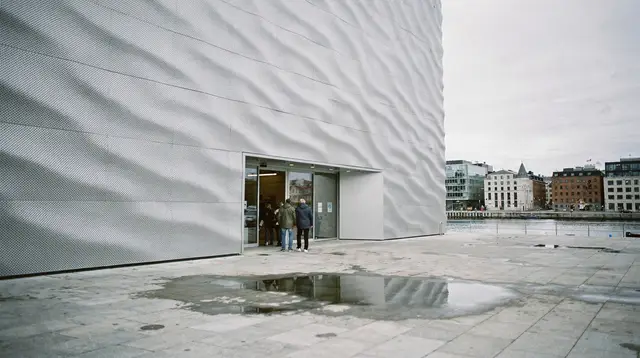
Oslo’s best indoor experience and the most satisfying use of a rainy day. The building is warm, well-lit, and large — you can spend 3 hours here without feeling rushed. The fjord views from the upper floors are atmospheric in grey weather. The café is good. Metro and tram access from the city centre means minimal outdoor exposure. See the full Munch Museum guide.
2. National Museum (NOK 160 / USD 17)
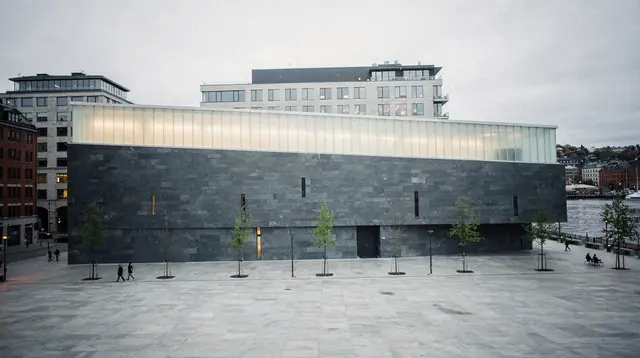
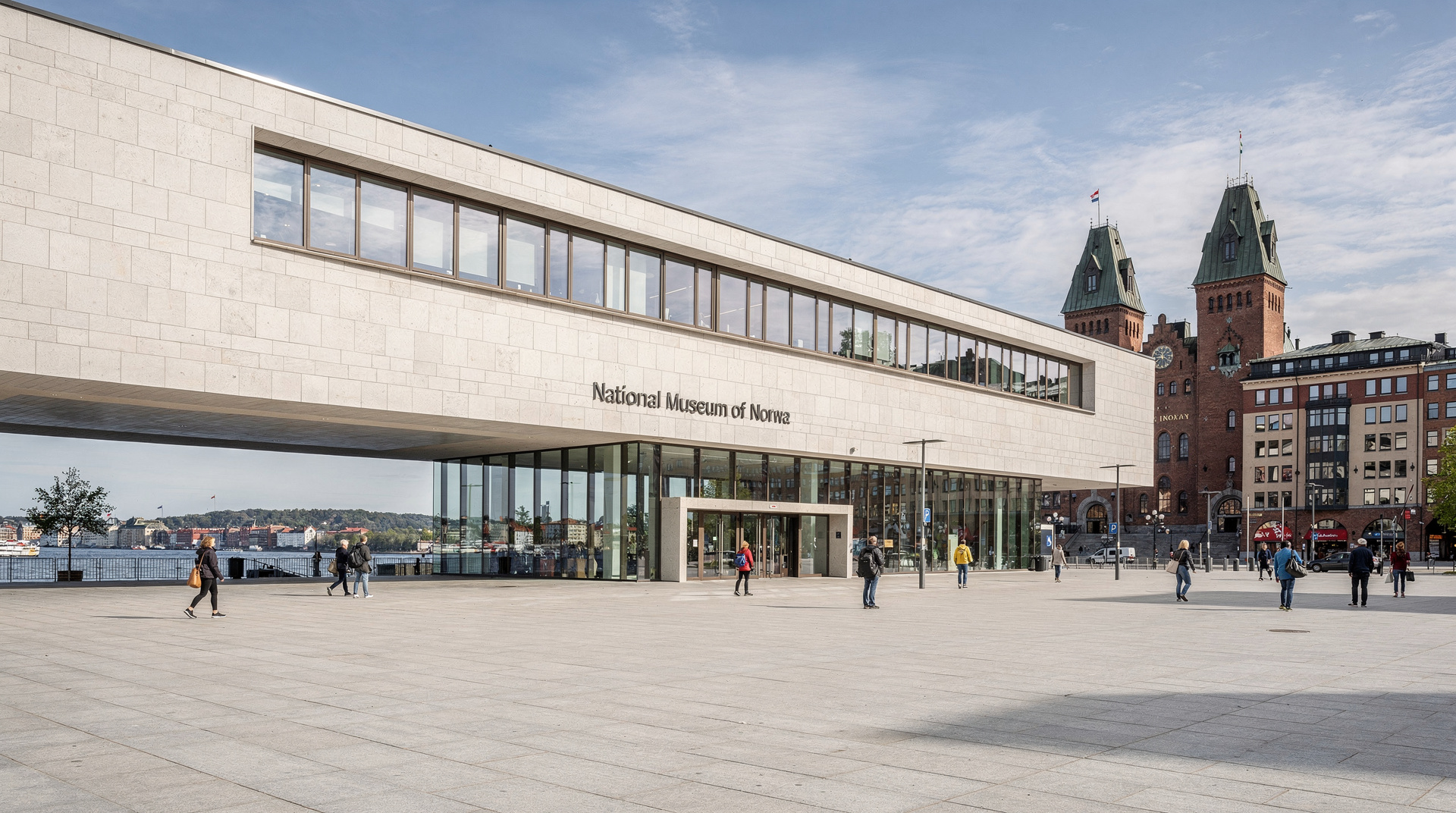
The largest building on this list — 54,000 square metres of gallery space. A rainy day is arguably the best time to visit; the Light Hall’s amber glow is most dramatic when the sky outside is grey. You could spend a full day here without exhausting the collection. Near Aker Brygge with tram access. See the full National Museum guide.
3. Deichman Bjørvika Public Library (free)
Oslo’s new public library is one of Europe’s best public buildings and entirely free. Eight floors, fjord-view reading rooms, a café, free wifi, and the kind of warm atmospheric quality that makes a rainy afternoon productive and pleasant. No museum ticket required. Adjacent to the Munch Museum — combine both in a morning. Do not skip this.
4. Nobel Peace Center (NOK 130 / USD 14)
Near City Hall on the Aker Brygge waterfront, the Nobel Peace Center presents the Prize’s history and its laureates in a thoughtful, compact space. Free with Oslo Pass. A 60 to 90 minute visit that works particularly well in combination with the National Museum (5-minute walk). See the full Nobel Peace Center guide.
5. Astrup Fearnley Museum of NOK Art (NOK 160 / USD 17)
Renzo Piano’s building at Tjuvholmen is fully indoor except the sculpture garden. The collection of post-1960s international contemporary art is the right scale for a rainy afternoon — large enough to justify the entry price, small enough to see properly in 2 hours. Not covered by Oslo Pass. Best for contemporary art enthusiasts. See the Astrup Fearnley guide.
6. Fram Museum at Bygdøy (NOK 170 / USD 18)
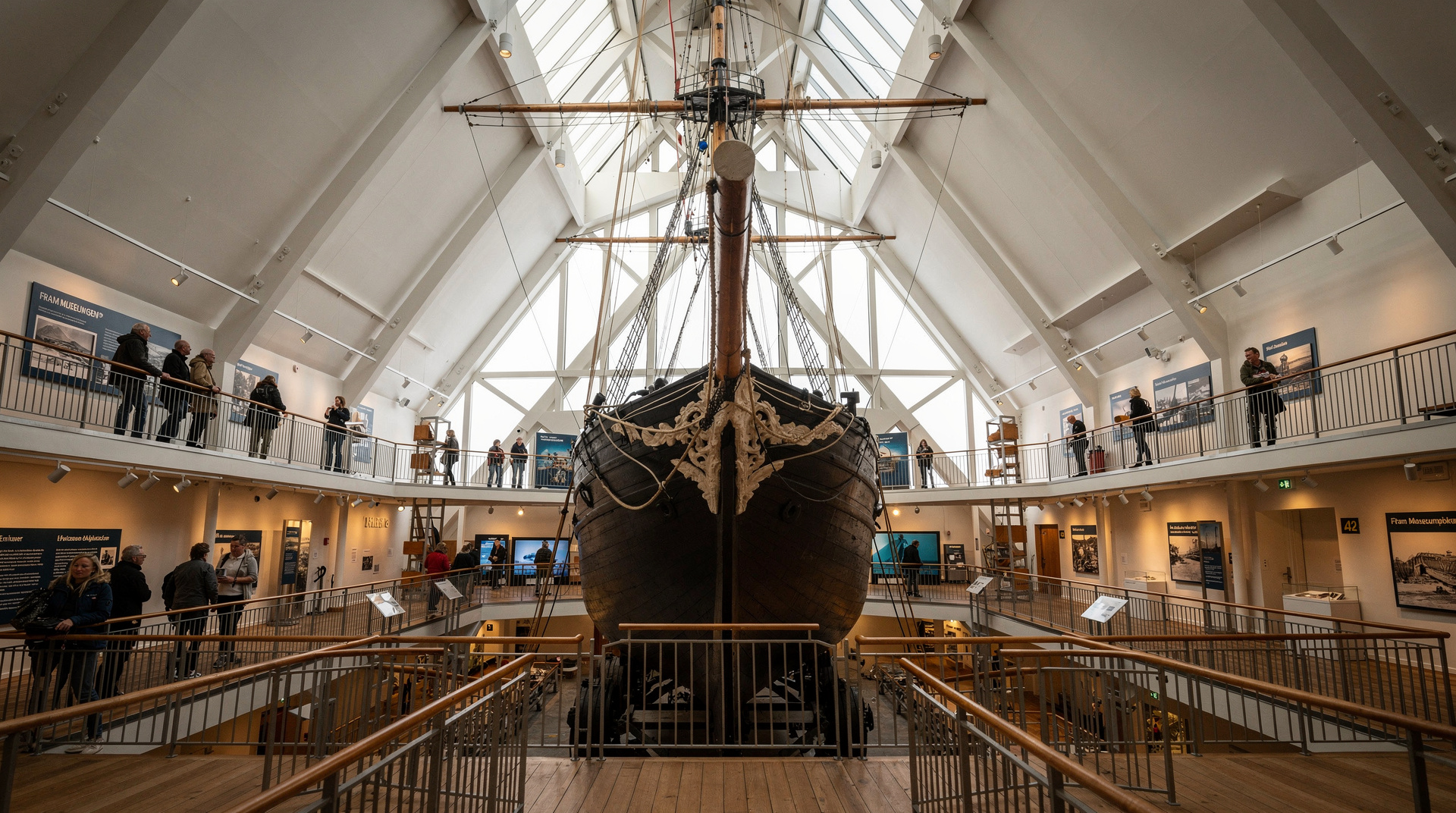
Fully indoor — the ship is inside a hangar. The bus journey from the city centre (bus 30 from Nationaltheatret) involves some outdoor waiting but the museum itself is entirely covered. A morning at Fram plus Kon-Tiki (both at Bygdøynes) makes a solid rainy half-day. See the Fram Museum guide.
7. Kon-Tiki Museum at Bygdøy (NOK 140 / USD 15)
Paired naturally with Fram (adjacent buildings, same bus stop). Fully indoor, 60 to 90 minutes. See the Kon-Tiki Museum guide.
8. Akershus Resistance Museum (NOK 80 / USD 9)
The Resistance Museum inside Akershus Fortress is indoor and compact. The walk to the fortress involves 10-15 minutes of outdoor exposure from Aker Brygge. Free with Oslo Pass. Best on a rainy day when you want history rather than visual spectacle. See the Akershus Fortress guide.
What to avoid on a rainy day
Norsk Folkemuseum: Primarily outdoor. 35 hectares of open ground in rain is a different experience. Save this for dry weather. The indoor section (Sami culture and social history) is accessible but not the reason to visit.
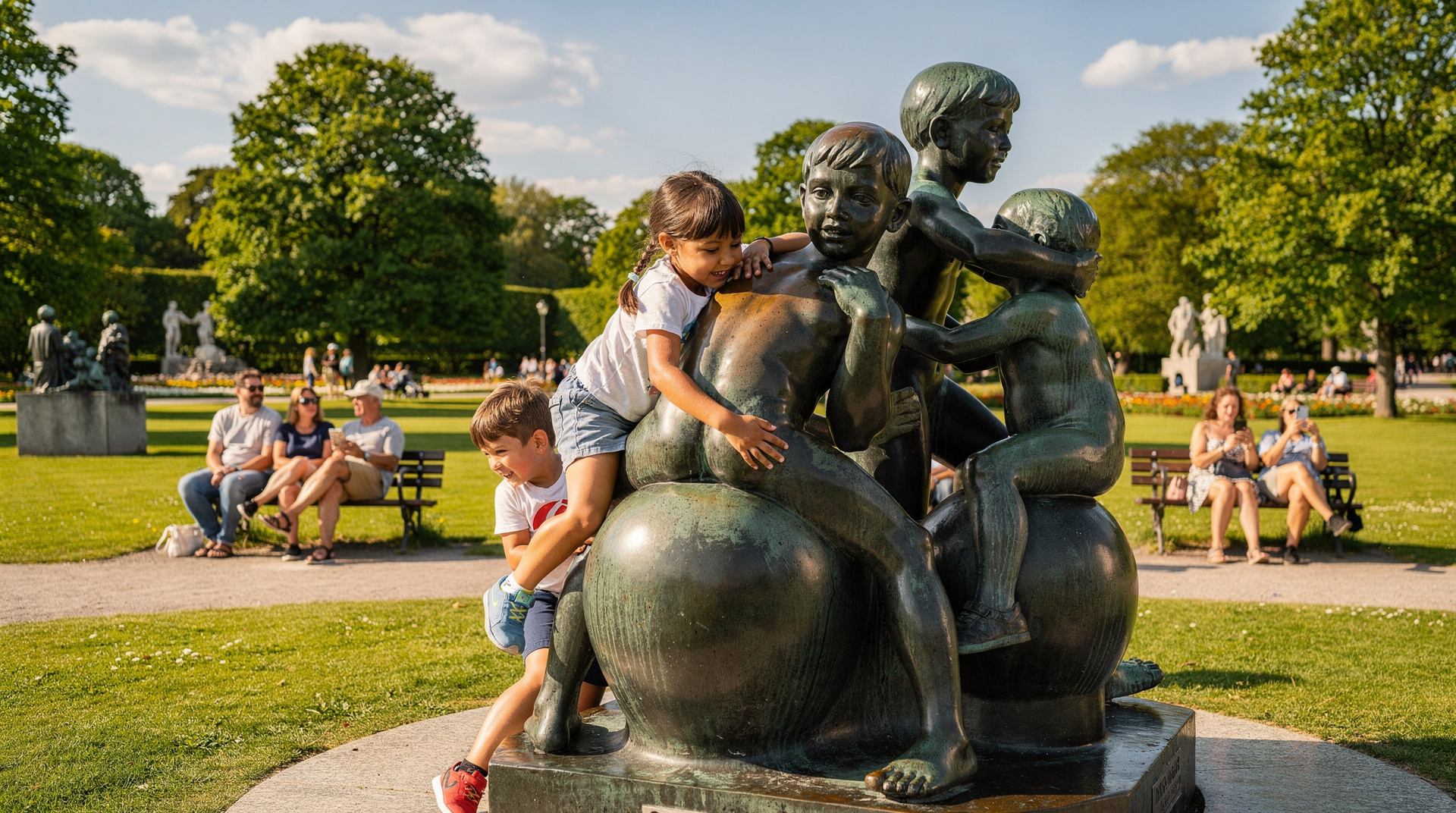
Vigeland Sculpture Park: The sculptures are in the open air. Beautiful in rain if you’re dressed for it, but not an optimal rainy-day choice. The adjacent Vigeland Museum (former studio) is free and indoor.
Hop-on hop-off bus: Open-top double-deckers in rain are uncomfortable. Even covered lower-deck sections have spray. Skip this for a dry day.
Opera House roof: Still worth doing briefly in rain — the marble surface is textured for grip and the views are atmospheric in grey light — but a full visit is less satisfying than in sunshine.
Oslo in November and February: the deepest winter museums
November and February are Oslo’s quietest tourist months and its most indoor-appropriate. The city is fully functional, prices are lower than summer, and the museums are uncrowded.
In November, Oslo averages 5-8 hours of daylight. In February, days begin to lengthen again. The Munch Museum in particular gains something in this light — Munch worked in Norwegian winter conditions, and his Anxiety-period paintings read differently in grey winter light than under summer brightness.
Specific November/February recommendations:
- The Munch Museum is quietest and most affordable to book (no summer queues)
- National Museum’s J.C. Dahl winter landscapes are particularly resonant in actual Norwegian winter
- Norsk Folkemuseum winter opening (shorter hours, but the stave church interior is dramatically atmospheric in December light with few other visitors)
- The Deichman library is at its best in winter — when Oslonians are spending long dark evenings indoors, the library’s warm amber light and fjord-view reading rooms are genuinely used
For a winter-specific Oslo plan that extends beyond museums, see the Oslo in winter activities guide.
Rainy day food and shelter
Mathallen Oslo (Vulkan): Indoor covered food market, open Tuesday to Sunday. Best quality affordable lunch option within 20 minutes of the city centre (tram to Vulkan). The warm, wood-and-brick interior is particularly good in wet weather.
Aker Brygge indoor complex: The old Aker wharf buildings have a covered shopping and restaurant complex connecting the waterfront to the street above. Not scenic, but dry.
Oslo Central Station (Oslo S): The station and surrounding underground complex connects to the metro and has several café and food options. Good for waiting out a heavy rain shower.
Coffee shops: Oslo’s independent café scene is excellent. Fuglen (Universitetsgata), Kaffebrenneriet (multiple locations), Tim Wendelboe (Grünerløkka), and Supreme Roastworks (Grünerløkka) all have warm, dry interiors. A coffee in any of these while the rain passes is a correct Oslo decision. Prices: NOK 50 to 75 (USD 5 to 8).
The Oslo Pass on a rainy day
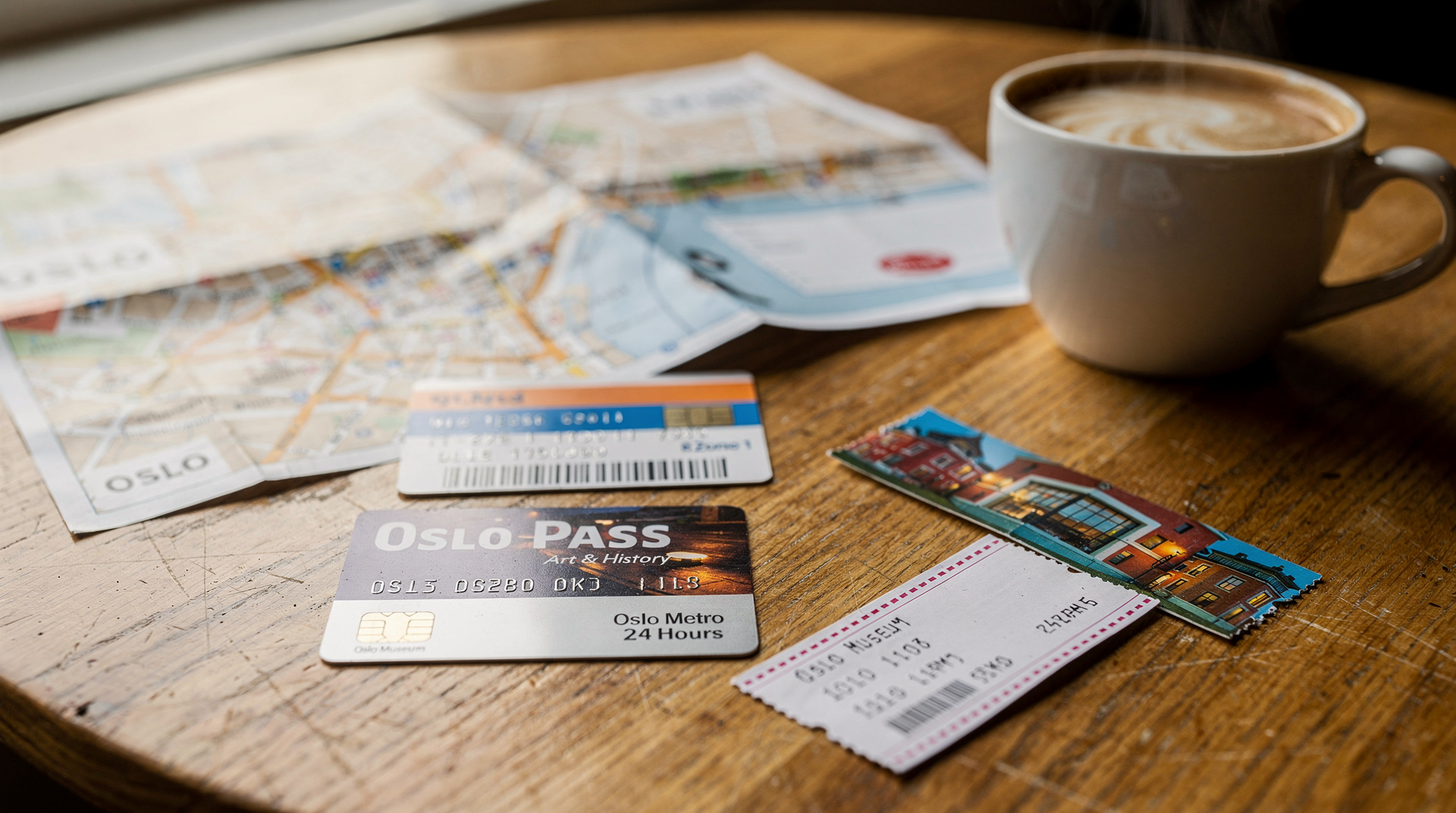
The Oslo Pass covers museum admissions and Ruter transport. On a rainy day in Oslo, the Oslo Pass is at its most valuable: you need indoor activities and indoor transport, and the pass provides both.
A rainy-day Oslo Pass calculation:
| Item | Cost without pass |
|---|---|
| Munch Museum | NOK 200 (USD 22) |
| National Museum | NOK 160 (USD 17) |
| Nobel Peace Center | NOK 130 (USD 14) |
| Ruter transport (metro + trams) | NOK 105 (USD 11) |
| Total | NOK 595 (USD 64) |
| Oslo Pass 24-hour | NOK 595 (USD 64) |
The break-even on a rainy day museum programme is essentially exact at these three museums. Add the Resistance Museum (NOK 80) or the Natural History Museum and the pass is clearly worthwhile. Without the pass, budget the same amount and buy museum tickets individually.
Getting between museums in the rain
The challenge on a wet Oslo day is the transitions between attractions. A few strategies:
Metro (T-bane): The underground metro connects Jernbanetorget (Central Station area) to Majorstuen (Vigeland/Frogner) and to the western suburbs. Good for moving between the centre and Frogner/Vigeland area. Six lines, clean, frequent.
Tram 12: Runs from central Oslo through Aker Brygge toward Frogner and Majorstuen. Good for moving along the waterfront.
The Bjørvika underpass: A pedestrian tunnel connecting Oslo Central Station to the Opera House and Munch Museum waterfront. Dry and direct — use it instead of crossing the exposed motorway junction above.
Aker Brygge to Akershus: The covered walkway along the Aker Brygge quayside gives partial shelter from rain for the 10-minute walk to Akershus.
Taxi/rideshare: Oslo taxis (Oslo Taxi, Bolt, Uber) are expensive but reliable. A city-centre hop is NOK 120 to 200 (USD 13 to 22) depending on distance. Worth it if the rain is heavy and you’re exhausted.
Rainy-day Oslo for families
The best rainy-day museums for families with children under 12:
Natural History Museum (Tøyen): The zoological museum’s animal dioramas work well for children. The geological museum has rocks and fossils. Both are free on Tuesdays. Take metro line 5 to Tøyen.
Teknisk Museum (Kjelsås): Norway’s science and technology museum, north of the city. Interactive exhibits on energy, transport, and computing. Takes 30 minutes by bus. Free with Oslo Pass.
Fram Museum (Bygdøy): Excellent for children who respond to adventure and physical scale. Walk through the actual polar ship. See the Fram Museum guide for family logistics.
For a full rainy-day family plan, see the rainy day with kids in Oslo guide.
The Oslo light in October and November
A note on winter and autumn light: Oslo in October and November can be beautiful in a specific way that deserves mention. The low sun angle in late October produces horizontal golden light for a few hours around noon. The rain-washed streets in Grünerløkka after morning showers have a particular quality. The Munch Museum’s amber-lit galleries work better in grey winter light than in summer brightness — the paintings were made in Norwegian winter light and that is partly how they’re designed to be seen.
Oslo’s autumn and winter visits are underrated. The museum crowds are thin, the cafés are full of locals rather than tourists, and the city functions on its own terms rather than performing for summer visitors. The Oslo in winter guide covers the full seasonal picture.
Planning with weather in mind
Oslo’s tourist high season (July-August) has warm, mostly dry weather but afternoon showers are frequent. June and September are more reliably pleasant overall. April-May and October bring the most rain.
Check yr.no for Oslo weather — this is the Norwegian meteorological service and significantly more accurate than international weather apps for Norwegian conditions. If yr.no shows “regn” (rain) for your day, activate this indoor plan.
For winter visits specifically, the Oslo winter activities guide covers the seasonal museum schedule alongside cross-country skiing at Nordmarka and the Holmenkollen events.
Frequently asked questions about Rainy day museums in Oslo
Do Oslo museums close in the rain?
No. All Oslo museums are open regardless of weather. Rain is common in Oslo year-round — the city doesn't treat it as unusual and attractions don't close for it. The outdoor-dependent experiences (Vigeland Park, Opera House roof) are still accessible in rain, just less comfortable.What are the best fully indoor museums in Oslo?
Fully indoor: Munch Museum, National Museum, Nobel Peace Center, Astrup Fearnley Museum, Natural History Museum, Resistance Museum at Akershus, Deichman Bjørvika Library (not a museum but excellent rainy-day space). The Norsk Folkemuseum is primarily outdoor — avoid as the main rainy-day choice.Is the Bygdøy museum peninsula worth visiting in the rain?
The Fram Museum and Kon-Tiki Museum are fully indoor and excellent in any weather. The Norsk Folkemuseum is primarily outdoor — in heavy rain, the experience is significantly diminished. If you're visiting Bygdøy on a rainy day, focus on Fram and Kon-Tiki and skip the folk museum for a drier day.Is there an indoor alternative to Vigeland Park?
The Vigeland Museum (the artist's former studio, adjacent to Vigeland Park) is fully indoor and free. It contains plaster models, sketches, and the working methods behind the Vigeland Sculpture Park. Small but worthwhile in bad weather.Where is the best indoor food option in Oslo on a rainy day?
Mathallen Oslo in the Vulkan district — a covered permanent indoor food market with 30+ food stalls. Open Tuesday to Sunday. The walk from the centre is short (tram to Vulkan) and once inside you're sheltered. Good quality and better value than the tourist restaurants on Karl Johans gate.
Top experiences
Bookable activities with verified prices and instant confirmation on GetYourGuide.