Munch Museum Oslo guide: The Scream, tickets, and what to prioritise
Oslo: Munch Museum admission ticket
Duration: Flexible
- Skip the ticket line
- Instant confirmation
Is the Munch Museum worth visiting?
Yes, strongly. The Munch Museum at Bjørvika holds the world's largest collection of Edvard Munch's work — 28,000 items including multiple versions of The Scream. The 2021 building is architecturally significant and offers fjord views from the upper floors. Allow 2 to 3 hours. Book tickets online to avoid queues, especially on weekends June through August.
A 13-storey archive of one artist’s mind
| Where | Edvard Munchs plass 1, Bjørvika |
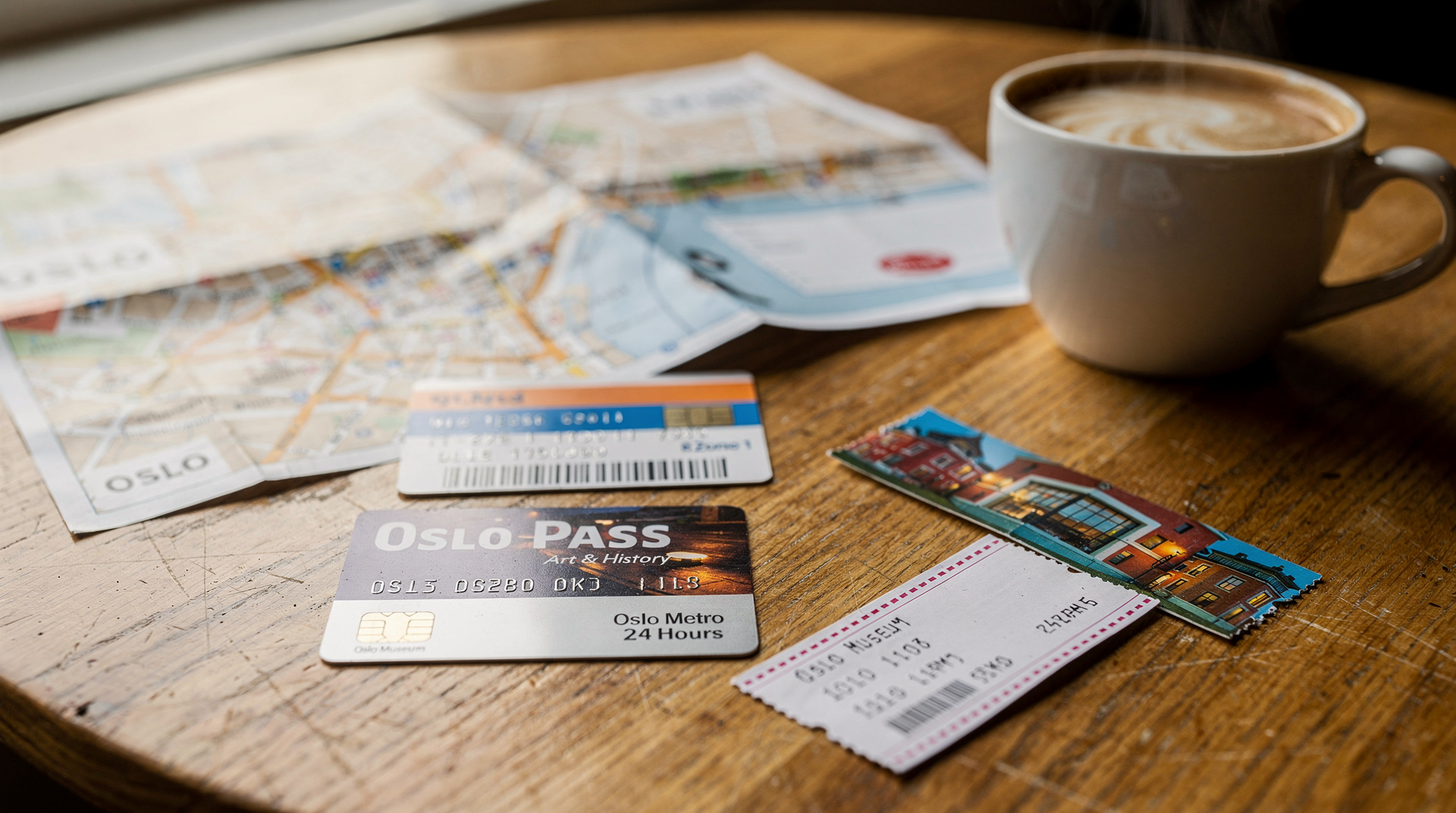
| Cost | NOK 200 adults; free with Oslo Pass; under-18 free |
| Time needed | 2–3 hours |
| Getting there | 10-min walk from Oslo S, or tram 12 to Bjørvika |
| Booking | Advance recommended June–August weekends |
The new Munch Museum — called Lambda by Oslonians after the Greek letter its silhouette resembles — opened in October 2021 at Bjørvika, next to the Opera House. It is the world’s largest single-artist museum, built specifically to house Edvard Munch’s bequest to the city of Oslo: 28,000 works comprising paintings, prints, drawings, diaries, photographs, and correspondence accumulated over a lifetime.
For context: Munch left everything to Oslo when he died in 1944. He was a solitary person who seldom sold his work and lived surrounded by his own art for decades. What the museum holds is not a curated collection of highlights but the actual contents of his studio — the rejected versions, the experimental prints, the private diaries, the letters to and from the people who formed and broke his emotional life.
The Scream is here. But treating the Munch Museum as a Scream-viewing exercise sells it short by the distance between a single painting and 28,000 works.
The building: why it matters
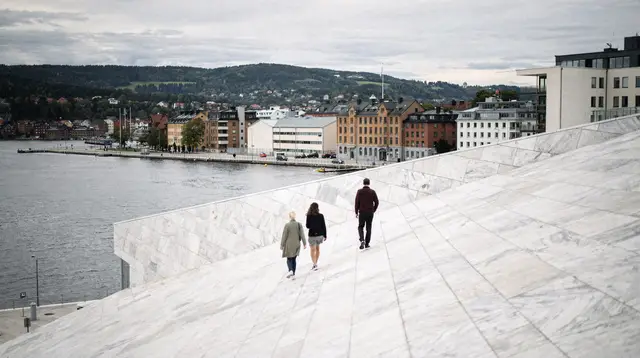
The Lambda building, designed by Estudio Herreros, is 13 storeys of stacked museum floors cantilevered over the waterfront. From the upper floors (visible from the Opera House roof) it looks like a glass-and-aluminum tower leaning slightly toward the fjord. The architectural debate about whether it overwhelmed its waterfront site ran for years; the building has settled into the Bjørvika skyline and most Oslonians have made their peace with it.
The upper floors have floor-to-ceiling fjord views. On a clear day, standing in a gallery with a Munch painting and the Oslofjord behind it is an experience that the old Tøyen museum building (Munch’s home for most of the 20th century) could never replicate.
Practical point: The building is tall enough that elevators serve the main galleries. If you prefer not to take stairs between floors, elevators are available.
The Scream: what you need to know
Edvard Munch made four versions of The Scream between 1893 and 1895:
- 1893 tempera on cardboard — at the Munch Museum
- 1893 pastel — sold privately in 2012 for USD 119.9 million (then the most expensive artwork ever auctioned)
- 1895 pastel on board — at the Munch Museum
- 1910 tempera — at the National Gallery, Oslo
The Munch Museum typically displays one or both of its versions at any given time. The 1910 version at the National Museum (in the new building near Aker Brygge — see the National Museum guide) is usually displayed as a permanent highlight.
What you see in person: The Scream is smaller than popular culture suggests — the original is approximately 91 by 74 cm. It is displayed in a dedicated room with protective glass and controlled lighting. The room is often crowded. Position yourself to stand in front of the work for 2-3 minutes without other visitors between you — possible on weekday mornings, harder on weekend afternoons.
What makes it powerful in person: The swirling orange sky and the figure’s upright posture are rendered in visible brushstrokes or pastel strokes that photographs flatten. The distortion of perspective — the elongated road, the dark figures behind, the impossible red sky — reads differently as a physical object than as a reproduction.
Context matters: Munch described the specific moment behind The Scream in his diary in 1892: “I stopped, leaned against the fence, paralyzed with exhaustion. The sky turned red as blood — I sensed an infinite scream passing through nature.” The diary entry is reproduced in the museum. Read it before looking at the painting.
The wider collection: what to see beyond The Scream
The Frieze of Life paintings are Munch’s central artistic project — a cycle of works exploring the themes of love, anxiety, and death. These are spread across the collection:
Love: The Kiss (multiple versions), Madonna, Vampire (the painting Munch described as “love and pain”). The Kiss exists as both a painting and a famous woodcut — find both.
Anxiety: Ashes, Evening on Karl Johan Street (the precursor to The Scream), Girls on the Pier. The anxiety works are often more psychologically acute than The Scream itself because they depict a social environment rather than an isolated moment.
Death: The Sick Child (of which Munch made six versions across his career, returning to the death of his sister Sophie again and again). By the Deathbed. The Death of Marat.
Self-portraits: Munch made over 60 self-portraits from his early twenties to his late seventies. The progression from the anxious young artist in black coat to the elderly man in an empty room is one of art history’s most complete self-records.
The prints: Munch’s printmaking is as important as his painting but receives less general attention. The museum’s print galleries have his lithographs and woodcuts — often more emotionally raw than the paintings because the reduction of the printmaking process forced him toward essence.
The diaries: Original manuscript diaries are displayed alongside the works they describe. Munch was a compulsive writer; the texts often reveal the emotional experience that generated the image.
Allow at minimum 2 hours; 3 hours if you intend to read the interpretive texts and spend time with the prints as well as the paintings.
Practical visiting information
Tickets: NOK 200 (USD 22) for adults. Free for children under 18. Free with Oslo Pass. Book at munchmuseet.no. Online booking includes timed entry — choose your slot.
Opening hours: Generally Tuesday to Sunday, 10am to 6pm. Thursday evening extension (to 8pm or later) in some seasons. Closed Monday. Always check munchmuseet.no before visiting — hours change seasonally.
Free evening: Last Thursday of the month, free entry after 5pm. Very crowded; a trade-off.
Photography: Personal photography (no flash, no tripod) is permitted in the permanent collection. Some temporary exhibitions prohibit photography — signs are clear.
Facilities: The museum café (MUNCH Kitchen) on the lower floors serves lunch and coffee. The prices are Oslo museum-standard: NOK 80 to 150 (USD 9 to 16) for food. The museum shop sells good quality art books and prints.
Accessibility: Full wheelchair access, elevators on all floors, accessible toilets on every floor.
Getting there
On foot from Central Station: 10 minutes south through the pedestrian underpass at Bjørvika, then follow waterfront signs. Straightforward.
Tram: Tram 12 to Bjørvika stop; 2-minute walk to the museum entrance.
From the Opera House: The museum is 5 minutes’ walk east along the Bjørvika waterfront. Combine both in a morning.
Combining with other Bjørvika sights
The Bjørvika waterfront offers a full day of free and paid culture:
Opera House roof (free, 10-minute walk west) — see the Opera House guide.
Deichman Bjørvika Library (free, 5-minute walk from the museum) — the new public library with fjord views and a café.
Sørenga (free swimming, 10-minute walk east) — outdoor bathing in the fjord in summer. See the Oslo swimming spots guide.
A morning visiting the Munch Museum followed by the library and an afternoon swim at Sørenga is one of Oslo’s best free-to-cheap days. Total cost with Oslo Pass for the museum: NOK 0. Without the pass: NOK 200.
Munch’s life and why it matters for understanding the work
Edvard Munch was born in Løten, Norway in 1863 and died at his property at Ekely, on the outskirts of Oslo, in 1944 — two months after the German occupation of Norway began its retreat. He was 80 years old, had been painting for 60 years, and had accumulated the work of a lifetime around him.
His life was marked by early loss: his mother died of tuberculosis when he was five, his sister Sophie died of the same disease when he was thirteen. His father was a deeply religious man who responded to grief with a severity that Munch described as emotional violence. His aunt Karen looked after the family after their mother’s death and was an important early support — but the atmosphere of illness, death, and religious guilt that pervades his childhood appears throughout his work in a way that is not metaphorical. He was painting what he lived.
The Anxiety period of the 1890s — the decade that produced The Scream, Madonna, and most of the Frieze of Life works — coincides with a tumultuous decade in Munch’s personal life. His relationship with Tulla Larsen ended in a confrontation in 1902 in which Munch lost the top of one finger to a pistol discharge (whether accidental or intentional is disputed). He sought treatment for alcoholism and what was then called a nervous breakdown in the clinic of Dr. Daniel Jacobson in Copenhagen in 1908-09.
After 1909, Munch’s style changed. The raw anxiety of the 1890s work modulated into something more robust — larger canvases, brighter colours, more physical figures. The later work has been undervalued by critics who prefer the famous neurotic Munch of The Scream. The museum’s collection across all periods allows visitors to see the full arc rather than the single famous image.
The Munch Museum vs the National Museum’s Munch holdings
Both museums hold significant Munch works, and visitors who have time for only one need to make a choice.
Visit the National Museum if you want to see Munch’s 1910 Scream in the context of Norwegian 19th-century painting — alongside J.C. Dahl’s landscapes and the visual tradition Munch both inherited and transformed. The National Museum’s selection of a dozen essential Munch paintings is more manageable for a general visitor.
Visit the Munch Museum if you want depth — the complete archive, the prints, the diaries, the complete Frieze of Life, the multiple versions of key works, the biographical documentation. This is the only place in the world where Munch’s complete artistic legacy can be encountered.
If you have two days, visit both. The National Museum on day one, the Munch Museum on day two. The contrast between the contextualised highlights and the comprehensive archive reveals aspects of both that neither visit alone can deliver.
The seasonal opening note
The Munch Museum occasionally closes specific galleries for conservation, rotation, or temporary exhibition installation. If there is a specific work you want to see — a version of The Scream, a particular Frieze of Life painting — check munchmuseet.no before your visit to confirm it’s currently on display.
The museum’s own website shows a simplified gallery map and current highlights. For a longer or research-focused visit, the museum offers scholarly access to the archives by advance arrangement.
Photography and visitor tips
Personal photography is permitted throughout the permanent collection. No flash, no selfie sticks in crowded gallery spaces. The most photographed spot in the museum is, inevitably, the Scream display room. The best photos are taken on weekday mornings when the room is less crowded. Afternoon on a July Saturday, the room will be 40+ people deep.
For the upper-floor fjord views: the northwest-facing galleries on floors 11-13 give the clearest views of the Oslofjord on a clear day. These galleries are worth visiting for the view alone when the weather is good, regardless of whatever works are displayed there.
The museum café (MUNCH Kitchen) is on floors 1 and 13. The 13th-floor café has fjord views and is the better choice for a meal break.
Munch Museum vs National Museum: value comparison
| Munch Museum (Lambda) | National Museum | |
|---|---|---|
| Entry | NOK 200 | NOK 200 |
| Munch works on display | Thousands, full career archive | A dozen essential highlights |
| Best for | Depth, prints, diaries, biography | Context within Norwegian art history |
| Time needed | 2–3 hours | 2–3 hours (whole museum) |
| Free with Oslo Pass | Yes | Yes |
Both museums cost the same and both are covered by the Oslo Pass, so the choice between them (if you can only do one) should be based on depth versus context rather than price. See the National Museum guide for the full comparison of what’s on display there.
Reading Munch before you go: two things worth knowing
Two pieces of context meaningfully improve a Munch Museum visit for first-time visitors. First, Munch’s 1892 diary entry describing the moment behind The Scream — reproduced in the museum — reframes the painting as a specific documented panic attack rather than an abstract symbol, which changes how the work reads in person.
Second, knowing that Munch bequeathed his entire studio contents to Oslo (rather than the museum acquiring a curated best-of) explains why the collection includes so much beyond the famous highlights: rejected drafts, personal letters, and deeply private diary material sit alongside the masterworks. Visitors expecting a small “greatest hits” selection are sometimes surprised by the scale and rawness of what’s actually on display.
For deeper background before or after your visit, the story behind The Scream covers the painting’s creation and its 2012 record-breaking auction in more narrative detail than the museum’s own wall texts.
Accessibility and family visits
The Lambda building was designed with full accessibility in mind: elevators serve every gallery floor, corridors are wide enough for wheelchairs and prams, and accessible toilets are available on multiple floors. For families, the museum is generally more engaging for children aged 10 and up who can process the emotional weight of some of the subject matter (illness, death, anxiety are recurring themes); younger children may find the pace and content less immediately engaging than a more hands-on museum like the Kon-Tiki Museum. There is no dedicated children’s activity area, unlike some of Oslo’s other museums, so plan accordingly if travelling with younger kids.
Stroller storage is available near the entrance, and the museum shop and both cafés are fully accessible. Free wifi covers the public areas throughout the building.
Frequently asked questions about Munch Museum Oslo guide
How do I get to the Munch Museum in Oslo?
The Munch Museum is at Edvard Munchs plass 1 in Bjørvika, a 10-minute walk from Oslo Central Station. Walk south from the station toward the harbour and follow signs for Bjørvika. The museum is next to the Opera House area. Tram 12 stops at Bjørvika, or take any Metro line to Jernbanetorget and walk.Do I need to book Munch Museum tickets in advance?
Booking online is strongly recommended, especially June through August when the museum sells out on weekends. Tickets can be bought at munchmuseet.no. Walk-in tickets are sometimes available on weekdays but not guaranteed in peak season.How many versions of The Scream are in the Munch Museum?
Munch created four versions of The Scream: two paintings, one in pastel, and one drawing. The Munch Museum holds two of these (one tempera painting from 1893, the pastel version from 1895). The National Gallery holds one painting. The fourth (pastel) is privately owned. Not all versions are displayed simultaneously — one is usually in rotation or conservation.Is the Munch Museum free with the Oslo Pass?
Yes. The Oslo Pass includes free admission to the Munch Museum. Given the ticket price of NOK 200 (USD 22), this is one of the Oslo Pass's most valuable inclusions.What floor is The Scream on in the Munch Museum?
The Scream is displayed in the dedicated Munch galleries, typically on floors 5 to 7. The display arrangement rotates seasonally — specific room locations are shown on the museum map available at entry. Look for the dedicated Scream display room rather than guessing which floor.What else does the Munch Museum contain besides The Scream?
The collection spans Munch's entire career: early realist works, the full Frieze of Life series (Love, Anxiety, Death), self-portraits spanning 60 years, lithographs, woodcuts, diaries, letters, and personal belongings. The museum is less a single-painting destination and more a comprehensive archive of a major artist's inner life.When is the Munch Museum open?
Generally Tuesday to Sunday, 10am to 6pm (extended to 8pm Thursday in some seasons). Closed Monday. Check munchmuseet.no for current hours as these change seasonally.
Top experiences
Bookable activities with verified prices and instant confirmation on GetYourGuide.