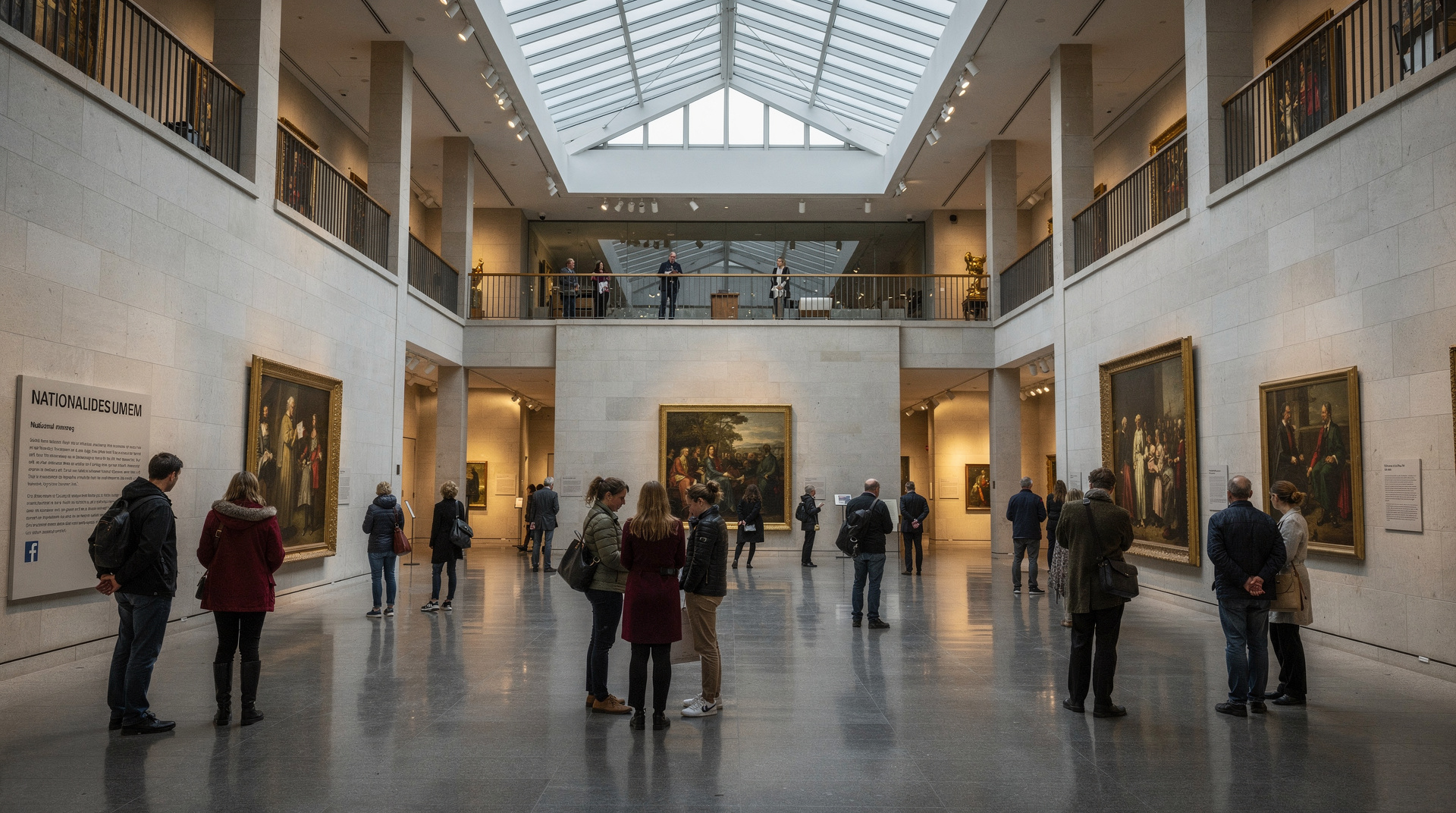
National Museum Oslo guide: highlights, tickets, and how long to allow
Oslo: National Museum of Norway entry ticket
Duration: Flexible
- Instant confirmation
- Mobile ticket
What is in the National Museum Oslo?
The National Museum (Nasjonalmuseet) is Norway's largest museum for art, design, and architecture, opened in its new building near Aker Brygge in 2022. The permanent collection spans Norwegian art from the 19th century to contemporary design, including The Scream (1910 version), J.C. Dahl landscapes, and comprehensive decorative arts. The building itself — with its 'Light Hall' — is one of Oslo's finest new public spaces.
Norway’s largest museum, in its best building
The Nasjonalmuseet — National Museum of Art, Architecture and Design — opened its new building at Aker Brygge in June 2022, consolidating three separate Oslo museums (the National Gallery, the Museum of Decorative Arts and Design, and the Museum of Architecture) into one 54,000-square-metre complex. It is the largest art museum in the Nordic region and one of the most significant museum buildings to open in Europe since the Louvre Abu Dhabi.
The opening resolved a long-running Oslo culture debate about whether to build a new institution at all. The answer, looking at the result, is clearly yes.
| Where | Brynjulf Bulls plass 3, Aker Brygge waterfront |
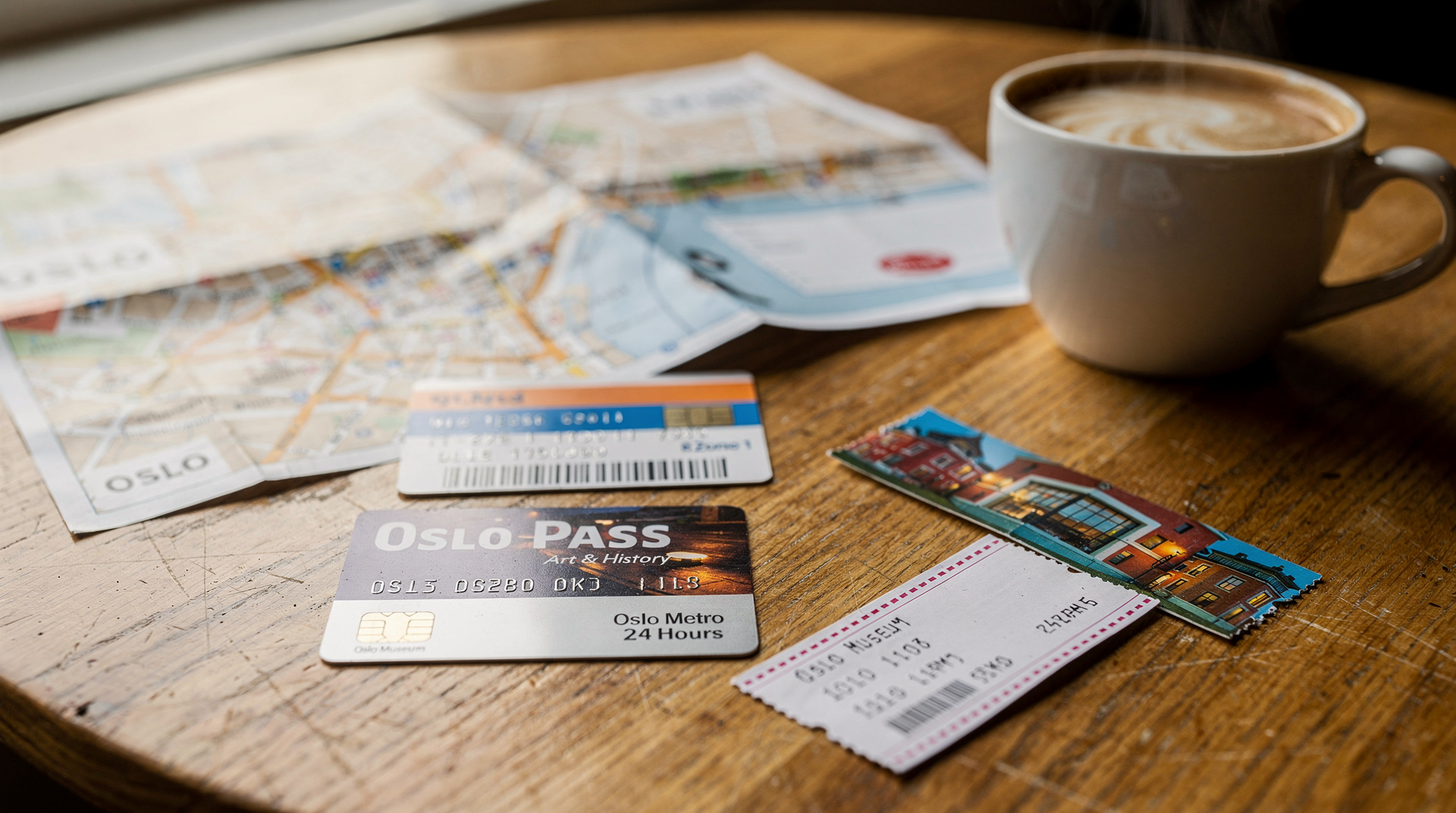
| Cost | Around NOK 160 (USD 17) adults; free with Oslo Pass |
| Time needed | 2 hours minimum, 3–4 for a thorough visit |
| Getting there | 15-min walk from Oslo S, or tram 12 to Aker Brygge |
| Best time | Weekday morning; free Thursday evenings are crowded |
The building: the Light Hall and the exterior
The new museum building, designed by the German architecture firms Kleihues + Schuwerk, sits between City Hall and the Aker Brygge waterfront on a plot previously occupied by a bus terminal. From the outside it presents a granite and brick facade — restrained by Oslo’s high-design standards — that gives little hint of what’s inside.
The Light Hall is the building’s defining space: a vast atrium of translucent onyx marble panels, 56 metres long, which filters Norwegian daylight into a warm amber glow regardless of the weather outside. The effect is extraordinary — standing in the Light Hall on a grey October day, surrounded by amber light, is one of the best experiences a new building in Europe offers.
The Light Hall is technically accessible to visitors with a museum ticket, but the atrium space itself is visible from the museum entrance without full admission. Worth approaching from the Aker Brygge waterfront for the exterior view before entering.
What the permanent collection contains
The museum’s permanent collection spans:
Norwegian painting, 19th century: J.C. Dahl is Norway’s most important landscape painter — his towering canvases of Norwegian fjords, waterfalls, and mountains established the visual grammar of what Norway looks like to itself and the world. The museum holds the largest Dahl collection anywhere. These paintings are formative: Dahl’s approach to Norwegian light influenced every landscape painter who followed him.
The Scream and Munch: The 1910 tempera version of Edvard Munch’s The Scream is the permanent collection highlight for most visitors. Unlike the Munch Museum (which holds the complete archive), the National Museum’s Munch holdings are curated highlights — a dozen essential paintings rather than 28,000 items. For a first encounter with Munch, the focused selection here is sometimes more digestible than the comprehensive collection next door.
Norwegian Impressionism and modern painting: Christian Krogh’s social realist paintings of 19th-century Oslo. Harriet Backer’s interiors. Erik Werenskiold’s folk illustrations. The museum documents the full development of Norwegian art from Romanticism through the 20th century.
International art: Works by Picasso, Matisse, Cézanne, and Monet are part of the collection — smaller than in larger European museums but significant in context.
Decorative arts and design: This section, from the former Museum of Decorative Arts, holds Viking Age and medieval ecclesiastical objects (including some of Norway’s best medieval carved wood), Scandinavian furniture design from the 1950s-1980s, glass, silver, and textile design. Less famous than the paintings but often more interesting to designers and the architecturally curious.
Architecture: The architecture collection covers Norwegian building design from the stave church period to the 21st century. Drawings, models, and documentation. Small but specific.
Highlights not to miss
Room 1 (The Scream): Don’t leave before seeing it. The 1910 version is darker in tone than the 1893 version at the Munch Museum — the colours more muted, the brushwork denser. Different character from the other version.
J.C. Dahl’s View from Stalheim (1842): The most iconic Norwegian landscape painting, a panoramic view over a valley that Dahl translated from an actual fjord view into pure visual argument for Norwegian national identity. The original is approximately 162 by 236 cm — much larger than reproductions suggest.
The medieval collection (ground floor, decorative arts): The Urnes Stave Church dragon posts, carved in the 12th century, are among the finest examples of Viking Age decorative art outside the Viking Planet. Often overlooked by visitors focused on paintings.
Design 1950-1980: Scandinavian furniture and product design from this period is having a continuous international revival. The museum’s holdings give the context for why those objects looked as they did.
Practical visiting information
Address: Brynjulf Bulls plass 3, 0250 Oslo.
Tickets: NOK 160 (USD 17) adults; children under 18 free; free with Oslo Pass. Buy online at nasjonalmuseet.no to avoid queues. Timed entry in peak season.
Opening hours: Tuesday, Wednesday, Friday: 10am to 8pm. Thursday: 10am to 9pm. Saturday and Sunday: 10am to 6pm. Closed Monday. Check nasjonalmuseet.no — hours vary seasonally.
Free admission: First Thursday of the month after 5pm. These evenings are genuinely crowded but worthwhile if you’re planning around budget.
Café: The museum café on the ground level serves lunch and coffee at Oslo standard prices (NOK 80 to 150 / USD 9 to 16 for food). The location with view toward Aker Brygge is good for a mid-visit break.
Photography: Personal photography is permitted throughout the permanent collection without flash. Temporary exhibitions may have different rules.
Guided tours: Audio guides (included in admission) cover the permanent collection highlights in multiple languages. Group tours must be booked in advance.
Getting there
On foot from Aker Brygge: 5 minutes east along the waterfront. Brynjulf Bulls plass is the square between City Hall and the new museum.
On foot from Central Station: 20 minutes west along Karl Johans gate and down toward the water, or take the tram.
Tram: Line 12 to Aker Brygge, then 5-minute walk.
Bus: Multiple lines to Aker Brygge and City Hall.
The museum’s waterfront location makes it a natural midday destination when combining Aker Brygge dining with an afternoon cultural visit.
Norwegian landscape painting: understanding the J.C. Dahl legacy
Johan Christian Dahl is the pivotal figure in Norwegian art history, and the National Museum holds the most important collection of his work. Understanding why his landscapes mattered requires a brief historical note.
Dahl was born in Bergen in 1788 and spent most of his professional life in Dresden, where he was close to the German Romantic painter Caspar David Friedrich. When he returned to Norway in the summers of 1826 and 1834, he brought back a technique and a sensibility that transformed how Norwegians visualised their own country.
Before Dahl, Norwegian landscape was seen through a conventional European lens — picturesque, composed, subordinated to classical rules of landscape painting. Dahl painted the actual scale of Norwegian nature: the violence of fjord light, the physical dominance of mountains over human scale, the specific atmosphere of western Norwegian weather. His paintings showed Norway as it actually looks rather than as a European visitor would expect it to look.
The political dimension: Norway was asserting its cultural independence from Denmark (formal union ended 1814) and building toward independence from Sweden (achieved 1905). Dahl’s landscapes were part of the cultural argument for Norwegian distinctiveness. A Norwegian fjord was not a reduced Rhine valley; it was something that had no European equivalent and demanded its own visual language.
The National Museum’s Dahl collection — including the View from Stalheim and his multiple versions of Norwegian waterfalls and fjord scenes — shows this transformation in progress. Spend time with the large-format landscapes and you understand why Norwegian national identity is so persistently linked to landscape.
The Munch in context
The National Museum’s permanent Munch holdings are not the comprehensive archive that the dedicated Munch Museum holds, but they are carefully curated highlights. The 1910 version of The Scream is the primary draw — and seeing it alongside Norwegian 19th-century landscape paintings and Dahl’s fjord scenes places Munch in a lineage he both continued and broke.
Munch’s Anxiety and The Sick Child hang in the same gallery tradition as Dahl’s landscapes — both are fundamentally about Norwegian light, Norwegian psychological experience, Norwegian relationship to nature and death. The Munch Museum in Bjørvika shows Munch in isolation; the National Museum shows Munch in context.
If you visit both museums, do the National Museum first. The 19th-century Norwegian art establishes the visual and cultural frame that Munch transformed.
The decorative arts and design collection
The design and decorative arts section occupies the lower floors and is frequently overlooked by visitors making straight for the painting galleries. This is a mistake.
The medieval ecclesiastical objects — carved wooden altarpieces, choir stalls, and metal liturgical objects from Norway’s stave church and medieval stone church tradition — are among the finest medieval artefacts in Scandinavia. They represent a period before Norway became culturally subordinate to Denmark, when Norwegian woodcarving and metalwork had its own regional character.
The 20th-century Scandinavian design galleries trace the development of what is now marketed worldwide as “Scandinavian design” — the spare functionality, the use of natural materials, the prioritisation of everyday objects over luxury goods. The Norwegian contribution to this tradition is less internationally known than the Swedish or Danish, but the National Museum’s collection makes the case for Norwegian furniture, glass, and textile design.
Temporary exhibitions
The National Museum hosts four to six major temporary exhibitions per year. These range from retrospective shows of major international artists to thematic exhibitions in architecture or design. Quality is consistently high. Check nasjonalmuseet.no for the current programme before your visit.
Temporary exhibitions are included in the standard admission price unless otherwise noted.
Planning your visit: self-guided vs audio guide
The National Museum provides audio guides (included in admission) in multiple languages. These cover approximately 50 highlights from the permanent collection — useful for visitors who want guided introduction to Norwegian art without a group tour format.
For a self-guided visit without the audio guide, the museum’s published collection highlights map (available at the entrance and on nasjonalmuseet.no) identifies the most important works in each section. The most efficient way to plan a 2-hour self-guided visit:
- Start in the Light Hall (ground floor) — understand the building’s architecture
- Move to the Norwegian painting galleries (floor 2) — J.C. Dahl, Munch, the 19th-century collection
- The Scream display room — allow time, particularly if it’s your first encounter
- Decorative arts — medieval objects (floor 1), Scandinavian design (floor 3)
- International art — Picasso, Cézanne, Matisse (floor 2, adjacent to Norwegian painting)
Skip: the architecture collection (floor 3) unless specifically interested; the print and drawing study room (open by appointment); the temporary exhibition if you’re pressed for time and it doesn’t align with your interests.
Rest point: The museum café on the ground level, with view toward Aker Brygge, is a good 20-minute break point after 90 minutes of galleries.
Is it worth the ticket price?
At around NOK 160 (USD 17), the National Museum sits mid-range for Oslo’s paid attractions — cheaper than the Norsk Folkemuseum (NOK 220) but pricier than the Nobel Peace Center. Judged purely on content-per-krone, it’s one of the better value museum tickets in the city: you get The Scream, the country’s best Dahl collection, and a design wing, all under one roof, plus a building that’s worth the visit on its own.
Visitors who only care about Munch specifically may prefer to spend that money on the dedicated Munch Museum instead, or better, budget for both if time allows — the two collections complement rather than duplicate each other. With the Oslo Pass, the calculation disappears entirely since admission is included.
Visiting with children
The National Museum is workable with children for a shorter visit, though it is not designed as a children’s museum in the way some Bygdøy attractions are. Family-friendly notes: strollers are permitted throughout the ground floor galleries (lifts serve upper floors); the museum runs family activity backpacks and trails at weekends and during school holidays, available free at the information desk; and the Light Hall itself tends to hold children’s attention simply through scale.
Aim for 60–90 minutes with young children rather than a full visit, and use the café as a natural midpoint break. For families spending a full day at Aker Brygge, pairing a short museum visit with time at the waterfront and a stop at the Nobel Peace Center’s Nobel Field (which also appeals to kids) works better than a single long museum block.
The museum shop
The ground-floor shop is one of the better museum shops in Oslo, stocking exhibition catalogues, Scandinavian design objects, jewellery reproductions inspired by the decorative arts collection, and a solid range of art and architecture books not easily found elsewhere in the city. Prices run from small postcards and prints (NOK 50–100) to design pieces in the hundreds of kroner. It’s accessible without a museum ticket, making it a legitimate stop even if you only have ten minutes at Aker Brygge and no time for the galleries themselves.
Combining with a day itinerary
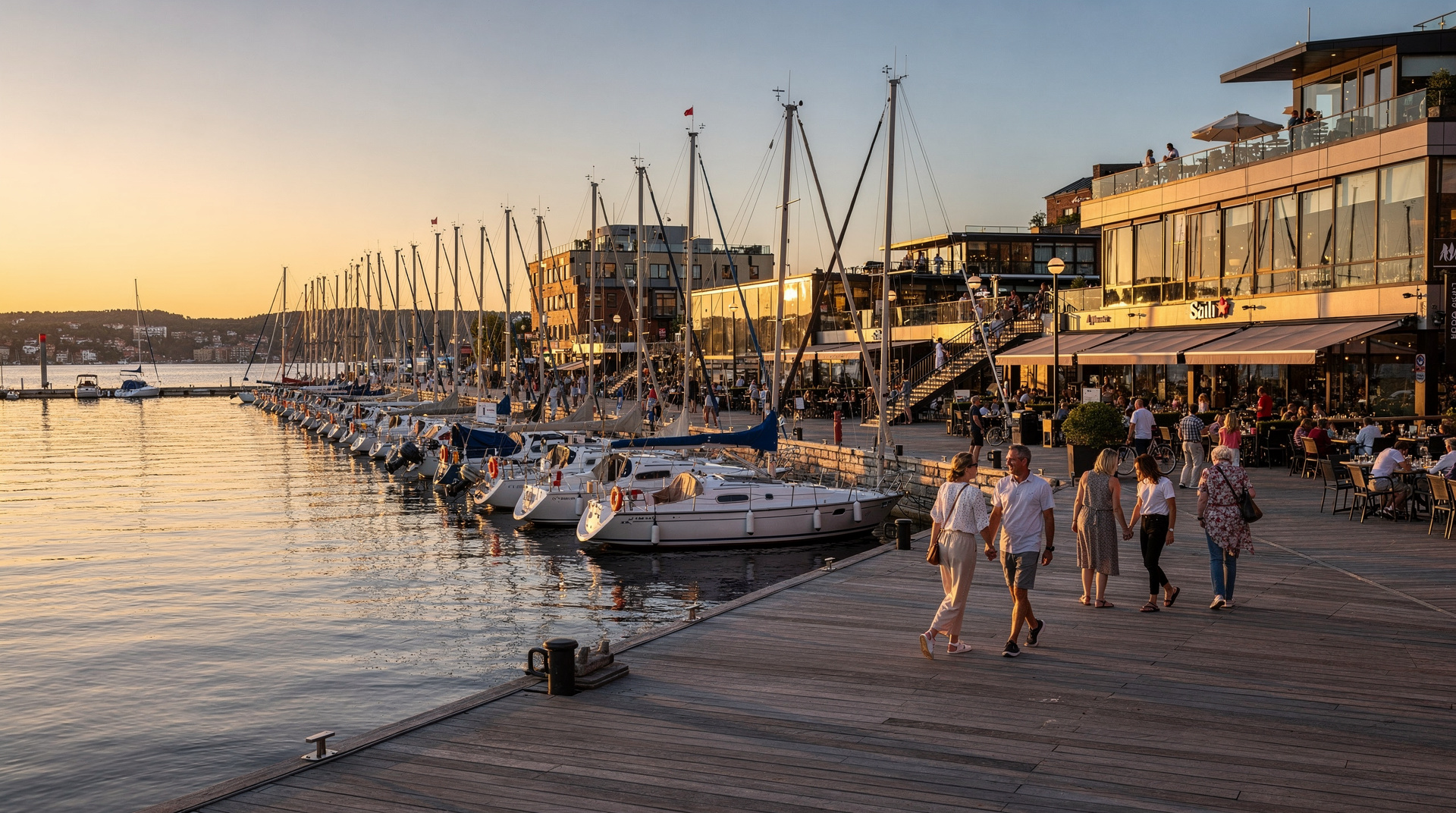
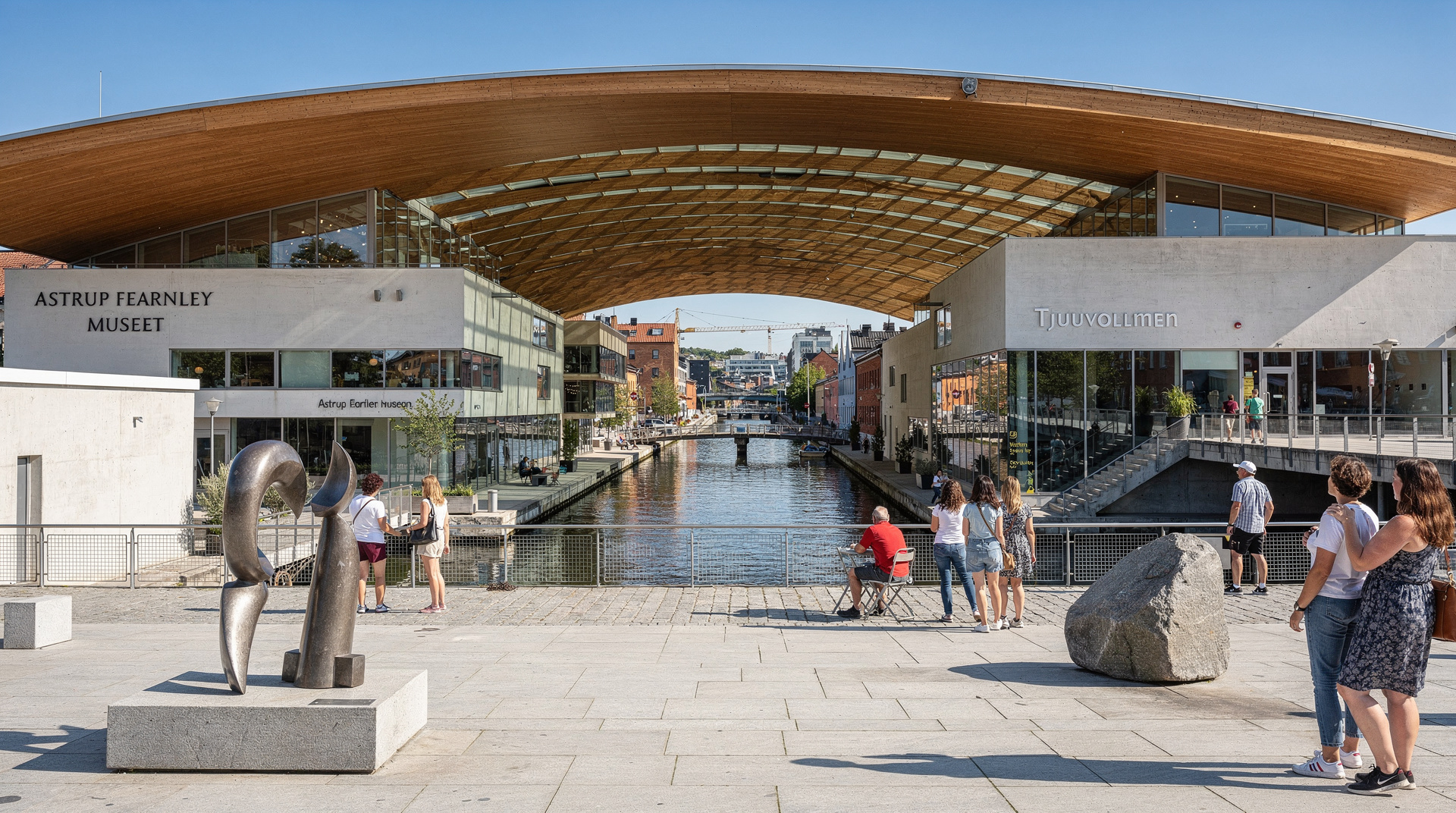
The National Museum and the nearby Astrup Fearnley Museum at Tjuvholmen (10-minute walk west) form a natural pairing for an art-focused afternoon. Spend the morning at the National Museum, have lunch at Aker Brygge, and walk to Tjuvholmen for the contemporary art and the free sculpture park.
Alternatively, combine with Akershus Fortress (15-minute walk east) for a morning that covers both monumental history and major art. See the Oslo in 2 days itinerary for a worked-out two-day plan incorporating both museums.
The Oslo museums ranked guide places the National Museum in the top tier alongside the Munch Museum and Norsk Folkemuseum — this is not a visit to skip.
Frequently asked questions about National Museum Oslo guide
How much does the National Museum Oslo cost?
Adult admission costs NOK 160 (USD 17). Children under 18 enter free. Free with Oslo Pass. Permanent collection free one Thursday evening per month — check nasjonalmuseet.no for exact dates.How long should I spend at the National Museum?
The museum is large — the new building has 54,000 square metres including galleries. Allow a minimum of 2 hours for a focused visit covering the highlights; 3 to 4 hours if you want to explore design, decorative arts, and the contemporary galleries thoroughly. The café is good for a mid-visit break.Is The Scream at the National Museum or the Munch Museum?
Both. The National Museum holds the 1910 tempera version of The Scream, which was previously in the National Gallery before the new building opened. The Munch Museum holds two other versions. Both museums are worth visiting for different aspects of Munch's work.Where is the National Museum in Oslo?
Brynjulf Bulls plass 3, next to City Hall on the Aker Brygge waterfront. A 15-minute walk from Oslo Central Station or from Aker Brygge tram stop.Is the National Museum building worth seeing even without a ticket?
Yes. The atrium and entrance area are accessible without a museum ticket. The Light Hall — a vast translucent space — is visible from outside. The building by Kleihues + Schuwerk is considered one of the best public buildings in Norway since 2010.Should I book National Museum tickets in advance?
Recommended in peak season (June to August) and on free Thursday evenings, when timed-entry slots can sell out by mid-afternoon. Off-season on a weekday morning, walk-up tickets are usually available, but booking online at nasjonalmuseet.no costs nothing extra and removes the risk entirely.Is the National Museum better than the Munch Museum for a first visit?
They cover different ground rather than competing directly. The National Museum gives broader context — Dahl's landscapes, decorative arts, and a curated selection of Munch alongside them — while the Munch Museum is the deep, single-artist archive. If you only have time for one, the National Museum's breadth suits a first-time Oslo visitor; Munch devotees should prioritise the dedicated museum.
Top experiences
Bookable activities with verified prices and instant confirmation on GetYourGuide.