Astrup Fearnley Museum: contemporary art at Tjuvholmen
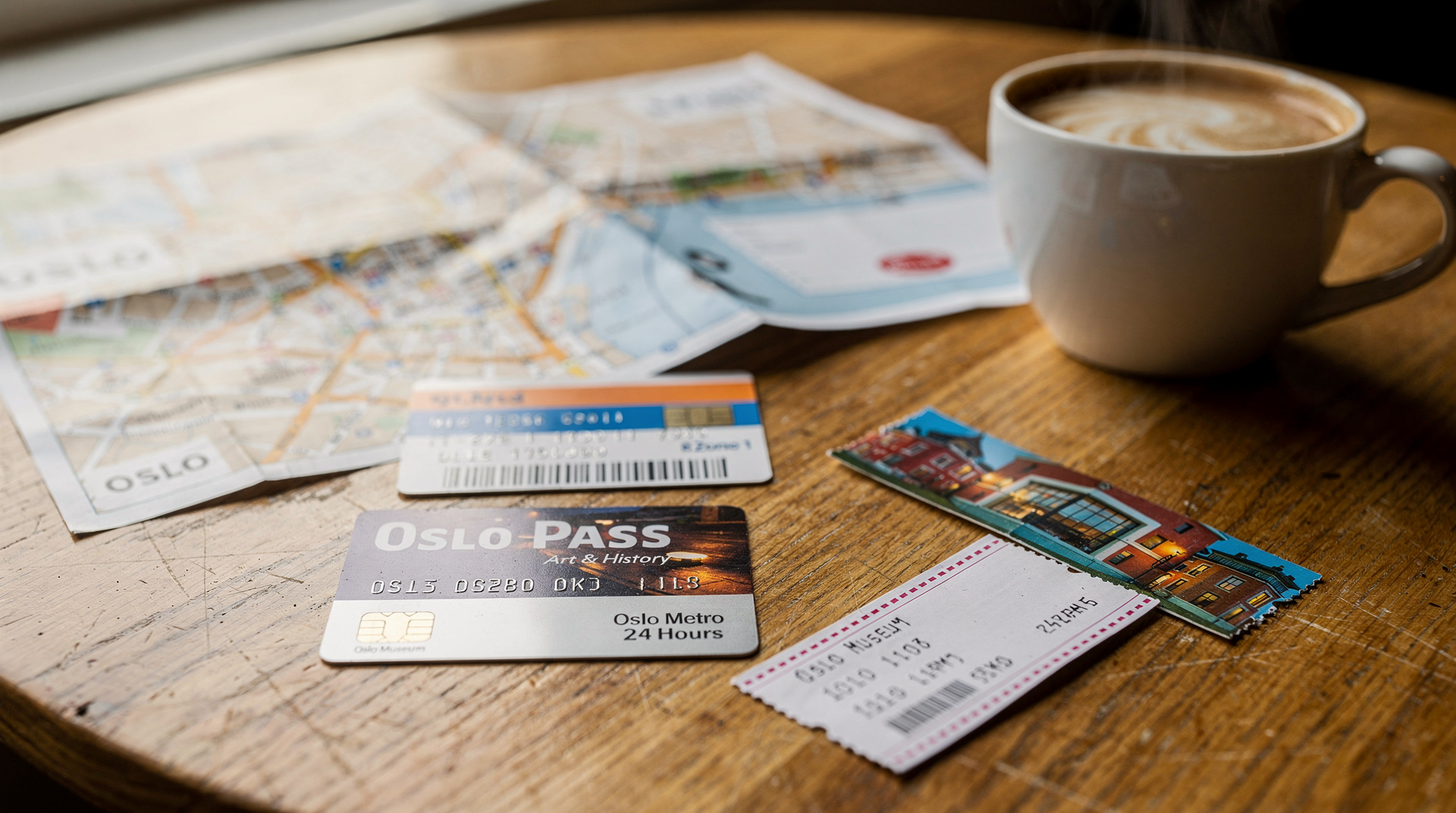
Oslo: Oslo Pass with public transport and free museum entry
Duration: 24-72 hours
- Instant confirmation
- Free public transport
- Skip museum queues
What is the Astrup Fearnley Museum?
The Astrup Fearnley Museum of Modern Art (Astrup Fearnley Museet) is Oslo's leading private contemporary art museum, located at Tjuvholmen in a Renzo Piano-designed building that opens onto a public sculpture park and bathing pier. The collection focuses on post-1960s international contemporary art — Jeff Koons, Cindy Sherman, Damien Hirst, Takashi Murakami. The outdoor sculpture area is free; the museum charges admission.
Contemporary art at Oslo’s newest waterfront
Tjuvholmen — “Thief Island” — was Oslo’s industrial waterfront until the 1990s, then a contested development site for two decades, and finally, from 2012, a coherent neighbourhood where architecture, contemporary art, and waterfront leisure intersect. The Astrup Fearnley Museum of Modern Art is the pivot around which Tjuvholmen was designed.
The museum was built by Renzo Piano for the Astrup Fearnley collection — a private holding assembled by the Norwegian shipping family of the same name. The building opened in 2012 and established Tjuvholmen as Oslo’s design quarter. Unlike most Oslo museums, this one is explicitly international in orientation: its collection is less about Norway and more about the global contemporary art market since 1960.
The building: Renzo Piano in Oslo
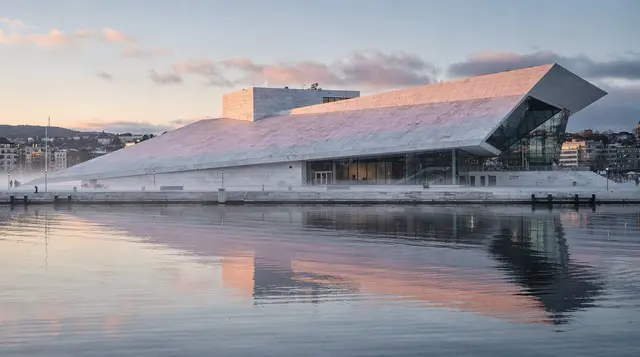
Piano’s building consists of two separate gallery volumes connected by a covered internal “street” or passage, topped by a curved glass-and-wood roof structure that reaches over both buildings and the canal between them. The roof curves continue outward over the waterfront pier — so the building’s structure is simultaneously a gallery enclosure, a covered public walkway, and a sheltered outdoor space.
The choice of Renzo Piano for Tjuvholmen was deliberate — Oslo was building a cultural anchor for its most architecturally ambitious new neighbourhood, and Piano is the architect who has done this more successfully than anyone (Pompidou, Getty, Beaubourg, Whitney). The result is excellent. The interior light — diffused through the curved roof — is warm and consistent in a way that suits contemporary photography and large-format painting.
The building sits at the end of the Tjuvholmen peninsula. Stand at the pier in front of it and you can see the Oslofjord in three directions.
| Where | Tjuvholmen, Strandpromenaden 2 |
| Cost | Around NOK 160 (USD 17); outdoor sculpture park and pier free |
| Time needed | 60-90 min inside, plus 30-45 min for the pier and sculpture garden |
| Getting there | 10-15 min walk west from Aker Brygge, or tram 12 to Tjuvholmen |
| Best time | Weekday late morning for quiet galleries; summer evening for the pier |
The collection: what to expect inside
The Astrup Fearnley collection is built around American post-pop, neo-expressionism, and the global contemporary market. Key works and artists in the collection:
Jeff Koons: The museum holds several Koons pieces, including monumental balloon sculptures. The large Bouquet of Tulips sculpture outside the entrance (a gift from Koons to Paris that was later moved) is part of the Astrup Fearnley’s public sculpture context. Koons’s work divides viewers sharply — the museum doesn’t apologize for this.
Cindy Sherman: Large-format photographs from Sherman’s Untitled Film Stills and later series. The museum holds a significant Sherman collection — the work makes more impact at this scale than in reproduction.
Damien Hirst: Medicine cabinets and spot paintings. Hirst’s work is either the most important or the most cynical art of the 1990s, depending on your view; the museum displays it without editorial comment.
Matthew Barney: The Cremaster Cycle is referenced in the collection. Barney’s elaborate, mythological video installations require time and patience but reward them.
Takashi Murakami: Japanese pop art with a commercial gloss that is more conceptually sophisticated than its surfaces suggest.
Norwegian and Scandinavian contemporary: The museum does not neglect its home context. Norwegian artists including Bjarne Melgaard are represented, and Scandinavian design thinking inflects the collection’s edges.
Temporary exhibitions: The Astrup Fearnley hosts substantial international temporary exhibitions — survey shows for mid-career artists, thematic exhibitions covering movements in contemporary art. These are often the reason to visit on a specific trip. Check afmuseet.no for the current programme before deciding whether to buy a ticket.
The free outdoor area: Tjuvholmen sculpture park and pier
The best reason to visit Tjuvholmen even if you don’t enter the museum is the free outdoor space. The Astrup Fearnley’s waterfront — the sculpture garden, the covered walkway beside the building, and the public pier — is accessible to everyone.
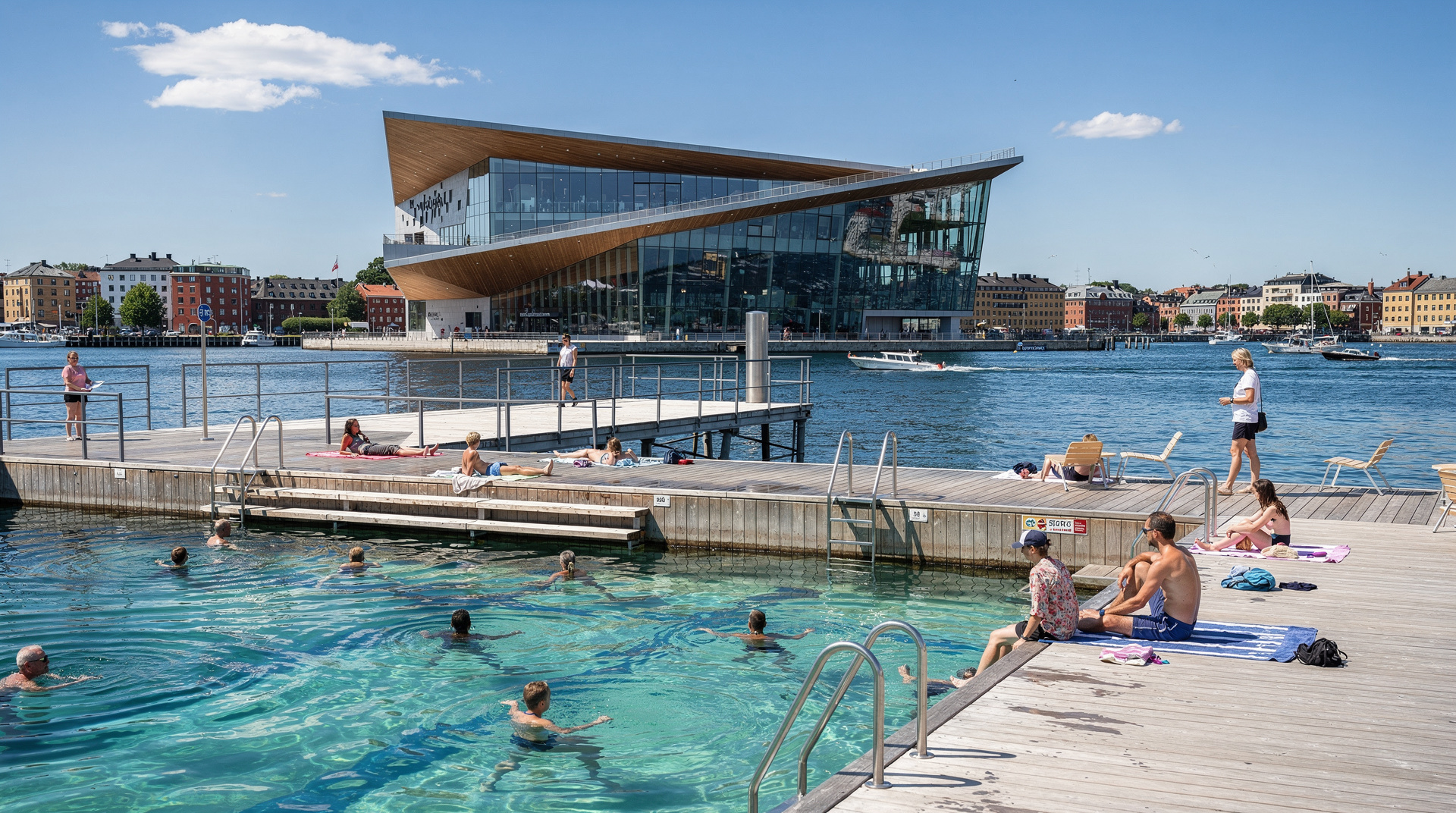
The pier: The wooden pier extending from the museum base into the Oslofjord has become Oslo’s most architecturally dramatic outdoor leisure space. In summer it’s lined with sunbathers. At any time of year it’s a good place to watch the harbour traffic, the fjord ferries, and the city skyline.
The sculpture garden: Large-scale works by international artists are installed in the public space around the museum. These rotate as part of the museum’s public art programme. The Koons tulip sculpture is a permanent reference point.
The pebble beach: A small pebble beach at the base of the Tjuvholmen pier allows swimming (the inner fjord water quality is good in summer). This connects to the broader Oslo swimming spots culture.
Everything above is free. Tjuvholmen as a whole — including the residential buildings designed by Renzo Piano, the smaller architecture studios, and the gallery row on the Tjuvholmen allé street — is worth an afternoon walk regardless of museum admission.
What the Astrup Fearnley represents in Oslo’s art landscape
Oslo’s museum landscape divides clearly between public and private. The Munch Museum and National Museum are state-funded, comprehensive, and structured around national cultural heritage. The Astrup Fearnley is privately funded, selective, and structured around the contemporary international art market.
This difference is visible in the collection. The Munch Museum holds everything Munch made, including failures, experiments, and juvenilia. The National Museum holds what Norwegian history demands. The Astrup Fearnley holds what the Astrup Fearnley family wanted to own — and what they wanted to own, consistently over several decades, was the most market-significant international contemporary art of each era.
This makes the collection somewhat predictable in its blue-chip quality — you will not discover an overlooked Norwegian painter here — but consistently excellent in its execution. The works on display are uniformly well-produced, well-presented, and internationally significant.
The private foundation model also gives the museum more flexibility in building its temporary exhibition programme. Without the constraints of national collection mandates or government approval processes, the Astrup Fearnley can respond quickly to artist reputations as they develop, producing exhibition partnerships that public institutions with longer planning cycles cannot match.
The Tjuvholmen neighbourhood as a whole
The Astrup Fearnley is the cultural anchor for Tjuvholmen, but the neighbourhood around it is worth exploring as architecture and urban design.
The residential buildings: Renzo Piano designed not only the museum but also the residential buildings on the west side of Tjuvholmen. These share the museum’s material vocabulary — wood, glass, gentle curves — and represent a consistent residential neighbourhood design of a kind rarely seen in European urban development. The architectural consistency makes Tjuvholmen feel like a planned community in the best sense: a neighbourhood with a coherent identity rather than a random assembly of developer buildings.
Tjuvholmen allé: The main pedestrian street running through the neighbourhood has a small number of galleries, design studios, and cafés. None are tourist-facing in the standard sense. This is where Oslo’s art world actually works — the smaller commercial galleries and studios that feed the kind of institutional collecting that the Astrup Fearnley represents.
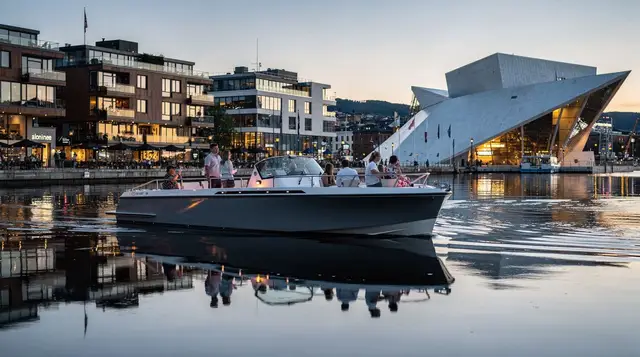
The canal: Tjuvholmen is separated from Aker Brygge by a narrow canal crossed by two pedestrian bridges. The canal is used by small boats and kayakers in summer and is an atmospheric element of the neighbourhood.
Norwegian contemporary artists in the collection
While the Astrup Fearnley’s international holdings dominate the public reputation, the collection includes significant Norwegian and Scandinavian contemporary work. Norwegian artist Bjarne Melgaard, whose work deals with subculture, sexuality, and political extremism, has an international reputation that the Astrup Fearnley’s holdings reflect. Swedish artist Lovis Corinth and several Danish contemporaries appear alongside the Americans and Japanese.
The Scandinavian works are not marginalised by the international context but positioned as part of the same international conversation — which is the appropriate frame for contemporary Oslo art.
Is the museum worth the admission?
The honest answer is: it depends what’s on. The permanent collection is strong but not large — a focused Oslo contemporary art collection rather than a comprehensive international survey. The temporary exhibitions can elevate the visit significantly when they coincide with a major artist.
If you’re visiting Oslo with a serious contemporary art interest, buy the ticket. If you’re visiting Oslo as a general traveller and need to choose between the Astrup Fearnley, the National Museum, the Munch Museum, and the Norsk Folkemuseum, put the Astrup Fearnley fourth — the other three are either uniquely Norwegian experiences (Norsk Folkemuseum) or contain work that cannot be seen anywhere else (Munch Museum, National Museum’s The Scream).
But walk to Tjuvholmen regardless for the free outdoor space. It’s one of Oslo’s most pleasant waterfront areas. See the Aker Brygge and Tjuvholmen destination guide for the full Tjuvholmen walk.
The Tjuvholmen pier and public swimming
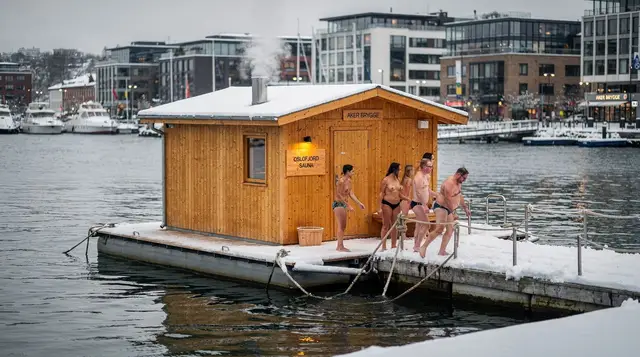
The public bathing pier at the end of Tjuvholmen is one of the most architecturally distinctive outdoor swimming spots in Oslo. The pier extends from the base of the Astrup Fearnley Museum building into the Oslofjord. Swimming is from ladders into the open fjord water — not a pool.
In summer (June-August) the pier is used by swimmers from early morning. The water quality in the inner Oslofjord has improved dramatically since the 1990s when significant investment was made in wastewater treatment. The Oslo municipality monitors water quality and publishes daily reports — generally the inner harbour is clean and safe for swimming from May through September.
For the full Oslo outdoor swimming picture including Sørenga and other harbour spots, see the Oslo swimming spots guide.
Practical information
Address: Strandpromenaden 2, 0252 Oslo.
Admission: Approximately NOK 160 (USD 17) adults. Children under 15 free. Not covered by Oslo Pass.
Opening hours: Tuesday and Wednesday 11am to 6pm; Thursday and Friday 11am to 7pm; Saturday and Sunday 11am to 5pm. Closed Monday. Check afmuseet.no — hours vary seasonally and during installation periods.
Café: The museum café has harbour views and serves coffee and lunch at Oslo prices (NOK 80-150 / USD 9-16). Reasonable for museum context.
Getting there: From Aker Brygge, walk west along the waterfront for 10-15 minutes. From the National Museum (Aker Brygge), 10-minute waterfront walk west. Alternatively, tram 12 to Tjuvholmen stop.
Visiting with an art background vs a general interest
The Astrup Fearnley collection rewards different levels of engagement differently.
For visitors with art backgrounds or contemporary art knowledge: The permanent collection is a reference point for the international art market from 1960 to the present. Jeff Koons as the endpoint of Pop Art’s relationship to commerce, Cindy Sherman’s transformation of photographic self-portraiture, Damien Hirst as the art market’s most polarising figure — these are canonical positions and the Astrup Fearnley holds primary examples. The collection is worth multiple visits for people who follow contemporary art.
For general visitors without specialist knowledge: The Astrup Fearnley is the weakest of Oslo’s major museums for visitors who don’t have prior engagement with contemporary international art. The works are beautiful and well-presented, but without context they can feel expensive, distant, and harder to respond to than the historical and culturally specific collections at Norsk Folkemuseum or the Munch Museum. The free outdoor space and Renzo Piano building are worth experiencing regardless.
The honest recommendation for general visitors: walk to Tjuvholmen for the outdoor sculpture park and pier (30 minutes, free), consider the ticket if a strong temporary exhibition is showing or if you’re specifically interested in contemporary art, and otherwise save your museum budget for the National Museum and Munch Museum.
Combining with an afternoon itinerary
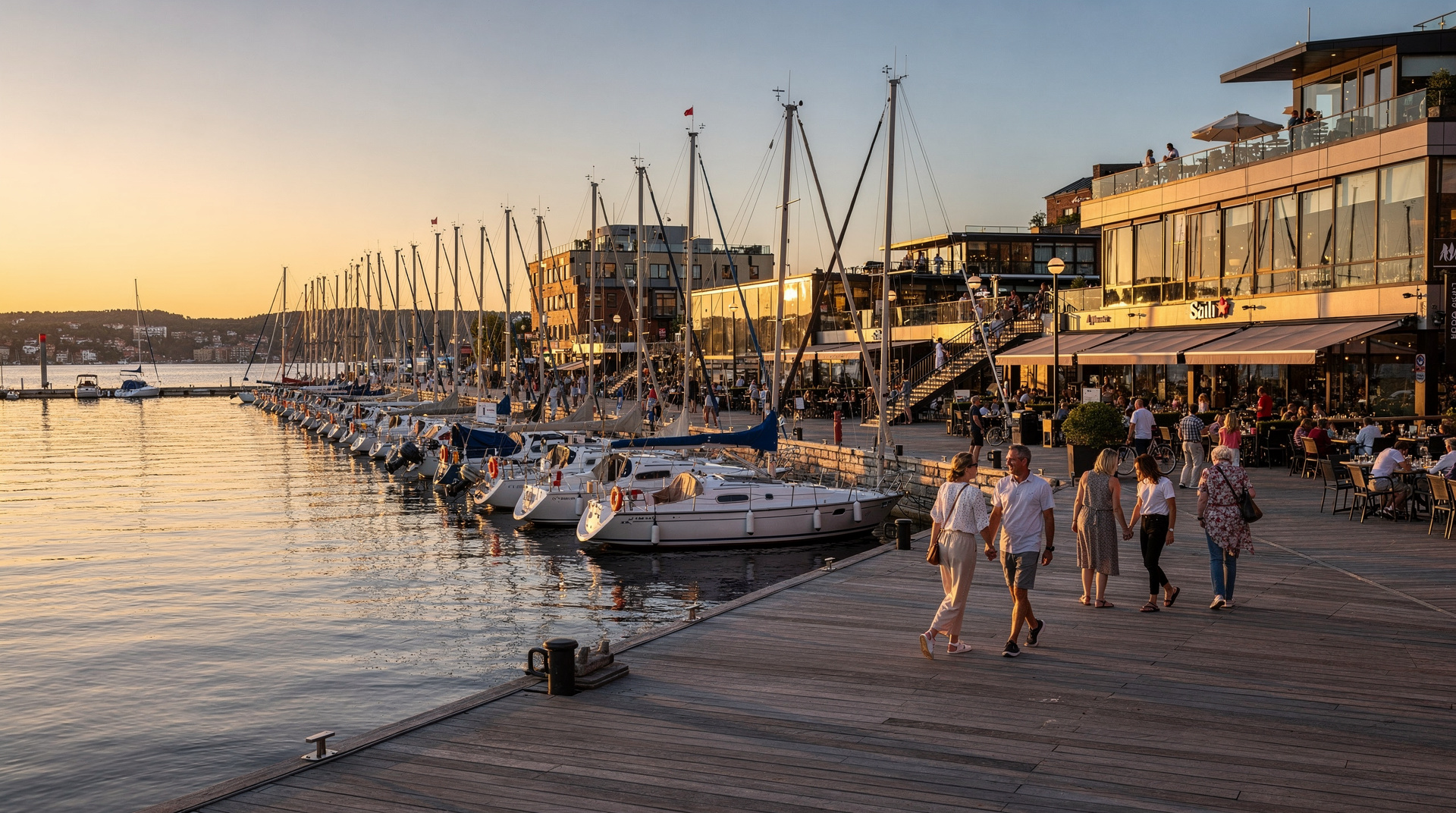
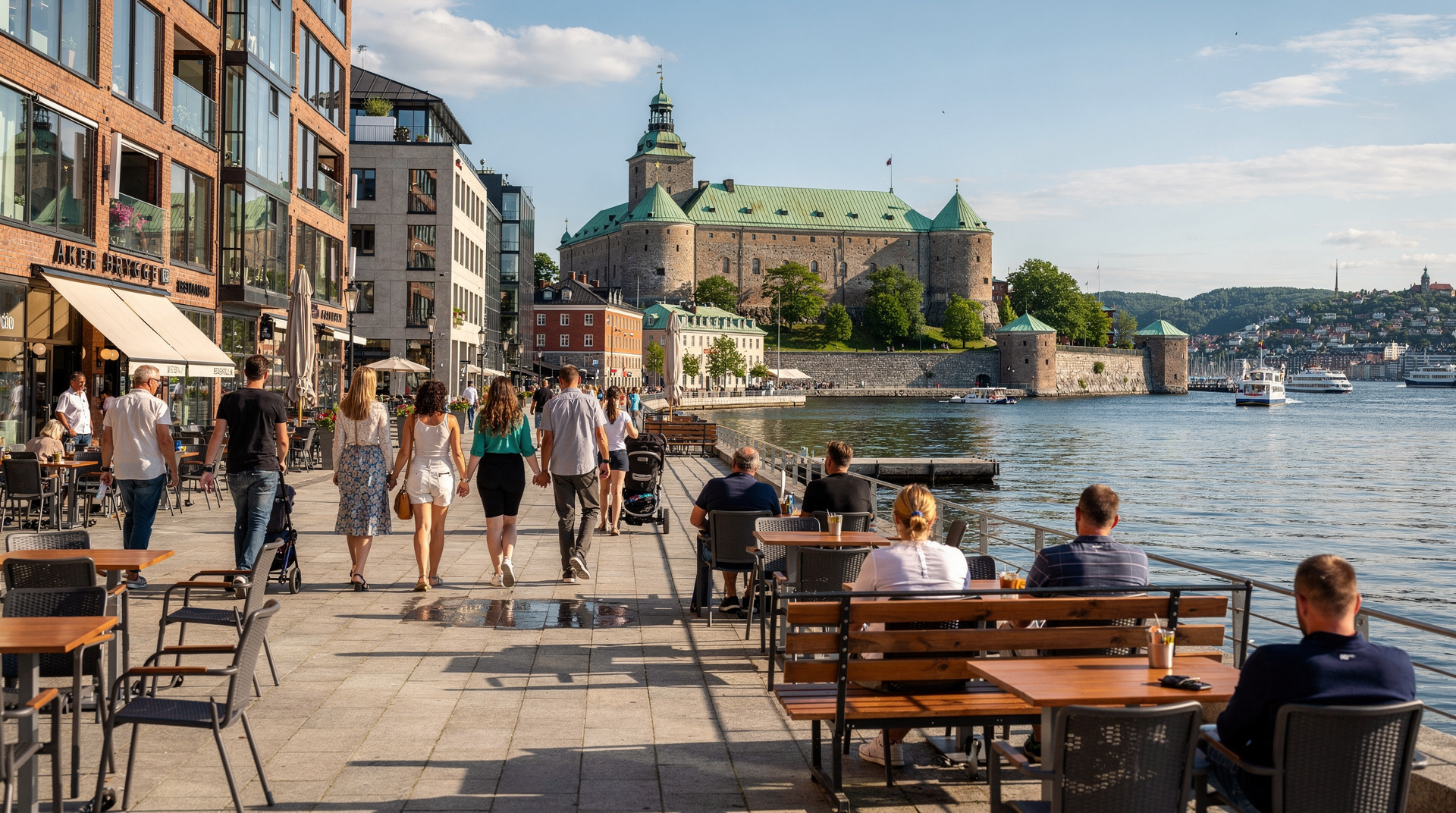
Tjuvholmen and Aker Brygge form a natural pairing. Spend the morning at the National Museum (near City Hall), have lunch at Aker Brygge, and walk to Tjuvholmen for the Astrup Fearnley and pier in the afternoon. Total culture and waterfront time: one full day.
For a rainy day plan, the Astrup Fearnley’s covered internal walkway and the museum itself work well in wet weather. The free outdoor pier is less pleasant in rain but the gallery interiors remain excellent.
How it fits a wider Oslo museum plan
If you’re weighing the Astrup Fearnley against Oslo’s other big-ticket museums, it helps to see where it sits in the full ranking rather than in isolation. Our Oslo museums ranked guide places the National Museum and Munch Museum ahead of the Astrup Fearnley for most general visitors, precisely because those two hold work — Munch’s paintings, the National Museum’s version of The Scream — that exists nowhere else.
The Astrup Fearnley’s strength is depth within a genre (international contemporary art since 1960) rather than uniqueness, which makes it the right fourth or fifth stop on a museum-heavy trip rather than the first. If your time in Oslo is limited to one or two museums, spend it elsewhere and treat Tjuvholmen as a free waterfront walk instead.
Visiting with a specific temporary exhibition in mind
Because the permanent collection is compact, the case for a ticket often hinges on the current temporary programme rather than the standing display alone. The museum’s temporary exhibitions have historically been more ambitious in scope than the permanent galleries — full retrospectives, thematic surveys spanning several artists, and occasionally major loans from international institutions. Checking afmuseet.no a week or two before your trip, rather than relying on general reputation, is the single best way to decide whether the Astrup Fearnley deserves a dedicated visit on this particular trip or a lighter pass-through for the free outdoor space alone.
Tjuvholmen beyond the museum
Even visitors who skip the ticket entirely should budget time for Tjuvholmen itself. Beyond the sculpture park and pier, the neighbourhood has a small cluster of design studios and independent galleries along Tjuvholmen allé, a scattering of well-regarded restaurants with canal-side seating, and direct pedestrian access back to Aker Brygge across the two footbridges. For visitors staying centrally in Oslo, the whole Tjuvholmen loop — museum, pier, allé, and the walk back along the harbour — makes a self-contained afternoon that doesn’t require any advance booking beyond the museum ticket itself.
Pairing the museum with other stops
The Astrup Fearnley sits comfortably inside a wider art-and-waterfront day. If contemporary work is what draws you, the Munch Museum guide shows how the city’s older modern tradition compares, and the Vigeland sculpture park gives a free outdoor counterpoint to the sculptures at Tjuvholmen. For another open-air art walk, the Ekeberg sculpture park offers a very different setting above the city.
If you are building a full day around the harbour, the Oslo Opera House guide covers the other great waterfront building, and the Bjørvika neighbourhood is the natural next stop for architecture lovers. Visitors short on time can slot the museum into the two-day Oslo itinerary or the food and design weekend, both of which suit a gallery visit.
Planning around cost matters in Oslo, so it is worth reading whether the Oslo Pass is worth it before you decide how many paid museums to include, and the getting around Oslo guide explains how to reach Tjuvholmen without fuss. After the gallery, the where to eat in Oslo guide helps you choose somewhere for lunch or dinner nearby.
Frequently asked questions about Astrup Fearnley Museum
How much does the Astrup Fearnley Museum cost?
Adult admission is approximately NOK 160 (USD 17). Children under 15 are free. The museum is NOT included in the Oslo Pass — it is a private institution. The outdoor sculpture park and the Tjuvholmen public pier are always free.Is the Astrup Fearnley Museum covered by the Oslo Pass?
No. The Astrup Fearnley is a private museum and is not included in the Oslo Pass. Budget NOK 160 (USD 17) separately if you plan to enter.What artists are in the Astrup Fearnley collection?
The permanent collection focuses on American post-pop and contemporary art: Jeff Koons (including the large Bouquet of Tulips sculpture), Cindy Sherman's large-format photographs, Damien Hirst's medicine cabinets, and works by Matthew Barney, Bruce Nauman, and Takashi Murakami. Norwegian and Scandinavian contemporary artists are also represented.Who designed the Astrup Fearnley Museum building?
Renzo Piano, the Italian architect responsible for the Pompidou Centre (Paris), the Shard (London), and the Whitney Museum (New York). The Oslo building opened in 2012 and is characterized by its curved roof structure that spans two separate gallery buildings connected by an interior street, opening onto a canal.What is the outdoor area at the Astrup Fearnley?
The museum's waterfront at Tjuvholmen includes a free public sculpture garden with large works, a pier extending into the Oslofjord, and a pebble beach for swimming. This is one of Oslo's best free spots — the Tjuvholmen pier is publicly accessible regardless of museum admission.How long should I spend at the Astrup Fearnley Museum?
Allow 60-90 minutes for the permanent collection and any temporary exhibition, plus 30-45 minutes for the free outdoor sculpture park and pier. A relaxed half-day covers the museum, the pier, and a walk around the rest of Tjuvholmen.Is the Astrup Fearnley Museum good for children?
The gallery itself is quiet and adult-oriented, with some works (Jeff Koons, Cindy Sherman) more engaging for older children and teenagers than young ones. The free outdoor sculpture park, pier and pebble beach are genuinely family-friendly regardless of museum admission.
Top experiences
Bookable activities with verified prices and instant confirmation on GetYourGuide.