Akershus Fortress guide: medieval castle, free grounds, Resistance Museum
Oslo: self-guided mystery tour at Akershus Fortress
Duration: 1.5 hours
- Self-guided
- Interactive
Is Akershus Fortress worth visiting?
Yes. The fortress grounds and medieval walls are free to walk at all times and offer the best views of the Oslofjord from the city centre. The Resistance Museum inside the walls is Oslo's most underrated museum — covering the 1940-45 occupation with remarkable honesty and depth. Admission to the museum is NOK 80 (USD 9), free with the Oslo Pass.
Seven centuries on a harbour headland
Akershus Fortress has stood on the rocky headland above Oslofjord since the 1290s, when King Haakon V moved Norway’s capital from Tønsberg to Oslo and needed a defensible position above the harbour. Over seven centuries it has been a medieval castle, a Renaissance palace, a prison, a military base, and — most dramatically — a Nazi headquarters during the 1940-45 occupation of Norway.
Today it’s Oslo’s most historically layered site. The grounds are free. The views over the harbour are unmatched from the city centre. And the Resistance Museum inside the walls is, in this guide’s honest assessment, the most important museum visit you can make in Oslo — not because it is the most spectacular, but because it tells a story that matters.
| Where | Headland above the harbour, 10–15 min walk from Oslo S |
| Cost | Grounds free; Resistance Museum around NOK 80 (USD 9) |
| Time needed | 1–2 hours grounds + museum; add 45 min for castle interior |
| Getting there | Walk from Oslo S or Aker Brygge, or tram 12 to Christiania torg |
| Best time | Morning, before cruise-ship crowds reach the ramparts |
The grounds: what to see without paying
The fortress complex occupies a large headland connected to the city centre by a bridge over what was once a moat. You enter through the main gate and immediately step into a working military installation — the Norwegian Armed Forces still use parts of the fortress today, which means some areas are restricted.
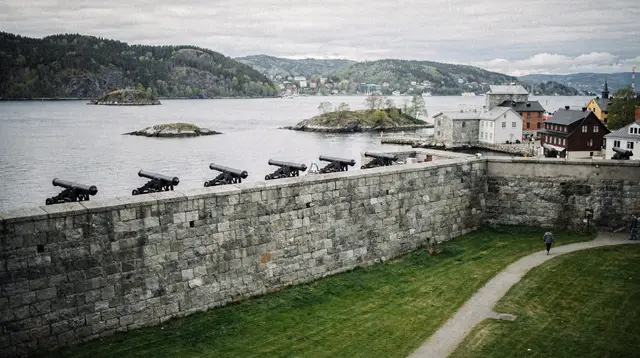
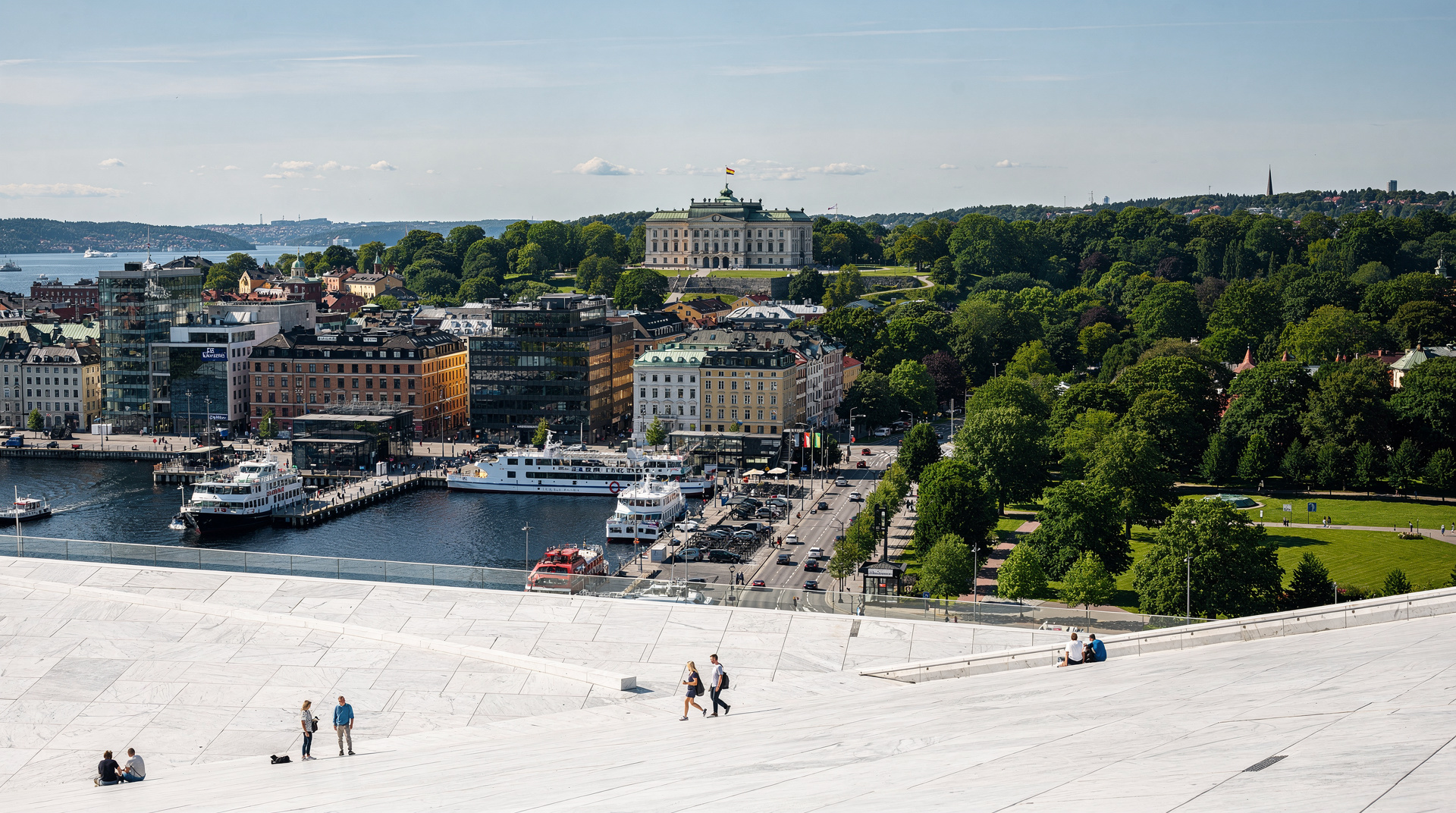
The outer walls and ramparts are the main free attraction. Walk the perimeter facing the fjord for the best harbour views in central Oslo: the Oslofjord below, Bygdøy to the west, Bjørvika and the Opera House to the east. On a clear day the view extends to the hills on the far side of the fjord.
Akershus Castle exterior dominates the inner courtyard. The original medieval structure was transformed into a Renaissance castle by King Christian IV of Denmark-Norway in the early 17th century. The exterior is imposing — thick stone walls, round towers, and a formal courtyard — but relatively plain compared to Danish or German contemporaries of the same period.
The Slottskirkegården (castle churchyard) contains the graves of Norwegian royalty including King Haakon VII (died 1957) and his wife Queen Maud. The chapel is sometimes open.
The inner courtyards feel genuinely medieval when you stand in them. There’s a small café near the entrance operating in summer.
Akershus Castle interior: is it worth the admission?
The castle interior tour, available May to September, costs approximately NOK 130 (USD 14). The rooms are not particularly furnished — this is not a Versailles-style palace with original royal interiors — but the medieval basement, the Great Hall, and the chapel have an atmosphere that partly rewards the entry fee. Guided tours include the dungeons, which were used as prison cells well into the 19th century.
Our honest verdict: skip the castle interior unless you are specifically interested in medieval Norwegian history. The Resistance Museum, which costs slightly less, is more rewarding.
The Resistance Museum: Oslo’s most underrated museum
The Norwegian Resistance Museum (Norges Hjemmefrontmuseum) sits inside the fortress walls and tells the story of Norway’s occupation by Nazi Germany and the organised resistance from 9 April 1940 to 8 May 1945.
Admission: NOK 80 (USD 9). Free with Oslo Pass.
The museum is compact — allow 60 to 90 minutes — but dense. Exhibits cover:
The occupation: The German invasion began at 4am on 9 April 1940. Within hours, the government had fled Oslo and the King had refused capitulate. The museum documents both the immediate military defeat and the early resistance.
The Norwegian Nazification attempt: The Nasjonal Samling party under Vidkun Quisling collaborated with occupiers. The museum covers their attempts to Nazify schools, churches, and civic organisations — and the systematic civil disobedience that defeated most of these attempts.
The Home Front: Organized resistance included intelligence networks, a secret press, rail sabotage, and escape routes to Britain and Sweden. The museum has original documents, radio transmitters used by resistance cells, and photographs from the period.
The Holocaust in Norway: 773 Norwegian Jews were deported to Auschwitz on the transport ship Donau in November 1942. Only 38 survived. The museum covers this with appropriate directness.
Liberation: The story of May 1945 and the return of the government and King from exile.
The museum uses original artefacts — clothing, weapons, documents, photographs — rather than reconstructions. The effect is sobering. Stand in the courtyard where resistance fighters were executed and the ground-level history becomes tangible.
For a deeper understanding of Oslo’s WWII history, the private Oslo WWII history walking tours extend the context into the surrounding city.
The Norwegian Armed Forces Museum
A second museum inside the fortress covers Norwegian military history from Viking-era longships to Cold War. Less emotionally resonant than the Resistance Museum, more encyclopaedic. Worth a look if you have time after the Resistance Museum.
Admission: NOK 100 (USD 11). Free with Oslo Pass.
Seven centuries of Oslo’s history in one place
Akershus is not just a tourist site — it is the physical record of seven centuries of Norwegian political and military life. Walking through it is a compressed history lesson.
1299: King Haakon V establishes his main court at Oslo and begins construction of the fortress, recognising that the harbourside headland is the natural defensive position for the new capital.
1308: The fortress withstands its first siege, by Duke Erik of Sweden. The original medieval castle is functional rather than palatial — a military installation, not a royal residence.
Early 1600s: King Christian IV of Denmark-Norway transforms the medieval castle into a Renaissance palace in the style of the period. The outer walls are reinforced, the towers are rebuilt, and the inner keep is redesigned with formal rooms for court use. The fortress takes on its current basic form during this period.
1814: Norway dissolves its union with Denmark and establishes its own constitution. Akershus serves as the seat of Swedish-Norwegian administrative authority during the union period that follows (1814-1905).
April 9, 1940: German forces invade Oslo. The Norwegian government and royal family flee north in the early morning hours. By midday, German troops occupy Akershus Fortress. It becomes the headquarters of the occupying administration and a detention facility for political prisoners.
May 8, 1945: Liberation. German forces surrender in Norway. Vidkun Quisling is subsequently arrested, tried, and executed by firing squad in the Akershus courtyard on October 24, 1945 — the man who collaborated with the occupiers executed in the fortress he helped run.
Present: The Norwegian Armed Forces still maintain a presence at Akershus. Ceremonial functions, including military funerals and flag ceremonies, take place in the fortress grounds. The Royal Mausoleum, containing the graves of King Haakon VII and Queen Maud, is within the fortress walls.
The view from the walls
One element of Akershus that guides often underestimate: the view. Stand on the ramparts facing south over the Oslofjord and you see what every Norwegian king since Haakon V has seen — the harbour mouth, the ships coming and going, the gentle hills across the water. On a clear day the view extends to the islands and the fjord narrows.
This view is the practical reason the fortress exists here. Akershus controls the entrance to the Oslo harbour. Any ship bringing troops, supplies, or authority to the Norwegian capital had to pass under these guns. The fortress was never taken by direct assault — the Germans in 1940 didn’t capture it in battle but occupied it because the Norwegian defences were overwhelmed elsewhere before they could be organized.
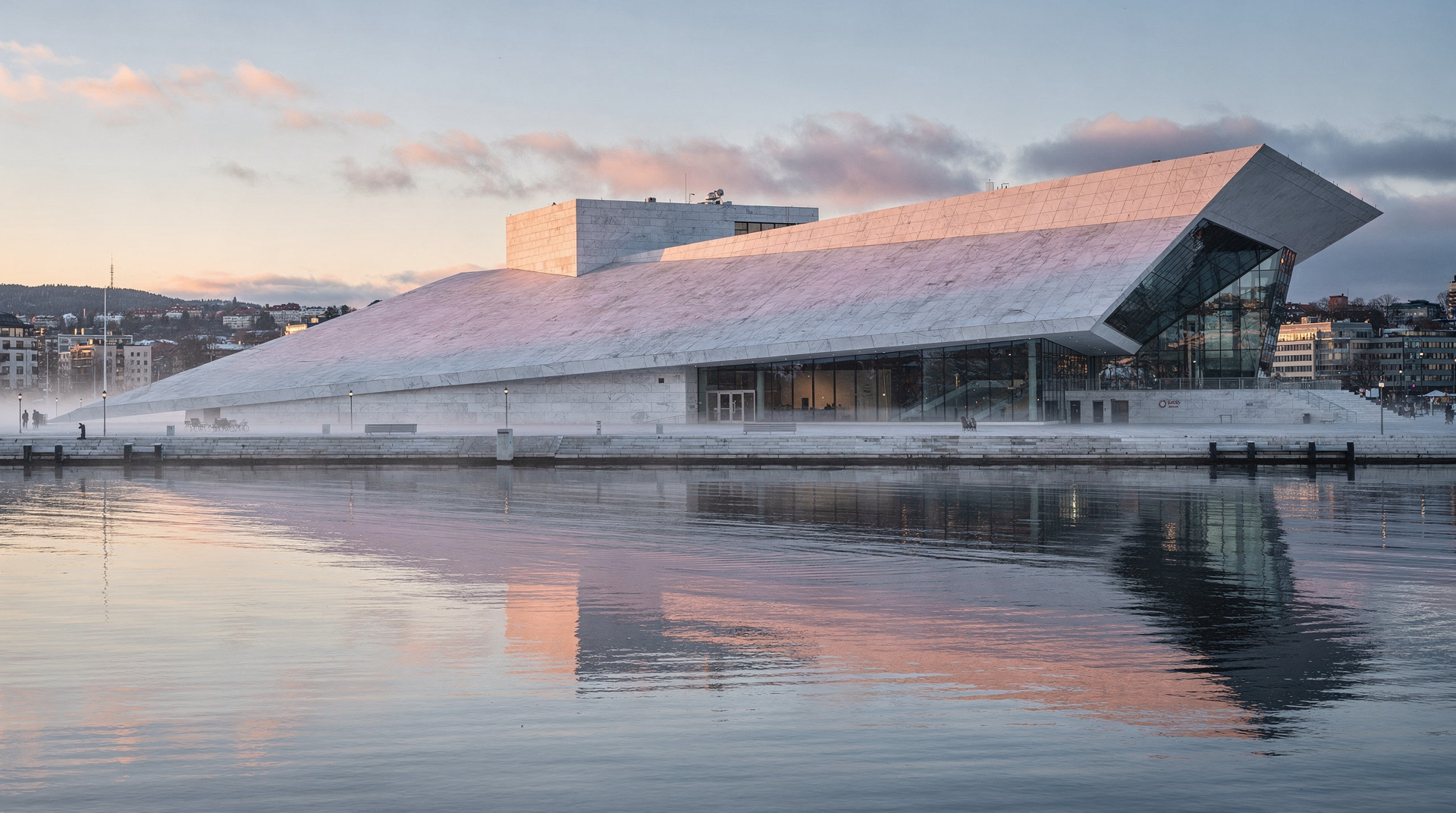
The panoramic view from the south ramparts also shows how much the harbour has changed. The Opera House at Bjørvika — now visible to the east — sits on what was an industrial port a generation ago. The Renzo Piano buildings at Tjuvholmen, visible to the west, are on land reclaimed from the fjord.
The execution courtyard
Near the main entrance to the fortress interior, a plaque marks the courtyard where executions took place during the German occupation. Thirty-seven Norwegian resistance fighters were shot here between 1942 and 1945. The courtyard is a plain cobbled space that gives no immediate impression of drama. The plainness is part of the point — ordinary spaces become extraordinary through the events that happen in them.
Reading the Resistance Museum first, then standing in this courtyard, changes what you see. The plaque lists names and dates. The names have faces in the photographs inside.
The Akershus Mystery Tour
For an evening activity, the mystery tour of Akershus explores the fortress at dusk with a focus on its history as a prison and site of execution. The format is part historical tour, part theatrical experience — not a horror attraction but a genuinely atmospheric evening exploration of Norway’s oldest fortress building. A good choice if you’ve already done the daytime museums.
What to wear and practical preparation
The fortress grounds involve uneven cobbled surfaces and some steep paths on the ramparts. Comfortable shoes with grip are important — in wet weather, the cobblestones become slippery. The site is exposed to wind off the fjord; even on warm summer days, the ramparts feel cooler than the city streets below.
In summer: Light layers are usually sufficient. The terrace facing the fjord is a good spot for a packed lunch in sun.
In winter: The fortress grounds are open but the winter atmosphere is stark rather than cosy. The museums are heated. Come for the Resistance Museum in winter rather than for outdoor exploration.
Photography: No restrictions on photography in the outdoor areas. The museums ask for flash-free photography inside; the Resistance Museum specifically asks visitors not to photograph the execution memorial plaque without reflection.
Guided tours of the grounds: Oslo-based history tour operators include Akershus on the standard WWII walking tour routes. A guided evening walk through the fortress with specialist historical knowledge adds significant depth — particularly for the WWII period, where a knowledgeable guide can identify the specific buildings and spaces involved. See the Oslo walking tours guide for the WWII-specialist operators.
Rainy day and winter planning
Akershus works reasonably well as a wet-weather destination because the Resistance Museum and Armed Forces Museum are both indoor and heated, even though the grounds themselves are exposed. If the forecast is poor, plan the museums first and save the ramparts walk for a clearer window later in the day — the harbour view is the whole point of walking the walls, and rain flattens it considerably. For other indoor options on a genuinely wet day, see the rainy day museums guide. In winter, the fortress grounds stay open on their shorter hours and the Resistance Museum’s low light and original artefacts feel, if anything, more atmospheric against a dark, cold Oslo afternoon.
How Akershus compares to Oslo’s other free sights
Oslo has a genuinely good stock of free attractions, and Akershus sits near the top of it because it pairs a free landscape (the ramparts and views) with a paid but affordable museum (the Resistance Museum) rather than being free-only. For a broader list of no-cost options across the city — Vigeland Sculpture Park, the Opera House roof, the harbour promenade — see the free things to do in Oslo guide. If budget is a central concern for your trip, the Oslo on a free-things budget guide builds a fuller day around sights like this one that cost nothing beyond transport.
Photography and the best time of day
The fortress ramparts photograph best in the low, angled light of early morning or the last two hours before sunset, when the stone walls take on a warm colour and the harbour water is calmer before the day’s boat traffic builds. Midday light on a bright summer day flattens the stone and washes out the fjord in glare, so if photography matters to your visit, plan around the edges of the day rather than the middle.
Winter afternoons, when the sun sits low even at midday, give consistently good light across several hours — a small compensation for the shorter daylight window. The view east toward the Opera House at Bjørvika is especially strong at golden hour, when the glass and marble of the newer buildings catch the same light as the medieval stone.
Combining Akershus with the Aker Brygge and Tjuvholmen waterfront
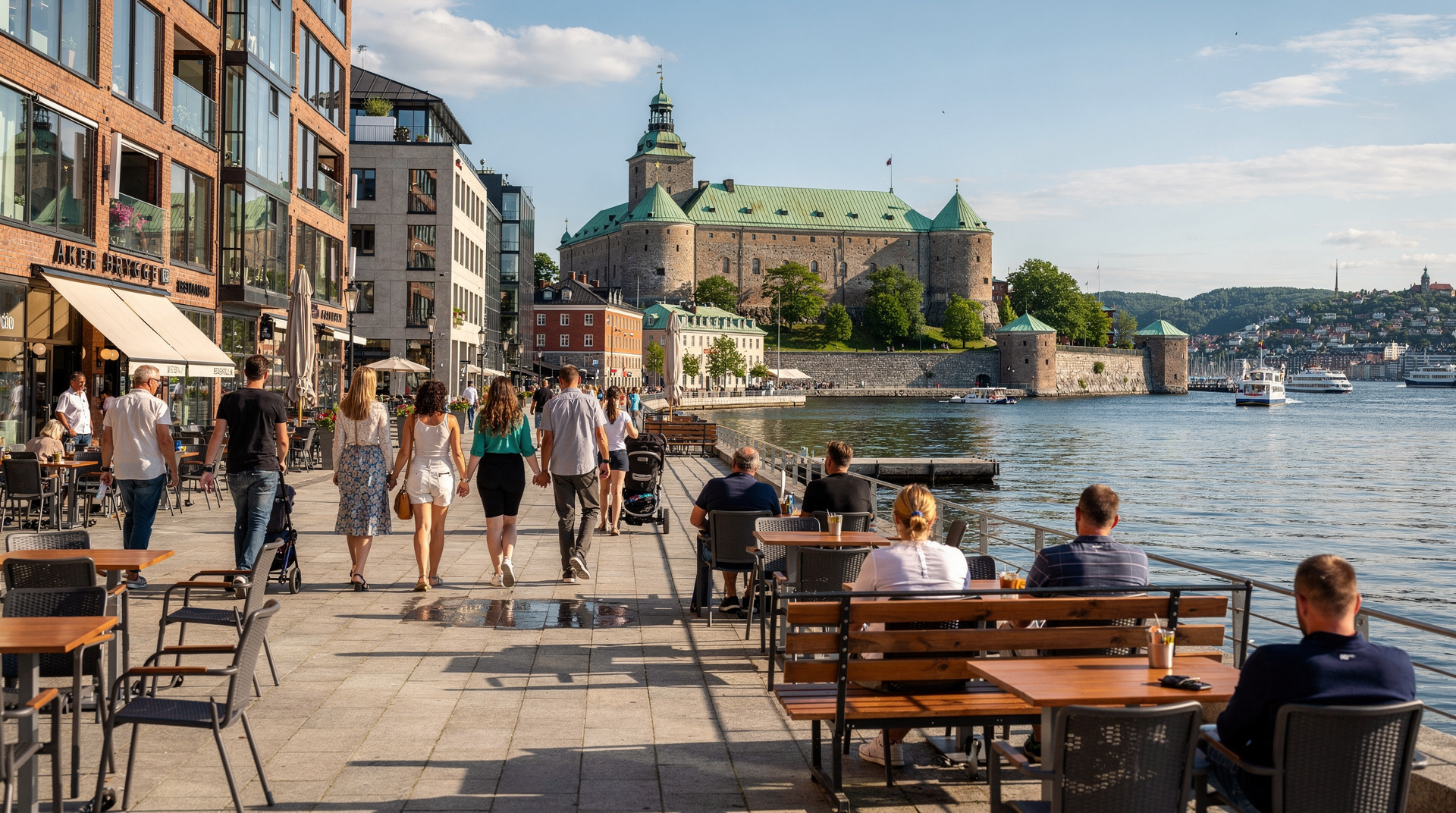
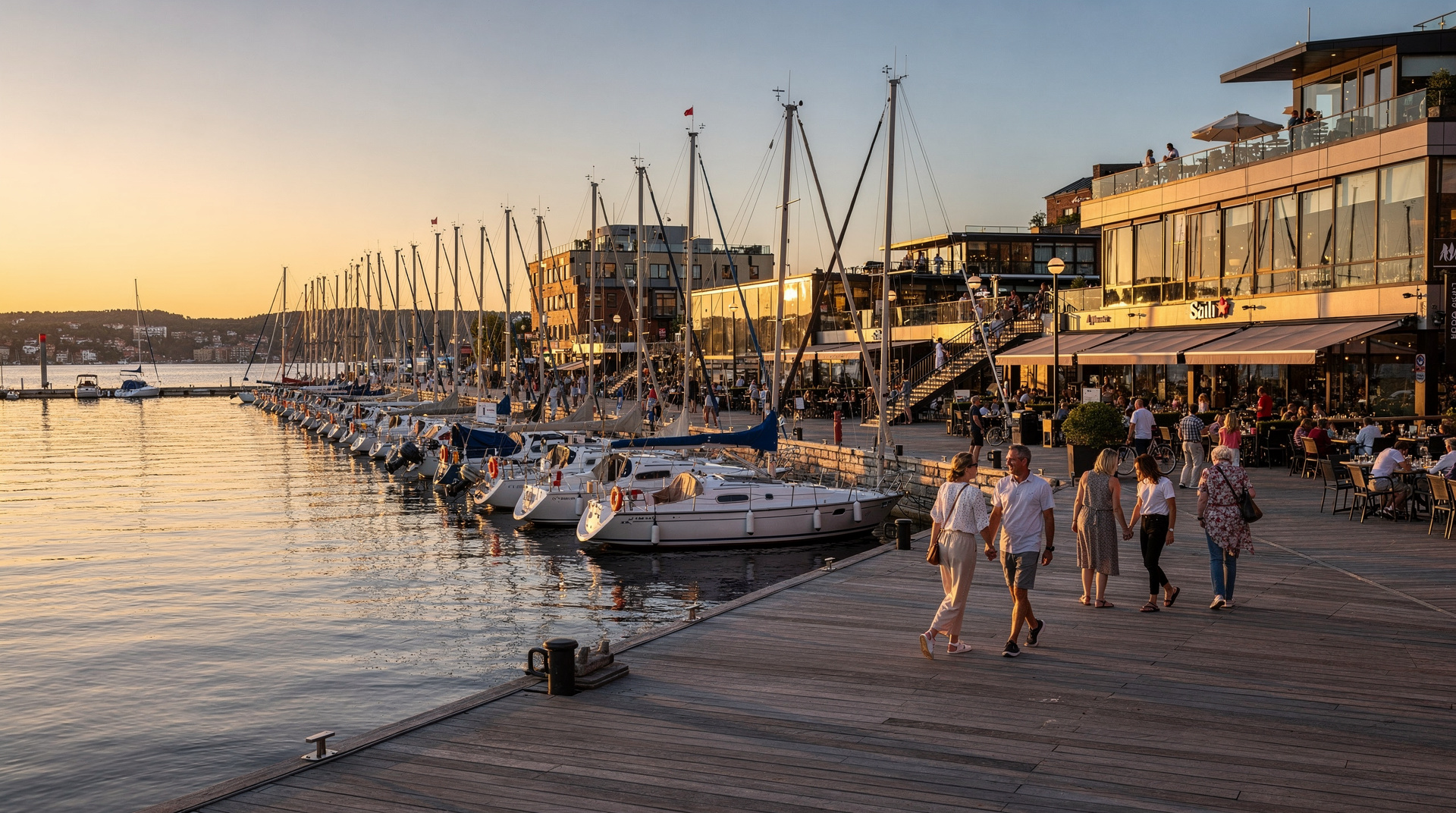
Because Akershus sits directly between Oslo S and the modern waterfront district, it functions as a natural hinge point for a longer harbourside walk rather than an isolated stop. Starting at the fortress in the morning and walking west takes you past Aker Brygge and Tjuvholmen within twenty minutes, giving you medieval history, a harbourfront lunch, and contemporary architecture and art in a single continuous route without doubling back. This is one of the more efficient ways to structure a first full day in Oslo, and it avoids the common mistake of treating each waterfront site as a separate outing requiring its own transport leg.
Getting to Akershus
Walking from the centre: From Oslo Central Station, walk south on Prinsens gate and follow the signs toward the waterfront. The fortress is visible on the headland — about 10-15 minutes. The approach from Aker Brygge is equally pleasant: walk east along the waterfront for 10 minutes.
Tram: Tram 12 to Christiania torg, then walk uphill for 5 minutes to the main gate.
Ferry: In summer, the harbour ferry from Aker Brygge passes below the fortress walls — you can see the ramparts from the water but cannot access the site from the pier.
Visiting hours and practicalities
The fortress grounds are open:
- Summer (May-September): 6am to 9pm daily
- Winter (October-April): 8am to 8pm daily
Akershus Castle interior tours run May to September; exact times vary. The Resistance Museum opens daily (10am-5pm in summer, shorter hours in winter). The Armed Forces Museum keeps similar hours.
The fortress hosts occasional evening events — concerts in the courtyard, open-air theatrical performances in summer. Check the fortress website (akershus-festning.no) for the calendar.
Dogs: the grounds are dog-friendly; museums are not.
Combining Akershus with a day itinerary
Akershus pairs naturally with Aker Brygge (10-minute walk west) and the waterfront walk toward the Opera House (15 minutes east). A logical morning: arrive at Akershus at 10am, do the Resistance Museum (90 minutes), walk the walls (30 minutes), then walk to Aker Brygge for lunch, and continue along the harbour to the Opera House.
If you’re also visiting the National Museum (near Aker Brygge) and the Munch Museum (at Bjørvika), this entire route takes one full day and covers three major sites plus two free ones. See the Oslo in 1 day itinerary for a timed version.
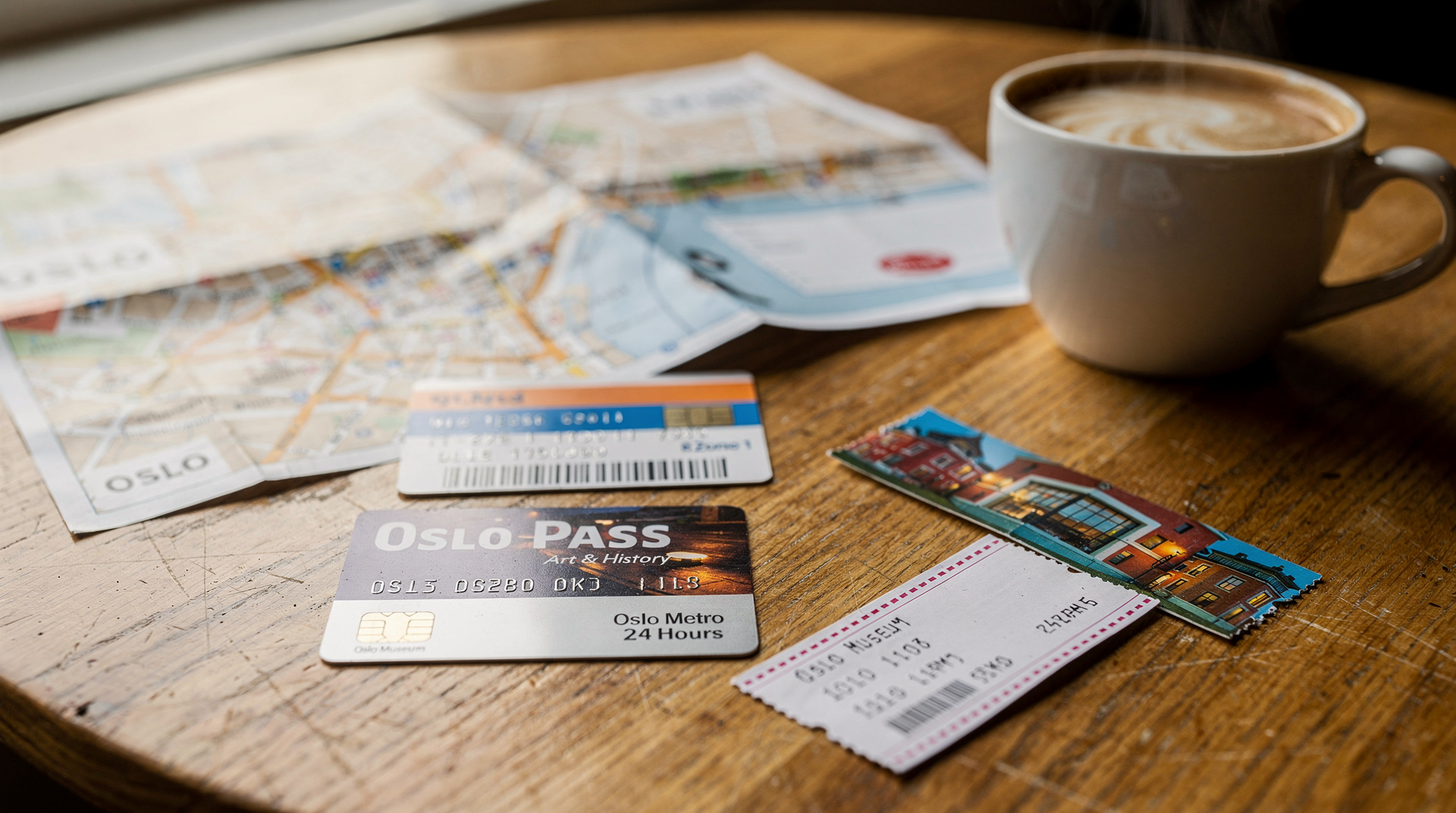
The Oslo Pass covers the Resistance Museum, Armed Forces Museum, and all tram/bus transport — check whether it makes financial sense for your planned day before buying.
Frequently asked questions about Akershus Fortress guide
Is Akershus Fortress free to visit?
The fortress grounds, ramparts, and outer courtyards are free. The Resistance Museum and Norwegian Armed Forces Museum inside the walls charge admission (NOK 80-100 / USD 9-11). All museums inside are free with the Oslo Pass.Can you go inside Akershus Castle?
Akershus Castle (the medieval royal castle building inside the fortress) is open for guided tours in summer, typically May to September. Entry costs approximately NOK 130 (USD 14). In winter the interior is closed except during special events.How long should I spend at Akershus Fortress?
One to two hours for the grounds and Resistance Museum. Add 45 minutes if you take the castle interior tour. The site is compact — you won't need a full day, but you'll need more than a quick pass-through to appreciate the Resistance Museum.How do I get to Akershus Fortress?
Walk 10-15 minutes downhill from Oslo Central Station or along the waterfront from Aker Brygge. Alternatively, tram 12 stops at Christiania torg, a five-minute walk uphill to the main gate. No dedicated public transport stop for the fortress itself.Is the Resistance Museum appropriate for children?
The Resistance Museum deals with occupation, executions, and the Holocaust in Norway. It is designed for adults and older teenagers. The subject matter is handled respectfully but unflinchingly. Children under 12 may find it disturbing. The fortress grounds and views are family-friendly regardless.What was Akershus used for during World War II?
Akershus Fortress was seized by German forces on 9 April 1940 and used as their headquarters during the occupation of Norway. Norwegian resistance fighters and political prisoners were executed on the grounds. The castle served as a detention facility until liberation in May 1945.Is Akershus Fortress good for kids?
The outdoor grounds, ramparts and harbour views work well for families and cost nothing. The Resistance Museum's content on executions and the Holocaust is heavy for young children, so plan the grounds walk as the family portion and let older teenagers or adults linger longer in the museum itself.Can you combine Akershus with the Oslo Pass?
Yes. The Oslo Pass covers admission to the Resistance Museum and the Armed Forces Museum inside the fortress, plus all Ruter tram and bus travel to get there. It doesn't cover the separate Akershus Castle interior tour, which is ticketed on its own. Work out whether your planned museum visits justify the pass cost first.
Top experiences
Bookable activities with verified prices and instant confirmation on GetYourGuide.