Oslo walking tours compared: free vs paid vs private
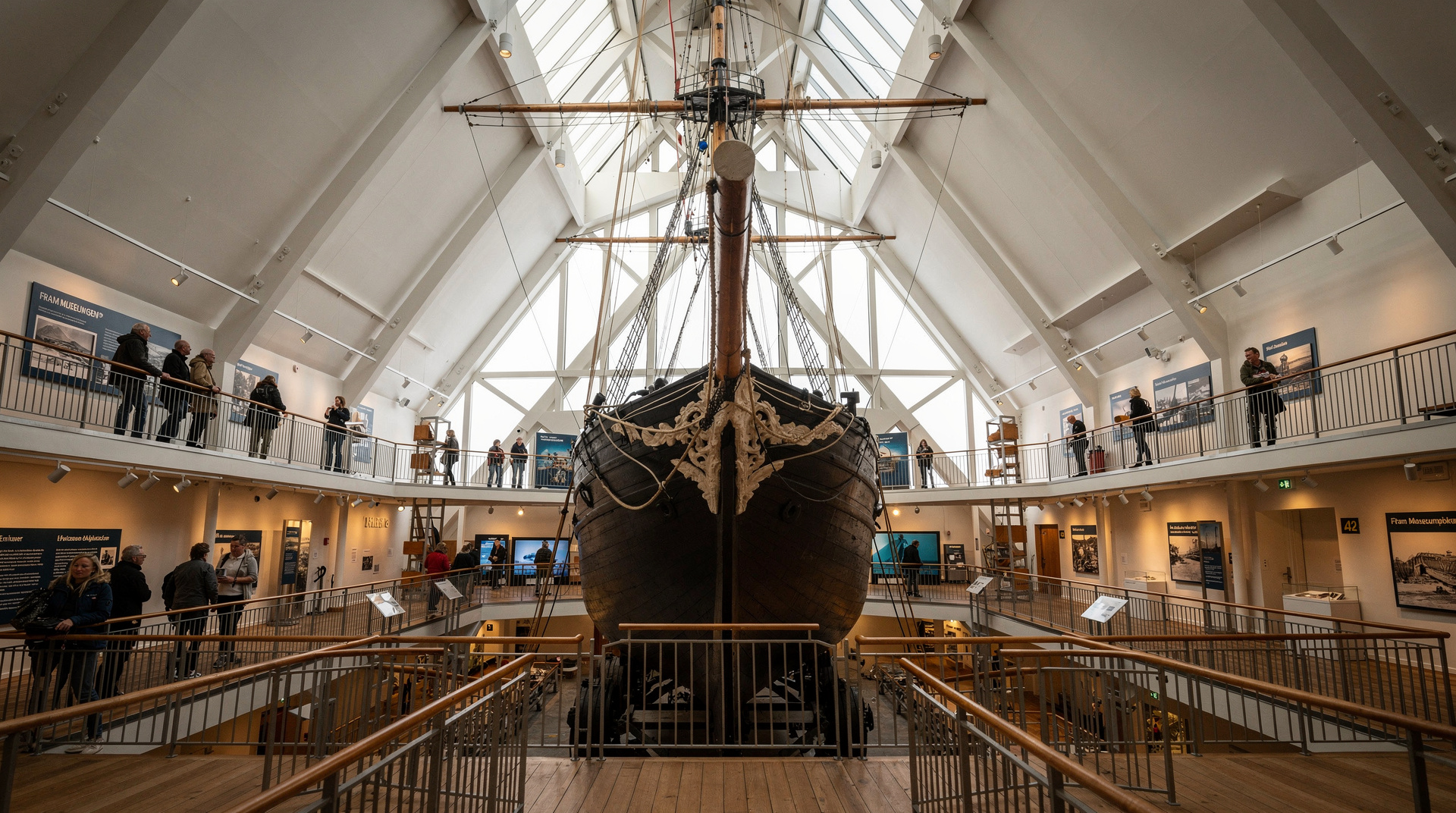
Oslo: city highlights walking tour
Duration: 2.5 hours
- Free cancellation
- Local guide
What is the best walking tour in Oslo?
For first-time visitors wanting an overview, the 2-hour central Oslo walking tour with a local guide offers good value at around NOK 250-300 (USD 27-32) per person. For families or those with specific interests (WWII, food), specialist tours are worth the premium. Private walking tours are the best way to customize your Oslo experience to your exact interests.
Why the right walking tour matters in Oslo
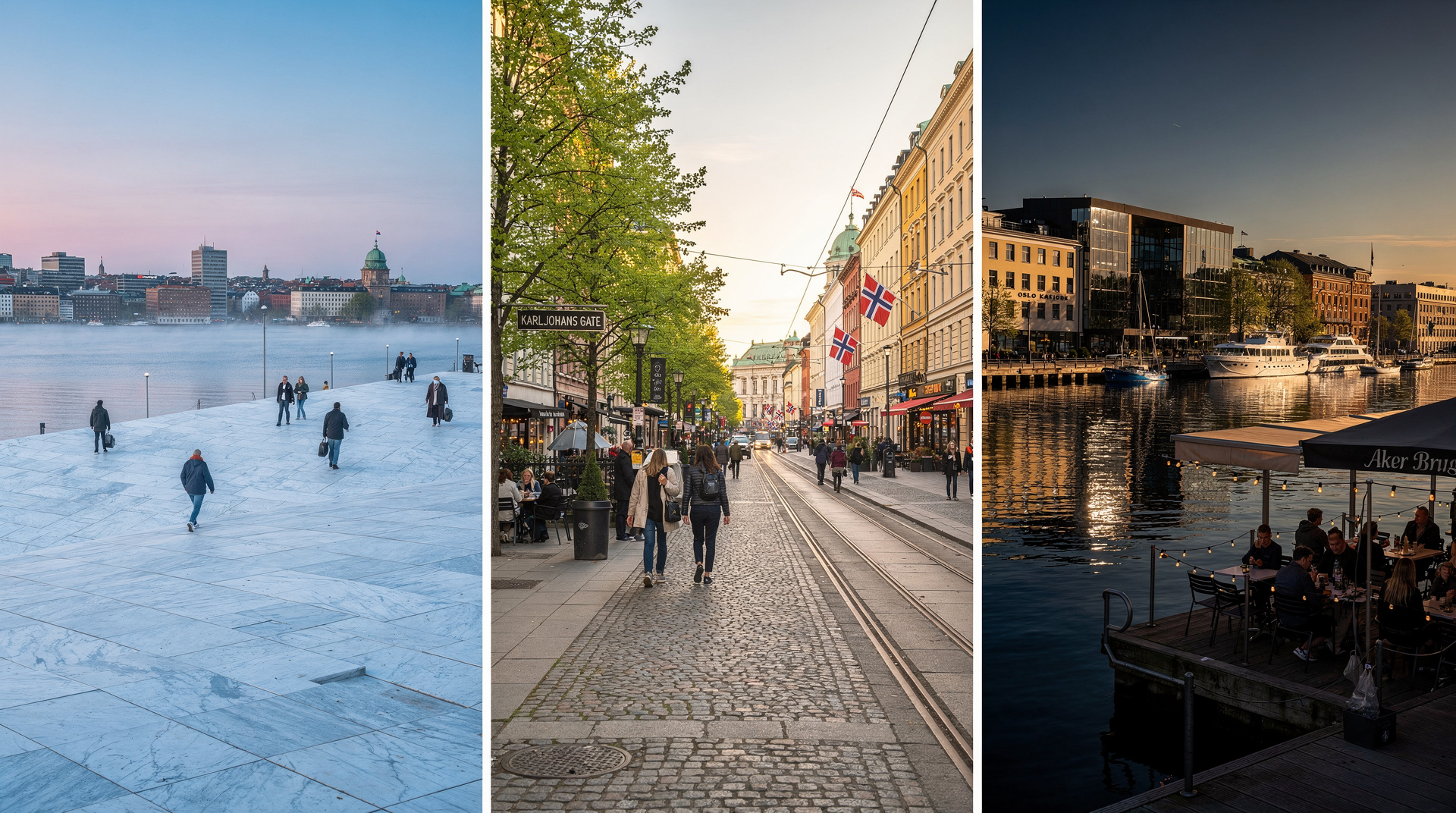
Oslo rewards guided walking more than many European capitals because the best stories are not visible from the outside. The building at Karl Johans gate 33 looks like an office block; it was the Gestapo headquarters during the occupation. The church in Grünerløkka has a graveyard that tells the city’s immigration history. The quayside at Aker Brygge was where German troops were disembarked in April 1940.
A good guide connects these layers. A bad one tells you the population of Norway and asks if you have questions. This guide helps you find the former.
| At a glance | |
|---|---|
| Where | Departs Rådhusplassen or Jernbanetorget (standard); varies for private/specialist |
| Cost | Free (tip-based) to around NOK 2,500–4,000 for a private full day |
| Time needed | 2 hours (standard) to a full day (private/specialist) |
| Best for first-timers | 2-hour paid small-group city-centre walk |
| Booking | Free tours: none needed. Paid/private: 24–48 hrs ahead in July |
Format 1: Free walking tours (tip-based)
Several companies run free tours of central Oslo on a tip-based model — no upfront charge, guides work for what you leave at the end. Tours typically depart from Rådhusplassen (City Hall square) or Jernbanetorget at set times (10am and 2pm are common).
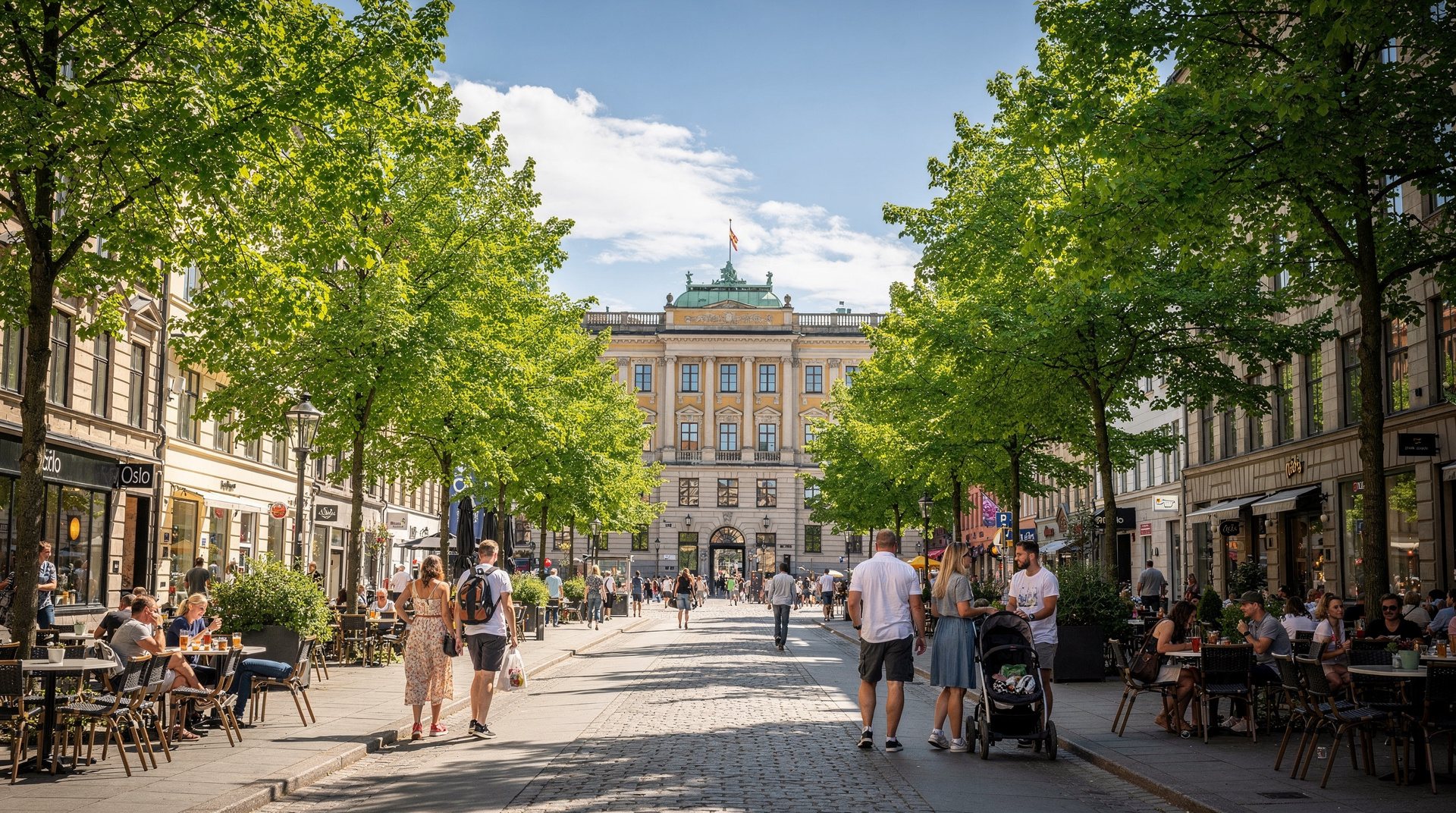
What they cover: Karl Johans gate, the Parliament, National Theatre, Akershus Fortress exterior, Aker Brygge. The core monumental city centre.
Duration: 2 hours.
Tip guidance: NOK 100 to 200 (USD 11 to 22) per person is standard for a good tour. Don’t leave less than NOK 50 (USD 5) — guides invest 2 hours of professional knowledge. If your guide is genuinely excellent, NOK 250+ is warranted.
Honest assessment: Quality varies enormously by guide, not just company. The same company can have one guide who’s a genuinely knowledgeable Oslo local with stories you’ll remember, and another who recites facts you could get from Wikipedia. Arrive early, talk to the guide before the tour starts, and switch if the energy isn’t right.
Tip for timing: Come for the afternoon departure (2pm) when crowd sizes are typically smaller than the morning.
Format 2: Paid small-group tours
Small-group guided walks with a set entry price typically cover the same city-centre territory as free tours but in smaller groups (8-12 people vs sometimes 25-40 on free tours) and with more curated guides. Prices run NOK 250 to 350 (USD 27 to 38) per person for standard tours.
The central Oslo walks cover:
- Jernbanetorget and Oslo Central Station
- Stortinget (Parliament)
- Karl Johans gate highlights
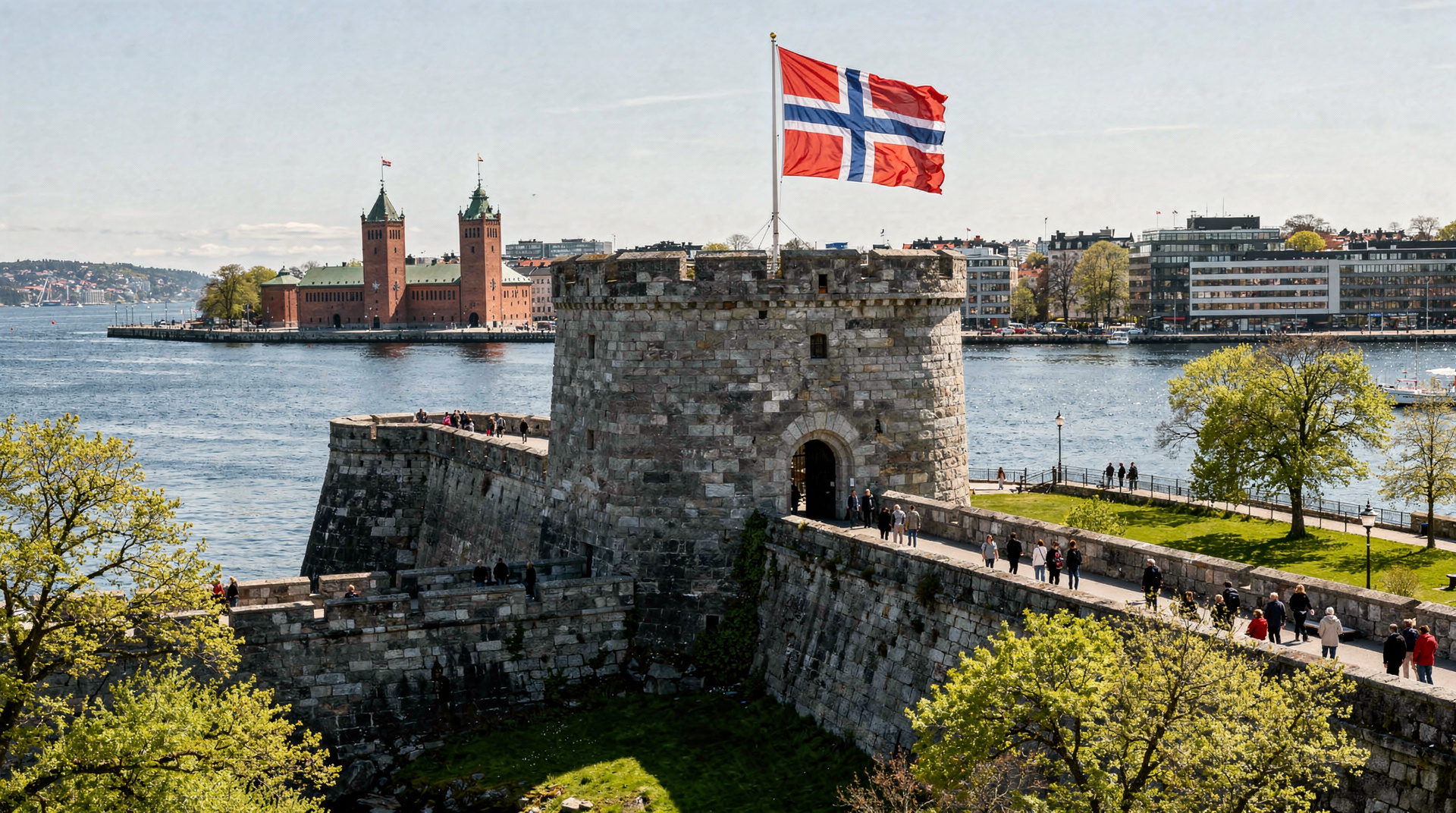
- Akershus Fortress exterior and history
- Aker Brygge and the harbour
For a 4-hour extended city walk, guides take in Grünerløkka or Bygdøy in addition to the centre.
When paid group tours are worth the premium over free tours: You want a guaranteed small group, you’re visiting in peak season when free tours swell, you want the certainty of a pre-vetted guide, or you’re booking for a group of friends who want the same experience simultaneously.
Format 3: Private walking tours
Private tours — a guide entirely to yourself or your group — are the best Oslo walking experience if the budget allows. Private guides adapt pace, language, content, and routes entirely to your interests.
Private 2-hour tours start around NOK 1,200 to 1,800 (USD 129 to 194) for the whole group. For families or small groups of 4+, this is comparable per-person cost to a paid small-group tour while offering complete flexibility.
What private tours can do that group tours can’t:
- Start from your hotel rather than a central meeting point
- Focus entirely on a neighbourhood that interests you
- Skip the things you’ve already seen
- Adjust walking pace for children, elderly travellers, or mobility needs
- Dive deeper into any topic (WWII, architecture, food culture, Viking history)
Best uses of private tours in Oslo: a half-day neighbourhood deep-dive in Grünerløkka, a full-day Bygdøy peninsula walk with museum integration, or a bespoke first day that substitutes for the hop-on hop-off bus.
Specialist formats: themed walking tours
WWII and Resistance history
The Nazi occupation of Norway from 9 April 1940 to 8 May 1945 left physical traces across central Oslo that most general city tours don’t fully address. Specialist WWII tours cover:
- Akershus Fortress as German headquarters
- The locations of Gestapo interrogation rooms
- The deportation of Norwegian Jews (November 1942)
- The Home Front resistance cells and their Oslo base
- Liberation on 8 May 1945
A private WWII tour, combined with the Resistance Museum, is the most complete way to understand this period. Highly recommended for visitors with an interest in 20th-century European history.
Evening and dark history tours
Evening tours of Akershus Fortress and old Oslo focus on the fortress’s history as a prison and execution ground. These are atmospheric rather than horror-focused — the guide emphasises historical fact (prisoners executed in the courtyard, including Quisling’s collaborators at the end of the war) rather than ghost-story theatrics. Good for adults, slightly long for children.
Neighbourhood tours: Grünerløkka
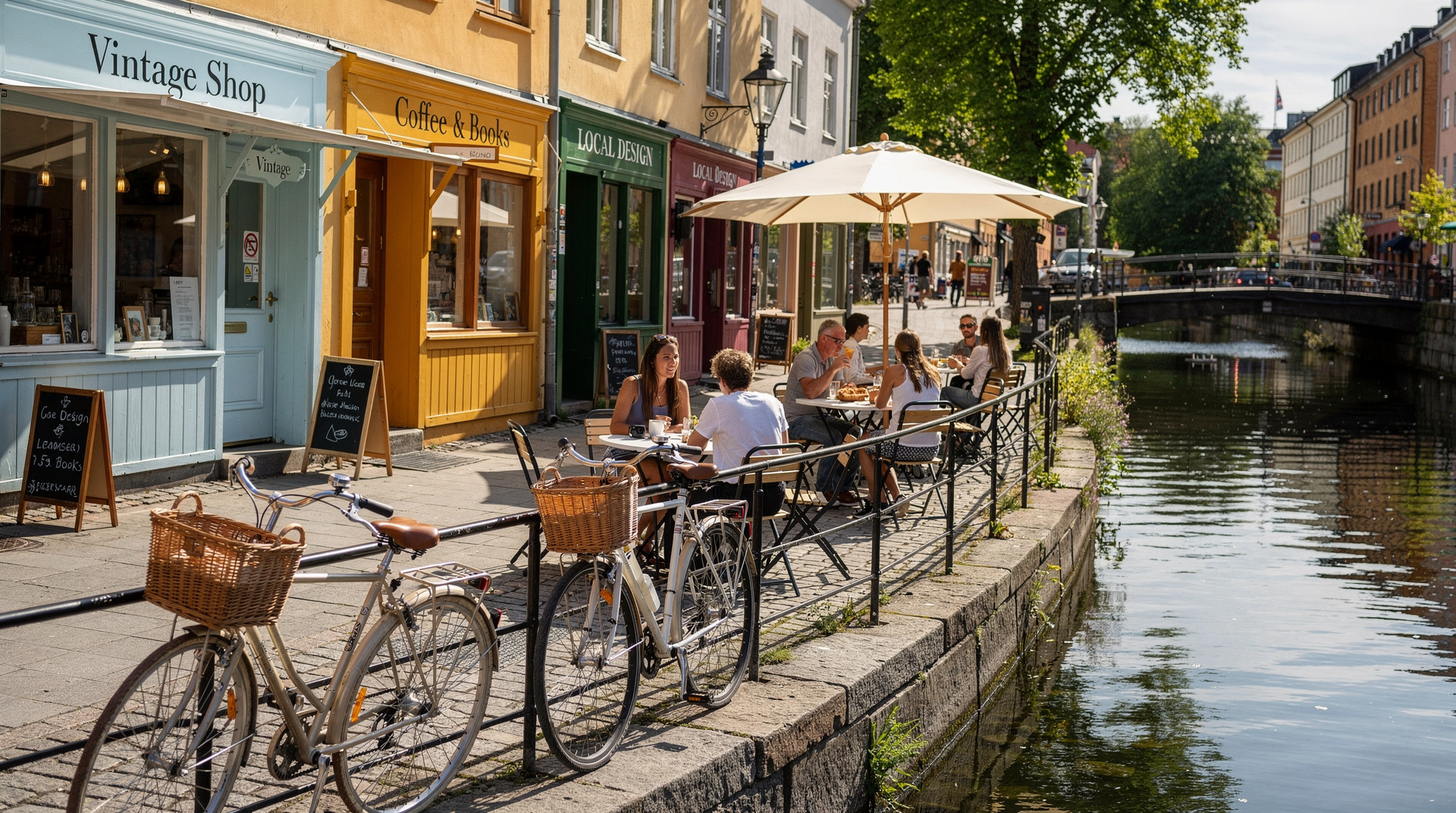
The Grünerløkka neighbourhood has its own specialist tours covering the coffee culture, street art, the industrial history along the Akerselva river canal, and the immigrant communities that shaped it. These tours don’t compete with the city-centre circuits — they’re for a second day, or for visitors who specifically want to understand contemporary Oslo rather than its monuments.
How Oslo walking tour duration and price compare
| Type | Duration | Price per person | Group size |
|---|---|---|---|
| Free (tip-based) | 2 hours | NOK 100-200 tip | 15-40 |
| Paid standard | 2-2.5 hours | NOK 250-350 | 8-15 |
| Paid extended | 3.5-4 hours | NOK 350-500 | 6-12 |
| Private 2-hour | 2 hours | NOK 300-450 (whole group) | 1-8 |
| Private full day | 5-7 hours | NOK 2,500-4,000 (whole group) | 1-8 |
Prices are approximate for 2026. Private tour prices cover the group, not per person.
What makes a good Oslo guide
The quality of an Oslo walking tour depends almost entirely on the guide, not the company or the tour format. The best guides share certain characteristics:
They know the city as residents. A guide who lives in Grünerløkka, drinks at the cafés they recommend, and cycles the harbour path on weekday mornings gives you a different Oslo than a guide who has memorized a script.
They tell you what NOT to do. The restaurants on Karl Johans gate are poor value. The “Viking experience” attractions near the station are tourist traps. The northern lights tours departing from Oslo are selling something that cannot be delivered. A good guide says these things.
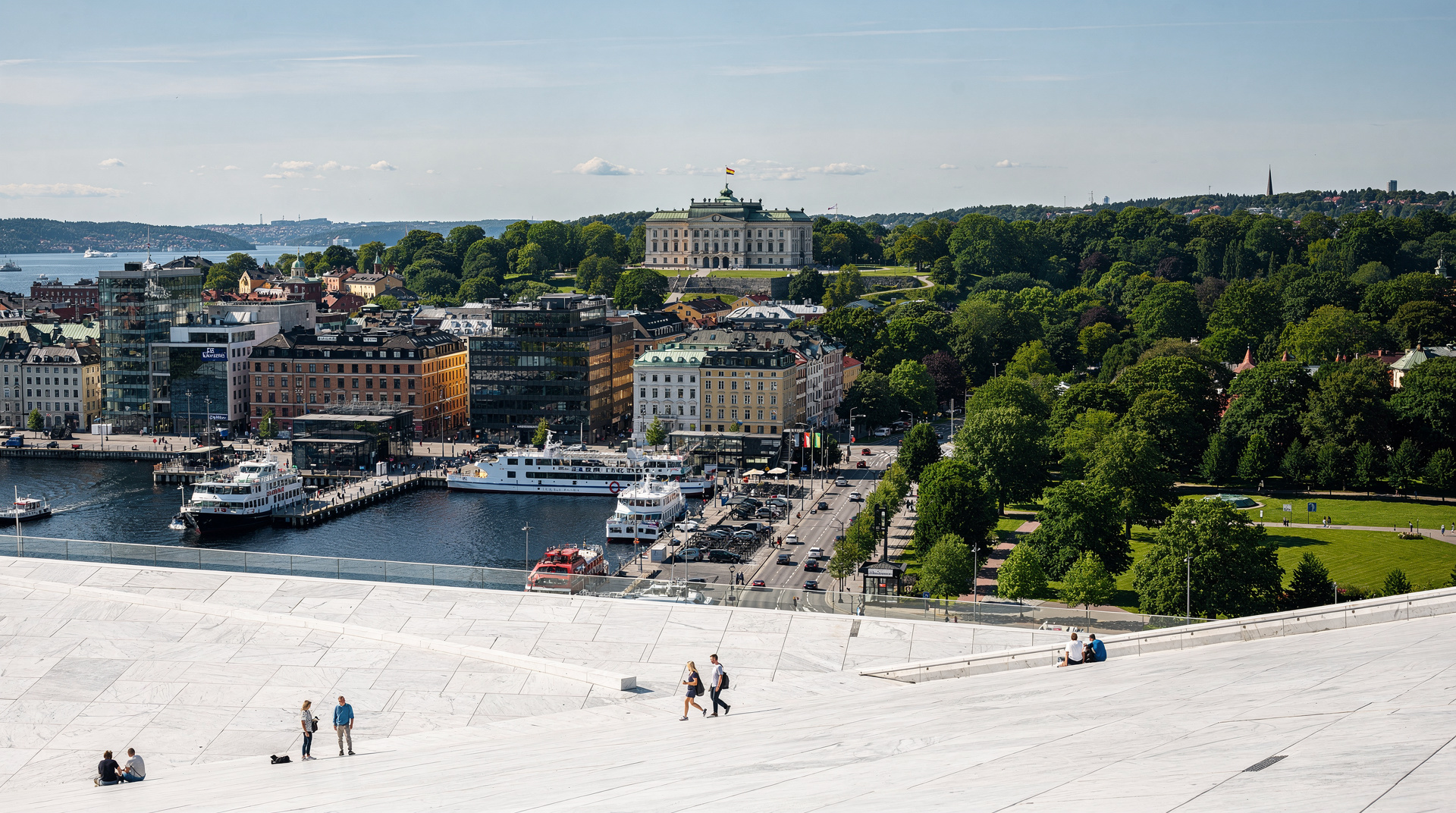
They adapt to the group. A private guide with a retired architect in the group will spend longer on Snøhetta’s Opera House than the script planned. A guide with teenage students will adjust the WWII content for emotional accessibility. The best guides read their audience continuously.
They have specific knowledge of their speciality. The WWII guides know the specific buildings where events happened — not generalised “the Germans occupied Oslo” but “that building on the corner was the Gestapo interrogation facility; there is a plaque, but most people miss it.” Specificity is the mark of genuine expertise.
How to assess a guide before committing: Talk to the guide for two minutes before the tour starts. Ask one specific question about something on the route — a building, an event, a neighbourhood. If the answer is general and scripted, the tour will be the same. If the answer is specific and comes from obvious personal knowledge, you’re in good hands.
Oslo on foot: the distances that matter
Understanding the walking distances helps you decide how much structure you need:
- Oslo Central Station to Royal Palace: 1.3 km (20 minutes at tourist pace)
- Royal Palace to Vigeland Park: 1.2 km (15 minutes)
- Central Station to Akershus Fortress: 1.1 km (15 minutes)
- Aker Brygge to Tjuvholmen: 0.9 km (12 minutes)
- Opera House to Munch Museum: 0.8 km (10 minutes)
- Aker Brygge ferry to Bygdøy: 2.4 km by boat (10 minutes), or bus 30 (15 minutes)
A visitor who can walk 4-5 km per day can self-guide the entire city centre without a bus or tour. The areas where a guide adds the most value are not the walking distances but the interpretive content — the stories that make the walk meaningful rather than merely a transit between landmarks.
Combining a walking tour with Oslo Pass
The Oslo Pass covers museum admissions and Ruter transport but does not include walking tours. If you want both a guided walk and museum access, budget separately: walking tour NOK 250-350 per person plus Oslo Pass NOK 595 for the day.
Some guided walk providers include discounts at specific museums or partner attractions. Ask when booking.
Solo travellers and walking tours
Walking tours are one of the best value activities for solo Oslo visitors — a free or paid group tour costs the same per person whether you’re travelling alone or with three friends, and it’s a natural way to get oriented and pick up other travellers’ recommendations on your first day. Private tours lose their per-person value advantage for solo travellers (you’re covering the whole group rate alone), so a solo visitor is usually better served by a paid small-group format than a private guide. See the solo travel in Oslo guide for how a walking tour fits into a wider solo itinerary.
Neighbourhood tours vs city-centre tours: which to choose
City-centre tours (covering Karl Johans gate, the Parliament, Akershus, Aker Brygge) are the right choice for a first day in Oslo — they give context, orientation, and historical grounding.
Neighbourhood tours (Grünerløkka, Grønland, Tjuvholmen) are better for repeat visitors or for people who specifically want to understand how Oslonians live rather than how the city presents itself to tourists. Grünerløkka in particular rewards a specialist guided walk — the neighbourhood’s transformation from industrial district to creative hub to gentrified café culture is a compressed version of how Oslo has changed in 30 years.
What the tours do NOT replace
Walking tours cover the city’s built surface. They don’t give you the time needed to go deep inside the major museums. After a good walking tour orientation on day one, plan your museum time on days two and three independently.
For museum planning: Oslo’s best museums ranked and the Oslo Pass guide help you prioritise. For combining a walking orientation with specific site visits, see the Oslo in 2 days itinerary.
Practical booking tips
Book 24-48 hours ahead for standard group tours in peak season (July) — they fill. Free tours have no booking but arriving early guarantees a spot.
Weather: Oslo walking tours run in all weather. Bring a waterproof layer. Norwegian guides don’t cancel for rain. A light rain is often more atmospheric for historical sites than flat sunlight.
Meeting points: Most central tours start at Rådhusplassen (City Hall) or at the statue outside Nationaltheatret. Confirm the exact meeting point when you book — Oslo City Hall is a large building with multiple plaza entrances.
Languages: All tours listed here operate in English. Norwegian-language versions are available for many tours. German, French, and Spanish are available for some operators.
Group size matters: Arrive early at free tours to get close to the guide. On a tour of 35 people, the back half hears 30% of the content on noisy streets. With a standard paid group tour of 8-12, positioning is less critical. Private tours have no positioning problem.
After the walking tour: how to follow up
A walking tour of Oslo’s centre gives context for the day. For the days following, use that context actively:
The WWII story continues at the Resistance Museum: Any guide who covers Oslo’s occupation should send you to the Resistance Museum inside Akershus Fortress. The physical artefacts — documents, clothing, radio transmitters — add a layer that walking past buildings cannot.
Grünerløkka deserves a separate half-day: If your tour covers the city centre but not Grünerløkka, that neighbourhood rewards its own exploration. See the Grünerløkka food guide for the coffee shops and restaurants worth finding.
The Oslo Pass and museum admissions: A walking tour typically costs NOK 0 to 350 depending on format. If you plan to visit three or more museums on the same or following day, the Oslo Pass (NOK 595 for 24 hours) covers both transport and admissions. Many visitors combine a walking tour on day one (orientation) with an Oslo Pass on day two (museums).
Frequently asked questions about Oslo walking tours compared
Are there free walking tours in Oslo?
Yes. Several operators run tip-based free walking tours of central Oslo, departing from Rådhusplassen (City Hall) or Jernbanetorget daily in summer. These typically cover the main sights from the Central Station to the Royal Palace in 2 hours. Quality varies by guide. The tip is expected — NOK 100 to 200 (USD 11 to 22) per person is standard.How long are most Oslo walking tours?
Standard group tours run 2 to 2.5 hours. Extended tours (Bygdøy, full-city, or thematic) run 3 to 4 hours. Private tours can be tailored to any length.Are Oslo walking tours worth it vs exploring solo?
A good guided walk adds context that independent exploration misses — the stories behind buildings, the history of streets, and local tips you won't find in generic guides. The best tours in Oslo are led by Oslonians who actually live in the neighbourhoods they cover. Worth doing at least once, particularly on the first day.What specialist walking tours are available in Oslo?
Oslo has specialist tours for: WWII and Resistance history (covering the occupation and liberation), food and market tours (Grünerløkka, Mathallen), neighbourhood tours (Grünerløkka culture, Grønland), evening dark history walks (Akershus legends), and combined walk-and-boat tours along the harbour.Is the Oslo walking tour appropriate for children?
Standard city tours work well for children aged 10+. The WWII and dark history tours are better suited to adults and teenagers. Food tours work for all ages if you book the non-drinking format. Private tours can be designed specifically for family needs.
Top experiences
Bookable activities with verified prices and instant confirmation on GetYourGuide.

Oslo: guided walking tour of central Oslo with a local guide
- Local guide
- Small group
Oslo: city center walking tour
- Free cancellation
- Small group
Oslo: 4-hour city walking tour
- In-depth
- Local guide

Oslo: private walking tour with a local
- Private tour
- Customizable
Oslo: WWII history private walking tour
- Private tour
- History focus