Karl Johans gate: what's worth it and what to avoid
Oslo: city highlights walking tour
Duration: 2.5 hours
- Free cancellation
- Local guide
What is Karl Johans gate known for?
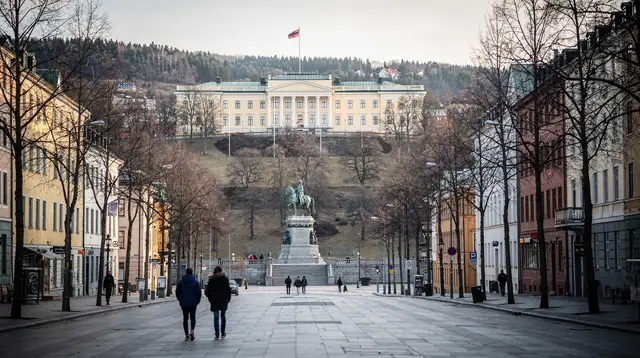
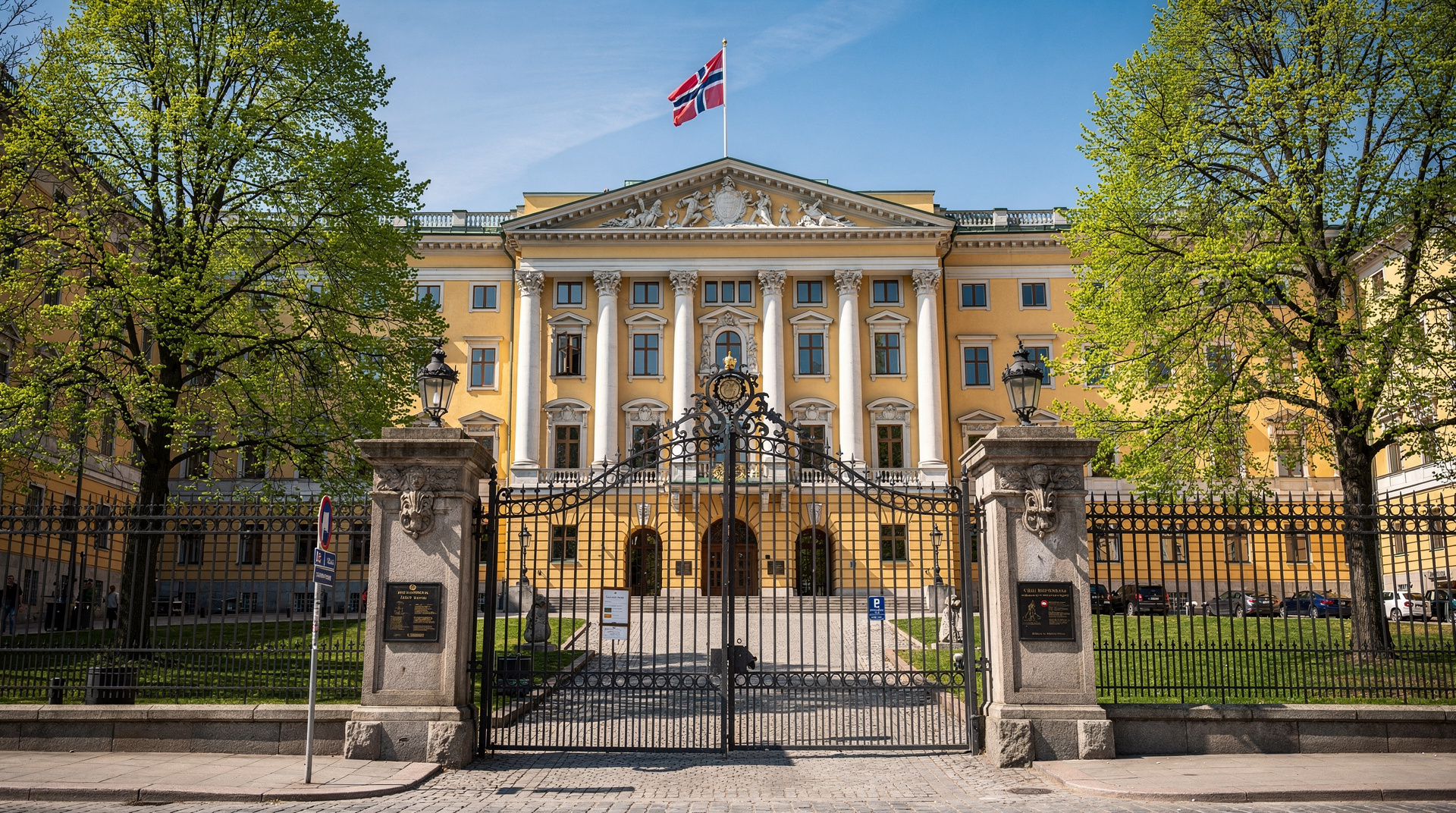
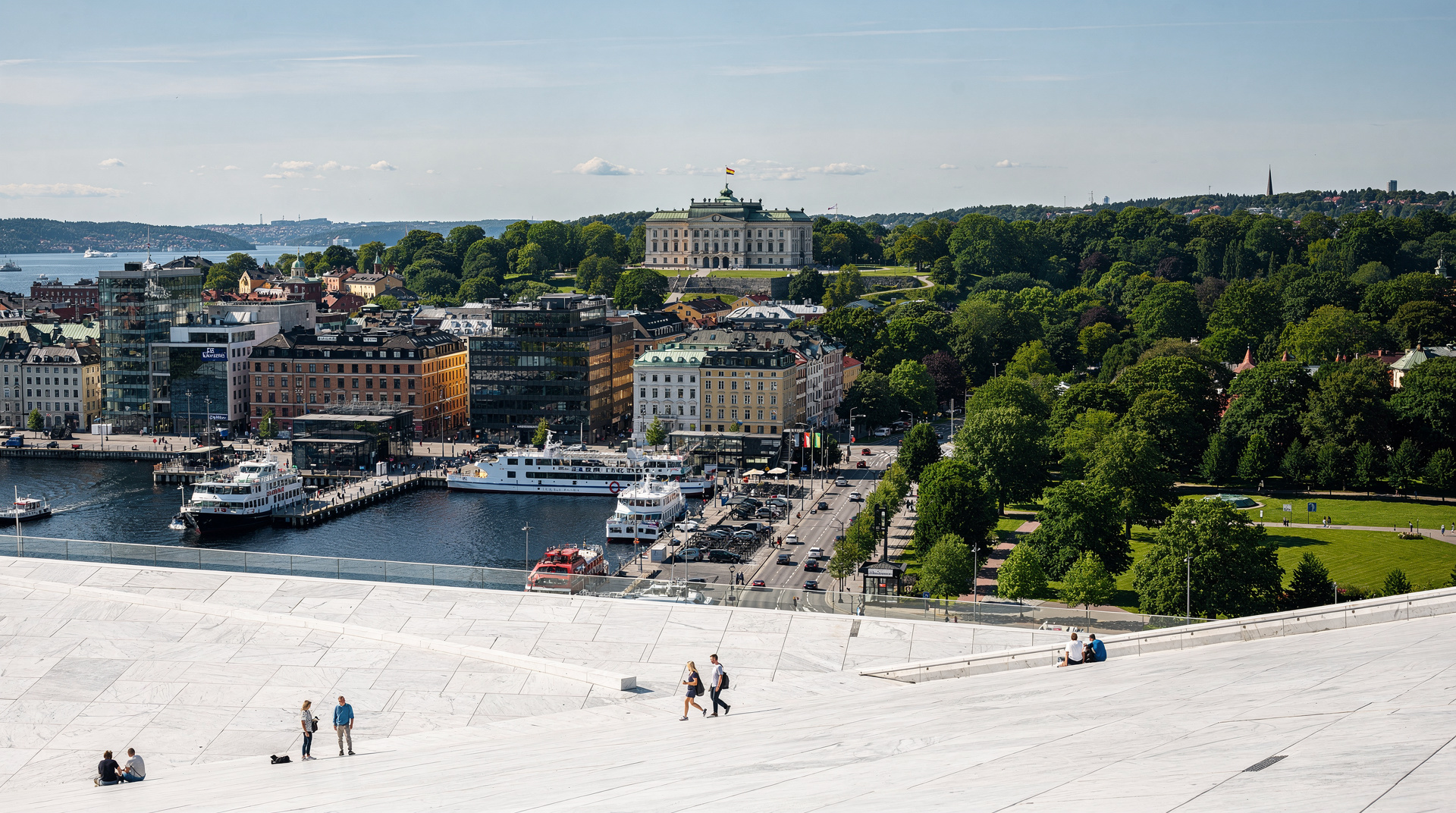
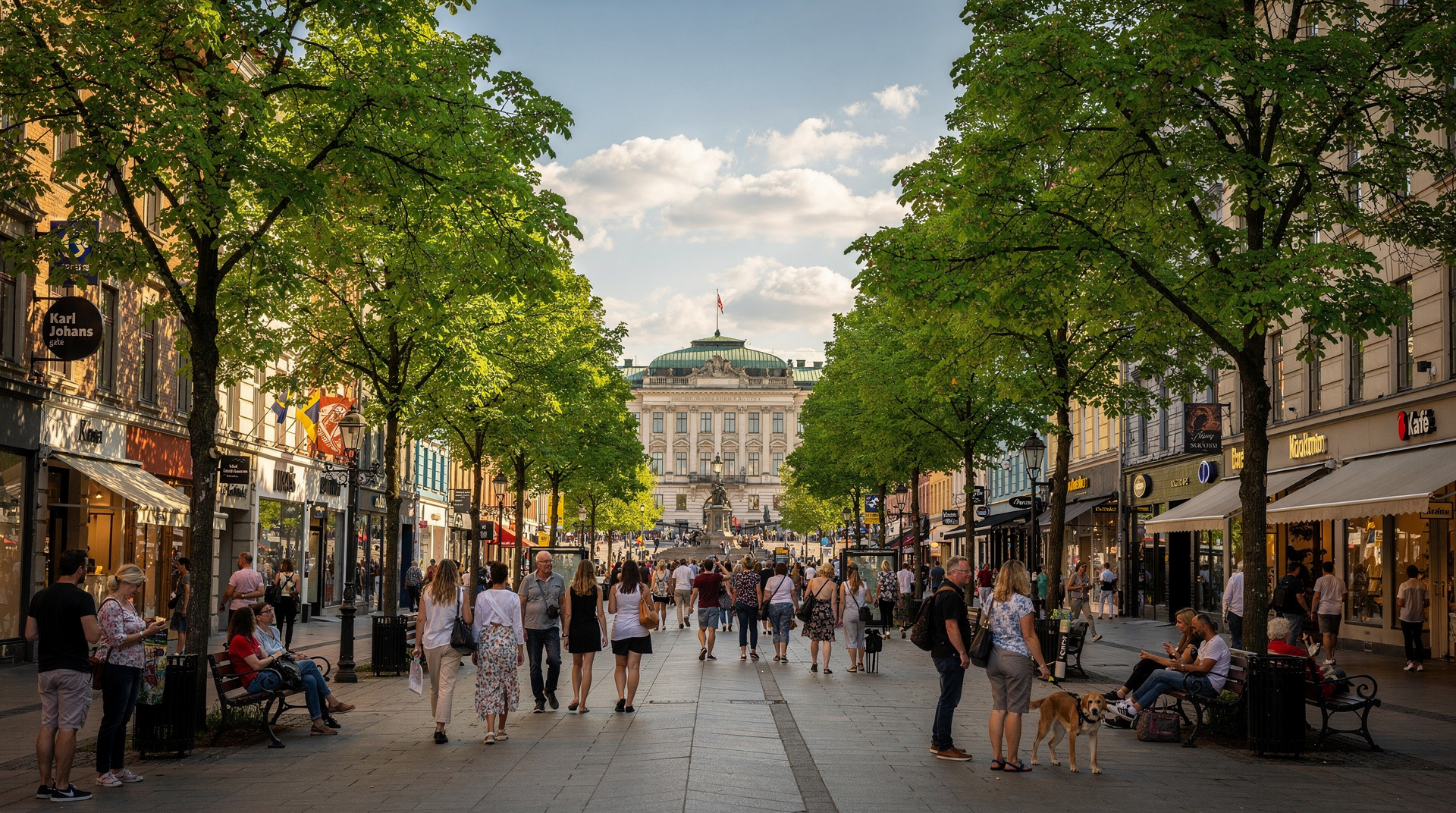
Karl Johans gate is Oslo's main pedestrian and ceremonial street, running 1.3 km from Oslo Central Station to the Royal Palace. It passes the Parliament building, the National Theatre, the University of Oslo, and the Grand Hotel. The street is Oslo's monumental core and an essential walk — but the restaurants lining it are some of the worst value in the city.
The spine of Oslo
| Where | Oslo Central Station to the Royal Palace, 1.3 km |
| Time needed | 20–25 min walk only; 2 hours with stops |
| Cost | Free to walk; Grand Café coffee around NOK 85–120 |
| Best time | Weekday mornings (quiet) or 17 May (parade) |
| Avoid | Restaurants in the first 300m from the station |
Karl Johans gate is Oslo’s central axis: a 1.3-kilometre street that runs from Oslo Central Station uphill to the Royal Palace, passing the most significant public buildings in the city. Named after the Swedish-Norwegian king Karl Johan, it was laid out in the early 19th century as a monumental approach to the new palace.
Every visitor walks Karl Johans gate at least once. It’s Oslo’s ceremonial core — the 17 May national day parade comes up this street, the Nobel Peace Prize laureates arrive by motorcade along it, and on Saturday afternoons it’s where Oslonians promenade. It is also, in places, deeply tourist-trap territory. This guide walks the street from east to west, honest about what’s worth your attention.
Starting point: Oslo Central Station (Oslo S)
The street starts at Jernbanetorget, the square in front of Oslo Central Station. The station itself (opened 1854, rebuilt multiple times) isn’t architecturally notable. The square, though, is Oslo’s main transport hub — trams converge from five directions, the metro runs underneath, and the Oslo Visitor Centre occupies the building to the north.
Jernbanetorget is where you buy Oslo Pass, collect Ruter transit cards, and pick up free city maps. Practical but not beautiful. The Oslo street art installation on the station facade is frequently changed.
Oslo Cathedral (Domkirke)
A short detour off the main street via Stortorvet (the square): the Domkirke is Oslo’s main cathedral, completed in 1697. The exterior is brick-red and modest by European cathedral standards. The interior has an unusual 1950s ceiling painted in blue — a dramatic contrast with the 17th-century structure. Free to enter. Quiet in the mornings.
Worth 20-30 minutes if you’re interested in Scandinavian Lutheran church interiors; otherwise keep walking.
Egertorget and the lower pedestrian zone
The lower section of Karl Johans gate, from the station to Egertorget, is fully pedestrianised and lined with chain stores: H&M, Zara, sports retailers, international fast food. The architecture above the shop fronts is often good — look up at the 19th-century buildings rather than at the ground-floor retail. The side streets off the lower section lead to better shopping: Akersgata and Grensen have Oslo’s independent fashion and design stores.
Tourist-trap alert: The restaurants at the station end of Karl Johans gate — particularly those on the square itself and along the first 300 metres — are aggressively tourist-focused. Menus in six languages, photos of every dish, aggressive pricing (NOK 280 to 380 for pasta or pizza), and mediocre food. The proximity to the station means they have a constant stream of weary new arrivals. Don’t be one of their customers. Walk past.
Parliament building (Stortinget)
Stortinget stands on the main street’s south side, slightly set back behind an open area. Completed in 1866 in yellow brick and neoclassical design, it’s one of Oslo’s best 19th-century public buildings. The public galleries are open during sessions. Free guided tours run Saturdays — book at stortinget.no.
The interior is worth seeing if you can get a tour: the plenary chamber with its wooden benches and green lighting, the Freske paintings in the lobbies, and the building’s honest lack of grandeur compared to Westminster or the French Assemblée Nationale. Norwegian democracy, by architectural statement, is a working institution rather than a monument to itself.
The Grand Hotel and Grand Café
The Grand Hotel at Karl Johans gate 31 is Oslo’s most historically significant hotel, opened 1874. Henrik Ibsen lunched here daily for years, arriving at the same time and sitting in the same chair. Edvard Munch frequented the Grand Café. Virtually every Nobel Peace Prize laureate since the prize moved to Oslo has stayed in the hotel. The current Nobel suite has windows facing the Nobel Peace Center.
The Grand Café on the ground floor is a genuine Oslo institution. A painted frieze on one wall depicts the 19th-century Oslo intellectual scene: Ibsen, Bjørnstjerne Bjørnson, and others at their tables. Having coffee here costs NOK 85 to 120 (USD 9 to 13) — not cheap, but you’re sitting in a room that Ibsen sat in, which carries its own value. The food is decent and not outrageously priced by Oslo standards.
The hotel bar is one of the better hotel bars in the city for an aperitivo. The restaurant prices are high (this is a five-star hotel) but the café can be enjoyed without hotel-level spending.
National Theatre (Nationaltheatret)
Nationaltheatret, at the upper end of Karl Johans gate, is Norway’s flagship theatre — home to the National Theatre company and connected, via the underground, to the transit hub of the same name. The building was completed in 1899 and reflects the same neoclassical formality as Stortinget but with more ornamental detail.
Outside the theatre, two statues: Henrik Ibsen on the left, Bjørnstjerne Bjørnson on the right. Both are useful orientation points. The theatre facade facing the street is particularly good in evening light.
Performance tickets are sold through nationaltheatret.no. Plays are performed in Norwegian (this is the national stage, not a tourist theatre), so non-speakers of Norwegian won’t get full value. Worth seeing the facade, less worth a ticket unless your Norwegian is strong.
University of Oslo buildings
On the opposite side of the street from Stortinget, the University of Oslo’s central campus includes three 19th-century buildings: the Aula (ceremonial hall), the law faculty, and the library. The Aula interior has famous Munch murals — the artist’s largest public commission, completed in 1916. The Aula is open to the public on guided tours during summer (check uio.no for dates). The murals include The Sun, History, and Alma Mater — a very different Munch from The Scream.
If the Aula tours are running: this is a genuine highlight. If not, the building’s exterior is pleasant but not an essential stop.
Slottsplassen and the Royal Palace
Karl Johans gate ends at Slottsplassen, the plaza in front of the Royal Palace. See the full Royal Palace guide for the changing of the guard, summer interior tours, and Slottsparken.
The street on 17 mai: the best day to be here
The single best day to walk Karl Johans gate is 17 May — Norway’s constitution day. Every year since the 1820s, the national day parade has come up this street from the Parliament toward the Palace. The parade is led by children in traditional bunad dress; there are no military vehicles, no weaponry, no martial display. Adults line the street. The royal family appears on the palace balcony. The entire city is in a state of cheerful celebration.
Cafés on the side streets open early. The crowds begin building by 9am for a noon climax. Oslonians wear their best, often including bunad (regional traditional dress) — the most common sight in Oslo is formally dressed people of all ages eating ice cream in the sun.
This is genuinely worth rearranging your trip around if 17 May falls within your dates. Oslo in summer is pleasant; Oslo on 17 May is something specifically Norwegian that you cannot see anywhere else.
The history of the street’s name
The street is named after Jean-Baptiste Bernadotte, a French Revolutionary and Napoleonic general who was adopted as heir to the Swedish throne in 1810 and became King Karl XIV Johan of Sweden and Norway in 1818. His reign lasted until 1844.
The choice of a French-born general as the Scandinavian monarch was unusual and pragmatic — the Swedish nobles needed an heir without dynastic complications, and Bernadotte had the military reputation and personal authority the situation required. He never learned to speak Swedish or Norwegian fluently, but he proved an effective ruler who presided over a period of relative stability.
His equestrian statue at Slottsparken faces down the street that bears his name. The statue was unveiled in 1875 — more than 30 years after his death — by which time his French origins were a historical footnote to a thoroughly Norwegian legacy.
The Grand Café and Oslo’s literary history
The Oslo literary and intellectual scene of the late 19th and early 20th centuries was concentrated around a small number of cafés, clubs, and meeting places in the city centre. Karl Johans gate and its immediate neighbourhood was the hub.
Henrik Ibsen ate lunch daily at the Grand Café from 1891 to his death in 1906 — his table by the window, his arrival time at 1pm, his departure at 3pm. The routine was so fixed that Oslonians could set their watches by it. He was famously reserved; tourists who hoped for conversation were disappointed. The Grand Café has preserved his corner and the painted frieze depicting the 1890s Oslo intellectual scene.
Edvard Munch painted in Tøyen but frequented Karl Johans gate. His 1892 painting Evening on Karl Johan Street shows the main street at dusk, the faces in the crowd rendered with the same anxiety as The Scream — ordinary city life as psychological experience.
The Nobel Peace Prize laureates stay at the Grand Hotel the night before the December ceremony. The Nobel Suite overlooks City Hall. The connection between the most famous street in Norway and the most internationally significant prize awarded here annually gives Karl Johans gate a symbolic density that the tourist-trap restaurants at its lower end do not reflect.
Shopping on and around Karl Johans gate
The main street itself has primarily chain stores — H&M, Zara, Jack&Jones, sports retailers, international fast food. Nothing distinctive.
For more interesting shopping:
Paleet (Karl Johans gate 37): A small upscale shopping centre with Norwegian design and fashion brands. Worth a quick look.
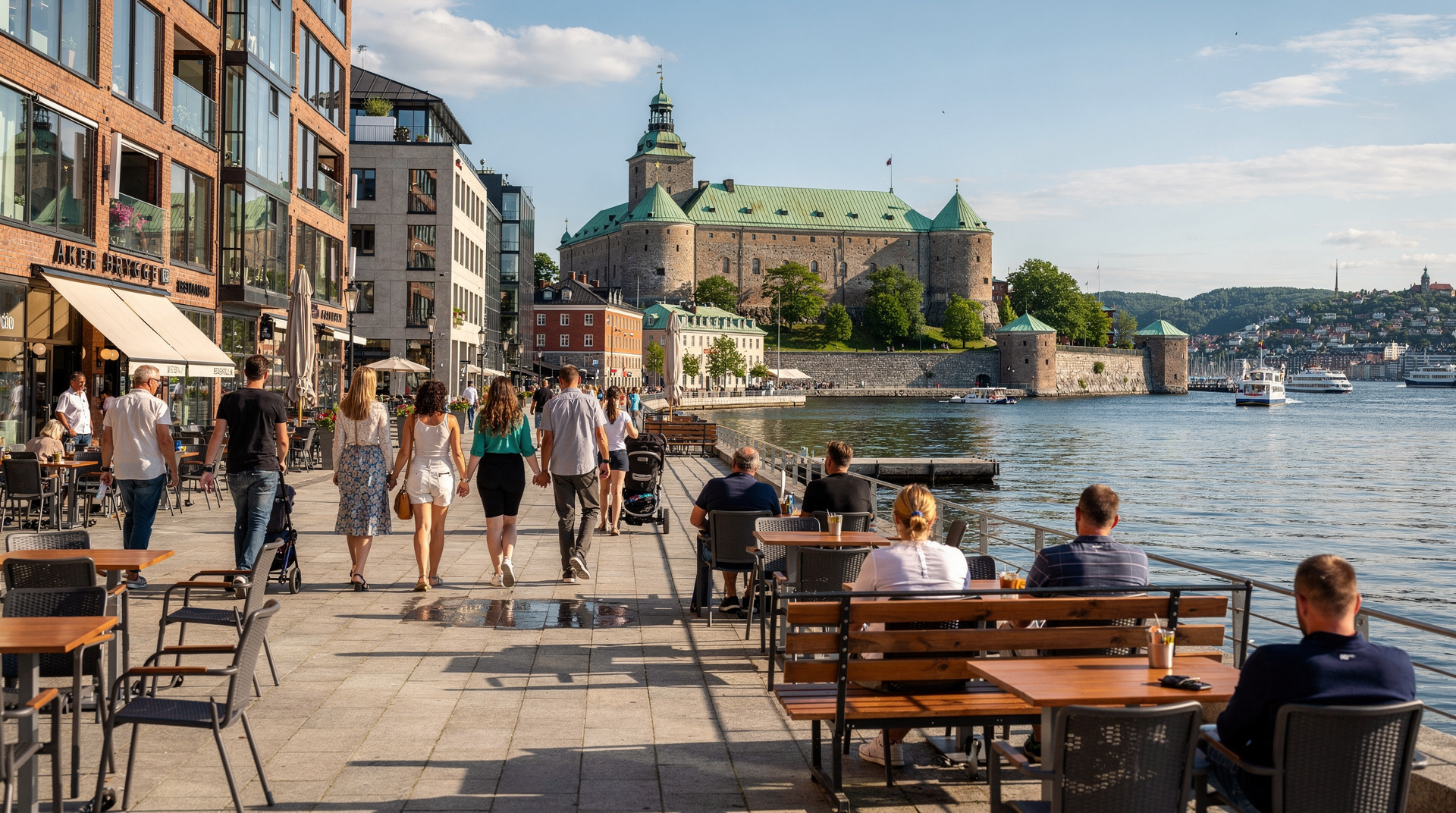
Aker Brygge Brygge shopping: The Aker Brygge complex has upscale Norwegian brands (Dale of Norway knitwear, Helly Hansen technical outdoor). 15-minute walk west.
Grünerløkka: For independent Norwegian fashion, vintage, and design. Take tram 12 from the Nationaltheatret. See the Grünerløkka neighbourhood guide.
Byporten (next to Central Station): A standard shopping centre, useful for pharmacy (apotek), travel supplies, and convenience items.
Where to eat near Karl Johans gate
The street itself is a food desert of tourist-trap restaurants. For genuine meals nearby:
Akersgata (one street east): several more local-facing restaurants with better price-quality ratios.
Grensen: A side street with some café options that serve the office-worker lunch crowd — a sign of reasonable value.
Youngstorget (a short walk east): This square has a cluster of Oslo restaurants that serve a local lunch market. The kafé at Kulturhuset is particularly popular with young Oslonians.
For dinner: Walk to Grünerløkka (tram 12 or 20 minutes on foot) or Tjuvholmen. See the where to eat in Oslo guide for specific recommendations.
Budget: The Deli de Luca convenience stores along Karl Johans gate sell decent sandwiches for NOK 60 to 90 (USD 6 to 10). The KIWI and Rema 1000 supermarkets just off the main street have everything for a better-than-café lunch at grocery prices.
Walking the street: practical tips
The walk from Central Station to the Royal Palace takes 20-25 minutes at a tourist pace. Allow 2 hours if you include the parliament, cathedral, and Grand Café coffee.
The street is fully accessible — no steps, level surface. Trams run along the upper section (take care crossing the tracks). The parallel streets — Akersgata to the east, Universitetsgata to the west — have less tourist density and more local character if you want a diversion.
For a guided walk of the city centre including Karl Johans gate, see the Oslo walking tours compared guide for the best local-guide options.
Statues and monuments along the way
Beyond the Bernadotte statue at Slottsparken, Karl Johans gate has a handful of monuments worth a slow glance rather than a dedicated stop. Outside Stortinget, a series of modest plaques mark historical events tied to Norwegian independence. Outside Nationaltheatret, the Ibsen and Bjørnson statues face the street rather than each other — a deliberate arrangement so both playwrights appear to be watching the passing crowd, which several guides describe as fitting given how much of both men’s work observed exactly that. Near the university buildings, smaller busts of past rectors and professors are easy to miss but reward a two-minute detour if you’re already walking slowly through that section.
None of these are essential stops on their own, but collectively they reinforce that Karl Johans gate functions as an open-air timeline of 19th- and 20th-century Norwegian public life, not just a shopping street with good buildings.
Accessibility and getting oriented
The street’s full length is step-free, with tram tracks in the upper section being the only surface hazard to watch for when crossing. Public benches are placed at intervals along the pedestrianised lower section, useful if you’re walking the full route with young children or anyone who tires easily. Public toilets are limited directly on the street itself; the nearest reliable options are inside Byporten shopping centre near the station or at the Nationaltheatret metro station at the upper end. Free wifi is generally available via the city’s public network in the busiest central sections, though coverage can be patchy near the university buildings.
Seasonal character of the street
Summer (June–August): The street is at its busiest, with outdoor café seating along the pedestrian section and street performers common near Egertorget. Evening light after 21:00 makes the upper section, near the Palace, particularly photogenic.
Autumn (September–October): Noticeably quieter. The chestnut trees in Slottsparken turn colour, and the street’s architecture is easier to appreciate without the summer crowds pressing past.
Winter (November–February): Christmas market stalls appear near Egertorget and Spikersuppa in late November through December, adding lights and food stalls to the lower pedestrian section — see the Christmas in Oslo guide for dates. The street is cold but well-lit and safe to walk after dark.
17 May specifically: As covered above, this is the single best day, but book accommodation and any restaurant plans well in advance — the whole city fills up around the national day.
How Karl Johans gate fits into a first day in Oslo
For visitors arriving by train or the Flytoget airport express, Karl Johans gate is the natural spine of a first orientation walk: start at Jernbanetorget, walk the full length to Slottsparken, and you’ve covered the Cathedral, Stortinget, the Grand Hotel, Nationaltheatret, and the university buildings in under two hours. This pairs naturally with the top things to do in Oslo guide for planning the rest of day one, and the free things to do guide if budget is a concern on arrival day.
Frequently asked questions about Karl Johans gate
What are the main sights on Karl Johans gate?
From east to west: Oslo Central Station, the Domkirke (Oslo Cathedral), Parliament building (Stortinget), the Grand Hotel, the National Theatre, the University of Oslo buildings, and at the top, Slottsparken and the Royal Palace. Most are free to view from outside; Stortinget offers free guided tours.Are the restaurants on Karl Johans gate any good?
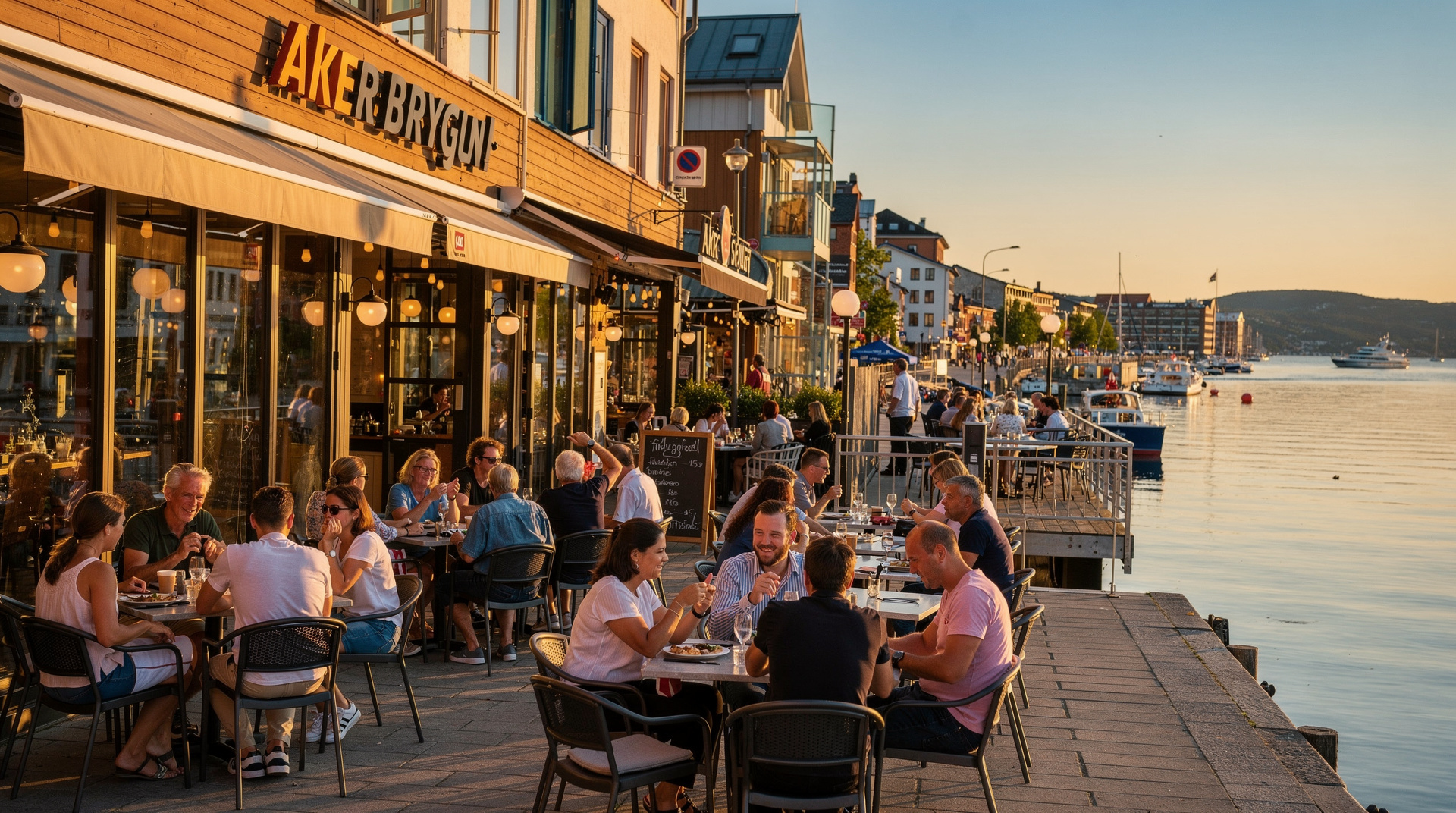
Honest answer: no, not really. The restaurants on Karl Johans gate and the adjacent harbour front near Aker Brygge are designed for tourists who don't know where else to eat. Prices are high, quality is mediocre, and portions are tourist-trap sized. Walk one street back to Storgata, Grensen, or Akersgata for better value.Is Karl Johans gate pedestrianised?
The lower section (from Central Station to Egertorget) is fully pedestrianised. The upper section allows trams and buses. The entire street is safe and pleasant to walk.Can you visit the Norwegian Parliament (Stortinget)?
Yes. Free guided tours of Stortinget run most Saturdays at 10am, 11:30am, and 1pm. Tours must be booked in advance through stortinget.no. The interior includes the plenary chamber, historic halls, and art collection.What is the Grand Hotel on Karl Johans gate?
The Grand Hotel (opened 1874) is Oslo's most storied hotel — the Nobel Peace Prize laureates traditionally stay here the night before the ceremony. The Grand Café on the ground floor is a genuine Oslo institution: Ibsen and Munch ate here regularly. A coffee here is expensive (NOK 85-120 / USD 9-13) but worth doing once.
Top experiences
Bookable activities with verified prices and instant confirmation on GetYourGuide.