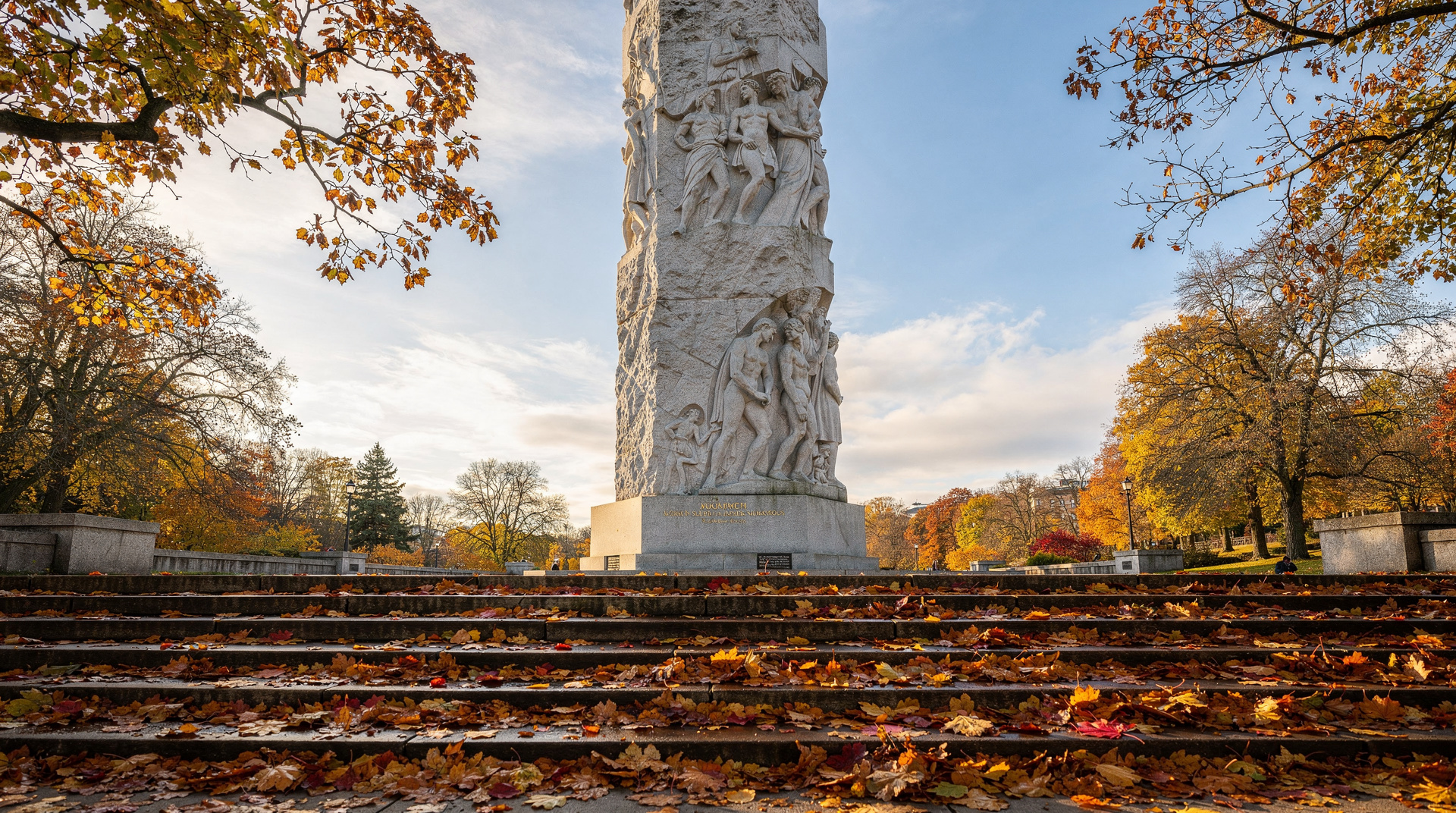
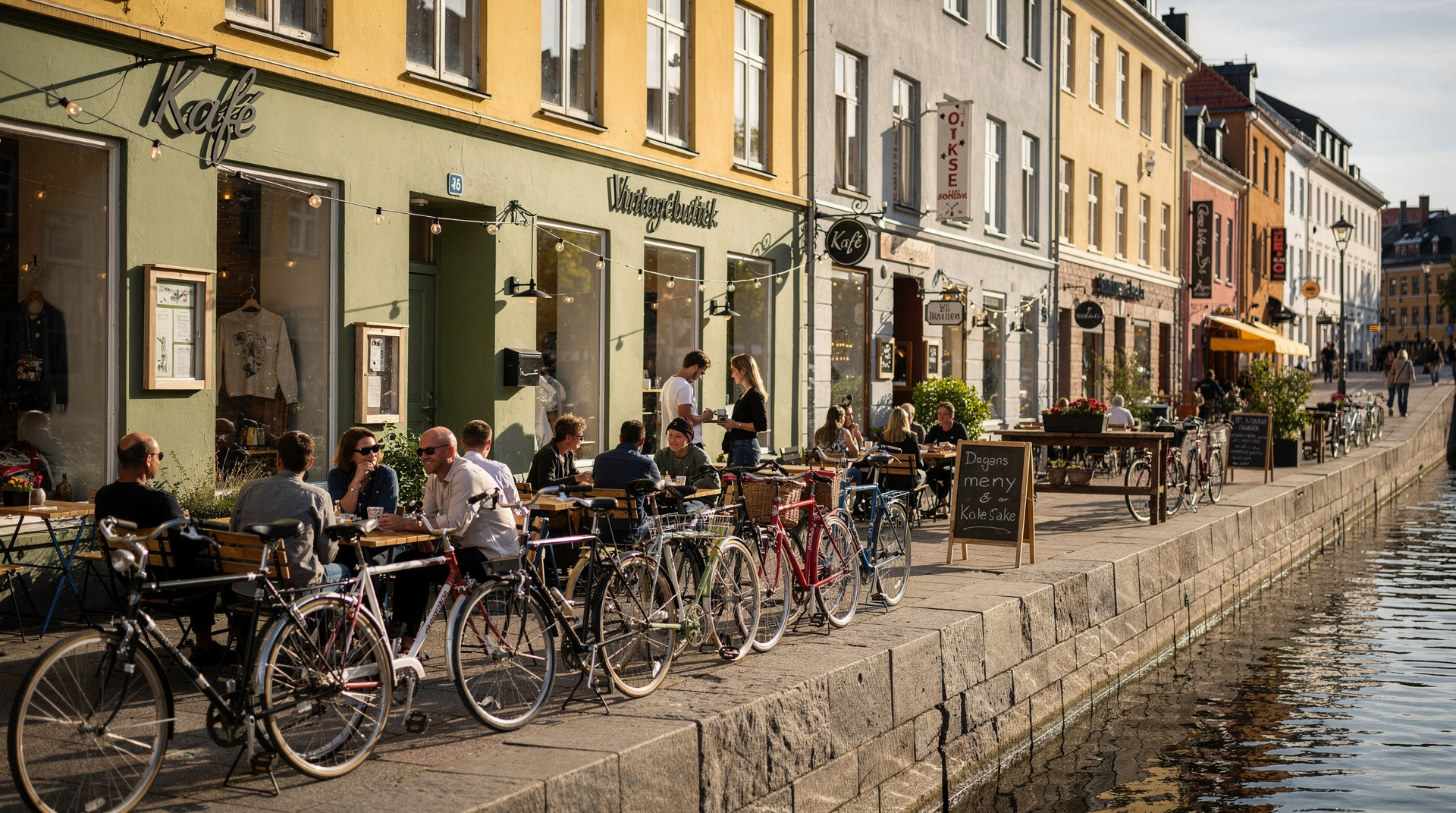
Oslo city centre — Sentrum & Karl Johans gate
Explore Sentrum: Royal Palace, Akershus Fortress, National Museum, Karl Johans gate — Oslo's walkable civic heart.
Oslo: guided walking tour of central Oslo with a local guide
Duration: 2 hours
- Local guide
- Small group
Quick facts
- Best time to visit
- Year-round; May 17 (National Day) is special
- Days needed
- 1–2 days
- Getting there
- Oslo S (central station) — most tram, T-bane, and bus lines converge here
- Budget per day
- NOK 600–1 800 (USD 65–194) excluding accommodation
Walking Karl Johans gate: what to actually do (and what to skip)
Oslo’s city centre is compact enough to cover on foot in a long morning, yet dense enough that you could spend two days here and still find corners worth exploring. The backbone is Karl Johans gate, the main pedestrian boulevard running about 1.2 km from Oslo S (the central railway station) up to the Royal Palace. Along the way it passes the cathedral, the parliament (Stortinget), the National Theatre, and the university — enough civic architecture to satisfy any admirer of nineteenth-century Scandinavian ambition.
Here is the honest version: the lower end of Karl Johans gate nearest Oslo S is not particularly attractive. Overpriced tourist restaurants, souvenir shops, and chain stores cluster here. Give it a few minutes of your time and keep walking. Things improve markedly past the cathedral.
| Where | Sentrum, anchored by Karl Johans gate |
| Getting there | Oslo S — nearly every tram, T-bane, and bus line converges here |
| Time needed | 1–2 days for the full district |
| Cost | Around NOK 600–1 800/day (USD 65–194), excluding accommodation |
| Best time | Year-round; 17 May (National Day) is a genuine highlight |
Domkirken (Oslo Cathedral)
The cathedral on Stortorvet square was consecrated in 1697 and has been rebuilt and renovated multiple times since. Entry is free. The interior is calm, with stained glass by Emanuel Vigeland (brother of the famous sculptor) and carved wooden pews. Worth a 15-minute detour.
Stortinget (Norwegian Parliament)
The ochre neo-Renaissance parliament building (1866) faces Karl Johans gate directly. It is not open to casual visitors without advance booking, but the exterior is a landmark, and the public gardens in front are where locals gather for political protests and outdoor concerts. Free guided tours are available in July when parliament is in recess.
National Theatre and the university quarter
The National Teatret (1899) sits at the midpoint of Karl Johans gate. The three statues outside — Ibsen, Bjørnson, and Holberg — signal Norway’s literary ambitions clearly. The university buildings behind the theatre date from the 1850s; the Aula (ceremonial hall) has murals by Edvard Munch and is occasionally open to visitors.
The Royal Palace (Slottet)
At the western end of Karl Johans gate, the neoclassical palace (1849) sits on a low hill above Slottsparken. The palace itself is only open for guided tours in summer (late June through mid-August; tickets NOK 175 / USD 19, book well ahead). The park surrounding it is open year-round, free, and very pleasant for a walk. The daily Changing of the Guard ceremony takes place at 1:30 pm (daily in summer, reduced schedule in winter) — a brief, understated ceremony that draws a crowd of locals more than tourists.
Akershus Fortress and medieval Oslo
The medieval stone fortress of Akershus stretches along the waterfront just west of Oslo S. It is one of Oslo’s most atmospheric sites, particularly on a winter morning when mist comes in off the fjord.
The fortress grounds are free to enter and open year-round (most mornings until late afternoon — check current hours as they vary seasonally). Inside the outer walls you will find:
Akershus Castle (the medieval keep): guided tours available, NOK 120 (USD 13) adult. The interior is sparse by European castle standards but the coastal views from the battlements are excellent.
Norwegian Resistance Museum (Norges Hjemmefrontmuseum): the most emotionally powerful museum in Oslo covers the German occupation from 1940 to 1945. Small but superbly curated, with original documents and personal testimonies. Entry NOK 90 (USD 10). Do not skip it.
Defence Museum (Forsvarsmuseet): free entry, covers Norwegian military history from the Viking age through modern peacekeeping. Better than you might expect.
The fortress is also the venue for a popular evening ghost tour — one of the more entertaining options for those travelling with teenagers or visitors who like their history with a theatrical twist. See the Oslo overview for seasonal event listings.
The National Museum
Opened in 2022 after two decades of planning, the National Museum (Nasjonalmuseet) at Aker Brygge occupies a purpose-built building that is itself worth seeing: 54 000 m2 of gallery space, the largest art museum in the Nordic countries. It holds Munch’s famous “The Scream” (one of four versions), plus an extraordinary collection of Norwegian and international art, design, and architecture.
Entry is NOK 200 (USD 22) for adults, free for under-18s and for all visitors on Thursdays from 5 pm to 8 pm. Budget two to three hours minimum. The permanent collection alone spans Greek antiquities through Norwegian Romantic landscape painting to twentieth-century design — it is genuinely comprehensive.
The building sits at the edge of Aker Brygge, a five-minute walk from the lower end of Karl Johans gate. Our National Museum guide covers the highlights and what to prioritise.
The waterfront walk to Aker Brygge
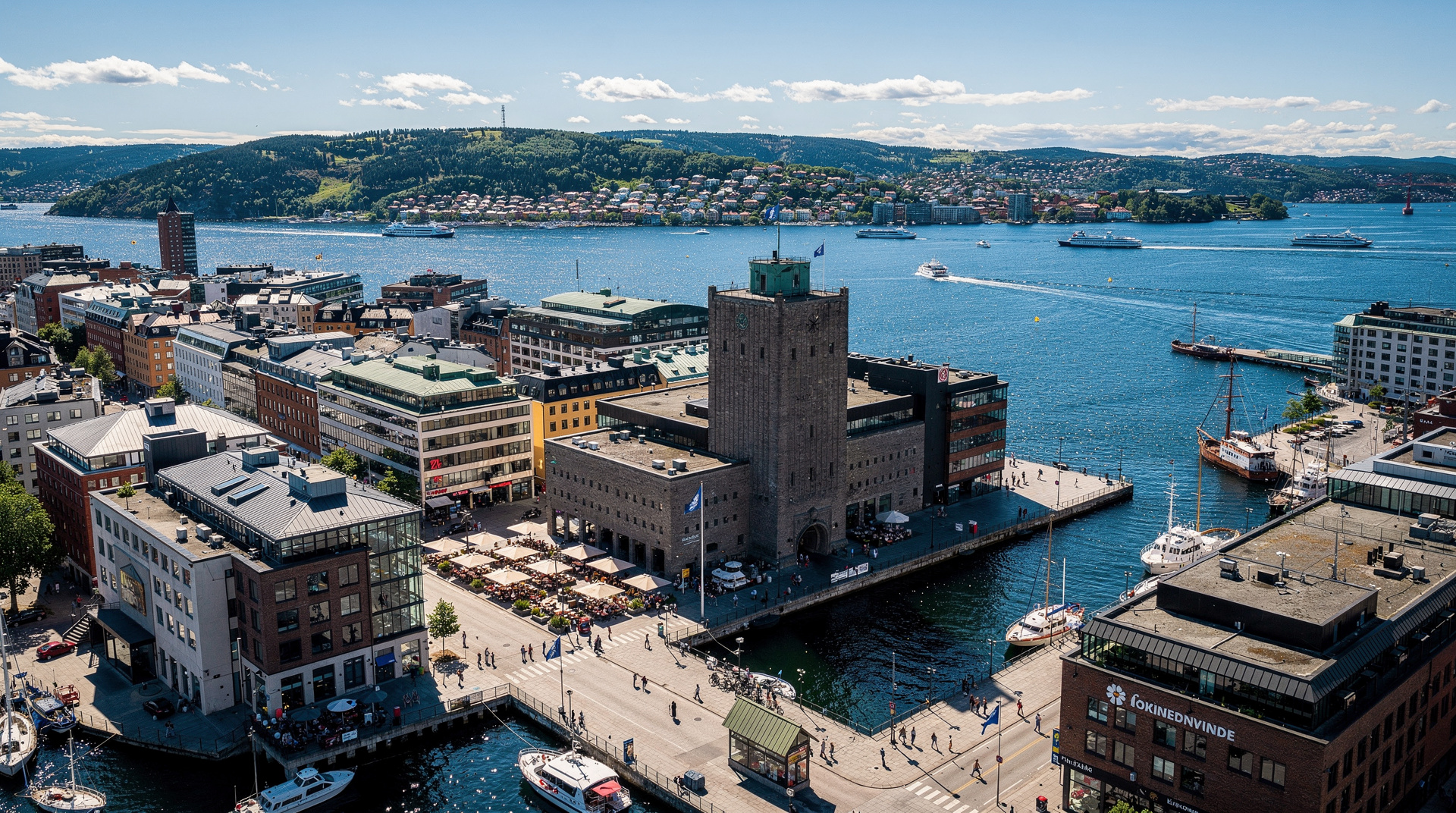
From the lower end of Karl Johans gate, it takes under 10 minutes to walk west along the harbourfront to Aker Brygge. This walk passes the Rådhuset (City Hall), Oslo’s red-brick civic building where the Nobel Peace Prize is awarded each December. The interior is free to enter on weekdays and contains enormous painted murals depicting Norwegian history. Worth 20 minutes.
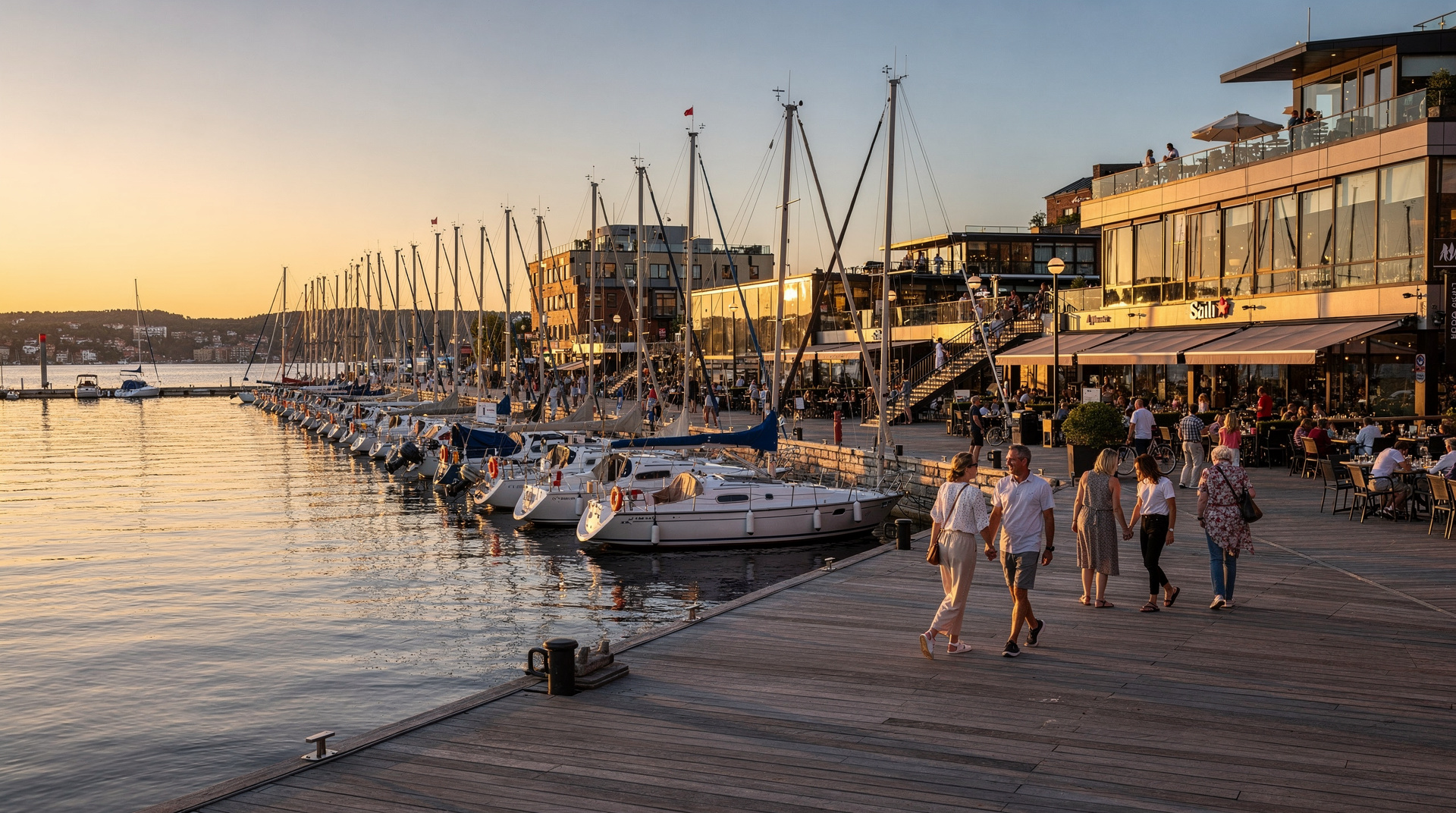
The harbourfront itself, with its restaurant terraces and bobbing boats, is one of the most pleasant stretches of urban waterfront in Northern Europe — genuinely lively in summer, unexpectedly atmospheric in winter when snow dusts the cobbles.
Eating and drinking in Sentrum: honest recommendations
The tourist restaurant strip along the lower half of Karl Johans gate and the immediate harbour front is to be avoided. Prices are 25 to 40% above neighbourhood norms and the kitchens rely on tourist footfall rather than returning local customers. The following recommendations are places locals actually eat.
Mathallen Oslo (Vulkan, Grünerløkka — a 15-minute tram ride east): Oslo’s best food hall, with a dozen independent food stalls covering Norwegian smoked fish, Japanese ramen, falafel wraps, quality pastries, and more. Lunch comes in at NOK 150 to 250 (USD 16–27) — excellent value by Oslo standards. Read our Mathallen guide.
Palmen restaurant, Grand Hotel: Oslo’s grand café on Karl Johans gate serves the kind of lunch that Norwegian politicians and authors have been eating since 1874. It is not cheap (NOK 250–400 / USD 27–43 for a main) but it is authentic, and the Saturday buffet brunch is an institution.
Kafe Celsius (near Akershus Fortress): one of Oslo’s oldest café spaces, occupying a building from 1626. Good open sandwiches (smørbrød), soup, and light lunches at NOK 150 to 200 (USD 16–22).
Torggata and surrounding streets (east of parliament): a growing cluster of independent bars, cafés, and mid-range restaurants has taken over the streets just east of Stortinget. Illegal Burger, Syverkiosken (a local hot-dog institution), and various ramen and sushi counters are all within a short walk of each other and priced for local workers rather than tourists.
For a comprehensive eating guide, see where to eat in Oslo and Oslo budget eats.
Getting around the centre
Central Oslo is small enough that walking is the best option for most sightseeing. Trams run frequently along major streets — tram line 11/12 is particularly useful for connecting the western waterfront with Grünerløkka to the east. The T-bane (metro) has several city-centre stations (Stortinget, Nationaltheatret, Jernbanetorget) and connects to all eight lines.
A Ruter single-journey ticket (NOK 42 / USD 4.50 via app; NOK 55 / USD 6 at kiosks) covers 90 minutes across all modes. If you are doing more than three journeys in a day, the 24-hour ticket (NOK 130 / USD 14) is better value. See the Ruter public transport guide for full details.
17 May: the best day to be in Sentrum
Norway’s National Day (Syttende Mai / 17 May) is unlike any national celebration in Europe. The entire Karl Johans gate fills with a procession of schoolchildren in traditional bunad dress, brass bands, and crowds of locals in their finest clothes. There are no military parades — just children, flags, and ice cream. Oslo S and the lower city are packed from mid-morning; arrive early and head to the Royal Palace gardens to watch the processions arrive. It is genuinely one of the most charming public celebrations anywhere in Scandinavia.
What to do on a rainy day in Sentrum
Oslo gets rain year-round (around 750 mm annually, spread fairly evenly). The National Museum alone can absorb a full rainy day. The Resistance Museum at Akershus is another hour to two hours. The Nobel Peace Center (Rådhusplassen, adjacent to City Hall) is smaller but worth an hour if you are interested in the prize’s history. For a broader list, see our rainy day Oslo guide.
Shopping on and around Karl Johans gate
Karl Johans gate itself is dominated by international chain stores and souvenir shops selling the same Viking helmets and moose fridge magnets at inflated prices — skip these unless you need a last-minute gift and are not fussy about originality.
For genuine Norwegian design, head one block off the main street: Norway Designs (near the National Theatre) stocks glassware, textiles, and homewares from established Norwegian studios. Heimen Husflid (near the cathedral) sells authentic bunad accessories and traditional knitwear — a good source for a genuine Norwegian sweater rather than a mass-produced import. For books, Tronsmo and the university-quarter bookshops carry strong English-language sections.
The department store Steen & Strøm, a short walk from the palace end of Karl Johans gate, is Scandinavia’s oldest department store (founded 1797) and worth a browse even if you’re not buying, for the building alone. See the Oslo design scene guide for a fuller picture of where to find quality Norwegian design outside the tourist strip.
Sentrum in a day: a practical itinerary
Morning: Start at Oslo S, walk up Karl Johans gate noting the cathedral, Stortinget, and National Theatre. Continue to the Royal Palace for the 1:30 pm guard change (arrive by 1:15 pm). Walk through Slottsparken to the western exit.
Midday: Head south toward Akershus Fortress, stopping at the Resistance Museum (allow 75 minutes). Lunch at Kafe Celsius or one of the harbour-adjacent spots beyond the tourist strip.
Afternoon: Walk west to the National Museum at Aker Brygge (budget two hours for highlights). Continue along the waterfront through Tjuvholmen and return via tram 13 or walk back through the city centre.
This route covers the core of Sentrum in about seven to eight hours of relaxed walking, including museum time. Combine it with our 1-day Oslo itinerary for exact timings.
Frequently asked questions about Oslo city centre
How long do you need in the city centre?
One full day covers the main landmarks: Karl Johans gate, the Royal Palace, Akershus Fortress, the Resistance Museum, and a stroll to Aker Brygge. Two days lets you add the National Museum thoroughly and explore the waterfront east toward Bjørvika. The centre is compact — you are rarely more than 20 minutes’ walk from any major sight.
Is Akershus Fortress worth visiting?
The fortress grounds are free and absolutely worth 45 to 60 minutes. The castle interior (paid tour) adds useful context for medieval Norwegian history. But the highlight for most visitors is the Norwegian Resistance Museum — it is small, focused, and genuinely moving in a way that larger national war museums often are not.
Where should I avoid eating near Karl Johans gate?
The restaurants immediately adjacent to Oslo S, along the lower pedestrian stretch of Karl Johans gate, and on the tourist-heavy harbour terrace between the railway and Rådhuset tend to charge a premium for mediocre cooking. Stick to places two or three blocks away from the main tourist artery, or use the food recommendations in our tourist traps guide.
Can I visit the Royal Palace?
The interior is open for guided tours in late June through mid-August only. Tours must be booked in advance and fill up weeks ahead in July. Tickets cost NOK 175 (USD 19) for adults. Outside summer, you can walk freely through Slottsparken and watch the Changing of the Guard at 1:30 pm daily (reduced to certain days in winter — check the palace’s official schedule).
What is the best free thing to do in Sentrum?
Slottsparken is lovely for a walk in any season. The Akershus Fortress grounds are free. City Hall (Rådhuset) lets you walk through the painted ceremonial hall on weekdays at no charge. And the walk from Sentrum to Aker Brygge along the harbourfront costs nothing and is one of the most pleasant 20 minutes you can spend in Oslo.
Is it safe to walk around central Oslo at night?
Yes. Oslo has very low street crime by European capital standards. Karl Johans gate and the areas around Oslo S are busier at night than in many cities and well-lit. The underpass near Oslo S and a few side streets off Grønland after midnight can feel slightly edgy, but serious safety incidents are rare. Standard urban common sense applies.
Seasonal highlights in Sentrum
Sentrum looks and feels different across Oslo’s four quite distinct seasons, and knowing what to expect helps you plan more effectively.
Spring and Syttende Mai: April and May bring the city out of winter hibernation. The parks fill rapidly, outdoor café terraces open in April (Osloians have a high tolerance for cold terraces), and the build-up to 17 May is palpable. The Royal Palace area is surrounded by flags from early May. This is also when the cherry trees around the University and in Slottsparken bloom — briefly but beautifully.
Summer (June through August): Sentrum is at its liveliest and most photogenic. Karl Johans gate has a near-permanent outdoor festival atmosphere on weekends. The lower harbourfront between Oslo S and Aker Brygge fills with people. Book accommodation well ahead for July — Oslo’s peak tourist month.
Autumn (September–October): the crowds thin, the light becomes golden and lower, and the city’s cultural institutions ramp up their autumn programmes. The National Theatre’s season opens in September. This is a very good time to be in the city: fewer queues at the Resistance Museum, easier reservations at good restaurants, and a quiet quality to the streets that summer cannot offer.
Christmas (December): the Christmas market at Spikersuppa (the rink-and-market setup on Studenterlunden, just off Karl Johans gate) is Oslo’s most atmospheric seasonal gathering. The ice rink operates from late November through early January; skate rental is available on site. The neighbouring shops and hotels are lit with restrained Nordic elegance rather than garish commercial excess. A mulled wine (gløgg) at a market stall costs NOK 80 to 100 (USD 9–11) — expensive but acceptable given the setting.
Accessibility in central Oslo
Sentrum is largely accessible to wheelchair users and those with limited mobility. Karl Johans gate is pedestrianised and flat. The major museums all have lift access. Oslo S has comprehensive accessible facilities including step-free access to all platforms.
The main challenge in Sentrum is the cobblestoned sections around Akershus Fortress and the older harbour area — uneven surfaces that can be difficult for wheelchairs or pushchairs. The National Museum and the main museums all have accessible entrances, but it is worth confirming specific access routes when booking. See accessible Oslo guide for detailed venue information.
Getting from Sentrum to other Oslo neighbourhoods
Sentrum is the natural hub from which to reach every other Oslo district:
- Aker Brygge: 15-minute walk west along the harbour, or tram 13.
- Bygdøy: Bus 30 from Nationaltheatret, around 10 minutes.
- Grünerløkka: Tram 11/12 from Jernbanetorget, around 15 minutes.
- Frogner/Vigeland: Tram 12 from Stortorvet, around 20 minutes; or T-bane to Majorstuen (5 min) then walk 10 minutes.
- Holmenkollen: T-bane line 1 from Nationaltheatret, around 30 minutes.
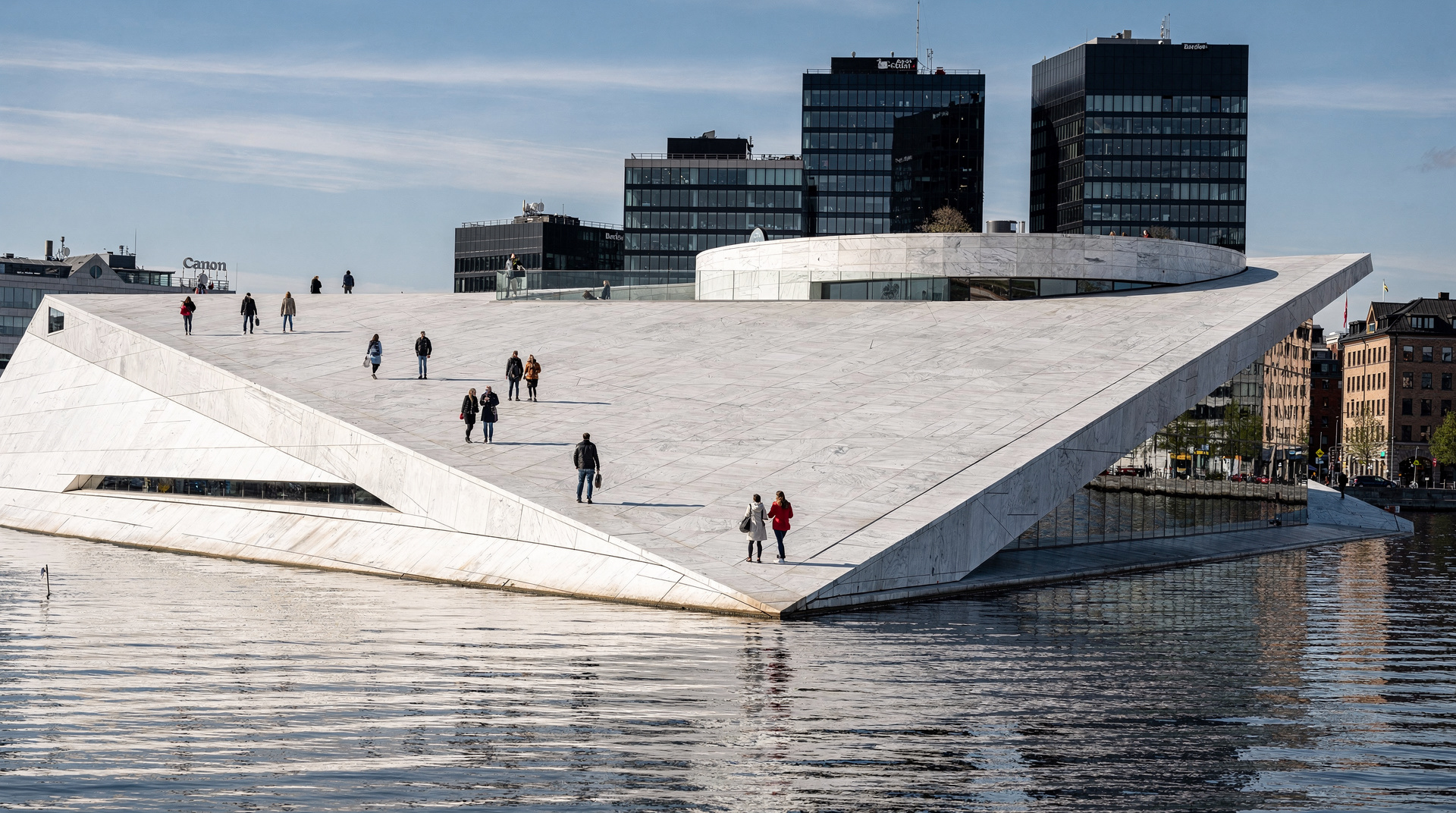
- Bjørvika: 2-minute walk south from Oslo S to the Opera House.
- Grønland: T-bane 2/3/4 from Oslo S, 5 minutes.
See getting around Oslo for full timetable and planning advice. For a one-stop transport planning tool, the Ruter app covers all modes and shows live departures.
The Nobel Peace Center
On Rådhusplassen, between the Rådhuset and the harbour, the Nobel Peace Center (Nobels Fredssenter) documents the history of the Nobel Peace Prize and the work of past laureates. The permanent exhibitions cover figures from Mandela to Malala; temporary exhibitions address current global issues. Entry is NOK 150 (USD 16) for adults; free for children under 16.
It is a well-designed, politically engaged museum that rewards a 60-to-90-minute visit, though it is not essential if your Oslo time is limited. The building itself — a converted railway station from 1872 — is attractive. See Nobel Peace Center guide for highlights.
Where to stay in Sentrum
The city centre has the widest range of accommodation options in Oslo, from hostels to luxury hotels.
Budget: Citybox Oslo (Karl Johans gate 14) and Anker Hostel (near Grünerløkka border) both offer clean, no-frills rooms and dorm beds at NOK 300 to 550 (USD 32–59) per night in dorms.
Mid-range: Comfort Hotel Karl Johan (NOK 1 100 to 1 600 / USD 118–172) for a well-located, functional option. Scandic Byporten (adjacent to Oslo S) is convenient for late arrivals.
Upscale: The Thief at Tjuvholmen (technically Aker Brygge zone) is Oslo’s most design-forward hotel, with the Astrup Fearnley Museum collection on the walls. Grand Hotel on Karl Johans gate remains the city’s grande dame. Expect NOK 2 500 to 5 000 (USD 269–538) per night.
See where to stay in Oslo for a full neighbourhood-by-neighbourhood accommodation guide.
Sentrum versus Grünerløkka: where should you actually base yourself?
Sentrum wins on convenience — you are within walking distance of the Royal Palace, Akershus Fortress, the National Museum, and the transport hub at Oslo S. Grünerløkka wins on value and atmosphere — cheaper food, a more local feel, and easy tram access back into Sentrum in 10–15 minutes. For a first Oslo visit prioritising sights, Sentrum is the practical choice. For a longer stay, or for travellers who care more about eating well than being adjacent to the palace, Grünerløkka is the better base with only a minor transport trade-off.
Top experiences
Bookable activities with verified prices and instant confirmation on GetYourGuide.

Oslo: city highlights walking tour
- Free cancellation
- Local guide

Oslo: self-guided mystery tour at Akershus Fortress
- Self-guided
- Interactive

Oslo: City Sightseeing hop-on hop-off bus tour
- Instant confirmation
- Audio guide

Oslo: Oslo Pass with public transport and free museum entry
- Instant confirmation
- Free public transport
- Skip museum queues