Accessible Oslo: step-free transport, museums, and attractions
Oslo: Oslo Pass with public transport and free museum entry
Duration: 24-72 hours
- Instant confirmation
- Free public transport
- Skip museum queues
Is Oslo accessible for wheelchair users and mobility-impaired visitors?
Oslo is one of the more accessible European capitals, with step-free T-bane stations at most central stops, low-floor trams and buses, and accessible main museums. The Old Town cobblestones and the Bygdøy ferry pontoon remain genuine obstacles. Call ahead and use the Ruter accessibility function in the app to plan routes around any gaps.
Oslo’s accessibility in perspective
Norway has a legal framework (the Disability Discrimination Act, Diskriminerings- og tilgjengelighetsloven) that mandates universal design in new public infrastructure. The result is that Oslo’s modern infrastructure — the Opera House, the new National Museum, the rebuilt T-bane stations, and the Ruter network’s newer vehicles — are genuinely accessible to wheelchair users and those with reduced mobility.
The honest caveats: the city is also old in parts, hilly, and has a historic street pattern that predates modern accessibility standards. The cobblestone streets around Akershus Fortress and in parts of the old Kvadraturen district are authentically difficult to navigate in a wheelchair. Outdoor terrain in Nordmarka and on some Oslofjord islands is uneven and unpaved.
This guide works through Oslo’s key transport modes and major attractions honestly, noting where things work well and where they don’t.
| Best area | Bjørvika (Opera House district) — fully step-free, modern paving |
| Hardest area | Akershus Fortress inner courtyard and parts of the Old Town — cobblestones |
| Best transport | Bus 30 to Bygdøy, low-floor trams, central T-bane stations |
| Book ahead | Accessible taxis, mobility scooter hire at Norsk Folkemuseum |
| Key tool | Ruter app “accessible journey” filter |
Public transport accessibility
T-bane (metro)
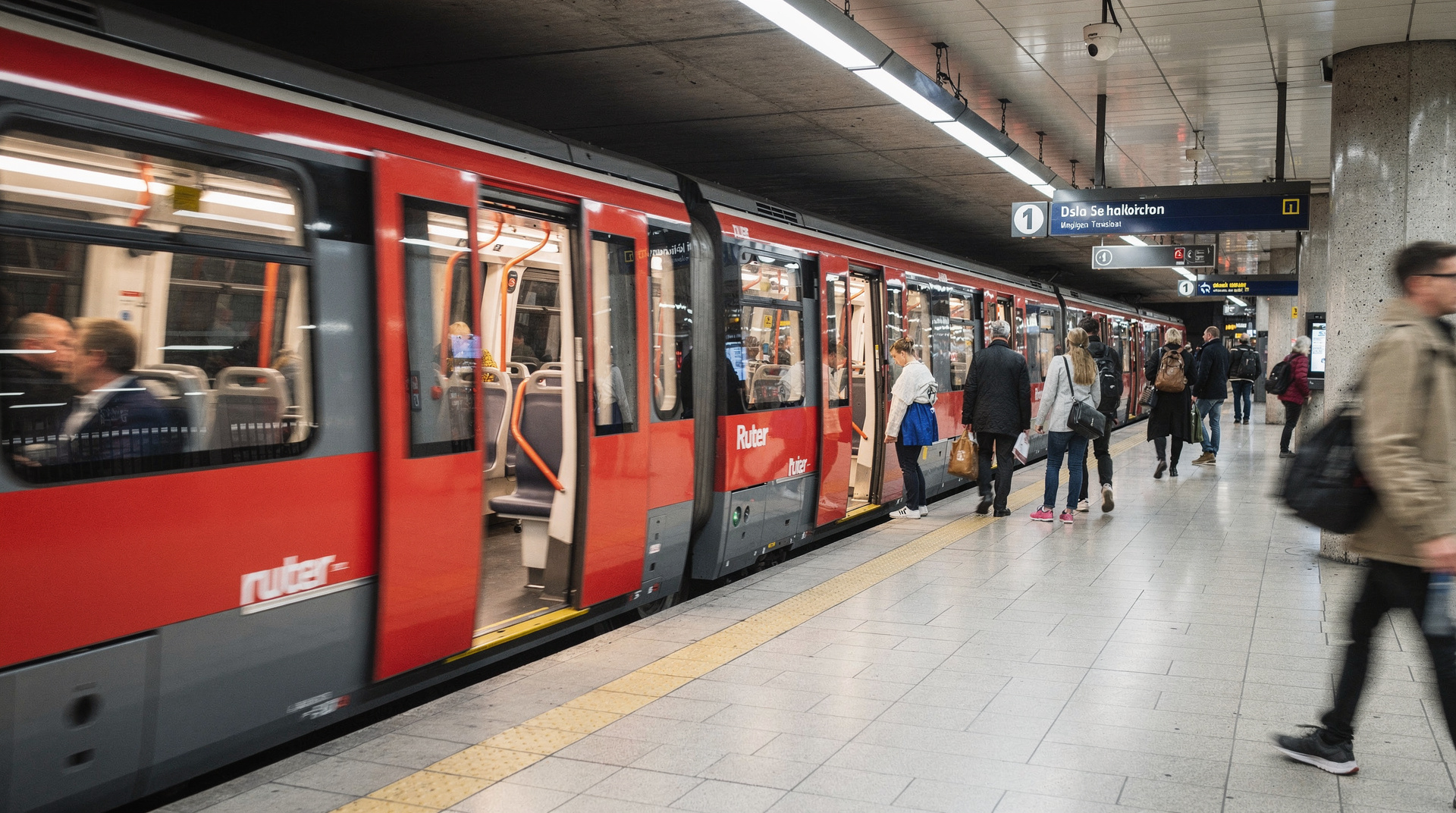
The central T-bane stations — Nationaltheatret, Stortinget, Jernbanetorget, Grønland, and Tøyen — are all step-free with lifts. Most stations built or renovated after 2000 have working lifts. Stations on older sections of lines 4 and 6 in the eastern suburbs may still have stairs at some access points.
The Ruter Journey Planner app has an “accessible journey” (tilgjengelig reise) option that automatically avoids non-accessible stops. Use this rather than the standard routing if you’re relying on lift access.
Key T-bane lines for accessible travel:
- Line 1 to Majorstuen and Vinderen is step-free throughout the central section. The terminus at Frognerseteren involves outdoor terrain in Nordmarka beyond the station.
- Lines 3, 4, 5 to Sognsvann and eastern destinations: central stations are accessible, but check your specific exit station.
Trams
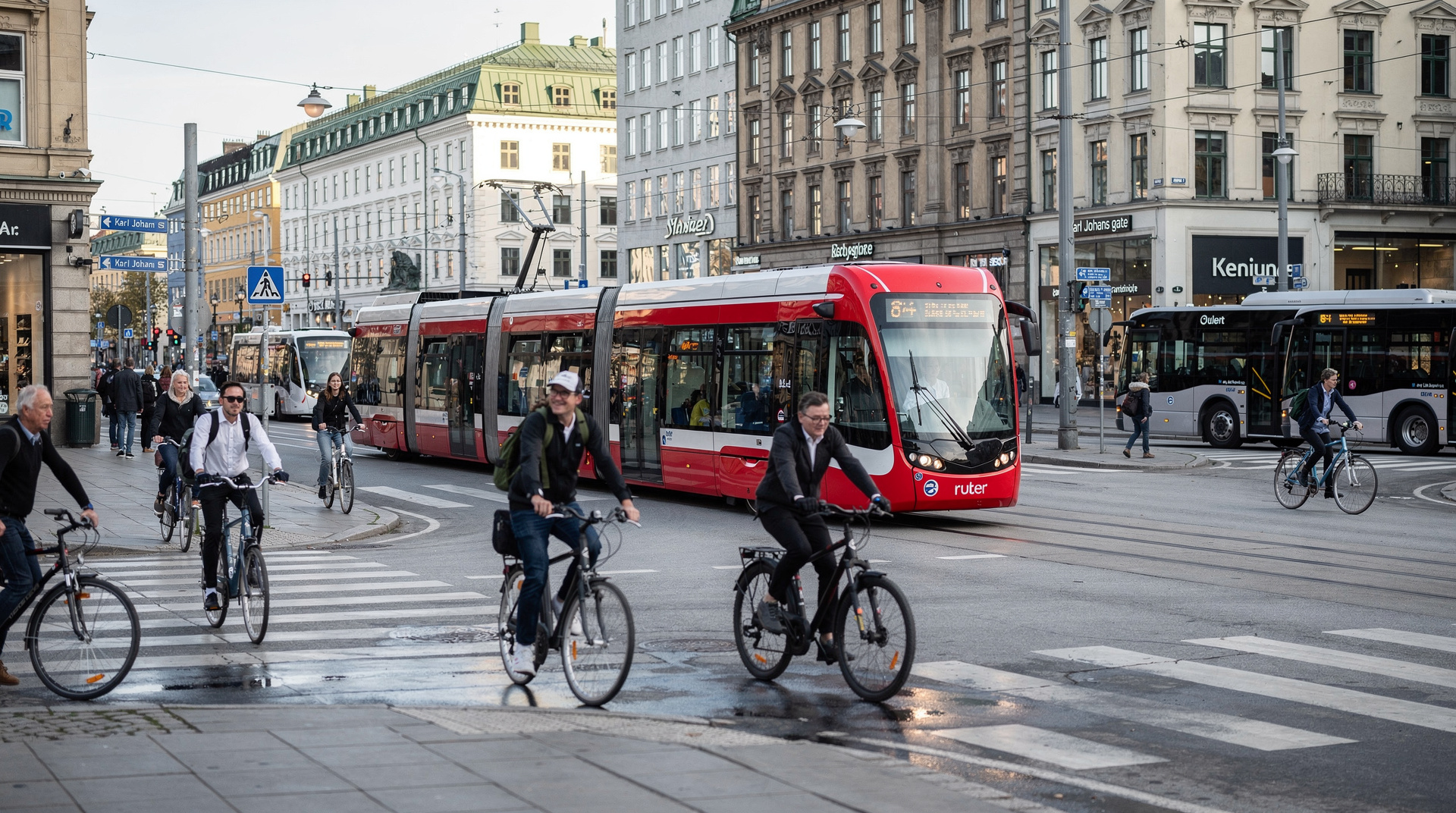
Oslo’s tram fleet has been substantially renewed with low-floor Stadler vehicles. These board level with the platform at well-maintained stops. The gap between the tram and platform edge is minimal at major stops.
Challenges: Some tram stops in residential areas have older, raised platforms with a small step, or a cobblestone approach surface. Tram line 12 (the most useful for visitors) is well-maintained throughout the central section.
The Ruter app timetable shows which departures use accessible vehicles — look for the wheelchair icon.
Buses
All Oslo city buses are low-floor with kneeling capability. Bus stops vary: central stops have level boarding; some outer-suburb stops have raised kerbs or uneven approaches. The driver can deploy the ramp at any stop on request.
Bus 30 from Nationaltheatret to Bygdøy is fully accessible and the recommended alternative to the Bygdøy ferry when accessibility is a concern.
Ferries
Bygdøy ferry (line 91): The pontoon at Aker Brygge and the Bygdøy landing stage can be steep or slippery at low water. The boat operators assist passengers with mobility issues, but the pontoon gradient varies significantly with tidal conditions. Call the Ruter accessibility line (177) or check current conditions before planning this route. Bus 30 is reliably step-free and is the safer choice.
Oslofjord island ferries (lines 82–85): Departing from Vippetangen pier, these older vessels have varying accessibility. Gressholmen ferry service is flat-boarding at the pier. The Nakholmen/Bleikøya/Langøyene ferries involve a small step in rough conditions. The islands themselves have mostly natural terrain (sand, grass, rock) rather than paved paths.
Major attractions
Oslo Opera House
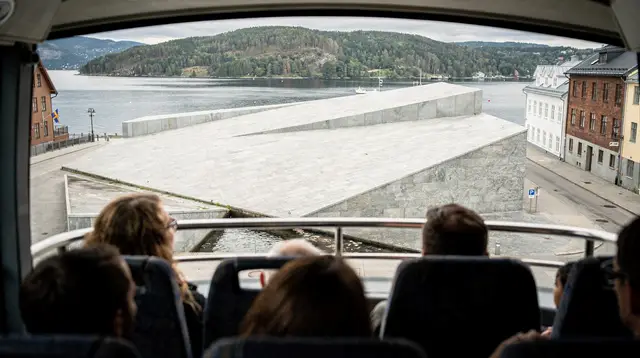
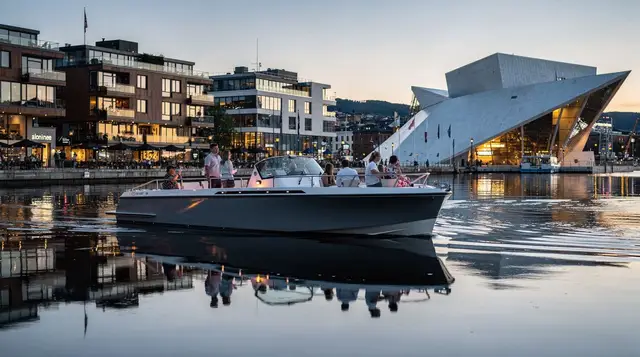
The Opera House (Operahuset) is an architectural landmark and one of Oslo’s most accessible major buildings. The ground floor entrance is step-free. Lifts access all performance levels and the roof (via a ramped section). Accessible toilets are clearly signed. The main hall has dedicated wheelchair spaces with excellent sightlines and hearing loop / T-loop systems for hearing aid users.
The sloping marble roof walk is accessible via a ramp route from the main entrance (avoid the steepest sections if needed). Accessible parking spaces are directly adjacent.
Munch Museum
The Munch Museum (Edvard Munch Museet) in Bjørvika opened in 2021 in a newly built tower. The building is fully accessible: step-free entry, lifts throughout, wide corridors, and accessible toilets on all floors. The temporary and permanent galleries are entirely step-free. Audio guide available.
National Museum (Nasjonalmuseet)
The new National Museum on Aker Brygge, which opened in 2022, was built to universal design standards from the ground up. Completely step-free, with multiple lifts, accessible toilets, hearing loops, and a tactile map at the entrance. One of the most physically accessible museums in Europe.
Norsk Folkemuseum (Norwegian Folk Museum)
This open-air museum on Bygdøy spreads across a large outdoor site with 160 historic buildings. The main paved paths are accessible, but the site is large (about 1.5 km across) and some connecting paths between buildings are gravel or grass. The stave church from Gol (13th century) has steps to the interior — viewing from outside is accessible. Most indoor exhibition spaces within the main building are step-free.
Powered wheelchairs and electric scooters handle the terrain better than manual chairs on the outer paths. The museum offers mobility vehicle hire for visitors — contact in advance.
Fram Museum and Kon-Tiki Museum
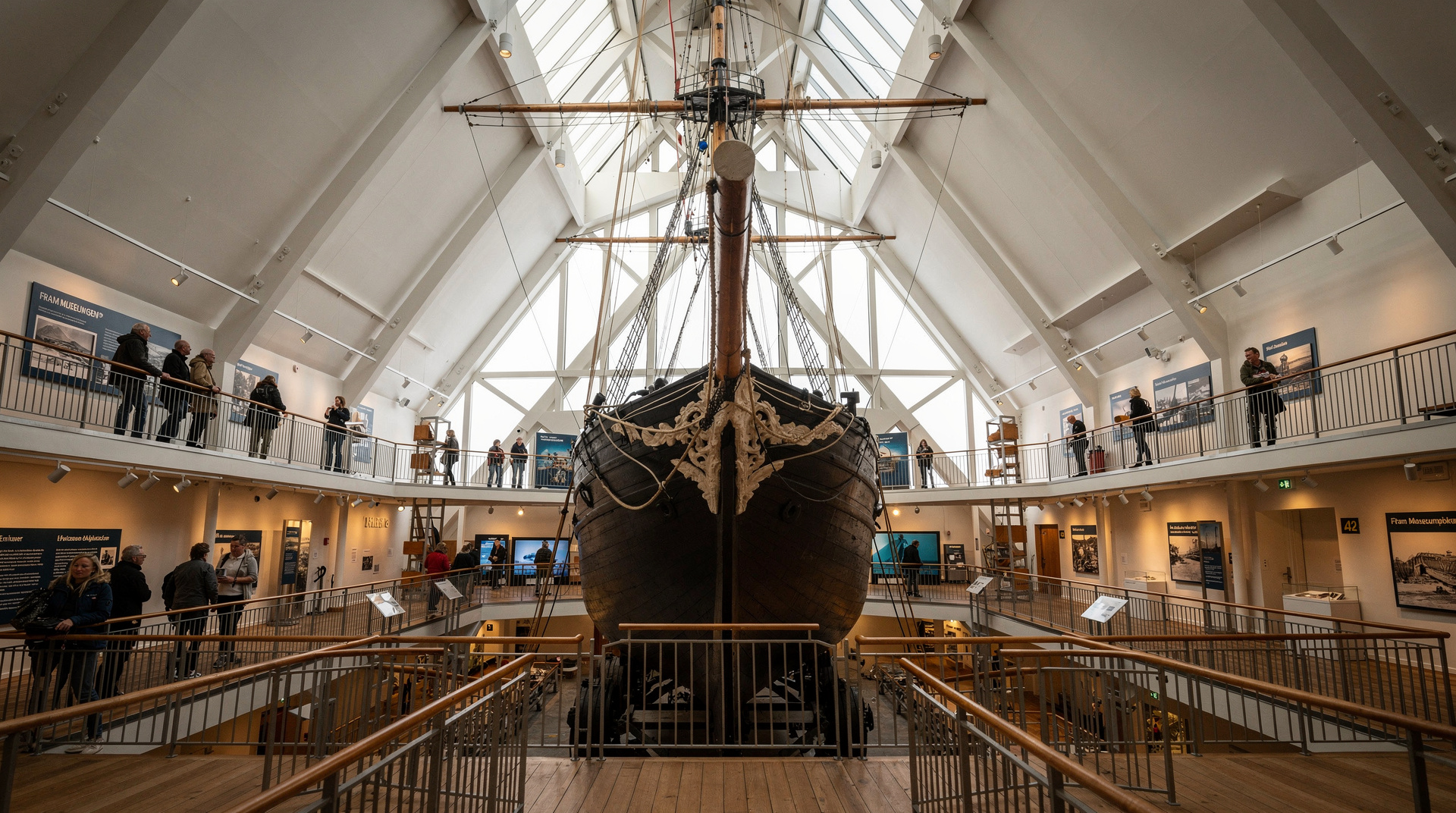
The Fram Museum is step-free throughout, with the main attraction (the polar ship Fram) accessible via ramp. Excellent lift access. The Kon-Tiki Museum’s main display hall is step-free with a lift to the upper floor.
Vigeland Sculpture Park
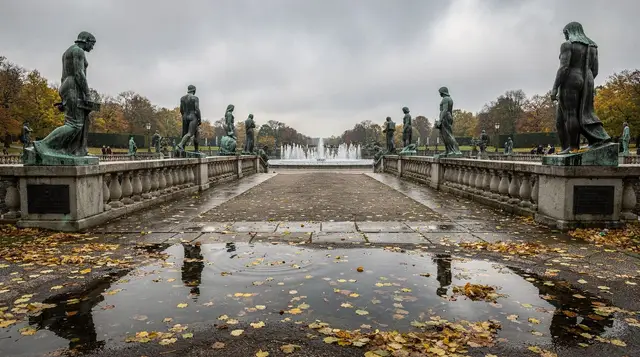
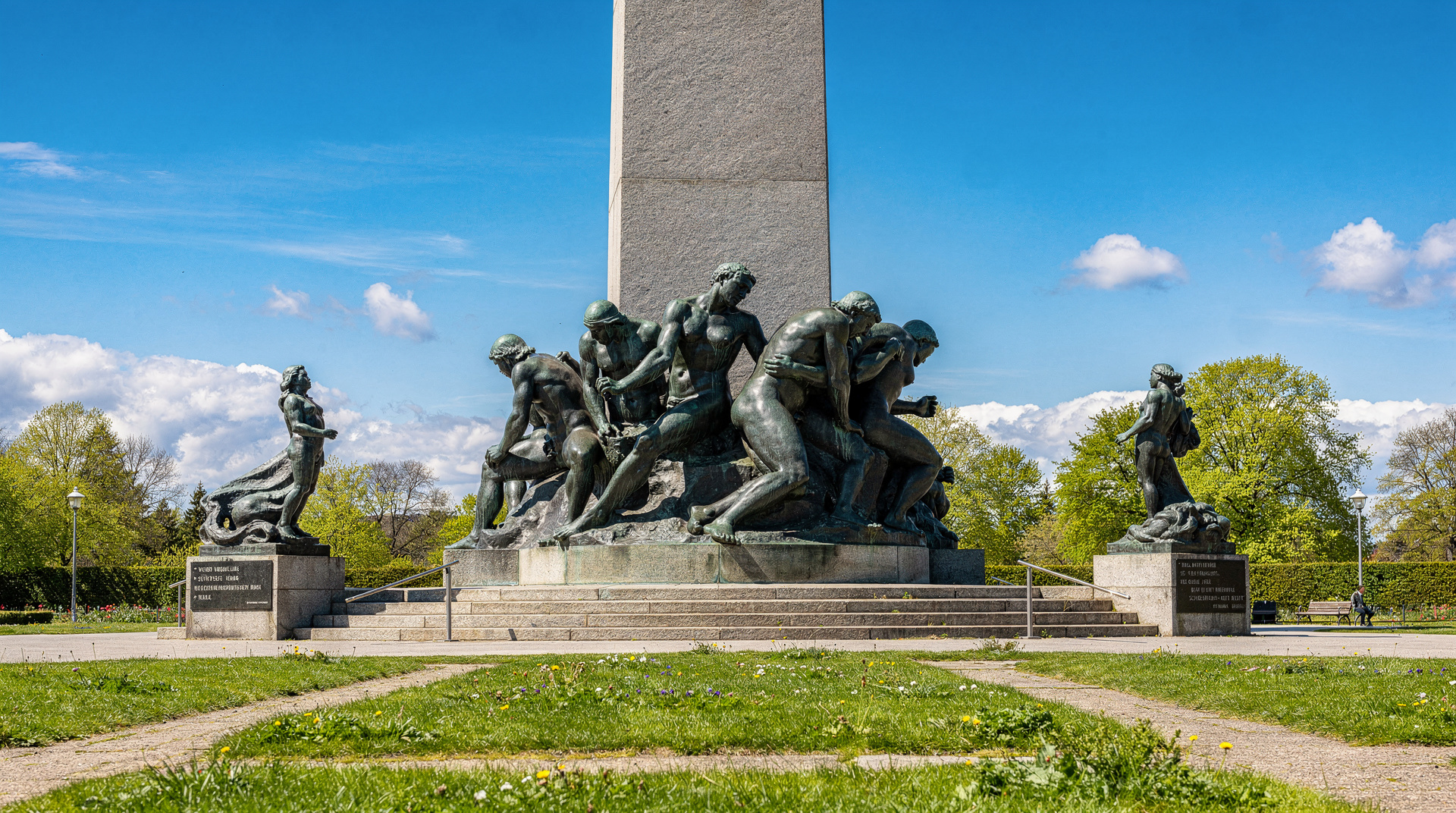
Frogner Park and Vigeland Sculpture Park are mostly accessible. The Monolith plateau (the park’s centrepiece) and the main bridge are fully paved and navigable. Some side paths are gravel. Accessible toilets are at the main entrance on Kirkeveien. The park is flat except for the Monolith hill — the incline is manageable in a standard wheelchair with a companion.
Akershus Fortress
The fortress grounds are partially accessible via the main entrance road from Festningsplassen. The cobblestone courtyard and older buildings inside the fortress are genuinely difficult for wheelchairs — expect uneven, steep surfaces. The sea-facing ramparts are accessible from the main gate. The Resistance Museum (Norges Hjemmefrontmuseum) within the fortress complex is fully accessible with lift access.
Karl Johans gate
The main pedestrian spine of Oslo is fully paved and flat. Wheelchair access along the full length from Oslo S to the Royal Palace is good — see the Karl Johans gate guide for the full walk. The Royal Palace itself offers accessible viewing of the changing of the guard from the square.
Holmenkollen
The Holmenkollen ski jump and museum, reached by T-bane line 1, has lift access to the main museum and the panoramic viewing platform at the top of the jump tower. The approach path from Holmenkollen station involves a moderate uphill gradient of about 400 metres; this is the one major attraction where the terrain itself, not just the buildings, requires some effort. See the Holmenkollen guide for the full site layout and an honest read on the gradient.
Accessible taxis and private transport
Oslo does not have a large fleet of wheelchair-accessible taxis available for street hailing. Adapted vehicles (rullestoltaxi) exist but must be pre-booked — call the taxi company directly or use their app and specify the requirement, ideally a day ahead in peak season. Standard taxis can fold a manual wheelchair into the boot but have no ramp or lift capacity.
For visitors who rely on adapted transport for longer trips (to Bygdøy, Holmenkollen, or day trips beyond the centre), booking a private accessible vehicle in advance through your hotel concierge is more reliable than trying to arrange one on arrival. This is worth building into your trip planning before you land, particularly outside the main tourist season when fewer adapted vehicles are on the road.
Practical tips
Planning your route: Use the Ruter app with the “accessible journey” filter enabled for every journey. It avoids non-lift stations and routes via accessible stops by default.
Contacting Ruter for assistance: The Ruter accessibility service (TT-tjenesten) offers door-to-door transport for travellers with documented disabilities. This requires pre-registration. Call 177 for general Ruter accessibility enquiries.
Oslo Tourist Information: The main Visitoslo information point (Østbanehallen, Oslo S) has staff who can advise on accessible routes and provide printed accessible Oslo maps.
Museum advance booking: Several museums (Munch, National Museum) offer dedicated accessible entry times. Pre-booking online avoids busy arrivals periods.
Accommodation: Most of Oslo’s main hotel chains have fully accessible rooms — request these directly when booking, as accessible rooms are limited and book early. Ask specifically for roll-in shower facilities if required, as standard accessible rooms sometimes have a small step into the bath.
Currency and payments: Every card reader and cash machine in Oslo has a standard height for wheelchair users. The city’s cashless culture means there are no high counter-exchanges to navigate.
Accessible neighbourhoods
Bjørvika and the Opera House district
The newest part of Oslo has been built to the highest modern accessibility standards. The Opera House, the Munch Museum, the Deichman Bjørvika library, and the Havnepromenaden waterfront promenade are all fully step-free. The surfaces are smooth marble, stone, and paving — excellent for wheelchairs. This is the most accessible area of Oslo for mobility-impaired visitors.
Bjørvika practical note: The sloping roof of the Opera House is accessible via a ramp route from the main entrance. The steepest sections of the roof can be avoided. The indoor foyer, café, and shop are all step-free with lifts.
Aker Brygge and Tjuvholmen
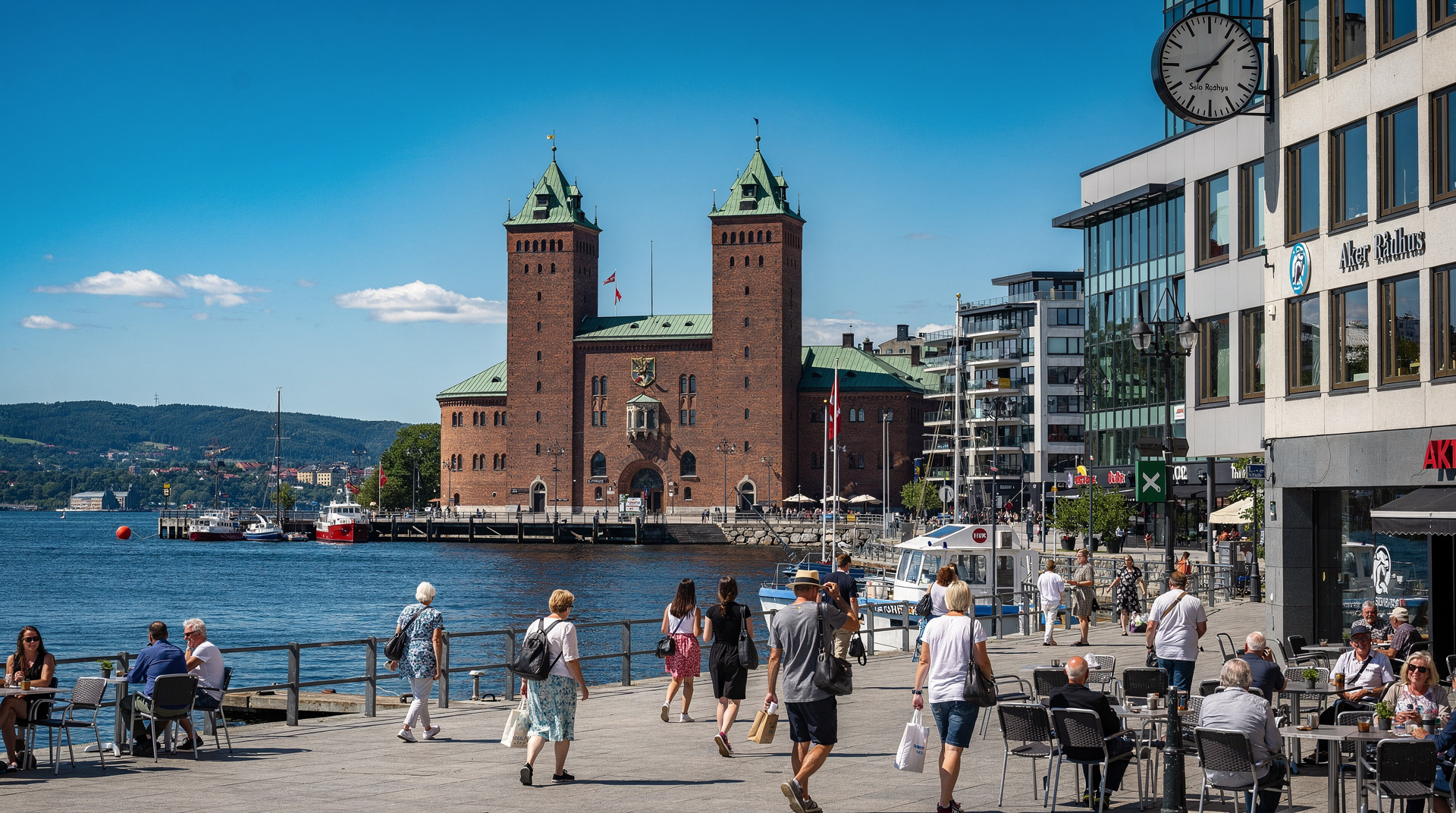
The marina and waterfront district is largely step-free on the main promenade level. The Astrup Fearnley Museum at Tjuvholmen is fully accessible (step-free, lifts, accessible toilets). Some of the older dockside sections have cobblestone or uneven paving — use the main promenade path rather than the side areas near the older boat docks.
Floating saunas note: The floating sauna operators at Tjuvholmen have varying accessibility. The platforms float and move slightly with water movement. Some operators have wider gangways than others. Contact the specific operator (KOK Oslo or Lurøy) directly before booking to discuss accessibility requirements.
Grünerløkka
Oslo’s most popular neighbourhood for cafés and restaurants has variable accessibility. The main streets (Thorvald Meyers gate, Markveien) are paved and navigable. Side streets have more variable surfaces. The Akerselva riverside park has a paved main path running the length of the river through Grünerløkka — this is accessible. The park bridges over the river have gentle slopes.
Mathallen food hall (Vulkan, Grünerløkka): Fully accessible, single-level hall with no steps at the main entrance. The outdoor area around Vulkan has step-free pathways.
Frogner and Vigeland Park
Vigeland Sculpture Park’s main axis (the bridge, the Fountain plaza, and the Monolith plateau) is paved throughout and accessible to standard wheelchairs. The Monolith hill has a gentle ramp rather than stairs. Side paths to the outer sections of the park are gravel and can be challenging for narrow-tyred wheelchairs. Frogner Park’s outer perimeter paths are also accessible.
Getting there: Tram 12 to Vigelandsparken stop. The tram stop has a level boarding surface. From the stop, the park entrance on Kirkeveien is 200 metres on a smooth pavement.
Planning tools and resources
Ruter accessibility information: The Ruter website (ruter.no, English version available) has a dedicated accessibility section with station lift status updates in real-time. The app’s “accessible journey” filter is the most practical tool.
VisitOslo accessibility guide: visitoslo.com publishes a downloadable accessible Oslo PDF guide. Available from the tourist information office at Østbanehallen (Oslo S).
Norwegian Disability Federation (Norges Handikapforbund): nhf.no has resources in Norwegian for disability-related travel planning in Norway.
Disability-adapted rentals: Several of Oslo’s major car hire companies at Gardermoen offer vehicles with hand controls — book well in advance as fleet availability is limited.
Hearing and visual impairments
For visitors with hearing impairments: The Oslo Opera House and major concert venues are equipped with T-loop/hearing loop systems. The Munch Museum and National Museum offer audio guide alternatives and exhibition text is consistently well-written and informative in English. Sign language (Norsk tegnspråk) is a distinct language from ASL or BSL.
For visitors with visual impairments: The Ruter app’s text-to-speech compatibility works reasonably well. Major T-bane and tram stations have audio announcements of departures. The Norsk Folkemuseum has tactile exhibits in some sections. Contact individual museums before visiting to arrange specific assistance.
What visitors consistently report
Based on travel forums and accessibility review sites, the following Oslo experiences are cited most positively by mobility-impaired travellers:
- The Opera House and surrounding Bjørvika waterfront (best accessible area)
- The National Museum and Munch Museum (both post-2022 purpose-built buildings with excellent accessibility)
- The T-bane central tunnel stations (Nationaltheatret, Stortinget, Jernbanetorget, Grønland, Tøyen)
- Vigeland Sculpture Park’s main axis
- The Havnepromenaden promenade from Opera House to Tjuvholmen
Areas with noted challenges:
- Akershus Fortress inner cobblestone areas
- Some Grünerløkka side streets
- The Bygdøy ferry at certain water levels
- Older T-bane stations on peripheral lines without lifts
The overall picture is positive. Oslo’s modern infrastructure and legally mandated universal design requirements have produced a city that is meaningfully more accessible than the European average, even if specific older areas retain challenges.
Building an accessible Oslo itinerary
A realistic accessible first day: start at Bjørvika (Opera House, Munch Museum — both fully step-free, an easy morning), walk the Havnepromenaden waterfront to Aker Brygge and the National Museum for lunch and an afternoon of art, then finish at Vigeland Sculpture Park via tram 12, sticking to the paved main axis. This route avoids the cobblestone challenges at Akershus and the ferry-dependent Bygdøy crossing entirely, while still covering three of Oslo’s best museums.
For a longer stay, see how many days in Oslo for pacing advice that accounts for the extra time accessible routing sometimes needs. If your itinerary includes Bygdøy, plan it as its own half-day: bus 30 out, allow extra time at Norsk Folkemuseum for the uneven outer paths, and check the ferry conditions before relying on it for the return.
Linking this guide to the rest of your planning
Accessibility is easier to manage when it is built into every other decision, not added at the end. A few companion guides help with that, and each one is worth reading with your own mobility needs in mind.
- Museums: the ranking of Oslo’s best museums helps you pick which ones deserve your energy, while the Munch Museum guide and the National Museum guide cover the two newest buildings in more detail. On Bygdøy, the Fram Museum guide and the Kon-Tiki Museum guide help you plan the half-day.
- Getting around: the Ruter public transport guide explains tickets and the app in depth, and the airport to city guide is useful for planning your first step-free journey after landing.
- Neighbourhoods: the Oslo Opera House guide and the Frogner neighbourhood guide go deeper on two of the flatter, smoother parts of the city, and the Oslo destination page gives the wider picture.
- Pacing and weather: the best time to visit Oslo is worth a look, because winter ice and snow change how easy the pavements are for wheels and sticks, and the rainy day museums guide gives you indoor options when the weather turns.
- Budget: adapted transport and accessible rooms can change what a day costs, so compare your plans with the Oslo daily costs guide.
Frequently asked questions about Accessible Oslo
Are Oslo's T-bane (metro) stations accessible?
Most central T-bane stations have lifts and step-free access. Older outlying stations may have stairs only. The Ruter app has an 'accessible journey' filter that routes around non-lift stations. Always check specific stations in advance.Are Oslo's trams step-free?
Most tram lines now operate with low-floor Stadler CAF vehicles that board level with the platform. Some older Duewag trams remain on less-frequent routes and have a single step. The tram stop surface varies — central platforms are smooth; older stops may have a small gap or uneven surface.Is Vigeland Sculpture Park wheelchair accessible?
Largely yes. The main Monolith plateau and the bridge are paved and accessible. Some paths between sections are gravel; bring a companion if your wheelchair has narrow tyres. There are accessible toilets at the park entrance.Are the Bygdøy museums accessible?
The Norsk Folkemuseum has mostly step-free paths between its outdoor buildings, though the terrain is uneven in some sections. The Fram Museum is fully step-free inside. The Kon-Tiki Museum has an accessible ground floor with lift to the upper level. The summer Bygdøy ferry has a pontoon that can be steep at low water — call ahead or use bus 30 as an alternative.Is the Oslo Opera House accessible?
Yes. The Opera House has lifts, step-free entrance, accessible seating inside the hall, and hearing loops for performances. The sloping roof is accessible via a gentle ramp route from the main entrance.Are Oslo taxis wheelchair accessible?
Some Oslo taxi companies operate wheelchair-adapted vehicles (rullestoltaxi) with ramps or lifts, but they must be booked in advance rather than hailed on the street — call or book through the operator's app and specify the need. Standard taxis have no wheelchair capacity beyond a folded manual chair in the boot.Is central Oslo flat, or are there steep hills to navigate?
The core visitor area — Karl Johans gate, Bjørvika, Aker Brygge, Tjuvholmen and most of Grünerløkka — is flat and paved. The main hills are around Holmenkollen and parts of Frogner above the park; the Old Town around Akershus Fortress has the steepest cobbled sections. Route-planning around the flat core covers most major sights without hill challenges.
Top experiences
Bookable activities with verified prices and instant confirmation on GetYourGuide.