Vigeland sculpture park — Oslo's free open-air masterpiece
Oslo: 3-hour highlights and Vigeland Park private walking tour
Duration: 3 hours
- Private tour
- Vigeland Park
Is Vigeland Sculpture Park free?
Yes — Vigeland Sculpture Park is completely free and open 24 hours a day, 365 days a year. It sits within Frogner Park in western Oslo. There is no entry fee, no booking required, and no guided tour necessary to enjoy it, though guided tours are available for those who want deeper context.
What makes Vigeland Sculpture Park extraordinary
There is nothing quite like Vigeland Sculpture Park anywhere in the world. In most cities, public sculpture is scattered — a statue in a square here, a monument there. In Oslo’s Frogner district, one artist spent 40 years of his life creating 212 sculptures and arranging them along a single geometric axis, telling the complete story of human existence from birth to death. And it is entirely free to visit, any hour of the day or night.
Gustav Vigeland (1869 to 1943) was Norway’s most celebrated sculptor. In 1921 he made a deal with Oslo city council: in exchange for a studio and permanent exhibition space, he would donate his entire life’s work to the city. The result is the world’s largest sculpture installation by a single artist, spread across 80 hectares of Frogner Park.
This is not a dusty municipal obligation. It is alive — children climbing bronze babies, couples walking the bridge with the frozen gestures of the figures beside them, cross-country skiers in winter passing the granite columns of the Monolith. It is one of Oslo’s most visited sights and one of the most consistently rewarding.
| Where | Frogner Park, western Oslo; tram 12 to Vigelandsparken |
| Cost | Free (Vigeland Museum inside is NOK 100 extra) |
| Time needed | 45–60 min for the main axis; 2–3 hrs with Frogner Park |
| Open | 24 hours, every day, all year |
| Best time | Early morning (07:00–09:00) or summer golden hour (19:00–21:00) |
The main axis — what you’ll see
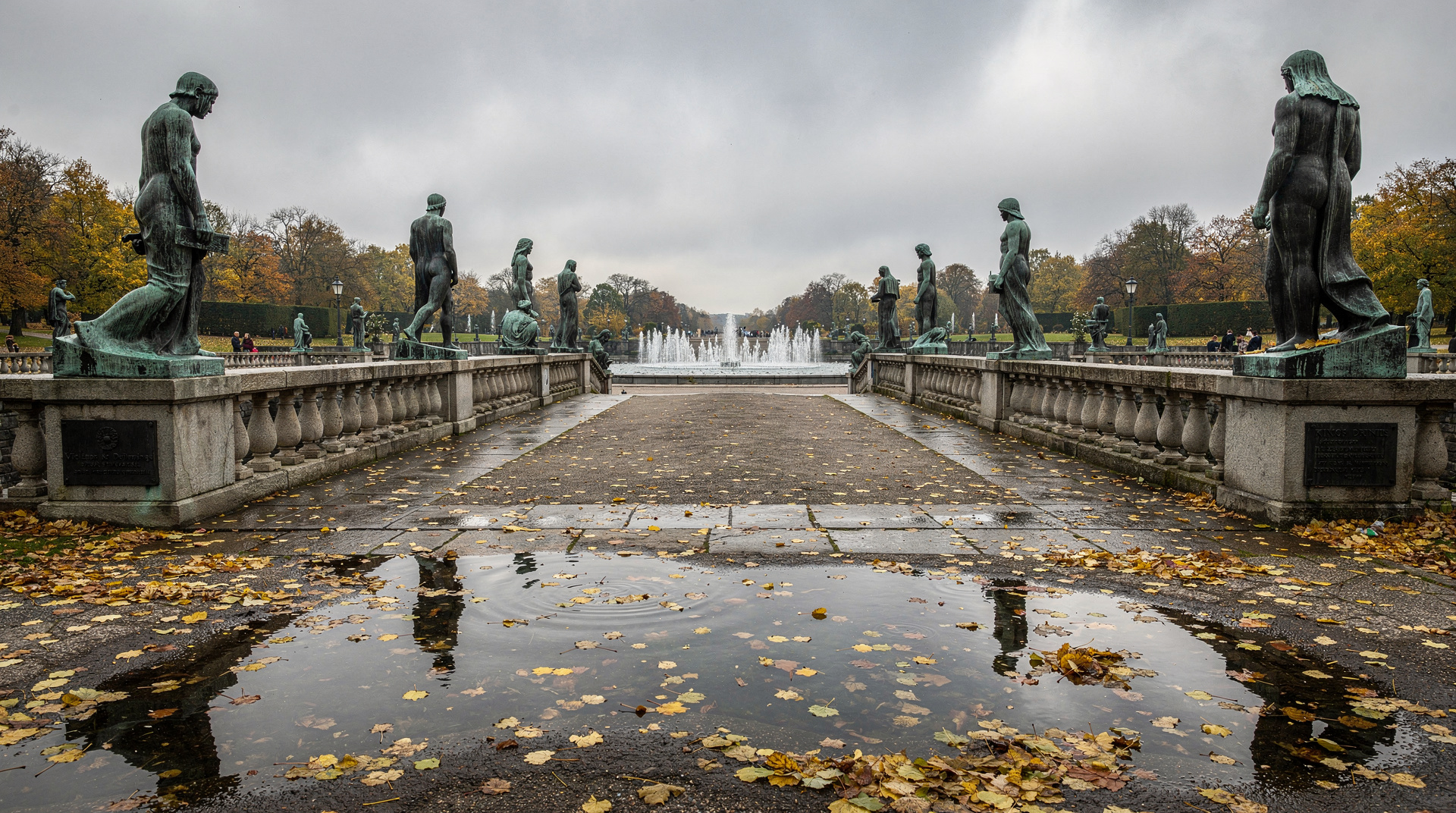
The park is organised along a 850-metre north-south axis with six distinct sculptural groups. Enter from the main south gate at Kirkeveien and walk north.
The bridge
The first major zone is the 100-metre bridge flanked by 58 bronze sculptures. These figures capture the full spectrum of human relationships: children playing, lovers embracing, elderly couples walking, an angry man stamping on a small lizard-like creature (the famous sinnataggen, or “angry boy” — one of Oslo’s most recognised images, rubbed shiny by thousands of hands). Take your time here; each figure rewards close inspection.
The children’s playground area
Beyond the bridge, a large bronze fountain surrounded by 20 tree groups shows more figures — skeletal death figures in the tree branches alternate with life figures in groups below. This zone is particularly popular with families because the sculptures are accessible, expressive, and genuinely suitable for children.
The Monolith plateau
The park’s centrepiece and Oslo’s most iconic single artwork. Climb the steps to the raised circular platform to find three concentric rings of granite figures surrounding the 17-metre Monolith column at the centre. The column itself is carved with 121 figures climbing upward in a spiral — an interpretation of human aspiration and the life cycle that is simultaneously beautiful and slightly unsettling.
Vigeland worked on the design for 14 years. Three stonemasons carved for 14 years more to realise it in Iddefjord granite. Stand at its base and look up — the column seems to shift as the figures emerge from the stone.
The 36 surrounding groups on the plateau steps are also exceptional, depicting the full range of human ages and conditions. Seek out “The Wheel of Life” — a circular bronze sculpture of figures creating a rotating wheel — at the north end of the plateau.
The north gate
The axis terminates at a wrought-iron north gate. The gate itself is an artwork — the metal fence along the park perimeter features 55 cast-iron figures and 58 decorated fence posts.
Practical visiting guide
How to get there:
- Tram 12 from Nationaltheatret or Jernbanetorget: approximately 15 minutes to Vigelandsparken stop. Service every 6 to 10 minutes during the day.
- Tram 19 to Frogner plass: 10-minute walk to the main gate.
- Metro (T-bane) line 2 to Majorstuen: 15-minute walk west.
- Walking from central Oslo: 30 to 40 minutes, a pleasant route through Frogner.
Opening hours: The sculpture park is open 24 hours, every day of the year. No gates or barriers. The Vigeland Museum inside Frogner Manor is open Tuesday to Sunday, 10:00 to 17:00 (shorter hours in winter). Museum entry: NOK 100 (USD 11) adults, children under 18 free. Check the museum website for current hours as they vary seasonally.
Free entry confirmed: There is no charge to enter or walk through the sculpture park. The only paid option is the Vigeland Museum.
What to bring: Comfortable shoes (cobblestones and grass paths), water in summer, warm layers in winter (the plateau is exposed and wind picks up). A camera is almost obligatory — the contrast between figurative bronze sculpture and Norwegian sky is endlessly photogenic.
When to visit
Early morning (07:00 to 09:00): The park is almost deserted. The light is soft, especially in summer when the sun is already up before 05:00. Without tour groups, you can stand in front of the Monolith and look without distraction. This is the single best time to visit.
Golden hour in summer (19:00 to 21:00): The evening light across the granite plateau is spectacular. Locals jog and walk dogs; the tourist buses are gone. Bring a picnic and find one of the benches near the fountain.
Midday on summer weekends: This is the peak tourist period. Tour groups from multiple cruise ships and hotels can converge here simultaneously. The bridge becomes crowded and the Monolith area fills. Not necessarily bad — there’s an energy to a populated park — but you lose the private connection with individual sculptures.
Winter: The park in snow is unforgettable. The granite Monolith turns grey-white against winter cloud, the bronze figures accumulate snow, and the entire park is almost empty apart from cross-country skiers cutting through the adjacent Frogner Park. Dress for temperatures of minus 5 to minus 15°C in January and February.
Spring (late April to May): Cherry blossoms in the adjacent Frogner Park, thawing ground, and increasing daylight create one of Oslo’s most pleasant seasonal moments. Fewer tourists than high summer.
Guided tours
A guided private walking tour of the park adds real context — the symbolism in individual sculptures is not always obvious, the chronology of Vigeland’s career is interesting, and the stories behind specific figures (like why the angry boy exists and who may have inspired him) are genuinely entertaining.
The 3-hour private highlights-and-Vigeland tour covers the park within a broader Oslo orientation, linking the sculpture themes to Norwegian culture and history. For those who want to combine the park with a city overview, the panoramic sculpture park walk also passes Holmenkollen viewpoints.
If you want a deeper solo experience without a tour, the Vigeland Museum contains the original clay and plaster models, which give you an intimate sense of how the final sculptures were developed.
Combining Vigeland with the surrounding area
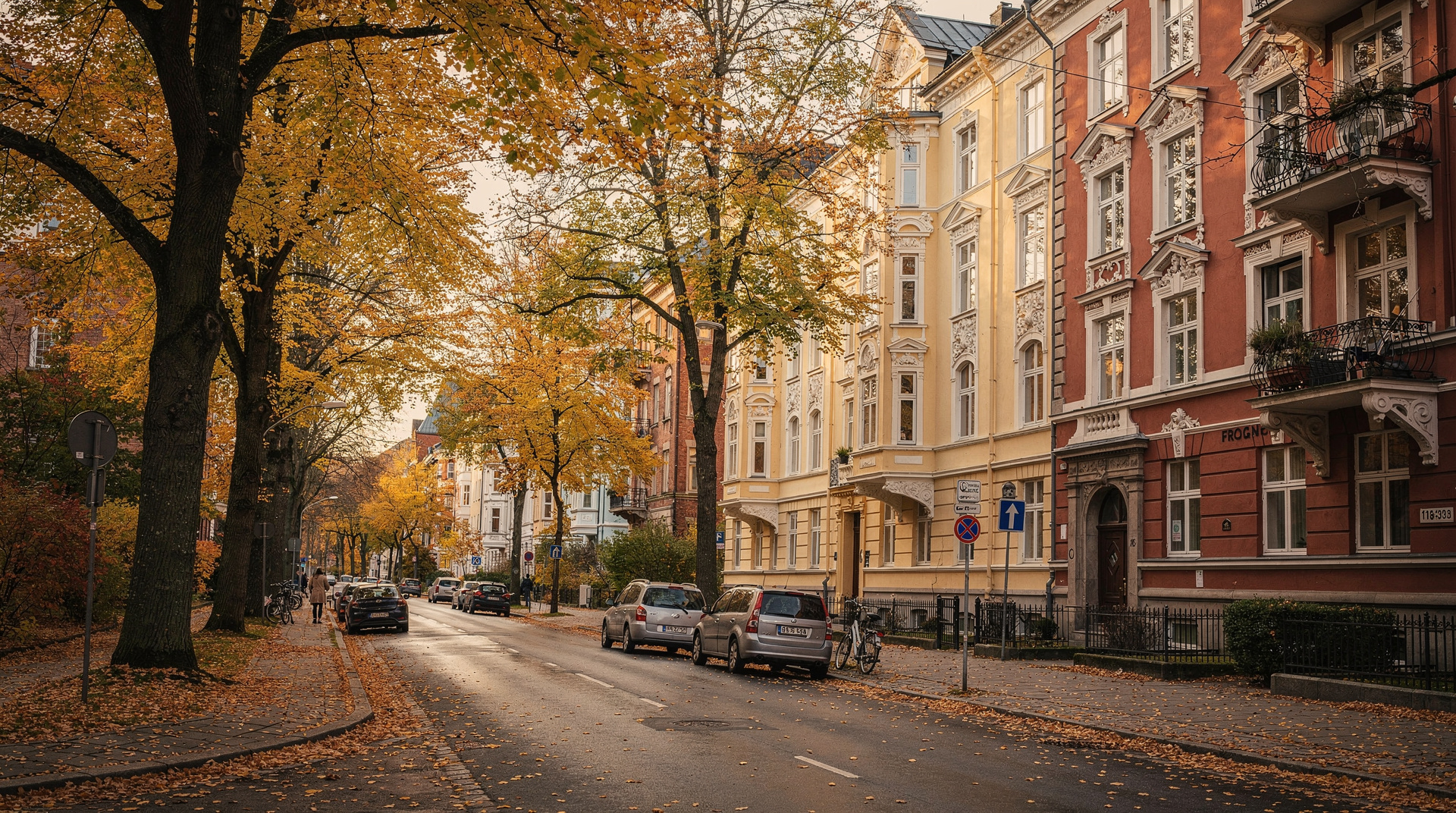
The sculpture park sits within the much larger Frogner Park — lawns, sports facilities, ponds, and the historic Frogner Manor. It’s worth an extra hour to explore. Read our Frogner Park guide for the full picture.
The elegant Frogner neighbourhood surrounding the park has excellent cafés and restaurants for a post-visit lunch or coffee. Westward toward Bygdøy, you can link the park to the peninsula museum cluster (Norsk Folkemuseum, Kon-Tiki, Fram) — see Frogner neighbourhood guide for ideas.
The Oslo Pass doesn’t provide any advantage for the sculpture park itself (free entry anyway), but it covers the Vigeland Museum and transport, so it’s worth considering if you’re doing a museum-heavy day.
Fitting Vigeland into your Oslo days
Vigeland works best as an anchor for a western-Oslo morning or evening rather than a stand-alone trip. If you only have one day, our Oslo in 1 day itinerary shows how to slot it in without rushing the rest. With two days, the Oslo in 2 days plan gives the park proper time, and the Oslo in 3 days plan leaves room to add the museum and a long wander through the surrounding lawns.
Because the park never closes, it is also a useful buffer. If rain ruins a boat trip or a hike, you can come back at dusk, or at the start of the day before your first booking. If you are weighing how long the whole city deserves, how many days in Oslo helps you decide how much slack to build in.
Who the park suits best
- Families: the bronze groups are physical and playful, and children tend to make their own stories about them. See Oslo with kids for how to pair the park with other family-friendly stops.
- Budget travellers: with no entry fee, Vigeland sits at the top of any list of free things; combine it with the ideas in Oslo on a budget for a day that costs very little.
- Solo visitors: the long axis and the benches make it an easy place to linger alone, and the park feels comfortable at all hours. Our solo travel in Oslo guide covers the wider city.
- Photographers: the low light of early morning and late evening does most of the work for you; a patient hour beats a rushed three.
How to read the sculptures
Do not try to decode every figure. Start with the overall idea: the park follows a human life, and the groups change in mood as you move along the axis. On the bridge the figures are individual and often humorous or tender; on the plateau they pile into dense, almost architectural forms. Notice how the same human body is shown at many ages and in many moods, with no clothing, no status and no names, which is exactly why the work feels universal.
Stand still for a few minutes in front of one group before moving on. Watch where the hands go, who touches whom, and who turns away. Many visitors say the quiet details, a parent bending over a child or two people leaning on each other, stay with them longer than the famous Monolith.
Pairing Vigeland with other sights
The park sits close to several other places worth a visit on the same day:
- For another open-air art setting with a very different feel, compare it with the Ekeberg sculpture park on the other side of the city.
- For more art indoors, the National Museum and the Munch Museum make a natural second stop on a culture-themed day; the ranking of Oslo’s best museums helps you choose.
- To get there and back without fuss, read getting around Oslo and the Ruter public transport guide.
- The wider district is described on the Frogner and Vigeland destination page, which is useful if you want to stay nearby.
If the weather turns, the rainy day museums guide lists indoor options to switch to, and you can return to the park once the sky clears.
A note on photography
The sculptures are photographed constantly and from every angle — this is expected and welcomed. Just note that commercial photography and film production require a permit from the Vigeland Park administration. Personal and editorial photography is unrestricted.
The most photographed spots: the sinnataggen (angry boy) on the bridge, the Monolith from below, and the “Wheel of Life” circular bronze. Less obvious but equally rewarding: the detailed individual figures in the bridge groups, the tree fountain from the south, and the north gate iron figures.
What Vigeland is not
It is not a museum with indoor galleries. It is not the Frogner Manor house, which has its own separate history (and is the location of Oslo City Museum, separate from the Vigeland Museum). It is also not quick to rush through — the temptation to try to see all 212 sculptures in 30 minutes leads to a superficial experience. Give it time.
For the overall Oslo sightseeing picture, see our top things to do in Oslo guide and free things to do in Oslo.
Vigeland Park by season at a glance
| Season | Atmosphere | Crowds |
|---|---|---|
| Winter (Dec–Feb) | Snow-dusted bronze, near-empty, minus 5 to minus 15°C | Lowest |
| Spring (Apr–May) | Cherry blossom in Frogner Park, mild, fresh | Low–moderate |
| Summer (Jun–Aug) | Long light, golden evenings, warmest | Highest, especially 11:00–14:00 |
| Autumn (Sep–Oct) | Leaf colour, cooler, still pleasant | Moderate |
A note on accessibility
The main axis is largely flat and paved or gravel, making it one of Oslo’s more accessible major attractions for visitors with mobility considerations or pushchairs. The bridge and Monolith plateau steps are the only sections requiring extra care — the plateau itself is reached via a shallow, wide staircase, though a ramped side route is also available. Benches are frequent along the main axis, useful for anyone wanting to pace a longer visit.
Frequently asked questions about Vigeland sculpture park — Oslo's free open-air masterpiece
How long does Vigeland Sculpture Park take?
The main axis of the park — from the bridge to the Monolith plateau — takes 45 to 60 minutes at a leisurely pace. A full exploration including the surrounding Frogner Park and the park museum takes 2 to 3 hours. Guided tours typically run 1.5 to 3 hours.What is the Monolith at Vigeland?
The Monolith is a 17-metre granite column carved with 121 intertwined human figures by sculptor Gustav Vigeland. It stands at the highest point of the park on a raised circular platform. Vigeland worked on the design from 1924 and it was completed in 1943 after 14 years of carving by three stonemasons.What time is best to visit Vigeland?
Early morning (07:00 to 09:00) for empty paths and beautiful light. Late afternoon (17:00 to 19:00) in summer for golden-hour atmosphere. Avoid 11:00 to 14:00 on summer weekdays and weekends when tour buses arrive. The park in snow is spectacular and nearly deserted.How do I get to Vigeland Sculpture Park?
Take tram 12 to Vigelandsparken stop (from Jernbanetorget or Nationaltheatret, about 15 minutes). Alternatively, tram 19 to Frogner plass and walk 10 minutes. By metro, take line 2 to Majorstuen and walk 15 minutes west.How many sculptures are in Vigeland Park?
The park contains 212 sculptures in bronze, granite, and wrought iron — all designed by Norwegian sculptor Gustav Vigeland (1869 to 1943). The installation represents the entire lifespan of humanity, from birth to death, across six main sculptural groups.Is there a Vigeland Museum?
Yes — the Vigeland Museum is inside the former Frogner Manor in the park grounds. It contains Vigeland's original models, drawings, woodcuts, and the sculptor's personal belongings. Entry: NOK 100 (USD 11) for adults, children free. Open Tuesday to Sunday.
Top experiences
Bookable activities with verified prices and instant confirmation on GetYourGuide.
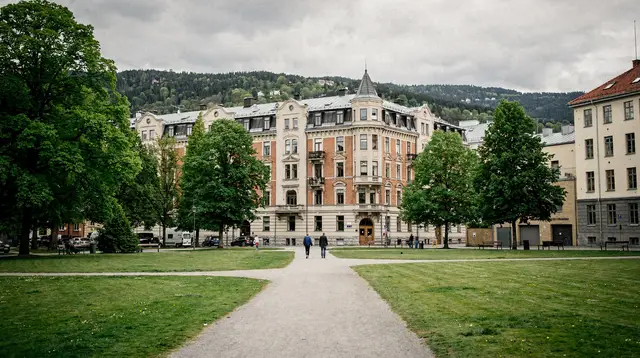
Oslo: 3-hour highlights and Vigeland Park private walking tour
- Private tour
- Vigeland Park
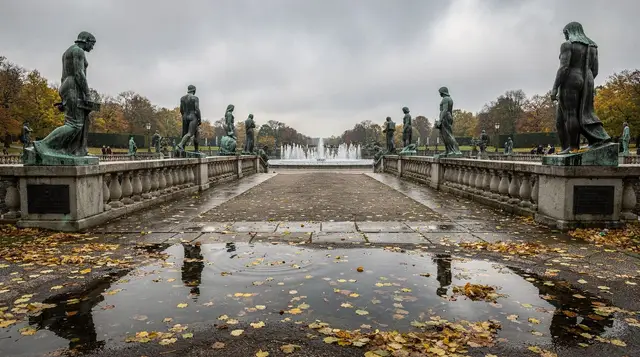
Oslo: city and Vigeland Park private walking tour
- Private tour
- Vigeland Park
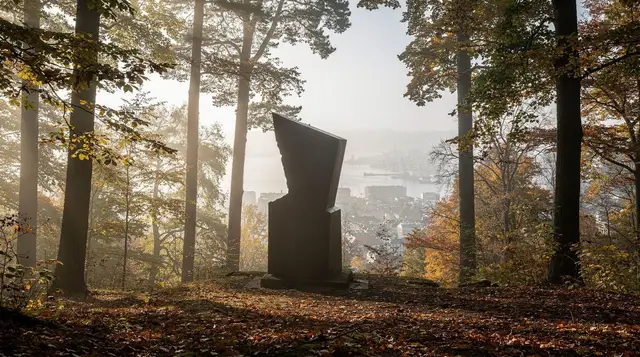
Oslo: panoramic view and sculpture park walk
- Scenic views
- Vigeland Park

Oslo: panoramic sightseeing bus with Holmenkollen and Vigeland Park
- Hotel pickup
- English guide