Frogner & Vigeland Park
Vigeland Park is free, open 24/7, and holds 200+ sculptures. This guide covers the park, Frogner's restaurants, and the Oslo City Museum.
Oslo: 3-hour highlights and Vigeland Park private walking tour
Duration: 3 hours
- Private tour
- Vigeland Park
Quick facts
- Best time to visit
- Any season; golden hour in summer or snow in winter are both extraordinary
- Vigeland Park hours
- Open 24 hours, free entry, every day of the year
- Getting there
- Tram 12 to Vigelandsparken stop, or T-bane to Majorstuen then 10-min walk
- Budget
- Park is free; dining in Frogner runs NOK 280–500 (USD 30–54) for a main
The park that makes other sculpture parks look timid
Vigeland Park (Vigelandsparken) within Frogner Park is one of those genuinely rare places that exceeds expectations. Most visitor accounts — the superlatives about scale, the praise for the human figures, the observation that it is unlike anything else in Europe — turn out to be accurate rather than promotional. The park contains more than 200 sculptures in bronze, granite, and cast iron, all created by a single artist, Gustav Vigeland, between 1900 and 1943. The whole thing is free to enter, at any hour, on any day of the year.
That is the fact that most travel coverage buries: Vigeland Park costs nothing. In a city where a museum entry runs NOK 160 to 220 and a decent lunch costs NOK 200 to 280, an entire afternoon in one of Europe’s most significant works of public art is genuinely, categorically free. This matters for budget planning.
It also means the park is equally available at midnight as at noon — and the choice of when you go changes the experience dramatically.
What Vigeland Park actually is
Gustav Vigeland (1869–1943) spent more than four decades creating this work. The Oslo city government gave him a permanent studio — now the Vigeland Museum, adjacent to the park — and a free hand. What he produced is a symbolic representation of the human life cycle, from birth through childhood, love, struggle, and death, organised along a formal axial layout inside Frogner Park.
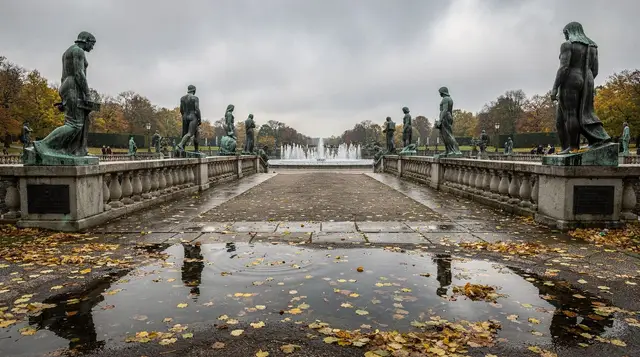
The main entrance (from Kirkeveien, to the east) leads across a bridge lined with 58 bronze figures — children, adults, adolescents, bodies in motion and stillness — before arriving at a central fountain surrounded by more bronze groups. Beyond the fountain, a broad stairway climbs to the Monolith plateau, dominated by the Monolith (Monolitten): a 14-metre column of granite carved with 121 intertwined human figures reaching upward. Completed in 1944 (after Vigeland’s death), it took three stonecutters 14 years to carve from the original block.
The plateau also contains the Wheel of Life — a circular wreath of human figures forming an unbroken ring — and the Sundial. From here, views extend back over the park to the city skyline.
Beyond the formal axis, the park extends into lawns, rose gardens, and the older Frogner Park (which surrounds and contains the sculpted section), with sports facilities, a duck pond, and children’s play areas.
When to visit
Summer evenings (9 pm in June and July): the light at this hour — low, golden, long shadows across the granite — is extraordinary. The crowds thin out after 7 pm. This is the single best time to visit.
Early morning (7–9 am): the park is used by joggers and dog-walkers before the tour groups arrive. Quiet and atmospheric.
Winter with snow: Oslo’s winters bring occasional snowfall that transforms Vigeland Park into something closer to a Russian Romantic landscape painting — the dark bronze figures against white ground, the Monolith catching low winter light. Not warm, but visually spectacular.
Midday in July: the worst time — tour groups from cruise ships and the Hop-on Hop-off route converge around 11 am and the main axis becomes crowded. Still perfectly fine, but the park is more enjoyable with fewer people.
The Vigeland Museum
The studio building where Vigeland lived and worked from 1924 until his death is now the Vigeland Museum (Vigeland-museet), immediately adjacent to the park (Nobels gate 32). Entry is NOK 100 (USD 11) for adults; free with the Oslo Pass.
The museum holds Vigeland’s drawings, plaster models, and preparatory sketches — the full range of his creative process across four decades. It is a surprisingly intimate space given the monumental scale of the park outside. Allow an hour. Closed Mondays.
For a deeper look at the sculptures themselves, our Vigeland Sculpture Park guide goes figure by figure, and the Frogner Park guide covers the wider grounds around them.
Frogner: the neighbourhood
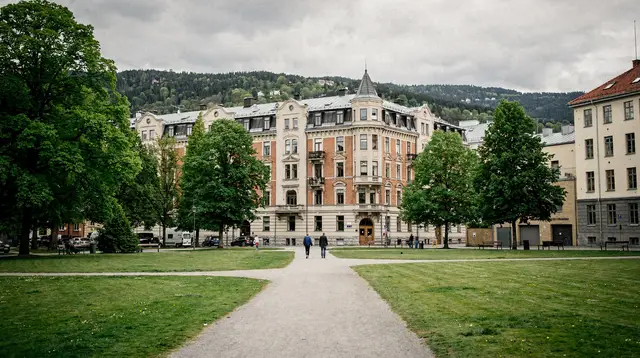
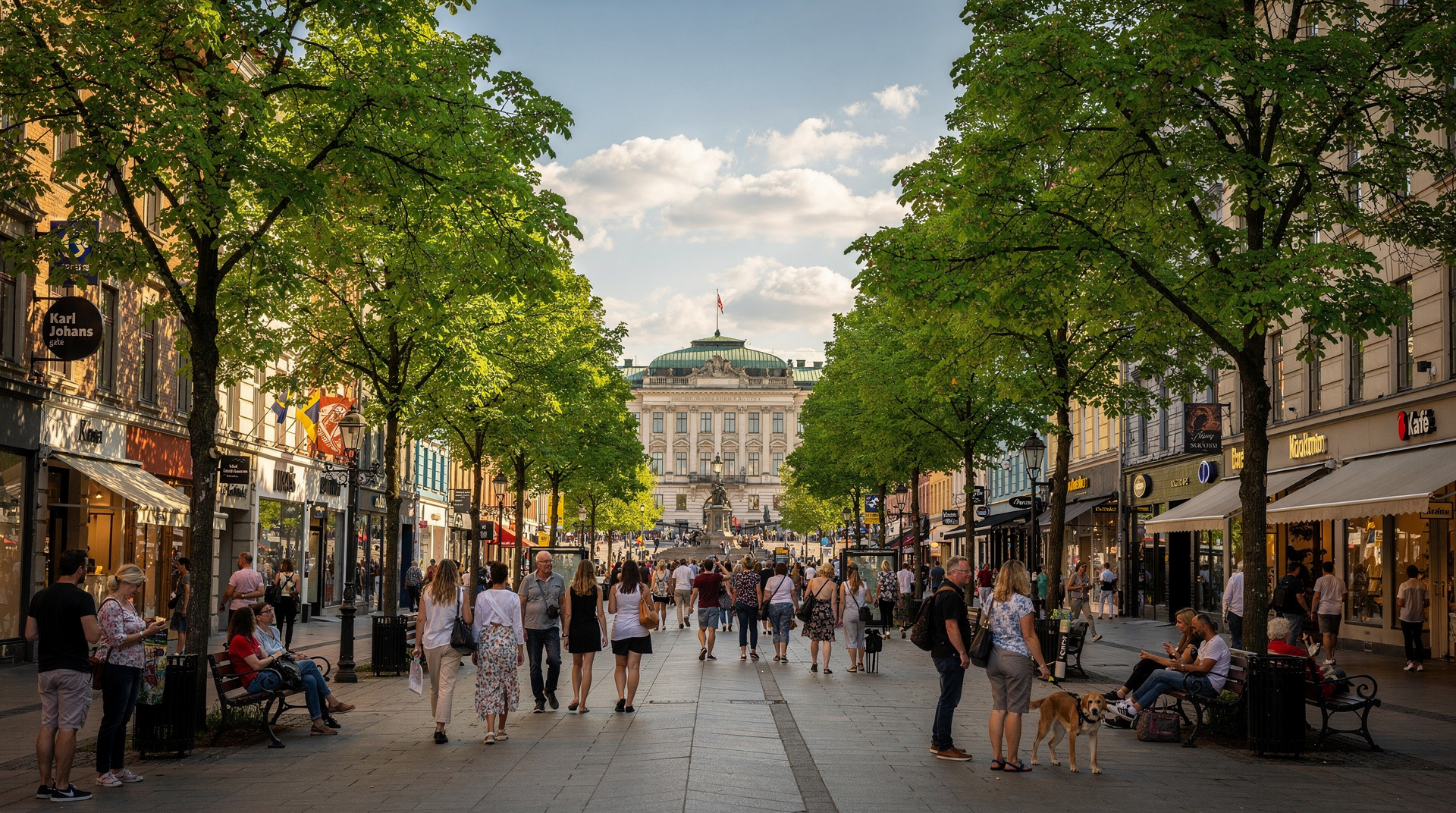
The residential district surrounding Frogner Park is Oslo’s most overtly affluent neighbourhood: broad, tree-lined streets, early-twentieth-century apartment buildings in the Continental style, embassies, and upper-end hotels. It feels quieter and more residential than Aker Brygge or Grünerløkka, which is part of its appeal.
Bogstadveien is the main shopping street running east from Majorstuen toward the park. It hosts a mix of Norwegian and international fashion brands, specialist food shops, and the best neighbourhood coffee on this side of the city. It is the commercial spine of the Frogner/Majorstuen area.
Frogner neighbourhood restaurants: Frogner’s dining scene is upmarket and generally very good, though prices reflect the local demographics.
- Frognerseteren (technically up in the Holmenkollen hills, but the classic Frogner-area destination): a landmark Norwegian restaurant with fjord views and a traditional menu. See Holmenkollen guide.
- Arakataka: Nordic small-plates restaurant on Mariboes gate, creative and seasonal, around NOK 600 to 900 (USD 65–97) per person for dinner with wine.
- Hanami: one of Oslo’s most respected Japanese restaurants, specialising in omakase. Book weeks ahead; dinner runs NOK 1 400 to 1 900 (USD 150–205) per person.
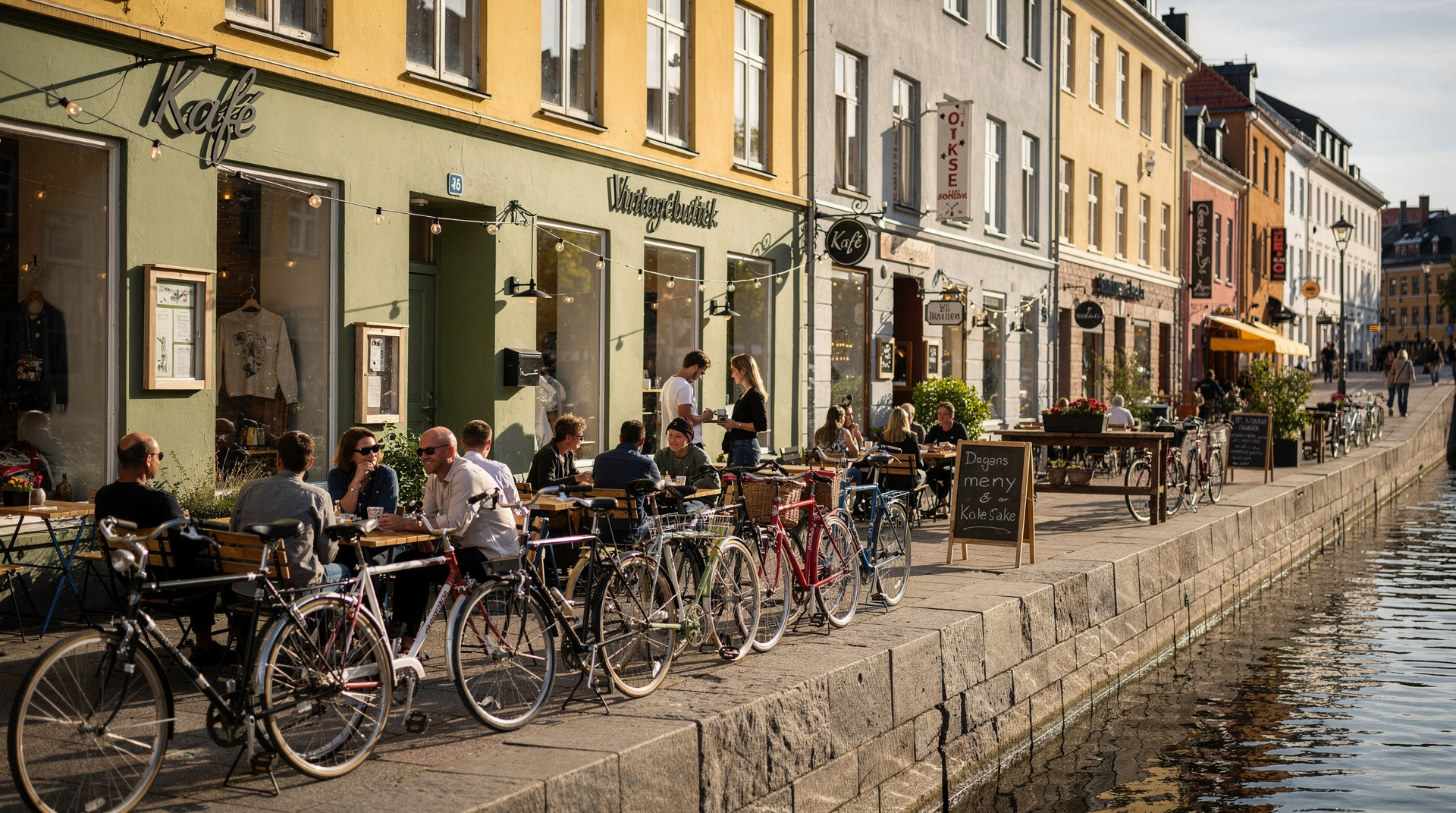
- Café Sør / neighbourhood cafés on Bygdøy allé: several good lunchtime spots with smørbrød (open sandwiches), soups, and coffee at NOK 140 to 200 (USD 15–22) — reasonable by Oslo standards.
If you want a fuller picture of how the district lives day to day, the Frogner neighbourhood guide adds more streets, cafés and local habits to explore.
Oslo City Museum
Inside Frogner Park, the Oslo City Museum (Oslo Museum) occupies the Frogner Manor buildings (dating from the 1790s). The permanent exhibition covers Oslo’s history from its medieval founding through industrial growth to the present. Entry is NOK 100 (USD 11). It is a somewhat overlooked museum — not spectacular, but genuinely useful context for understanding the city. Closed Mondays.
Getting there
Tram 12 from Jernbanetorget (Oslo S direction): get off at Vigelandsparken stop — the tram drops you directly at the park’s eastern gate. About 20 minutes from the city centre.
T-bane (any line) to Majorstuen, then walk about 10 minutes west along Kirkeveien to the park entrance. This approach takes you through Bogstadveien, which is worth walking in its own right.
City bike (Bysykkel): docks near the park entrance and throughout Frogner. Pleasant cycling from the city centre takes about 20 minutes via the protected bike lanes on Bygdøy allé.
For transport context, see getting around Oslo. The Ruter public transport guide explains how tickets work across trams, the T-bane and buses, which helps when you combine the park with other stops in one day.
Frogner in context with other Oslo districts
Frogner is geographically and socially west of centre — quieter, more residential, and more expensive than the eastern neighbourhoods. It pairs naturally with Aker Brygge and Tjuvholmen (a 25-minute walk or short tram ride south) and with the Sentrum to the east. A natural day combines: morning at the National Museum (Aker Brygge), lunch in Frogner, afternoon at Vigeland Park, and evening drinks on Bogstadveien. Our 2-day Oslo itinerary structures this kind of combination efficiently.
Travelling on a tight budget? Vigeland Park is a natural anchor for the free things to do in Oslo, and it sits comfortably inside the Oslo budget weekend itinerary. If you are weighing the Oslo Pass for museum visits like the Vigeland Museum, the Oslo Pass guide helps you decide whether it pays off.
Vigeland Park for photography
The park offers some of the most photogenic scenes in Oslo across all seasons. Key spots for photography:
- The bridge at sunrise or sunset: the low-angle light catches the bronze figures from behind, creating dramatic silhouette effects.
- The Monolith at any hour: the column’s texture catches light differently throughout the day; overcast conditions actually work well here, reducing harsh shadows.
- The fountain basin in autumn: falling leaves around the fountain create colour contrast with the dark bronze.
- Winter morning after snowfall: the park clears early of footprints; arrive before 8 am for clean compositions.
Frequently asked questions about Frogner and Vigeland Park
How much does Vigeland Park cost to enter?
Nothing. Vigeland Park is completely free and open 24 hours a day, 365 days a year. There are no timed entries, no booking requirements, and no sections that cost extra. The adjacent Vigeland Museum costs NOK 100 (USD 11) for adults but is a separate visit.
How long does it take to walk through Vigeland Park?
The main axis from the eastern gate to the Monolith plateau and back takes about 45 to 60 minutes at a leisurely pace, including time to look at the sculptures along the bridge and the fountain. Extending into the wider Frogner Park areas, adding the Vigeland Museum, and taking time for photography can easily fill two to three hours.
Is Vigeland Park suitable for children?
Very much so. The park is large, flat, and entirely outdoor. The human figures along the bridge include children, and the famous “Angry Boy” (Sinnataggen) — a small bronze figure of a furious toddler — is a favourite with children who like to see tantrums immortalised in bronze. The wider Frogner Park has a pond with ducks, open grass, and play areas.
What is the best sculpture in Vigeland Park?
The Monolith (Monolitten) on the central plateau is the most significant work — a 14-metre column of 121 figures that rewards extended looking. But many visitors find the figures on the bridge equally moving: the sheer range of emotional states represented across the 58 bridge sculptures (joy, grief, play, struggle) is what makes the ensemble feel genuinely human rather than merely monumental.
Is there somewhere to eat inside or near the park?
The park itself has no café or restaurant. The closest options are on Kirkeveien (the street running along the eastern edge of Frogner Park) and on Bogstadveien to the north. The Oslo City Museum café inside the park is occasionally open in summer. For a sit-down lunch, Bogstadveien has several cafés and delis worth the short walk.
Is Frogner Park the same as Vigeland Park?
Frogner Park (Frognerparken) is the larger green space; Vigeland Park (Vigelandsparken) is the sculpted section within it, occupying the central axis. Most people use the names interchangeably when referring to the sculpture area, but technically Frogner Park extends significantly beyond the sculptures into open lawns, sports facilities, and the Oslo City Museum complex.
Understanding Gustav Vigeland: the artist behind the park
Vigeland was born in Mandal in southern Norway in 1869, the son of a woodcarver. He came to Oslo at 15, trained under traditional sculptors, and gradually developed the obsessive humanism that defines all his mature work. His first major commissions in the 1890s were influenced by Rodin — dynamic, emotionally intense figures that caught the attention of the Oslo city government.
The arrangement that produced the park was unusual: in 1921, the city offered Vigeland a large studio (now the Vigeland Museum) and effectively unlimited resources in exchange for the right to all his future work. Vigeland accepted and spent the rest of his life — 22 years — producing the sculptures for the park. He died in 1943, before all elements were installed, but had approved the complete plan.
The artistic range across the park is wide. The bridge figures are essentially psychological portraits of human states — jealousy, tenderness, rage, grief, play — rendered in bronze at larger than life scale. The fountain group (which Vigeland intended as his masterwork long before the park concept emerged) depicts the tree of life with human figures at every stage of existence. The Monolith is the transcendent summation: all these individual lives compressed into a single aspirational column.
Critics have sometimes found Vigeland’s work sentimental or overwrought. The best rebuttal is to spend an unhurried hour in the park and notice that the sculptures provoke genuine emotional responses in visitors of every culture — which is not a trivial achievement for stone and metal.
Frogner for families
Beyond the sculptures, the Frogner Park grounds contain practical family attractions that most tourist guides do not mention.
The Frogner Park swimming pool (Frognerbadet) is an outdoor public pool just inside the park grounds, one of Oslo’s most pleasant places to swim in summer. It has both a 50-metre pool and a dedicated children’s area with water play equipment. Entry is around NOK 80 (USD 9) for adults and NOK 45 (USD 5) for children. Open from late May through early September.
The duck pond in the lower park is a reliable children’s favourite year-round. An ice-skating area in the lower park operates in winter when temperatures allow, with skate rental available.
The park’s wide, flat main paths are excellent for family cycling; Bysykkel docks are located near the main entrance. Our Oslo with kids guide places Vigeland Park in the context of a family trip.
Walking routes from Vigeland Park
The park connects naturally to several Oslo walking routes that can extend your visit into a broader half-day.
Toward Majorstuen: exit the park at the northern end, walk 10 minutes to Majorstuen T-bane and the start of Bogstadveien shopping street. Natural choice for a post-park lunch in one of the neighbourhood cafés.
Toward Aker Brygge: exit the eastern park entrance and walk 30 to 35 minutes south and east along Bygdøy allé toward the waterfront — a pleasant residential street with cycle path. Links to Aker Brygge for afternoon museums or fjord activities.
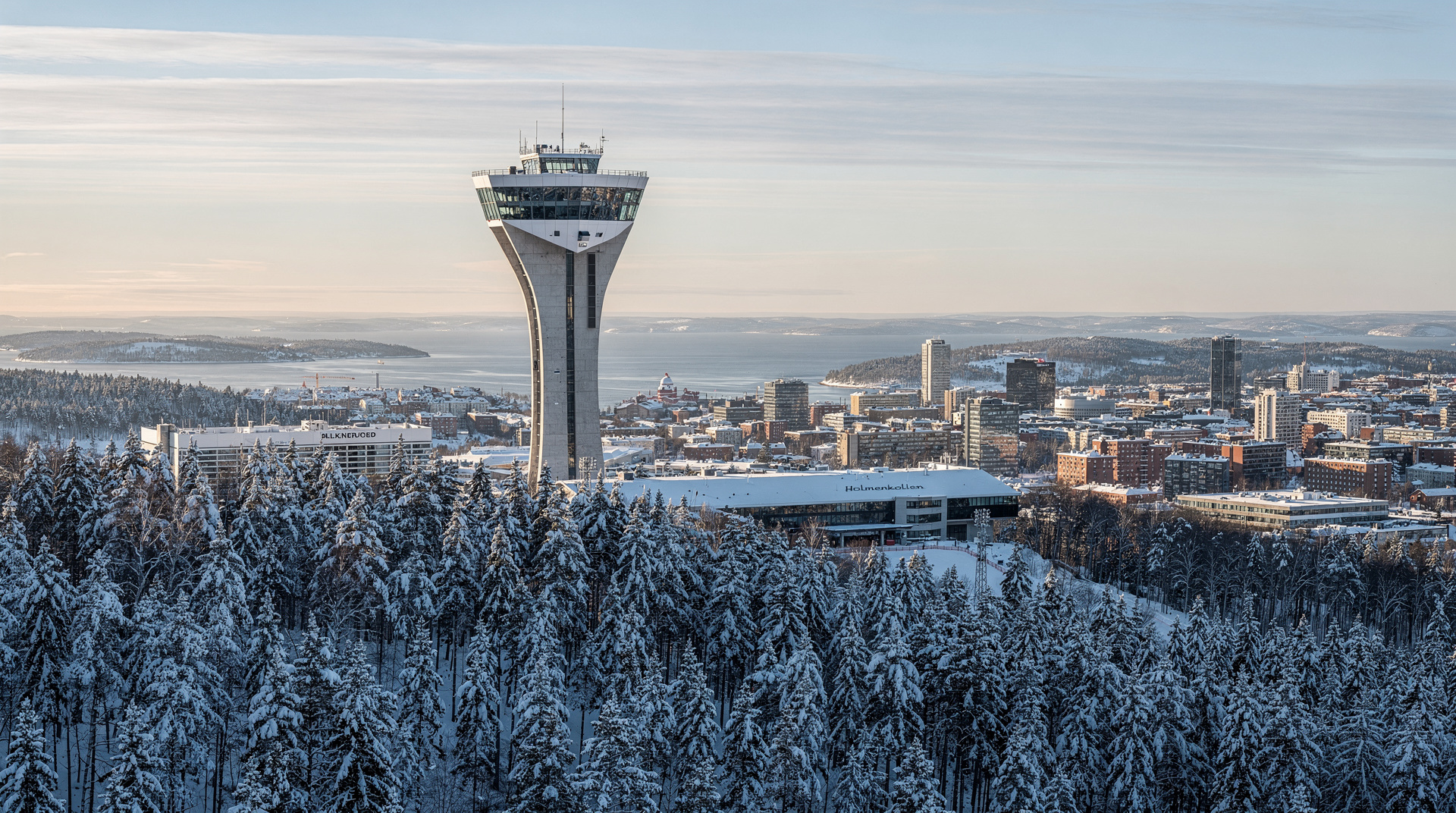
Toward Holmenkollen: for the ambitious, a hillside trail leaves from the northern reaches of Frogner Park toward the Holmenkollen ridgeline. This is a more demanding walk (allow 90 minutes one way) but provides a continuous green corridor from the park to the ski jump. Return by T-bane line 1.
Accommodation in Frogner
Frogner is one of Oslo’s most desirable neighbourhoods for accommodation, particularly for visitors who prefer a quieter residential feel over the bustle of Sentrum.
Frogner House Hotel (Skovveien): an apartment-hotel in a classic Frogner building, with kitchenette units suitable for longer stays. NOK 1 400 to 2 200 (USD 150–237) per night depending on season.
Holmenkollen Park Hotel Rica: technically up in Holmenkollen but closely associated with the Frogner/west-Oslo area. One of Norway’s most architecturally distinctive hotels, in a stave-church-inspired building from 1894 with fjord views. Expensive but exceptional for a special occasion.
For a full comparison, see where to stay in Oslo.
Top experiences
Bookable activities with verified prices and instant confirmation on GetYourGuide.