Bjørvika — the Opera House & Barcode
Bjørvika is Oslo's boldest urban renewal: Opera House with free rooftop, the Munch Museum, Deichman library, and the Barcode skyline.
Oslo: Munch Museum admission ticket
Duration: Flexible
- Skip the ticket line
- Instant confirmation
Quick facts
- Best time to visit
- Year-round; summer for rooftop and waterfront; winter for architecture
- Getting there
- Oslo S is directly adjacent — 2-minute walk to the Opera House
- Days needed
- Half a day
- Budget
- Opera rooftop and Deichman library are free; Munch Museum NOK 200 (USD 22)
Oslo’s newest neighbourhood, built on ambition
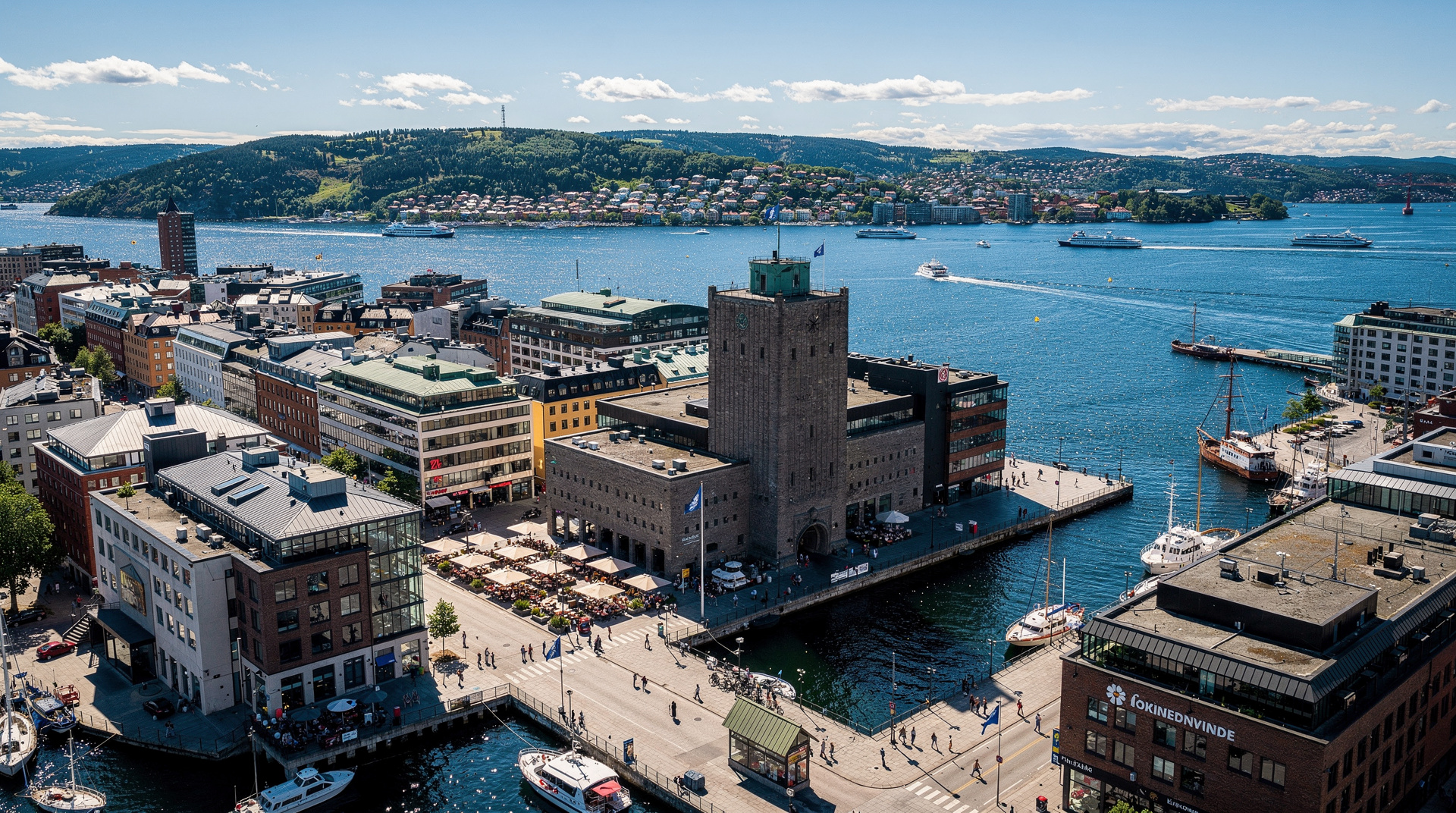
Bjørvika barely existed as an urban district 20 years ago. The area at the head of the Oslofjord, just east of Oslo S, was an industrial waterfront of container terminals and rail yards — functional, inaccessible to the public, and architecturally unremarkable.
The transformation that followed the relocation of the port is one of the most significant urban renewal projects in recent Norwegian history. The Oslo Opera House opened in 2008, immediately winning the Mies van der Rohe Award for European architecture. The Munch Museum opened in 2021. The Deichman Bjørvika public library followed in 2020. The Barcode development, a row of high-density mixed-use towers designed by multiple architectural firms, rose along the northern edge. Lambda, the cantilevered tower that houses Munch’s works, became the most debated building in Oslo since the Opera House.
The result is a district worth visiting specifically as a piece of urban design — a city that has done something genuinely interesting with a large piece of formerly industrial waterfront, without producing either a sterile corporate quarter or a theme-park heritage district.
The Oslo Opera House: the free rooftop
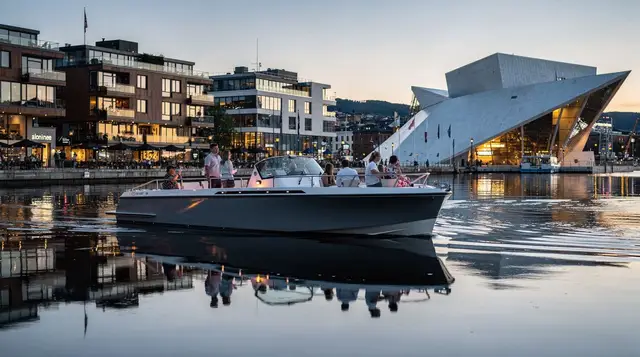
The Operahuset is the work of Norwegian firm Snøhetta, and its most distinctive feature is its white Carrara marble and granite-clad roof, which slopes down from its peak to the waterfront at an angle that allows visitors to walk from the harbour pavement directly up to the highest point.
The rooftop is free and open to the public. No ticket, no booking. The views from the peak of the Opera House cover the Oslofjord, the Akershus Fortress to the west, the Barcode towers behind, and on clear days, the hills of Bygdøy and the forests of Nordmarka. The marble surface catches morning light dramatically; golden hour in summer produces a particularly good quality of photography.
The interior of the Opera House — lobby, foyer, café — is also freely accessible. Guided tours of the backstage areas and technical facilities are available for around NOK 130 to 160 (USD 14–17). For performances (opera, ballet, theatre), tickets range from NOK 200 to 800 (USD 22–86) depending on the production and seat.
The free rooftop is the single best free activity in Bjørvika and one of the most distinctive free experiences in Oslo full stop. See our Oslo Opera House guide for performance booking tips and what to look for inside.
The Munch Museum
The Munchmuseet on Edvard Archs gate opened in 2021, designed by Herreros Arquitectos (Madrid). The building is remarkable: a 13-storey tower whose upper floors project out over the fjord in an asymmetric cantilever, the facade covered in perforated aluminium panels that change appearance with the light.
The museum holds Edvard Munch’s entire bequest to the city of Oslo — more than 26 000 works including paintings, prints, drawings, watercolours, and written materials. At any given time only a fraction is on display (permanent and temporary galleries combined cover around 11 000 m2), but this is still the most comprehensive Munch display in the world by a significant margin.
What to see: the permanent galleries are organised thematically rather than chronologically, which suits Munch’s obsessive returning to the same subjects across decades. Look for the large-format late works, the landscape series, and the self-portraits. The “Scream” is not here — it is at the National Museum — but the Munch Museum holds a later lithograph version and an extraordinary range of related works that contextualise what everyone knows. Our Munch Museum guide suggests a two-hour route through the permanent collection.
Entry: NOK 200 (USD 22) for adults, free under 18. Closed Tuesdays. The café on the upper floor has fjord views that justify a coffee break mid-visit. Allow two to three hours minimum.
Deichman Bjørvika: Oslo’s new public library
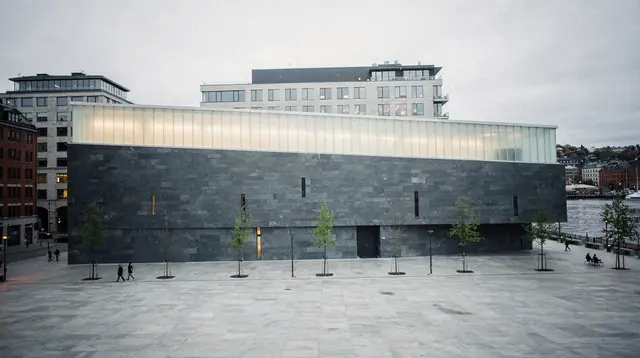
The Deichman Bjørvika library (opened 2020, designed by Lund Hagem Arkitekter and Atelier Oslo) is one of the best new public buildings in Oslo and almost entirely overlooked by the tourist circuit. It is 20 metres from the Opera House.
The building is free to enter for everyone — not just library card holders. The interior is an extraordinary piece of public space: five levels of reading rooms, children’s areas, maker labs, and open stacks, connected by a soaring central atrium. The views from the upper reading rooms toward the Opera House and the fjord are excellent.
Deichman holds a significant English-language section and subscribes to international periodicals. Free wifi throughout. The café on the ground floor serves coffee and simple lunch at normal Oslo café prices (NOK 60 to 130 / USD 7–14). Even if you do not need a library on your holiday, the building is worth spending 30 minutes in as an example of how Norway invests in public infrastructure.
The Barcode
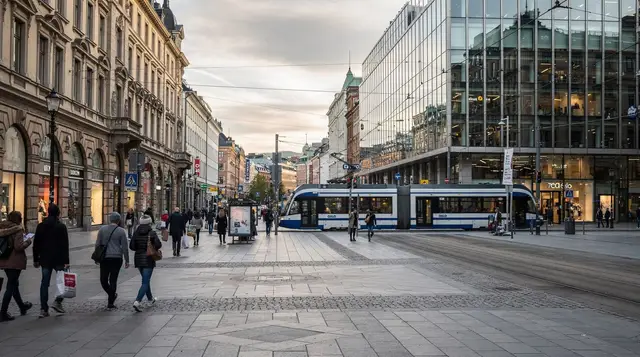
The Barcode (Bjørvika Barcode) is the row of mixed-use towers on the northern edge of Bjørvika, running parallel to the railway. Designed across twelve plots by six different architectural firms, the towers range from 15 to 22 storeys and house offices, apartments, hotels, and ground-floor retail.
Reaction to the Barcode has been divided since it was built in the late 2000s and 2010s. Critics argue it blocks the historic view of the Ekeberg hillside behind Oslo. Supporters — and a significant number of international architecture commentators — consider it one of the more interesting examples of mixed-use high-density urbanism in Northern Europe.
From a visitor perspective, the Barcode is worth walking along (the street-level arcade has cafés, restaurants, and shops) and worth viewing from the Opera House rooftop (where the combination of the towers, the fjord, and the older city creates an interesting panorama).
Barcode eating and coffee: several good café and restaurant options at ground level. Kaffebrenneriet has a branch here; the Maaemo restaurant (three Michelin stars, Norway’s only) is technically in the Bjørvika district, though its current address is slightly northwest on Schweigaards gate — extremely expensive (around NOK 3 000 to 3 500 / USD 323–376 per person for the full menu), long waiting list for reservations.
Combining Bjørvika with adjacent neighbourhoods
Bjørvika sits between several other key Oslo districts, making it easy to combine in a larger city loop:
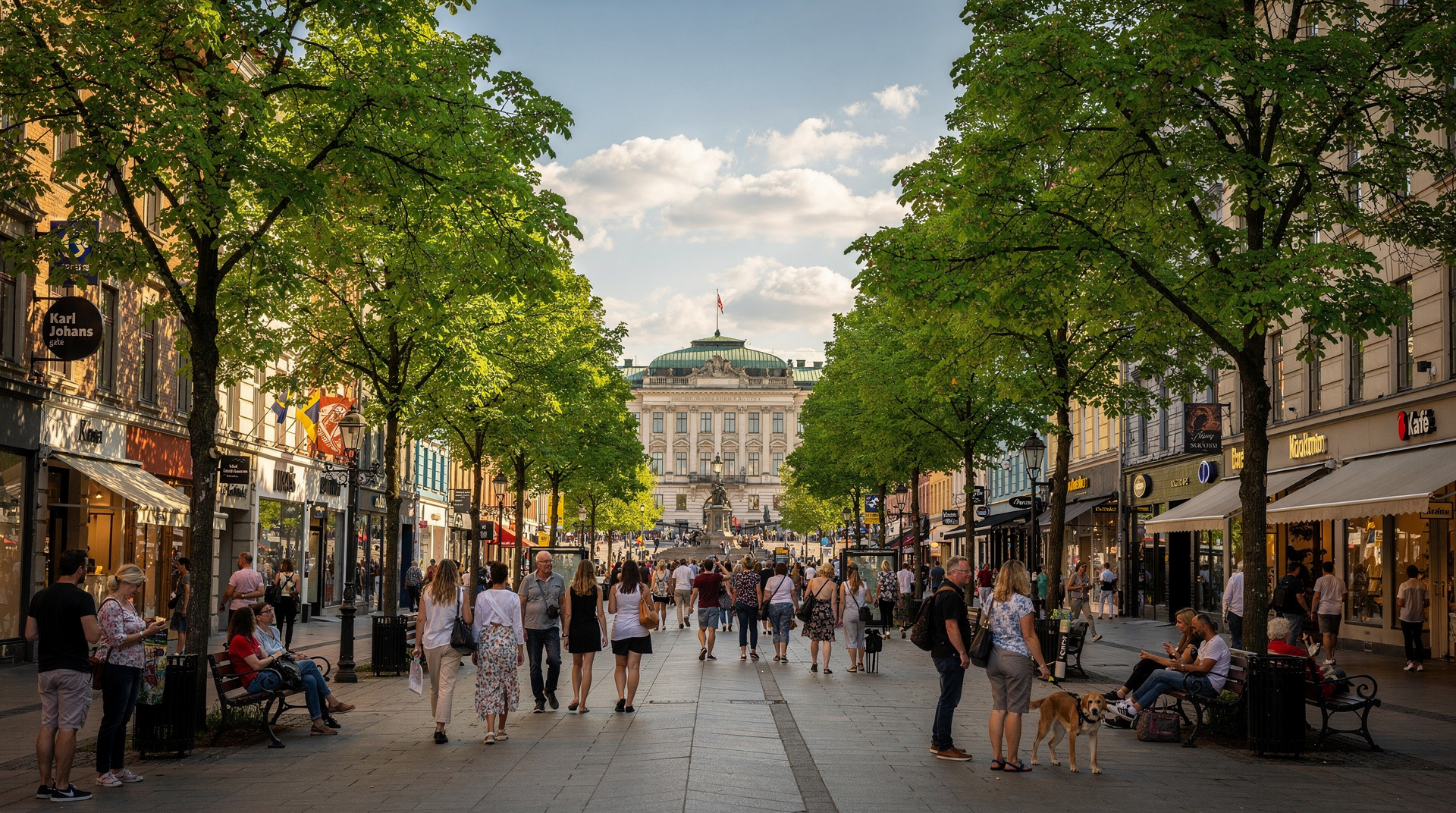
- Walk west to Oslo S (2 minutes) and continue to the city centre and Karl Johans gate.
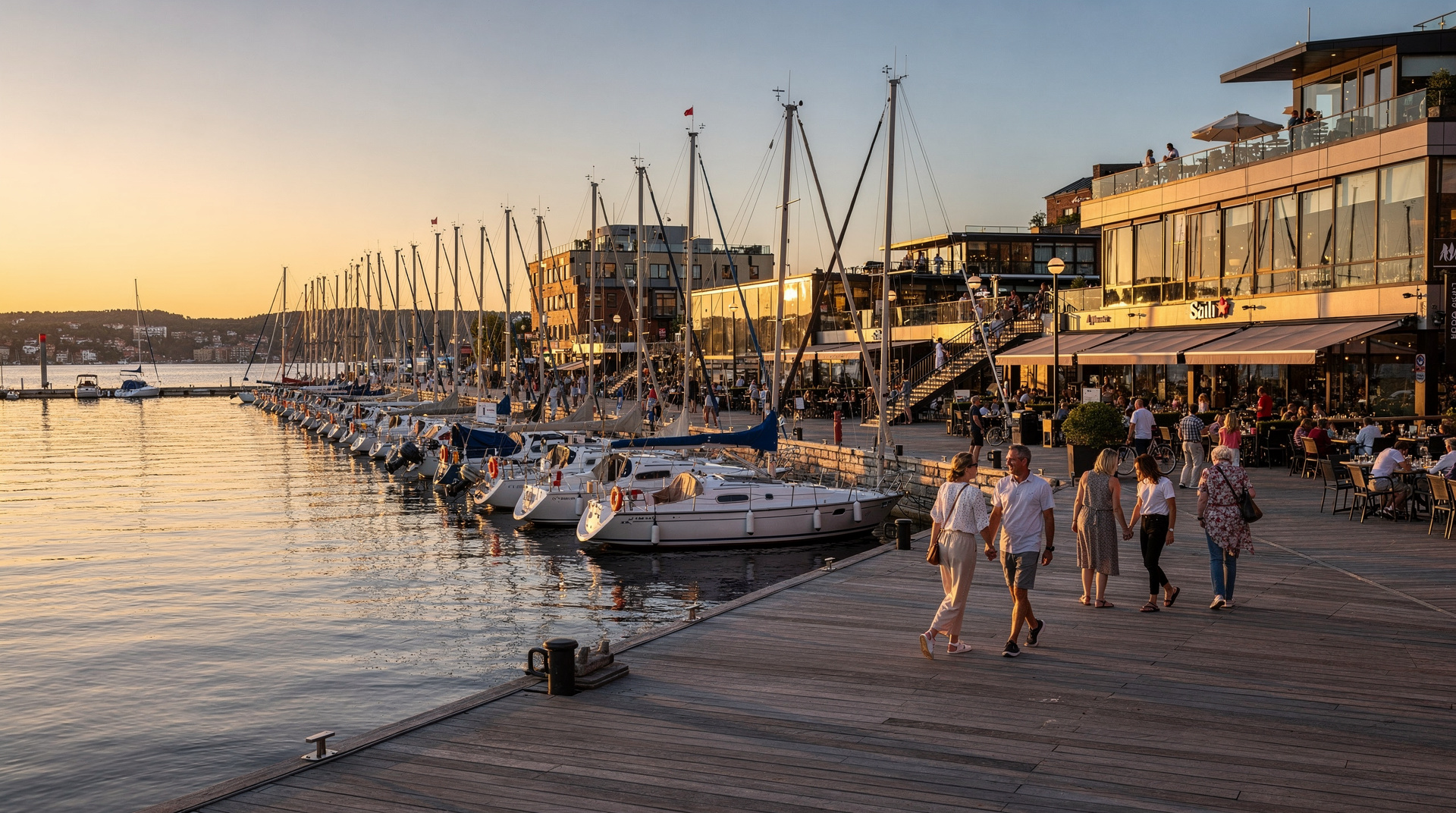
- Walk west along the harbourfront to Aker Brygge and Tjuvholmen (about 25 minutes).
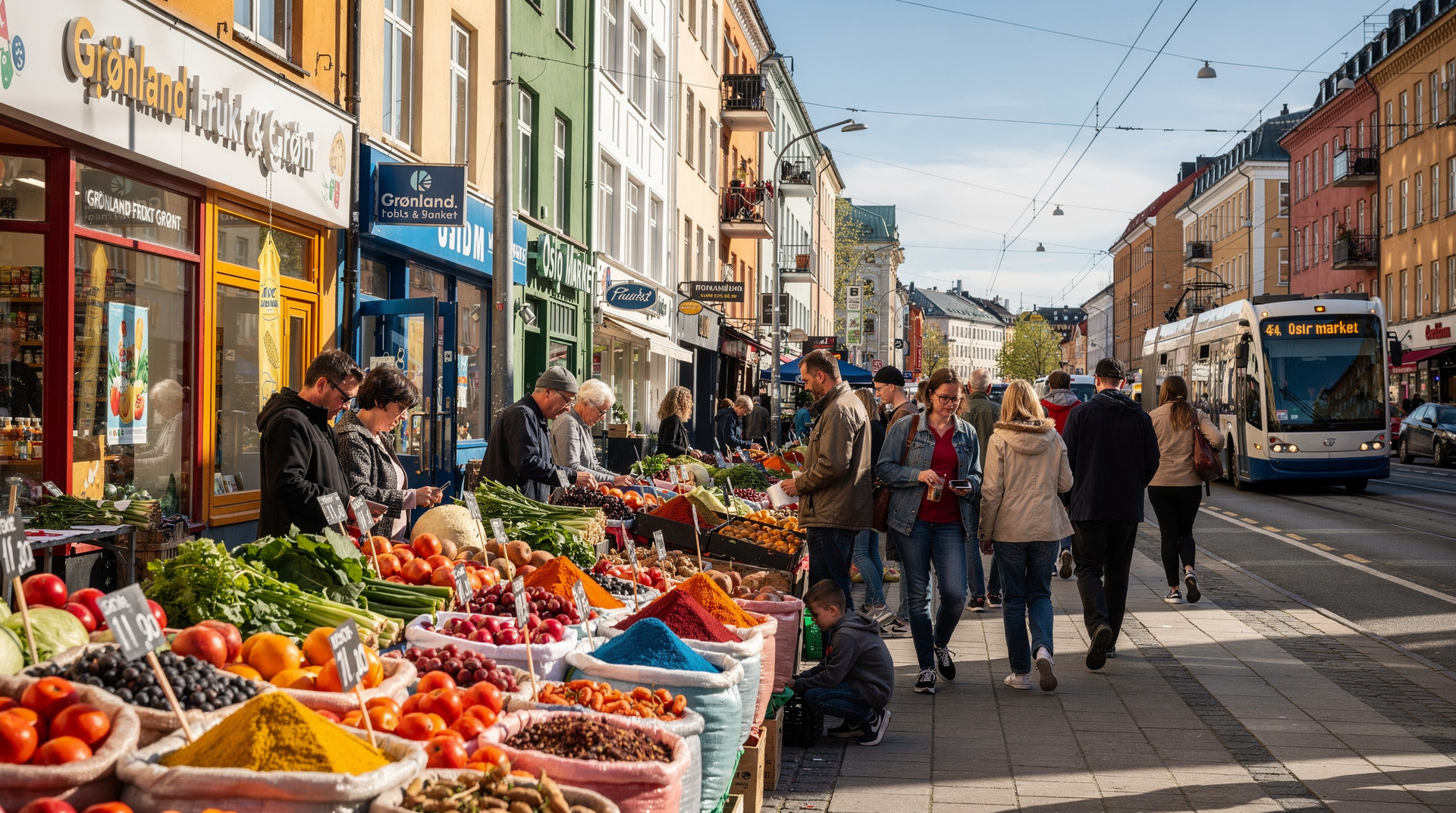
- Walk north to Grønland and Tøyen (about 15 minutes), combining Bjørvika’s architecture with Grønland’s markets and cheap eats.
- Take tram 11/12 east to Grünerløkka.
Our 2-day Oslo itinerary and 3-day itinerary both incorporate Bjørvika as part of longer city routes.
When to visit Bjørvika
Year-round: unlike the outdoor-dependent activities at Vigeland Park or the fjord islands, Bjørvika’s core attractions (Opera House, Munch Museum, Deichman) work in any season. The rooftop is excellent in winter light — on a cold clear February morning with the fjord mirror-still, the marble surface is extraordinary. The Munch Museum’s cantilevered form is particularly striking in low winter light.
Summer: the waterfront promenade between the Opera House and the Munch Museum becomes a popular outdoor space — cafés set up terrace seating, people sit on the harbour steps. The Sørenga Sjøbad swimming area (a short walk south) is a good summer complement to a Bjørvika visit.
Frequently asked questions about Bjørvika
Is the Oslo Opera House free to visit?
Yes — the rooftop is free and open to the public at all times, year-round. The interior lobby and foyer are also free. Guided backstage tours cost around NOK 130 to 160 (USD 14–17). Performances require tickets. The building is worth visiting even without any specific event in mind.
How far is the Opera House from Oslo S?
About a 2-minute walk — the Opera House is directly south of the railway station, facing the fjord. It is the most centrally located major cultural building in Oslo.
Is the Munch Museum bigger than the National Museum?
The Munch Museum is specialised — it holds only Munch’s work (and related material) in enormous depth. The National Museum holds the broader Norwegian and international art collection and is physically larger (54 000 m2 vs the Munch Museum’s 26 000 m2 of gallery and public space combined). For Munch specifically, the Munch Museum is the world’s primary resource. For a broader range of art, design, and decorative arts, the National Museum wins. Both are excellent.
Can you walk on the Opera House roof in winter?
Yes. The roof is open year-round. It can be icy and slippery in winter — wear appropriate footwear and exercise normal care on the sloped marble surface. Oslo’s winters are cold enough that the surface freezes after rain and overnight. The views in winter, particularly on clear days, are excellent.
What is there to do in Bjørvika for free?
Walk the Opera House rooftop (free), visit Deichman Bjørvika library (free), walk the Barcode promenade, and explore the waterfront. The Astrup Fearnley Museum and National Museum offer free Thursday evening access if you combine the visit with Aker Brygge. Altogether, a Bjørvika half-day can be done at close to zero cost if you skip the Munch Museum paid entry.
How do I get to the Sørenga swimming area from Bjørvika?
Sørenga Sjøbad is a 10 to 15-minute walk south from the Opera House, along the harbourfront and through the newer Sørenga residential development. It is free to access; the sea-swimming platforms and outdoor showers are open from approximately June through August depending on conditions.
The architecture of Bjørvika: a closer look
The district represents a rare opportunity to see a large urban development in a major European city designed simultaneously with genuine architectural ambition and accountability. Most large-scale urban waterfront redevelopments end up either as sanitised corporate parks (London’s Canary Wharf) or themed heritage reconstructions. Bjørvika is neither.
The Opera House by Snøhetta (2008): Snøhetta — the Norwegian firm that also designed the National September 11 Memorial Museum pavilion in New York and the renovation of the Times Square pedestrian areas — created a building whose primary innovation is civic rather than formal. By allowing the public to walk on the roof, they turned a cultural institution into a piece of public infrastructure, ensuring daily use by people who have no intention of attending a performance.
The white Carrara marble and glass exterior functions as a sundial of sorts — the surface warms dramatically in direct sunlight, and different times of day produce dramatically different appearances. The interior, by contrast, is warm and wood-panelled — an auditorium designed with Norwegian acoustic precision, holding the main opera hall (1 300 seats), the main stage (1 200 seats), and a smaller flexible hall.
The Munch Museum by Herreros Arquitectos (2021): the Madrid firm’s decision to tilt the building’s mass northward over the fjord was controversial from the planning stages. Critics argued it was showboating; supporters said it was the only way to give a building housing Munch’s dramatic works the visual tension they deserved. From the water approaching by ferry, the building’s projection is more striking than photographs suggest — it genuinely appears to be falling forward.
The perforated aluminium cladding, which Herreros described as a “second skin,” produces a different visual texture in every light condition: flat and dark in overcast conditions, alive with reflected light in direct sun. The top-floor viewing gallery (accessible with museum entry) faces south and west over the fjord, providing a different perspective on the Opera House and the inner harbour than you get from ground level.
Deichman Bjørvika by Lund Hagem and Atelier Oslo (2020): the library’s irregular terraced facade and the transparency of the ground floor (readable as a public space from the street even when the library is closed) represent a different approach to civic architecture — less monumental, more welcoming. The building has won multiple architecture awards and is regularly cited alongside the Opera House as evidence of the Norwegian state’s commitment to high-quality public infrastructure.
The Sørenga district
Immediately south of the Munch Museum and the Opera House, the Sørenga residential development occupies a former container pier. It was completed incrementally between 2012 and 2022 and now houses approximately 3 500 residents in a compact waterfront district.
Sørenga Sjøbad: the open-sea swimming area at the tip of the Sørenga peninsula is Oslo’s largest urban saltwater swimming facility. Wooden piers, diving platforms, outdoor showers, and a small café/kiosk make it a genuinely well-equipped urban beach. Free to use; no booking. The sauna cabin at Sørenga (operated separately) can be booked in advance. Water temperature peaks around 18 to 20°C in July and August. Popular with local residents rather than tourists — the contrast with the Aker Brygge sauna scene (more visitor-facing) is noticeable.
Sørenga as a walking route: the path from the Opera House along the Sørenga waterfront, out to the swimming area and back, covers about 3 km and gives excellent views of the harbour and the Munch Museum’s profile from the south. One of Oslo’s better free waterfront walks.
Bjørvika’s restaurant and café scene
The Bjørvika eating options are more varied than the district’s short history might suggest.
Maaemo (Schweigaards gate 15, three Michelin stars): Norway’s most celebrated restaurant is technically at the edge of Bjørvika. The tasting menu runs NOK 3 000 to 3 500 (USD 323–376) per person — a serious luxury restaurant by any standard, requiring reservations many months ahead. Worth knowing about for a very special occasion; not worth considering for most visitors.
Vippa (Akershusstranda, between Aker Brygge and Bjørvika): a street-food market in a converted pier warehouse with a dozen independent food vendors. This is closer to the Mathallen concept — diverse, affordable, locally sourced — with fjord views added. Lunch prices run NOK 110 to 180 (USD 12–19). Open daily in summer, reduced hours in winter.
Munch Museum café: the seventh-floor café inside the Munch Museum has arguably Oslo’s best café view — the fjord directly below, the Opera House to the west, and the Holmenkollen ridge on the horizon. Coffee and light lunch at standard Oslo café prices (NOK 55 to 130 / USD 6–14). Accessible with museum entry.
Deichman café: the ground-floor café in the library is a good option for a quick coffee and simple lunch at normal Oslo prices, without requiring museum entry.
Planning a Bjørvika visit
The district’s core elements — Opera House roof, Deichman library, Munch Museum — sit within a 500-metre triangle. A focused half-day might run:
Morning: arrive via Oslo S (2-minute walk). Walk the Opera House roof at opening time (before cruise-ship visitors arrive, typically before 11 am in summer). Cross to Deichman (free, 30 minutes). Coffee.
Midday: enter the Munch Museum when the morning crowds have settled (around 11 am). Allow two hours for the permanent collection. Lunch at the museum café or at Vippa.
Afternoon: walk south to Sørenga Sjøbad for a swim (summer), or catch tram 11/12 north toward Grønland and Tøyen.
For a complete Oslo east-side day, see the 2-day Oslo itinerary, which combines Bjørvika with the city centre and the western waterfront in an efficient sequence.
Top experiences
Bookable activities with verified prices and instant confirmation on GetYourGuide.