Oslo in 3 days: the complete city itinerary
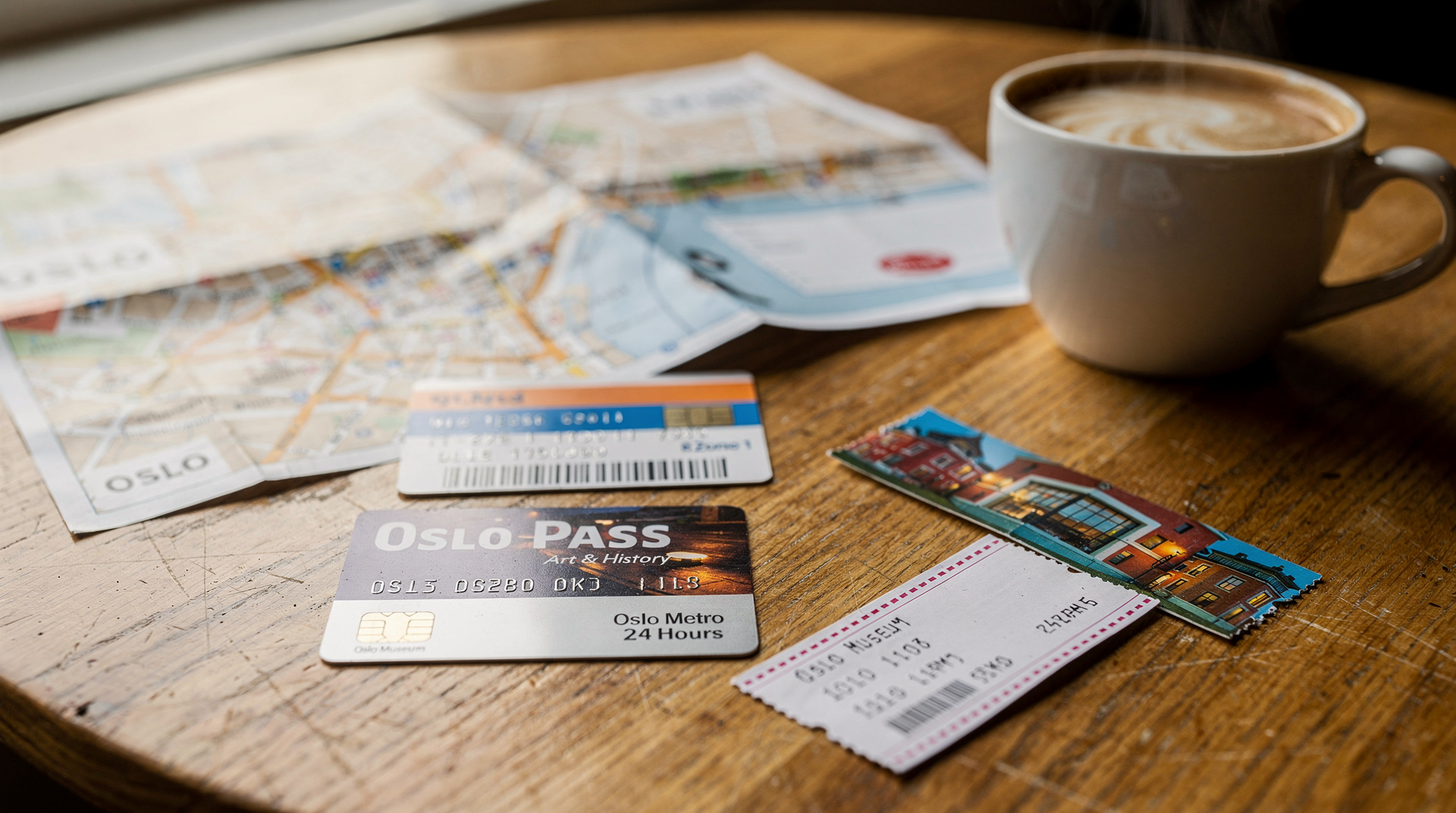
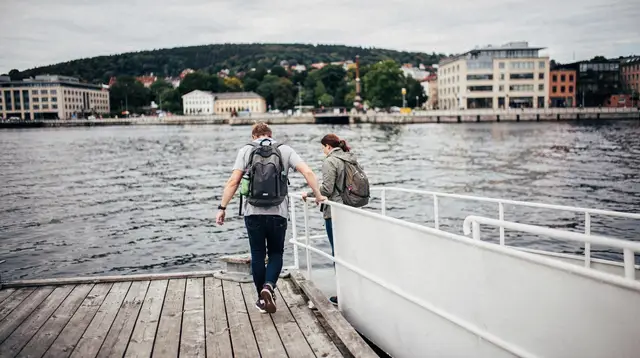
Oslo: Oslo Pass with public transport and free museum entry
Duration: 24-72 hours
- Instant confirmation
- Free public transport
- Skip museum queues
Three days in Oslo: the complete itinerary
Three days gives you enough time to explore Oslo at a comfortable pace — covering the main museums, the fjord, two or three neighbourhoods, and a trip up to Holmenkollen without ever feeling rushed. This is the sweet spot for a first Oslo visit. The itinerary uses only Ruter public transport and is built around the 72-hour Oslo Pass.
Oslo Pass (72 hours): NOK 1 040 / ~USD 112 adult. Covers unlimited Ruter transport, free entry to 30+ attractions including the Munch Museum, Fram Museum, Norsk Folkemuseum, and Holmenkollen Ski Museum. See our full Oslo Pass guide for what’s included.
| Where | Aker Brygge, Bygdøy, Bjørvika, Grünerløkka, Vigeland Park, Holmenkollen |
| Cost (mid-range) | Around NOK 4 900–6 000 / ~USD 529–645 per person |
| Time needed | Three full days |
| Getting there | Flytoget or Vy train to Oslo S |
| Best time | May–June and September for daylight and fewer crowds |
Day 1: waterfront, Akershus and Bygdøy
Morning: Akershus Fortress and Aker Brygge
09:00 — Akershus Fortress (Akershus Festning)
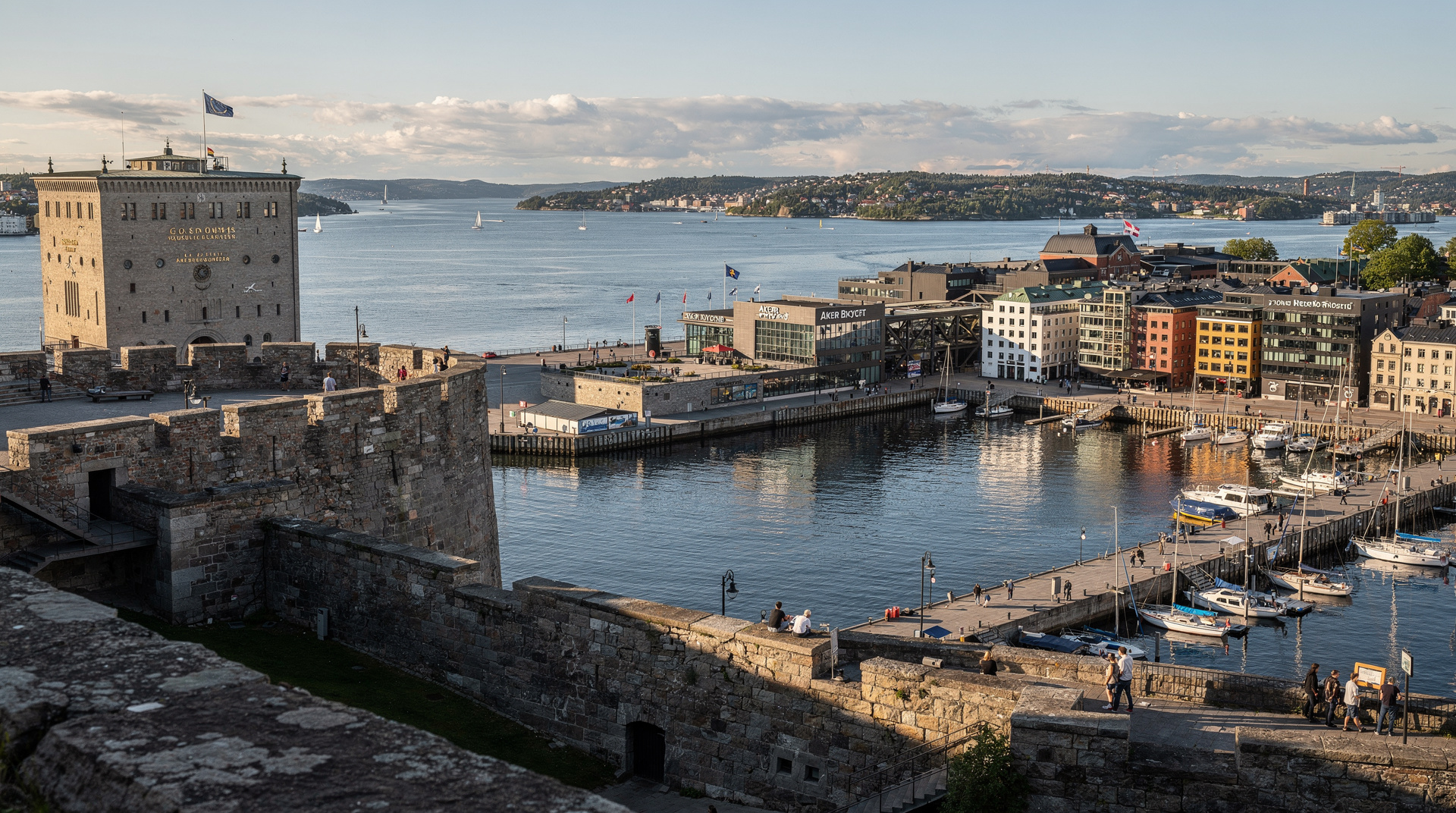
Begin at Oslo’s medieval fortress overlooking the inner harbour. The grounds are always free; the museum and castle interior cost NOK 120 / ~USD 13 (free with Oslo Pass). Allow 60 minutes to walk the ramparts and explore the interior rooms. The harbour views from the south tower are outstanding at any time of day, but particularly good in morning light.
10:15 — Aker Brygge waterfront
Walk west from the fortress along the harbour. Aker Brygge is touristy but genuine: a renovated dockland with galleries, restaurants and the best people-watching spot in central Oslo. Stop for a coffee (NOK 60–80 / ~USD 6.5–9 for a flat white), then continue west to Tjuvholmen and the Astrup Fearnley Museum of Modern Art (free with Oslo Pass). Even if contemporary art is not your focus, the Renzo Piano building is worth seeing from outside.
Midday and afternoon: Bygdøy peninsula
11:30 — Ferry to Bygdøy (May–September)
In summer, board ferry 91 from Rådhusbrygge 3 pier (10-minute crossing, free with Oslo Pass). In winter, take bus 30 from Aker Brygge (~8 minutes).
Spend the afternoon at Bygdøy covering three museums:
12:00 — Fram Museum
The polar exploration ship Fram is preserved inside its own custom building at Bygdøynes pier. You can board the ship and explore the cramped crew quarters, the ice-strengthened hull, and the engine room. Allow 60–70 minutes. Free with Oslo Pass (normally NOK 190 / ~USD 20). See our Fram Museum guide.
13:30 — Lunch
The Oscarshall café near Bygdøy serves smørbrød (open sandwiches) and simple hot dishes (NOK 150–250 / ~USD 16–27). Alternatively pack a lunch — there are excellent picnic spots along the Bygdøy shoreline with fjord views.
14:30 — Norsk Folkemuseum
The Norwegian Folk Museum is a vast open-air collection of 160 historic buildings transferred from across Norway, including a 13th-century stave church from Gol. Allow 90 minutes minimum — more in summer when costumed interpreters demonstrate traditional crafts like butter-churning and blacksmithing. Free with Oslo Pass (normally NOK 220 / ~USD 24).
16:15 — Kon-Tiki Museum (optional)
If you have energy: Thor Heyerdahl’s balsa raft and papyrus boat Ra II are in a compact, fascinating museum a 5-minute walk from Norsk Folkemuseum. Allow 30–40 minutes. Free with Oslo Pass (normally NOK 170 / ~USD 18).
Evening: Tjuvholmen sauna and dinner
17:30 — Return to Tjuvholmen by bus or ferry
18:00 — Floating sauna
Book a slot at the public floating sauna at Tjuvholmen (Sukkerbiten) in advance. The sauna heats to 80–90°C; a cold plunge into the Oslofjord follows — transformative in any season. NOK 200–250 / ~USD 21–27, towel rental available. Read our floating sauna guide to compare venues.
20:00 — Dinner near Aker Brygge
Lekter’n (Stranden 3) is reliable for fish and shellfish at mid-range prices (NOK 280–400 / ~USD 30–43 for mains). For something cheaper, head up to Grønland or Grünerløkka for ethnic food options.
Day 2: Munch Museum, Grünerløkka and Vigeland Park
Morning: Munch Museum (MUNCH)
09:30 — Munch Museum at Bjørvika
Oslo’s newest landmark, the Lambda building by Bjørvika pier, holds over 28 000 works by Edvard Munch. The permanent collection includes multiple versions of The Scream plus Madonna, The Sick Child, and his extraordinary late-life self-portraits. Allow 90–120 minutes. Free with Oslo Pass (normally NOK 200 / ~USD 21). Book a timed entry slot online, especially June–August. See our Munch Museum guide.
11:30 — Opera House
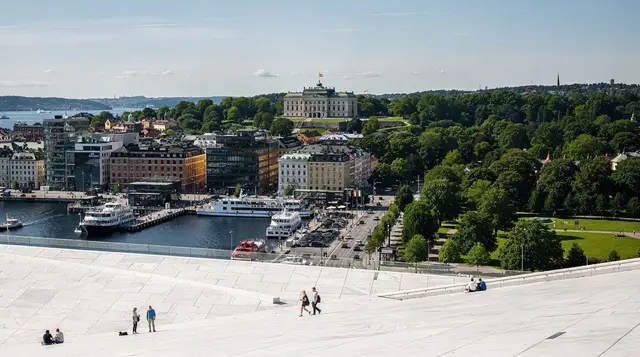
Walk 5 minutes from the Munch Museum to the Oslo Operahuset in Bjørvika. The rooftop marble ramp is free to walk at any time and gives dramatic views of the fjord and the Barcode district (Bjørvika’s commercial towers). Allow 20 minutes.
Midday: Grønland and Grünerløkka
12:15 — Grønland for lunch
Take tram 13 from Bjørvika (Operaen stop) to Grønland (2 stops). The neighbourhood around Grønlandsleiret has Oslo’s most affordable food — Middle Eastern bakeries, Pakistani cafés, and Vietnamese restaurants. A full meal runs NOK 120–180 / ~USD 13–19. The food guide has specific recommendations.
13:30 — Grünerløkka
Walk 15 minutes north from Grønland along the Akerselva river, or take tram 13 two stops. Grünerløkka is Oslo’s creative neighbourhood — independent coffee shops (Tim Wendelboe at Grüners gate 1 is world-class), vintage stores, galleries and the Akerselva river walk. Spend 60–90 minutes exploring freely. There is no obligation to spend money here; the neighbourhood itself is the attraction.
Afternoon: Vigeland Park
15:00 — Vigeland Sculpture Park
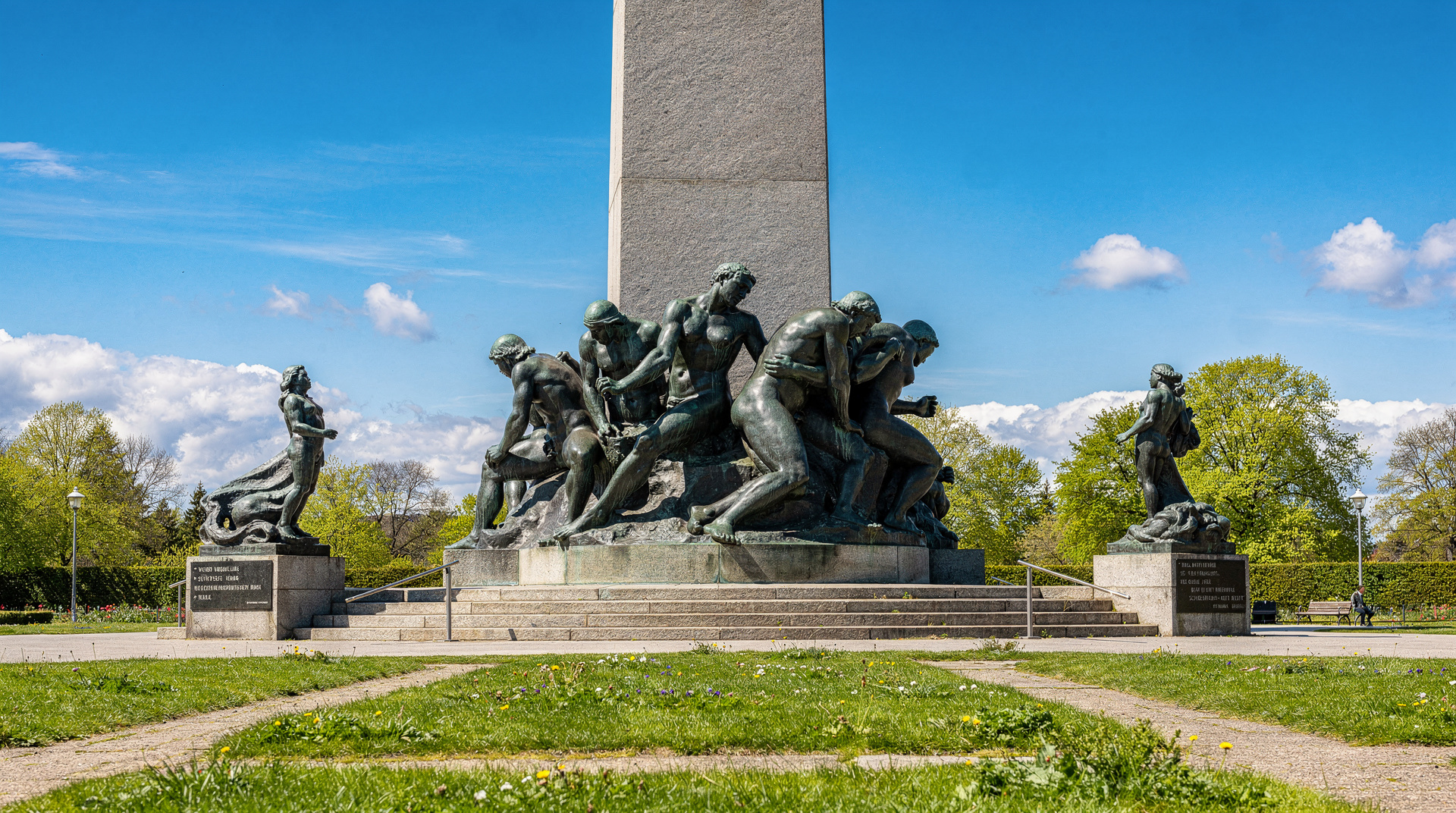
Tram 12 or 13 from Grünerløkka west to Vigelandsparken (allow ~20 minutes). The park is free and open always. Gustav Vigeland’s lifework — 214 sculptures in bronze, granite and wrought iron arranged along a monumental axis — is one of the most remarkable public art installations in the world. The Monolith (Monolitten) alone justifies the visit: a 14-metre column carved from a single piece of granite, depicting 121 writhing human figures. Allow 75–90 minutes.
Our Vigeland Park guide has the optimal walking route.
16:45 — Frogner Park and neighbourhood
The sculpture park sits within the larger Frogner Park, where Oslo residents jog, picnic and walk their dogs. Continue west into the elegant Frogner district for a coffee or an early dinner. Good options: Café Skansen (Rådhusplassen, traditional Norwegian, NOK 180–320 / ~USD 19–34 for mains) or Hos Thea (Gabels gate 11, creative modern Norwegian, NOK 350–500 / ~USD 38–54).
Evening: fjord cruise
19:00 — Silent electric fjord cruise
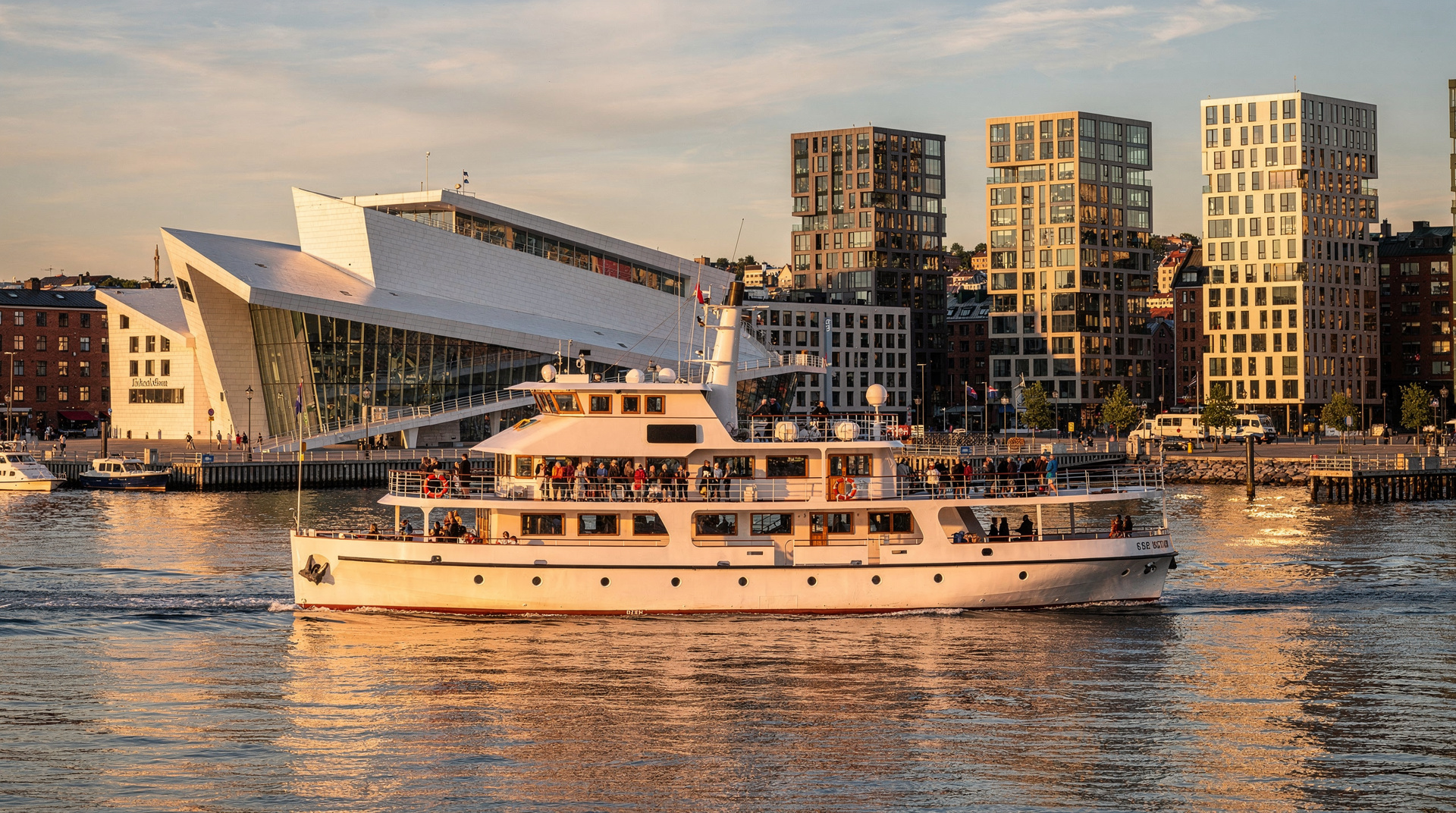
Book the evening departure from Aker Brygge for the 2-hour silent electric guided cruise. The combination of a golden sky, a quiet electric boat and a knowledgeable guide makes this the single most memorable Oslo evening. ~NOK 600 / ~USD 64. Full details in our silent cruise guide.
Day 3: Holmenkollen, bike tour and farewell
Morning: Holmenkollen
09:00 — Metro to Holmenkollen
Take metro line T-banen line 1 (Frognerseteren direction) from Nationaltheatret station. Ride 30 minutes to Holmenkollen station (included in Oslo Pass / Ruter pass). The metro climbs into the forested hillside above the city — the views from the elevated sections are impressive even before you arrive.
09:40 — Holmenkollen Ski Jump and Ski Museum
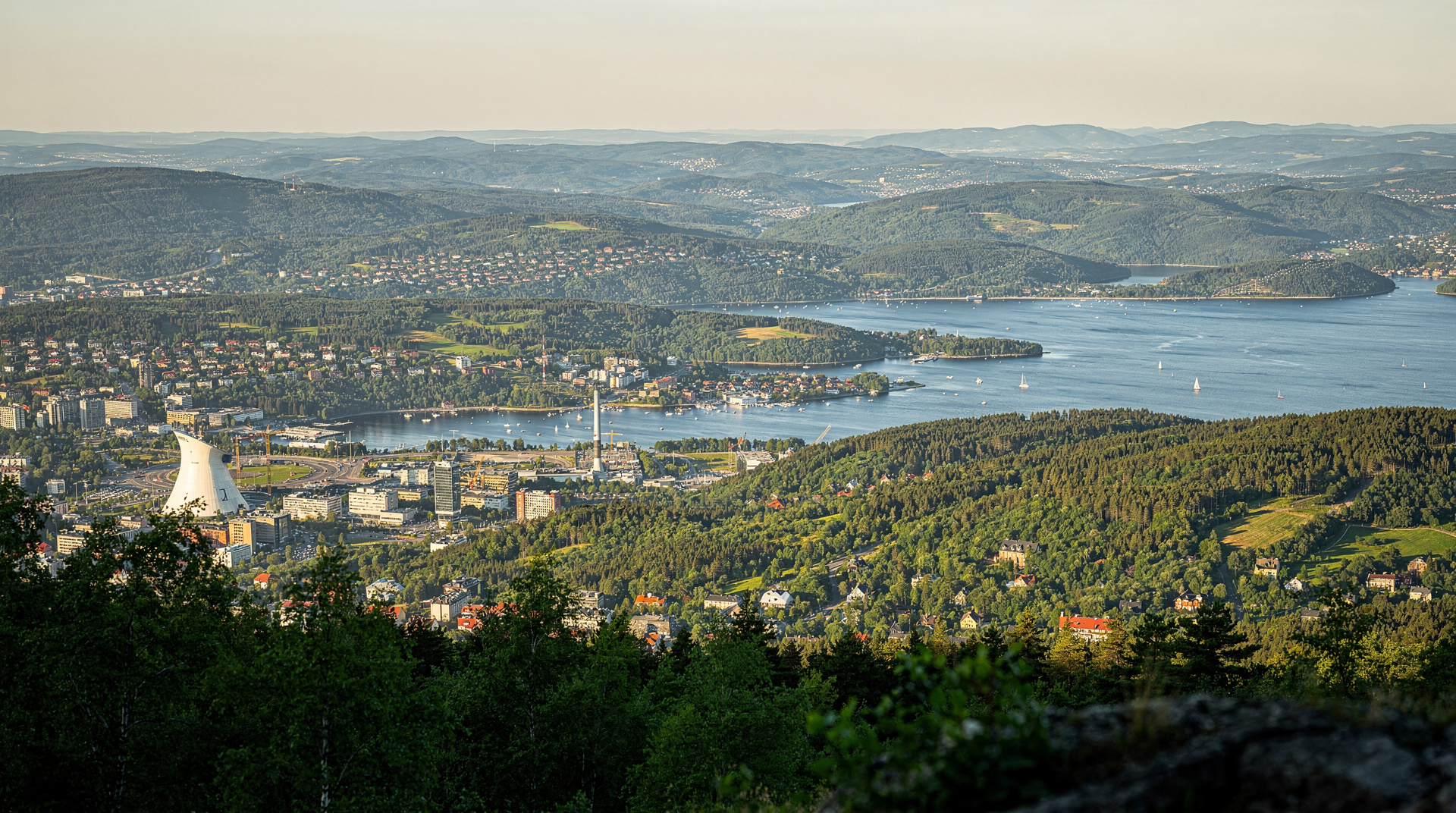
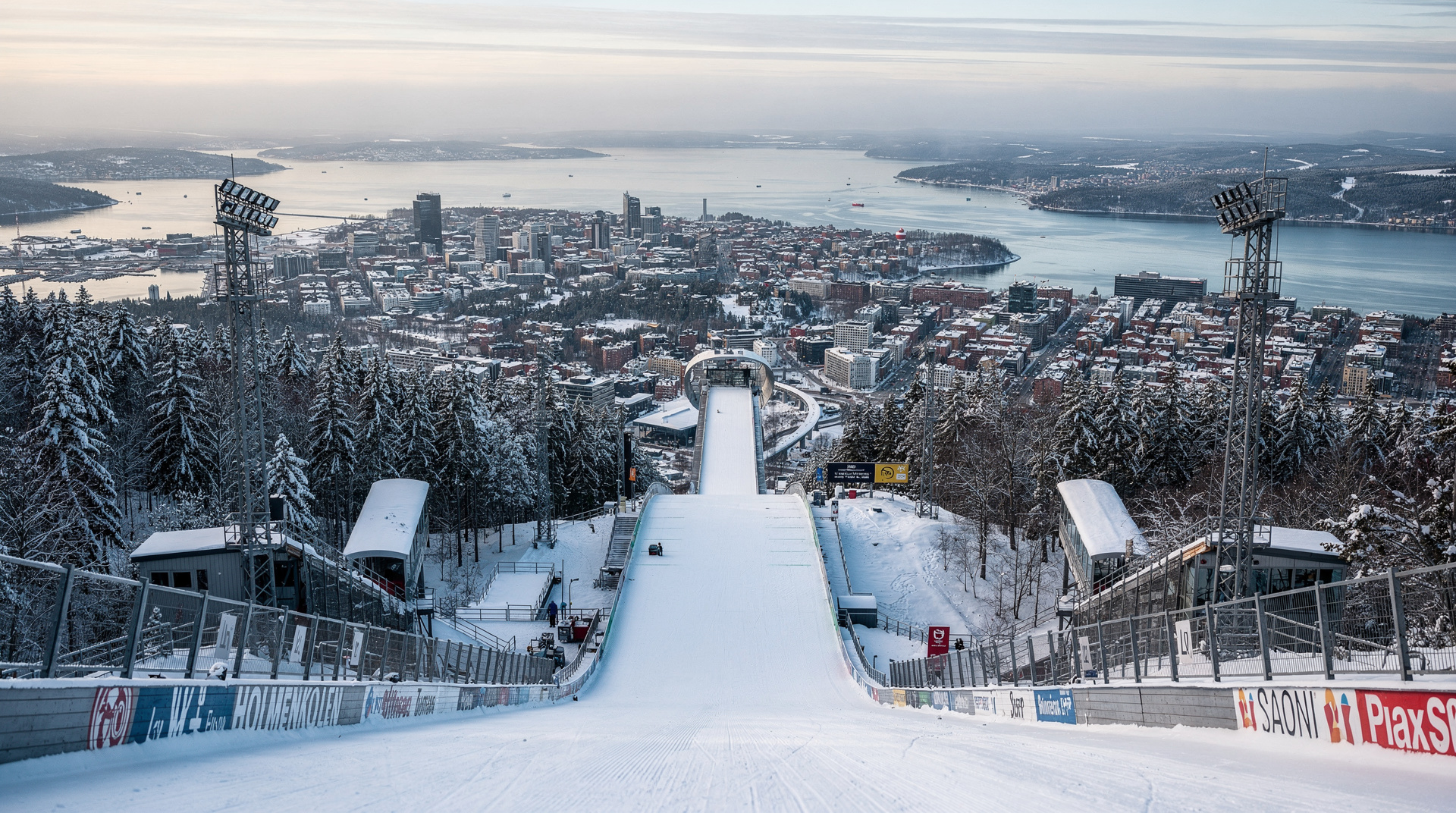
The Holmenkollen ski jump (Hoppet) is the most iconic sports venue in Norway. You can take the lift up the tower for panoramic views over Oslo and the Oslofjord (NOK 150 / ~USD 16, free with Oslo Pass). The Ski Museum at the base is the world’s oldest ski museum, with 4 000 years of Nordic skiing history — allow 45 minutes. Free with Oslo Pass (normally NOK 150 / ~USD 16). See our Holmenkollen guide.
11:00 — Tryvann forest hike
From Holmenkollen, take the metro one further stop to Voksen Skog or Tryvann, the start of excellent walking trails into the Nordmarka forest. A 45–60 minute circular walk brings you to Tryvannstårnet tower (observation tower, free) and back through birch forest to the metro. Even in summer the forest is cool and empty compared to the city below.
12:30 — Return to city, lunch near Majorstuen
Return by metro to Majorstuen (10 minutes). Grab lunch along Bogstadveien — this is one of Oslo’s best shopping streets and has decent mid-range restaurants and bakeries. Budget NOK 150–280 / ~USD 16–30 for a sit-down lunch.
Afternoon: Oslo highlights bike tour
14:00 — Highlights bike tour
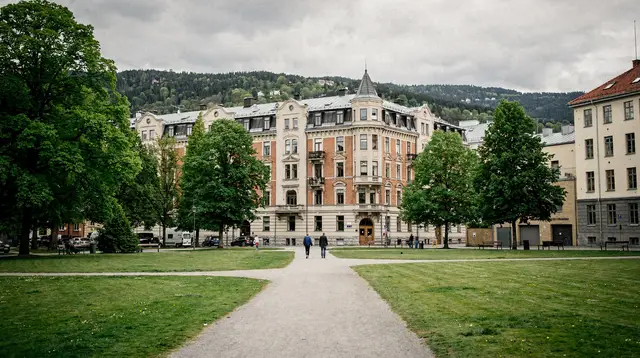
A 3-hour guided bike tour of Oslo covers Akershus Fortress, Vigeland Park, Aker Brygge, the Opera House, and several viewpoints — more ground than you could cover comfortably on foot, with expert commentary. The tour includes a bicycle and helmet. A good option for Day 3 when you already know the lay of the land and can appreciate the connections between places. ~NOK 450 / ~USD 48. Full review in our tour comparison guide.
Evening: farewell dinner
17:30 — Karl Johans gate area
Return to the city centre for a final stroll along Karl Johans gate. The Nobel Peace Center (Rådhusplassen, free with Oslo Pass) is worth 30 minutes if you have not visited.
19:00 — Farewell dinner
For a genuinely Norwegian farewell dinner: Engebret Café (Bankplassen 1) is Oslo’s oldest restaurant (1857), serving classics like reindeer and whale steak alongside updated Norwegian dishes. Mains NOK 320–480 / ~USD 34–52. Reservation recommended. For a more modern experience: Fiskeriet Youngstorget (Youngstorget 2) is a lively fish market and restaurant — excellent klippfisk (salt cod) and fiskesuppe (fish soup) with a more relaxed vibe.
Day-by-day summary at a glance
| Day | Focus | Signature booking |
|---|---|---|
| Day 1 | Akershus Fortress, Aker Brygge, Bygdøy museums, floating sauna | Tjuvholmen floating sauna slot |
| Day 2 | Munch Museum, Grønland, Grünerløkka, Vigeland Park, fjord cruise | Munch Museum timed entry (summer) |
| Day 3 | Holmenkollen, Nordmarka forest walk, highlights bike tour, farewell dinner | Highlights bike tour |
Use this table to reorder days around your arrival time or the weather forecast — Day 1’s ferry crossing and Day 3’s outdoor stretches are the two most weather-sensitive blocks, so if a storm is forecast, consider swapping Day 2 (mostly indoor) into that slot instead.
Stretching to four days
Three days covers Oslo’s core comfortably, but it deliberately leaves out a day trip. If your schedule has any flexibility, the most common upgrade is adding a fourth day for Drøbak and Oscarsborg Fortress — a genuinely different, small-town-and-fjord experience that contrasts well with three days of city sightseeing. The 4-day itinerary builds this in as a structured extra day rather than an afterthought. If four days is not possible, at minimum consider the best day trips from Oslo guide for a future return visit.
What repeat visitors do differently
First-time visitors rightly prioritise Bygdøy, Munch and Vigeland. Return visitors to Oslo tend to skip at least one of the “big three” museums in favour of neighbourhood time — an extra hour in Grünerløkka, a proper Grønland food crawl, or a fjord swim at Huk beach on Bygdøy rather than a third museum. If this is not your first Oslo trip, consider trading the Kon-Tiki Museum on Day 1 or the Nobel Peace Center on Day 3 for one of these more atmospheric, less scheduled options.
Practical notes
Accommodation suggestions:
- Budget: Anker Hostel (Storgata 55) or PS:Hotell (Dronning Eufemias gate 32, NOK 900–1 200 / ~USD 97–129 double)
- Mid-range: Comfort Hotel Xpress Central Station or Radisson Blu Plaza Hotel (Sonja Henies plass 3, central location)
- Upscale: The Thief (Landgangen 1, Tjuvholmen, doubles from NOK 2 800 / ~USD 301)
Total 3-day budget (per person, mid-range): Flights/transport to Oslo excluded. Oslo Pass 72h NOK 1 040 + floating sauna NOK 230 + fjord cruise NOK 600 + bike tour NOK 450 + meals (3 days) NOK 2 100 + coffee NOK 500 = approximately NOK 4 920 / ~USD 529.
Getting around: Ruter’s metro, tram and bus network is excellent. Download the Ruter app for live departures and mobile tickets. Google Maps gives accurate Oslo transit directions.
Frequently asked questions about 3 days in Oslo
Is 3 days the right length for Oslo?
Three days is the ideal first visit — enough to cover the major sights without rushing, with one day for Bygdøy museums, one for Munch Museum and Vigeland, and one for Holmenkollen. Add a fourth day if you want a day trip to Drøbak or the outer fjord.
Which museums are best in Oslo for 3 days?
The Munch Museum, Fram Museum, and Norsk Folkemuseum form a natural trio. The Holmenkollen Ski Museum is a bonus on Day 3. Note that the Viking Ship Museum remains closed until approximately 2027 — visit Viking Planet instead.
How much should I budget for 3 days in Oslo?
A mid-range visitor (hostel to 3-star hotel, public transport, museums via Oslo Pass, restaurants not tourist traps) spends roughly NOK 4 500–6 000 / ~USD 484–645 per person for 3 days including accommodation. See our honest Oslo trip cost breakdown.
Do I need the Oslo Pass for 3 days?
The 72-hour Oslo Pass (NOK 1 040) easily pays for itself if you use Ruter transit freely and visit four or more paid museums. Check the pass calculator for your specific plans.
Can I fit a day trip into 3 days?
Only if you sacrifice one museum or the bike tour. With 3 days and a lot of city to cover, most visitors find that one fjord cruise plus a ferry to Bygdøy provides sufficient “out of the city” feeling. Save a day trip to Drøbak or the Norway Nutshell for a 4-day visit.
What is the best time to visit Oslo for 3 days?
May–June and September are ideal: good weather, long days (17–19 hours of light in June), fewer crowds than July–August, and shoulder-season hotel pricing. December–January is dramatic for winter atmosphere and Christmas markets but daylight is only 6–7 hours. See our best time to visit guide.
Is this itinerary suitable in winter?
Yes, with adjustments. The Bygdøy ferry does not run outside May–September, so Day 1 uses bus 30 instead. Daylight in December is only around 6 hours, so start earlier and expect to do the Holmenkollen and Nordmarka stretch on Day 3 in partial darkness by mid-afternoon — bring a headlamp if you plan the full forest loop. The floating sauna is arguably more dramatic in winter, and the fjord cruise still runs, just with fewer daily departures.
Top experiences
Bookable activities with verified prices and instant confirmation on GetYourGuide.
Oslo: Oslo Pass with public transport and free museum entry
- Instant confirmation
- Free public transport
- Skip museum queues
Oslo: 3-hour highlights and Vigeland Park private walking tour
- Private tour
- Vigeland Park
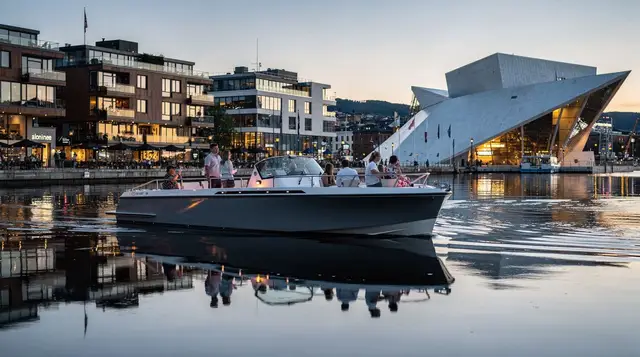
Oslo: guided sightseeing fjord cruise on a premium silent electric boat
- Silent electric boat
- Free cancellation
- Best seller
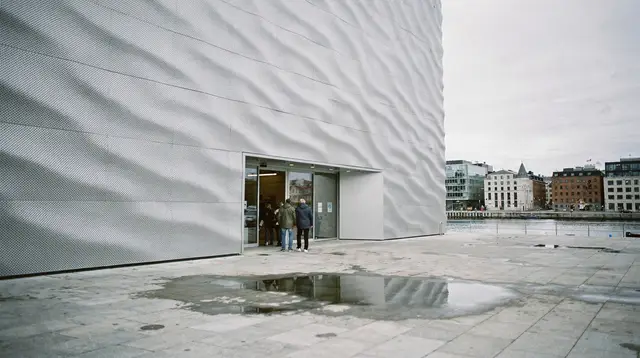
Oslo: Munch Museum admission ticket
- Skip the ticket line
- Instant confirmation
Oslo: 3-hour highlights bike tour
- Small group
- Bike included