Holmenkollen — ski jump, museum, views, and the ski festival
Oslo: 3-hour Holmenkollen ski jump hiking tour
Duration: 3 hours
- Panoramic views
- Local guide
Is Holmenkollen worth visiting?
Yes, in all seasons. The ski jump museum is genuinely excellent and the tower viewing platform offers Oslo's best elevated panorama. In winter with snow, the setting is extraordinary. The Holmenkollen ski festival in early March is one of Europe's greatest sporting spectacles.
Holmenkollen: the mountain above Oslo
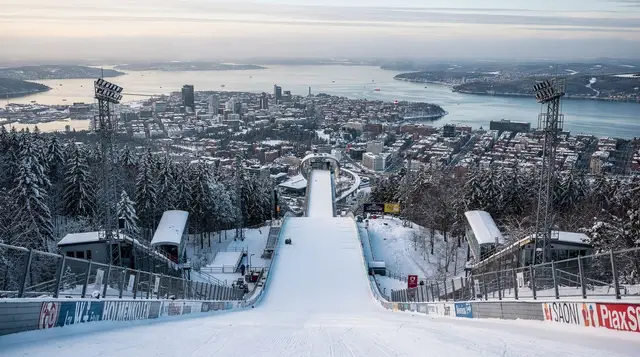
There are places in Norway that function as both landmarks and mirrors — locations where the country sees something essential about itself reflected back. Holmenkollen is one of them. The ski jump tower above Oslo has been a competition venue since 1892, rebuilt and enlarged more than a dozen times as ski jumping distances have grown. The current structure, completed in 2010 and designed by architect Julien De Smedt, is a piece of infrastructure so visually emphatic — a curved white beam angling into the sky above the dark forest — that it is visible from the Oslofjord on clear days.
But Holmenkollen is not just a monument. It is an active sporting venue, a living museum, a winter ski hub, and a viewpoint. This guide covers all four dimensions.
| Where | Holmenkollen, T-bane line 1, ~23 minutes from Nationaltheatret |
| Cost | Around NOK 185 adults for museum + tower |
| Time needed | 1.5–2hrs, half a day with Nordmarka added |
| Best time | March (ski festival) for atmosphere, any season for the view |
| Don’t miss | The jump tower panorama and the Nansen/Amundsen exhibits |
Getting to Holmenkollen
T-bane line 1 (Frognerseteren direction) from central Oslo to Holmenkollen station. Journey time: approximately 23 minutes from Nationaltheatret, 20 minutes from Majorstuen. Trains run every 5 minutes in peak hours, 10–15 minutes off-peak. Single Ruter ticket NOK 42 (USD 4.50) in app, NOK 80 (USD 8.60) on board.
The ski jump structure is visible immediately from the station exit — walk uphill for about 5 minutes through the Holmenkollen Skistua area to the museum entrance.
Alternative: walk from Vettakollen station (3 km south along the ridge trail) or from Frognerseteren station (3 km north via forest trail). Both routes are pleasant and add context to the visit.
The ski museum
The Ski Museum (Skimuseet) in the base of the jump tower is the world’s oldest dedicated ski museum, founded in 1923. It runs from prehistoric skiing (4,000-year-old rock carvings from Rødøy showing hunters on skis) through the Sami ski tradition, the 19th-century competitive skiing movement, Norwegian polar expeditions (Nansen’s Greenland crossing on skis in 1888, Amundsen’s South Pole journey), and up to contemporary Olympic achievements.
The museum is well-designed and not overwhelming — plan 45–75 minutes for a thorough visit. The polar expedition section is particularly strong, with original equipment from both Nansen’s and Amundsen’s journeys. The skiing history section contextualises why Norway treats cross-country skiing as a national identity, not just a sport.
Admission includes the museum and the jump tower observatory.
Opening hours: Open daily throughout the year. Summer (May–September) 09:00–17:00; winter (October–April) 10:00–16:00, extended to 18:00 during the Holmenkollen festival week. Verify on visitholmenkollen.no before you go.
Admission prices: Adult NOK 185 (USD 20), child 6–15 years NOK 110 (USD 12), child under 6 free. Oslo Pass holders enter free. Family ticket (2 adults + 2 children) NOK 500 (USD 54).
The jump tower — the view from the top
The lift inside the jump structure takes visitors to the in-run platform — the ramp from which jumpers launch. Standing at the top and looking down over the take-off table and the landing hill below (roughly a 50-degree slope), the geometry of competitive ski jumping becomes viscerally obvious. This is what it feels like to stand where athletes routinely launch into 130-metre flights. Many visitors find it more affecting than expected.
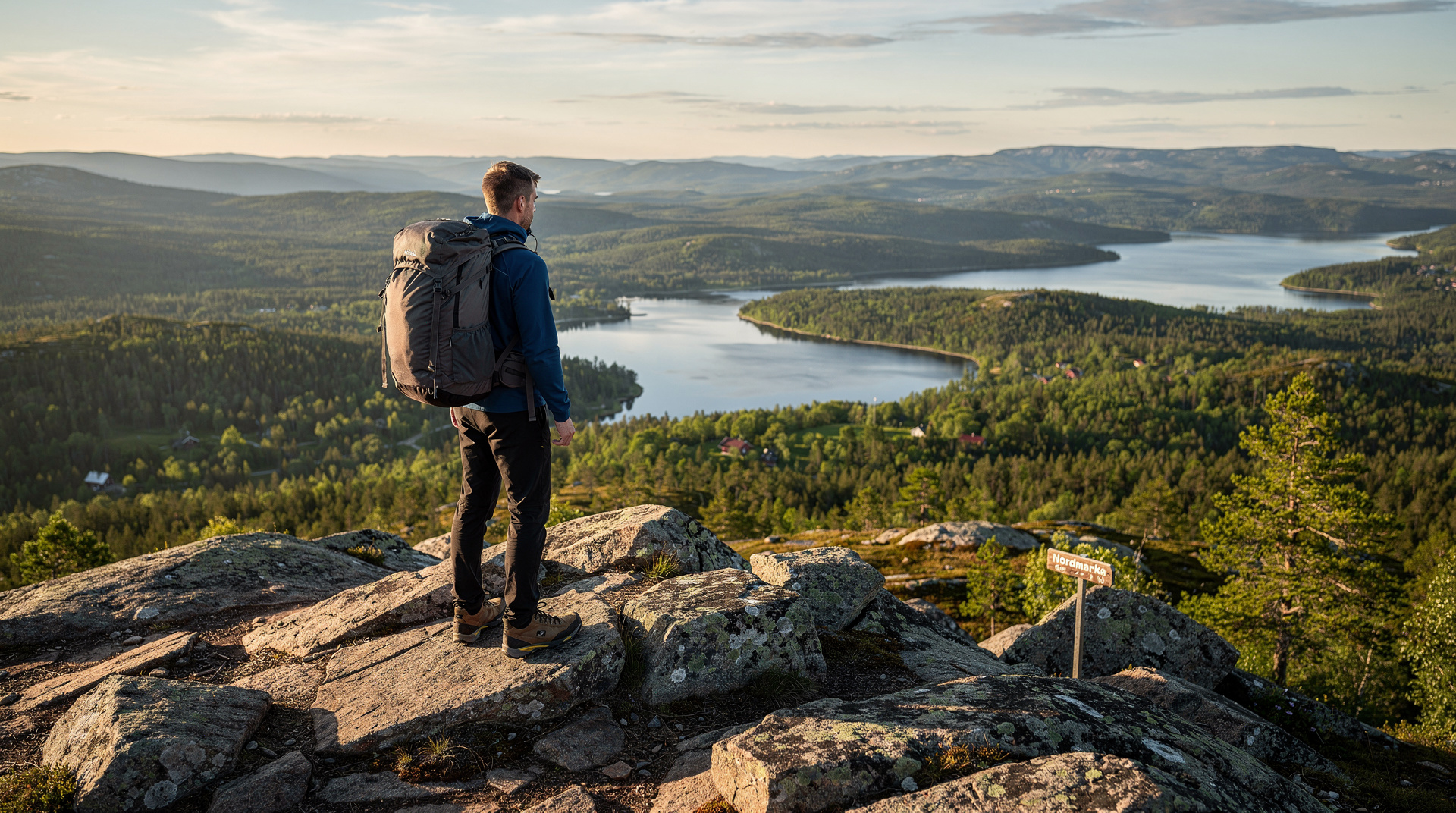
The view from the tower platform is genuinely one of Oslo’s finest elevated perspectives. The city spreads south-east — the Barcode towers of Bjørvika visible as a sharp skyline fragment, the Oslofjord glittering behind the islands, the Royal Palace and Karl Johans gate visible in the valley. North, Nordmarka forest stretches without visible interruption. On very clear days, the Drøbak narrows and the Drøbak church tower are identifiable with binoculars.
The platform is open air and exposed. In winter it can be extremely cold and windy — bring a windproof layer regardless of how warm it seems lower down.
Cross-country skiing from Holmenkollen
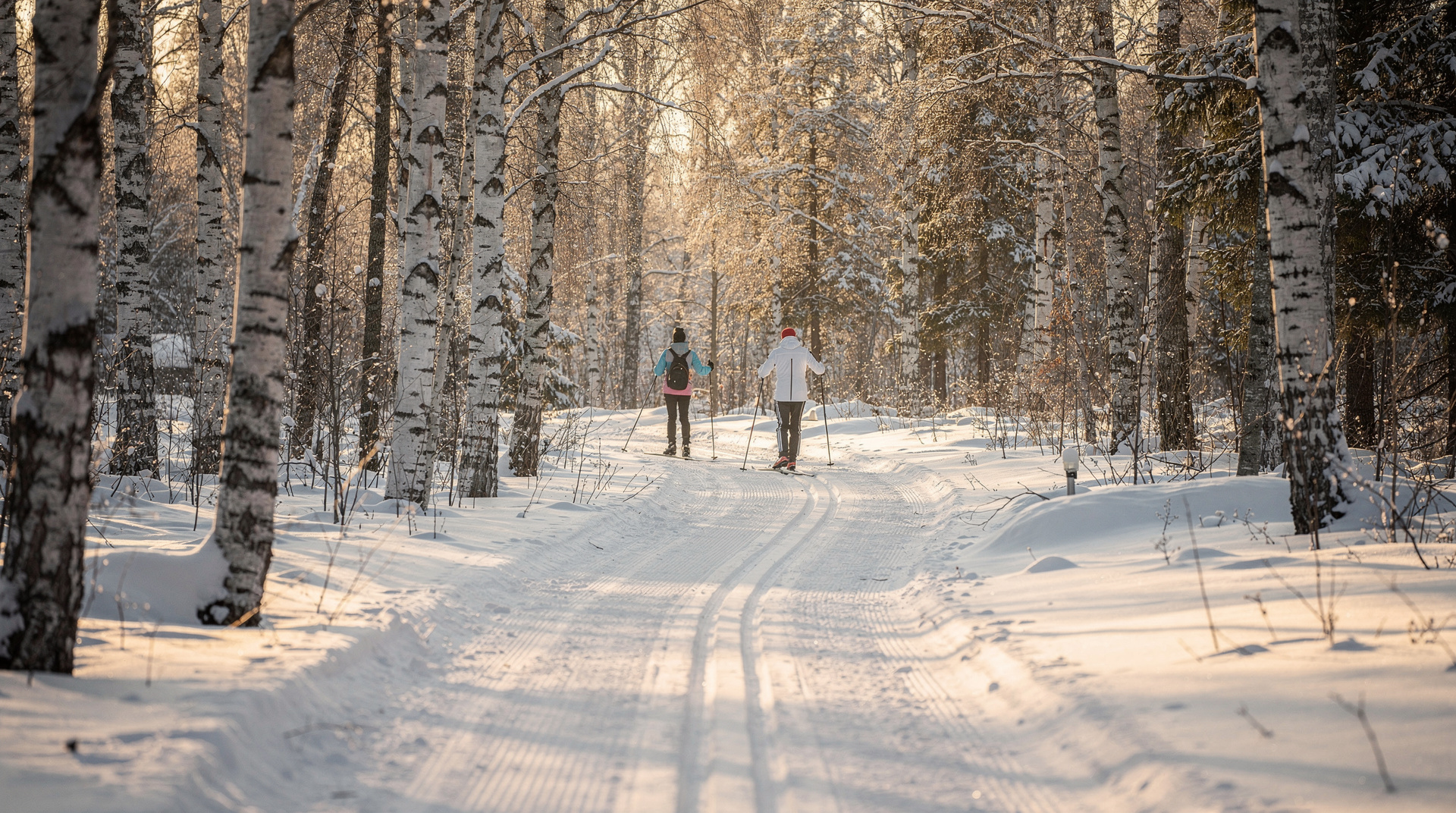
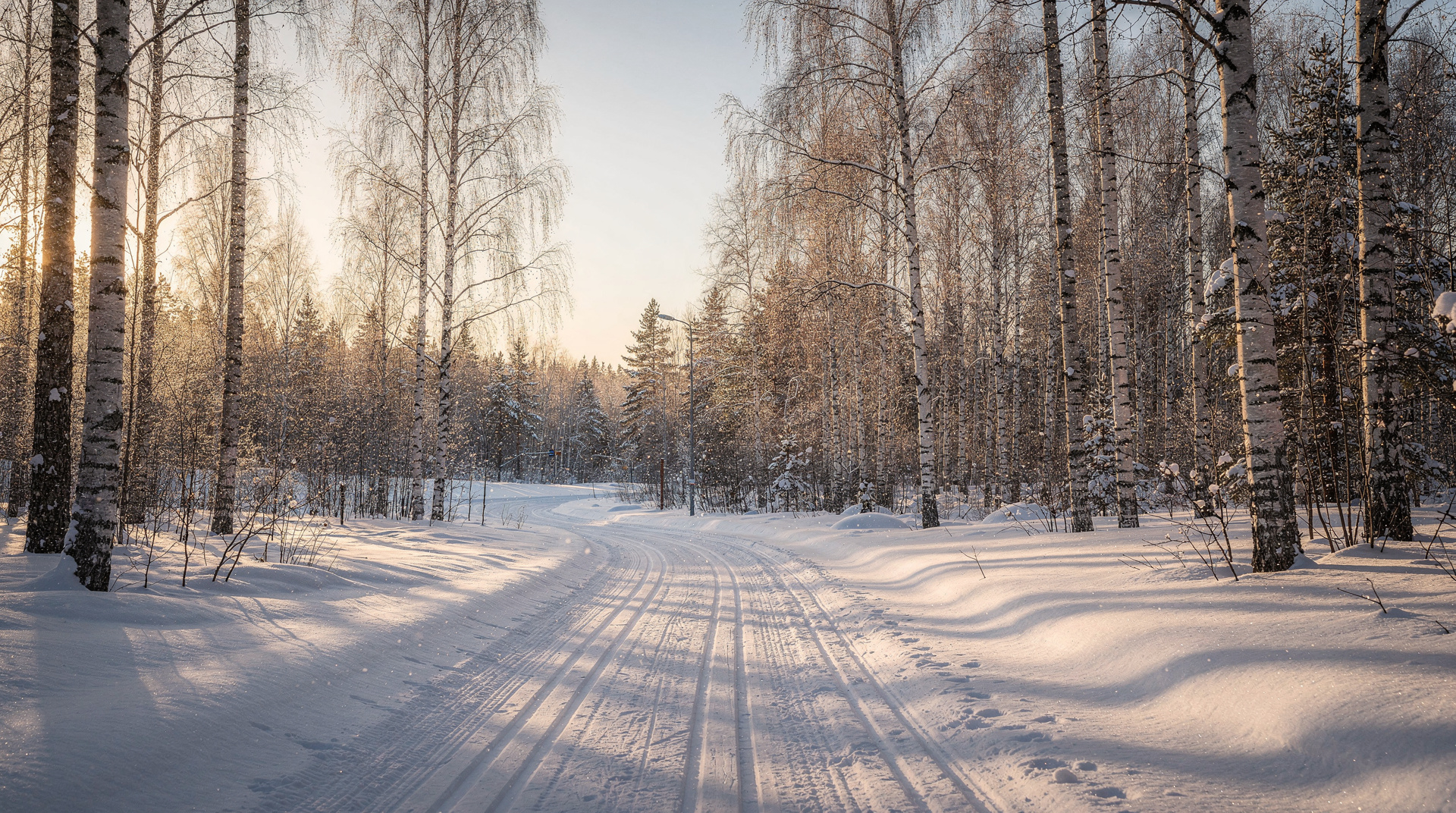
The T-bane station at Holmenkollen is also the entry point for a section of the Nordmarka cross-country ski trail network. Trails depart directly from the station and the Holmenkollen Skistua complex.
The 10 km race loop used for World Cup competition runs through the area and is accessible to recreational skiers when not in use for events. It is marked on the Ut.no ski trail map. Equipment rental is available at Holmenkollen Skistua.
For the full picture of Oslo’s cross-country ski scene, see our cross-country skiing guide, which covers the broader Nordmarka network, rental, and lessons.
The Holmenkollen ski festival (March)
The Holmenkollen Rennet has run since 1892, interrupted only by two world wars. It is the world’s oldest continuous ski competition event and, in scale, one of the largest Nordic sporting events anywhere. The modern festival spans approximately two weeks in February and March, with World Cup events in ski jumping, cross-country skiing (classic and freestyle), and biathlon.
The Sunday ski jumping final — the Holmenkollen Jump — is the centrepiece event. Crowds of 50,000 to 100,000 fill the arena and the surrounding hillsides. The atmosphere is intense, Norwegian-patriotic, and cheerful in the particular way of large winter sporting gatherings. Spectators arrive at all positions around the hill: the main grandstand, the lower landing hill terraces, and the free public hillside.
Tickets:
- Main grandstand: NOK 450–800 (USD 48–86) per session
- Lower arena standing: NOK 200–350 (USD 22–38)
- Hillside viewing (some positions): free
Tickets sell out weeks in advance for the main jumping final. Cross-country race tickets are more accessible. Book through holmenkollenidrettsfest.no or Ticketmaster Norway well in advance.
Getting there during the festival: The T-bane runs extended services to Holmenkollen during festival days. Expect very crowded trains in the 90 minutes before major events. Walking from Majorstuen metro station (about 5 km) is a pleasant alternative if you have time.
Visiting in summer
Holmenkollen in summer is a different experience — quieter, the snow absent, the structure’s architecture fully exposed. Many visitors find the jump tower even more impressive without the forest snowscape competing for attention. The museum is identical year-round. The surrounding area has pleasant forest hiking (connect to the Vettakollen trail via the ridge south) and the Frognerseteren restaurant (1 station further on the T-bane) has an excellent summer terrace.
Summer visit times average 60–90 minutes at the museum and tower, plus transport. A half-day excursion from central Oslo is the natural format.
Holmenkollen for families
The museum is excellent for families with children who have any interest in winter sports, Arctic exploration, or physical challenge. Children tend to be very engaged by the Nansen and Amundsen sections (the actual sledges, the clothing, the scale of the expeditions) and by the tower view.
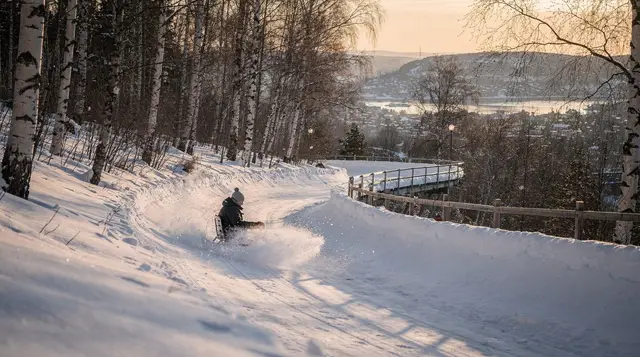
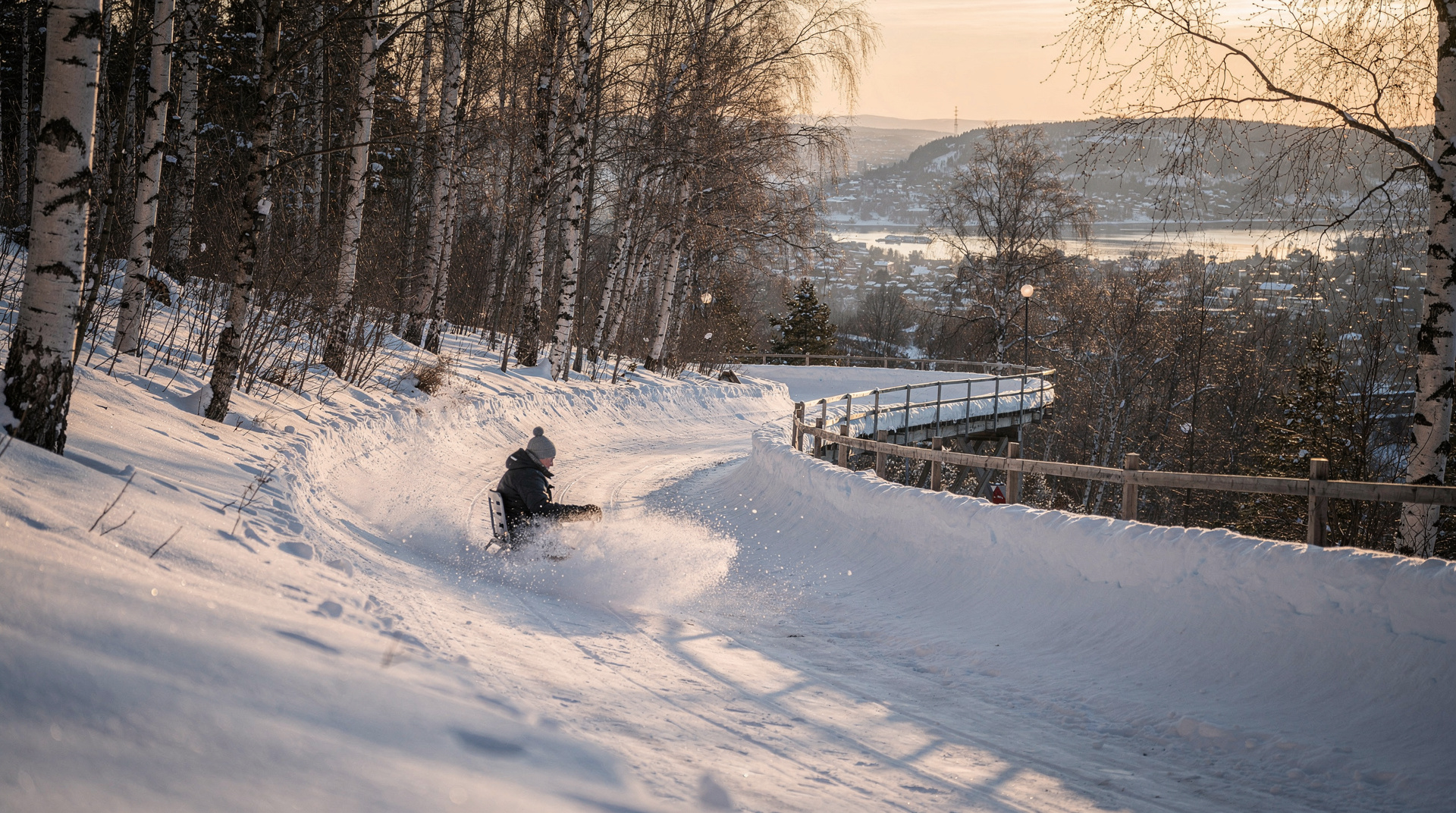
The Korketrekkeren toboggan run is accessible 3 T-bane stops south at Midtstuen/Frognerseteren — combine a Holmenkollen visit with the sledge run for a complete winter family afternoon. See our Korketrekkeren guide for how that works.
Where Holmenkollen fits in your Oslo plan
Holmenkollen works best as a half-day anchor rather than a stand-alone stop. If you are still deciding how long to spend in the capital, our guide on how many days in Oslo helps place it, and the Oslo in 2 days and Oslo in 3 days itineraries both leave room for it. Travellers who care about the outdoors will find it slots naturally into the active outdoors 3-day plan.
The ride up is part of the appeal, and getting around by T-bane is simple once you know how tickets work. Our guide to Oslo public transport with Ruter explains the zones and the app, and getting around Oslo covers the other options. If you plan to visit several paid attractions during your stay, compare the numbers in is the Oslo Pass worth it before buying, since the museum admission is one of the things the pass can cover.
Honest assessment
Holmenkollen is one of the few Oslo attractions that consistently over-delivers. Visitors who expect a minor ski hill with a museum get something significantly more: a world-class cultural space documenting Norway’s relationship with winter, a viewing platform with unmatched city views, and (in March) one of Europe’s most atmospheric sporting events. The admission price is reasonable by Oslo standards and the T-bane access is seamless.
The one honest caveat: without snow, the setting is somewhat stripped of its full drama. Winter visitors — particularly during the festival period — get the definitive Holmenkollen experience. Summer visitors get the museum and views but miss the magic of the forest under snow. If your trip allows any flexibility on the winter-vs-summer question and you have any interest in skiing culture, nudge your visit toward winter.
The architecture of the ski jump
The current Holmenkollen ski jump tower was designed by Danish architect Julien De Smedt (JDS Architects) and completed in 2010 for the FIS Nordic World Ski Championships. It replaced a structure that had served since 1980, which itself replaced earlier versions going back to the original 1892 jump.
The current design is a dramatic departure from the solid timber and concrete of its predecessors. The structure reads as a curved white parabola against the sky — the in-run (the slope from which the jumper descends to launch) bends in a gentle arc that mimics the natural ski-jumping body position. The supporting structure is exposed steel, visible from all sides. The shape manages to be both imposing and elegant, and it photographs differently depending on your position — from below the landing hill it appears vast; from the summit viewing platform it reveals its actual engineering.
The jump was designed for distances exceeding 130 metres. World Cup competitions here see athletes launch into flights of 125–145 metres, landing on a hill that plunges at nearly 35 degrees. The combination of the launch, the flight, and the landing on an arena of 50,000 spectators produces what is, to Norwegian eyes, the most dramatic single moment in sport.
Biathlon at Holmenkollen
The Holmenkollen complex includes a purpose-built biathlon venue — the combination of cross-country skiing and rifle shooting that is, counterintuitively, one of Norway’s most-watched winter sports. The biathlon stadium sits below the ski jump and hosts World Cup biathlon events during the Holmenkollen festival week.
Watching biathlon — athletes skiing the course at racing pace, then stopping at the shooting range, controlling their breath to 40–50 beats per minute, and firing at 50-metre targets the size of a coin — is a compelling sporting experience. The technical challenge is immediately legible to any spectator: the targets flash white when hit (a light behind the plate illuminates) and the rifle report is clear and audible at ringside.
Biathlon World Cup tickets are slightly easier to obtain than ski jump final tickets and provide excellent close-range views of athletes on the range. Worth considering if your Holmenkollen visit coincides with the festival week.
Holmenkollen as a viewpoint — practical photography tips
The tower viewing platform faces primarily south and south-east over Oslo. For photography:
Best light for the city view: Morning, when the sun is east of you and the city is illuminated. A clear morning in January with frost on the forest and the fjord silver-grey makes for exceptional images.
Best light for Nordmarka: Afternoon, when the low winter sun catches the treetops from the west. The forest turns from dark green-grey to amber-gold in the last hour before dusk (around 14:30 in January).
Best season for drama: Winter with fresh snow. The landing hill below the viewing platform becomes a white slope extending down to the arena. The contrast between the white structure, dark forest, and grey sky is stark and atmospheric.
Equipment: A standard zoom lens (24–105 mm equivalent) covers both the city view and the jump structure from the platform. If you have a long telephoto lens, the view from the lower arena level looking up at the jump tower is a strong alternative framing.
Combining Holmenkollen with Nordmarka
Holmenkollen station sits at the southern edge of Nordmarka — meaning a Holmenkollen visit naturally leads into cross-country skiing or hiking in the forest. The most common combination for winter visitors:
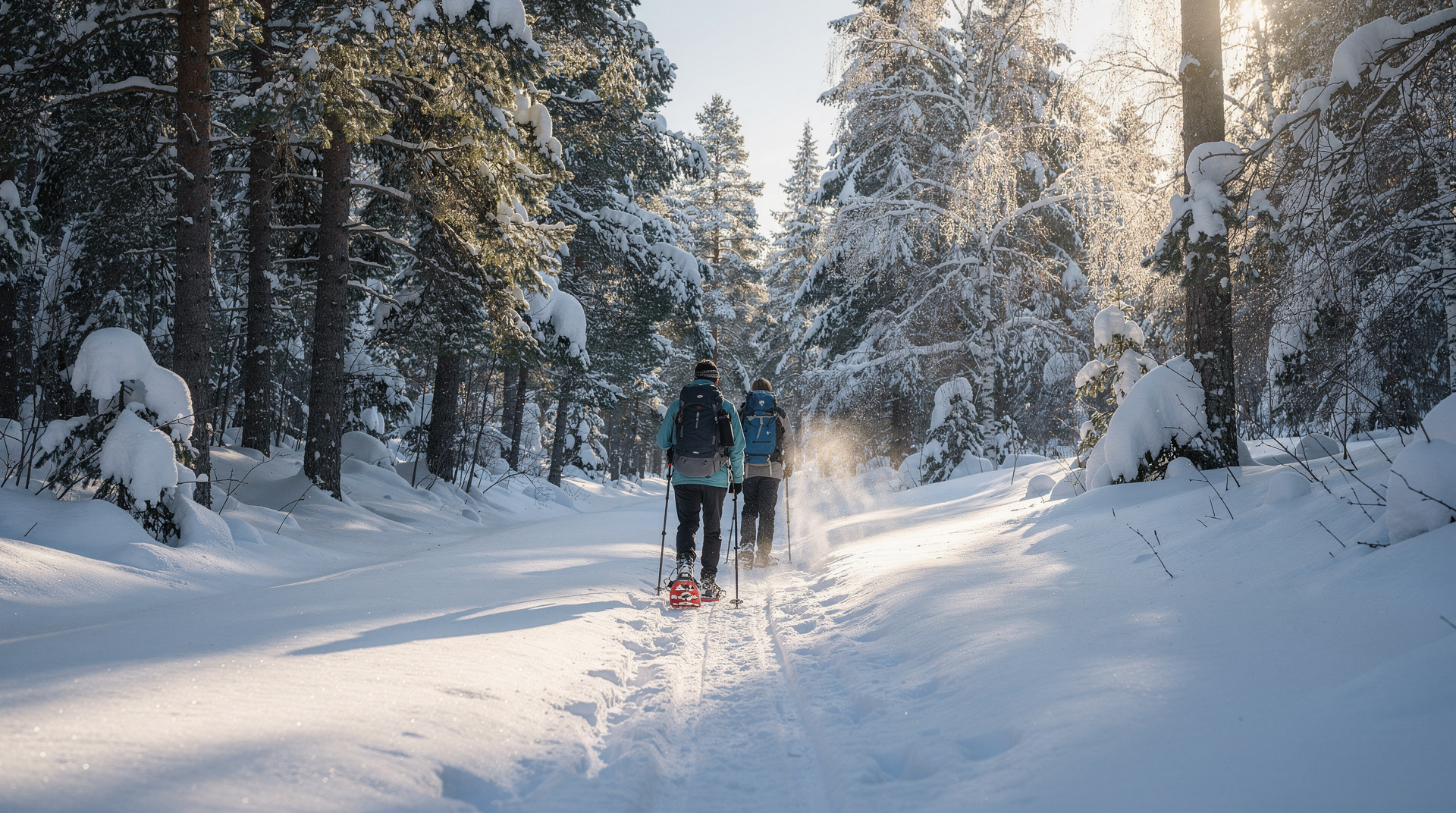
Morning: T-bane to Holmenkollen, museum and tower (1.5–2 hours). Lunch at Holmenkollen Skistua café (NOK 160–220 for a main, USD 17–24). Afternoon: ski or snowshoe into Nordmarka from the station — trails begin within 5 minutes of the exit. Return to Oslo by T-bane from Holmenkollen or continue to Frognerseteren (3 stops north) for a longer outing.
This is how most Oslo residents use Holmenkollen — as a cultural anchor for a day that is really about the forest around it. The museum is the excuse, the skiing is the point. Visitors who approach it the same way will have a more Norwegian experience than those who treat the jump tower as a standalone destination.
See our full winter Oslo schedule suggestion in the 3-day winter itinerary.
Practical information consolidated
Getting there: T-bane line 1 to Holmenkollen station, 23 minutes from Nationaltheatret. Trains run every 5–15 minutes. Single Ruter ticket: NOK 42 (USD 4.50) in app, NOK 80 (USD 8.60) on board.
Museum opening hours: Daily. Summer (May–September) 09:00–17:00. Winter (October–April) 10:00–16:00. Extended hours during ski festival week (early March) to 18:00. Always verify at visitholmenkollen.no as hours can change.
Admission: Adult NOK 185 (USD 20), child 6–15 years NOK 110 (USD 12), under 6 free. Family ticket (2 adults + 2 children) NOK 500 (USD 54). Oslo Pass covers entry.
Accessibility: The museum building and lift to the tower viewing platform are fully accessible. The outdoor landing hill terrain and ski trails are not.
Weather considerations: The tower viewing platform is open-air and exposed. Wind chill at the platform can be significant even when Oslo itself is mild. A windproof layer is essential year-round, and a warm layer in winter.
Photography permit: No special permit required for personal photography inside the museum. Commercial photography inside the exhibition spaces requires advance permission from museum management.
Food on site: Holmenkollen Skistua at the base of the jump complex has a café with soups, sandwiches, and hot drinks (NOK 140–200 for a main, USD 15–22). For a fuller meal, Frognerseteren restaurant (3 stops north on T-bane line 1) has Norwegian classics including reindeer dishes and baked brown cheese. Budget NOK 250–380 for a main course there (USD 27–41).
What the ski festival adds to an Oslo winter visit
For visitors whose trip dates can be flexible, visiting Oslo during the Holmenkollen ski festival (typically the first or second full weekend of March) is categorically different from visiting at any other time of year.
The festival transforms the Holmenkollen area into Norway’s largest winter sporting event venue. Preparations begin days before — fencing goes up around the course, sponsors’ banners appear on every surface, loudspeakers pipe Norwegian folk music into the forest, food vendors stake out positions around the arena perimeter. Norwegian flags are ubiquitous.
The atmosphere on competition day is one of the most distinctively Norwegian experiences available to a visitor. The crowd is 80% Norwegian and the cultural codes are specific — the particular cadence of the stadium announcer’s voice, the communal roar when a Norwegian competitor is on course, the matter-of-fact comfort with standing in −3°C for two hours because the skiing is good. Foreigners who experience this typically describe it as one of the most genuinely local sporting events they have attended anywhere in the world, which for a World Cup-level competition is an unusual quality.
If the Holmenkollen festival coincides with your Oslo visit, prioritise it. Book tickets (from holmenkollenidrettsfest.no or Ticketmaster) at least 2–3 weeks in advance for the main events.
Extending the day to Frognerseteren
Three T-bane stops beyond Holmenkollen, at the end of line 1, sits Frognerseteren — the gateway to Nordmarka and home to a much-loved restaurant of the same name. The restaurant occupies a striking dragon-style timber building from 1891, with a terrace that in clear weather offers views arguably as good as the Holmenkollen tower itself, minus the admission fee.
Norwegian classics here — reindeer, baked brown cheese, cloudberries with cream — run NOK 250–380 (USD 27–41) for a main course, and it’s a natural lunch or coffee stop before or after the ski jump visit. From Frognerseteren, marked trails fan out into Nordmarka in every direction, and in winter this is also where many recreational skiers actually start their day, rather than at Holmenkollen itself.
Combining the two stops works well: ride to Frognerseteren first for an early terrace coffee and a short forest walk while the light is best, then come back one stop to Holmenkollen for the museum and tower before the crowds build. Reversing the order works equally well if you’d rather finish the day with a meal. For families, this pairing also opens up the Korketrekkeren toboggan run near Midtstuen, roughly midway between the two stations, making a full winter afternoon of museum, meal, and sledging without ever leaving the T-bane line 1 corridor.
Holmenkollen by season, at a glance
| Season | What you get | Crowds | Notes |
|---|---|---|---|
| Winter, festival week (Mar) | Peak atmosphere, World Cup events, snow | Very high | Book event tickets weeks ahead |
| Winter, non-festival (Dec–Feb) | Snow-covered setting, quieter museum | Low–moderate | Cold; windproof layer essential |
| Summer (Jun–Aug) | Exposed steel architecture, clearest long views | Low | Combine with Nordmarka hiking |
| Spring/Autumn | Transitional light, good photography | Low | Trails can be muddy, not snow-ready |
Holmenkollen vs Oslo’s other viewpoints
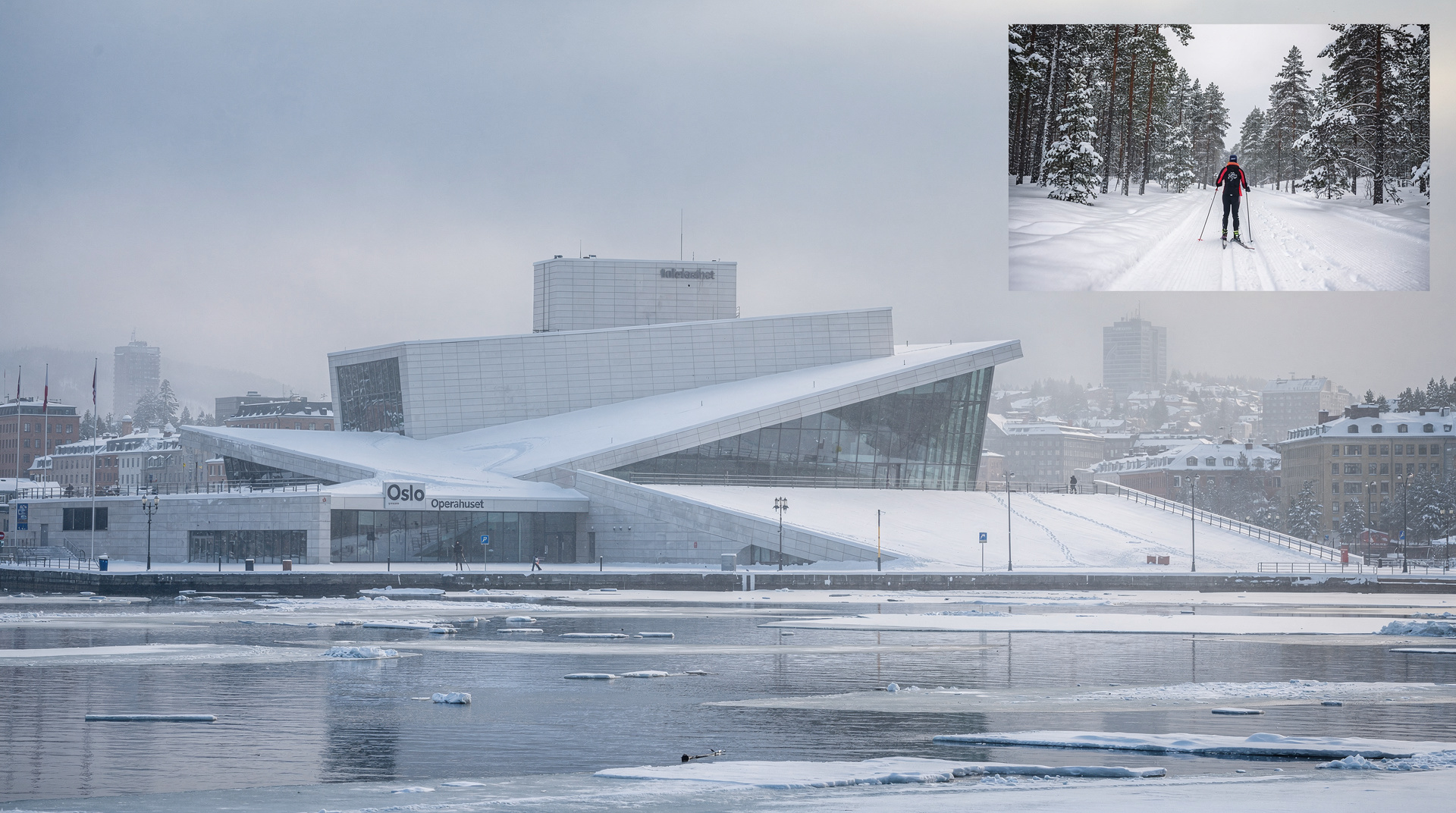
Oslo has several elevated viewpoints, and Holmenkollen is the most dramatic but not the most convenient. Ekebergparken and the Opera House roof are both closer to the centre and free or near-free, making them better choices if you only have an hour. Holmenkollen requires the T-bane trip and an admission fee, but rewards the effort with the highest, most complete panorama in the city, plus the ski museum most other viewpoints don’t offer.
If your schedule allows only one elevated view, choose based on time: under an hour, pick a central option; a half day, Holmenkollen is worth the journey. Photographers in particular tend to prefer Holmenkollen for its combination of forest, fjord, and city skyline in a single frame — something the more urban viewpoints closer to Sentrum can’t quite replicate.
More ideas to pair with your visit
If the forest is what draws you, the Nordmarka destination page and the Nordmarka hiking guide show how far the trails reach beyond the ski jump, while the Holmenkollen destination page gives the wider neighbourhood picture. In cold months, snowshoeing near Oslo is a gentler alternative to skiing, and the Oslo in winter activities guide lists what else is worth doing when the snow is down.
For the festival itself, our blog post on the Holmenkollen ski festival gives a first-hand feel for the atmosphere, and the best views over Oslo article compares the tower with the city’s other lookouts. Finally, if you are weighing seasons for your trip, the best time to visit Oslo puts the festival and the quiet summer months side by side.
Frequently asked questions about Holmenkollen — ski jump, museum, views, and the ski festival
How do you get to Holmenkollen from central Oslo?
T-bane line 1 (direction Frognerseteren) to Holmenkollen station — about 25 minutes from Nationaltheatret. The jump complex is visible from the station; a short walk brings you to the museum entrance. Trains run every 5–15 minutes.How much does Holmenkollen cost to visit?
The ski museum and jump tower admission costs NOK 185 for adults (USD 20), NOK 110 for children 6–15 (USD 12), under 6 free. The Oslo Pass covers admission. The outdoor areas around the jump structure — the terraces, the ski trails — are free to access at all times.What is the Holmenkollen ski festival?
The Holmenkollen ski festival is an annual World Cup Nordic skiing event held in early March, featuring cross-country skiing, biathlon, and ski jumping competitions. It has run since 1892. The Sunday ski jumping final draws crowds of 50,000–100,000. It is the largest Nordic skiing event outside the Winter Olympics.Can you ski at Holmenkollen?
Cross-country ski trails begin directly from Holmenkollen station and connect to the Nordmarka network. Holmenkollen is not an Alpine ski resort — there is no downhill piste open to the public. The ski jump is competition-only. For Alpine skiing, day trips to Norefjell or Hafjell are the better options.What is the view like from the Holmenkollen jump tower?
The tower platform sits at roughly 200 metres above the valley floor and offers a 270-degree panorama over Oslo, the Oslofjord, and the surrounding forested hills. On clear days the islands of the Oslo archipelago and the Drøbak narrows are visible. Many visitors consider it the finest elevated city view in Oslo.Is Holmenkollen open in summer?
Yes. The museum and tower are open year-round. Summer visitors see the jump structure without snow, which reveals its dramatic architecture — a 60-metre curved steel scaffold designed by Julien De Smedt. The views are as good in summer as winter; the setting is less atmospheric but less crowded.How does Holmenkollen compare to other Oslo viewpoints?
It's higher and more dramatic than Ekebergparken or the Opera House roof, at the cost of being further from the centre — about 23 minutes by T-bane rather than a short walk. For a quick view with minimal travel, Ekebergparken or the Opera House roof are faster options; for the single best elevated panorama in the city, Holmenkollen wins.Do I need to book the ski museum in advance?
No, walk-in tickets are the norm outside the festival period. During the Holmenkollen ski festival week in early March, the museum itself doesn't require booking, but expect much busier trains and grounds, and book festival event tickets separately well ahead.
Top experiences
Bookable activities with verified prices and instant confirmation on GetYourGuide.