Snowshoeing near Oslo — guided tours in Nordmarka
From Oslo: Oslomarka forest guided snowshoeing tour
Duration: 3 hours
- Winter only
- Snowshoes included
Where can you go snowshoeing near Oslo?
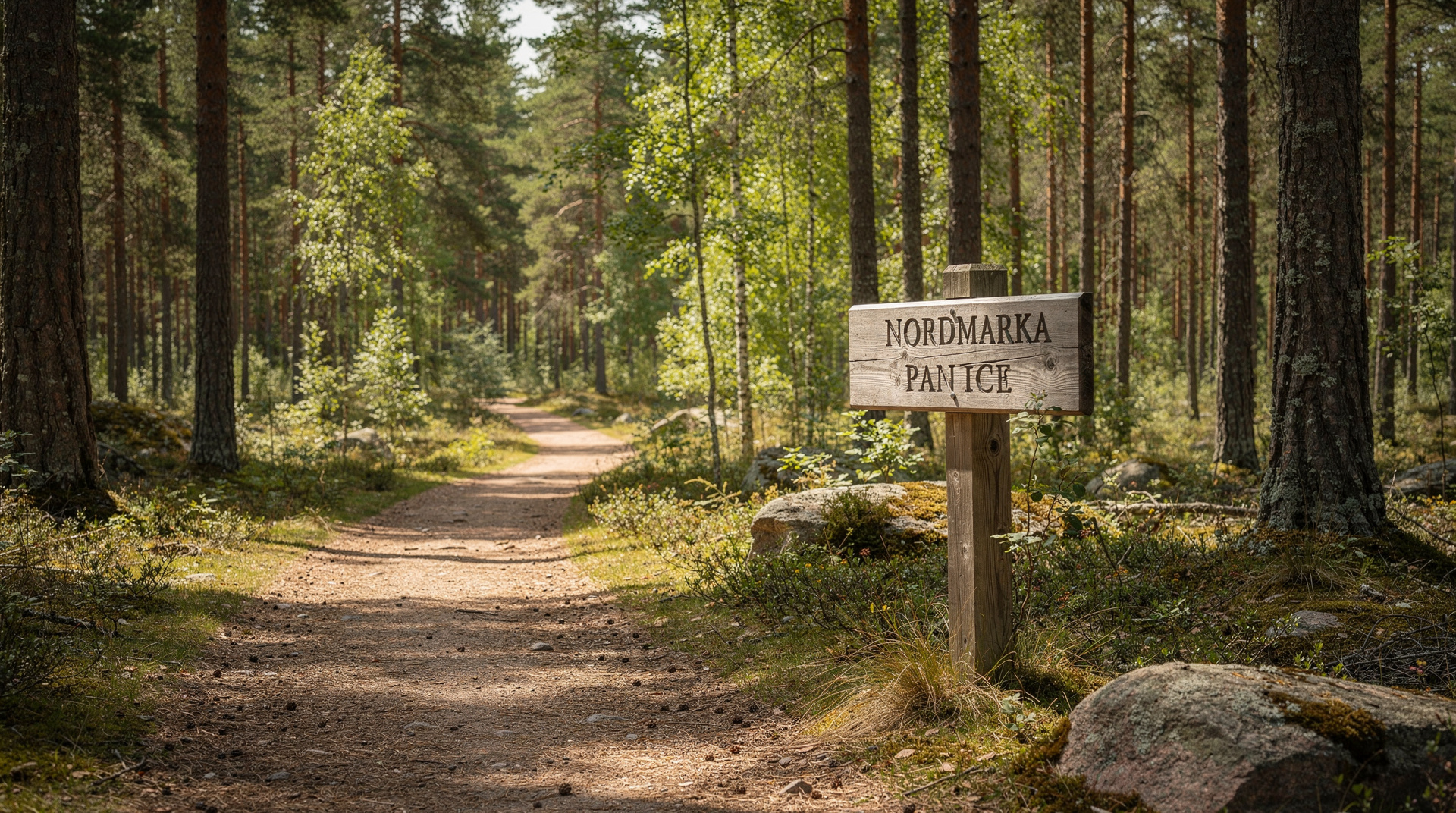
Nordmarka forest, directly accessible by T-bane from central Oslo. Guided snowshoe tours depart from Frognerseteren (T-bane line 1) and typically cover 5–8 km through the winter forest, often including a campfire and Norwegian BBQ stop. Self-guided rental is also available.
| Where | Nordmarka, from Frognerseteren (T-bane line 1) |
| Cost | around NOK 750-1,200/person guided; NOK 150-250 self-guided rental |
| Time needed | 2.5-4 hours guided |
| Getting there | T-bane line 1 to Frognerseteren |
| Best time | January-February for reliable deep snow |
Walking on snow — Norway’s most accessible winter activity
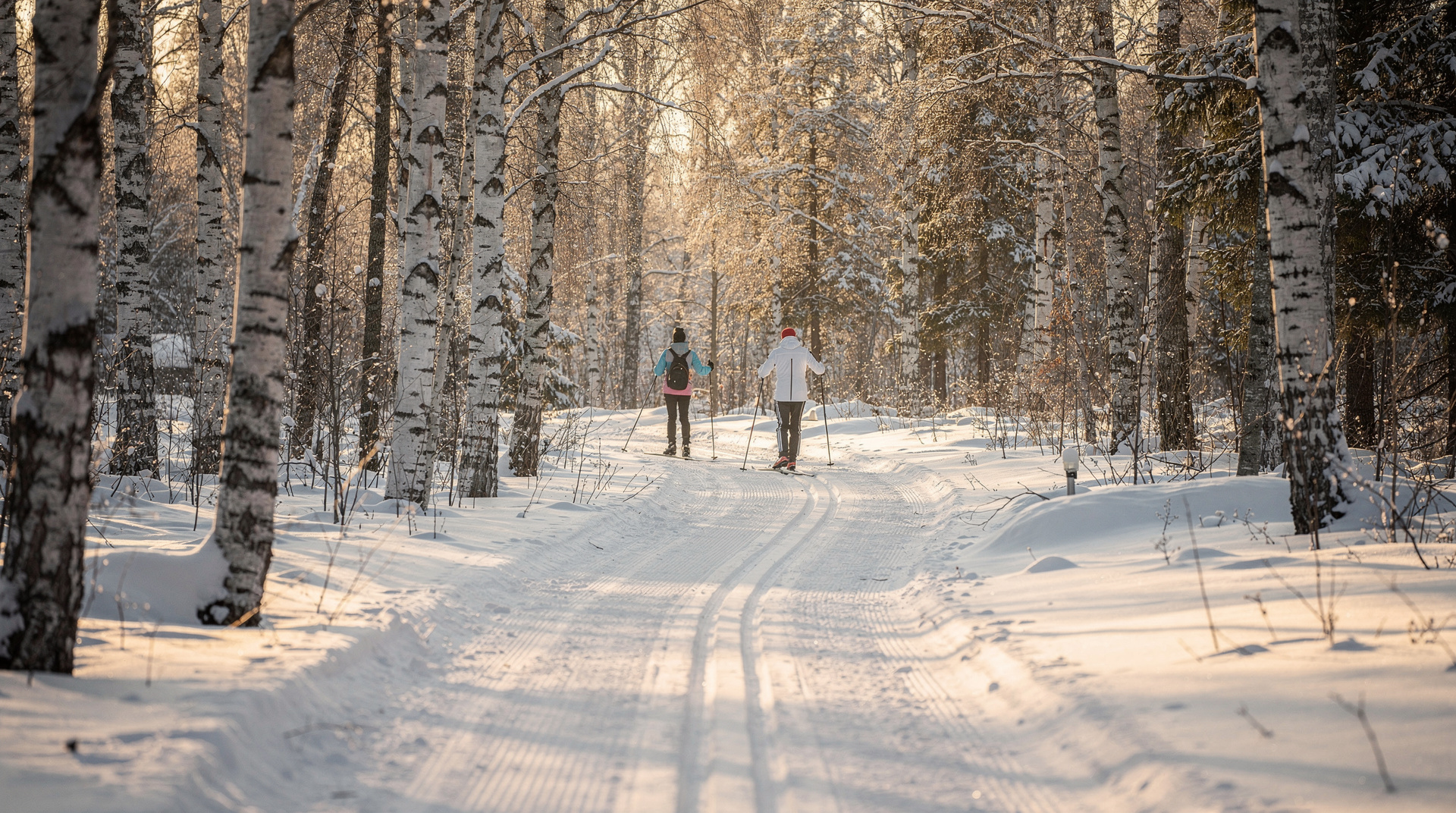
Cross-country skiing is the Norwegian winter ideal. But it requires equipment, technique, and ideally a lesson before the forest trails start to make sense. Snowshoeing asks for none of this. Strap metal-framed extensions to your boots and you can walk on 60 cm of powder as though it were compacted ground. The learning curve is not a curve — it is an immediate plateau.
This accessibility is why snowshoeing has grown rapidly in Oslo’s visitor activity market. The same Nordmarka forest that hosts hundreds of kilometres of ski trails also hosts snowshoe routes through ungroomed terrain — areas where cross-country skis would require specific technique but snowshoes go wherever you point them. The result is a winter activity that puts any reasonably mobile adult into one of Norway’s most beautiful landscapes within 40 minutes of leaving their Oslo hotel.
Why Nordmarka in winter is spectacular
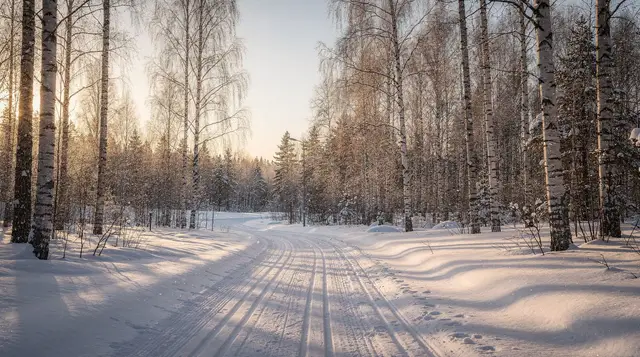
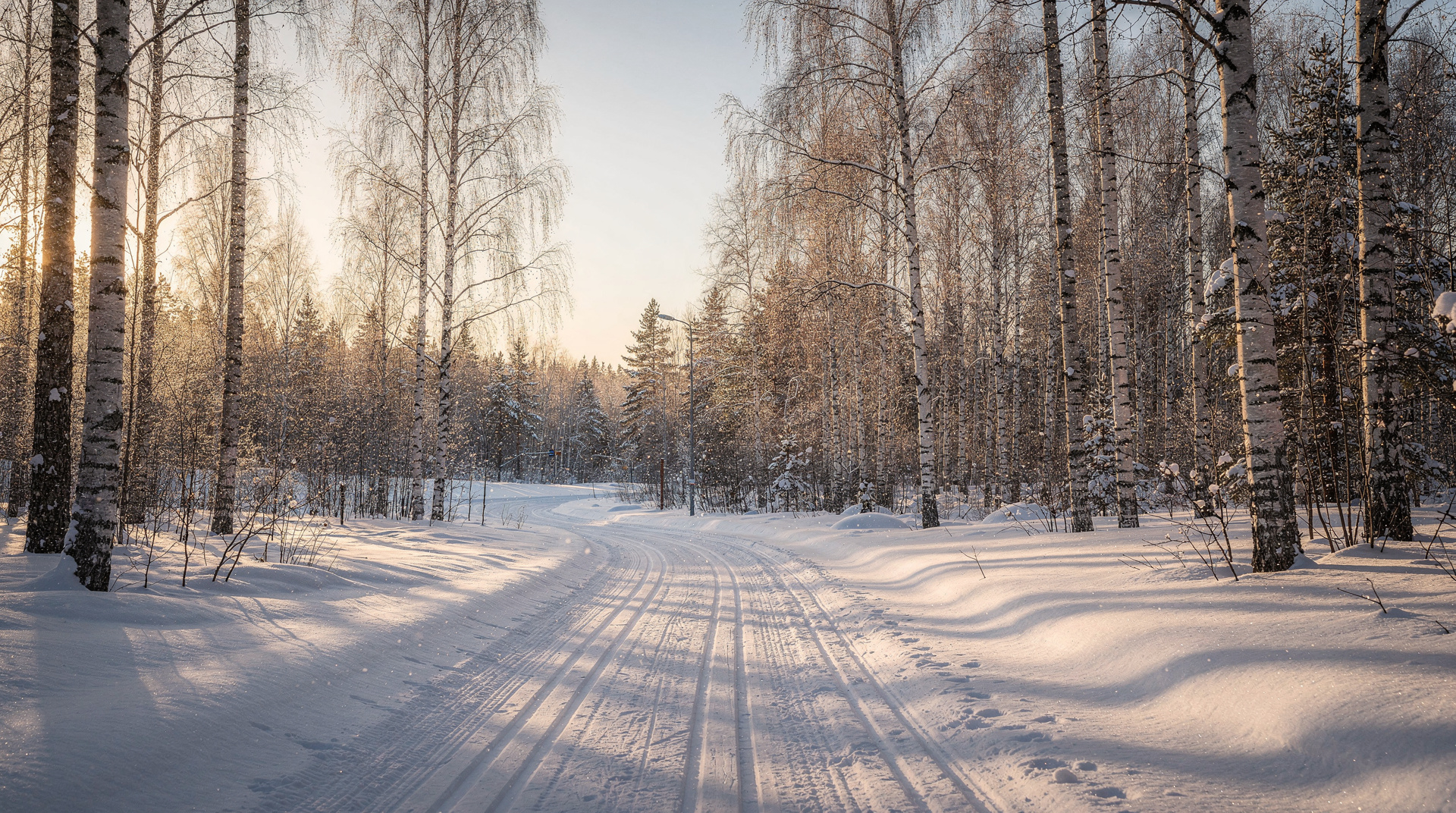
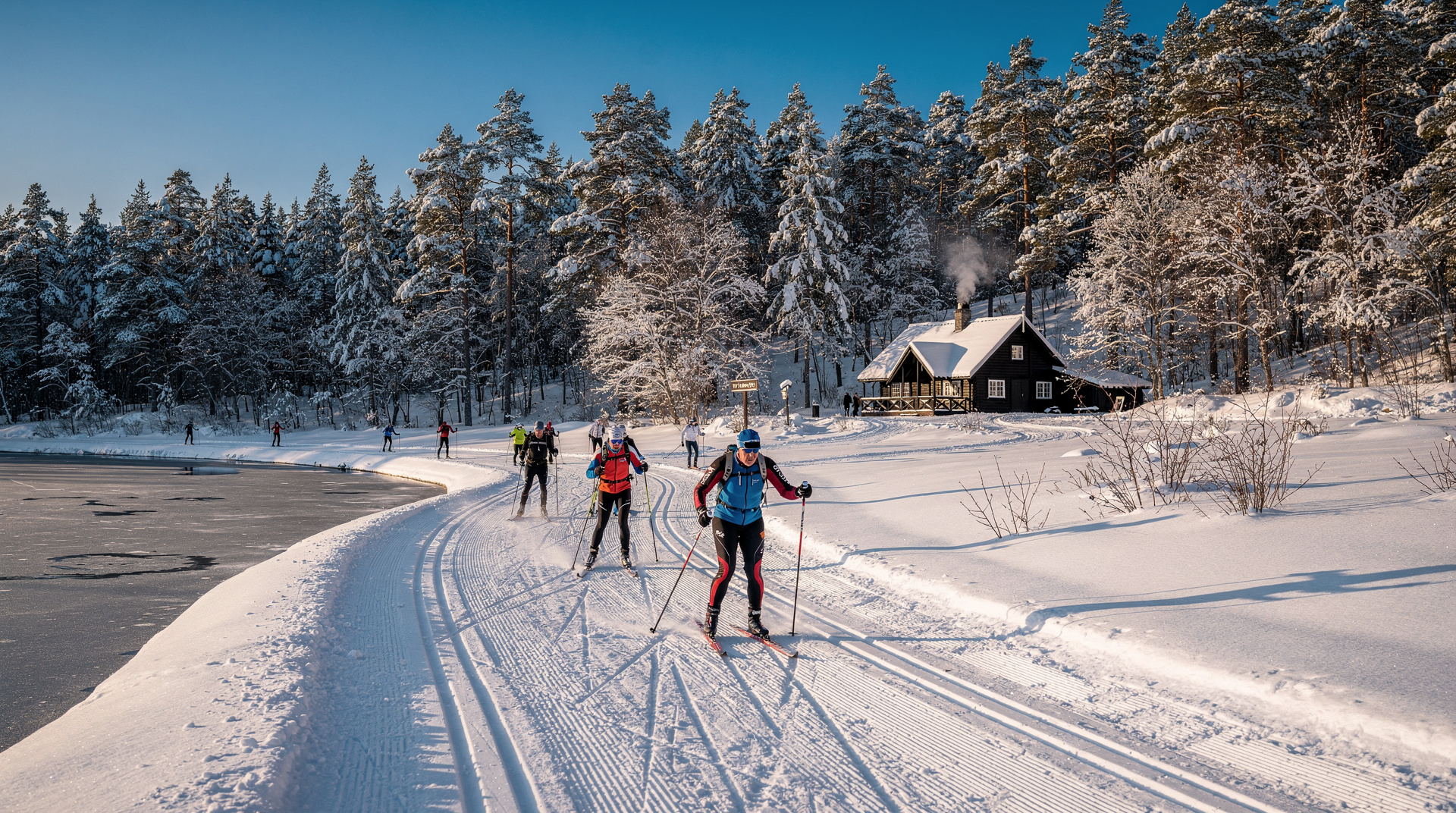
The case for Nordmarka in summer is clear: green forest, swimming lakes, long evenings. The case for winter is different and equally valid. Under a metre of snow, Nordmarka becomes a landscape of black spruce and white ground, profound silence, and a quality of light that changes minute by minute when the low winter sun catches the snow crystals. The frost-covered birch canopy on ridge sections is unlike anything in temperate Europe.
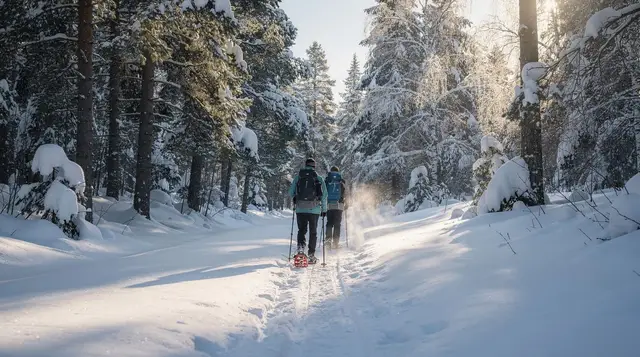
Walking through this landscape on snowshoes — the soft crunch of each step, the occasional distant woodpecker, the track of an elk crossing from tree to tree — provides the core Norwegian winter nature experience without any of the logistics of skiing.
Guided snowshoe tours from Oslo
Standard group snowshoe tour (Oslomarka)
The most popular format. A guide picks up the group at Frognerseteren station (T-bane line 1) or a central Oslo meeting point, distributes equipment, and leads a 5–8 km route through Nordmarka’s winter forest. The pace is conversational; the guide typically provides commentary on the forest ecology, Norwegian winter traditions, and orientation skills.
Duration: 2.5–3.5 hours Difficulty: Easy to moderate Group size: 4–12 participants Included: Snowshoe and pole rental, guide service, hot drink stop Price: NOK 750–950 per person (USD 81–102)
Norwegian BBQ snowshoe tour
The standout Oslo winter experience. After 60–90 minutes of forest walking, the guide leads the group to a prepared forest clearing with a pre-built fire. Grilled pølse (traditional Norwegian sausage), flatbrød, and hot varm saft (spiced berry juice) are served at the fireside. The combination of physical cold, warm fire, and distinctly Norwegian food is memorable in a way that most activity-tourism experiences are not.
Duration: 3–4 hours Included: Equipment, guide, full BBQ spread Price: NOK 950–1,200 per person (USD 102–129) Best for: Groups, couples, visitors wanting cultural depth alongside the landscape
This is the tour we most consistently recommend to first-time winter Oslo visitors who want something they cannot replicate elsewhere in Europe.
Torchlight evening snowshoe
A smaller, more atmospheric format designed for evenings. The group meets at dusk, receives headlamps or torches, and follows a guide through the forest after dark. The experience of Nordmarka at night in winter — absolute silence, the trees heavy with snow, the torches making small pools of warm light — is eerie and beautiful. Usually ends with hot drinks and a campfire.
Duration: 2–3 hours Best in: January and February when darkness falls by 15:30 and the forest is at its most silent Price: NOK 850–1,100 per person (USD 91–118)
Snowshoe day trip to Hønefoss
For those wanting to go beyond Nordmarka, a guided snowshoe experience with a campfire bonfire near Hønefoss (west of Oslo, 50 km by train) offers a different forest character — the rolling lowlands of Ringerike rather than Oslo’s steep ridges. This is a full-day excursion. See our ski day trips guide for context on the wider Hønefoss area.
Self-guided snowshoeing in Nordmarka
If the guided format’s price is prohibitive, self-guided snowshoeing is a genuine option with reasonable preparation.
Rental: Snowshoes are available from Fjellsport Oslo (Bogstadveien, near Majorstuen) and some outdoor equipment hire services for NOK 150–250 per day (USD 16–27). Carbon poles recommended — they penetrate snow better than aluminium.
Route: The Sognsvann–Ullevålseter trail (7 km each way) is the most beginner-appropriate self-guided snowshoe route. The trail is marked even under snow; the Ut.no offline map shows the path clearly. Allow 90 minutes each way at a moderate snowshoe pace. Ullevålseter cabin (manned year-round) provides a warming stop with waffles and hot coffee.
What to bring: Waterproof boots or gaiters over hiking boots, warm layers, a windproof outer, and 1.5 litres of warm drink in an insulated flask. Temperatures in Nordmarka can be −10°C to −15°C in January even when Oslo city is milder. Inform someone of your route if going solo.
Emergency: Norway’s emergency number is 112. Ut.no has a hike registration feature — use it if going far from the main trails.
What to wear
The standard Norwegian winter layer system applies:
- Base layer: Merino wool or synthetic — not cotton. Retains warmth when damp.
- Mid layer: Fleece or light down jacket.
- Outer layer: Windproof shell, waterproof preferred.
- Extremities: Warm gloves (not thin liner gloves), wool beanie or balaclava, warm wool socks.
- Boots: Waterproof hiking boots are adequate in −5°C and above. Insulated boots recommended for colder days.
Most guided tour operators bring spare layers for participants who are under-dressed. If you are renting rather than buying, do not hesitate to borrow — operators expect it.
Seasonal timing
Late November to December: Snow is uncertain. Routes may be limited. Check availability before booking.
January: The most reliable month for deep, consistent Nordmarka snow. Cold but manageable (−5 to −12°C in the forest). Trail conditions typically excellent.
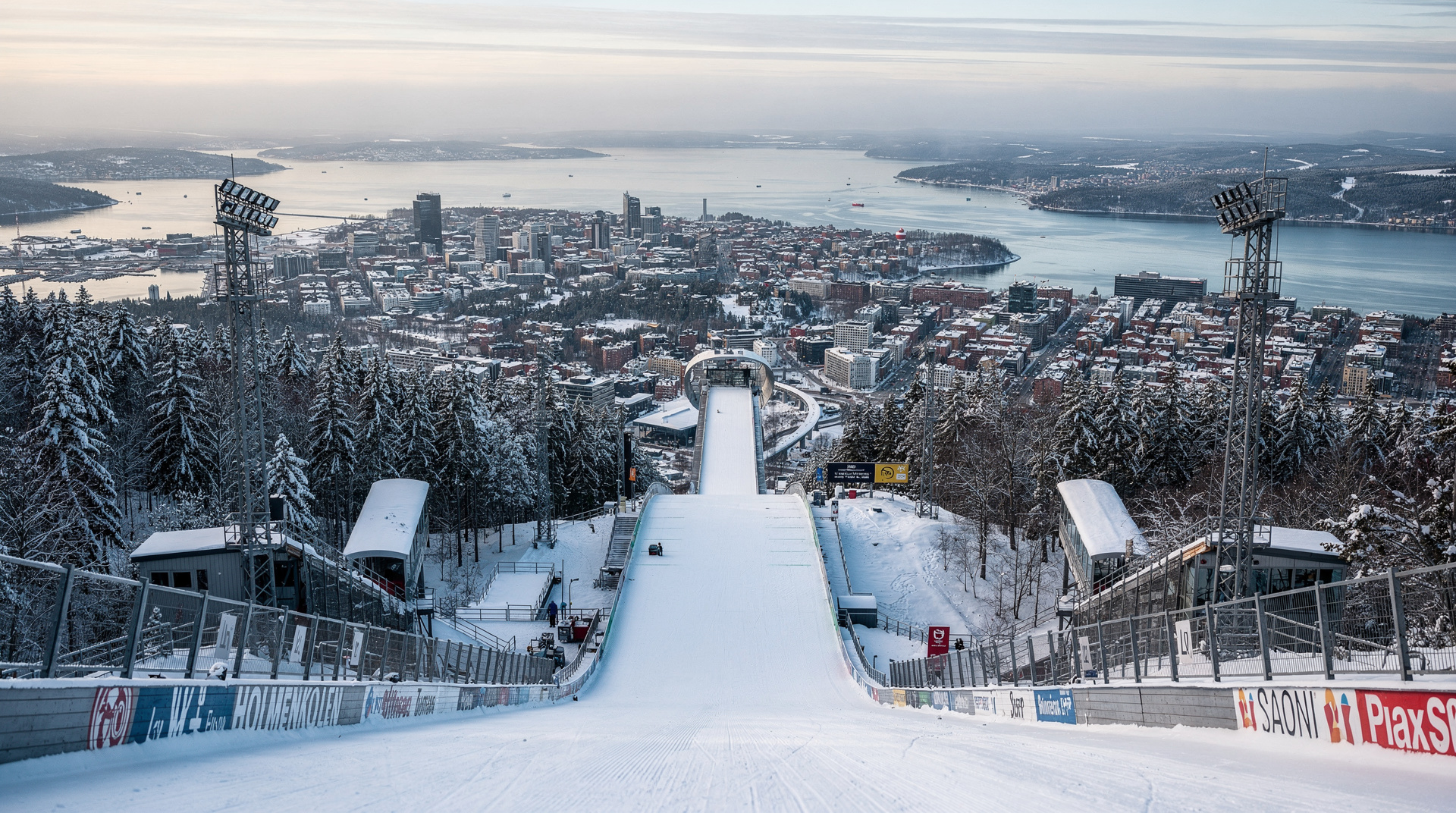
February: Slightly warmer and slightly longer days (sunrise 08:00 by late February). Still excellent snow in most years. The Holmenkollen ski festival in early March bookends this period perfectly — combine a snowshoe tour with festival attendance.
March: Snow is generally good until mid-month. After mid-March the south-facing slopes soften and snowshoeing becomes more difficult as the snowpack consolidates. The last reliable snowshoe dates are typically mid-to-late March.
Combining snowshoeing with other winter activities
A natural Oslo winter programme pairs snowshoeing with:
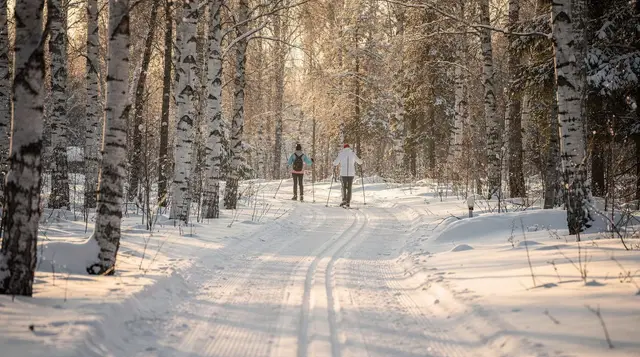
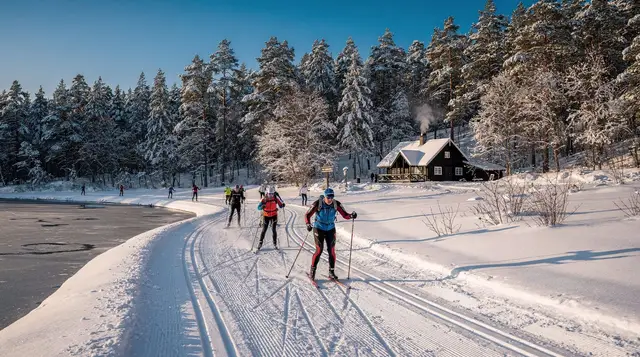
- A day of cross-country skiing in Nordmarka (the ski and snowshoe networks overlap, but each provides a different experience of the forest)
- An afternoon at the Holmenkollen ski museum and tower (30 minutes by T-bane from snowshoe territory)
- The Korketrekkeren toboggan run — easily combined with Nordmarka activity as both use T-bane line 1
- A winter floating sauna session on the Oslofjord, listed in our saunas guide
The 3-day winter itinerary integrates snowshoeing, skiing, and city culture into a practical three-day programme.
Planning around the rest of your winter trip
Snowshoeing fits easily into a wider cold-season stay. If you are still deciding what else to do, our overview of winter activities in Oslo puts the options side by side, and the Nordmarka destination page explains how the forest is laid out. For walkers who like the same terrain without snow, the Nordmarka hiking guide covers the trails that you will be crossing on snowshoes.
The lake at Sognsvann is the starting point for the self-guided route described above, and the Sognsvann lake guide is worth a read before you go. If you would like a shorter outing in the same area, the Vettakollen hike is a natural alternative when snow conditions allow.
Daylight is limited in midwinter, which affects how you schedule a tour. Our page on daylight hours by season helps you pick a start time, and the Oslo winter guide in blog form gives a first-hand sense of what the cold feels like. After a day in the forest, a visit to a sauna is a classic way to warm up — see how to behave in an Oslo sauna before you go.
The Norwegian snowshoe tradition
Snowshoeing in Norway has older roots than the recreational tour format suggests. Sami communities in northern Scandinavia have used wide-framed footwear on snow for thousands of years as a practical transport solution. Norwegian farmers and hunters used early snowshoe variants for winter travel in lowland forests like Nordmarka before groomed ski trails existed.
The modern aluminium-framed snowshoe with crampon-style teeth underneath is a North American import — it arrived in Norway’s outdoor market in the 1990s and grew steadily as a leisure activity accessible to non-skiers. Today it occupies a clear niche: available to people who cannot or will not ski, accessible to anyone who can walk, and opening winter forest terrain that cross-country skiing tracks do not reach.
What the forest looks like in deep winter
Nordmarka in January or February is visually different from any other season. The spruce forest — Norway’s dominant tree type — handles heavy snow loads by bending its branches downward, creating forms that look architectural: snow-laden boughs drooping in precise geometric patterns, the whole forest interior structured by white horizontal planes. On still days after heavy snowfall, the forest is utterly silent. Not quiet — silent. There is no wind movement, no animal sound (most birds have moved south or are roosting), no human noise. Just the crunch of your snowshoes on the unbroken surface.
This silence is, for many visitors, the most unexpected and most valued aspect of a winter Nordmarka walk. The urban noise — which in Oslo is not dramatic, but is ever-present — drops away completely within 10 minutes of leaving the T-bane. You are, genuinely, in a forest.
Elk (elg) are more visible in winter than summer because the snow holds their tracks clearly and their dark bulk is visible against white backgrounds at a distance. Morning snowshoe tours near Frognerseteren regularly encounter fresh elk tracks; on some mornings the animals themselves are visible at forest edges where they browse on tree bark and young shoots. Maintain a respectful distance (50 metres minimum) and move slowly to avoid startling them.
The Norwegian BBQ in more detail
The campfire food element of the Norwegian BBQ snowshoe tour deserves a specific note because it is so culturally specific.
The pølse (Norwegian sausage) served at the fireside is typically a skinless, mildly smoked pork or pork-beef sausage — not a German bratwurst or a UK banger, but something distinctly Norwegian in texture and flavour. It is cooked on a long-handled stick directly over birch wood flames until the skin blisters and splits. Served with mustard, lompe (a thin potato flat bread, not a bun), and the knowledge that you have cooked it yourself in -8°C forest, it is significantly better than the identical sausage would taste at a city lunch counter.
The hot varm saft — a concentrate of cloudberry, black currant, or lingonberry diluted in boiling water — is the Norwegian winter drink: sweet, fruity, hot, and effective at warming the hands as much as the body. Cloudberry saft in particular has a flavour that is entirely Norwegian — there is nothing else in the world that tastes quite like it.
The bonfire itself is built in the Norwegian way: a teepee structure of dry birch, lit with a single match, and managed to produce steady heat over 30–40 minutes rather than a fast-flaring blaze. Guides light the fire while the group is still a few minutes away from the clearing, so it is burning and warm when you arrive.
Extended snowshoe options
Jotunheimen National Park (2-day tour)
For those who want a genuinely mountainous winter snowshoe experience, guided 2-day tours into Jotunheimen from Oslo are available. The journey involves a 2.5-hour Vy train from Oslo to Otta, then guided transport to the mountain lodge base. Jotunheimen’s winter landscape — at elevations of 1,000–1,200 m, with glaciers visible and Norway’s highest peaks surrounding you — is categorically different from Nordmarka.
The 2-day format includes overnight accommodation at a mountain lodge with full board. Cost: NOK 3,800–5,200 per person (USD 409–559) including all transport from Oslo, accommodation, food, equipment, and guiding. Requires reasonable fitness — the tours cover 10–15 km per day in winter mountain terrain.
This is one of the most spectacular winter experiences available from Oslo as a base, and it is often overlooked by visitors who assume the big Norwegian mountains are out of day-trip range. With the train connection, they are not.
Hønefoss bonfire snowshoe (half-day)
The Hønefoss area west of Oslo (50 km, 50 minutes by Vy train) offers a campfire snowshoe experience in the Ringerike lowland forest. The landscape is gentler than Nordmarka — broader valleys, lower ridges, frozen river meanders visible through the birch forest — but the campfire format is the same. This is a good option for visitors who have already done the standard Nordmarka tour and want to experience a different forest character.
Booking in practice
Most guided snowshoe tours around Oslo are bookable through the tour operator platforms used throughout this site. Booking 3–5 days in advance is sufficient for weekday tours in most of the winter season. Weekend tours in January and February can sell out, particularly the popular Norwegian BBQ format — book these 7–14 days ahead if your dates are fixed.
Meeting points are almost always at a T-bane station — Frognerseteren being the most common. Some operators meet at central Oslo locations and transfer to the forest by T-bane as a group (the guide handles the navigation so you just follow). Bring your confirmation email, wear warm clothes, and arrive on time. The rest is handled.
Snowshoeing with children
Snowshoeing is one of the most genuinely family-friendly winter activities in Oslo because it requires no technical skill, uses the same forest that children walk in summer, and produces the immediate satisfaction of walking on deep snow without sinking. Children typically adapt to snowshoes faster than adults because they are lighter and closer to the snow surface.
Children from about age 6 can snowshoe independently with child-sized snowshoes (available in rental sets from outdoor shops and from some guided tour operators). Under 6, most operators are flexible — very young children can be pulled in a sled for parts of the route or carried in a carrier. Check with the specific operator when booking.
The Norwegian BBQ campfire stop is particularly well-received by children. The combination of building (or watching the guide build) a fire in the snow, grilling sausages on sticks, and drinking hot sweet saft feels genuinely adventurous in a way that manages to be both safe and memorable.
Practical notes for families:
- Children need proper warm clothing — they cool down faster than adults when stationary at the campfire. Extra warm layers are essential.
- Boot waterproofing matters more for children because they are more likely to kick snow into their boot tops. Gaiters over hiking boots prevent the cold-feet-from-snow problem.
- Snacks for children during the walk keep energy and mood stable. The campfire stop is typically 60–90 minutes into the walk, which can feel long for children who are hungry.
Snowshoeing versus winter hiking
The practical question is when to snowshoe versus when to simply hike through Nordmarka in winter. The answer depends on snow depth.
At less than 15 cm of compacted snow, regular waterproof hiking boots with microspikes provide adequate traction and you do not need snowshoes. At 20–30 cm of uncompacted powder snow, snowshoes make a genuine difference — the difference between sinking to the knee on every step and floating on the surface.
Winter in Oslo varies: some years bring 50+ cm of snow to Nordmarka by January; some years barely see a reliable 15 cm. In years with heavy snow, snowshoeing is the right tool for off-groomed-track movement. In years with thin snow, microspike hiking and cross-country skiing on the groomed trails are more practical.
The guided tour operators monitor conditions and will advise at booking whether snowshoes are warranted for the planned date.
Physical preparation
Snowshoeing uses muscle groups that flatland walking does not fully activate — particularly the hip flexors and lateral stabilisers required to clear the wide snowshoe frame with each step. For most recreational walkers, the first 20 minutes involves a mild adaptation to the new gait. After this, it feels natural.
If you have a known knee or hip issue, consult a doctor before booking a snowshoe tour. The terrain is generally gentle in Nordmarka, but uneven snowpack and the occasional downhill section require joint stability that can aggravate pre-existing conditions. Most guides are trained in first aid and carry basic emergency kit, but prevention is better.
Overall fitness requirement: the standard 3-hour guided snowshoe tour in Nordmarka is equivalent to a moderate 2-hour walk in difficulty. Most adults in average health complete it without distress. The Norwegian BBQ format adds a rest stop that helps manage pace for groups with mixed fitness levels.
Frequently asked questions about Snowshoeing near Oslo — guided tours in Nordmarka
Do I need experience to go snowshoeing near Oslo?
No. Snowshoeing requires no prior experience — if you can walk, you can snowshoe. The guide will explain the gear in under 5 minutes. Guided tours are specifically designed for beginners and mixed ability groups.When is the snowshoeing season near Oslo?
December through March, conditions permitting. January and February are the most reliable months for good snow depth in Nordmarka. The season varies year to year — in mild winters, routes may not be available until late December or may close early. Check tour availability when booking.How much does snowshoeing in Oslo cost?
Guided group snowshoe tours cost NOK 750–1,100 (USD 81–118) including equipment. Tours with a Norwegian BBQ campfire stop typically run NOK 950–1,200 (USD 102–129). Self-guided rental (snowshoes only) is NOK 150–250 per day (USD 16–27).What is the Norwegian BBQ snowshoe tour?
A popular guided format that combines a 2–3 hour forest snowshoe with a stop at a forest clearing for an open-fire BBQ — grilled sausages (pølse), flat bread, and hot berry juice (varm saft). This is one of Oslo's most memorable winter experiences and appeals to visitors who want cultural content alongside the outdoor activity.Can I go snowshoeing without a guide in Nordmarka?
Yes, with rental snowshoes and the Ut.no offline app for navigation. The forest is safe and the terrain is manageable. However, a guide adds route knowledge, cultural context, and the campfire experience that is difficult to replicate alone.How fit do I need to be for snowshoeing?
Moderate fitness is adequate for the standard 2–3 hour guided format. Snowshoeing through 30 cm of snow requires more effort than walking on dry land — expect a genuine workout without it feeling excessive. The guide sets a pace suitable for the group.
Top experiences
Bookable activities with verified prices and instant confirmation on GetYourGuide.