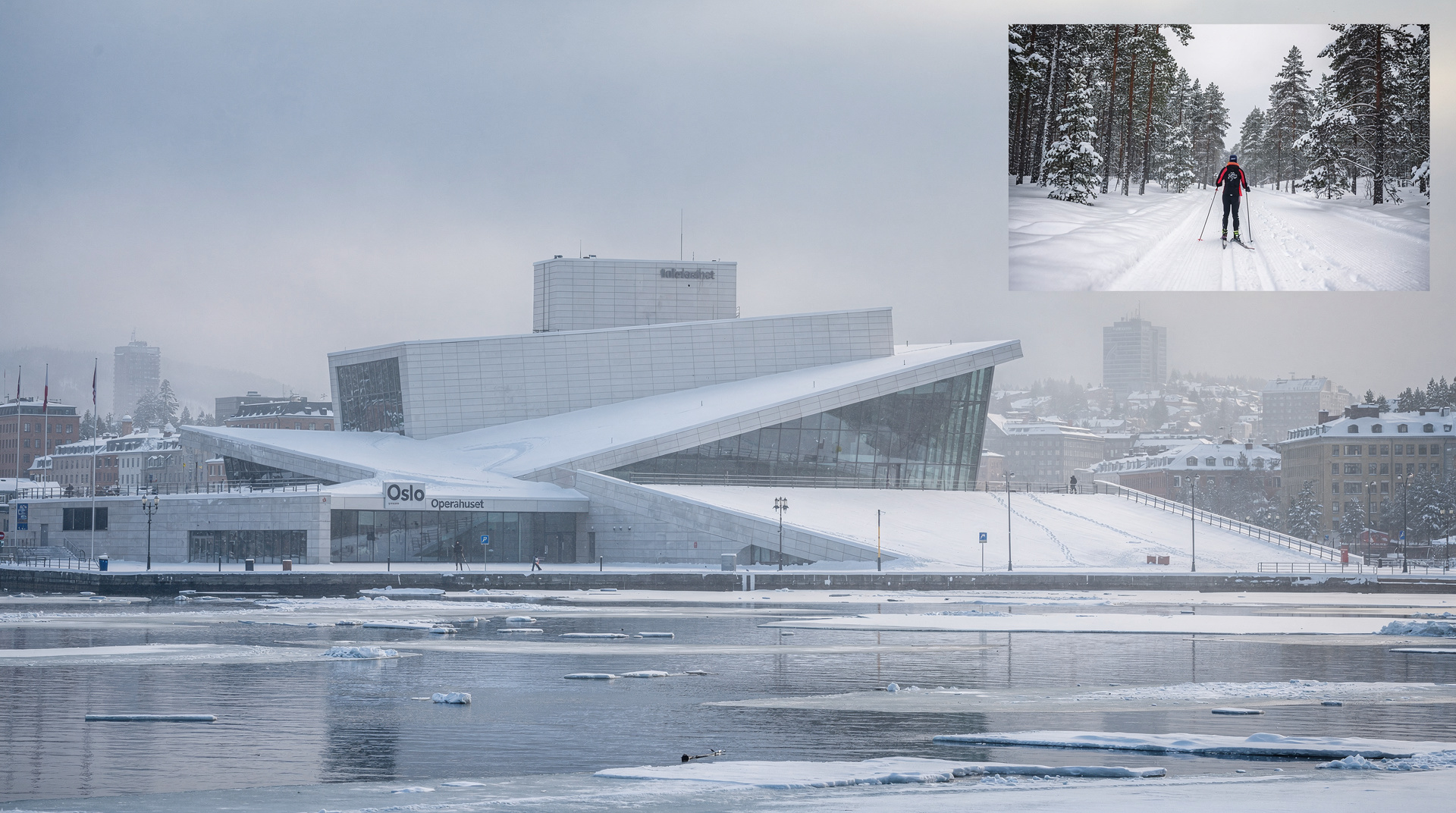
Cross-country skiing in Oslo — trails, rental, and lessons
Oslo: 3-hour cross-country skiing trip with equipment and guide
Duration: 3 hours
- Winter only
- Gear + guide
Where can you cross-country ski in Oslo?
The Nordmarka forest north of Oslo has hundreds of kilometres of groomed cross-country ski trails, accessible directly from T-bane line 1 (Frognerseteren, Holmenkollen) and line 3 (Sognsvann). Trails open when snow depth allows, typically December through March. Equipment rental is available at several T-bane stations.
Oslo’s founding outdoor religion
Norwegians did not invent skiing — that honour belongs to the pre-Viking populations who left 4,000-year-old rock carvings at Rødøy showing hunters on skis. But Norway did turn skiing into a cultural identity, and Oslo, with the Holmenkollen arena in the hills above the city and the Nordmarka forest at its back, is where that identity is most legibly enacted.
The concept of langrenn — long-distance cross-country skiing — is not a niche sport in Oslo. It is what people do on winter weekends, what children learn in school PE, and what the city spends municipal money maintaining. When the snow arrives and the T-bane starts depositing ski-carrying commuters at Frognerseteren station, you are witnessing something that has been happening every winter for well over a century: Oslo going skiing.
This guide explains how that system works, how to access it, what to expect, and how to learn cross-country skiing if you have never done it before.
| Where | Nordmarka forest, via T-bane lines 1 and 3 |
| Cost | Trails free; rental around NOK 250–450/day |
| Time needed | Half-day to full day |
| Getting there | T-bane to Frognerseteren, Holmenkollen, or Sognsvann |
| Best time | January–early March |
The Nordmarka trail network
The groomed cross-country trail network around Oslo is enormous by any standard. The core network accessible from T-bane stations covers roughly 400 kilometres of marked trails at elevations between 300 and 600 metres above sea level. The trails are marked by Oslo Skisenter and private landowners and are groomed (typically every 24–48 hours) by tracked grooming machines when snow conditions permit.
Two trail types:
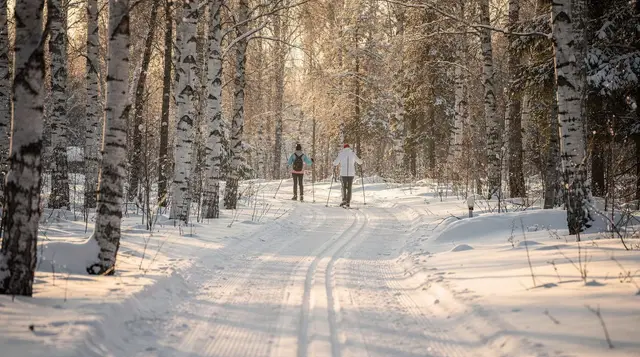
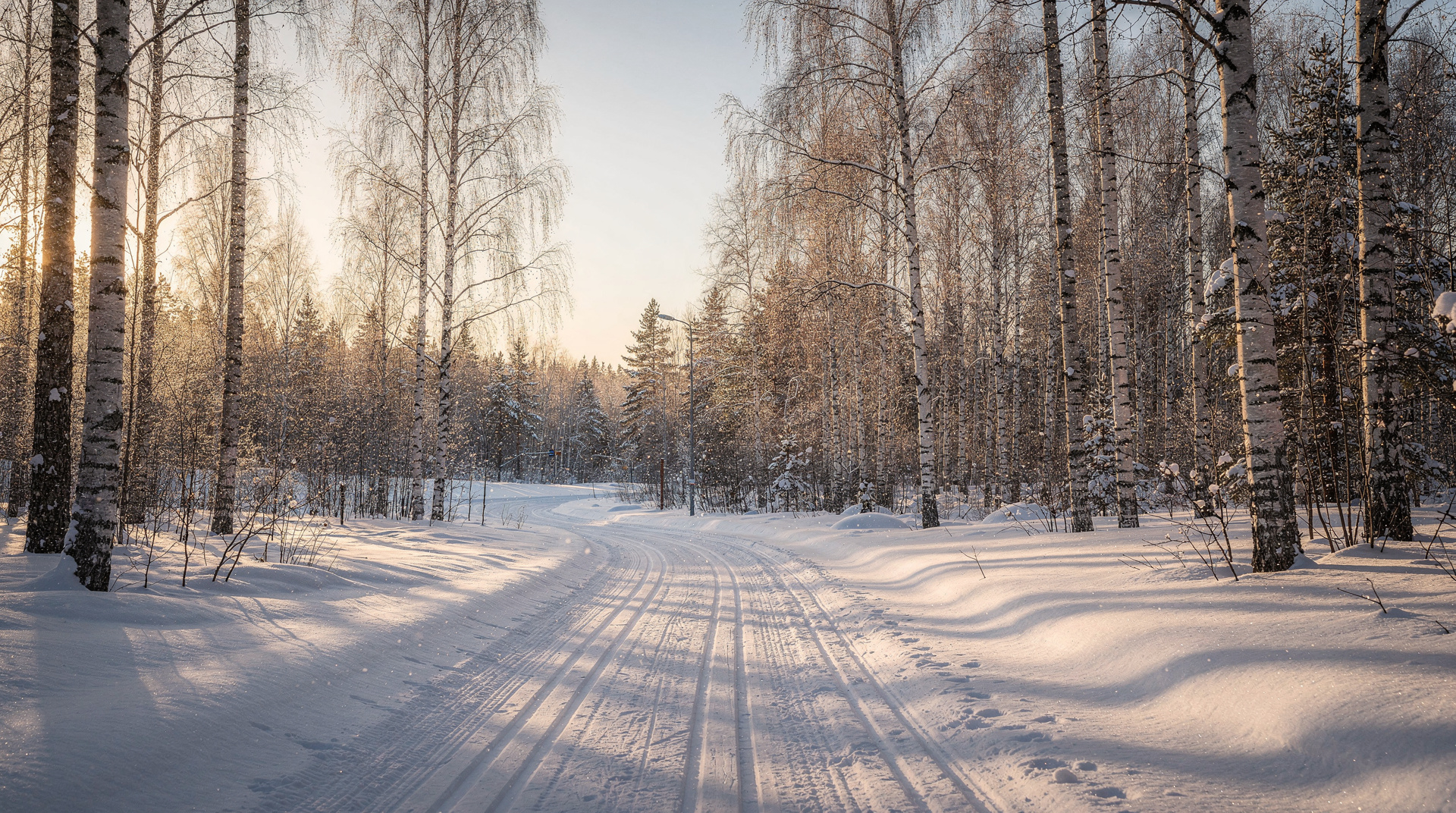
- Classic tracks (klassiske spor): Two parallel grooves cut into the snow for the traditional alternating-kick technique. This is the easiest and most beginner-friendly format.
- Skating lane (skøyting): A wider, flatter corridor for the skate skiing technique (skating motion, wider skis). Faster and more athletic but requires more technical skill.
Most groomed trails in Nordmarka carry both, with classic tracks on the sides and skating lane down the centre. Snowshoers and hikers should walk on the edges, not in the ski tracks.
Key access points
Frognerseteren (T-bane line 1, end of line): The most popular starting point for cross-country skiing. From the station, the trail network is immediately accessible — you can be skiing within 5 minutes of leaving the T-bane. The trails here connect to the Kikutstua cabin (4.5 km) and fan out north, east, and west through Nordmarka. On a good snow weekend, this station teems with skiers.
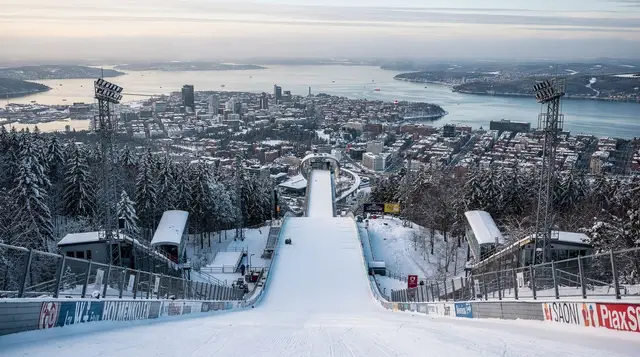
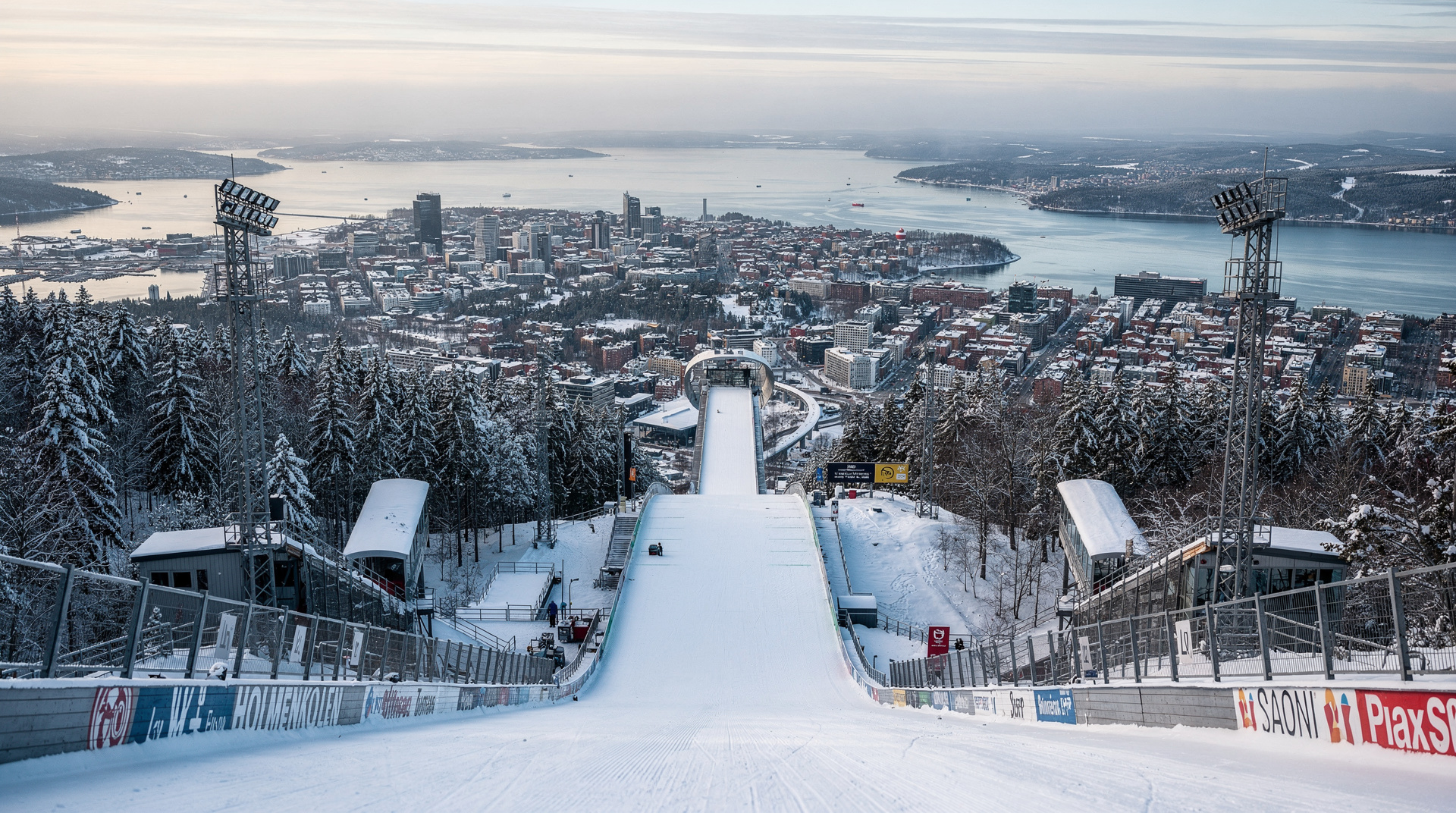
Holmenkollen (T-bane line 1): The Holmenkollen area has a dedicated ski trail hub, well-mapped and signed, that fans out from the ski jump complex. The flat terrain near the jump structure is ideal for beginners; the trails north gain elevation quickly for those wanting a workout. The Holmenkollen Skistua café at the jump base provides warming stops.
Sognsvann (T-bane line 3, end of line): The lake at Sognsvann becomes a skating rink in very cold winters (the ice is monitored for safety) and the surrounding forest has groomed trails that extend north into Nordmarka. The terrain near Sognsvann is flatter than the Frognerseteren area — well suited for beginners or those wanting a relaxed outing.
Classic Oslo ski routes
Frognerseteren–Kikutstua–Ullevålseter loop (22 km): The classic half-day ski loop. Start at Frognerseteren, ski north to Kikutstua cabin (hot waffles, NOK 85), continue west then south to Ullevålseter (more hot waffles), return via Sognsvann to T-bane. Allow 4–5 hours for a fit recreational skier. This is the canonical Nordmarka ski day.
Holmenkollen–Frognerseteren traverse (8 km): A shorter link between the two T-bane stations, following well-marked ridge trails. Suitable for intermediate skiers. Can be extended in either direction.
Sognsvann–Ullevålseter–Sognsvann loop (14 km): A more accessible loop departing and returning from Sognsvann station. Ideal for beginners completing their first full ski day. The terrain is manageable and the cabins provide natural warm stops.
Equipment: what you need
Classic cross-country gear
- Skis: Waxless (felleski with fish-scale base) for beginners — these grip and glide without needing to apply kick wax. Waxable skis for experienced skiers who want better performance.
- Boots: Low-cut, integrated with binding system (NNN or SNS standard — make sure rental skis and boots match).
- Poles: Lightweight aluminium or carbon; length should reach your armpit.
- Clothing: Thin wool or synthetic base layer, light insulating mid-layer, windproof outer. Overheating is the more common problem than cold during active skiing.
Where to rent in Oslo
Kikutstua cabin (at trail): Full rental set (skis, boots, poles) for roughly NOK 250/day (USD 27). No advance booking; first-come basis. Queue early on weekends.
Holmenkollen Skistua: Rental and sales, reasonably priced. Also offers waxing service for performance skiers.
Outdoor shops in the city: Fjellsport Oslo (Bogstadveien, near Majorstuen metro), Intersport (multiple central Oslo branches), and XXL Sport (Gunerius, near Central Station) all rent cross-country equipment in winter. Prices NOK 300–450/day (USD 32–48). More formal rental process with deposit required; better quality gear.
Lessons and guided skiing
Group lessons (recommended for beginners)
A 2-hour group classic skiing lesson covers the basic kick-and-glide technique, pole use, turning, and basic stopping. Classes typically run 08:00–10:00 or 10:00–12:00 to catch morning snow. Cost: NOK 600–900 per person (USD 65–97) including equipment hire.
Booking through the tour operators who offer guided skiing experiences is the most organised option. Several operators based at Holmenkollen run lessons in English, Norwegian, and German. Advance booking (1–3 days) is recommended on weekends in January and February.
Private instruction
Private one-on-one or one-on-two instruction is available for approximately NOK 900–1,400 per hour (USD 97–150). This dramatically accelerates technique learning. A 2-hour private lesson brings a fit adult to functional independent skiing faster than a group lesson would.
Guided group ski tours
If you want to experience the trail network without navigation worry, guided group ski tours cover the classic Nordmarka routes with an English-speaking guide who handles pacing, route selection, and emergency stops. Typical duration is 2–3 hours. This is the least stressful way to experience the forest in winter and highly recommended for visitors who have not skied in several years.
The Holmenkollen ski festival (March)
Every year in early March, Holmenkollen hosts the World Cup cross-country skiing and biathlon events — the biggest Nordic skiing weekend outside the Winter Olympics. Crowds of 100,000+ attend the main events. Standing along the course to watch elite skiers pass at close range is an experience unlike any other Nordic sporting event.
Events tickets: NOK 350–800 (USD 38–86) depending on the event. The ski jump competition is the showpiece event (Sunday) and requires booking months in advance. Cross-country race tickets are somewhat easier to obtain. Our full Holmenkollen guide covers the festival in detail.
Snow conditions and seasonal planning
The Nordmarka trail network opens when groomed trail conditions are safe — typically after 25–30 cm of snow accumulation. Live trail status is updated at skiforeningen.no (Oslo Ski Association), which shows which trails are groomed and open. The app is in Norwegian but the green/red status icons are self-explanatory.
Most reliable months: January, February, early March. These are also the coldest months (−10°C to −2°C typical range) and require proper clothing.
Shoulder months: Late November and December (unpredictable opening), late March (snow melting quickly on south-facing slopes). The T-bane-accessible higher trails last longer than the lower ones.
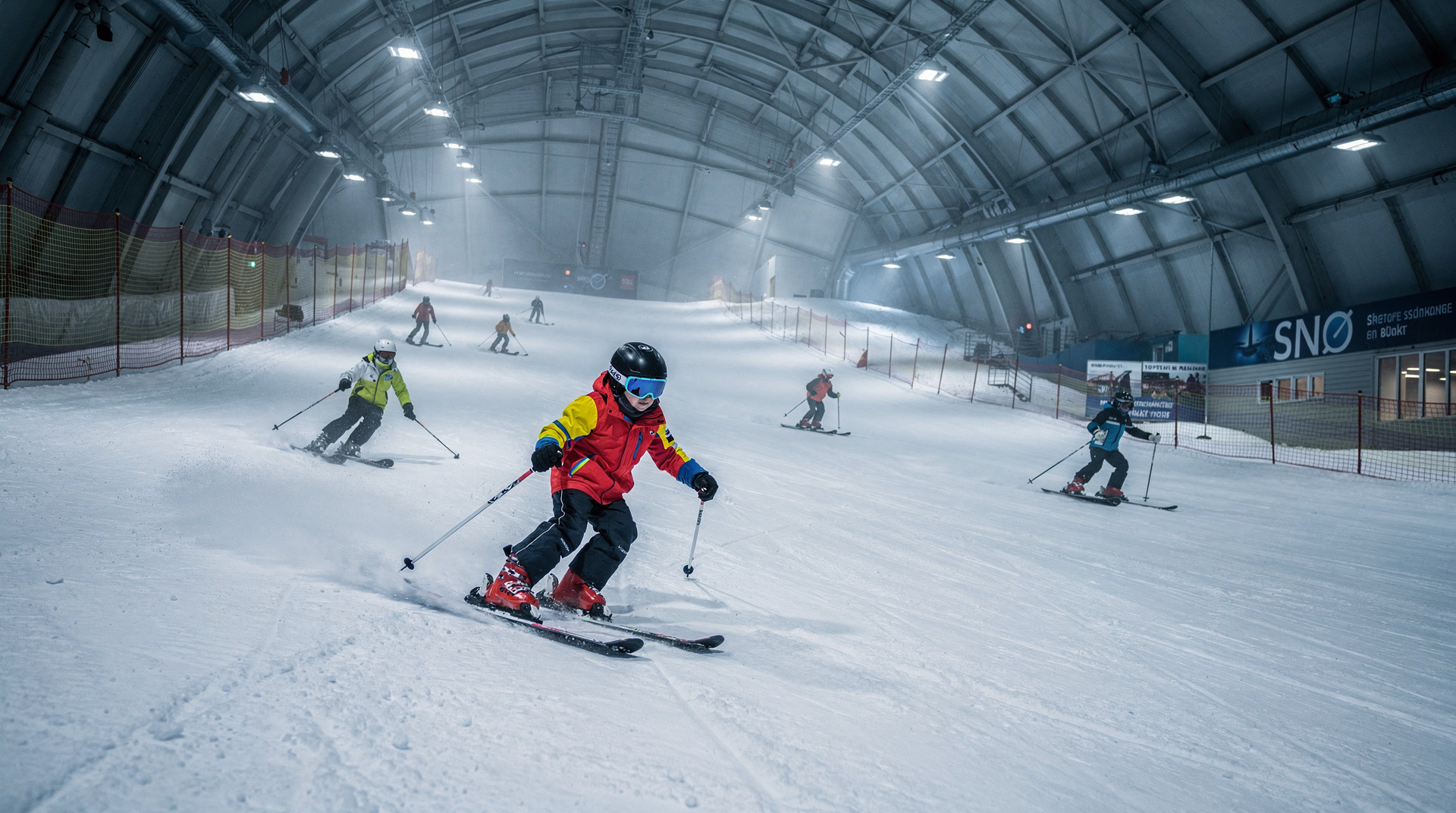
Poor snow years: Oslo occasionally has warm winters where the Nordmarka trails open late or have thin coverage. In these cases, the SNØ indoor ski dome at Lørenskog provides guaranteed skiing. The dome maintains 3–5°C year-round and operates regardless of outdoor conditions.
Budget summary
| Item | Cost |
|---|---|
| T-bane return to Frognerseteren | NOK 80 (USD 9) |
| Equipment rental (full day) | NOK 300–450 (USD 32–48) |
| Waffles at Ullevålseter/Kikutstua | NOK 85–120 (USD 9–13) |
| Group lesson (2 hours, incl. rental) | NOK 850–1,100 (USD 91–118) |
| Guided tour (3 hours, incl. rental) | NOK 950–1,200 (USD 102–129) |
Trail use: free. Total budget for a ski day without a guide: NOK 400–550 (USD 43–59), not including food. One of the most cost-effective full days in Oslo.
For those building a winter Oslo trip, the 3-day winter itinerary combines cross-country skiing, snowshoeing, and the city’s cultural highlights into a coherent schedule.
Classic versus skate technique — what to learn first
Cross-country skiing divides into two main techniques, and the choice matters for beginners because the gear is different and the learning curve is different.
Classic technique: The traditional diagonal stride — left arm, right leg; right arm, left leg — in a set of parallel grooves cut into the snow. Waxless skis (with a textured grip zone under the foot) are the easiest to learn on; they grip on the kick phase without needing to apply kick wax. This is the technique most beginners should learn first. It is intuitive enough that a fit adult can achieve basic competence in 2–3 hours.
Skate technique: A skating motion on wide, flat skis in an open lane — more like ice skating than hiking. Skate skis are different from classic skis (shorter, stiffer) and the technique is more demanding — it takes several sessions to develop the lateral hip push that generates efficient glide. Experienced recreational athletes (cyclists, ice skaters, runners) adapt faster; pure beginners find it challenging.
For a first Oslo ski day, choose classic technique and waxless skis. The groomed tracks provide a natural guide for your feet; the grip is automatic; and the rhythm of the diagonal stride, once found, is deeply satisfying.
The joy of the Nordmarka ski experience
What distinguishes Nordmarka cross-country skiing from ski tourism in the Alps or the Rockies is the absence of commercial infrastructure on the trails. You are not paying for a lift pass. There is no ski village with après-ski bars pumping commercial music. The cabins at Ullevålseter and Kikutstua serve waffles and coffee and not much else, and that is precisely their appeal.
The experience of skiing through dense spruce forest, emerging onto a ridge with a long view over the snowy landscape, descending into a valley to follow a frozen stream, and arriving at a wooden cabin where a wood fire is burning and the smell of coffee and cardamom fills the air — this is the Norwegian winter ideal. It has been available to Oslo residents via the T-bane since the late 19th century and it has not changed fundamentally since then. No staging, no curation, no Instagram background. Just cold air and tracks in the snow.
Norwegian skiing in popular culture
Cross-country skiing occupies an unusual place in Norwegian identity — it is both ordinary daily activity and profound cultural symbol. Understanding this duality helps visitors make sense of why Holmenkollen attracts 100,000 spectators, why kindergartens take children on ski trips in January, and why a politician photographed on cross-country skis in Nordmarka is sending a specific signal about their values.
The connection runs deep. The explorer Fridtjof Nansen crossed Greenland on skis in 1888 — the first crossing of the Greenland ice sheet — using Norwegian cross-country technique and equipment. This journey is credited with transforming skiing from a practical transport method into a sport with cultural prestige. Roald Amundsen’s 1911 South Pole expedition used skis as its primary surface transport. Both men returned to Norway as national heroes who had proved that their national outdoor competence was a serious competitive advantage.
Modern Norwegian cross-country athletes carry that legacy lightly. But it is why, when an Oslo office worker clips on skis at Frognerseteren station after work, they are participating in something that has a 150-year lineage of national meaning.
Equipment care and etiquette
Track etiquette: Classic tracks are the narrow grooves on the outer sides of the trail. Skate lane is the wide central section. Walk beside the trails, not on them — footprints destroy the grooming. If you fall in the classic track, move to the side quickly. Faster skiers pass on the left; call “til venstre” (to the left) as a warning, or simply “hei” to signal you are approaching.
Wax rooms: Several Nordmarka cabins and the Holmenkollen Skistua have wax rooms — heated spaces where you can apply kick wax to waxable skis or dry and warm equipment during a break. These are free to use and deeply civilised.
Equipment care: After skiing, brush snow off the bindings and skis before storing. Dry wooden ski poles in a warm room, not against a radiator. Waxless skis need no specific care beyond cleaning. Waxable classic skis need the kick wax removed after each session with wax remover and a scraper — most rental operators do this for rental gear.
Multi-day ski touring from Oslo
For experienced skiers, Nordmarka supports genuine multi-day tours. The Oslo region ski hut network (operated by DNT and Skiforeningen) connects a series of overnight shelters that allow point-to-point tours through the forest over 2–4 days.
A practical 3-day Nordmarka tour: Day 1 — Frognerseteren to Kikutstua to Sandungen hut (unmanned, requires DNT key, approximately 25 km). Day 2 — Sandungen north to Fagerli hut area, then west into the Krokskogen plateau (approximately 22 km). Day 3 — Return south to Kolsås T-bane via forest tracks (approximately 18 km). Total: roughly 65 km, manageable for recreational skiers who train regularly.
Multi-day ski tours require: DNT membership for hut access, good fitness, navigation competence, cold weather camping skills if huts are full, and advance planning of the route using skiforeningen.no’s hut availability system.
Practical planning details
What to wear for cross-country skiing: The layering principle is different for cross-country skiing than for downhill. Cross-country generates significant body heat — a 10 km classic ski at a moderate pace burns approximately 500–600 calories and produces substantial sweat. Overdressing is a more common problem than underdressing.
Standard Norwegian cross-country layer system:
- Base layer: Thin merino wool or synthetic — must wick sweat away from skin
- Mid-layer: Thin fleece or a lightweight cross-country ski top (skip the heavy down jacket — you will be far too hot within 5 minutes)
- Outer: Windproof but breathable cross-country ski jacket
- Legs: Cross-country ski trousers (or thin windproof running tights in milder weather)
- Hat: Light wool beanie rather than a heavy ski hat — you will warm up fast
- Gloves: Cross-country specific gloves or light ski gloves — NOT thick alpine ski mittens
The key principle: start slightly cold and warm up in the first 5–10 minutes. If you are comfortable standing still at the T-bane station, you are overdressed for the actual skiing.
Where to buy or rent gear in Oslo:
- Fjellsport Oslo: Bogstadveien 63, near Majorstuen T-bane. Excellent selection of Norwegian cross-country ski brands (Madshus, Fischer, Salomon). Rental service available.
- Intersport: Multiple central Oslo branches, including Gunerius near Central Station. Good mid-range gear rental.
- Sport Outlet: Discount outdoor gear, good for budget conscious skiers buying for a longer visit.
- At the trail (Kikutstua, Holmenkollen Skistua): Limited but convenient rental, best for one-day use without advance planning.
Oslo’s ski culture in numbers
To put cross-country skiing in Oslo in context: Oslo municipality maintains approximately 2,600 km of groomed cross-country ski tracks in the marka areas surrounding the city (Nordmarka, Østmarka, Vestmarka, and Sørmarka combined). This is maintained by Oslo Skisenter and partner organisations with an annual budget of approximately NOK 60 million (USD 6.5 million).
Approximately 40% of Oslo’s adult population skis cross-country at least occasionally. In a city of 700,000, that is around 280,000 regular skiers — more than the entire population of many countries’ ski resort towns. On a good snow weekend in February, an estimated 50,000 people use the Nordmarka trail network.
This scale explains why the infrastructure is so good: the demand is high enough to justify serious public investment, and the political will to fund it reflects a deep social consensus that outdoor recreation is a public good worth protecting. The groomed trails, the T-bane access, the DNT cabin system, the affordable rental — all of this is a collective choice that Oslo has made and remade every year for over a century.
After your ski day — recovery and food
A full day of cross-country skiing burns significant energy and leaves most people genuinely hungry by mid-afternoon. The cabin stops at Ullevålseter and Kikutstua partially address this, but if you are taking the T-bane back to central Oslo for dinner, plan for a satisfying meal.
Post-ski Norwegian food that makes sense:
- Biff med løk (beef with onions): A Norwegian classic in most traditional restaurants. Hearty and appropriate after physical effort.
- Fårikål (mutton and cabbage stew): The official national dish of Norway, available in traditional restaurants particularly in autumn. Slow-cooked and restorative.
- Aquavit: Norway’s spirit, traditionally consumed in one shot alongside a beer (“en og en”). The caraway and dill botanicals in Norwegian aquavit have a warming effect that feels earned after a cold day on the trails. Available at most traditional Oslo restaurants.
Restaurant areas near the T-bane lines that serve the ski trails: Majorstuen and Frogner (near Majorstuen station, line 1 and 2) have a wide choice of mid-range restaurants. Grünerløkka (Grünerløkka neighbourhood guide) is Oslo’s most culinarily interesting neighbourhood and 15 minutes on T-bane line 4 from Frognerseteren. For traditional Norwegian food, Dovrehallen on Karl Johans gate serves traditional Norwegian classics at mid-range prices.
First-timer vs experienced skier: which route to start on
Complete beginner: Start at Sognsvann. The terrain is the flattest of the three main access points, the loop back to the T-bane is short if you tire quickly, and a 2-hour group lesson booked in advance removes the guesswork on technique.
Some skiing experience, no cross-country specifically: Frognerseteren to Kikutstua and back (about 9 km round trip) is a manageable introduction with a waffle stop, and it’s the most iconic Oslo ski experience.
Confident intermediate: The full Frognerseteren–Kikutstua–Ullevålseter loop (22 km) or the Holmenkollen–Frognerseteren traverse both deliver a genuine day out without requiring hut-to-hut navigation skills.
Experienced and fit: Consider the multi-day Nordmarka ski touring routes described above, or combine a day of skiing with the Holmenkollen ski jump and museum for a full day mixing sport and culture.
If poor snow coverage in Nordmarka is a risk during your visit (check skiforeningen.no before committing), the SNØ indoor dome guarantees skiing regardless of natural conditions — a reasonable backup rather than a first choice.
Combining a ski day with the rest of Oslo
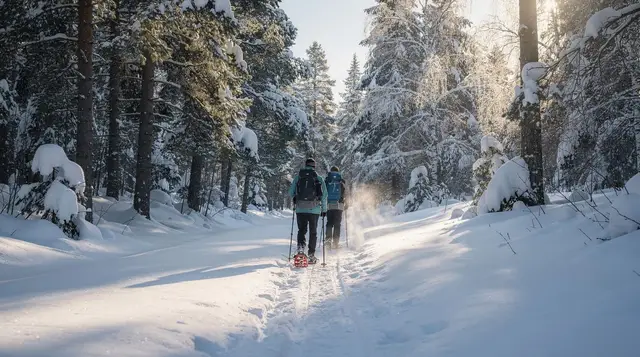
Cross-country skiing pairs naturally with other Oslo winter activities on a longer trip. A 2- or 3-day winter visit typically alternates a ski day with a culture day: morning skiing at Frognerseteren, afternoon at the Munch Museum or National Museum once you’ve thawed out, and an evening in Grünerløkka for dinner. Snowshoeing is a gentler alternative on the same trail network for travel companions who don’t want to learn the ski technique — both activities use the same T-bane access points and can be combined within the same group.
If you’re visiting specifically for the Holmenkollen Ski Festival in early March, budget an extra day beyond the festival itself for a quieter ski outing at Sognsvann or Frognerseteren — the festival days themselves are crowded with spectators rather than ideal for your own skiing.
What locals do differently from visitors
A few habits distinguish an Oslo local’s ski day from a first-time visitor’s: locals rarely rent — most own skis and store them at a cabin or apartment, so budget for rental costs as a visitor rather than assuming it’s included in a “ski day.” Locals also treat the waffle stop at Ullevålseter or Kikutstua as a near-mandatory ritual rather than an optional extra — factor in 20–30 minutes at a cabin stop when planning your timing. Finally, locals check skiforeningen.no’s live trail-grooming map before setting out rather than assuming conditions from the weather forecast alone; snow at the T-bane station doesn’t guarantee good grooming further into the forest.
Where to go next after your ski day
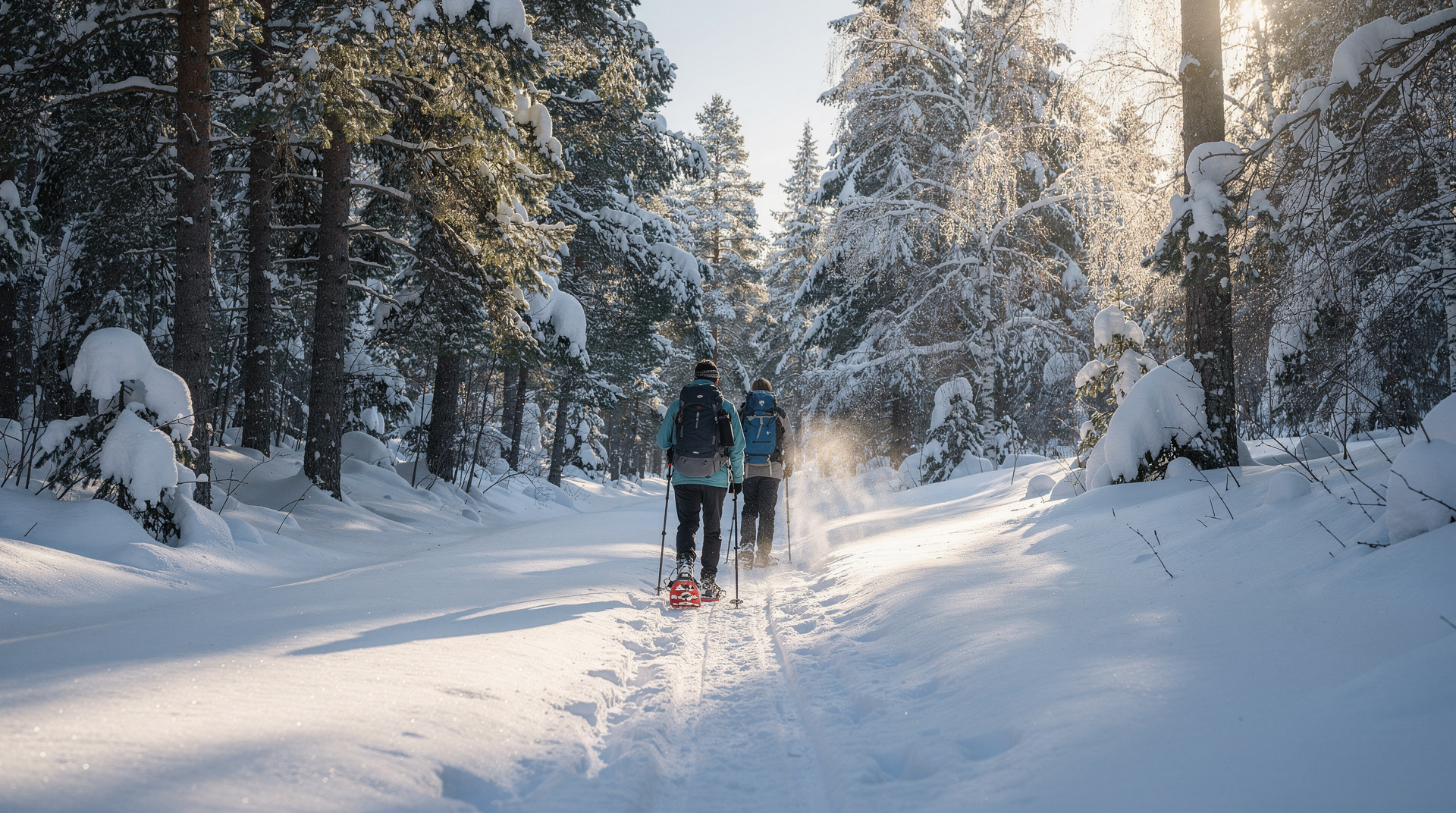
Skiing is only one way to use the forest in winter. If part of your group would rather walk than glide, our guide to snowshoeing near Oslo covers the same woods at a gentler pace, and the wider Nordmarka destination page explains how the forest is laid out. In the warmer months the same paths turn into hiking routes, described in Nordmarka hiking.
For the rest of a cold-season trip, Oslo in winter: activities lists what else is open, and ski day trips from Oslo is the place to look if you want a different landscape. Getting to the trailheads is straightforward once you understand the metro, which Oslo public transport (Ruter) explains. If you are still choosing your dates, Oslo daylight hours by season helps you plan how much light you will have for a long loop, and the Sognsvann lake guide is useful for a gentle first outing. The festival atmosphere is also described in the blog post on the Holmenkollen ski festival.
Frequently asked questions about Cross-country skiing in Oslo — trails, rental, and lessons
Is Oslo actually good for cross-country skiing?
Oslo is arguably the world's most accessible city for cross-country skiing. The metro goes directly to the forest edge, trail grooming is maintained by Oslo municipality, and Nordmarka has hundreds of kilometres of marked routes. The Holmenkollen ski festival — the largest Nordic skiing event in the world — has been held here since 1892.Can a beginner learn cross-country skiing in Oslo?
Yes. Classic cross-country technique is learnable in 2–4 hours with a lesson, though mastery takes longer. Several operators around Holmenkollen and Frognerseteren offer beginner instruction. Skate skiing is more technical and takes longer to learn comfortably.Where do I rent cross-country ski equipment in Oslo?
Equipment rental is available at Kikutstua cabin (9 km from Frognerseteren, full day NOK 250–350, USD 27–38), Holmenkollen Skistua, and several outdoor shops near the T-bane stations. In central Oslo, Intersport and XXL have rental desks in winter.When is the cross-country ski season in Oslo?
Typically December through March. Peak season is January–March when snow is most reliable. The Holmenkollen ski festival in early March is the traditional season highlight. In poor snow years, the T-bane-accessible trails may not open until January or may close early.How much does cross-country skiing in Oslo cost?
Trail use is free. Equipment rental costs NOK 250–450 per day (USD 27–48). Lessons run NOK 600–900 for a 2-hour group lesson (USD 65–97). Guided group tours with equipment included range from NOK 850–1,200 (USD 91–129).Do I need to buy a trail pass for Nordmarka?
No. Cross-country skiing in Nordmarka is free — there is no trail pass charge. You pay only for equipment rental and any optional guide or lesson. This is different from Alpine skiing, where lift passes are required.
Top experiences
Bookable activities with verified prices and instant confirmation on GetYourGuide.