Grønland & Tøyen — multicultural Oslo
Grønland is Oslo's most multicultural district: cheap eats, the Botanical Garden, and easy access to the Munch Museum in Bjørvika nearby.
Oslo: Munch Museum admission ticket
Duration: Flexible
- Skip the ticket line
- Instant confirmation
Quick facts
- Best time to visit
- Year-round; Botanical Garden best May to September
- Getting there
- T-bane to Grønland or Tøyen station (lines 2, 3, 4); tram 11/12/13
- Days needed
- Half a day
- Budget per day
- NOK 200–500 (USD 22–54) — among Oslo's most affordable areas
The Oslo that tourists often miss
Grønland sits a 15-minute walk east from Oslo S, just across the Akerselva river from Grünerløkka and a short tram ride from the city centre. It is the neighbourhood where Oslo’s population diversity is most visible and most embedded — a working district where Norwegian-born residents share streets with Pakistani, Somali, Eritrean, Iraqi, and Vietnamese families who have shaped the neighbourhood’s character over three to four decades.
This is not Oslo’s tourist Oslo. There are no heritage buildings here, no sculpture parks, no major galleries. What Grønland offers is something rarer: a neighbourhood that functions as a city rather than a destination — with a market, a high street full of independent shops, some of the most economical eating in Oslo, and a community that goes about its life without reference to the visitor economy. Adjacent Tøyen, just to the north, adds the Botanical Garden and several museums that barely appear in most tourist itineraries.
For budget-conscious travellers and for those who find the western tourist strip of Oslo slightly airless, Grønland is one of the more satisfying places to spend a few hours.
Grønlands torg: the neighbourhood market street
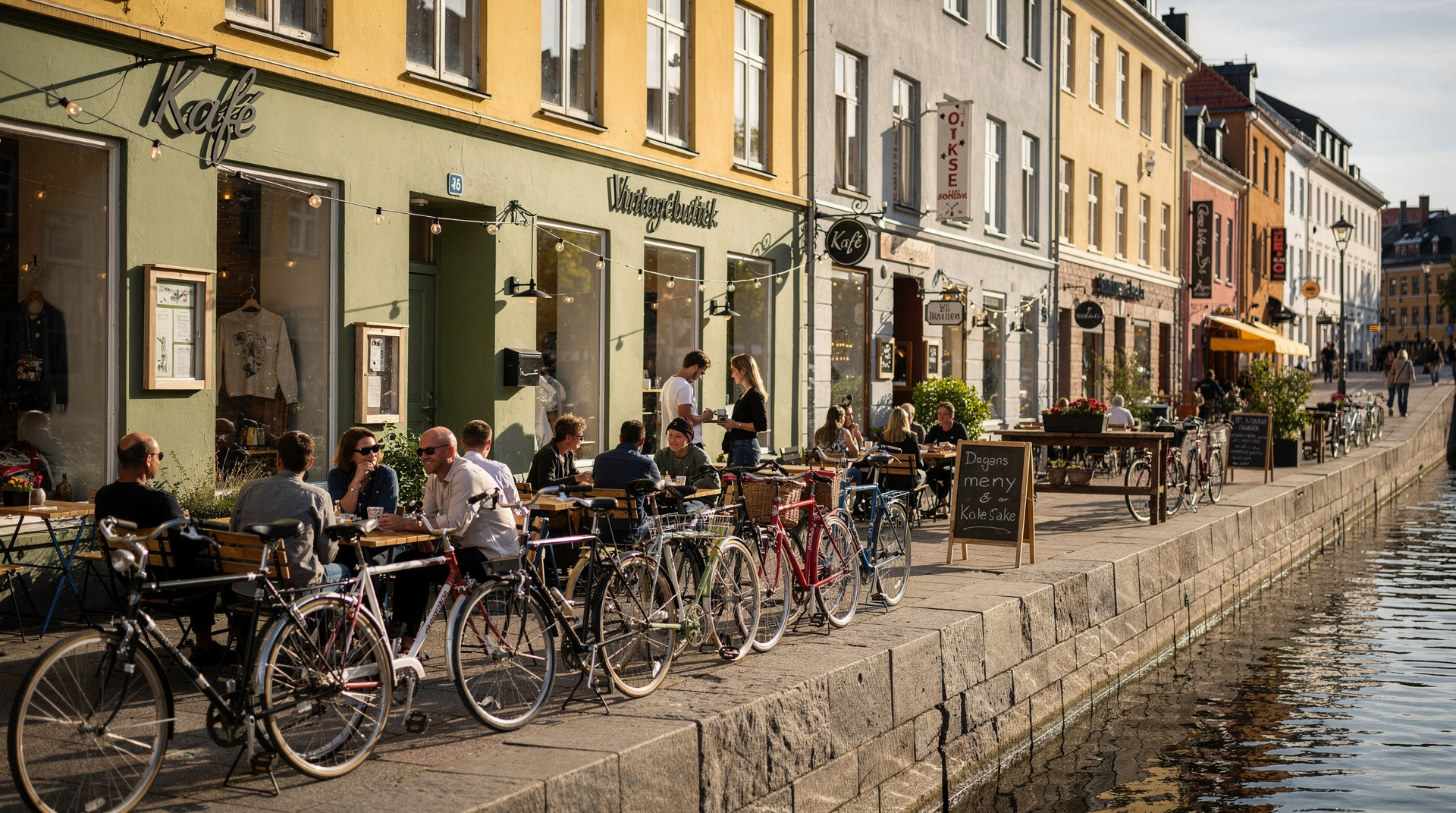
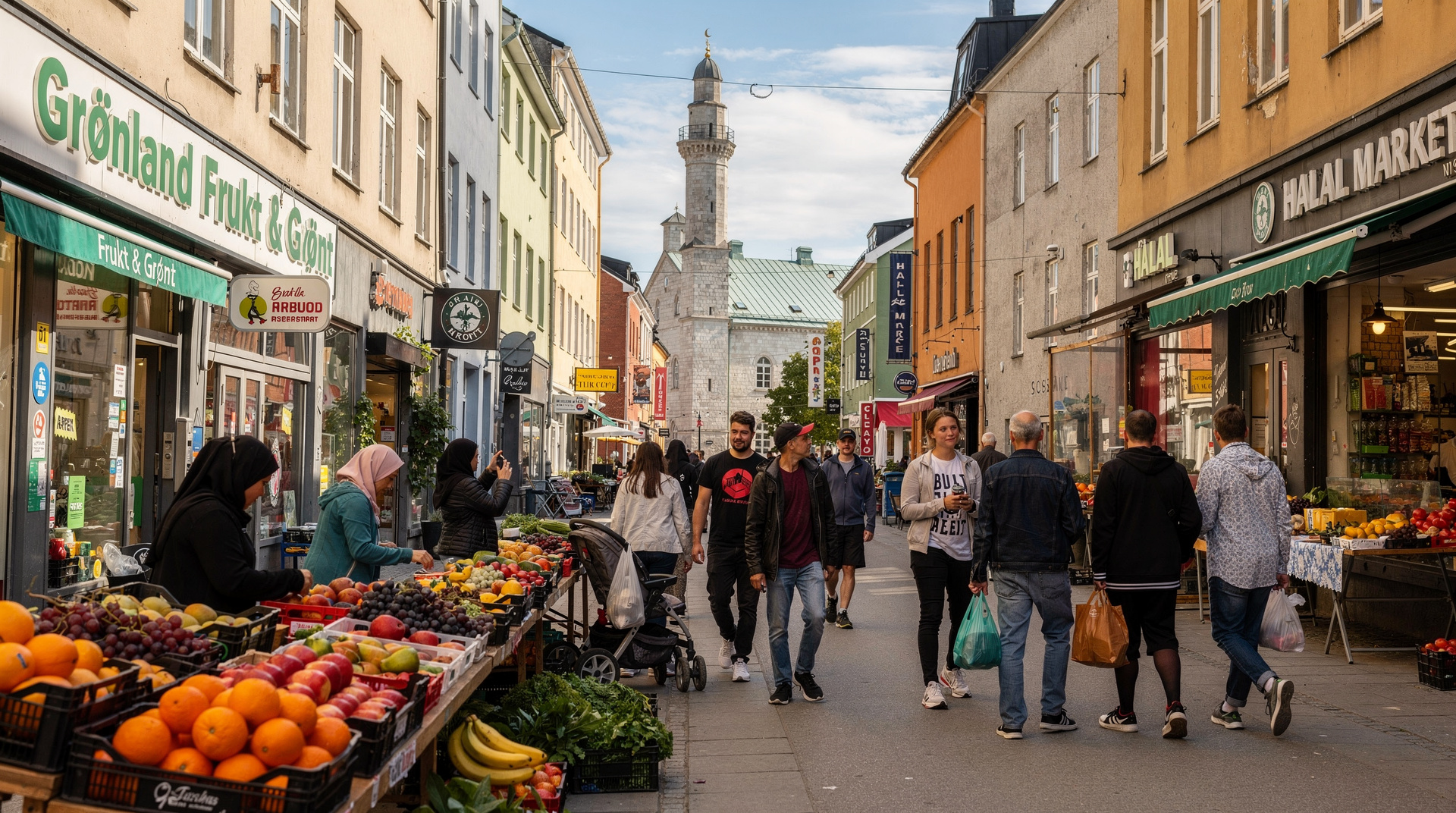
Grønland is both the district name and the name of the main commercial street. The torg (market area) and the surrounding shops along Grønlandsleiret constitute a kind of permanent market that is livelier and more characterful than anything in the tourist centre.
Pakistani and Middle Eastern grocery shops stock spices, dried fruit, halal meat, and fresh vegetables at prices well below supermarket rates. Bakeries sell cardamom bread and flatbread alongside Norwegian pastries. Several shops carry South Asian and African fabrics.
Punjab Tandoori (Grønlandsleiret 24): Oslo’s most consistently praised budget Indian restaurant. Open since the 1980s, it has survived every shift in dining fashion because the food — chicken tikka masala, saag paneer, lamb curry — is genuinely good and the prices are genuinely reasonable. A main with rice costs NOK 160 to 200 (USD 17–22). Queues at lunch on weekdays; slightly less busy in evenings.
Kebabhuset Grønland: multiple kebab shops on the main street compete for the title of best late-night kebab in Oslo. The quality varies; the prices are uniformly low by Oslo standards (NOK 90 to 120 / USD 10–13 for a full kebab).
For a structured introduction to the neighbourhood’s food culture, a food walking tour covering Grønland’s hidden gems gives useful context on the district’s culinary geography.
Tøyen and the Botanical Garden
Tøyen is the district immediately north of Grønland, accessed by T-bane line 2/3/4 from Tøyen station or on foot from Grønland in about 10 minutes.
The Botanical Garden (Botanisk hage), on Sars gate, is one of Oslo’s best-kept free secrets: a 40-acre garden with more than 7 500 plant species, including a Victorian greenhouse complex with tropical plants, a rock garden, a rose garden, and an arboretum. Entry is free year-round. The garden is managed by the University of Oslo’s Natural History Museum (which shares the grounds) and is impeccably maintained.
In summer (May through August), the garden’s combination of flowering perennials, the tropical house, and the shaded tree canopy makes it one of the most pleasant outdoor spaces in Oslo — and one of the least crowded, because most visitors to the city do not know it exists. Worth 60 to 90 minutes on any day with good weather. See the Botanical Garden guide.
The Natural History Museum (Tøyen, on Sars gate) sits adjacent to the Botanical Garden. It holds natural history collections covering geology, zoology, and botany. Admission is around NOK 80 (USD 9). It is worth an hour for those with children or natural history interests; less essential for others.
The Munch Museum in nearby Bjørvika
The Munch Museum (Munchmuseet) opened in 2021 in Bjørvika, about a 15-minute walk south from Grønland (or one tram stop). While it is technically in the Bjørvika district, the museum sits at the natural endpoint of a Grønland-Tøyen exploration day.
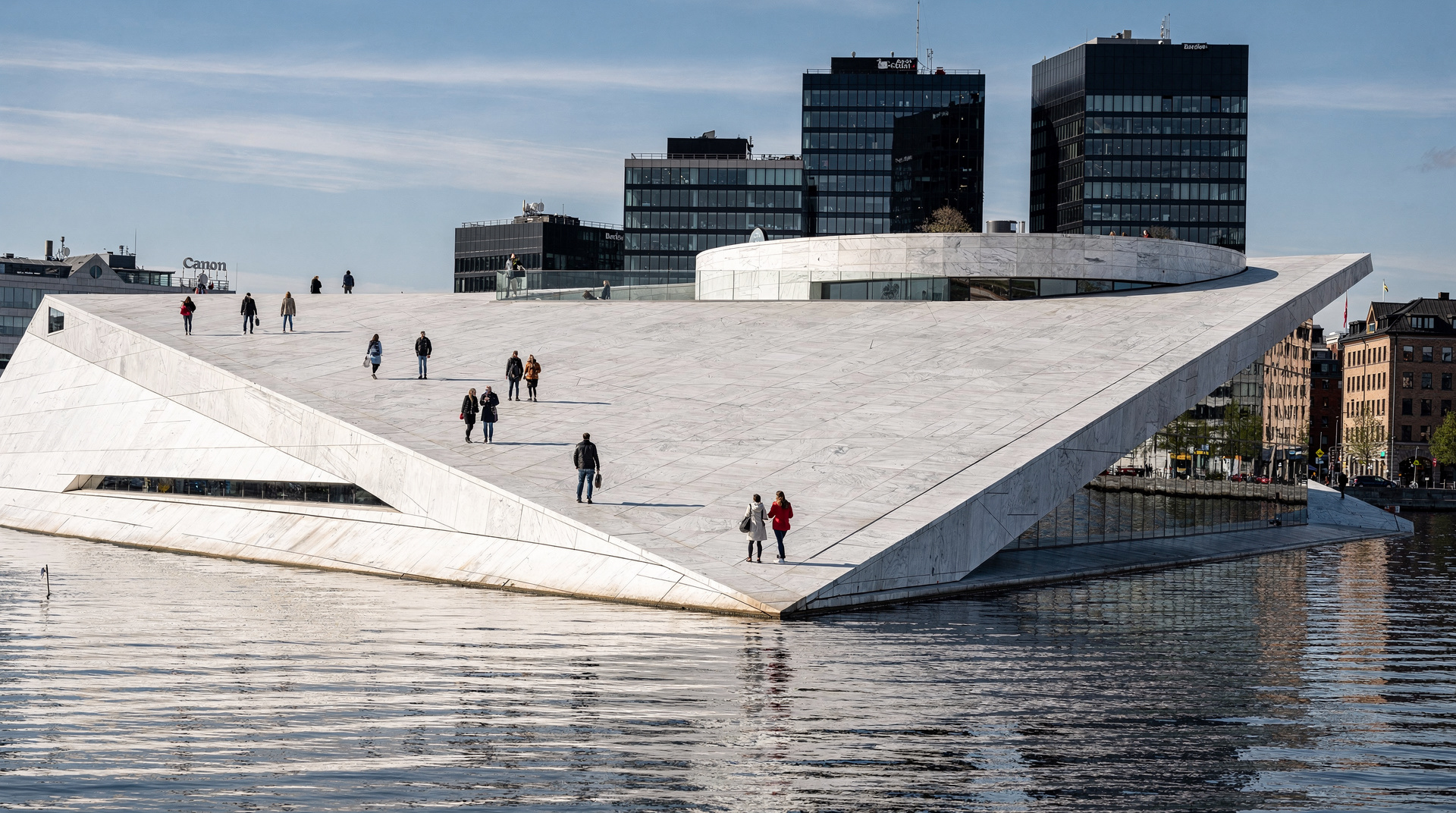
The museum holds the world’s largest collection of Edvard Munch’s work — more than 26 000 pieces, including many never permanently displayed anywhere. The building’s distinctive leaning tower was designed by the Spanish firm Herreros Arquitectos; the upper floors overhang the fjord in a way that becomes more dramatic the longer you look at it.
Entry is NOK 200 (USD 22) for adults. Allow two to three hours. The permanent collection is extensive; temporary exhibitions change several times per year. Our Munch Museum guide covers what to prioritise and how to avoid the crowds.
Ekeberg sculpture park
A short bus ride south of Grønland (Bus 18/19 from Sentrum, or Bus 34 from Oslo S), Ekeberg Park (Ekebergparken) combines a panoramic hillside above the Oslofjord with a sculpture park holding works by Salvador Dalí, Auguste Rodin, Damien Hirst, James Turrell, and others. Entry is free.
The views from Ekeberg over the fjord and back toward the city are among the best in Oslo — and significantly less visited than Holmenkollen or the ski jump. It is an underused Oslo viewpoint. See our Ekeberg guide.
Where to eat: the honest Grønland/Tøyen guide
The eating in Grønland is as close to budget-friendly as Oslo gets.
Punjab Tandoori (already mentioned): the benchmark for affordable, reliable cooking in the district. NOK 160 to 200 (USD 17–22) for a substantial main.
Olympen (Grønlandsleiret 15): Oslo’s most beloved traditional Norwegian pub-restaurant, operating since 1892. A vast, high-ceilinged room with stained glass and wooden booths, serving traditional Norwegian food — kjøttkaker (meatballs), fish soup, baked cod — at prices that are modest by Oslo standards (NOK 200 to 300 / USD 22–32 for a main). Lunch and dinner. One of the few remaining places where Oslo’s pub-restaurant tradition feels genuinely intact.
Nodee (various locations, including Grønland): reliable pan-Asian fast casual with good bao, noodles, and sushi rolls at NOK 130 to 180 (USD 14–19). Popular with local office workers.
Grønland Basar: the indoor market on Tøyengata has several small food counters serving Afghan, Iranian, and Turkish food at lower prices than anywhere else in central Oslo. Not consistently open but worth checking.
For wider eating recommendations in Oslo, see where to eat in Oslo and budget eats in Oslo.
How Grønland fits into an Oslo itinerary
Grønland and Tøyen work best as a half-day complement to other Oslo sightseeing. Natural pairings:
-
Grønland + Grünerløkka: both eastern-district neighbourhoods connected by tram 11/12. A morning in Grünerløkka (coffee, specialty food, vintage shopping), lunch in Grønland (Punjab Tandoori or Olympen), afternoon walk to the Botanical Garden in Tøyen.
-
Grønland + Bjørvika: after the Botanical Garden, walk or take the tram south to the Munch Museum and Opera House. This covers a significant amount of Oslo’s eastern character in a single afternoon.
-
Budget day in Oslo: Grønland is the cornerstone of any serious Oslo budget day — cheap lunch here, free Botanical Garden, free Ekeberg park, free Opera House rooftop, and the cheapest sit-down eating in the city. See Oslo on a budget for the full strategy.
Frequently asked questions about Grønland and Tøyen
Is Grønland safe to visit?
Yes. Grønland’s reputation for being “rough” is significantly outdated and was never particularly accurate in a serious crime sense. The district has some lively Friday and Saturday nights, and the area immediately around Grønland T-bane station can feel slightly chaotic, but safety incidents involving visitors are rare. The same common sense you would apply in any dense urban district applies here.
What is the best free thing to do in Tøyen?
The Botanical Garden (Botanisk hage) is the clear answer — 40 acres of free, well-maintained gardens including a tropical greenhouse, a rock garden, and a university arboretum. Open year-round, no booking required. In summer, it is one of the more pleasant green spaces in central Oslo. See botanical garden guide.
Is the Munch Museum in Grønland or Bjørvika?
Technically Bjørvika — the Munch Museum is on the Oslofjord waterfront, not in Grønland proper. But it sits at the southern end of a natural route from Grønland and Tøyen, about a 15-minute walk. Many visitors combine a Grønland neighbourhood visit with the Munch Museum in the same half-day.
Can you find good Norwegian food in Grønland?
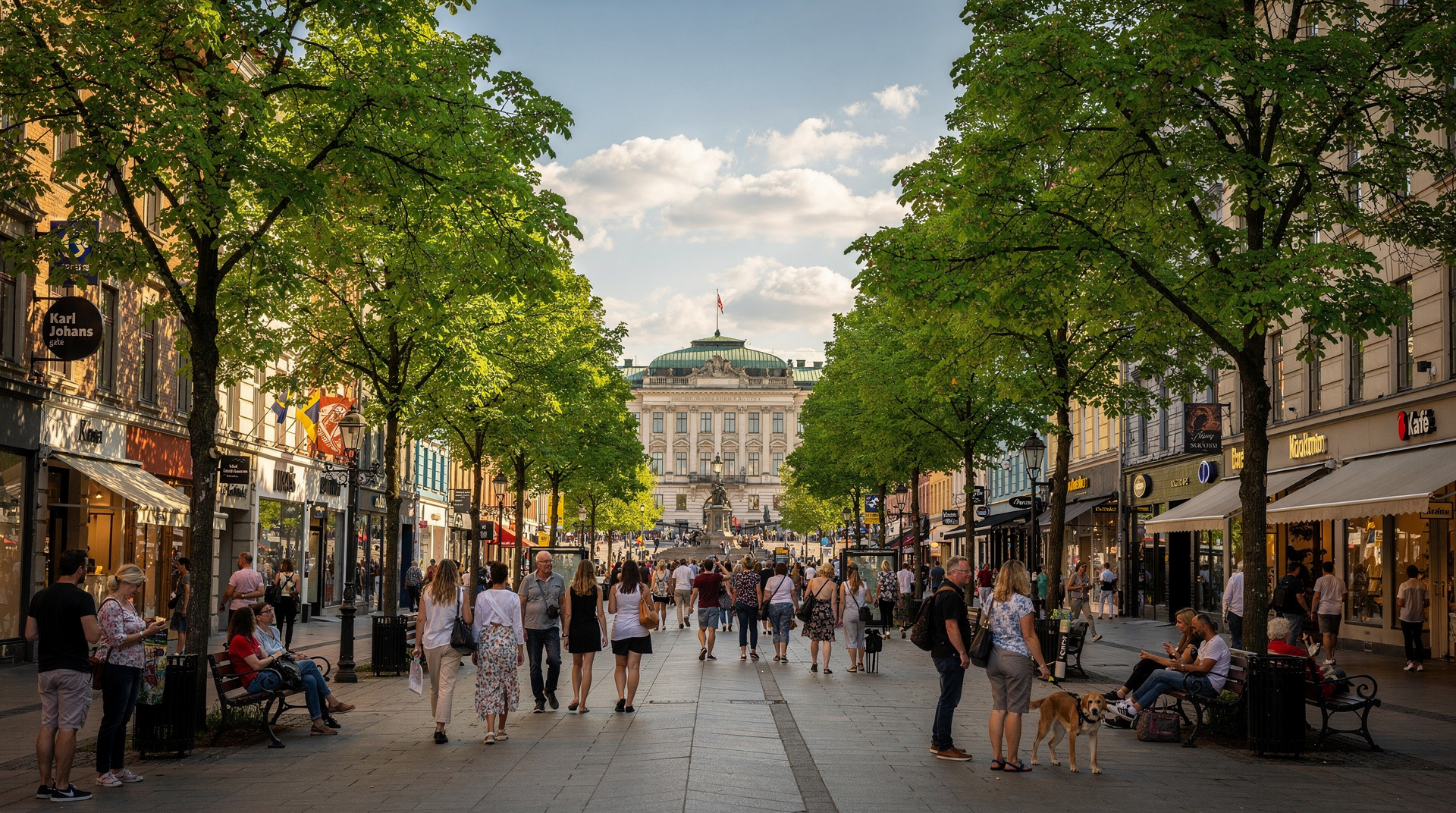
Olympen (Grønlandsleiret 15) is one of the best traditional Norwegian restaurants in the city — a genuine institution serving classic dishes in an atmospheric nineteenth-century space. It is very much worth seeking out if you want proper Norwegian food at prices that are lower than the tourist-facing restaurants near Karl Johans gate.
How do I get to Grønland from the city centre?
T-bane lines 2, 3, and 4 all stop at Grønland station — about five minutes from Oslo S, or eight minutes from Nationaltheatret. Trams 11, 12, and 13 also pass through the district. Walking from Oslo S takes about 12 to 15 minutes through the lower end of the city. Grønland is one of the easiest Oslo districts to reach.
The broader context: how Oslo’s east side developed
Understanding Grønland and Tøyen helps to understand Oslo’s social geography more broadly. The Akerselva river historically divided the city: west of the river was wealthier, east was working-class. The textile mills and manufacturing that lined the river (many now converted into the Grünerløkka creative zone) employed the east-side population for generations.
Grønland’s demographic shift began in the 1970s as Pakistani, then Turkish, then Somali and other groups arrived and settled in Oslo’s most affordable inner-east housing. The neighbourhood resisted gentrification longer than Grünerløkka because it never quite had the aesthetic appeal that attracted artists first. What it developed instead was a more durable multicultural character: businesses that serve genuine community needs rather than artisanal lifestyle markets.
This does not mean Grønland has been untouched by Oslo’s broader real-estate pressure. Rents have risen significantly since 2010, and some of the neighbourhood’s more vulnerable residents have been displaced outward. But the commercial street and the market area retain their function as a genuinely multi-origin community hub in a way that is unusual for a city-centre neighbourhood.
Kampen and Tøyen: the wider neighbourhood context
North of Tøyen, the hillside district of Kampen (a 20-minute walk or tram ride further east) is sometimes called “Oslo’s most Norwegian village” — a grid of wooden houses built in the 1880s for working-class families, largely intact, with a neighbourhood bakery, a local bar, and almost no tourist infrastructure. Worth a 30-minute wander if you have time.
Tøyen Park: the greenspace adjacent to the Botanical Garden and Natural History Museum is a popular local park with a summer outdoor pool (Tøyenbadet) and a skate park. Used primarily by local families. The pool entry is NOK 80 (USD 9); the park itself is free.
Youngstorget: just west of Grønland (technically in the city centre), the market square at Youngstorget has a Thursday and Saturday outdoor market selling produce, flowers, and Norwegian foods. Smaller than Bergen’s fish market and less tourist-oriented — a genuine city market rather than a photo opportunity.
Budget eating beyond Punjab Tandoori
The density of affordable eating in Grønland exceeds any comparable area in central Oslo. A few specific additions:
Shalimar (Grønlandsleiret): another reliable Pakistani restaurant, slightly less well-known than Punjab Tandoori, with good biryani and nihari. Mains NOK 150 to 180 (USD 16–19).
Asian Palace (Tøyengata): pan-Asian buffet lunch that represents some of the best value in Oslo — around NOK 130 (USD 14) for unlimited servings. Midday only.
Grønland bakeries: the neighbourhood has several Pakistani bakeries producing naan, samosas, and mithai (sweet pastries) at extremely low prices. These are typically open from early morning and serve both sit-in and takeaway customers. A takeaway lunch from one of these plus a juice from the grocery next door costs NOK 60 to 80 (USD 7–9) — essentially unbeatable for Oslo.
For comprehensive budget strategies, see free and cheap things to do in Oslo and cheap eats in Oslo.
The Grønland neighbourhood association and community life
Unlike some of Oslo’s more tourist-facing neighbourhoods, Grønland maintains a strong community association structure. Local events — cultural festivals, neighbourhood clean-up days, community dinners — are posted on notice boards in the Grønland basar and the community centres on Grønlandsleiret.
Oslo World Music Festival: held annually in October or November, Oslo World is one of Europe’s most respected world music festivals and uses venues throughout Grønland and Tøyen as well as larger city-centre stages. The Grønland venues are intimate and produce some of the festival’s best concerts. See oslworld.no for the annual programme.
Day structure for a Grønland-Tøyen visit
The most natural half-day combines:
- Arrive mid-morning at Grønland T-bane station.
- Walk Grønlandsleiret — browse the market street, note the grocery shops and bakeries.
- Lunch at Punjab Tandoori or Olympen (arrive by noon to avoid queues at Punjab).
- Walk north to Tøyen (15 minutes) for the Botanical Garden (free, 60 to 90 minutes).
- Continue south on foot or by tram to Bjørvika for the Opera House rooftop (free) or Munch Museum.
This covers about 5 hours comfortably and costs NOK 160 to 360 (USD 17–39) per person including lunch and possible Munch Museum entry — one of the cheapest substantive half-days available in Oslo.
For a full day’s programme incorporating Grønland, see the Oslo budget weekend itinerary.
Top experiences
Bookable activities with verified prices and instant confirmation on GetYourGuide.