Oslo on a budget: 2-day weekend itinerary
Oslo: Oslo Pass with public transport and free museum entry
Duration: 24-72 hours
- Instant confirmation
- Free public transport
- Skip museum queues
Can you do Oslo on a budget? Yes — here is how
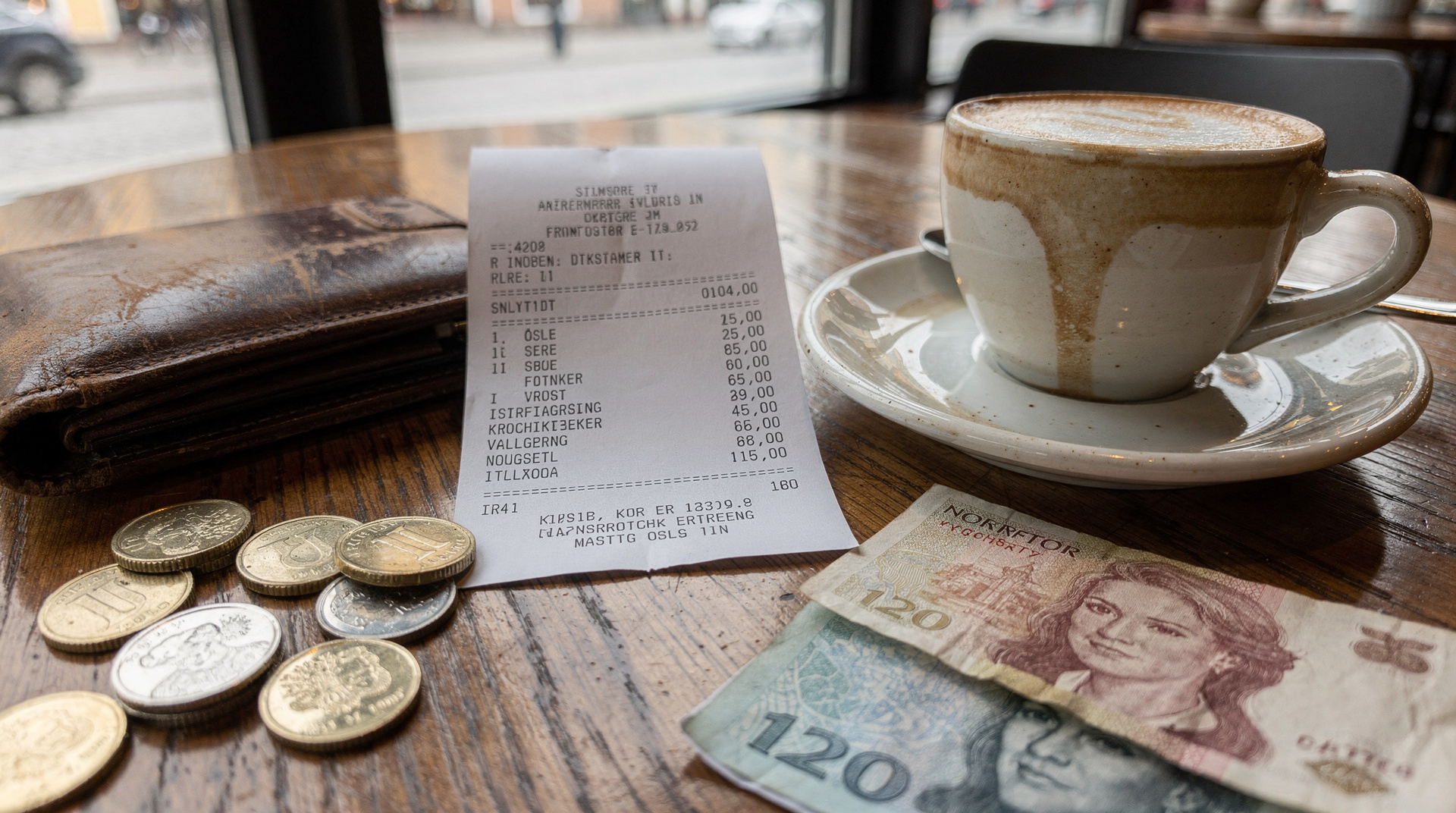
Oslo is one of the most expensive cities in Europe. A restaurant dinner can cost NOK 400–600 / ~USD 43–65 per person. A craft beer is NOK 100–130 / ~USD 11–14. A taxi from the airport is NOK 600 / ~USD 65. None of this is fake — it is simply Oslo.
But there is a parallel Oslo that costs almost nothing: free world-class public art (Vigeland Park), a free landmark building you can climb (the Opera House), some of Europe’s best urban coffee culture at prices below London equivalents, free beaches, free forest hiking, and neighbourhood streets that are genuinely interesting to walk without spending a kroner.
This itinerary is for budget travellers who want to experience the real Oslo without ignoring the price reality. It targets approximately NOK 1 000–1 400 / ~USD 108–150 per day per person (excluding accommodation), which is achievable with discipline. It does not pretend Oslo is cheap — it shows where real value exists. For the full honest breakdown, see our guide on whether Oslo is expensive.
Oslo Pass for budget travellers: The 48-hour Oslo Pass (NOK 845 / ~USD 91) is worth buying on a budget trip ONLY if you visit 3+ paid museums. This itinerary deliberately minimises paid attractions to keep costs low, so we suggest buying a 2-day Ruter pass (NOK 240 / ~USD 26) instead. If you add the Munch Museum (NOK 200) and Fram Museum (NOK 190), then the Oslo Pass pays off. Calculate at our Oslo Pass calculator.
| Where | Karl Johans gate, Vigeland Park, Grünerløkka, Grønland, Ekeberg Park |
| Cost | Around NOK 1 600 / ~USD 173 per person, excluding accommodation |
| Time needed | Two full days |
| Getting there | Flytoget or Vy train to Oslo S, then tram |
| Best time | Any season — the free attractions on this route work year-round |
Day 1: free Oslo highlights
Morning: Royal Palace, Karl Johans gate and Akershus Fortress
09:00 — Walk Karl Johans gate
Oslo’s main boulevard from Oslo S to the Royal Palace is completely free and very pleasant on a weekend morning before the crowds. Stop for a takeaway coffee from 7-Eleven or Narvesen (NOK 25–35 / ~USD 2.7–3.8 for a reasonable filter coffee) rather than a café if budget is very tight. Independent cafés charge NOK 55–80 / ~USD 6–9 but the quality is significantly better.
The walk passes the Parliament (Stortinget, free to enter the public gallery on weekdays), the National Theatre (exterior worth seeing), and ends at the Royal Palace grounds (~1.5 km total). Entry to the palace grounds is free; guided tours cost NOK 175 / ~USD 19 (July–August only) and are not necessary for a budget visit.
10:00 — Akershus Fortress
The fortress grounds are free to enter always. The medieval ramparts, the harbour views, and the outdoor space are all free. The interior castle rooms cost NOK 120 / ~USD 13 — worth it if history is your interest, but skippable on a tight budget. Allow 45–60 minutes on the ramparts.
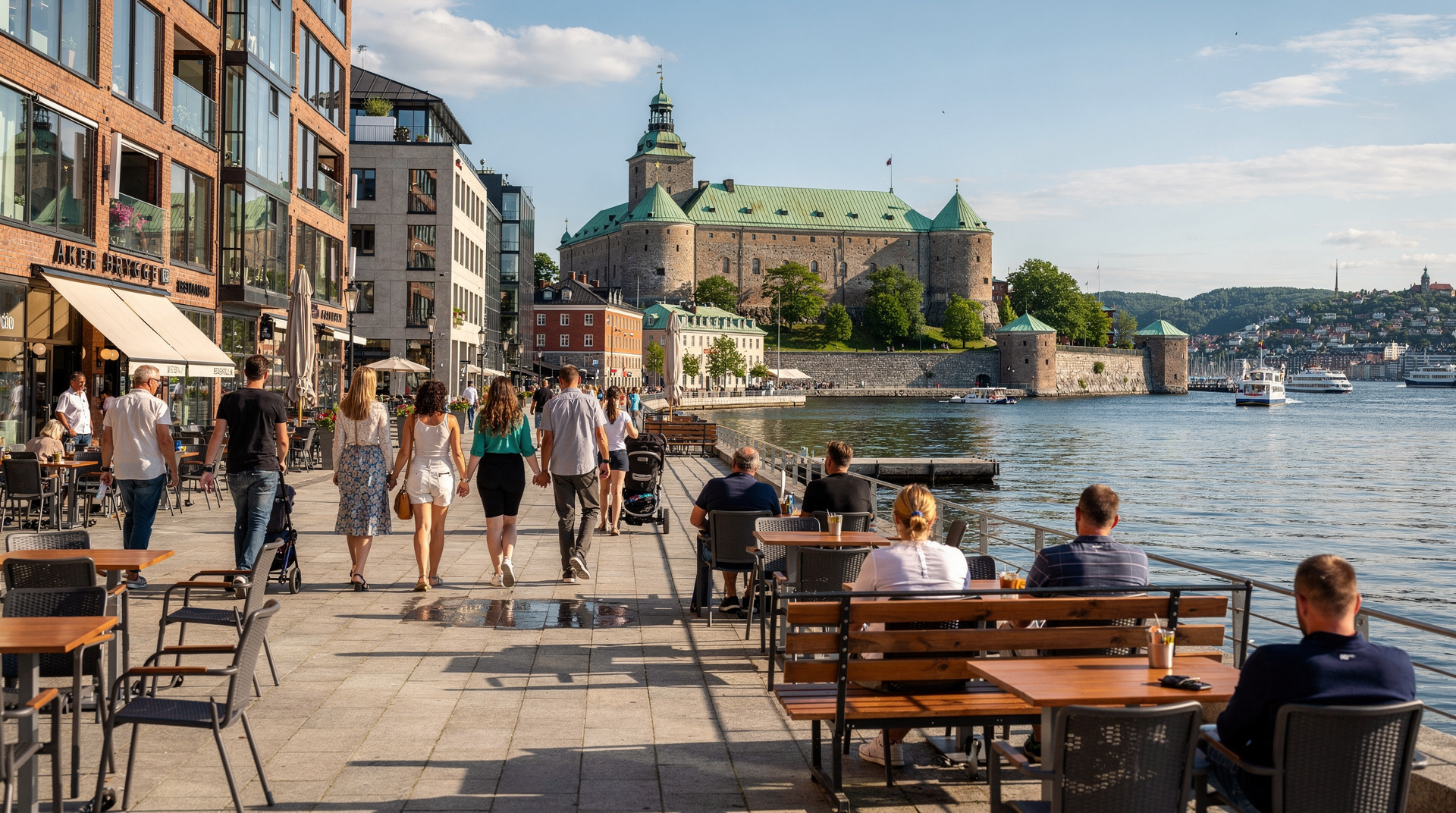
11:00 — Walk to Aker Brygge and Tjuvholmen
Walk west along the harbour waterfront (entirely free). The outdoor public art installations at Tjuvholmen are free to view. Even the Astrup Fearnley Museum has a free view of its gardens from outside. The architecture and harbour view are worth the 20-minute walk.
Midday: Aker Brygge lunch (cheaply)
12:00 — Budget lunch near Aker Brygge
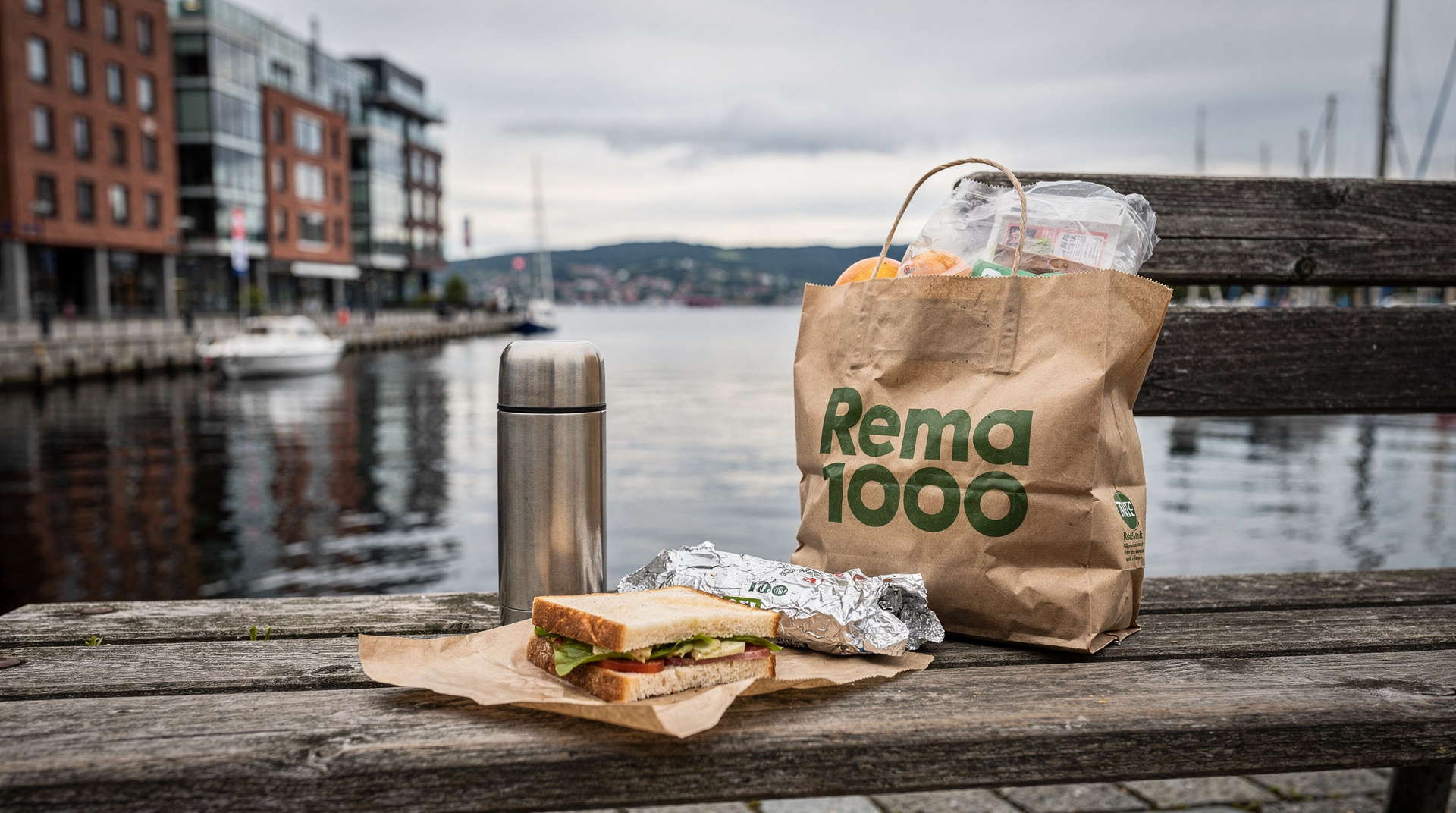
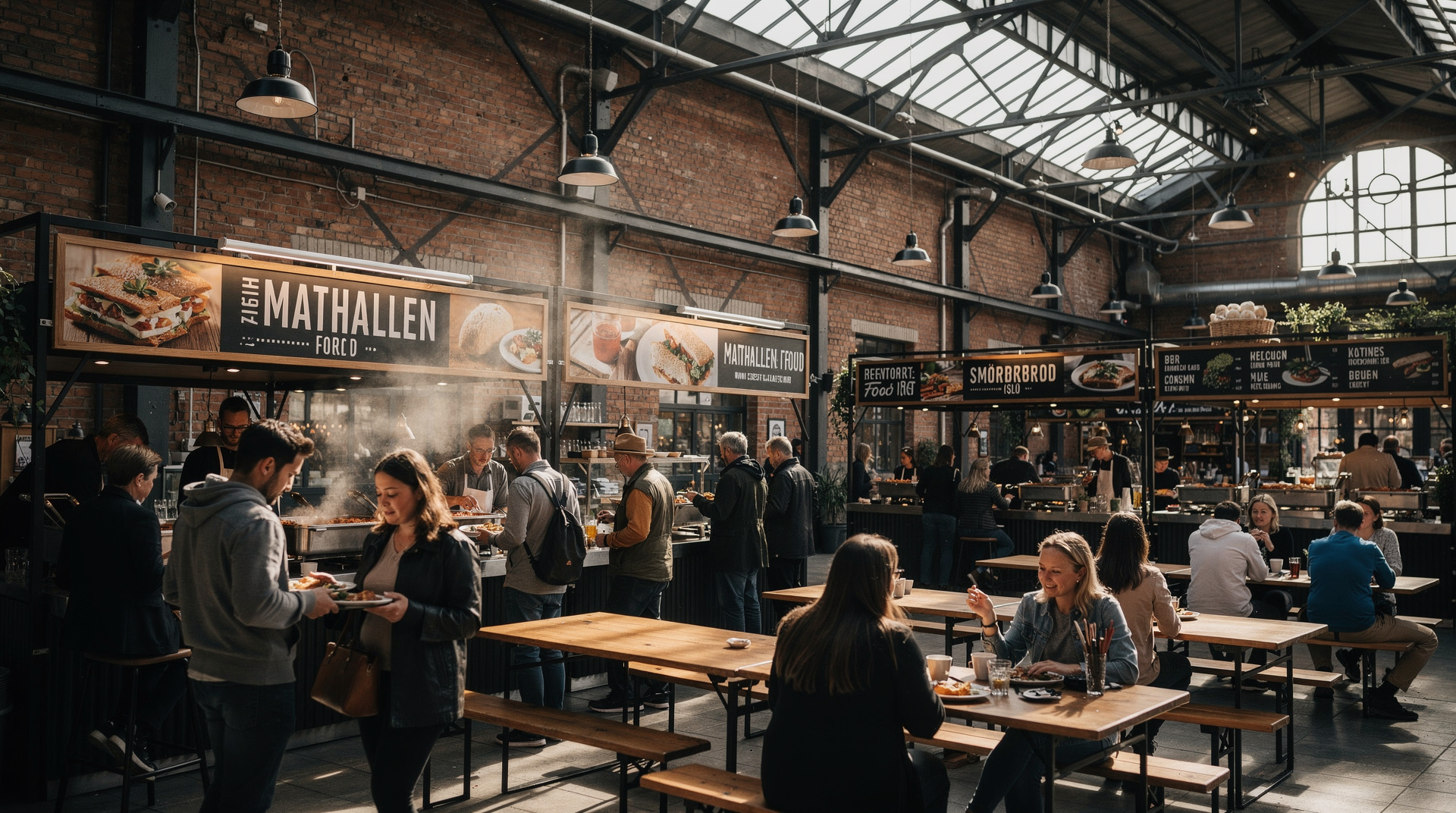
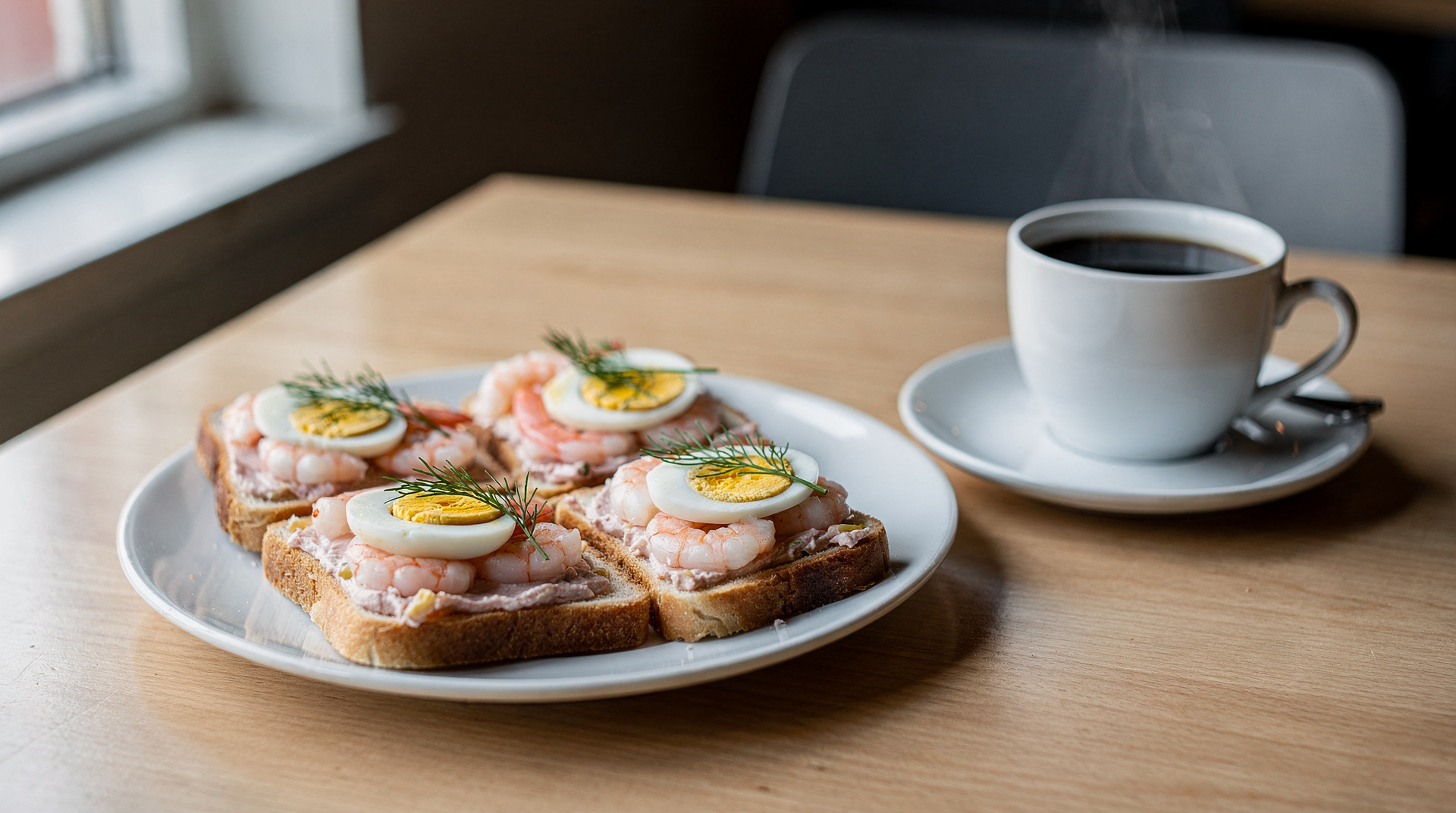
Eating cheaply in Oslo is possible if you avoid restaurants and use supermarkets. Rema 1000 on Skippergata (near Aker Brygge) and Kiwi on Filipstad brygge both sell good ready-made lunch — a smørbrød (open sandwich), a piece of fruit, and a drink costs NOK 60–95 / ~USD 6.5–10. Eat on the harbour steps — genuinely pleasant in good weather.
If you want to sit down for a meal on a budget: Kaffistova (Rosenkrantz gate 8) is a government-subsidised traditional Norwegian canteen with hot dishes from NOK 130–220 / ~USD 14–24. This is where Oslo workers eat, not tourists. Reliable, cheap, genuinely Norwegian.
Afternoon: Vigeland Park and Frogner
13:30 — Vigeland Sculpture Park
Tram 12 from Nationaltheatret to Vigelandsparken (~15 minutes, NOK 42 / ~USD 4.5). The park is entirely free and one of the most remarkable public art collections in the world. Gustav Vigeland’s 214 sculptures cost you nothing. Allow 75–90 minutes.
See our Vigeland Park guide for the best walking route through the sculptures.
15:00 — Frogner Park and the Oslo City Museum
The Oslo City Museum (Bymuseet, inside Frogner Manor within the park) is free. It has a good overview of Oslo’s history from a small trading post to a modern capital. Allow 30–45 minutes.
Walk through the Frogner neighbourhood, one of Oslo’s most elegant residential areas. The streets around Bygdøy allé and Frognerveien are pleasant for a free walk — Art Nouveau apartment blocks, garden squares, and the feel of residential Oslo far from the tourist zone.
Evening: Grünerløkka
17:00 — Tram to Grünerløkka
Tram 12 or 13 from Vigeland Park to Grünerløkka (~25 minutes, NOK 42 / ~USD 4.5). Grünerløkka is Oslo’s best free neighbourhood experience. Walk Thorvald Meyers gate and Markveien for independent shops, street art, and the Akerselva river path.
Coffee at Kaffebrennieriet (Grøndahl), Fuglen, or Tim Wendelboe — all charge NOK 55–70 / ~USD 6–7.5 for an excellent filter coffee. This is genuinely world-class coffee at prices lower than London or Copenhagen.
19:00 — Budget dinner in Grünerløkka or Grønland
- Lokomotivverkstedet canteen, Grünerløkka area: Some workspace canteens open evenings — check locally.
- Café Sara (Thorvald Meyers gate 38): Pizza and pasta from NOK 185–250 / ~USD 20–27. Family-friendly, no pressure.
- Grønland neighbourhood (15-minute walk): Middle Eastern and South Asian restaurants regularly serve full meals for NOK 120–180 / ~USD 13–19. Try Punjabi Tandoori (Grønlandsleiret 24, NOK 150 / ~USD 16 for a generous curry) or one of the Turkish kebab shops (NOK 85–120 / ~USD 9–13).
21:00 — Evening stroll to the Opera House
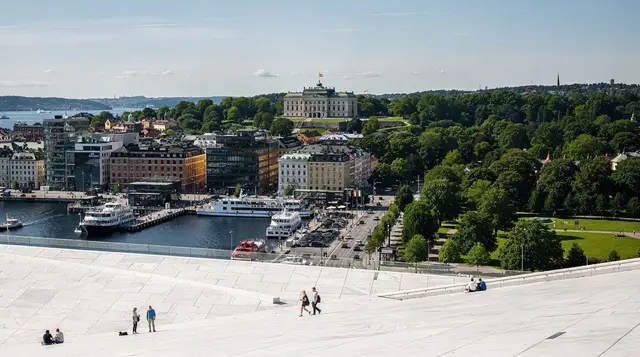
Take tram 13 from Grünerløkka to Bjørvika (Operaen stop, ~15 minutes, NOK 42 / ~USD 4.5). The Oslo Opera House rooftop is free, 24 hours. In summer the long white evenings make this walk memorable. In winter, the building lights reflect in the fjord at dark. Allow 30 minutes.
Day 2: Grønland, national museum and the fjord for free
Morning: free museums and the Opera House district
09:00 — Grønland and breakfast
Start Day 2 in Grønland — Oslo’s most affordable neighbourhood for food. A bakery breakfast (croissant or börek + filter coffee) costs NOK 60–80 / ~USD 6.5–9. The Grønland market on Grønlandsleiret has a covered produce market open from 07:00 (weekday mornings and Saturday).
10:00 — Munch Museum (free entry days)
The Munch Museum charges NOK 200 / ~USD 21 normally. Check if there are free entry days in your visit period — the museum occasionally offers free entry for specific events. If not, the budget-conscious visitor can appreciate the Lambda building’s architecture from outside and the free public water terrace along the fjord.
10:30 — Oslo Opera House interior
The Oslo Operahuset lobby and public areas are free to enter. The architecture by Snøhetta is remarkable — the interior is as interesting as the exterior. Guided tours cost NOK 130 / ~USD 14. Standing tickets for opera or ballet performances start from NOK 250 / ~USD 27 if you want to experience a performance. See the Opera House guide.
11:30 — Nobel Peace Center
Rådhusplassen (city hall square). NOK 140 / ~USD 15 normally, free for some categories. The building is worth visiting for the permanent collection on the prize’s history; the annual laureate exhibition is usually thoughtful. Budget travellers can view the exterior and the city hall building (Rådhuset) for free — the murals inside Oslo City Hall are visible on weekday open visits.
Midday: National Museum and Aker Brygge
12:30 — National Museum (Nasjonalmuseet)
The National Museum at Aker Brygge costs NOK 200 / ~USD 21 normally. Budget option: the outdoor public sculpture garden and the building’s exterior architecture are free. If you decide to pay, the Nasjonalmuseet holds more than 400 000 works including Munch’s oil Scream — on a budget, this is the one paid museum most worth the cost.
14:00 — Lunch from a supermarket
Rema 1000 or Kiwi at Aker Brygge area. Self-catered lunch: NOK 70–100 / ~USD 7.5–11. Eat on the harbour front.
Afternoon: Ekeberg Park (free and underrated)
15:00 — Ekeberg Sculpture Park
Tram 18 or 19 from Aker Brygge to Ekeberg (~15 minutes, NOK 42 / ~USD 4.5). Ekeberg Park (Ekebergparken) is a free sculpture park on the hill east of Bjørvika — less famous than Vigeland but excellent, with works by Salvador Dali, Louise Bourgeois and others spread through forested hillside. The views over Oslo and the Oslofjord from the park are arguably better than any viewpoint in the city. Allow 60–90 minutes.
The park is open 24 hours and entirely free. See our Ekeberg guide.
17:00 — Akerselva river walk
Walk from the city centre north through Grünerløkka along the Akerselva — a 2-kilometre riverside path through converted industrial buildings, waterfalls, and urban nature. Entirely free. The walk between the waterfront at Nyland Allé and Beierbrua (at Grünerløkka) is the best stretch. Allow 45 minutes.
Evening: free Oslo at dusk
18:30 — Final dinner
Budget choices for a final Oslo dinner:
- 7-Eleven hot food counter: Hot dogs and nachos from NOK 35–65 / ~USD 4–7. This sounds terrible, but Norwegian 7-Eleven actually has decent food and it is a genuine Oslo institution.
- Kiwi deli counter: Some Kiwi supermarkets have a hot food section with NOK 100 / ~USD 11 meals.
- Deli de Luca: Norwegian chain, decent sandwiches and wraps from NOK 75–110 / ~USD 8–12.
- Real restaurant on a budget: Olympen pub (Grønlandsleiret 15) — generous portions of reindeer burger or kjøttkaker from NOK 195–260 / ~USD 21–28. Atmospheric and genuinely popular with Oslo locals.
21:00 — Last evening walk
Oslo’s waterfront between Aker Brygge and the Opera House is pleasant at any time. In summer, this walk at 21:00 is in long golden light. It costs nothing.
Budget breakdown: 2 days in Oslo (per person)
| Item | NOK | ~USD |
|---|---|---|
| Ruter 2-day pass | 240 | 26 |
| Breakfast x2 (supermarket/bakery) | 160 | 17 |
| Lunch x2 (supermarket) | 180 | 19 |
| Dinner x2 (budget restaurant) | 400 | 43 |
| Coffees x4 | 280 | 30 |
| Optional one paid museum | 200 | 21 |
| Snacks and extras | 150 | 16 |
| Total 2 days | 1 610 | 173 |
This excludes accommodation. Budget accommodation: Anker Hostel (Storgata 55, dorm from NOK 350 / ~USD 38) or PS:Hotell (Dronning Eufemias gate 32, budget hotel from NOK 750 / ~USD 81 for a private room).
Note on Oslo Pass: If you add the Munch Museum (NOK 200), Fram Museum (NOK 190), and National Museum (NOK 200) on top of the free activities, the 48-hour Oslo Pass at NOK 845 saves money versus paying individually. This brings the budget to around NOK 1 900–2 100 / ~USD 204–226 but includes more museum content.
Where the real savings are (and where they are not)
Not every “free” thing on this itinerary saves you the same amount. The table below ranks the biggest budget wins so you can prioritise if time is tighter than a full two days.
| Free/cheap activity | What you would otherwise pay | Worth prioritising? |
|---|---|---|
| Vigeland Park | Comparable paid sculpture parks elsewhere run NOK 150–250 | Yes — do not skip |
| Ekeberg Sculpture Park | Similar art-park experiences elsewhere charge entry | Yes — genuinely underrated |
| Opera House rooftop | Guided architecture tours cost NOK 130+ | Yes — free and quick |
| Skipping the Oslo Pass | Saves NOK 845 if you visit fewer than 3 museums | Only if your museum count stays low |
| Supermarket meals over restaurants | Saves NOK 150–250 per meal vs a sit-down restaurant | Yes — the single biggest lever on this budget |
Supermarket meals are the biggest single lever here: three restaurant meals a day at Oslo prices would roughly double this itinerary’s food budget. Everything else on the list matters, but food discipline is where the real savings come from.
Stretching this to a third day cheaply
If you have a third day and want to keep costs down, the cheapest genuine add-on is a full day on the Oslofjord islands — a Ruter ticket, a packed lunch, and a free beach day at Langøyene or Hovedøya costs barely more than a single museum ticket. This keeps the trip’s budget character intact while adding something none of the first two days cover.
Frequently asked questions about Oslo on a budget
How much money do you need per day in Oslo?
Realistically: NOK 800–1 000 / ~USD 86–108 per day for accommodation (budget), food (mostly self-catered), and transport. Add NOK 400–600 / ~USD 43–65 if you pay for one or two activities. The full honest breakdown is in our Oslo daily costs guide.
Are there any genuinely free things to do in Oslo?
Yes. Vigeland Park, Akershus Fortress grounds, Ekeberg Sculpture Park, the Opera House rooftop, the Akerselva river walk, and all of Grünerløkka and Grønland as neighbourhoods. See our complete free activities guide.
Is the Oslo Pass worth it for budget travellers?
Only if you plan to visit 3 or more paid museums. A Ruter day pass (NOK 128) plus selective museum entry is usually cheaper than the Oslo Pass for a traveller who prioritises outdoor and neighbourhood experiences over museum-hopping.
What is the cheapest way to eat in Oslo?
Supermarkets (Kiwi, Rema 1000, Extra) for self-catered meals. Kaffistova for cooked Norwegian meals at canteen prices. The kebab shops in Grønland. Avoid the tourist restaurants along Karl Johans gate and the Aker Brygge waterfront. See our cheap eats guide.
Is Oslo safe for budget backpackers?
Completely. Oslo is one of Europe’s safest cities. Anker Hostel in Grünerløkka and several guesthouses near Oslo S cater specifically to backpackers. The Ruter network operates until 01:00 (later on weekends).
Can I visit Oslo for free without any paid activities?
Yes — this itinerary demonstrates it. Two full days spending zero on attractions, only transport (NOK 128/day), food, and coffee is genuinely feasible and not a diminished experience. The free Oslo is the real Oslo.
How does this compare to a budget weekend in nearby Scandinavian capitals?
Oslo’s free attractions (Vigeland Park, Ekeberg Park, the Opera House) are unusually strong compared to equivalent free sights in Stockholm or Copenhagen, which partly offsets Oslo’s higher food and accommodation prices. See our honest Oslo vs Stockholm and Oslo vs Copenhagen comparisons if you are deciding between Nordic capitals on a tight budget.
Top experiences
Bookable activities with verified prices and instant confirmation on GetYourGuide.