Ekeberg sculpture park — hillside art with Oslo's best city views
Oslo: panoramic view and sculpture park walk
Duration: 2.5 hours
- Scenic views
- Vigeland Park
What is Ekeberg sculpture park in Oslo?
Ekebergparken is a wooded hillside park above the Ekeberg district with 40 sculptures by international artists including Auguste Rodin, Salvador Dalí, and contemporary Scandinavian artists. The park offers panoramic views over Oslo and the Oslofjord, is free to enter, and is open year-round. It's a 15-minute tram ride from central Oslo.
The Oslo view most visitors miss
Most Oslo visitors head to Vigeland Sculpture Park in Frogner and consider the outdoor sculpture obligation fulfilled. Very few make it to Ekebergparken — the wooded hillside park on the east side of the city that offers arguably Oslo’s single best panoramic view combined with an international sculpture collection integrated directly into the forest landscape.
| Where | Ekeberg hillside, southeast of Grønland |
| Cost | Free |
| Time needed | 2–3 hours for the full trail |
| Getting there | Tram 19 from Jernbanetorget, ~15 min |
| Best time | Summer evenings or autumn colour |
This is a real oversight. Ekebergparken is one of those Oslo experiences that consistently earns the description “unexpectedly excellent” — and it’s entirely free.
What Ekebergparken is
The park occupies a steep wooded hillside above the Ekeberg district, southeast of Grønland. It was developed as a formal art park between 2012 and the present day when a private collector (Christian Ringnes) funded the acquisition and installation of international sculptures through the park’s forested trails.
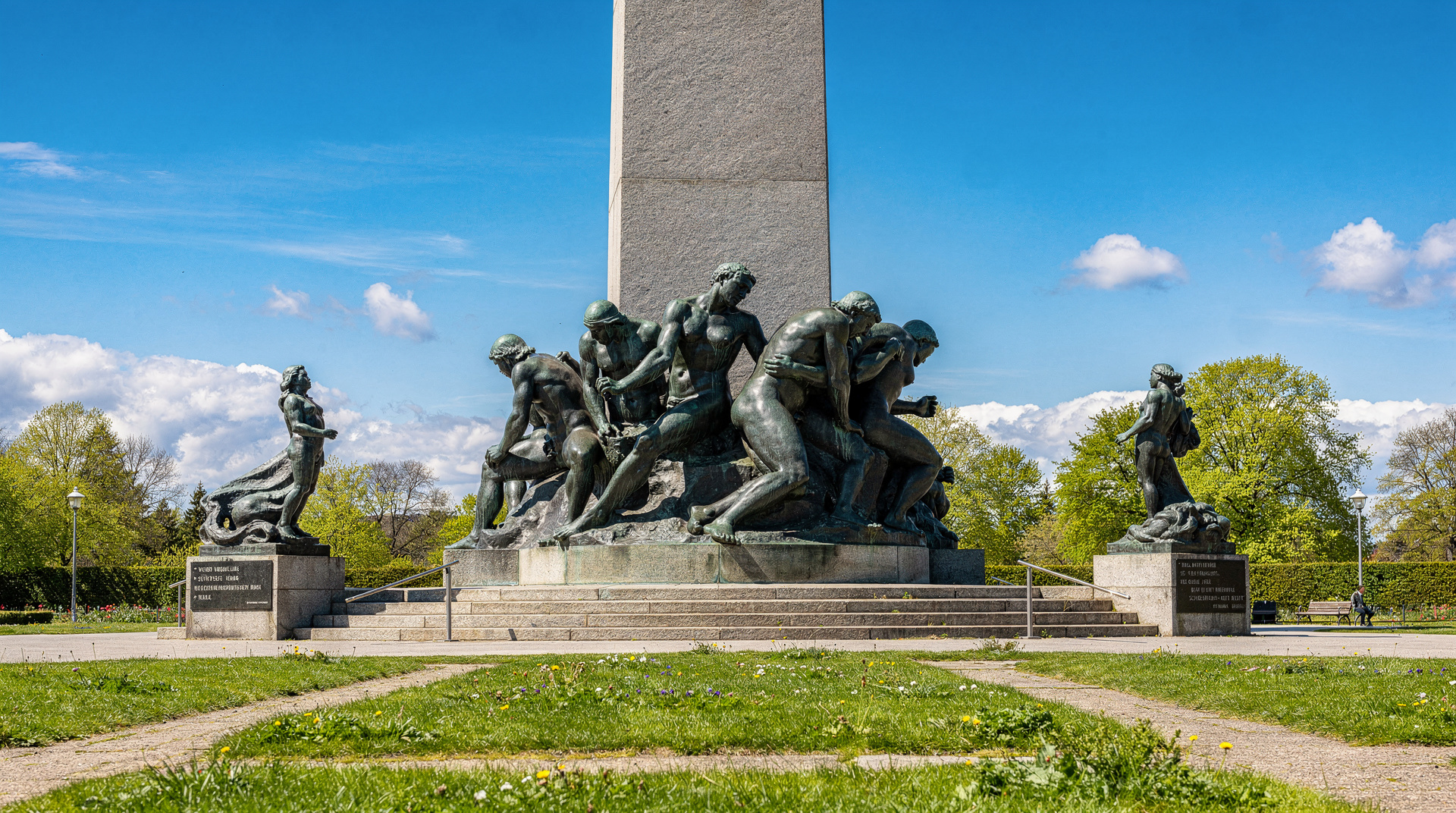
The collection spans historical to contemporary: a Rodin cast, a Dalí bronze, works by Damien Hirst, Tracey Emin, and a wide range of Norwegian sculptors including Nils Aas and Arnold Haukeland. More than 40 works are distributed along about 6 km of paths through the woods.
What makes Ekebergparken different from a conventional sculpture park is the integration with nature. Works appear at turns in the path, at viewpoints, on hillsides, and beside rocky outcrops. Discovery is part of the experience — you round a corner and find a bronze figure in the forest that you weren’t expecting.
The view over Oslo
At the top of the park, a large natural terrace gives a panoramic view south and west over the Oslofjord. On clear days you can see:
- The Bjørvika waterfront and Opera House directly below
- The Barcode development with its distinctive office towers
- Aker Brygge and Tjuvholmen waterfront to the west
- The Oslofjord opening southward toward Drøbak and the sea
- In summer haze, islands including Hovedøya and Lindøya
This is the view that allegedly moved Edvard Munch. A plaque on Ekebergveien below the park marks the spot from which he is believed to have seen the “blood-red sky” sunset that inspired The Scream. The plaque is a short walk from the main tram stop. For the actual paintings, the Munch Museum in Bjørvika is visible from the park.
The sculpture trail
A formal app-guided trail leads through the major sculpture locations (download the Ekebergparken app before visiting). The complete circuit takes 2 to 3 hours. Key works include:
The Thinker (Rodin): A cast of Rodin’s famous 1902 bronze, one of the more unexpected finds in a Norwegian forest. Positioned on a rocky promontory with views through the trees.
Space Venus (Dalí): Salvador Dalí’s elongated female figure in bronze, set in a small clearing. One of the more visually striking juxtapositions — surrealist art in a Norwegian pine forest.
She Lies (Tracey Emin): A reclining female figure in white bronze. Emin’s work connects to the Munch tradition of emotional vulnerability in Scandinavian art.
Singing Tree (Monica Bonvicini): A stainless steel structure with an audio component that responds to wind — more installation than traditional sculpture, and effective on blustery days.
Norwegian sculptors are well-represented: look for works by Nils Aas, Arnold Haukeland, and Borghild Rud throughout the trail.
The Ekebergparken restaurant
At the top of the park, near the main viewpoint, the Ekebergparken Restaurant is a historic venue originally opened in 1929 — a white Functionalist building with an outdoor terrace that has one of the best-positioned views in the city. The restaurant is open for lunch and dinner; the terrace for drinks. Prices are elevated (beer NOK 130 to 160/USD 14 to 17; a main course NOK 250 to 400/USD 27 to 43) but the location justifies one drink or a summer lunch.
The restaurant is closed in winter apart from private events.
Getting to Ekebergparken
Tram 19 from Jernbanetorget (Central Station) runs directly to Ekebergparken stop. The journey takes about 12 to 15 minutes. From the tram stop, walk up the short stairway path to the park entrance — the main viewpoint terrace is 5 minutes uphill from the tram. Tram 19 runs every 8 to 10 minutes during the day.
You can also walk from Grønland: from Grønland torg, follow Ekebergveien uphill for about 25 minutes. The walk is steep in places but passes the Munch-connection plaque on the way up.
From Bjørvika (Opera House area): Walk up from the waterfront via steep paths — about 20 minutes. The route gives you the experience of ascending from the fjord level to the forest panorama, which is satisfying.
Ruter public transport tickets apply — same pricing as elsewhere in Oslo (NOK 41 single/USD 4.40, or included in the 24-hour Ruter pass). See Oslo transport guide.
The Munch connection
The area around Ekeberg is genuinely tied to Norway’s most famous artist. Edvard Munch was born nearby (though his family home no longer stands in its original form) and walked these paths repeatedly. The sunset view from Ekebergveien — that specific combination of fjord, clouds, and light that appears in The Scream — is why the area has particular significance for art history.
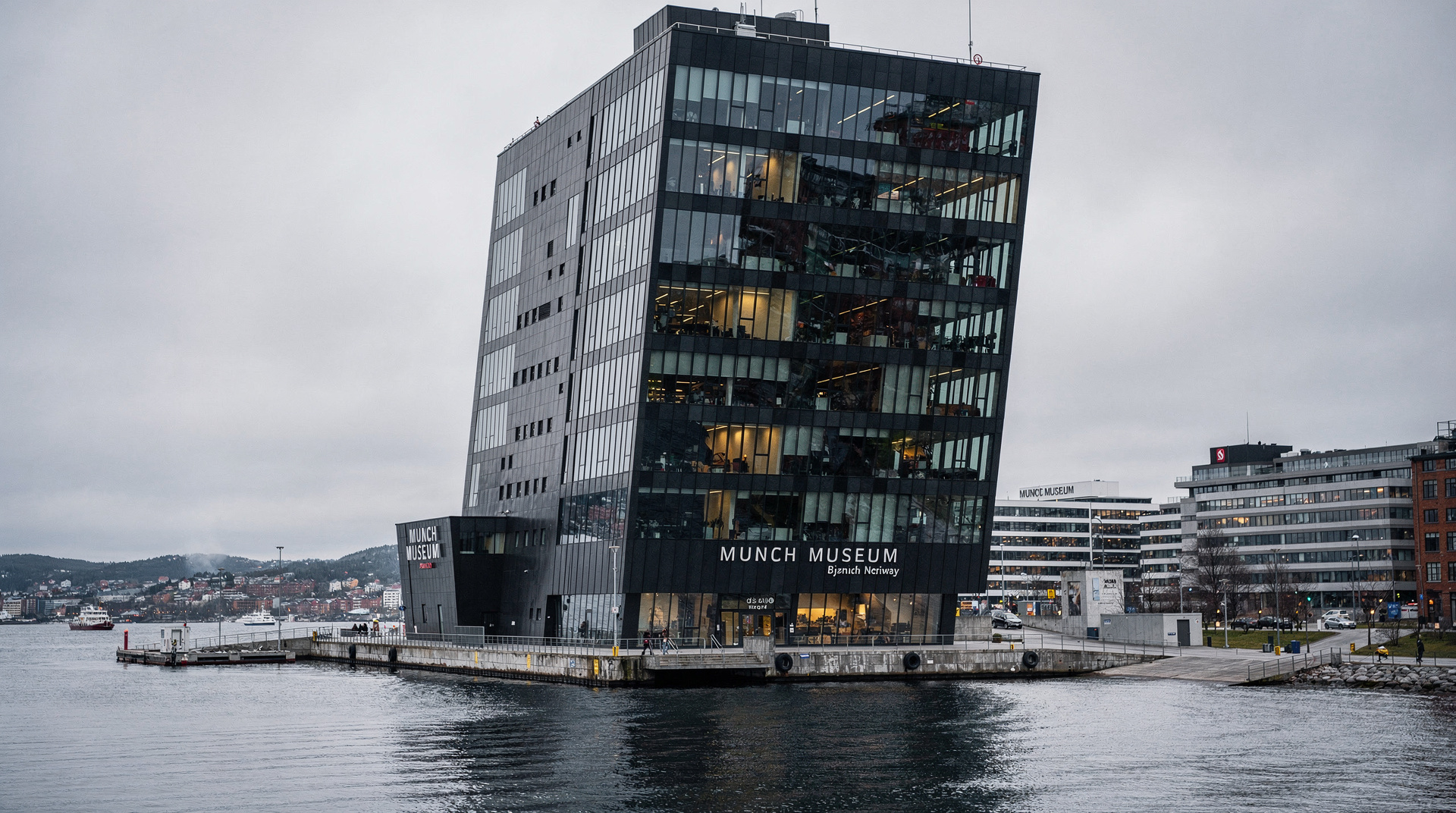
The Munch Museum (MUNCH) in Bjørvika, visible from the park, holds the largest Munch collection in the world including multiple versions of The Scream. See our full Munch Museum guide for entry, prices, and what to prioritise.
How to pace your visit
The park rewards slow walking. Treat the hillside as a long stroll with pauses rather than a checklist: stop at each sculpture long enough to see how it sits in its setting, and let the forest do part of the work. Many visitors find that the works that stay with them are not the famous names but the ones they stumbled upon at a bend in the path.
A sensible rhythm is to head first for the main viewpoint, take in the panorama while the whole city is laid out in front of you, and only then plunge into the trail. That way you have your bearings: you know where Bjørvika is, where the fjord opens, and which direction the centre lies, so the forest paths feel like a journey through a place you already understand. If the weather is turning, do the reverse and keep the terrace for the clearing sky.
Bring comfortable shoes with decent grip, a layer you can add or remove, and something to drink. The paths are not long on any one stretch, but the cumulative walking adds up, and the uneven ground tires legs more than a flat city pavement does. Phone battery matters too if you rely on the trail app, so charge before you set off.
Ekebergparken for different kinds of visitors
Art lovers. The attraction here is the dialogue between works and landscape. Classical bronze sits beside conceptual pieces, and the trees, rocks and light change how each one reads. If you enjoyed the concentrated display at the Vigeland sculpture park, Ekeberg offers the opposite experience: scattered, quiet and full of small surprises. For a more traditional indoor counterpart, the National Museum makes a natural pairing on another day.
Photographers. The terrace gives the broad city panorama, but the forest paths give frames that are harder to find elsewhere: a figure framed by trunks, a bronze against low evening light, a view through branches to the fjord. Early and late light is kinder than midday, and the shifting seasons give you very different pictures of the same spot.
Families. Children often enjoy the hunt for the next sculpture, and the open spaces give them room to move. Keep in mind the uneven terrain and the exposed edges near the viewpoints. For more ideas for younger travellers, see our Oslo with kids guide.
Budget travellers. With free entry and a tram ride as the only cost, this is one of the best-value half-days in the city. Bring a picnic rather than eating at the restaurant, and combine it with other no-cost sights from our Oslo on a budget guide.
Walkers and hikers. The park is a gentle introduction to Oslo’s relationship with its green hills. If it leaves you wanting more time among trees, our best Oslo hikes and the Nordmarka hiking guide point to longer routes.
Reading the park as part of Oslo
Ekeberg makes more sense when you see how it fits the city’s wider geography. Oslo sits in a bowl of hills around the fjord, and the east side looks back across the water toward the centre in a way the western parks do not. From here you grasp how close the forest, the harbour and the dense city really are, an idea that runs through the whole of Oslo and is the reason locals take their green space seriously.
The hillside also tells a story about the changing waterfront. Below you, the Bjørvika district has been transformed, and the view lets you read that transformation at a glance. Our Bjørvika destination guide explains what you are looking at, and the Grønland and Tøyen guide covers the lively quarter at the foot of the hill.
Weather, light and what to wear
Oslo weather can change quickly, and an exposed hilltop amplifies it. Check the forecast before you commit, and remember that a grey morning can clear into a beautiful afternoon. Rain does not ruin the park, since the forest gives some shelter and the wet trees look striking, but slippery paths call for care. If the skies open for the whole day, switch to one of the options in our rainy day museums guide and save Ekeberg for a clearer window.
Light matters more here than in most attractions because the views are the main event. Low sun in the evening warms the whole panorama, while midwinter light is soft and brief. Our guide to daylight hours by season helps you plan around it, and the best time to visit Oslo covers the seasons more broadly.
When to visit
Summer (June to August): The best season for the views — clear air, green forest, and the evening light is extraordinary at this latitude. The restaurant and terrace are open. Daylight until 22:30 in June means you can visit well into the evening.
Autumn (September to October): The forest turns and the light has a quality that suited Munch’s palette perfectly. Fewer visitors than summer.
Winter: The park stays open but the restaurant closes. The forest in snow is beautiful and the view over the city takes on a different character. Dress very warmly; the hilltop is exposed and winds can be strong.
Spring (April to May): Wildflowers appear along the paths in May and the park fills up with Oslo residents wanting the first outdoor air of the year.
Combining Ekebergparken with other attractions
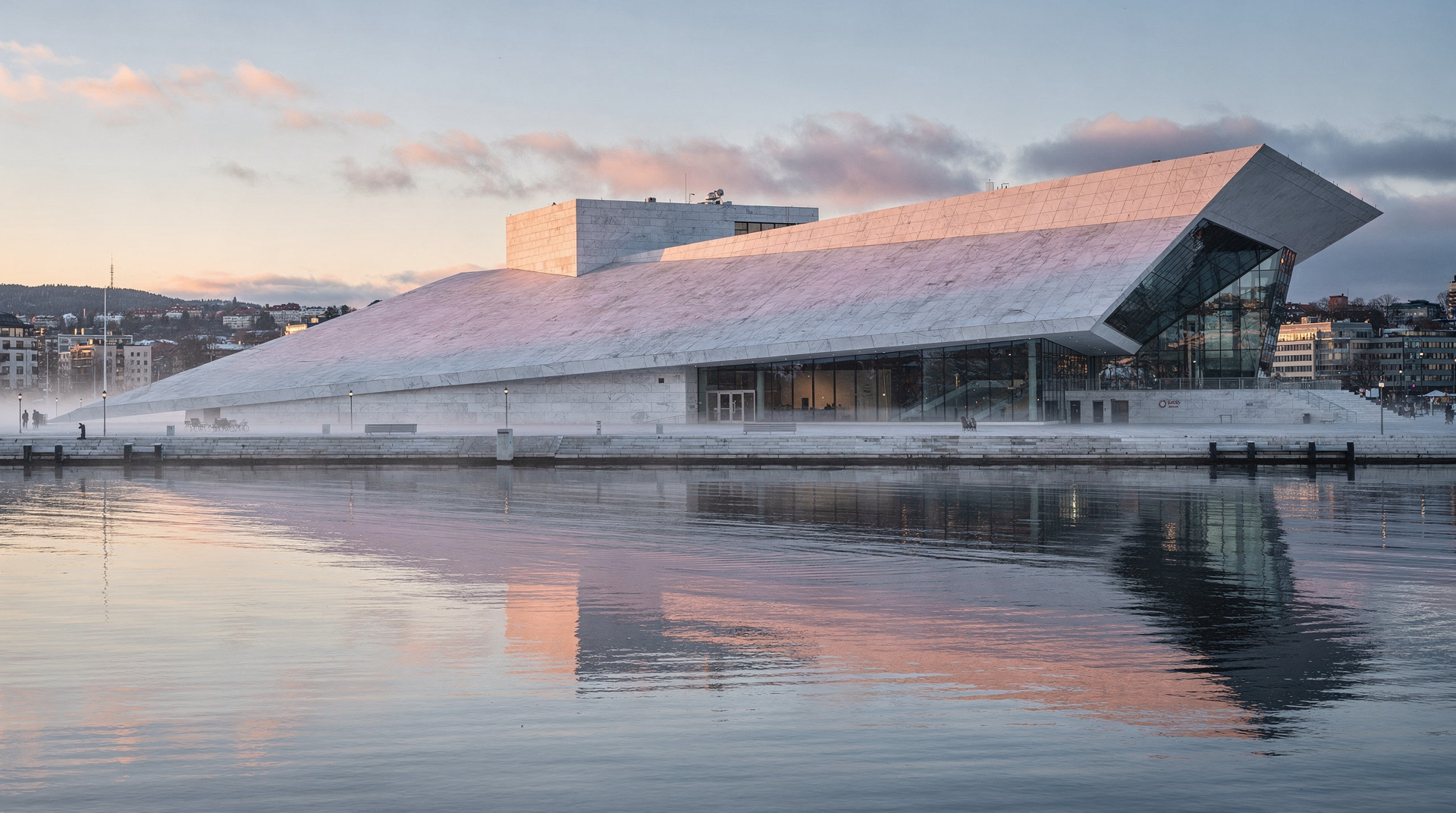
Bjørvika and the Opera House: Start at the Ekeberg viewpoint, descend to the Oslo Opera House area (15 to 20 minutes downhill on foot), walk the Opera House roof, and continue along the fjord to Aker Brygge. A half-day that covers three of Oslo’s most distinctive experiences. See our Opera House guide.
Grønland: The multicultural Grønland neighbourhood at the base of the hill is worth an hour for street food and coffee. See our Grønland neighbourhood guide.
Munch Museum: Combine an Ekeberg visit with the Munch Museum in Bjørvika for a coherent day around Munch’s Oslo. The museum is 15 minutes downhill by foot or two tram stops.
What the park is not
Ekebergparken is not as formally spectacular as Vigeland Sculpture Park — the sculptures are more integrated and less immediately overwhelming. It requires walking (the forest paths are uneven in places; not suitable for prams or wheelchairs throughout) and some curiosity. Visitors who expect everything to be at the main viewpoint terrace will miss most of it.
It is, however, one of Oslo’s most rewarding free experiences and consistently underrated in standard tourist itineraries. For the full list of free Oslo options, see our free things to do in Oslo guide.
Ekebergparken vs Vigeland Sculpture Park: which one first?
Both are free outdoor sculpture experiences, but they suit different priorities:
| Ekebergparken | Vigeland Sculpture Park | |
|---|---|---|
| Best for | Views + forest walk + discovery | Iconic, concentrated sculpture display |
| Crowds | Low to moderate | High, especially summer |
| Terrain | Hilly, forest paths, some steep sections | Flat, formal park layout |
| Time needed | 2–3 hours | 1.5–2.5 hours |
| Accessibility | Limited (uneven paths) | Good (paved paths throughout) |
If you have time for only one and want the famous photo, choose Vigeland. If you want the more surprising, less crowded experience with a genuinely spectacular view thrown in, Ekebergparken wins — and pairing both across two half-days is entirely feasible in a longer Oslo stay.
Fitting Ekeberg into an itinerary
Ekebergparken slots easily into a short stay. On a first visit it works well as a morning or late-afternoon anchor around which you build the rest of the day, and our one day in Oslo itinerary and Oslo in 2 days show how to balance the headline sights with quieter places like this. If you have longer, the Oslo in 3 days plan leaves room to linger on the hillside rather than rush it.
Accessibility and practical notes
Ekebergparken’s forest paths are genuinely uneven in sections — tree roots, gravel, and some steep gradients near the main viewpoint. This makes it less suitable for wheelchairs, prams, or visitors with limited mobility than the flat, paved paths at Vigeland. The main viewpoint terrace near the restaurant is reachable via a shorter, more manageable path if mobility is a concern — ask at the tram stop or check the Ekebergparken app’s accessibility notes before setting out.
Frequently asked questions about Ekeberg sculpture park — hillside art with Oslo's best city views
How do I get to Ekebergparken?
Take tram 19 from Jernbanetorget (Central Station) or Sentrum to the Ekebergparken stop — about 15 minutes. The main entrance is at the top of the hill with views opening immediately. You can also walk up from Grønland in about 25 minutes via steep paths.Is Ekeberg sculpture park free?
Yes — entry to the park and sculpture trail is free. The Ekebergparken restaurant charges for food and drinks. Some special events may have entry fees. There are no turnstiles or ticket booths.What sculptures are in Ekebergparken?
The collection includes works by Auguste Rodin (The Thinker replica), Salvador Dalí (Space Venus), Damien Hirst, and over 35 other international and Norwegian artists. Sculptures are integrated into the forest and hillside rather than displayed in formal arrangements.Can you see Oslo from Ekebergparken?
Yes — the views from Ekebergparken are among the best in the greater Oslo area. The main terrace near the restaurant looks directly south over the Oslofjord and west toward the city centre, Sentrum, Bjørvika, and Aker Brygge. On clear days you can see far down the fjord.Is The Scream connected to Ekebergparken?
Yes — Edvard Munch is believed to have experienced the moment of inspiration for The Scream (1893) while standing on the Ekebergveien road below the park, looking over the fjord at sunset. A plaque marks the approximate spot. The Munch Museum in Bjørvika has the actual paintings.
Top experiences
Bookable activities with verified prices and instant confirmation on GetYourGuide.